

Small designer dog breeds have become enormously popular with people looking for affectionate, adaptable companions in relatively compact packages. From the cuddly Cavapoo and Maltipoo to the spirited Yorkipoo and tiny Pomchi, these crossbred dogs come in an extraordinary variety of personalities, coat types, sizes and activity levels.
A designer dog is generally a deliberately bred cross between two established dog breeds. Some, such as the Cockapoo, have been bred for generations. Others are much more recent. Many of today’s most popular small designer dogs have a Poodle parent, while others combine two companion or toy breeds.
Designer dogs are sometimes promoted as offering the “best of both breeds.” Real life is more complicated. A puppy can inherit almost any combination of characteristics from its parents. Even puppies from the same litter can differ in size, coat, temperament, shedding, exercise needs and appearance.
That unpredictability doesn’t make designer dogs poor companions. Far from it. It simply means that choosing one wisely requires learning about both parent breeds rather than shopping for a particular look.
Dogs Central’s Small Designer Dog Breeds Guide is designed to help you do exactly that.
🐾 Dogs Central Recommendation
Never choose a designer dog based on appearance alone. Learn about both parent breeds, consider the full range of traits your puppy could inherit, and look for a responsible breeder who prioritizes health, temperament and careful puppy raising over fashionable colors, tiny sizes or trendy labels.
Small Designer Dog Breeds Guide Menu
- Top 10 Small Designer Dog Breeds
- Choosing the Right Designer Dog
- Why Are So Many Designer Dogs Poodle Mixes?
- Are Designer Dogs Hypoallergenic?
- Grooming and Coat Care
- Health and Responsible Breeding
- Designer Dogs for Families
- Designer Dogs for Seniors
- Designer Dogs for Apartments
- Adopting a Designer Dog
- Small Designer Dog Breeds A–Z
- Frequently Asked Questions
Top 10 Small Designer Dog Breeds
There is no single “best” designer dog. A breed that is perfect for an active family may be a poor match for someone wanting a quiet lap dog, while the cuddliest companion may struggle in a household where everyone is away for long periods.
These ten popular small designer dogs offer very different combinations of temperament, size, coat care and activity level.
1. Cavapoo
Parent breeds: Cavalier King Charles Spaniel × Poodle
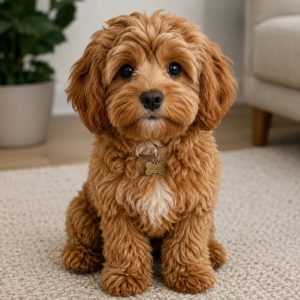 The Cavapoo has become one of the best-known small designer dogs, and its appeal isn’t difficult to understand. Combining the sweet, people-oriented nature associated with the Cavalier King Charles Spaniel with the intelligence and trainability of the Poodle can produce a charming little companion.
Cavapoos tend to thrive when they are included in everyday family life. Many are affectionate, playful and sociable, although individual temperament varies considerably.
Their coats may be wavy, curly or somewhere in between. Low shedding is possible, but should never be guaranteed.
- Typical size: Small
- Exercise needs: Moderate
- Grooming needs: Moderate to high
- Trainability: Usually high
- Apartment suitability: Very good
- Best suited to: People wanting an affectionate, interactive companion
🐾 Why Choose a Cavapoo?
Consider a Cavapoo if you want a cheerful, affectionate little dog and enjoy having a companion who wants to participate in family life. Be prepared for regular grooming and a dog that may not enjoy spending long days alone.
Explore the Complete Cavapoo Breed Guide →
2. Maltipoo
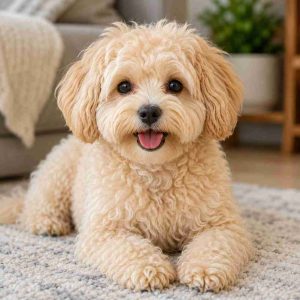 Parent breeds: Maltese × Poodle
The Maltipoo combines two highly companion-oriented breeds in a conveniently small package. These dogs are often bright, affectionate, playful and strongly attached to their people.
Their compact size makes them particularly appealing to apartment dwellers and people who prefer a dog that is easy to carry and travel with.
Don’t mistake small size for a lack of personality. Maltipoos can be lively, vocal and surprisingly energetic. They also require considerably more coat maintenance than their teddy-bear appearance may suggest.
- Typical size: Toy to small
- Exercise needs: Low to moderate
- Grooming needs: High
- Trainability: Usually good
- Apartment suitability: Excellent with appropriate training
- Best suited to: People wanting a very small, affectionate companion
🐾 Why Choose a Maltipoo?
The Maltipoo can be especially appealing if small size is important but you still want an intelligent, playful dog. Coat care and potential separation-related behavior deserve serious consideration.
Explore the Complete Maltipoo Breed Guide →
3. Cockapoo
Parent breeds: Cocker Spaniel × Poodle
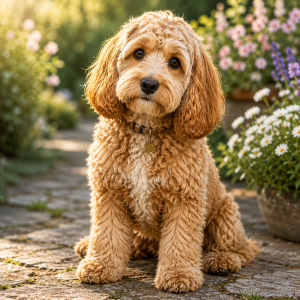 The Cockapoo isn’t simply the latest designer-dog trend. Cocker Spaniel–Poodle crosses have been deliberately bred for decades, making the Cockapoo one of the longest-established popular designer crosses.
Cockapoos are often friendly, clever and enthusiastic companions. Many are somewhat sturdier and more energetic than the smallest toy-sized designer dogs, which can make them particularly appealing to active households.
Both parent breeds can be energetic and highly people-oriented, so prospective owners should expect a dog that needs interaction, training and meaningful daily activity.
- Typical size: Small to medium, depending on parents
- Exercise needs: Moderate
- Grooming needs: High
- Trainability: Usually high
- Apartment suitability: Good with sufficient exercise
- Best suited to: Interactive households wanting a lively companion
🐾 Why Choose a Cockapoo?
A Cockapoo may suit you better than a tiny designer breed if you want a somewhat sturdier dog for walks, games and family activities while still enjoying the advantages of a relatively compact companion.
Explore the Complete Cockapoo Breed Guide →
4. Shichon
Also known as: Zuchon, Teddy Bear Dog
Parent breeds: Shih Tzu × Bichon Frise
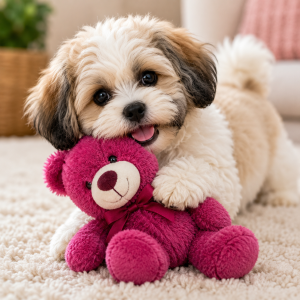 The Shichon is one of the quintessential teddy-bear dogs. With a Shih Tzu and Bichon Frise as parents, the Shichon is generally bred first and foremost as a companion.
Many Shichons are friendly, affectionate, playful and adaptable. They can be wonderful companions for families, singles and older adults, particularly when someone is home for much of the day.
The famous fluffy coat requires commitment. Brushing, bathing, face care and professional grooming are part of life with most Shichons.
- Typical weight: About 8–16 pounds
- Typical height: About 9–12 inches
- Exercise needs: Moderate
- Grooming needs: High
- Apartment suitability: Excellent
- Best suited to: People seeking a devoted companion dog
🐾 Why Choose a Shichon?
The Shichon stands out for people who prioritize companionship over athletic ability. This can be a wonderful little dog for someone who wants a cuddly sidekick and doesn’t mind investing time and money in coat care.
Explore the Complete Shichon Breed Guide →
5. Yorkiepoo
Parent breeds: Yorkshire Terrier × Poodle
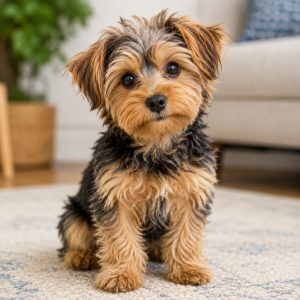 Tiny dog, big personality. The Yorkipoo can combine the intelligence of the Poodle with the boldness and confidence of the Yorkshire Terrier.
Yorkipoos are often lively, entertaining and closely bonded to their owners. They may be considerably more energetic and vocal than their tiny appearance suggests.
The Yorkie’s terrier heritage matters. Not every Yorkipoo will behave like a soft little lap dog, and early socialization and positive training are important.
- Typical size: Toy to small
- Exercise needs: Moderate
- Grooming needs: Moderate to high
- Trainability: Good, although individuals can be independent
- Apartment suitability: Very good if barking is managed
- Best suited to: People who enjoy lively little dogs with personality
🐾 Why Choose a Yorkipoo?
Choose the Yorkipoo over a quieter lap-dog mix if you love the confidence and character of terriers and want those qualities in a tiny companion.
Explore the Complete Yorkiepoo Breed Guide →
6. Shih-Poo
Parent breeds: Shih Tzu × Poodle
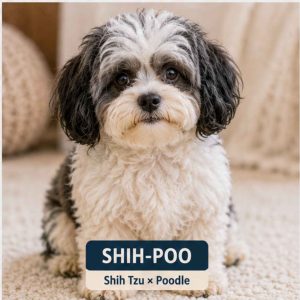 The Shih-Poo combines two popular small companion breeds. Many are affectionate, amusing little dogs that enjoy attention and adapt well to smaller homes.
A Shih-Poo can inherit the Poodle’s athleticism and trainability, the Shih Tzu’s more easygoing companion-dog qualities, or a mixture of both.
Coats vary widely and usually require regular brushing and professional grooming.
- Typical size: Toy to small
- Exercise needs: Low to moderate
- Grooming needs: High
- Trainability: Moderate to good
- Apartment suitability: Excellent
- Best suited to: Companion-oriented homes
🐾 Why Choose a Shih-Poo?
The Shih-Poo can be a particularly good match when you want a small companion but prefer a Poodle cross that may be less athletic than some of the larger Doodle-type dogs.
Explore the Complete Shih-Poo Breed Guide →
7. Morkie
Parent breeds: Maltese × Yorkshire Terrier
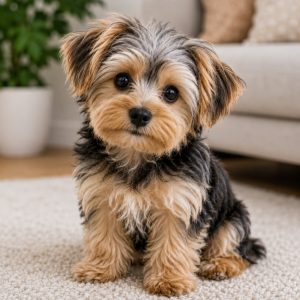 The Morkie combines two tiny breeds with devoted followings. These little dogs can be affectionate and entertaining, but prospective owners shouldn’t assume that crossing two lap-sized breeds automatically produces a quiet lap dog.
The Yorkshire Terrier contributes genuine terrier ancestry, while Maltese have been treasured companion dogs for centuries. The resulting Morkie can be cuddly, feisty, playful, vocal and very attached to its favorite people.
Because of their small size, Morkies need careful handling and may not be appropriate for households with very young children who cannot reliably handle a tiny dog gently.
- Typical size: Toy
- Exercise needs: Low to moderate
- Grooming needs: Moderate to high
- Trainability: Moderate
- Apartment suitability: Excellent with barking management
- Best suited to: Adults and families with older, gentle children
🐾 Why Choose a Morkie?
The Morkie is worth considering if you want an especially small dog but enjoy a little attitude and personality along with the cuddles.
Explore the Complete Morkie Breed Guide →
8. Pomapoo
Parent breeds: Pomeranian × Poodle
The Pomapoo can pack intelligence, playfulness and plenty of personality into a very small body.
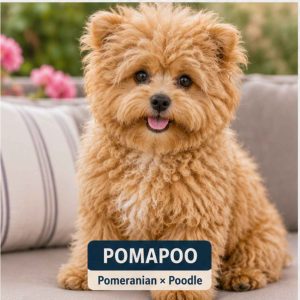 Pomeranians are alert, animated little dogs, while Poodles are renowned for intelligence and trainability. Pomapoos may therefore be quick learners and engaging companions, but they can also be vocal and require more stimulation than prospective owners expect.
Coat type varies substantially depending on which parent the dog favors.
- Typical size: Toy to small
- Exercise needs: Low to moderate
- Grooming needs: Moderate to high
- Trainability: Usually good
- Apartment suitability: Very good with barking management
- Best suited to: People wanting a bright, animated little companion
🐾 Why Choose a Pomapoo?
Pomapoos can be a great fit for people who adore the animated personality of the Pomeranian but are attracted to some of the qualities a Poodle may contribute.
Explore the Complete Pomapoo Breed Guide →
9. Havapoo
Parent breeds: Havanese × Poodle
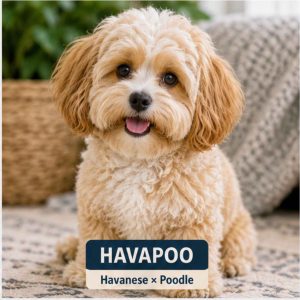 The Havapoo combines the Havanese, a cheerful companion breed, with the intelligent Poodle.
Many Havapoos are sociable, affectionate and eager to be involved in whatever their families are doing. Their manageable size and adaptable nature can make them appealing to families, retirees and apartment dwellers alike.
As with other Poodle crosses, coat type and shedding vary. Regular grooming should be expected regardless of how much the individual dog sheds.
- Typical size: Small
- Exercise needs: Moderate
- Grooming needs: High
- Trainability: Usually good to excellent
- Apartment suitability: Excellent
- Best suited to: People wanting a cheerful, sociable companion
🐾 Why Choose a Havapoo?
The Havapoo deserves consideration if friendliness and companionship are priorities and you want a small Poodle mix with another true companion breed as its other parent.
Explore the Complete Havapoo Breed Guide →
10. Maltshi
Also known as: MalShi, Malt-Tzu
Parent breeds: Maltese × Shih Tzu
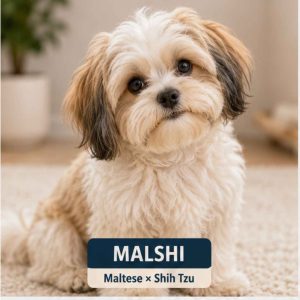 The Maltshi combines two breeds developed primarily for companionship, making it an interesting alternative for people who like designer dogs but aren’t specifically looking for a Poodle mix.
Maltshis are generally small, people-oriented dogs. Many enjoy cuddling as much as playing and can adapt well to apartments and less athletic households.
Their coats need regular attention, and the Shih Tzu side of the family means prospective owners should also learn about brachycephalic features and their possible health implications.
- Typical size: Toy to small
- Exercise needs: Low to moderate
- Grooming needs: High
- Trainability: Moderate
- Apartment suitability: Excellent
- Best suited to: People prioritizing companionship and manageable exercise needs
🐾 Why Choose a Maltshi?
The Maltshi is especially interesting for someone seeking a teddy-bear-style companion but who doesn’t necessarily want a Poodle cross.
Explore the Complete Malshi Breed Guide →
For a complete list of small designer dog breeds, go here ->
How to Choose the Right Small Designer Dog
The names may be cute, but choosing between designer breeds deserves more thought than deciding whether “Cavapoo” or “Pomchi” sounds more appealing.
Start with your real life.
How much exercise can you comfortably provide every day? How much grooming can you afford? Is somebody usually home? Do you have young children? Cats? Other dogs? Do you live in an apartment where barking could become a serious problem? Are you looking for a walking companion or primarily a cuddly house dog?
Then research both parent breeds.
If one parent breed has a characteristic that would be completely unsuitable for your household, don’t assume crossing it with another breed will make that characteristic disappear.
A designer dog is not a predictable 50/50 blend.
One Cavapoo may strongly resemble its Cavalier parent in temperament and coat. Another may inherit considerably more Poodle-like characteristics. A third may fall somewhere in between.
That variability is part of owning a crossbred dog.
🐾 A Better Question Than “Which Is Best?”
Ask: Which of these dogs could I happily live with even if my puppy inherits some of the less convenient characteristics of either parent breed? That question can prevent a great many mismatched expectations.
Why Are So Many Designer Dogs Poodle Mixes?
You’ll notice a pattern in our Top 10. Cavapoos, Maltipoos, Cockapoos, Yorkipoos, Shih-Poos, Pomapoos and Havapoos all have a Poodle parent.
There are several reasons Poodles appear so frequently in designer crosses. Poodles are highly intelligent and trainable, come in different sizes, and have a distinctive curly coat that sheds differently from the coats of many other breeds.
Unfortunately, the popularity of Poodle crosses has also produced some exaggerated marketing claims.
Adding a Poodle does not automatically create a hypoallergenic dog, eliminate inherited disease, guarantee an easy temperament or produce a particular coat.
The other parent still matters enormously.
So does the individual dog.
Are Designer Dogs Hypoallergenic?
No designer breed should be advertised as guaranteed hypoallergenic.
People with dog allergies may react to proteins found in dander, saliva and urine rather than simply reacting to loose hair. A dog that sheds less may spread less hair through the home, but that doesn’t mean the dog cannot trigger allergies.
Coat inheritance is also unpredictable in mixed-breed dogs. Two puppies from the same litter can have noticeably different coats and shedding levels.
If allergies are an important factor in choosing a dog, spend time around adult dogs similar to the one you are considering before making a commitment. Speak with an appropriate medical professional about significant allergies.
Be especially wary of anyone who charges a premium while promising that a particular designer puppy is “100% hypoallergenic.”
The Hidden Reality: Many Designer Dogs Need a Lot of Grooming
The fluffy teddy-bear coat that makes many designer dogs irresistible is often one of their most demanding characteristics.
Low shedding does not mean low maintenance.
Curly and wavy coats can trap loose hair rather than dropping it around the house. Without thorough brushing and combing, that trapped hair can contribute to tangles and painful mats.
Many Shichons, Cavapoos, Maltipoos, Cockapoos, Shih-Poos, Havapoos and similar dogs need regular home brushing plus professional grooming throughout their lives.
Before choosing one, factor grooming into your budget.
If you don’t want to brush a dog regularly or pay for professional grooming every several weeks, a fluffy designer breed may not be the best choice—even if everything else about the dog seems perfect.
🐾 Grooming Is Part of the Cost of Ownership
Ask a groomer what maintaining the breed or coat type typically costs in your area before bringing home your puppy. Over a dog’s lifetime, professional grooming can represent a significant expense.
Designer Dog Health and Responsible Breeding
Crossing two breeds does not automatically produce a healthier dog.
Genetic diversity can have advantages, but a mixed-breed puppy can still inherit health problems found in either parent breed. If both parent breeds are predisposed to the same condition, that concern deserves particular attention.
Responsible breeding therefore involves much more than putting two healthy-looking dogs together.
A good breeder should understand the inherited conditions relevant to both breeds and perform appropriate health testing on breeding dogs.
Prospective owners should ask what tests were performed, what the results were and whether those results can be independently verified.
Be cautious when a breeder’s primary selling points are unusual colors, extremely tiny “teacup” size, celebrity-style marketing or claims that hybrid vigor means health testing isn’t necessary.
It is.
Are Designer Dogs Good Family Dogs?
Many small designer dogs can make excellent family companions, but small doesn’t automatically mean child-friendly.
Temperament matters, and so does physical size.
Tiny dogs can be injured accidentally by toddlers or young children who pick them up, squeeze them or drop them. Some small dogs are also less tolerant of rough handling than larger, sturdier breeds.
Families should consider both the likely temperament and physical resilience of the dog.
Cockapoos and somewhat sturdier Cavapoos may suit some active families particularly well. Very small Morkies, Yorkipoos or Pomchis may be better suited to homes with older children who understand how to interact gently with a tiny dog.
Children and dogs should always be appropriately supervised.
Small Designer Dogs for Seniors
A small designer dog can be a wonderful companion in retirement, but size alone shouldn’t determine the choice.
Consider exercise requirements, grooming, barking, ease of training, the dog’s tendency to get underfoot, and whether you could comfortably lift the dog if necessary.
Companion-oriented crosses such as Shichons, Malshis, Maltipoos, Havapoos and some Cavapoos may appeal to older adults because of their manageable size and affectionate nature.
Puppies, however, are demanding regardless of breed.
An adult designer dog with a known temperament can sometimes be an even better choice for a senior than an eight-week-old puppy.
Best Designer Dogs for Apartments
Many small designer dogs adapt beautifully to apartment living, but square footage is only one part of the equation.
Barking may matter more than size.
So can separation distress and exercise requirements.
A quiet 20-pound dog can be a much easier apartment neighbor than an alert eight-pound dog who announces every footstep in the hallway.
Shichons, Maltipoos, Havapoos, Shih-Poos and Malshis can all be good apartment candidates when their individual needs are met. Yorkipoos, Pomapoos, Morkies and Pomchis can also live very happily in apartments, but owners may need to pay particular attention to barking and early training.
No dog should be expected to live happily without appropriate exercise, enrichment and companionship simply because it is small.
Can You Adopt a Designer Dog?
Absolutely.
Designer dogs and Poodle mixes sometimes become available through humane societies, municipal shelters, all-breed rescues, Poodle rescues and organizations associated with either parent breed.
Adult dogs may also need new homes directly from owners whose circumstances have changed.
Adopting an adult designer dog offers one important advantage: many characteristics that are uncertain in a puppy are already visible. You can often get a much clearer idea of adult size, coat, shedding, energy level and personality.
Don’t assume that a designer label makes a dog rare or impossible to find through adoption. If you’re willing to wait for the right match, adoption is well worth exploring.
Small Designer Dog Breeds A–Z
Looking for a particular designer dog? Explore our individual Dogs Central breed guides below. Our library is continually expanding, with detailed guides being added to each breed section.
Chipin
Chihuahua × Miniature PinscherTiny, alert and often remarkably confident, the Chipin combines two small breeds with outsized personalities.
Cavapoo
Cavalier King Charles Spaniel × PoodleAn affectionate and increasingly popular companion cross combining two people-oriented breeds.
Cockapoo
Cocker Spaniel × PoodleA long-established designer cross known for its cheerful personality and family appeal.
Havapoo
Havanese × PoodleA small, sociable companion combining the cheerful Havanese with the intelligent Poodle.
Maltshi
Maltese × Shih Tzu A small companion cross that doesn’t involve a Poodle and is often known for its cuddly, teddy-bear appearance.
Maltipoo
Maltese × PoodleA tiny, affectionate and playful companion that has become one of the most recognizable small Poodle mixes.
Morkie
Maltese × Yorkshire TerrierA tiny designer companion combining Maltese sweetness with Yorkshire Terrier spirit.
Pomapoo
Pomeranian × PoodleA bright little companion combining Pomeranian animation with Poodle intelligence.
Pomchi
Pomeranian × ChihuahuaSmall in stature but rarely short on personality, the Pomchi combines two of the world’s best-known toy breeds.
Puggle
Pug × BeagleA distinctive small-to-medium cross combining the companion-oriented Pug with the curious, scent-driven Beagle.
Shichon
Shih Tzu × Bichon FriseAlso called the Zuchon or Teddy Bear Dog, the Shichon is a fluffy little companion bred from two popular companion breeds.
Shih-Poo
Shih Tzu × PoodleA small Poodle cross combining the Shih Tzu’s companion heritage with Poodle intelligence.
Yorkipoo
Yorkshire Terrier × PoodleA tiny but often lively companion combining terrier confidence with Poodle intelligence.
Complete Directory of Small Designer Dog Breeds –>
Frequently Asked Questions About Small Designer Dogs
What is a designer dog?
A designer dog is generally a deliberately bred cross between two established dog breeds. Examples include the Cavapoo, which crosses a Cavalier King Charles Spaniel with a Poodle, and the Shichon, which crosses a Shih Tzu with a Bichon Frise.
What is the most popular small designer dog?
Cavapoos, Maltipoos and Cockapoos are among the best-known small designer dogs, while popularity varies by country, region and changing trends. Rather than choosing according to popularity, look for a dog whose likely temperament, activity level, adult size and grooming requirements suit your household.
What is a teddy bear dog?
“Teddy bear dog” is an informal description rather than a recognized breed. It can refer to several small, fluffy dogs and crosses. The Shichon, a Shih Tzu–Bichon Frise cross, is particularly commonly called a Teddy Bear Dog or Zuchon.
Are designer dogs healthier than purebred dogs?
Not automatically. Crossbreeding can increase genetic diversity, but designer dogs can inherit health conditions from either parent breed. Responsible breeders should perform health testing appropriate to both breeds used in the cross.
Are designer dogs hypoallergenic?
No dog or designer cross should be guaranteed hypoallergenic. Some designer dogs shed relatively little, particularly those inheriting certain Poodle coat characteristics, but people can react to allergens associated with dander, saliva and urine as well as hair.
Do designer dogs shed?
Some shed very little, some moderately and others considerably more than their owners expected. Coat inheritance varies even within the same litter, so a puppy’s designer-breed name cannot guarantee its eventual coat or shedding level.
Are designer dogs easy to train?
It depends on the individual dog and its parent breeds. Many Poodle crosses are quick learners, but intelligence does not automatically mean effortless training. Terrier ancestry, scent-hound instincts, sensitivity, independence and early socialization can all influence behavior.
Are small designer dogs good for first-time dog owners?
Many can be, provided the owner understands the dog’s needs. Cavapoos, Shichons, Maltipoos and Havapoos are among the crosses that may suit some first-time owners particularly well. Individual temperament and the owner’s lifestyle matter more than the designer label.
How much grooming do designer dogs need?
Many popular small designer dogs require substantial grooming. Wavy and curly coats can mat easily and may need frequent brushing plus professional grooming every several weeks. Grooming requirements should be researched before choosing a puppy.
Should I get a designer dog puppy or adopt an adult?
Both can be excellent choices. A responsibly bred puppy allows you to influence training and socialization from an early age, while adopting an adult provides much more information about the dog’s final size, coat, temperament and activity level. The best choice depends on your circumstances.
Continue Exploring Dogs Central
- Small Dog Breed Guides
- Best Small Dogs for Families
- Best Small Dogs for First-Time Owners
- Best Small Dogs for Apartments
- Shichon Breed Guide
- Cavapoo Breed Guide
- Maltipoo Breed Guide
- Cockapoo Breed Guide
🐾 The Best Designer Dog Is the One That Fits Your Life
Cute names and teddy-bear faces may attract attention, but compatibility is what creates a successful relationship. Learn about both parent breeds, be realistic about grooming and exercise, choose responsible breeders or adoption organizations, and give yourself permission to decide that a different dog may suit you better.