
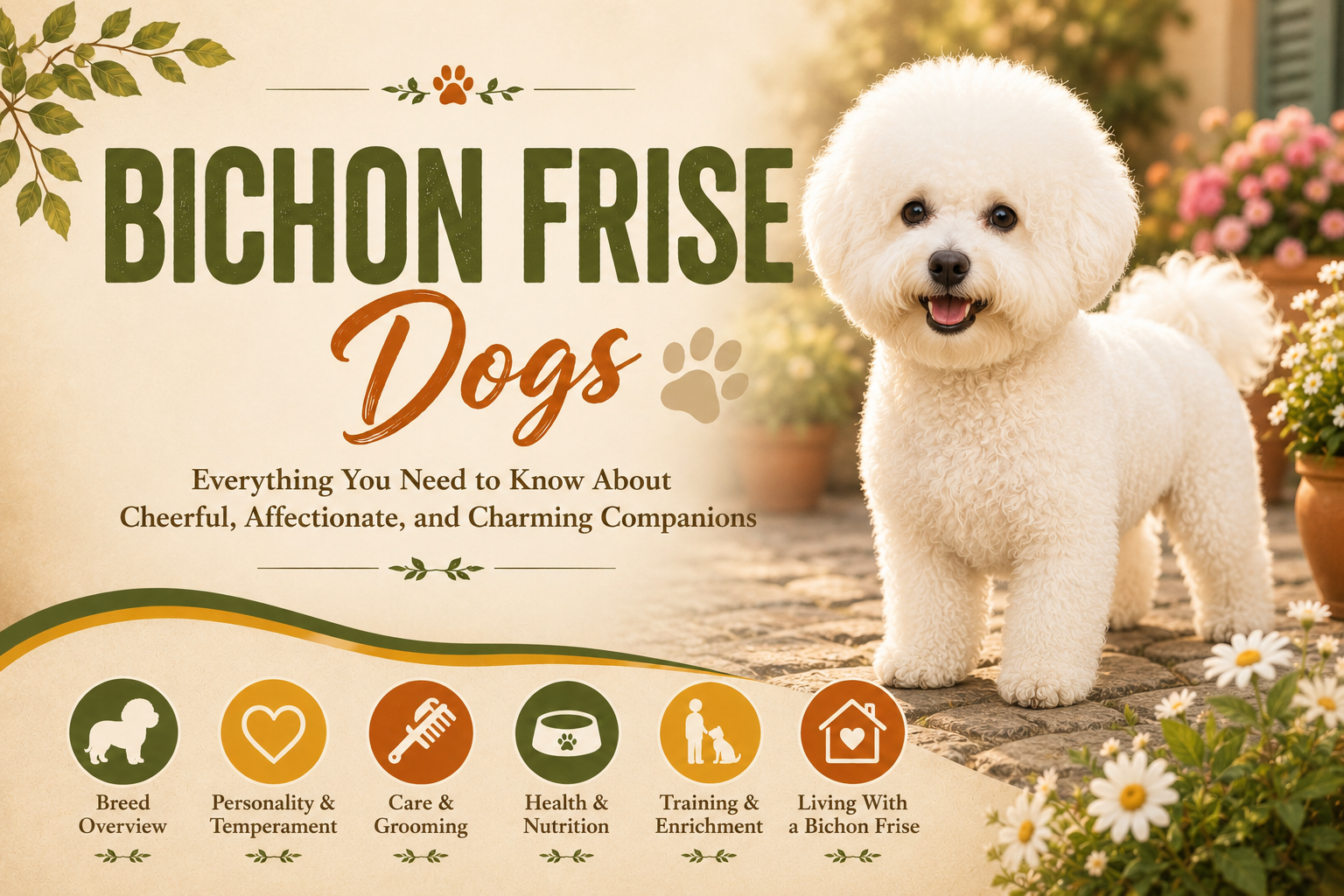
Bichon Frise Breed Guide
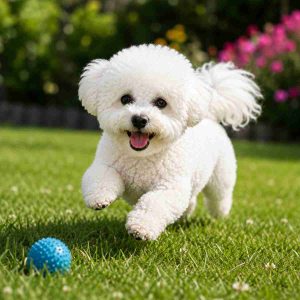 The cheerful, affectionate Bichon Frise has been winning hearts for centuries with its bright personality, playful spirit, and cloud-like white coat. Although small in stature, the Bichon is bursting with confidence, intelligence, and an infectious enthusiasm for life. Whether entertaining its family with playful antics or happily curling up for an evening cuddle, this charming little companion has a remarkable ability to make people smile.
Originally developed as a companion dog, the Bichon Frise thrives on human interaction and genuinely enjoys being part of everyday family life. They typically get along well with children, other pets, and visitors, making them one of the most sociable small dog breeds. Their adaptable nature also allows them to flourish in apartments, condominiums, and larger homes alike, provided they receive plenty of companionship and regular mental stimulation.
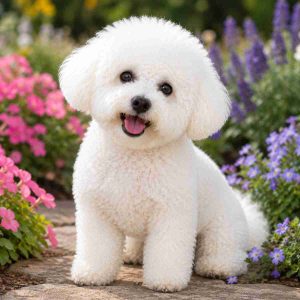 One of the breed’s greatest attractions is its low-shedding coat, which makes the Bichon Frise a popular choice for people looking for a cleaner home or those with mild dog allergies. However, that beautiful fluffy appearance comes with a trade-off—regular grooming is essential to keep the coat healthy, mat-free, and looking its best.
If you’re searching for a small dog that combines affection, intelligence, playfulness, and a genuine love of people, the Bichon Frise deserves a place near the top of your list. Throughout this guide, we’ll help you discover whether this delightful little companion is the right match for your lifestyle and provide practical advice to help you become the very best Bichon owner possible.
❤️ DogPage Philosophy
The best dog isn’t necessarily the most popular dog—it’s the one whose personality, companionship needs, grooming requirements, and energy level fit comfortably into your lifestyle. Our goal is to help you make an informed decision that leads to a happy, lifelong relationship for both you and your dog.
Page Menu
About the Bichon Frise
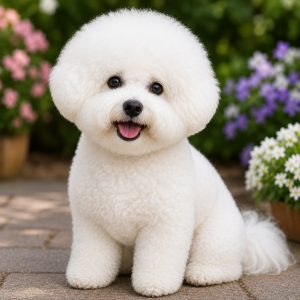 The Bichon Frise may look like a pampered lap dog, but beneath that fluffy white coat lies a fascinating history spanning hundreds of years. Unlike many breeds that were developed to hunt, herd livestock, or guard property, the Bichon Frise was bred for one very special purpose—to be a delightful companion. That heritage still defines the breed today.
The Bichon belongs to the ancient Barbichon family of small white companion dogs, which also includes the Maltese, Havanese, Bolognese, and Coton de Tulear. Historians believe these cheerful little dogs originated around the Mediterranean, where they became popular with sailors who carried them aboard ships. Their affectionate personalities, compact size, and adaptability made them excellent travel companions and helped spread the breed throughout Europe.
By the Renaissance, the Bichon Frise had become a favorite among European nobility. Kings, queens, and aristocrats often kept these charming little dogs as beloved companions, admiring both their intelligence and their playful personalities. Paintings from the 16th and 17th centuries frequently depict small white dogs believed to be early Bichons sitting proudly beside their owners.
Like many breeds, the Bichon’s fortunes changed over time. After the French Revolution, many aristocratic families lost their estates, and their cherished companion dogs often found themselves living alongside ordinary people. Remarkably adaptable, the clever Bichon soon became popular with street performers and traveling entertainers. Their intelligence, eagerness to learn, and love of attention made them natural performers capable of learning impressive tricks.
Today, the Bichon Frise is treasured around the world as one of the finest companion dogs available. While their days of entertaining royalty and circus audiences are largely behind them, they continue to excel at what they’ve always done best—bringing joy, companionship, and laughter to the people they love.
💡 Did You Know?
Unlike many breeds developed for hunting or guarding, the Bichon Frise has spent centuries being selectively bred primarily for companionship. That’s one reason they’re naturally affectionate, sociable, and happiest when surrounded by people.
🧠 Why This Trait Exists
If your Bichon seems to follow you everywhere, greets everyone enthusiastically, or constantly wants to be involved in family activities, it’s behaving exactly as generations of careful breeding intended. The Bichon Frise wasn’t bred to work independently—it was bred to be a constant, loving companion.
❤️ Living With a Bichon Frise
Many owners describe their Bichon as the “comedian” of the family. Their cheerful outlook, playful antics, and genuine love of people make them one of the happiest little dogs you’ll ever meet. If you’re looking for a companion that wants to share your everyday life, few breeds do it better.
Bichon Frise Personality & Temperament
Personality Rating: ⭐⭐⭐⭐⭐ (Outstanding Companion)
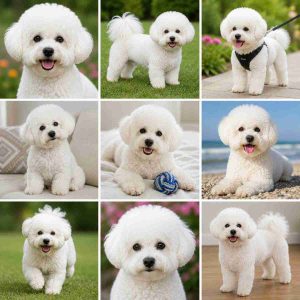 If there were a prize for the happiest small dog, the Bichon Frise would almost certainly be a contender. Cheerful, affectionate, playful, and endlessly people-oriented, the Bichon seems to approach every day with enthusiasm. They thrive on human companionship and have an uncanny ability to brighten a room with their joyful personality.
Bichons are true companion dogs. They generally love meeting new people, enjoy playing with children, and often get along well with other dogs and even cats when properly introduced. Unlike breeds developed to work independently, the Bichon was bred to share life closely with its family, and it usually wants to be included in everything you do.
Although gentle and affectionate, Bichons are far from lazy lap dogs. They have a playful, sometimes mischievous streak and enjoy games, learning tricks, and entertaining their families. Many owners describe their Bichon as a little comedian who seems determined to make everyone laugh.
💡 Did You Know?
Bichon Frises are famous for their joyful “Bichon Blitz“—a sudden burst of excitement where they race around the house or yard at top speed before happily settling down again.
🧠 Why This Trait Exists
For centuries, Bichons were bred to charm people. Whether entertaining European nobility or performing alongside street entertainers, dogs with cheerful, outgoing personalities were favored for breeding. Today’s Bichon still carries that happy, people-loving temperament.
❤️ Living With a Bichon Frise
Expect your Bichon to greet you enthusiastically every morning, follow you from room to room, and happily supervise almost everything you do. Their greatest joy isn’t a favorite toy—it’s simply being with the people they love.
🏡 Perfect Match
The Bichon Frise is ideal for people looking for a cheerful, affectionate companion that enjoys family activities, meeting new people, learning fun tricks, and sharing everyday life. If you want a dog that’s happiest by your side, the Bichon is hard to beat.
⚠️ Common Mistake to Avoid
Don’t mistake the Bichon’s happy personality for independence. While they may appear confident and social, they still need plenty of companionship and can become lonely if left alone for long periods on a regular basis.
Bichon Frise Size & Appearance
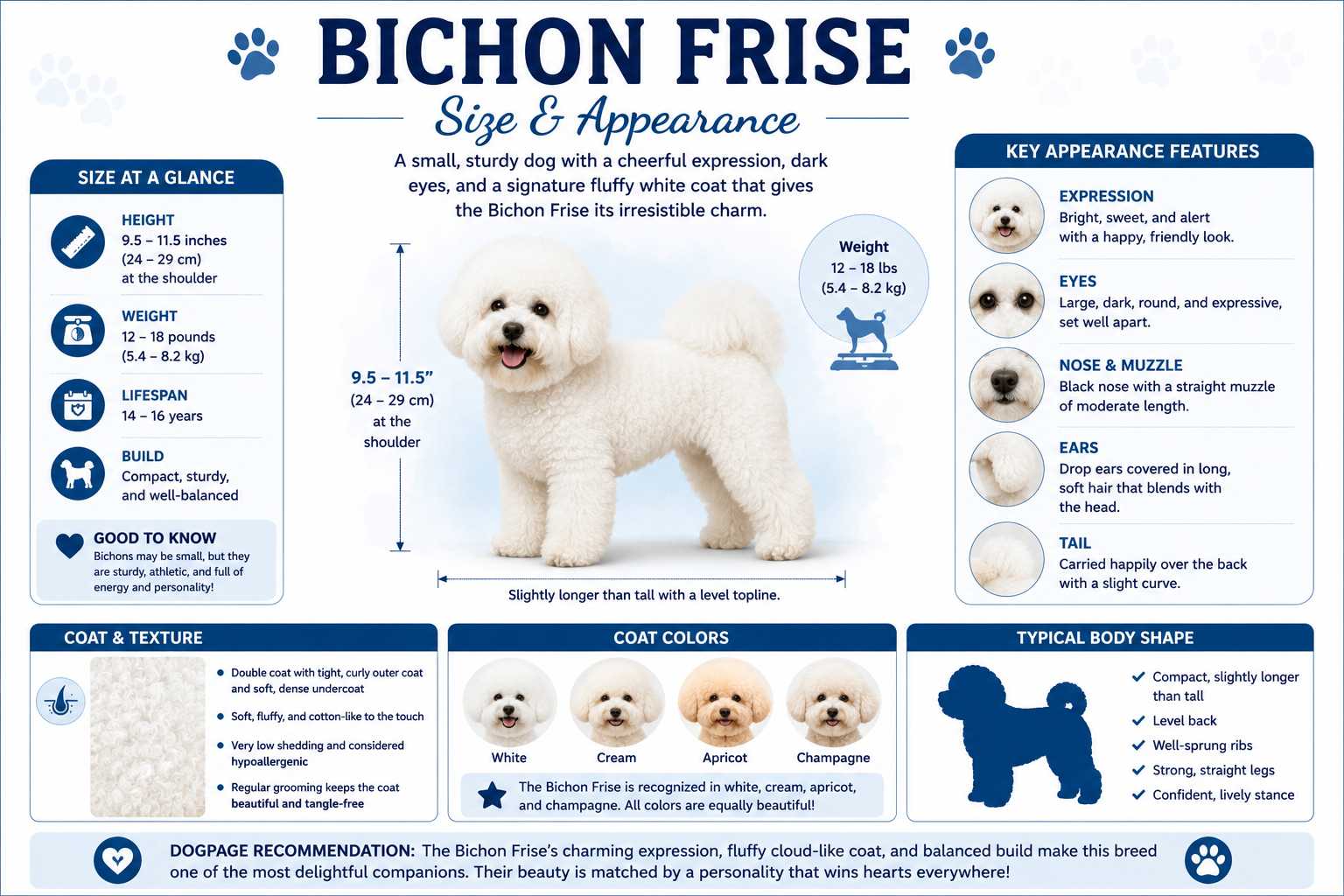
The Bichon Frise may be small in size, but its lively personality and distinctive appearance make it one of the most recognizable companion dogs in the world. With its fluffy white coat, expressive dark eyes, black button nose, and constantly wagging tail, the Bichon has an irresistible teddy bear-like charm that wins admirers wherever it goes.
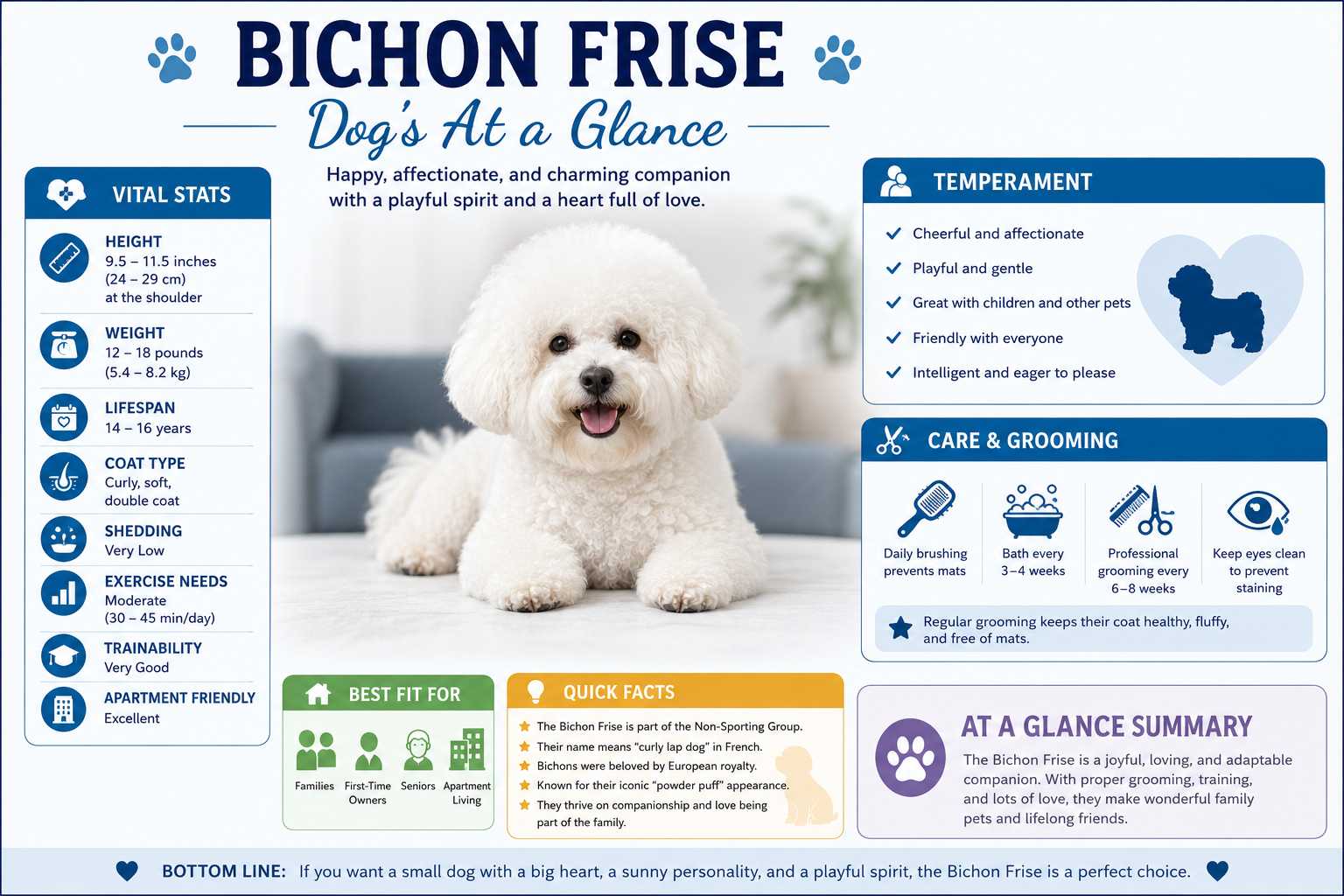
Standing just 9½ to 11½ inches (24–29 cm) at the shoulder and typically weighing between 12 and 18 pounds (5.5–8 kg), the Bichon is an ideal size for apartment living, travel, and families seeking a portable companion that’s sturdy enough for everyday life.
Although their soft, cloud-like coat gives the impression of a delicate dog, Bichons are surprisingly athletic and well-balanced. Beneath that luxurious coat is a compact, muscular little dog capable of keeping up on walks, enjoying games, and participating in a variety of canine sports.
💡 Did You Know?
Most of what makes a Bichon appear larger than it really is comes from its beautifully groomed double coat. Once wet during bath time, many owners are surprised just how petite their fluffy companion actually is!
Bichon Frise Size at a Glance
- Height: 9½–11½ inches (24–29 cm)
- Weight: 12–18 pounds (5.5–8 kg)
- Build: Compact, sturdy, and well-balanced.
- Coat: Soft, dense double coat with a plush, powder-puff appearance.
- Typical Colour: Pure white (cream, buff, or apricot shading may appear in puppies but usually fades with maturity).
- Life Expectancy: 14–15 years.
🧠 Why This Trait Exists
The Bichon’s compact size made it the perfect traveling companion for sailors and later an ideal lap dog for European nobility. Small enough to accompany its owners almost anywhere, yet sturdy enough to remain active and playful, the breed was developed to fit comfortably into everyday life.
❤️ Living With a Bichon Frise
One of the joys of owning a Bichon is that they can happily accompany you almost anywhere. Whether you’re relaxing at home, visiting friends, enjoying a road trip, or exploring a local park, their manageable size makes them wonderfully adaptable companions.
✅ Good to Know
Despite their fluffy appearance, Bichons are not fragile dogs. They’re surprisingly sturdy for their size, making them an excellent choice for active families, retirees, and first-time dog owners alike.
⚠️ Common Mistake to Avoid
Don’t assume the Bichon’s fluffy coat reflects its actual body size. Always judge healthy weight by feeling the ribs and consulting your veterinarian rather than relying on appearance alone.
Bichon Frise Coat & Colors
The Bichon Frise is famous for its beautiful, powder-puff appearance. Its soft white coat, dark eyes, and black nose create one of the most recognizable silhouettes in the dog world. While many people assume the coat is simply decorative, it actually reflects centuries of careful breeding to produce an elegant, cheerful companion with a distinctive look.
Unlike many breeds that come in numerous colours and patterns, the Bichon Frise is known almost exclusively for its brilliant white coat. Puppies may occasionally be born with light cream, buff, apricot, or pale gray shading on the ears or body, but these markings usually fade as the dog matures, leaving the characteristic snowy-white adult coat.
💡 Did You Know?
The Bichon’s fluffy appearance comes from a double coat consisting of a soft, dense undercoat and a coarser outer coat. Together they create the breed’s famous “cotton ball” look.
Accepted Coat Colour
- 🤍 White (the breed standard)
Puppy Colour Variations
Some Bichon Frise puppies may display subtle shading, including:
- 🤎 Cream
- 🧡 Apricot
- 🤍 Buff
- 🩶 Pale Gray
These markings are perfectly normal in many puppies and usually become much less noticeable as the adult coat develops.
🧠 Why This Trait Exists
For centuries, breeders selected Bichons with bright white coats because the clean, elegant appearance became one of the breed’s defining characteristics. Combined with their cheerful expression and dark eyes, the white coat helped create the unmistakable look we recognize today.
❤️ Living With a Bichon Frise
Don’t expect your Bichon to stay sparkling white all by itself! Regular brushing, bathing, and professional grooming are all part of owning one of the world’s most beautiful companion breeds.
✅ Good to Know
Tear staining around the eyes is fairly common in Bichons and many other white-coated breeds. Regular grooming and veterinary advice can often help minimize staining while keeping the face clean and healthy.
⚠️ Common Mistake to Avoid
Don’t assume cream or apricot shading in a young puppy means it won’t become white. Many Bichons naturally lighten considerably as they mature into adults.
Bichon Frise Exercise Needs
Exercise Rating: ⭐⭐⭐☆☆ (Moderate)
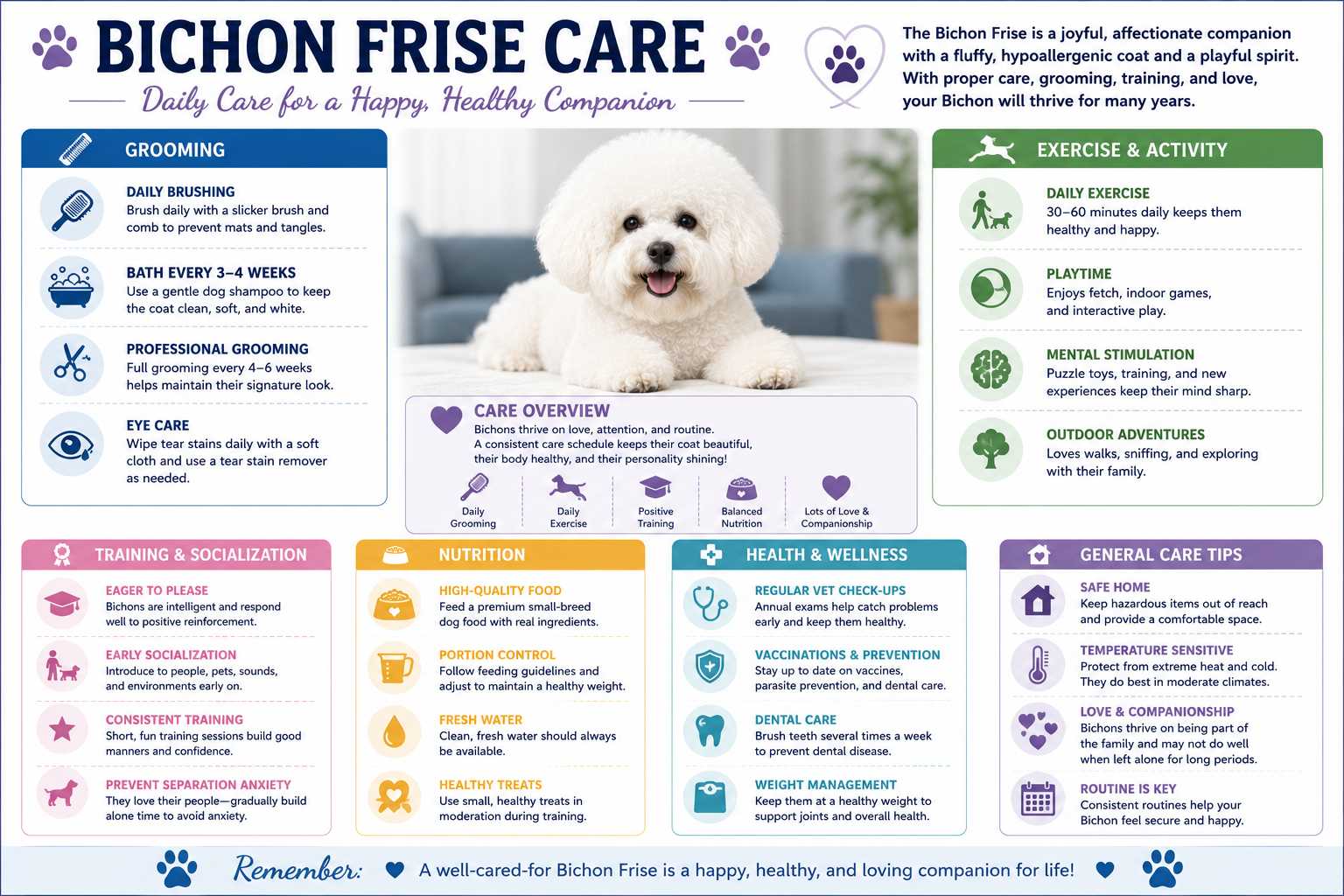
 Although the Bichon Frise was bred to be a companion rather than a working dog, it’s far from being a couch potato. These cheerful little dogs enjoy daily walks, interactive games, and plenty of opportunities to play with the people they love. Regular exercise helps keep both their bodies and minds healthy while preventing boredom and unwanted behaviours.
Most healthy adult Bichons thrive with 30 to 60 minutes of exercise each day. This can easily be divided into two or three shorter walks along with indoor play sessions and mentally stimulating activities. Because they’re intelligent and eager to interact with their families, Bichons often enjoy learning tricks, solving food puzzles, and playing games that challenge both body and mind.
💡 Did You Know?
Many Bichon owners are familiar with the famous “Bichon Blitz.” Every so often, a Bichon may suddenly burst into an energetic sprint around the house or yard before happily settling down again. It’s a perfectly normal—and highly entertaining—part of the breed’s personality.
Favourite Activities
- ✔ Daily neighbourhood walks.
- ✔ Interactive play with family members.
- ✔ Puzzle toys and enrichment games.
- ✔ Trick training.
- ✔ Agility and rally for enthusiastic owners.
- ✔ Playdates with friendly dogs.
🧠 Why This Trait Exists
The Bichon wasn’t bred for endurance or hard physical work. Instead, generations of selective breeding produced a lively, playful companion whose greatest joy comes from interacting with people. Their moderate exercise needs reflect that history perfectly.
❤️ Living With a Bichon Frise
Bichons don’t need marathon hikes to be happy. Most would much rather enjoy a pleasant walk followed by a game of fetch and an evening curled up beside their favourite person.
🏡 Perfect Match
The Bichon Frise is an excellent choice for people who enjoy moderate daily activity but don’t want the demands of a high-energy working breed. Families, retirees, apartment dwellers, and first-time owners often find the Bichon’s exercise requirements fit comfortably into their lifestyle.
⚠️ Common Mistake to Avoid
Don’t assume that because the Bichon is small, it doesn’t need regular exercise. Without daily walks, play, and mental stimulation, even this cheerful breed can become bored and develop unwanted behaviours such as excessive barking or destructive chewing.
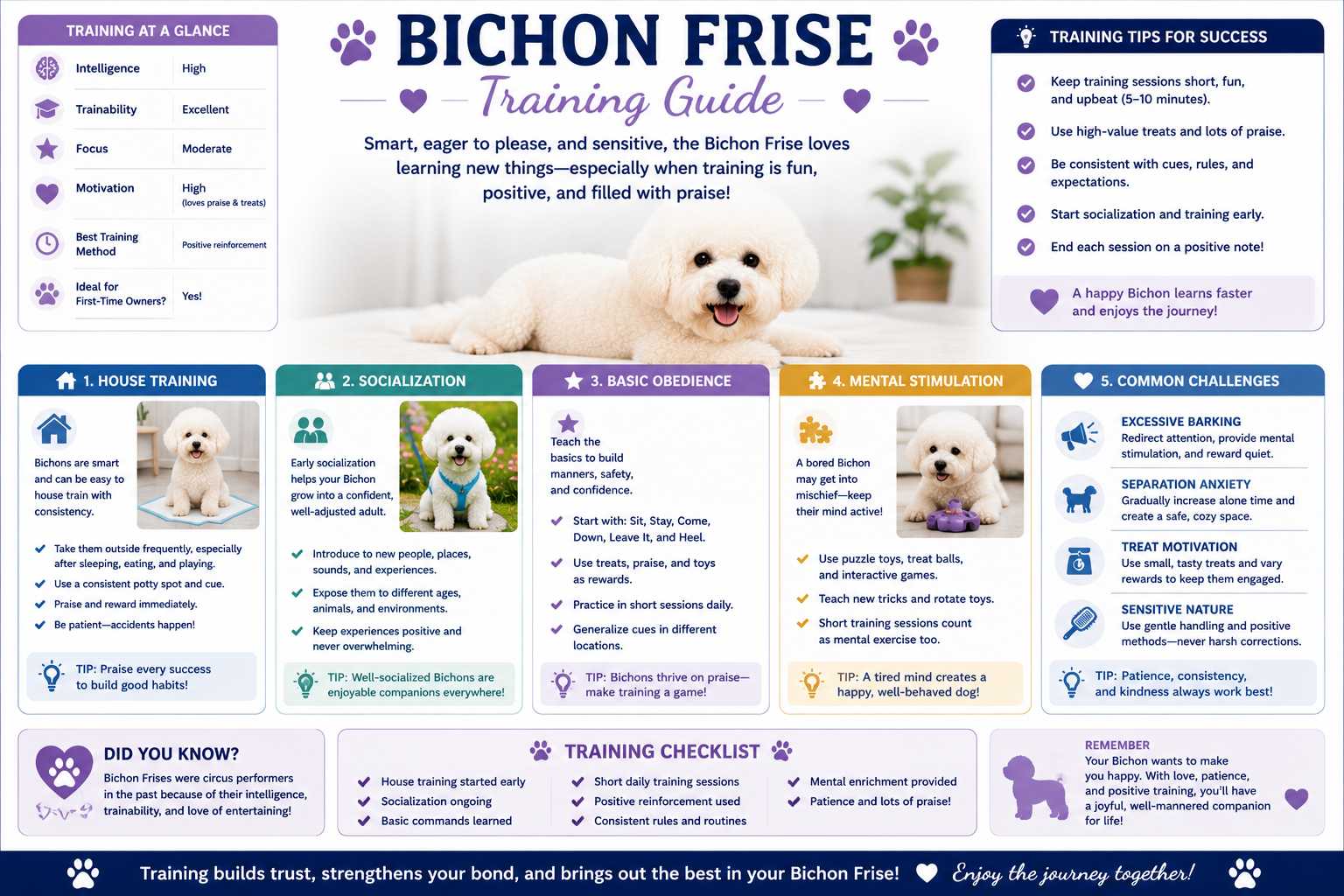
Training a Bichon Frise
Trainability Rating: ⭐⭐⭐⭐⭐ (Highly Trainable)
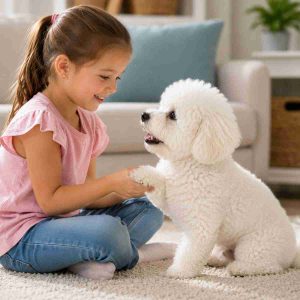 The Bichon Frise is one of the most enjoyable small breeds to train. Intelligent, eager to please, and naturally people-oriented, Bichons usually respond enthusiastically to positive reinforcement and enjoy learning new skills. Whether you’re teaching basic obedience, fun tricks, or participating in dog sports, most Bichons love the opportunity to work alongside their owners.
Unlike breeds developed to work independently, the Bichon Frise has spent centuries being bred as a companion. This means they naturally look to their owners for guidance and often thrive on praise, encouragement, and shared activities.
Training should always be fun, positive, and rewarding. Short, upbeat sessions keep the Bichon’s attention and help build confidence while strengthening the bond between dog and owner.
💡 Did You Know?
Long before modern obedience competitions existed, Bichons entertained audiences throughout Europe by performing tricks alongside street entertainers. Their intelligence and love of attention made them natural performers.
Training Priorities
- ✔ House training.
- ✔ Socialization from an early age.
- ✔ Loose-leash walking.
- ✔ Reliable recall.
- ✔ Basic obedience.
- ✔ Tricks and interactive games.
House Training
Like many small breeds, some Bichons may take a little longer to become fully house trained than larger dogs. Success comes from consistency, patience, frequent opportunities to go outside, and generous praise when they get it right. Establishing a predictable daily routine greatly improves success.
🧠 Why This Trait Exists
Because Bichons were bred to work closely with people rather than independently, they naturally enjoy interacting with their owners. This makes them eager students when training is enjoyable and rewarding.
❤️ Living With a Bichon Frise
Training doesn’t have to feel like work. Many Bichons are happiest when learning fun tricks, showing off their accomplishments, and making their families smile. Five or ten minutes of training each day can become one of your favourite bonding activities.
🏡 Perfect Match
If you’re looking for a small dog that’s intelligent, cooperative, and eager to participate in family activities, the Bichon Frise is an outstanding choice. They especially suit owners who enjoy interacting with their dog rather than simply exercising it.
⚠️ Common Mistake to Avoid
Don’t rely on punishment or harsh corrections. Bichons are sensitive dogs that respond far better to praise, rewards, and encouragement. Keeping training positive helps build confidence and strengthens the trusting relationship they naturally seek with their owners.
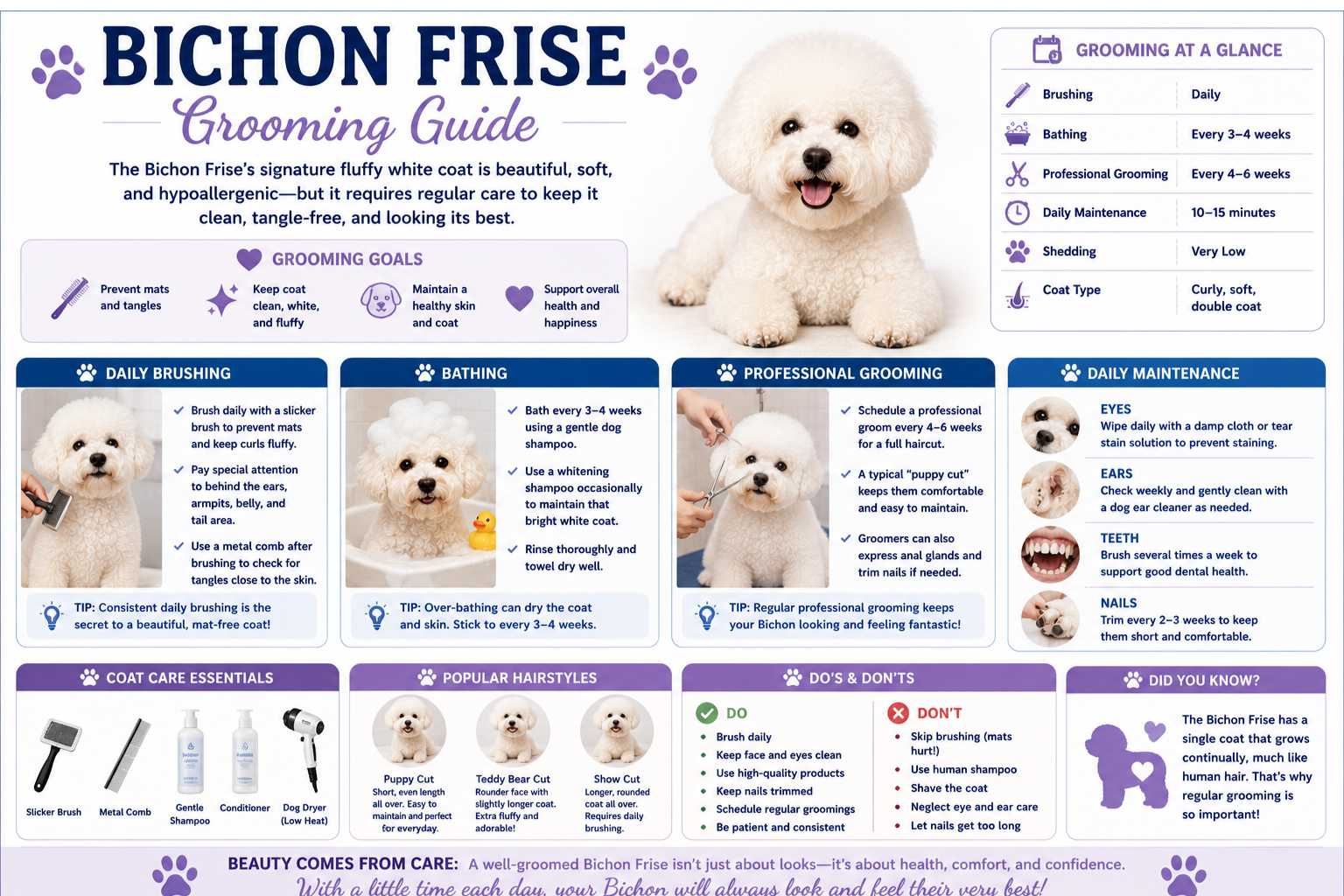
Bichon Frise Grooming Needs
Grooming Rating: ⭐⭐☆☆☆ (High Maintenance)
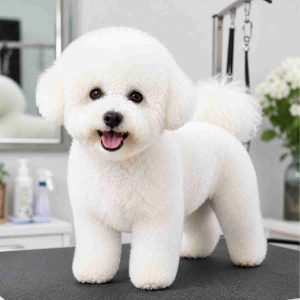 The beautiful white coat that makes the Bichon Frise so instantly recognizable is also one of the breed’s biggest commitments. While the Bichon is considered a low-shedding breed, its soft, continuously growing coat requires regular brushing, bathing, trimming, and professional grooming to keep it healthy and looking its best.
Unlike breeds that shed most of their loose hair naturally, the Bichon’s hair tends to remain trapped within the coat. Without regular brushing, loose hairs can quickly become tangled, leading to mats that are uncomfortable for the dog and difficult to remove.
Fortunately, many owners find grooming becomes an enjoyable part of living with a Bichon. Regular brushing sessions provide valuable bonding time while keeping your companion comfortable, clean, and looking like the cheerful little cloud the breed is famous for.
💡 Did You Know?
Although many people think the Bichon has fur, it actually has hair that grows continuously, much like human hair. That’s one reason the breed sheds very little but requires regular haircuts.
Recommended Grooming Routine
- 🪮 Brush thoroughly at least 3–4 times per week (daily is ideal).
- 🛁 Bathe every 3–4 weeks or as needed.
- ✂️ Professional grooming every 4–8 weeks.
- 🦷 Brush teeth daily or several times each week.
- 👂 Check and clean ears weekly.
- 💅 Trim nails every 3–4 weeks.
- 👁️ Gently clean around the eyes to help reduce tear staining.
🧠 Why This Trait Exists
The Bichon’s continuously growing double coat was selectively bred to create its signature soft, rounded appearance. While this beautiful coat sheds very little, it depends on regular grooming because loose hairs remain trapped rather than falling away naturally.
❤️ Living With a Bichon Frise
Many Bichon owners say that regular grooming quickly becomes part of their routine. A well-groomed Bichon is not only beautiful but also healthier, more comfortable, and less likely to develop painful mats or skin problems.
🏡 Perfect Match
The Bichon Frise is ideal for people who appreciate a beautifully groomed dog and don’t mind investing a little extra time—or occasional professional grooming appointments—to keep their companion looking and feeling wonderful.
⚠️ Common Mistake to Avoid
Don’t wait until mats appear before brushing. A few minutes of regular grooming throughout the week is much easier—and far more comfortable for your Bichon—than trying to remove severe tangles later.
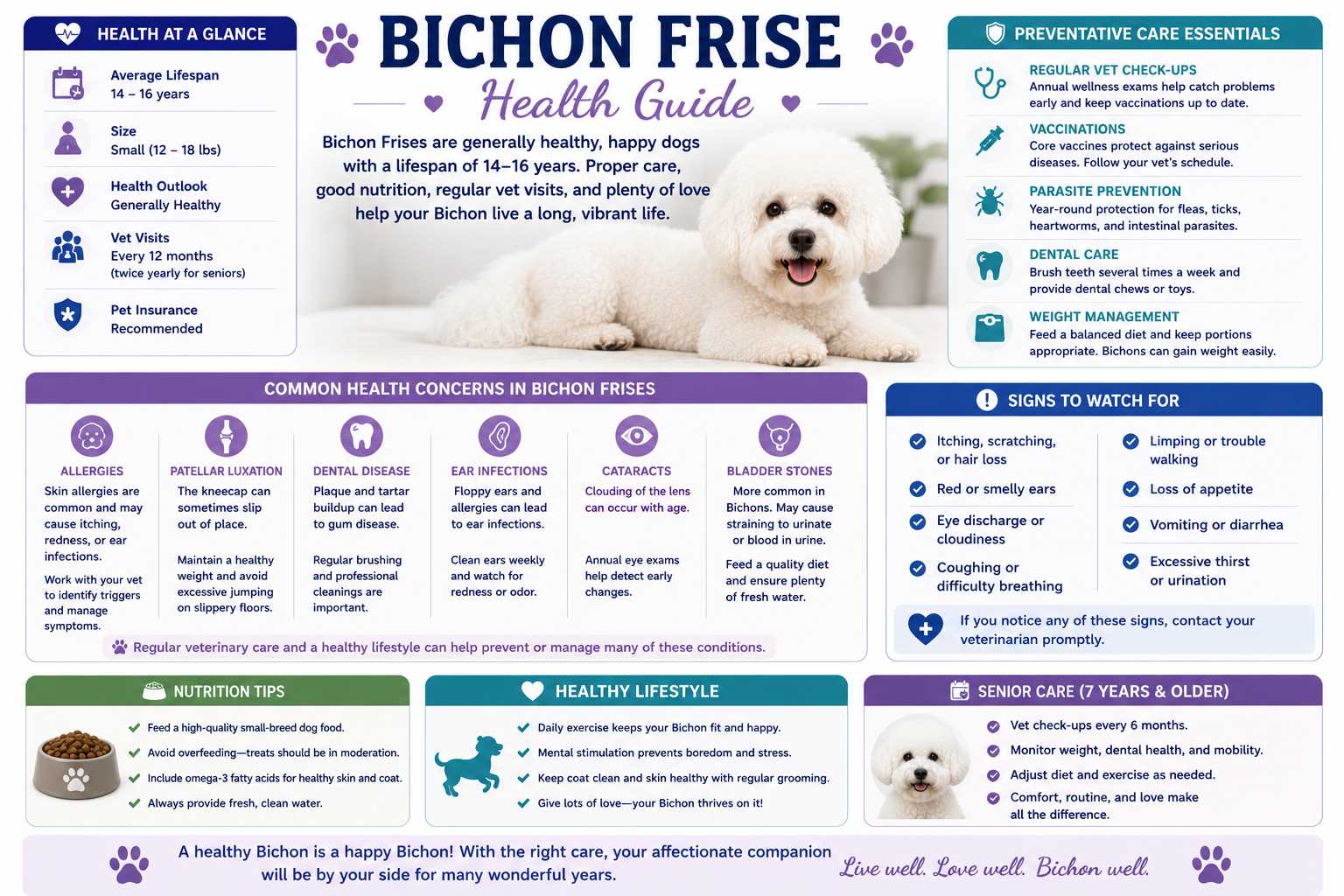
Bichon Frise Health Concerns
Health Rating: ⭐⭐⭐⭐☆ (Generally Healthy)
 The Bichon Frise is generally a healthy, long-lived breed, with many individuals enjoying 14 to 15 years of life or more. Like all purebred dogs, however, Bichons are predisposed to certain inherited health conditions. Understanding these risks allows owners to work closely with their veterinarian and make informed decisions that support a long, healthy life.
It’s important to remember that most Bichons never develop all—or even most—of these conditions. Choosing a puppy from a responsible breeder, maintaining a healthy weight, feeding a balanced diet, providing regular exercise, and scheduling routine veterinary checkups all contribute to lifelong wellness.
💡 Did You Know?
The average Bichon Frise often lives well into its teenage years. Many owners enjoy 15 years or more with their cheerful little companion when good preventive care is provided.
Common Health Concerns
- 🦴 Patellar Luxation – A condition where the kneecap slips out of place. Mild cases may require little treatment, while severe cases occasionally need surgery.
- 🦷 Dental Disease – Like many small breeds, Bichons benefit greatly from regular tooth brushing and professional dental care.
- 👂 Ear Infections – Their hairy ear canals can trap moisture, making regular ear checks and cleaning important.
- 👁️ Tear Staining – Common in white-coated breeds. While often cosmetic, persistent excessive tearing should be discussed with your veterinarian.
- 🌿 Allergies & Skin Conditions – Some Bichons may develop environmental or food allergies that cause itchy skin or recurring ear infections.
- 🩺 Bladder Stones – The breed has an increased risk of certain urinary stones. Encouraging water intake and prompt veterinary care for urinary symptoms can help.
🧠 Why This Trait Exists
Selective breeding creates the wonderful qualities we love in purebred dogs, but it can also increase the likelihood of certain inherited health conditions. Responsible breeders help reduce these risks through careful health testing and thoughtful breeding decisions.
👨⚕️ Veterinarian’s Perspective
Annual wellness examinations—and twice-yearly checkups for senior Bichons—allow many health concerns to be detected early when treatment is often simpler and more effective. Preventive care is one of the best investments you can make in your dog’s long-term health.
❤️ Living With a Bichon Frise
Many health problems can be minimized—or even prevented—through simple habits such as maintaining a healthy weight, brushing your Bichon’s teeth, keeping up with grooming, and visiting your veterinarian regularly. Prevention is almost always easier than treatment.
🏡 Perfect Match
If you’re prepared to invest in routine preventive care, regular grooming, and annual veterinary visits, the Bichon Frise is likely to reward you with many years of joyful companionship.
⚠️ Common Mistake to Avoid
Don’t skip annual veterinary checkups simply because your Bichon appears healthy. Many medical conditions develop gradually and are much easier to treat when identified early.
Feeding & Nutrition
Nutrition Rating: ⭐⭐⭐⭐⭐ (Easy to Feed Well)
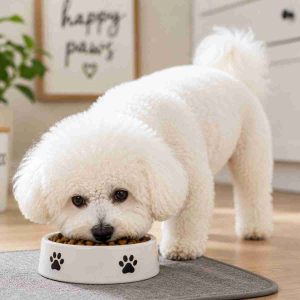 A nutritious, well-balanced diet is one of the greatest gifts you can give your Bichon Frise. Proper nutrition supports healthy growth, a strong immune system, good dental health, a beautiful coat, and the energy this cheerful little companion needs to enjoy everyday life.
Although the Bichon Frise doesn’t require a specialized diet, choosing a high-quality dog food appropriate for your dog’s age, activity level, and overall health helps promote lifelong wellness. Because Bichons are relatively small dogs, even modest overfeeding can gradually lead to unwanted weight gain.
Fresh, clean drinking water should always be available, and treats should be offered in moderation as part of a balanced feeding plan.
💡 Did You Know?
A healthy diet doesn’t just affect your Bichon’s weight—it also contributes to healthy skin, a beautiful white coat, good digestion, and overall vitality.
Choosing the Right Food
Select a complete and balanced food formulated for your Bichon’s stage of life:
- 🐶 Puppy
- 🐕 Adult
- 🐾 Senior
Look for foods that list a high-quality animal protein as the first ingredient and provide balanced levels of healthy fats, vitamins, and minerals. Your veterinarian can also recommend diets for dogs with allergies, sensitive stomachs, or other specific health concerns.
Healthy Treats
Treats are wonderful training rewards but should generally make up no more than about 10% of your dog’s daily calorie intake. Small pieces of healthy treats are usually just as rewarding as larger ones.
🧠 Why This Matters
The Bichon Frise was bred to be an active companion rather than a high-endurance working dog. Maintaining a healthy body weight helps preserve healthy joints, supports mobility, and contributes to a longer, more active life.
❤️ Living With a Bichon Frise
Bichons are remarkably good at convincing their families to share “just one more treat.” Those adorable dark eyes can be hard to resist! Sticking to healthy portions is one of the simplest ways to help your companion enjoy a long, healthy life.
🏡 Perfect Match
If you’re happy to provide a balanced diet, monitor your dog’s weight, and avoid overindulging those pleading puppy eyes, feeding a Bichon Frise is refreshingly uncomplicated.
⚠️ Common Mistake to Avoid
Don’t judge your Bichon’s weight by its fluffy coat alone. That luxurious hair can hide gradual weight gain. Regular weigh-ins and body condition checks are much more reliable than appearance.
Bichon Frise Companionship Needs
Companionship Rating: ⭐⭐⭐⭐⭐ (Exceptionally High)
 If you’re looking for a dog that truly wants to be part of your everyday life, it’s hard to find a better companion than the Bichon Frise. This breed has spent centuries doing exactly one job—bringing joy and companionship to people. As a result, Bichons are happiest when they’re included in family activities and able to spend plenty of time with the people they love.
Whether you’re working from home, relaxing on the couch, gardening, or simply moving from room to room, don’t be surprised if your Bichon happily follows along. Many owners affectionately refer to their Bichon as their “little shadow” because these cheerful dogs simply enjoy being wherever their family happens to be.
Although Bichons can learn to stay home alone for reasonable periods, they generally do not thrive when left by themselves for long hours every day. Without enough companionship and mental stimulation, some may become lonely, bored, or develop unwanted behaviours such as excessive barking, chewing, or anxiety.
💡 Did You Know?
Unlike many breeds originally developed for hunting or guarding, the Bichon Frise was bred almost exclusively for companionship. Wanting to spend time with you isn’t being “clingy”—it’s simply being a Bichon.
Can a Bichon Frise Be Left Alone?
Yes—but within reason. Most well-adjusted adult Bichons can comfortably stay home for several hours when gradually taught independence and provided with toys, enrichment, and a predictable routine. However, they generally aren’t the ideal breed for households where they’re regularly left alone for eight to ten hours every weekday.
🧠 Why This Trait Exists
For hundreds of years, Bichons lived alongside sailors, noble families, entertainers, and devoted companions. They weren’t bred to work independently—they were bred to share life closely with people. That history explains why human companionship remains one of their greatest needs today.
Ideal Homes for a Bichon Frise
- ✔ Families with flexible schedules.
- ✔ People who work from home.
- ✔ Retirees and seniors.
- ✔ Couples or individuals wanting a constant companion.
- ✔ Homes where the dog is included in everyday activities.
❤️ Living With a Bichon Frise
If your dream dog is one that greets you enthusiastically every morning, happily curls up beside you every evening, and wants to share nearly every moment in between, you’ll probably fall in love with the Bichon Frise. Few breeds enjoy human companionship quite as much.
🏡 Perfect Match
The Bichon Frise is an outstanding choice for owners who view their dog as a true member of the family rather than simply a pet. If you have time, affection, and companionship to offer, a Bichon will likely return that love many times over.
⚠️ Common Mistake to Avoid
Don’t mistake a Bichon’s desire to be close to you for behavioural problems. Their companionship needs are deeply rooted in the breed’s history. The happiest Bichons are those whose emotional needs receive as much attention as their physical care.
Are Bichon Frises Good Family Dogs?
Family Rating: ⭐⭐⭐⭐⭐ (Excellent)
 The Bichon Frise is widely regarded as one of the best small dog breeds for families. Gentle, affectionate, playful, and highly social, Bichons typically form strong bonds with every member of the household. Their cheerful personalities and love of human interaction make them wonderful companions for couples, families with children, and multi-generational households alike.
Unlike some toy breeds that may be reserved around strangers or easily overwhelmed by busy households, the Bichon Frise usually enjoys meeting new people and participating in family activities. Whether it’s playing in the backyard, joining a family walk, or relaxing together for movie night, most Bichons simply want to be where the action is.
Because they are sturdy for their size, Bichons are generally better suited to families with respectful children than many more delicate toy breeds. However, as with all dogs, children should always be taught how to handle them gently and respectfully.
💡 Did You Know?
The Bichon Frise has spent centuries living closely with people. Their friendly, outgoing personality wasn’t an accident—it was carefully developed through generations of breeding companion dogs that genuinely enjoyed human company.
Why Families Love Bichons
- ✔ Affectionate with all family members.
- ✔ Playful without being overly rough.
- ✔ Usually gets along well with respectful children.
- ✔ Friendly toward visitors.
- ✔ Adaptable to many different family lifestyles.
- ✔ Enjoys participating in everyday activities.
🧠 Why This Trait Exists
For hundreds of years, breeders selected Bichons for their friendly, cheerful temperament and desire to be close to people. Those qualities continue to make the breed one of the world’s most beloved family companions.
❤️ Living With a Bichon Frise
Don’t expect your Bichon to choose just one favourite person. Many happily divide their affection among everyone in the household, greeting each family member with equal enthusiasm and always wanting to be part of whatever is happening.
🏡 Perfect Match
The Bichon Frise is an excellent choice for families with respectful children, active retirees, couples, and first-time dog owners who want an affectionate companion that enjoys being involved in everyday family life.
⚠️ Common Mistake to Avoid
Don’t assume that because the Bichon is friendly, children don’t need supervision. Teaching children how to respect a dog’s space, handle it gently, and recognize when it wants to rest helps build a safe, trusting relationship for everyone.
Are Bichon Frises Good for Seniors?
Senior Companion Rating: ⭐⭐⭐⭐⭐ (Excellent)
 The Bichon Frise is widely considered one of the very best dog breeds for seniors. Their affectionate nature, manageable size, moderate exercise needs, and cheerful personality make them wonderful companions for retirees and older adults looking for a loyal friend to share everyday life.
Bichons thrive on companionship and are happiest when they’re included in daily routines. Whether accompanying you on a leisurely morning walk, relaxing nearby while you read or watch television, or greeting you with excitement each morning, they quickly become devoted members of the family.
Because they require only moderate exercise, most healthy seniors can comfortably meet the breed’s activity needs with daily walks and interactive play. Their adaptable nature also makes them excellent companions for apartment, condominium, and retirement community living.
💡 Did You Know?
Studies have shown that spending time with companion animals may help reduce stress, encourage regular physical activity, and provide valuable emotional companionship. The Bichon Frise excels at offering all three.
Why Seniors Love the Bichon Frise
- ✔ Small, manageable size.
- ✔ Moderate exercise requirements.
- ✔ Extremely affectionate.
- ✔ Loves spending time indoors with its owner.
- ✔ Adaptable to apartments and smaller homes.
- ✔ Friendly with visitors and grandchildren.
- ✔ Long lifespan means many wonderful years together.
🧠 Why This Trait Exists
The Bichon Frise has spent centuries serving one primary purpose—being a devoted companion. Their natural desire to stay close to people, combined with their cheerful and affectionate personality, makes them especially rewarding for owners who have the time to enjoy a close relationship with their dog.
❤️ Living With a Bichon Frise
Many retired owners say their Bichon naturally becomes part of every aspect of the day—from enjoying breakfast together to afternoon walks, relaxing in the garden, and curling up beside them in the evening. They’re happiest simply being wherever you are.
🏡 Perfect Match
The Bichon Frise is ideal for retirees, active seniors, empty nesters, and anyone looking for a loving companion who enjoys sharing everyday life without requiring intense physical exercise.
⚠️ Common Mistake to Avoid
Don’t overlook the grooming commitment. While the Bichon is physically easy to care for in many respects, regular brushing and professional grooming are essential to keep its beautiful coat healthy and comfortable.
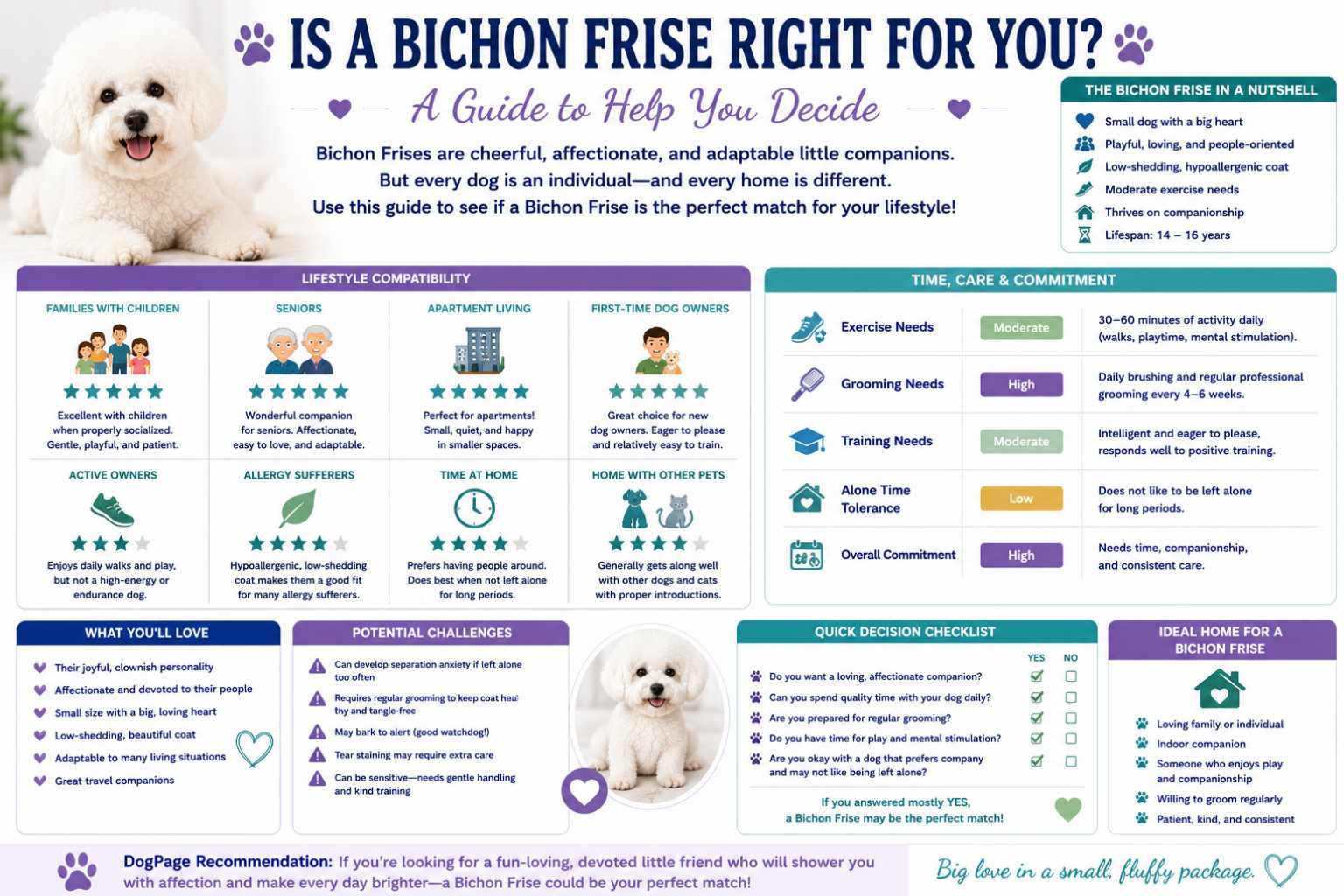
Is a Bichon Frise Right for You?
Overall DogPage Rating: ⭐⭐⭐⭐⭐ (Outstanding Companion Dog)
The Bichon Frise is one of the most affectionate, adaptable, and people-oriented companion dogs in the world. Their cheerful personality, intelligence, friendliness, and moderate exercise needs make them an excellent choice for many households, including families, retirees, apartment dwellers, and first-time dog owners.
Like every breed, however, the Bichon isn’t perfect for everyone. Their beautiful white coat requires regular grooming, and their deep need for companionship means they generally do best in homes where they’re included in everyday family life.
Choosing the right dog means looking beyond appearance. The happiest relationships develop when a dog’s physical, emotional, and social needs naturally fit the lifestyle of its family.
💡 Did You Know?
Many Bichon owners say they originally chose the breed because of its adorable appearance—but fell in love with its joyful personality, affectionate nature, and constant companionship.
A Bichon Frise May Be Perfect for You If You:
- ✔ Want an affectionate companion that loves people.
- ✔ Have plenty of time to spend with your dog.
- ✔ Live in an apartment, condo, or house.
- ✔ Enjoy moderate daily walks and playtime.
- ✔ Don’t mind regular brushing and professional grooming.
- ✔ Want a friendly dog that usually gets along well with children and other pets.
- ✔ Are looking for one of the best breeds for first-time dog owners.
You May Want to Consider Another Breed If You:
- ✘ Regularly leave your dog alone for long hours every day.
- ✘ Want a dog that requires very little grooming.
- ✘ Prefer a highly independent pet.
- ✘ Aren’t prepared for ongoing grooming costs or maintenance.
- ✘ Want an outdoor dog that spends most of its time outside.
🧠 Why This Matters
The Bichon Frise was developed for companionship, not independence. Owners who embrace that role are often rewarded with one of the most loving and devoted relationships found in the dog world.
❤️ Living With a Bichon Frise
Life with a Bichon is usually filled with laughter, affection, and plenty of happy greetings. They have a remarkable ability to make ordinary days feel a little brighter simply by being themselves.
🏡 Perfect Match
The Bichon Frise is ideal for owners seeking a devoted companion that thrives on human interaction and enjoys being included in everyday life. If you’re looking for a dog that’s happiest by your side, few breeds can match the Bichon’s cheerful devotion.
⚠️ Common Mistake to Avoid
Don’t choose a Bichon Frise simply because it’s cute or low shedding. Choose one because you’re prepared to meet its companionship and grooming needs for the next 14 to 15 years.
Bichon Frise Adoption & Rehoming
Every year, wonderful Bichon Frises find themselves searching for loving new homes through no fault of their own. Changes in family circumstances, illness, financial hardship, allergies, relocation, or simply choosing a breed that wasn’t the right fit can all result in a much-loved companion needing a fresh start.
If you’re thinking about adding a Bichon Frise to your family, adoption is well worth considering. Many adult Bichons are already house-trained, know basic manners, and have settled personalities, making it easier to find a dog whose temperament matches your lifestyle.
Whether you’re adopting a puppy or an adult, the goal is always the same: finding the right match for both the dog and its new family. Taking the time to learn about an individual dog’s personality, activity level, grooming needs, and companionship requirements greatly increases the chances of a successful lifelong relationship.
💡 Did You Know?
Many experienced dog owners specifically choose adult Bichons because their personalities are already well developed, making it easier to find a companion whose temperament perfectly suits their family.
Considering Rehoming Your Bichon Frise?
Life doesn’t always go according to plan. Illness, financial hardship, moving, changes in family circumstances, or other unexpected events can make keeping a beloved pet impossible.
If you find yourself in that difficult position, choosing to carefully and responsibly rehome your Bichon Frise is a loving decision—not a failure. A thoughtful rehoming process helps ensure your dog finds another safe, stable, and loving home where it can continue to thrive.
❤️ DogPage Recommendation
Whether you’re adopting or rehoming, focus on finding the right match rather than simply the first available home. Matching a dog’s personality, companionship needs, grooming requirements, activity level, and lifestyle with the right family gives everyone the best chance of a happy future together.
🏡 Looking to Adopt or Rehome a Bichon Frise?
Our comprehensive Bichon Frise Adoption & Rehoming Guide on Pet Rehoming Network provides practical advice for adopters and owners alike.
You’ll find information on:
- ✔ Bichon Frises available for adoption.
- ✔ Safe private pet rehoming.
- ✔ Responsible adoption guidance.
- ✔ Preparing your home for a new companion.
- ✔ Resources for owners who need to find a loving new home for their Bichon.
Read our complete Bichon Frise Adoption & Rehoming Guide:
⚠️ Common Mistake to Avoid
Don’t choose a Bichon Frise based solely on its adorable appearance. Spend time getting to know the individual dog and make sure its personality, grooming needs, companionship requirements, and energy level are a good fit for your lifestyle.
Finding a Responsible Bichon Frise Breeder
If you’ve decided that a Bichon Frise puppy is the right addition to your family, choosing a responsible breeder is one of the most important decisions you’ll make. A reputable breeder is committed not only to producing healthy puppies, but also to preserving the breed’s excellent temperament, sound structure, and long-term health.
Responsible breeders carefully health test their breeding dogs, raise puppies in clean, enriching home environments, and provide lifelong support to the families who purchase their puppies. Their goal isn’t simply to sell dogs—it’s to ensure every puppy is placed in a loving home where it can thrive.
💡 Did You Know?
Many of the most respected Bichon Frise breeders have waiting lists. They often spend just as much time getting to know prospective owners as those owners spend researching them because finding the right home is one of their highest priorities.
Signs of a Responsible Bichon Frise Breeder
- ✔ Performs recommended health testing on breeding dogs.
- ✔ Raises puppies in a clean, stimulating home environment.
- ✔ Encourages you to meet the puppy’s mother whenever possible.
- ✔ Provides complete veterinary and vaccination records.
- ✔ Is knowledgeable about Bichon Frise health, temperament, and care.
- ✔ Provides a written contract and health guarantee.
- ✔ Offers lifelong support and guidance to puppy buyers.
- ✔ Will always take back one of their dogs if circumstances change.
Warning Signs
- ❌ Always has puppies available.
- ❌ Won’t let you see where puppies are raised.
- ❌ Cannot provide health testing documentation.
- ❌ Pressures you to make a quick purchase.
- ❌ Shows little interest in learning about your family or lifestyle.
- ❌ Sells puppies before they’re ready to leave their mother.
❤️ Living With a Bichon Frise
A great breeder remains part of your dog’s story long after you bring your puppy home. Many are delighted to answer questions, celebrate milestones, and provide guidance throughout your Bichon’s life.
🏆 DogPage Recommended Breeders
By Invitation Only
DogPage.us is developing an exclusive directory of responsible Bichon Frise breeders who demonstrate exceptional breeding practices, appropriate health testing, ethical standards, and a lifelong commitment to every puppy they produce.
Inclusion isn’t automatic or based on advertising alone. Breeders are invited—or accepted following a thorough review process—because they meet the high standards that DogPage.us believes responsible dog owners deserve.
⚠️ Common Mistake to Avoid
Don’t choose a breeder based solely on price, location, or immediate puppy availability. Take your time, ask plenty of questions, and look for a breeder who cares just as much about your future puppy as you do.
Frequently Asked Questions About the Bichon Frise
 Are Bichon Frises good family dogs?
 Are Bichon Frises good family dogs?
Yes. The Bichon Frise is one of the best small family dogs thanks to its affectionate nature, playful personality, and friendly temperament. They typically enjoy spending time with children, adults, and other pets when properly socialized.
Do Bichon Frises shed?
Bichon Frises are considered a low-shedding breed. Rather than falling out, loose hairs tend to remain trapped in the coat, which is why regular brushing and professional grooming are so important.
Are Bichon Frises hypoallergenic?
No dog is truly hypoallergenic. However, because the Bichon Frise sheds very little and produces less airborne dander than many breeds, some people with mild dog allergies find them easier to live with. Individual reactions vary.
How much exercise does a Bichon Frise need?
Most healthy adult Bichons need about 30 to 60 minutes of exercise each day, along with opportunities for play and mental stimulation.
Are Bichon Frises easy to train?
Yes. Intelligent and eager to please, Bichons generally respond very well to positive reinforcement training and often enjoy learning tricks as well as basic obedience.
Can Bichon Frises be left alone?
For reasonable periods, yes. However, because they were bred as companion dogs, Bichons generally don’t enjoy spending long hours alone every day and thrive in homes where someone is around much of the time.
Do Bichon Frises bark a lot?
Bichons are reasonably alert and may bark to announce visitors or unusual sounds, but with proper training and enough companionship they are not generally considered excessive barkers.
How often do Bichon Frises need grooming?
Most Bichons benefit from brushing several times each week, regular bathing, and professional grooming every four to eight weeks to keep their coat healthy and free of mats.
How long do Bichon Frises live?
The average life expectancy is between 14 and 15 years, although many healthy Bichons enjoy even longer lives with excellent care.
Are Bichon Frises good for first-time dog owners?
Absolutely. Their friendly temperament, moderate exercise needs, trainability, and affectionate personality make them one of the best choices for many first-time dog owners, provided they’re prepared for the grooming commitment.
💡 Still Have Questions?
Every Bichon Frise has its own unique personality, but understanding the breed’s history, companionship needs, grooming requirements, and temperament will help you decide whether this delightful little companion is the right fit for your family.
Related Guides
If you enjoyed learning about the Bichon Frise, you may also find these DogPage.us guides helpful. Whether you’re comparing breeds or looking for advice on caring for a small dog, these carefully selected resources will help you make informed decisions and become the best dog owner possible.
❤️ Continue Your Journey
Every breed has its own unique personality, strengths, and care requirements. Exploring several breeds before making a decision is one of the best ways to find a companion that truly fits your lifestyle. At DogPage.us, we’re here to help you make that choice with confidence.
Trusted Resources
Responsible dog ownership begins with reliable information. The organizations below are widely respected for their expertise in canine health, responsible breeding, training, and breed education. Whether you’re considering adding a Bichon Frise to your family or already share your life with one, these resources can help you make informed decisions throughout your dog’s life.
🏆 Breed Information
- American Kennel Club (AKC)
Official breed standard, care information, and responsible dog ownership resources.
Visit the AKC Bichon Frise Page - Bichon Frise Club of America
The official parent breed club for the United States, offering education, breeder information, health resources, and breed activities.
Visit the Bichon Frise Club of America
🩺 Health Resources
- Orthopedic Foundation for Animals (OFA)
Health testing information and recommended screenings for breeding dogs.
Visit OFA - American Animal Hospital Association (AAHA)
Trusted veterinary guidance on preventive care, nutrition, vaccinations, and lifelong wellness.
Visit AAHA
❤️ Adoption & Rehoming
- Pet Rehoming Network
Responsible adoption and private pet rehoming resources, including breed-specific guidance for Bichon Frises.
Bichon Frise Adoption & Rehoming Guide
❤️ DogPage Recommendation
No website can replace the advice of your veterinarian or qualified canine professionals. We encourage every Bichon Frise owner to work closely with trusted experts throughout their dog’s life and to continue learning about this wonderful breed.