

From the elegant Maltese and spirited Yorkshire Terrier to the affectionate Cavalier King Charles Spaniel and cheerful Boston Terrier, today’s small dog breeds offer an incredible variety of personalities, activity levels, grooming needs, and lifestyles. Some thrive in busy family homes, while others are happiest curled up beside a single owner or accompanying retirees on leisurely walks.
Choosing the right breed is about much more than appearance. Factors such as temperament, exercise requirements, trainability, barking tendencies, grooming commitment, health, and compatibility with children or other pets all play an important role in finding the perfect match.
In this comprehensive guide, we’ve highlighted ten of our favorite small dog breeds and compared their personalities, care requirements, and ideal homes. Whether you’re looking for an apartment-friendly companion, a playful family dog, or a devoted lap dog, this guide will help you narrow your options and choose a breed that suits your lifestyle.
Use the menu below to explore each breed in detail, compare their characteristics, and follow links to our complete breed guides for even more expert information.
Page Menu
About Small Dog Breeds
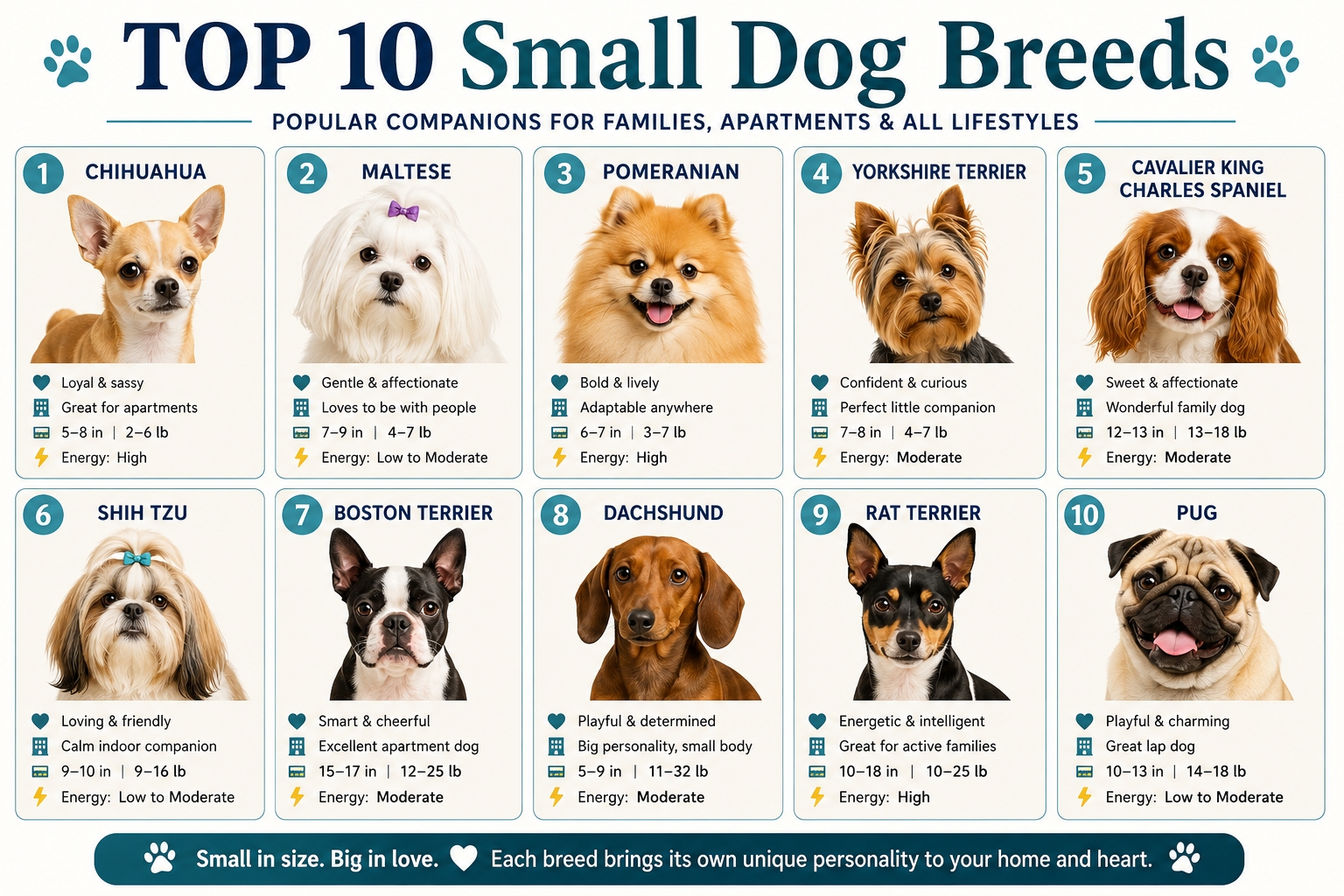
Small dog breeds have captured the hearts of millions of people around the world—and for good reason. They combine affectionate personalities, manageable size, and remarkable versatility, making them ideal companions for a wide variety of households. Whether you live in a downtown apartment, a suburban home, or a quiet retirement community, there’s a small dog breed that can fit beautifully into your lifestyle.
While most small dogs weigh under 25 pounds, they are far from all being alike. Some are energetic adventurers that enjoy hiking and learning new tricks, while others are happiest curled up on the couch beside their favorite person. Some require regular professional grooming, while others have short, easy-care coats. Understanding these differences is the key to choosing a dog you’ll enjoy living with for many years.
One of the greatest advantages of small dogs is their adaptability. Many thrive in apartments and condos because they require less living space than larger breeds. Their smaller appetites, compact size, and ease of travel also make them attractive companions for busy professionals, families, retirees, and first-time dog owners alike.
Of course, every breed comes with its own unique strengths and challenges. Some are naturally quiet, while others are enthusiastic watchdogs that enjoy announcing visitors. Some love children and busy households, while others prefer calmer environments. Grooming needs, exercise requirements, trainability, and common health concerns can vary considerably from one breed to another.
In this guide, we’ve selected ten outstanding small dog breeds based on temperament, health, trainability, adaptability, companionship, and overall suitability for modern family life. Rather than naming one breed as “the best,” our goal is to help you discover the breed that’s the best match for your home, lifestyle, and expectations.
Whether you’re searching for a playful family companion, an affectionate lap dog, an apartment-friendly roommate, or an active little partner for everyday adventures, you’ll find plenty of wonderful options in the breeds featured below.
Quick Breed Comparison
Choosing the right small dog isn’t just about appearance—it’s about finding a breed whose personality, activity level, grooming requirements, and lifestyle needs match your own. This quick comparison chart provides an at-a-glance overview of the ten featured breeds to help you narrow your choices before exploring each breed in more detail.
| Breed | Weight | Energy | Grooming | Apartment | Families | Seniors |
|---|---|---|---|---|---|---|
| Chihuahua | 2–6 lbs | Moderate | Low | ★★★★★ | ★★★★☆ | ★★★★★ |
| Yorkshire Terrier | 4–7 lbs | Moderate | High | ★★★★★ | ★★★★☆ | ★★★★★ |
| Maltese | 4–7 lbs | Low–Moderate | High | ★★★★★ | ★★★★★ | ★★★★★ |
| Pomeranian | 3–7 lbs | Moderate | High | ★★★★★ | ★★★★☆ | ★★★★★ |
| Shih Tzu | 9–16 lbs | Low | High | ★★★★★ | ★★★★★ | ★★★★★ |
| Cavalier King Charles Spaniel | 13–18 lbs | Moderate | Moderate | ★★★★★ | ★★★★★ | ★★★★★ |
| Boston Terrier | 12–25 lbs | Moderate | Low | ★★★★★ | ★★★★★ | ★★★★★ |
| Dachshund | 11–32 lbs* | Moderate | Low–Moderate | ★★★★★ | ★★★★☆ | ★★★★☆ |
| Rat Terrier | 10–25 lbs | High | Low | ★★★★☆ | ★★★★★ | ★★★★☆ |
| Pug | 14–18 lbs | Low | Low | ★★★★★ | ★★★★★ | ★★★★★ |
*Includes both Miniature and Standard Dachshunds.
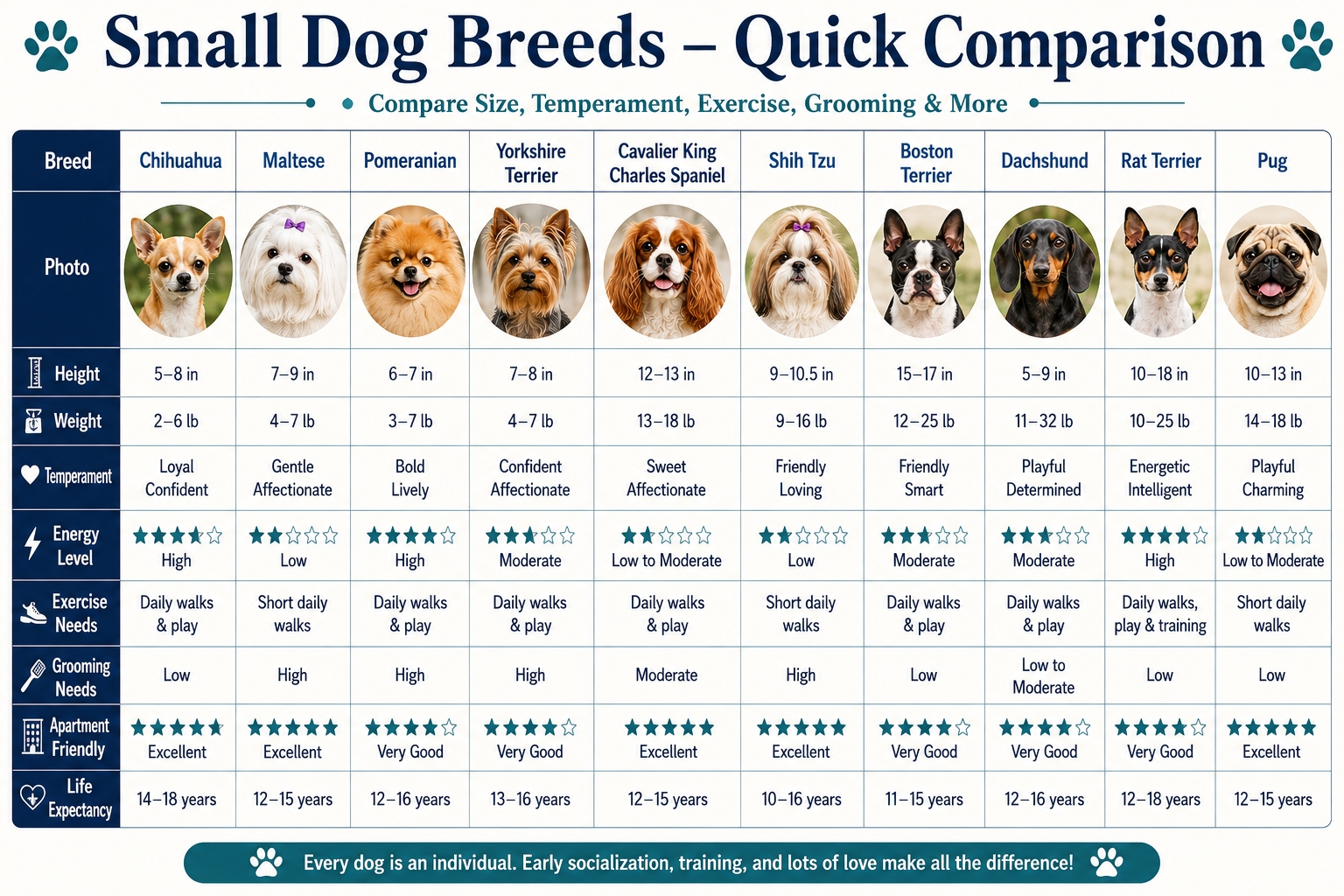
Remember that every dog is an individual. While breed characteristics provide a helpful starting point, temperament, training, early socialization, and responsible breeding all play an important role in shaping a dog’s personality and behavior.
Next, we’ll explain the criteria we used to select these ten outstanding small dog breeds—and why we believe they represent some of the best companions for today’s dog lovers.
How We Chose These Breeds
Ask ten dog lovers to name the “best” small dog breed and you’ll probably get ten different answers. The truth is, there isn’t one perfect breed for everyone. The best small dog is the one whose personality, energy level, grooming needs, and temperament match your lifestyle.
Rather than ranking these breeds from first to last, we’ve selected ten outstanding companions that consistently excel in the qualities most people look for when choosing a small dog. Each offers something unique, and all have earned devoted fans around the world.
When selecting the breeds featured in this guide, we considered a number of important factors, including:
- Temperament: Friendly, affectionate, and enjoyable companions.
- Trainability: Intelligence and willingness to learn.
- Adaptability: Ability to thrive in apartments, houses, and different lifestyles.
- Exercise Needs: Suitable for the average dog owner without excessive exercise requirements.
- Family Compatibility: Generally good with respectful children and family life.
- Suitability for Seniors: Manageable size and companionship for older adults.
- Grooming Requirements: A range of coat types to suit different preferences.
- Health and Longevity: Overall health, lifespan, and responsible breeding considerations.
- Popularity and Proven Companionship: Breeds with a long history of being cherished family pets.
We also recognize that no breed is perfect. Every dog has strengths and challenges, and every owner has different expectations. A lively Rat Terrier may be the ideal companion for an active family, while a gentle Cavalier King Charles Spaniel could be a better fit for someone seeking a calm lap dog. Likewise, the grooming commitment required for a Maltese or Yorkshire Terrier may be worthwhile for owners who love their elegant coats, while others may prefer the low-maintenance coat of a Boston Terrier or Pug.
Our goal isn’t to tell you which breed is “best.” Instead, it’s to provide honest, practical information that helps you make an informed decision and choose a companion you’ll enjoy for many years.
Now let’s meet ten of our favorite small dog breeds—and discover what makes each one such a wonderful companion.
Chihuahua
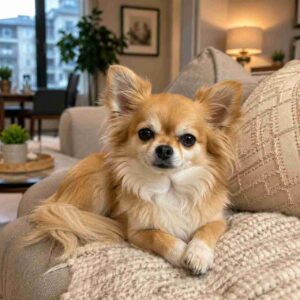
Don’t let their tiny size fool you—Chihuahuas are among the biggest personalities in the dog world. Confident, intelligent, loyal, and endlessly entertaining, these pint-sized companions have earned devoted fans across the globe. Despite weighing as little as two pounds, many Chihuahuas seem convinced they’re capable of taking on dogs ten times their size.
Originally developed in Mexico, the Chihuahua is one of the world’s oldest toy breeds. Today, they are cherished for their affectionate nature, portability, and remarkable ability to form deep bonds with their owners. Many become devoted little shadows, happily following their favorite person from room to room throughout the day.
One of the Chihuahua’s greatest strengths is adaptability. Their compact size makes them excellent companions for apartment living, while their moderate exercise needs fit comfortably into a variety of lifestyles. A couple of short walks each day, along with indoor play and mental stimulation, are usually enough to keep them happy and healthy.
Chihuahuas are highly intelligent and respond well to positive reinforcement training. Early socialization is important, as some individuals can become reserved around strangers or overly protective of their owners if not properly exposed to new people, places, and experiences during puppyhood.
Although they are affectionate with their families, Chihuahuas are often better suited to homes with older, respectful children due to their delicate size. Careful handling helps prevent accidental injuries.
Why You’ll Love a Chihuahua
- Extremely loyal and affectionate
- Excellent apartment dog
- Easy to travel with
- Moderate exercise needs
- Long lifespan
- Intelligent and entertaining
Things to Consider
- Can be vocal without training
- Needs early socialization
- Delicate around rough handling
- May become protective of one person
Quick Facts
- Height: 5–8 inches
- Weight: 2–6 pounds
- Life Expectancy: 14–17 years
- Energy Level: Moderate
- Grooming: Low (smooth coat) to Moderate (long coat)
- Apartment Friendly: ★★★★★
Want to learn more? Read our complete Chihuahua Breed Guide for detailed information on temperament, health, grooming, training, nutrition, adoption, and more.
Yorkshire Terrier
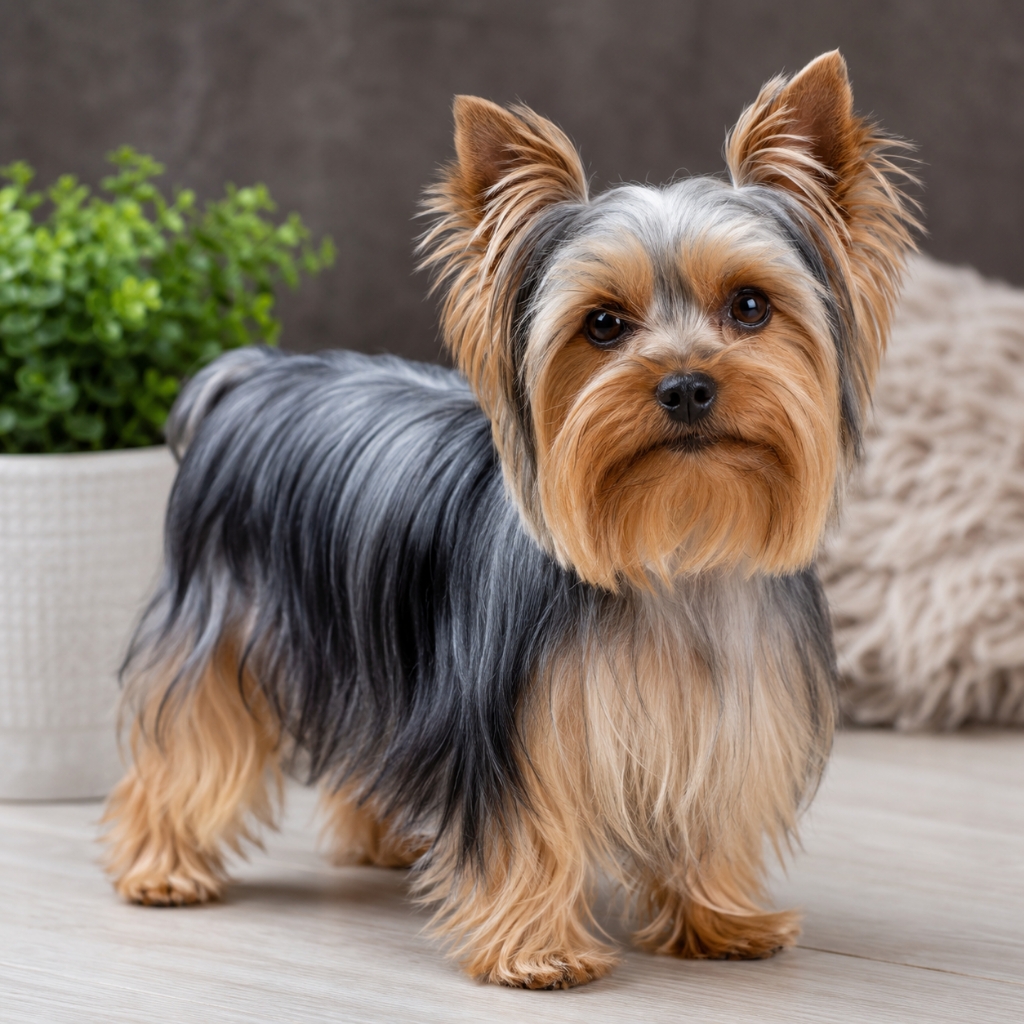
Small in size but overflowing with confidence, the Yorkshire Terrier proves that courage has nothing to do with stature. Originally bred in northern England to hunt rats in textile mills, today’s Yorkie has evolved into one of the world’s most popular companion dogs while retaining the bold, spirited personality of its hardworking ancestors.
Yorkshire Terriers are affectionate, intelligent, and fiercely loyal to their families. They love being involved in daily activities and often become devoted companions who happily follow their owners from room to room. Their alert nature also makes them surprisingly effective little watchdogs, quick to announce visitors or unusual sounds.
One of the breed’s most distinctive features is its beautiful steel blue and tan coat. Unlike many other small breeds, the Yorkie’s silky hair continues growing much like human hair, making it an excellent choice for owners who enjoy regular grooming and styling. Many pet owners choose a shorter “puppy cut” to make coat care easier.
Despite weighing only a few pounds, Yorkshire Terriers are energetic, curious, and eager to explore. They enjoy daily walks, interactive play, puzzle toys, and learning new tricks. Their intelligence makes them highly trainable, although their independent streak means consistency and positive reinforcement are essential.
Yorkies adapt exceptionally well to apartment living thanks to their compact size and moderate exercise requirements. They also travel easily, making them popular companions for people who enjoy taking their dogs along on adventures.
Why You’ll Love a Yorkshire Terrier
- Affectionate and deeply devoted
- Intelligent and quick to learn
- Excellent apartment companion
- Minimal shedding
- Easy to travel with
- Long lifespan
Things to Consider
- Requires regular grooming
- Can be vocal without training
- Small size requires careful handling
- May be reserved with strangers until properly socialized
Quick Facts
- Height: 7–8 inches
- Weight: 4–7 pounds
- Life Expectancy: 11–15 years
- Energy Level: Moderate
- Grooming: High
- Apartment Friendly: ★★★★★
Want to learn more? Read our complete Yorkshire Terrier Breed Guide for expert information on temperament, grooming, health, nutrition, training, adoption, and more.
Maltese
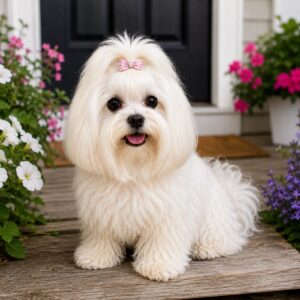 Elegant, affectionate, and full of charm, the Maltese has been a beloved companion for more than 2,000 years. Once treasured by royalty and aristocrats, this graceful little dog continues to captivate owners with its luxurious white coat, gentle nature, and unwavering devotion.
Despite their refined appearance, Maltese dogs are surprisingly playful and spirited. They enjoy games, short walks, and spending time with their families, but they’re equally content curling up on the couch for a quiet afternoon. Their adaptable personalities make them excellent companions for singles, couples, families, and seniors alike.
One of the breed’s greatest strengths is its affectionate temperament. Maltese dogs thrive on human companionship and often form exceptionally close bonds with their owners. They love being included in everyday activities and are happiest when they’re close to the people they love.
Their beautiful white coat is one of the breed’s defining features. Although it requires regular brushing and grooming to remain tangle-free, the Maltese sheds very little, making it a popular choice for people who prefer a cleaner home. Many owners choose a shorter “puppy cut” to simplify grooming while preserving the breed’s adorable appearance.
Maltese dogs are intelligent and eager to please, responding well to positive reinforcement training. Early socialization helps build confidence and encourages polite behavior around unfamiliar people and other animals. With gentle, consistent guidance, they become well-mannered and delightful companions.
Their compact size and moderate exercise needs also make Maltese one of the very best breeds for apartment and condo living. A few daily walks, indoor play sessions, and plenty of attention are usually all they need to stay happy and healthy.
Why You’ll Love a Maltese
- Affectionate and loving companion
- Excellent apartment dog
- Very low shedding
- Intelligent and eager to please
- Wonderful with seniors
- Long lifespan
Things to Consider
- Requires regular grooming
- Can develop separation anxiety if left alone too often
- Needs gentle handling due to small size
- Benefits from early socialization and training
Quick Facts
- Height: 7–9 inches
- Weight: Under 7 pounds
- Life Expectancy: 12–15 years
- Energy Level: Low to Moderate
- Grooming: High
- Apartment Friendly: ★★★★★
Want to learn more? Read our complete Maltese Breed Guide for expert advice on personality, grooming, health, nutrition, training, adoption, and choosing a reputable breeder.
Pomeranian
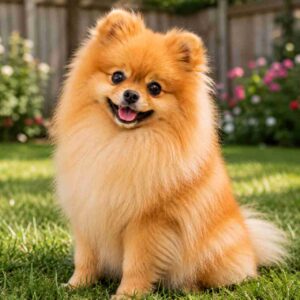 With its luxurious double coat, fox-like face, and larger-than-life personality, the Pomeranian is one of the world’s most recognizable toy breeds. Don’t be fooled by its tiny size—this confident little dog approaches life with remarkable enthusiasm and enough self-confidence to rival dogs many times larger.
Originally descended from much larger Spitz-type dogs, today’s Pomeranian has become a favorite companion for families, singles, seniors, and apartment dwellers alike. They are affectionate, intelligent, and endlessly entertaining, often delighting their owners with their playful antics and expressive personalities.
Pomeranians thrive on companionship and love being involved in family life. Whether accompanying you on a neighborhood walk, supervising household activities, or curling up beside you after a busy day, they are happiest when they’re close to their favorite people.
One of the breed’s greatest attractions is its stunning coat, which comes in an impressive variety of colors, including orange, cream, white, black, chocolate, blue, sable, and particolor combinations. While beautiful, their thick double coat requires regular brushing to keep it healthy, fluffy, and free of tangles.
These bright little dogs are highly intelligent and enjoy learning new tricks, solving puzzle toys, and participating in short, fun training sessions. Positive reinforcement works exceptionally well, and early socialization helps them develop into confident, well-mannered companions.
Despite their playful energy, Pomeranians don’t require excessive exercise. A couple of daily walks, interactive playtime, and plenty of mental stimulation are usually enough to keep them happy and healthy, making them excellent companions for apartment living.
Why You’ll Love a Pomeranian
- Affectionate and loyal companion
- Beautiful fluffy double coat
- Excellent apartment dog
- Intelligent and highly trainable
- Playful and entertaining personality
- Long lifespan
Things to Consider
- Requires regular grooming
- Can be vocal without training
- Needs early socialization
- Small size requires careful handling
Quick Facts
- Height: 6–7 inches
- Weight: 3–7 pounds
- Life Expectancy: 12–16 years
- Energy Level: Moderate
- Grooming: High
- Apartment Friendly: ★★★★★
Want to learn more? Read our complete Pomeranian Breed Guide for expert information on personality, grooming, health, nutrition, training, adoption, and choosing a responsible breeder.
Shih Tzu
 Originally bred to be cherished companions of Chinese royalty, the Shih Tzu continues to excel in the role it has held for centuries—bringing love, companionship, and joy to the people around it. Friendly, affectionate, and adaptable, this charming little breed is one of the world’s most popular family dogs.
Shih Tzus are known for their sweet, outgoing personalities. They genuinely enjoy spending time with people and are happiest when they’re included in family activities. Unlike some toy breeds that become attached to just one person, Shih Tzus often spread their affection generously among all members of the household.
The breed’s luxurious flowing coat and distinctive “chrysanthemum face” make it instantly recognizable. While the long coat is stunning, it does require regular brushing and grooming to prevent mats. Many owners choose a shorter puppy cut, which is both attractive and much easier to maintain.
Shih Tzus are playful without being overly demanding. They enjoy leisurely walks, interactive games, and relaxing beside their owners. Their relatively low exercise needs make them ideal companions for apartment dwellers, seniors, and families who prefer a calmer lifestyle.
Although they can sometimes display a stubborn streak, Shih Tzus are intelligent and respond well to gentle, positive reinforcement training. Early socialization helps them grow into confident, well-mannered dogs that are comfortable around people, children, and other pets.
Perhaps the Shih Tzu’s greatest strength is its wonderful temperament. These cheerful little dogs are affectionate, adaptable, and remarkably easy to live with, making them an excellent choice for first-time dog owners as well as experienced families.
Why You’ll Love a Shih Tzu
- Exceptionally affectionate and friendly
- Wonderful family companion
- Excellent apartment dog
- Low exercise requirements
- Generally good with children and other pets
- Long lifespan
Things to Consider
- Requires regular grooming
- Can be stubborn during training
- Sensitive to hot weather
- Needs routine eye and dental care
Quick Facts
- Height: 9–10.5 inches
- Weight: 9–16 pounds
- Life Expectancy: 10–18 years
- Energy Level: Low
- Grooming: High
- Apartment Friendly: ★★★★★
Want to learn more? Read our complete Shih Tzu Breed Guide for expert advice on temperament, grooming, health, nutrition, training, adoption, and finding a responsible breeder.
Cavalier King Charles Spaniel
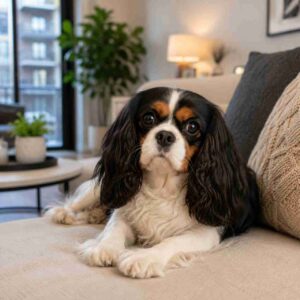 Graceful, affectionate, and wonderfully gentle, the Cavalier King Charles Spaniel is often described as the perfect companion dog. Originally favored by British royalty and nobility, this charming breed combines elegance with an easygoing personality that has made it one of the world’s most beloved small dogs.
Cavaliers are exceptionally people-oriented and thrive on human companionship. They are happiest when spending time with their families, whether joining you on a walk, playing in the backyard, or simply relaxing beside you on the couch. Their sweet temperament makes them one of the friendliest breeds you’ll ever meet.
Unlike some toy breeds, Cavaliers are generally outgoing and sociable with strangers, children, and other pets. Their gentle nature and adaptable personality allow them to fit comfortably into a wide variety of households, from busy family homes to quiet apartments occupied by retirees.
The breed’s silky coat and expressive, soulful eyes are among its most recognizable features. Cavaliers come in four beautiful color combinations: Blenheim, Tricolor, Ruby, and Black and Tan. Regular brushing helps keep their feathered coat healthy and free of tangles, although grooming requirements are generally less demanding than those of breeds like the Maltese or Shih Tzu.
Cavaliers enjoy moderate daily exercise and are equally happy exploring the neighborhood or cuddling indoors. Their balanced energy level makes them excellent companions for owners seeking an active but easygoing dog.
They are intelligent and eager to please, making training enjoyable for most owners. Positive reinforcement, early socialization, and gentle consistency help them develop into confident, well-mannered companions.
Why You’ll Love a Cavalier King Charles Spaniel
- Exceptionally affectionate and gentle
- Wonderful with families and children
- Excellent companion for seniors
- Adaptable to apartments and houses
- Friendly with people and other pets
- Beautiful silky coat
Things to Consider
- Needs regular brushing
- Prefers not to be left alone for long periods
- Requires regular veterinary care due to several inherited health concerns
- Moderate shedding
Quick Facts
- Height: 12–13 inches
- Weight: 13–18 pounds
- Life Expectancy: 12–15 years
- Energy Level: Moderate
- Grooming: Moderate
- Apartment Friendly: ★★★★★
Want to learn more? Read our complete Cavalier King Charles Spaniel Breed Guide for detailed information on temperament, grooming, health, nutrition, training, adoption, and finding a responsible breeder.
Boston Terrier
 Affectionately known as the “American Gentleman” thanks to its tuxedo-like markings and polite personality, the Boston Terrier is one of the most lovable and adaptable small dog breeds. Friendly, intelligent, and full of charm, this cheerful companion has become a favorite with families, apartment dwellers, and first-time dog owners alike.
Boston Terriers are naturally affectionate and enjoy being part of everything their families do. They thrive on companionship and are happiest when they’re included in daily activities, whether it’s a walk around the neighborhood, a game of fetch, or simply relaxing on the couch beside their favorite people.
One of the breed’s greatest strengths is its balanced personality. Boston Terriers are playful without being overly demanding, energetic without being hyperactive, and alert without being excessively vocal. Their adaptable nature allows them to fit comfortably into apartments, condominiums, and larger family homes.
Their short, smooth coat is easy to care for, requiring only occasional brushing and routine bathing. Boston Terriers are also relatively light shedders, making grooming simple compared to many long-haired small breeds.
Highly intelligent and eager to please, Boston Terriers generally respond well to positive reinforcement training. Early socialization helps them develop into confident, well-mannered adults who typically get along well with children, visitors, and other pets.
Because of their short muzzle, Boston Terriers can be sensitive to extreme heat and strenuous exercise during hot weather. Moderate daily walks, indoor play, and mental stimulation are usually all they need to stay healthy and happy.
Why You’ll Love a Boston Terrier
- Friendly and affectionate personality
- Excellent apartment companion
- Low-maintenance coat
- Highly intelligent and trainable
- Wonderful with families and children
- Playful without excessive exercise needs
Things to Consider
- Can be sensitive to heat because of their short muzzle
- May snore or snort
- Requires regular eye care and routine veterinary checkups
- Needs moderate daily exercise to maintain a healthy weight
Quick Facts
- Height: 15–17 inches
- Weight: 12–25 pounds
- Life Expectancy: 11–13 years
- Energy Level: Moderate
- Grooming: Low
- Apartment Friendly: ★★★★★
Want to learn more? Read our complete Boston Terrier Breed Guide for expert advice on temperament, grooming, health, nutrition, training, adoption, and choosing a responsible breeder.
Dachshund
 With their unmistakable long bodies, short legs, and fearless personalities, Dachshunds are among the most recognizable and beloved dog breeds in the world. Originally bred in Germany to hunt badgers, these determined little dogs still possess the courage, intelligence, and curiosity that made them exceptional hunters centuries ago.
Today’s Dachshund is first and foremost a devoted family companion. Affectionate, loyal, and endlessly entertaining, they form strong bonds with their families and often become happiest when spending time close to their favorite people. Whether they’re exploring the backyard, burrowing under blankets, or relaxing beside you on the sofa, Dachshunds bring personality to everything they do.
Available in smooth, long-haired, and wire-haired coat varieties, as well as Miniature and Standard sizes, Dachshunds offer something for nearly every dog lover. Their adaptable nature makes them equally comfortable in apartments or larger homes, provided they receive regular exercise and plenty of mental stimulation.
Dachshunds are intelligent but can also be independent thinkers, so patience and consistency are important during training. Positive reinforcement methods work best, and early socialization helps them develop into confident, well-mannered adults.
Although energetic and playful, Dachshunds don’t require excessive exercise. Daily walks and interactive games usually provide enough activity. Because of their long backs, owners should discourage jumping from furniture and maintain a healthy weight to help reduce stress on the spine.
Despite their small stature, Dachshunds make surprisingly good watchdogs. They’re alert, courageous, and never hesitate to let their families know when someone is approaching the home.
Why You’ll Love a Dachshund
- Loyal and affectionate companion
- Full of personality and confidence
- Excellent apartment dog
- Available in three coat types
- Moderate exercise requirements
- Long lifespan
Things to Consider
- Can be stubborn during training
- May bark more than some breeds
- Needs protection from back injuries
- Benefits from early socialization
Quick Facts
- Height: 5–9 inches
- Weight: 11–32 pounds (depending on variety)
- Life Expectancy: 12–16 years
- Energy Level: Moderate
- Grooming: Low to Moderate
- Apartment Friendly: ★★★★★
Want to learn more? Read our complete Dachshund Breed Guide for expert advice on temperament, grooming, health, nutrition, training, adoption, and responsible breeding.
Rat Terrier
 Energetic, intelligent, and remarkably versatile, the Rat Terrier is one of America’s great all-purpose companion dogs. Originally developed as a hardworking farm dog, the breed excelled at controlling rodents while also serving as a loyal family companion. Today, Rat Terriers continue to impress owners with their athletic ability, affectionate personalities, and exceptional intelligence.
Rat Terriers thrive on activity and enjoy having a job to do. Whether they’re learning new tricks, exploring hiking trails, competing in dog sports, or simply playing fetch in the backyard, these lively little dogs love staying both physically and mentally engaged.
Despite their energetic nature, Rat Terriers are deeply devoted to their families and often form strong bonds with the people they love. They’re affectionate without being overly demanding and typically enjoy spending quiet evenings relaxing beside their owners after an active day.
The breed’s short, smooth coat is easy to maintain, requiring only occasional brushing and routine baths. Their low grooming needs make them an attractive choice for busy families who prefer spending more time playing with their dog than maintaining its coat.
Highly intelligent and eager to learn, Rat Terriers are among the easiest small breeds to train. They respond exceptionally well to positive reinforcement and often excel in obedience, agility, scent work, and other canine activities. Early socialization helps channel their confidence into polite, well-mannered behavior around people and other pets.
Although they adapt well to apartment living if given sufficient exercise, Rat Terriers are happiest in homes where they receive plenty of opportunities to burn off energy through walks, games, training, and interactive play.
Why You’ll Love a Rat Terrier
- Extremely intelligent and highly trainable
- Affectionate and loyal family companion
- Low-maintenance coat
- Excellent for active owners
- Long lifespan
- Outstanding problem solver
Things to Consider
- Needs daily exercise and mental stimulation
- Strong prey drive may require supervision around small animals
- Can become bored without enough activity
- Benefits greatly from early socialization and training
Quick Facts
- Height: 10–18 inches
- Weight: 10–25 pounds
- Life Expectancy: 12–18 years
- Energy Level: High
- Grooming: Low
- Apartment Friendly: ★★★★☆
Want to learn more? Read our complete Rat Terrier Breed Guide for expert advice on temperament, grooming, health, nutrition, training, adoption, and finding a responsible breeder.
Pug
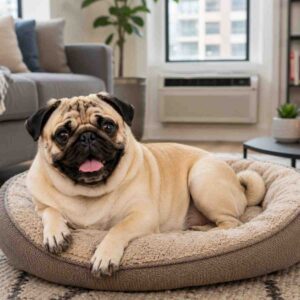 With their wrinkled faces, expressive eyes, and irresistible charm, Pugs have been winning hearts for centuries. Originally bred as cherished companions for Chinese emperors, these affectionate little dogs continue to delight families around the world with their loving personalities, playful nature, and remarkable sense of humor.
Pugs are true companion dogs. They thrive on human interaction and are happiest when they’re included in everyday family life. Whether they’re following you around the house, greeting visitors with enthusiastic tail wags, or snuggling beside you on the couch, Pugs simply love being close to their people.
Although playful and entertaining, Pugs are not high-energy dogs. They enjoy short daily walks, gentle games, and interactive play but are equally content relaxing indoors. Their moderate activity level makes them an excellent choice for apartment dwellers, seniors, families, and first-time dog owners.
Their short, smooth coat is relatively easy to care for with regular brushing, although Pugs do shed throughout the year. Owners should also pay close attention to cleaning the facial wrinkles and maintaining good dental hygiene to help keep their dogs healthy and comfortable.
Pugs are intelligent and eager to please, although they occasionally display an independent streak. Positive reinforcement, patience, and consistency produce the best training results. Early socialization helps them grow into confident, friendly companions that generally get along well with children, strangers, and other pets.
Because Pugs are a brachycephalic (short-nosed) breed, they can be sensitive to heat and vigorous exercise. During warm weather, walks should be scheduled during the cooler parts of the day, and owners should always provide access to fresh water and shade.
Why You’ll Love a Pug
- Exceptionally affectionate and loving
- Wonderful family companion
- Excellent apartment dog
- Moderate exercise needs
- Friendly with children and other pets
- Playful, entertaining personality
Things to Consider
- Can be sensitive to hot weather
- Moderate year-round shedding
- Needs regular wrinkle and dental care
- May snore due to its short muzzle
Quick Facts
- Height: 10–13 inches
- Weight: 14–18 pounds
- Life Expectancy: 12–15 years
- Energy Level: Low to Moderate
- Grooming: Low
- Apartment Friendly: ★★★★★
Want to learn more? Read our complete Pug Breed Guide for expert advice on temperament, grooming, health, nutrition, training, adoption, and finding a responsible breeder.
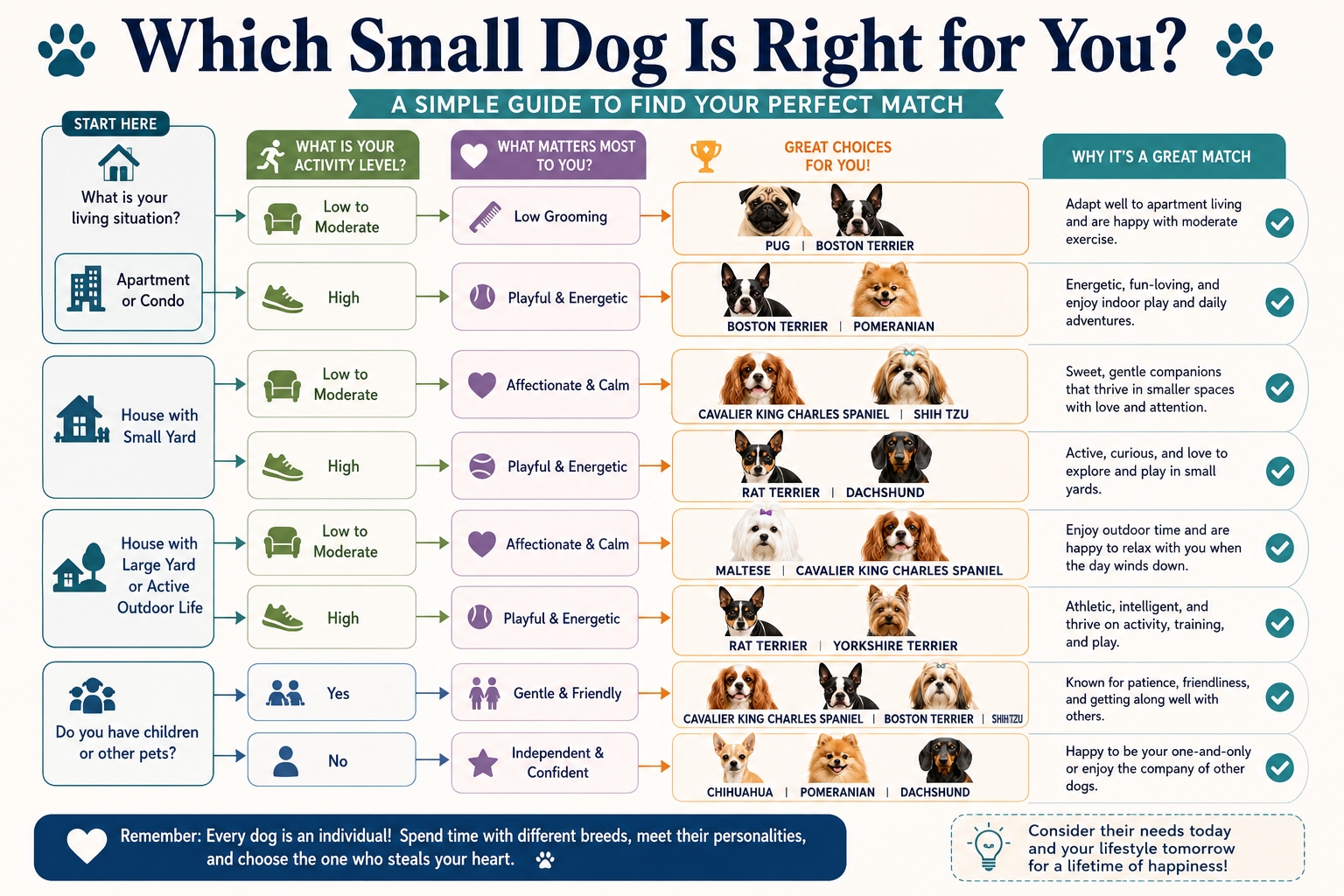
Which Small Dog Is Right for You?
Now that you’ve met our top ten small dog breeds, you may still be wondering which one is the best fit for your lifestyle. The truth is, there isn’t a single “best” breed—only the breed that’s best for you. By considering your living situation, activity level, grooming preferences, and family dynamics, you’ll be much more likely to find a companion you’ll enjoy for many years.
Best for Apartment Living
If you live in an apartment or condominium, look for breeds that are adaptable, relatively quiet, and don’t require a large yard. Excellent choices include the Maltese, Shih Tzu, Pug, Cavalier King Charles Spaniel, Boston Terrier, Pomeranian, and Chihuahua.
Best for Families
Families with children often appreciate breeds that are affectionate, patient, and playful. The Cavalier King Charles Spaniel, Boston Terrier, Pug, Shih Tzu, and Rat Terrier are all wonderful choices for many active households.
Best for Seniors
Seniors often benefit from companion dogs that are affectionate, manageable, and adaptable. The Maltese, Cavalier King Charles Spaniel, Shih Tzu, Pug, Yorkshire Terrier, and Chihuahua are among the best options.
Best for First-Time Dog Owners
If this will be your first dog, consider breeds known for their friendly personalities and trainability. The Boston Terrier, Cavalier King Charles Spaniel, Maltese, Pug, and Shih Tzu are excellent places to start.
Best for Active Owners
If you enjoy daily walks, hiking, training, and outdoor adventures, the energetic Rat Terrier, Boston Terrier, Yorkshire Terrier, and Dachshund can make wonderful companions.
Lowest Grooming Requirements
If you prefer a dog with an easy-care coat, the Boston Terrier, Pug, Rat Terrier, and smooth-coated Chihuahua require relatively little grooming compared to long-coated breeds.
Lowest Exercise Needs
Looking for a more relaxed companion? The Pug, Shih Tzu, Maltese, and Cavalier King Charles Spaniel are generally content with moderate daily walks and indoor play.
Our Final Advice
Before bringing any dog home, take time to research the breed thoroughly, meet several dogs whenever possible, and honestly consider your lifestyle, schedule, and long-term commitment. Remember that every dog is an individual, and responsible breeding, early socialization, training, and loving care all play an important role in shaping a happy, well-adjusted companion.
When you choose a breed that matches your lifestyle rather than simply your favorite appearance, you’re much more likely to enjoy a rewarding relationship that lasts for many years.
Frequently Asked Questions
What is the best small dog breed?
There isn’t one “best” small dog breed for everyone. The right choice depends on your lifestyle, activity level, grooming preferences, living situation, and experience with dogs. Our guide highlights ten excellent breeds, each with its own unique strengths.
What small dog is best for apartment living?
Many small breeds thrive in apartments, including the Maltese, Shih Tzu, Pug, Boston Terrier, Cavalier King Charles Spaniel, Yorkshire Terrier, Pomeranian, and Chihuahua. Daily exercise and mental stimulation remain important regardless of where you live.
Which small dog is easiest to train?
Boston Terriers, Rat Terriers, Cavalier King Charles Spaniels, Maltese, and Yorkshire Terriers are generally eager learners that respond well to positive reinforcement training.
Which small dog sheds the least?
Maltese and Yorkshire Terriers shed very little because their coats grow much like human hair. Regular grooming is still required to keep their coats healthy and free of tangles.
What small dog is best for families?
Cavalier King Charles Spaniels, Boston Terriers, Pugs, Shih Tzus, and Rat Terriers are all excellent family companions when properly socialized and supervised around young children.
What small dog is best for seniors?
Maltese, Cavalier King Charles Spaniels, Shih Tzus, Pugs, and Chihuahuas are popular choices for seniors thanks to their affectionate personalities and manageable exercise needs.
Do small dogs need less exercise than large dogs?
Generally yes, but exercise requirements vary by breed. Active breeds such as Rat Terriers need considerably more activity than lower-energy breeds like Pugs or Shih Tzus.
Are small dogs good for first-time owners?
Absolutely. Many small breeds are excellent choices for first-time owners, particularly Boston Terriers, Cavaliers, Maltese, Pugs, and Shih Tzus.
Which small dog has the longest lifespan?
Many small breeds enjoy impressive longevity. Chihuahuas, Rat Terriers, Pomeranians, Dachshunds, and Maltese often live well into their teens with excellent care.
Should I adopt or buy from a breeder?
Both can be wonderful options. Adoption gives a deserving dog a second chance, while responsible breeders carefully select healthy, well-socialized puppies. Avoid puppy mills and always research carefully before bringing home a new companion.
Related Guides
Looking for even more information about choosing and caring for a small dog? These DogPage.us guides can help you compare breeds, understand their unique needs, and make informed decisions about pet ownership.
- Best Small Dogs for Apartments – Discover which breeds thrive in apartment and condo living.
- Complete Chihuahua Breed Guide – Learn about personality, care, health, and training.
- Complete Yorkshire Terrier Breed Guide – Everything you need to know about the spirited Yorkie.
- Complete Maltese Breed Guide – Explore this affectionate, elegant companion breed.
- Complete Pomeranian Breed Guide – Discover why these fluffy little dogs are so popular.
- Complete Pug Breed Guide – Learn about one of the world’s most lovable companion breeds.
- Complete Boston Terrier Breed Guide – Meet the friendly “American Gentleman.”
We’ll continue expanding our collection with additional breed guides, comparison articles, puppy care resources, health information, training advice, and responsible dog ownership tips to help you become the best possible companion for your small dog.
Trusted Resources
When researching dog breeds, it’s important to rely on accurate, science-based information from reputable organizations. The following resources provide valuable guidance on breed standards, canine health, responsible breeding, training, and veterinary care.
- American Kennel Club (AKC)
- Orthopedic Foundation for Animals (OFA)
- American Veterinary Medical Association (AVMA)
- American Animal Hospital Association (AAHA)
While online resources can provide valuable information, they should never replace professional veterinary advice. If you have questions about your dog’s health, nutrition, behavior, or overall wellbeing, consult your veterinarian.
At DogPage.us, our goal is to help you make informed decisions, choose the right breed for your lifestyle, and provide your canine companion with the happiest, healthiest life possible.