
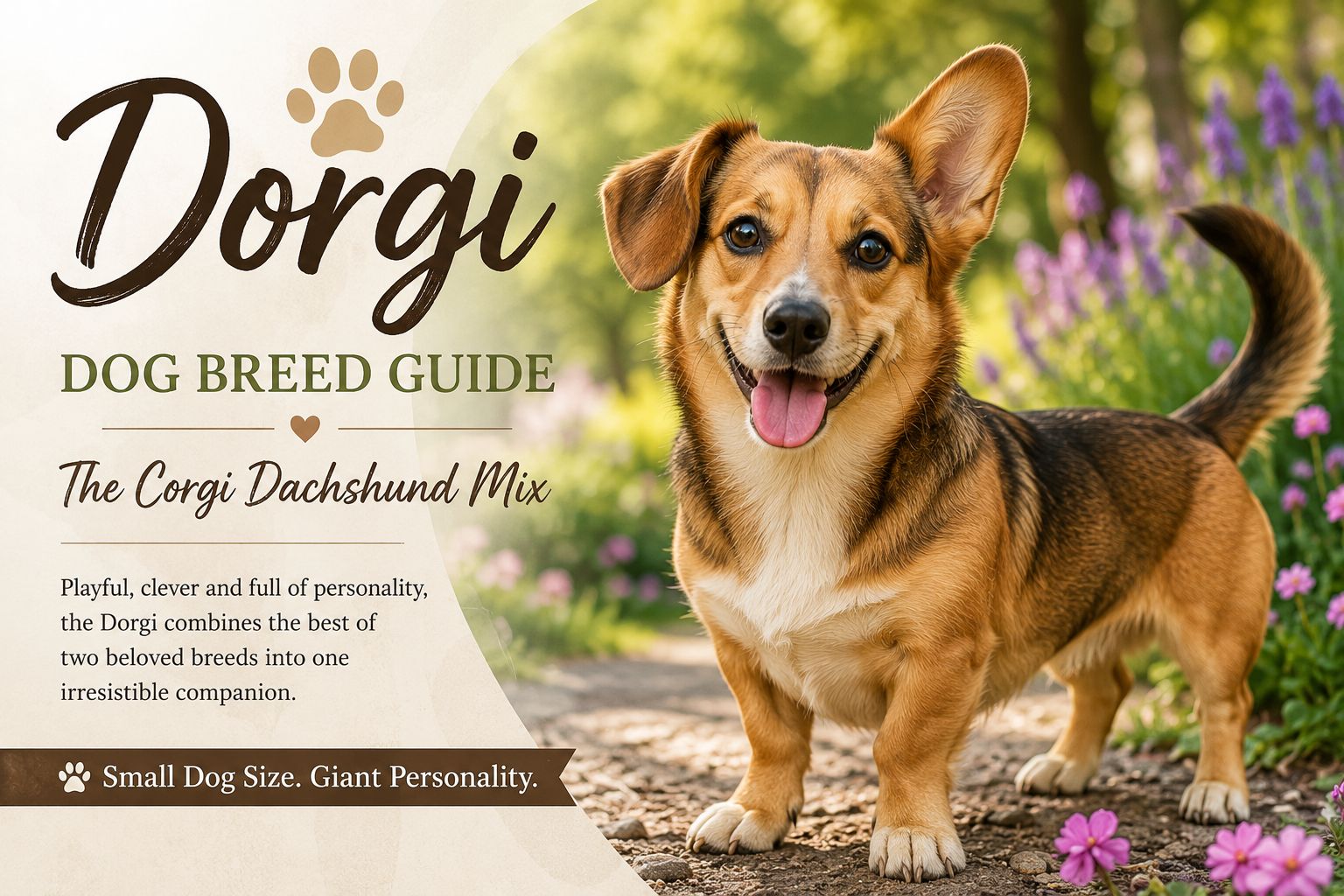
Small, sturdy, clever and packed with personality, the Dorgi is a Dachshund Corgi mix that brings together two famously short-legged working breeds. Also searched for as a Corgi Dachshund mix, Dachshund and Corgi mix, Corgi and Dachshund mix, and sometimes a Corgi wiener dog mix, the Dorgi can be an affectionate, entertaining companion for people who appreciate a dog with opinions, energy and a very big voice in a compact body.
There is no official Dorgi breed standard, so these dogs can vary considerably in size, coat, ear shape, build and temperament. One may look like a slightly taller Dachshund with Corgi ears; another may resemble a small, long-bodied Corgi. The same variability applies to personality. A Dorgi may inherit the Dachshund’s curiosity and hunting instincts, the Corgi’s herding tendencies and eagerness to work, or an unpredictable blend of both.
This Dogs Central guide takes a realistic look at what it is like to live with a Dorgi, including temperament, full-grown size, exercise, training, grooming, health, feeding, family compatibility and what to consider when looking for a Dorgi puppy or adult dog.
Dorgi Breed Guide Menu
- Dorgi at a Glance
- What Is a Dorgi?
- Dorgi History and Origins
- Appearance and Full-Grown Size
- Coat Types and Colors
- Temperament and Personality
- Dorgis as Family Dogs
- Living With Other Pets
- Training a Dorgi
- Exercise and Enrichment
- Grooming
- Feeding and Nutrition
- Health and Lifespan
- Apartment and City Living
- Dorgis and Seniors
- Dorgi Puppies
- Dorgi Adoption and Rescue
- Pros and Cons
- Is a Dorgi Right for You?
- Frequently Asked Questions
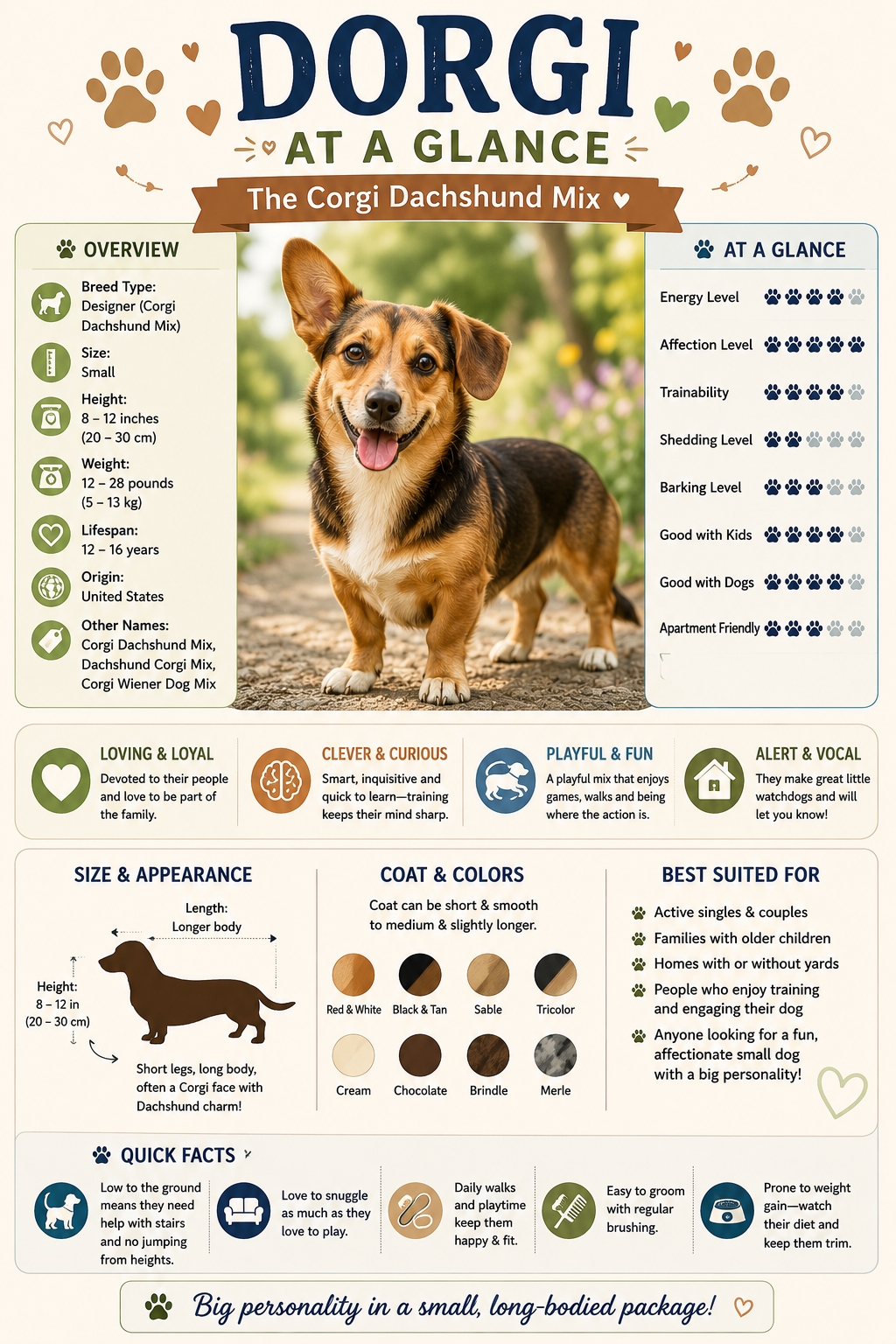
Dorgi at a Glance
| Other Names | Dachshund Corgi mix, Corgi Dachshund mix, Dorgie |
|---|---|
| Parent Breeds | Dachshund × Welsh Corgi, most commonly associated with the Pembroke Welsh Corgi |
| Breed Type | Designer crossbreed / mixed-breed dog |
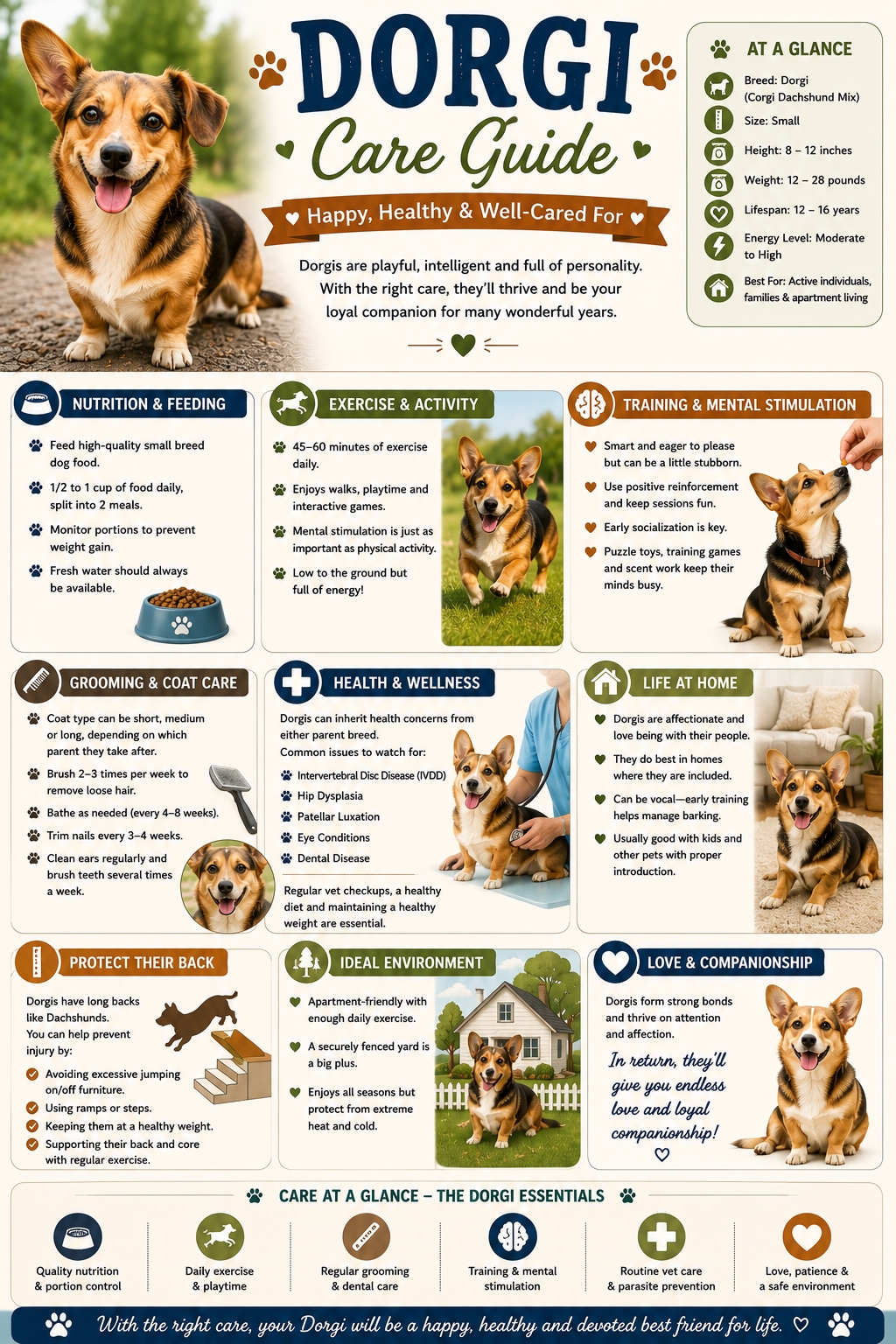
| Typical Height | About 8–12 inches at the shoulder, with individual variation |
| Typical Weight | Approximately 15–30 pounds, depending on the parents and individual dog |
| Typical Lifespan | Approximately 12–16 years |
| Energy Level | Moderate to high |
| Trainability | Intelligent, but can be independent or stubborn |
| Grooming | Low to moderate; depends on coat type |
| Shedding | Usually moderate; can be heavier seasonally |
| Hypoallergenic? | No |
| Barking | Moderate to high tendency |
| Good With Children? | Often, especially with respectful older children and good socialization |
| Good With Other Dogs? | Often, with appropriate introductions and socialization |
| Apartment Friendly? | Potentially, if exercise and barking are well managed |
| Best Suited To | People wanting an affectionate, clever, active small companion and who enjoy training and enrichment |
These figures are general guidelines rather than a breed standard. Dorgis are crossbred dogs, so an individual may fall outside these ranges.
What Is a Dorgi?
A Dorgi is a cross between a Dachshund and a Welsh Corgi. The name combines parts of the two parent breed names: Dachshund + Corgi = Dorgi.
The cross is most often described as involving the Dachshund and Pembroke Welsh Corgi, although the term Dorgi can also be used more generally for a Dachshund crossed with a Welsh Corgi. Because the Dorgi is not a standardized purebred breed, there is no single appearance, temperament or size that every Dorgi must have.
That variability is important. Designer-dog descriptions sometimes make crosses sound as though breeders can simply select the most desirable quality from each parent and combine them in one puppy. Genetics do not work that neatly. A Dorgi puppy can inherit any combination of physical and behavioral traits from either side of the family.
That unpredictability is part of the appeal for some owners, but it also means prospective owners should learn about both parent breeds. If you would be unhappy living with the strong prey drive of a Dachshund, the alert barking of a Corgi, a long-backed body requiring thoughtful care, or an independent little dog that occasionally questions your instructions, the Dorgi may not be the right choice.
On the other hand, people who enjoy bright, funny, engaged dogs often find the Dorgi enormously appealing. These dogs tend to notice everything, participate in household life and form close relationships with their people.
Dorgi History and Origins
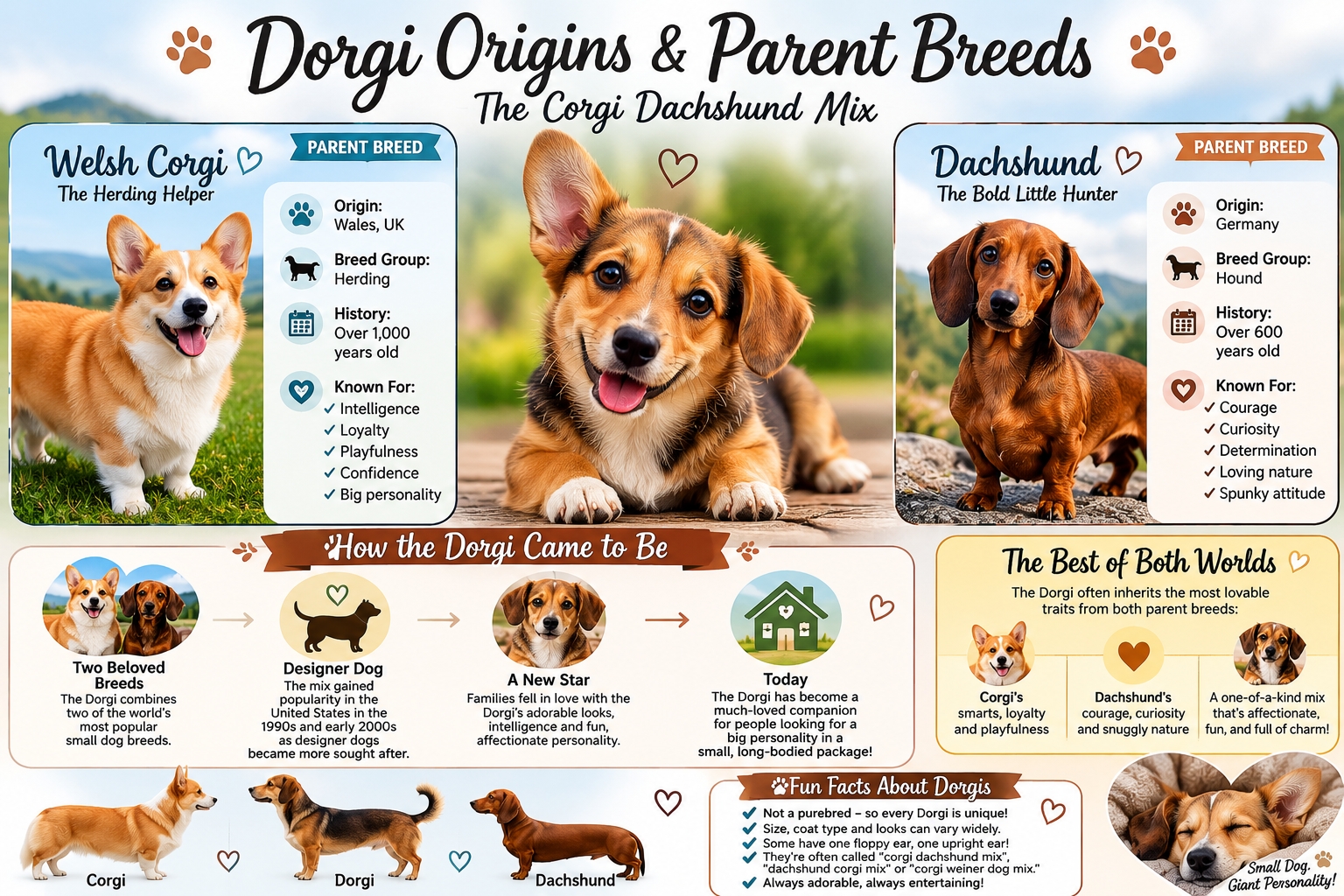
The Dorgi does not have the long documented history of either parent breed. It is a modern crossbreed, but it has one unusually famous association: Queen Elizabeth II, whose lifelong love of Pembroke Welsh Corgis is well known, also kept several Dorgis.
The royal Dorgi story is commonly traced to a mating between one of the Queen’s Corgis and a Dachshund belonging to Princess Margaret. Whatever role that famous litter played in popularizing the name, Dachshund–Corgi crosses can of course occur independently anywhere the two breeds are bred together.
The Dachshund Parent
The Dachshund was developed in Germany as a hunting dog capable of pursuing quarry into burrows. Its distinctive elongated body, short legs, strong front end, courage, digging ability and determined personality all relate to that working history.
Modern Dachshunds are cherished companions, but the instincts behind the original working dog have not disappeared. Many remain alert, curious, vocal, scent-oriented and surprisingly fearless. They may dig, pursue small animals and become intensely interested in whatever is happening on the other side of the fence.
The Corgi Parent
Welsh Corgis were developed as working herding dogs. The Pembroke Welsh Corgi in particular is famous for its intelligence, bold personality, athleticism and ability to move livestock despite its short stature.
A Corgi’s compact appearance can make people underestimate how active and mentally engaged these dogs can be. Herding ancestry may appear as alertness, barking, chasing movement or occasionally trying to control the movement of people and animals.
What Happens When You Combine Them?
A Dorgi can inherit a fascinating combination: the determination and scent-driven curiosity of a hound with the quick intelligence and movement sensitivity of a herding dog. Both parents were developed to work rather than simply sit on laps, and that heritage helps explain why many Dorgis are much more active and mentally demanding than their short legs suggest.
What Does a Full-Grown Dorgi Look Like?
Searches for Dorgi full grown are common for good reason: puppies from this cross can mature into surprisingly different-looking adults.
A full-grown Dorgi is usually a small, low-set dog with a somewhat elongated body and relatively short legs. Many have a sturdy chest and substantial body rather than the delicate build associated with some toy breeds. The head may look more Dachshund-like or Corgi-like, and ears can be upright, partly upright or dropped.
Dorgi Height
Many adult Dorgis stand roughly 8 to 12 inches at the shoulder. Parent size matters, particularly whether the Dachshund parent is miniature or standard and the size of the Corgi parent.
Dorgi Weight
A typical adult may weigh approximately 15 to 30 pounds. Some are lighter, while a sturdier dog from larger parents may exceed the commonly quoted range.
Rather than aiming for a particular number on the scale, owners should focus on healthy body condition. Excess weight is particularly undesirable in a dog that may inherit a long-backed, short-legged structure.
When Is a Dorgi Full Grown?
Most small-to-medium dogs reach much of their adult height during the first year, although they may continue filling out afterward. Growth rate varies, so your veterinarian is the best person to assess whether a particular puppy is developing appropriately.
Do not assume that the smallest puppy will remain tiny. Ask to see both parents and obtain their adult weights and heights when possible. Parent size provides more useful information than a breeder’s promise that a puppy will remain a particular size.
Dorgi Coat Types and Colors
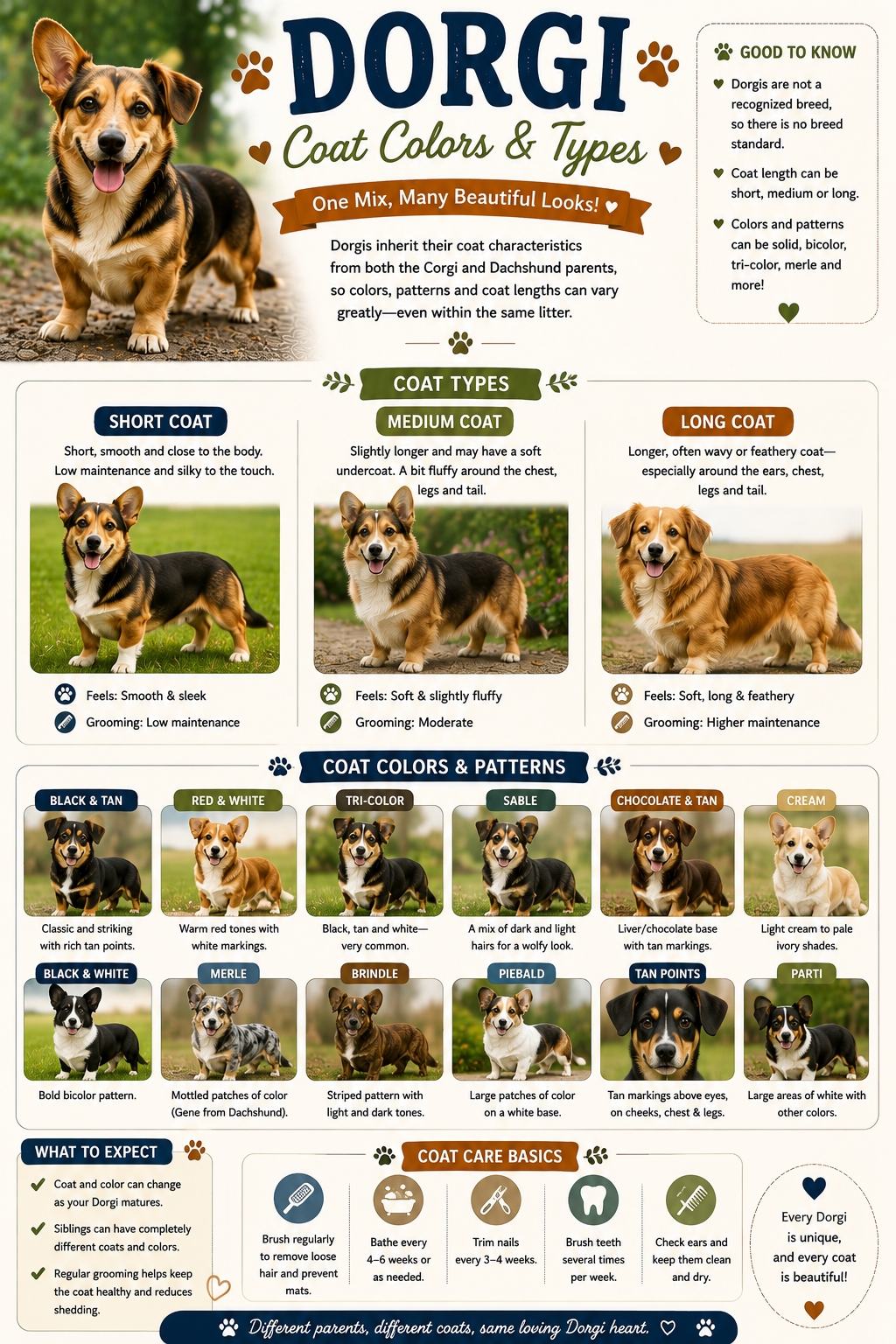
Dorgi coats can vary because both parent breeds contribute different possibilities.
A Corgi typically contributes a short-to-medium double coat, while Dachshunds occur in smooth, longhaired and wirehaired varieties. Depending on ancestry, a Dorgi may therefore have a:
- short, smooth coat;
- short-to-medium dense coat;
- somewhat longer coat with feathering;
- or, less commonly, a rougher or wirier texture when wirehaired Dachshund ancestry is involved.
Colors and patterns can include red, tan, sable, brown, chocolate, black and tan, black, cream, white markings, brindle or combinations influenced by the parents.
Dorgis are not considered hypoallergenic. Even a relatively sleek-coated individual can shed, and dogs with a dense Corgi-influenced undercoat may shed considerably more during seasonal coat changes.
Dorgi Temperament and Personality
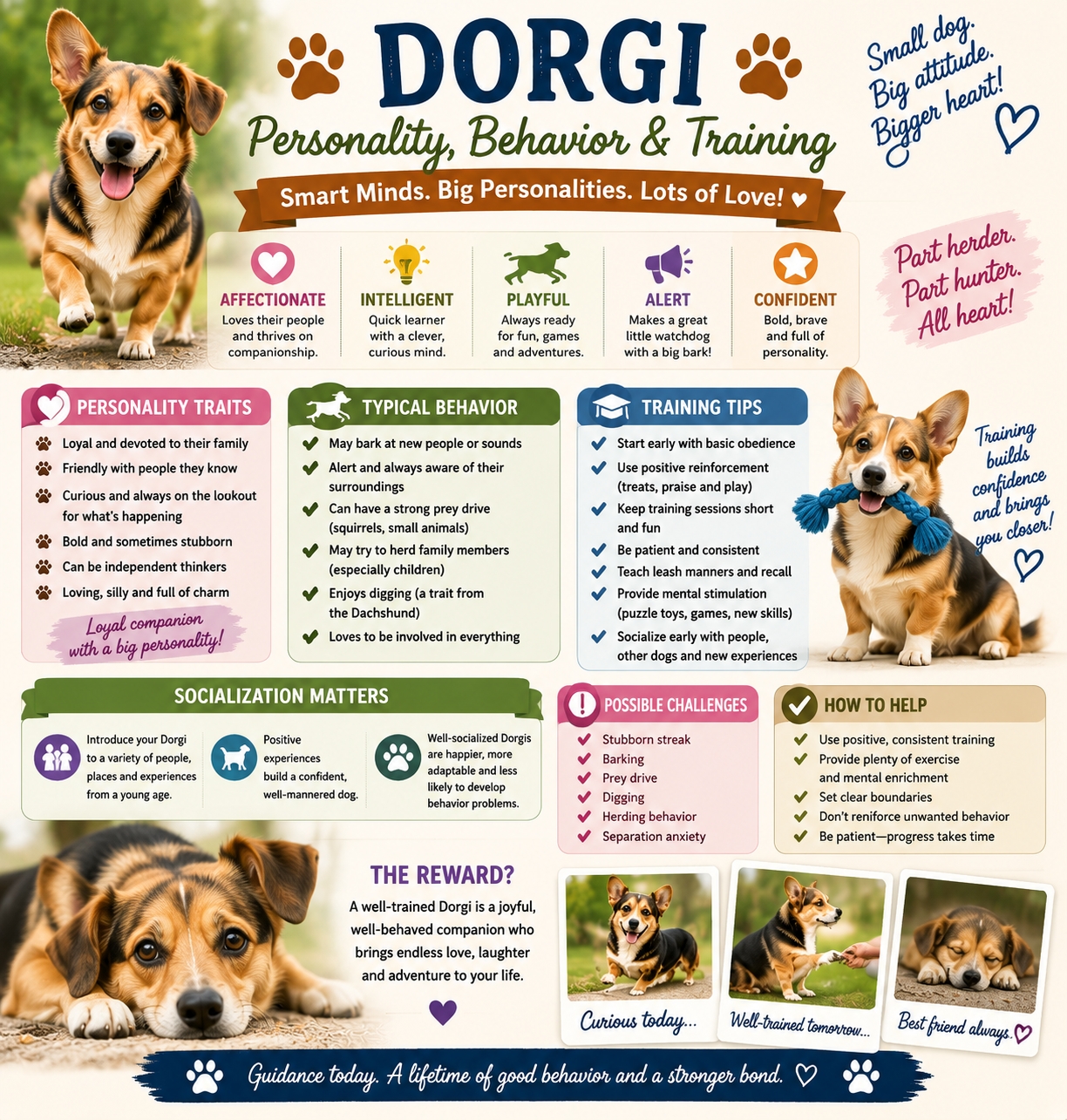
The most useful way to understand Dorgi temperament is not to look for a single personality description, but to consider the traits that may arrive from either parent.
Many Dorgis are:
- affectionate and closely bonded with their people;
- bright and observant;
- playful well into adulthood;
- alert to sounds, visitors and activity outside;
- confident for their size;
- curious and interested in exploring;
- food motivated, which can help with training;
- and occasionally stubborn or independent.
A Small Dog With a Working-Dog Brain
This is not necessarily a sleepy lapdog cross. Dachshunds were bred to hunt; Corgis were bred to herd. A Dorgi may therefore be happiest when daily life includes something to do.
That “job” does not have to involve livestock or badgers. Food puzzles, scent games, trick training, hide-and-seek, short training sessions and exploratory walks can all satisfy the need to use the brain.
Are Dorgis Affectionate?
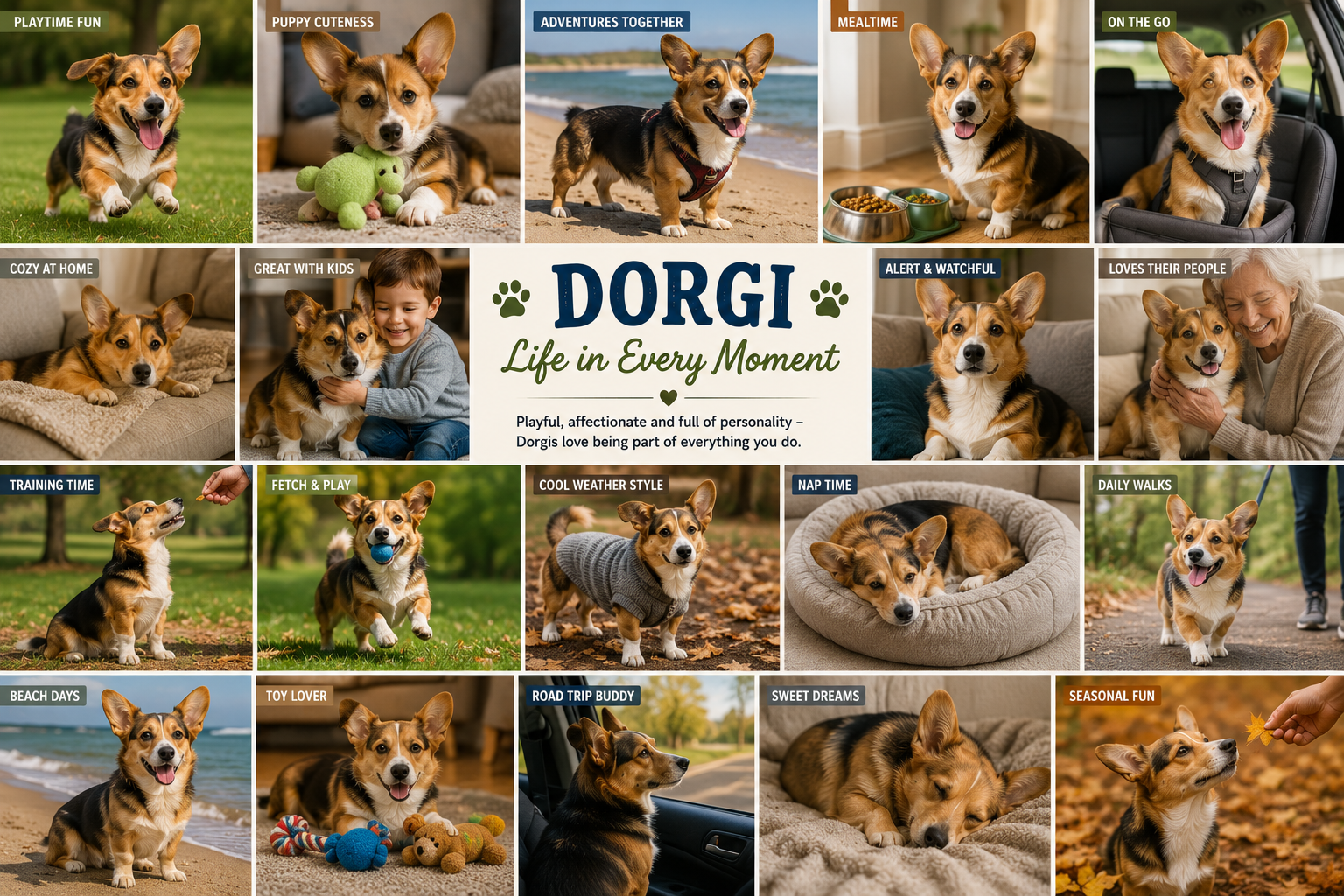
They often are. Many enjoy being physically close to their family and may follow a favorite person from room to room. Affection does not necessarily mean passivity, however. A Dorgi may want to cuddle with you and then leap up to announce the arrival of a delivery truck thirty seconds later.
Do Dorgis Bark a Lot?
They can. Both parent breeds can be vocal, so barking should be considered a genuine possibility rather than an unusual fault.
Early training can teach a dog when alerting is appropriate and when it is time to settle. Mental stimulation, sufficient exercise and preventing hours of window patrol can also help. If you require a reliably quiet dog because of close neighbors or personal preference, a Dorgi may not be your safest choice.
Can Dorgis Be Stubborn?
Yes. Intelligence and obedience are not the same thing. A Dorgi may understand exactly what you want and still decide that investigating an interesting smell is currently a better offer.
Positive reinforcement, clear routines and short, engaging training sessions usually work much better than confrontation.
Are Dorgis Good Family Dogs?
A well-socialized Dorgi can be a loving family companion, particularly in a household that understands small-dog boundaries and provides appropriate exercise and training.
Dorgis and Children
Dorgis can live happily with children, but compatibility depends on the individual dog and the children involved.
Older children who understand how to interact respectfully with dogs are often the easiest match. Very young children require close supervision. A Dorgi may dislike rough handling, and a Corgi-influenced dog may become excited by running children and attempt to chase or herd them.
Children should be taught not to:
- pick the dog up without adult guidance;
- climb on or ride the dog;
- disturb the dog while eating or sleeping;
- pull ears, legs or tail;
- or encourage repeated jumping from furniture.
Because many Dorgis have elongated backs and short legs, protecting them from falls and inappropriate handling is particularly important.
Do Dorgis Like Being Left Alone?
Many become strongly attached to their people. Some may struggle with long periods of isolation, especially if alone time was never taught gradually.
Owners should practice calm, age-appropriate independence from puppyhood rather than waiting until a dog has become accustomed to constant company. A safe resting area, predictable routine and enrichment can help, but a dog showing genuine separation distress should be assessed by a veterinarian or qualified behavior professional.
Dorgis With Dogs, Cats and Other Pets
Dorgis can live successfully with other dogs and, in many cases, cats. Early positive socialization and careful introductions matter.
The important wildcard is prey drive. Dachshunds were hunting dogs, and an individual Dorgi may be strongly motivated to chase small animals. Corgi ancestry can add another form of movement sensitivity through herding behavior.
For that reason, do not assume a Dorgi will automatically be safe with rabbits, guinea pigs, hamsters, birds or other small pets. Management may be necessary even when the dog is friendly with cats and other dogs.
Training a Dorgi
Dorgis can be excellent learners. The trick is making training worthwhile from the dog’s perspective.
Use Positive Reinforcement
Reward behaviors you want with food, toys, praise, play or access to something the dog values. Keep sessions upbeat and stop before either of you becomes frustrated.
Particularly useful skills include:
- coming when called;
- walking politely on a leash;
- settling on a mat;
- leaving dropped objects alone;
- waiting at doors;
- remaining calm around visitors;
- allowing paws, ears and teeth to be handled;
- and responding to a cue that ends alert barking.
House Training
Some Dachshunds have a reputation for making housetraining owners work for their success, and a Dorgi may inherit that independent streak.
Use a predictable schedule, frequent outdoor opportunities, close supervision and immediate rewards for eliminating in the correct place. Punishment for accidents can create anxiety without teaching the dog where you actually want them to go.
Recall and Prey Drive
A dog following an exciting scent may temporarily consider your recall cue optional. Practice recall gradually in increasingly distracting environments and use a long line where appropriate. In unsecured areas, a leash or secure fenced space is safer than relying on obedience alone.
Socialization
Good socialization is not simply exposing a puppy to as many things as possible. It means creating safe, positive experiences with different people, friendly dogs, surfaces, sounds, environments, handling and everyday events during development.
A thoughtful socialization program can help a naturally alert Dorgi grow into a more confident adult.
Dorgi Exercise and Enrichment
Those little legs belong to a dog descended from two working breeds. Most Dorgis need meaningful daily activity.
For a healthy adult, daily exercise might include walks plus play and training, adjusted to the dog’s age, build, fitness and veterinary recommendations. The goal is not to exhaust the dog through repetitive high-impact exercise but to provide a healthy combination of movement and mental stimulation.
Good Activities for Dorgis
- sniff-focused walks;
- food puzzles;
- hide-and-seek;
- find-the-treat games;
- short trick-training sessions;
- gentle fetch on suitable surfaces;
- supervised exploration;
- and low-impact games that encourage thinking.
Be Sensible About Jumping
Because a Dorgi may inherit a long back and short legs, repeated high-impact jumping deserves caution. Maintaining a healthy weight, using sensible handling and discussing the individual dog’s structure and activity with your veterinarian are practical precautions.
Ramps may be useful for dogs that routinely climb onto high furniture, although they should be introduced safely and should not become an excuse to allow uncontrolled jumping elsewhere.
Dorgi Grooming
Grooming requirements depend heavily on which coat the dog inherits.
Short-Coated Dorgis
A short coat is relatively simple to maintain. Weekly brushing can remove loose hair and distribute natural skin oils. A rubber grooming mitt or suitable soft brush may be all that is required for routine coat care.
Denser or Longer-Coated Dorgis
A Dorgi with more Corgi-like undercoat or longer Dachshund-influenced hair may require more frequent brushing, particularly behind the ears, around the legs and in areas prone to tangles. Seasonal shedding can be substantial in dogs with a dense undercoat.
Bathing
Bathing is generally needed when the dog is dirty rather than according to an inflexible schedule. Use a dog-appropriate shampoo and rinse thoroughly.
Nails, Ears and Teeth
Trim nails often enough that they do not become overgrown. Check ears routinely for odor, redness, discharge or irritation, and ask your veterinarian about an appropriate dental-care routine.
Dental health deserves special attention in small dogs. Regular home tooth brushing with dog-safe toothpaste, combined with veterinary dental care when needed, can help protect the teeth and gums.
Dorgi Feeding and Nutrition
A Dorgi should be fed a complete and balanced diet appropriate for the dog’s age, size, activity level and health.
There is no single correct amount of food for every Dorgi. Calorie requirements differ between a 16-pound quiet adult and a 28-pound active dog. Use feeding directions as a starting point and adjust with veterinary guidance based on body condition.
Weight Management Matters
Keeping a Dorgi lean is particularly important because excess weight places additional load on the joints and spine.
Watch the extras. Training treats, dental chews, table scraps and food-stuffed toys all contribute calories. For a small dog, what looks like a tiny snack to a human can represent a meaningful portion of the day’s energy intake.
What Should a Dorgi Eat?
Choose food labeled as complete and balanced for the appropriate life stage. Puppies have different nutritional requirements from adults, and senior dogs may develop individual needs as they age.
Supplements should not automatically be added simply because a product is marketed for joints, coats or designer breeds. Discuss supplements with your veterinarian, especially if your dog has a medical condition or takes medication.
Dorgi Health Problems and Lifespan
Dorgis are mixed-breed dogs, but mixed ancestry does not make a dog automatically free of inherited disease. A puppy can inherit health risks found in either parent breed.
A typical Dorgi lifespan is often estimated at approximately 12 to 16 years, although individual longevity depends on genetics, preventive care, body condition, environment and many other factors.
Intervertebral Disc Disease (IVDD) and Back Health
Back health deserves particular attention in this cross. Dachshunds are strongly predisposed to intervertebral disc disease (IVDD), a condition involving degeneration and displacement of spinal discs. Dorgis may inherit an elongated, short-legged structure, so owners should understand the signs of spinal pain and discuss risk with their veterinarian.
Possible warning signs requiring veterinary attention include:
- reluctance to move or jump;
- crying out in pain;
- a hunched or tense posture;
- weakness or wobbliness;
- dragging or knuckling of the feet;
- loss of coordination;
- or loss of bladder or bowel control.
Sudden weakness, paralysis or severe spinal pain is an emergency. Seek veterinary care promptly rather than waiting to see whether it resolves.
Joint and Orthopedic Concerns
Depending on inherited structure, Dorgis may also be at risk for orthopedic problems affecting the hips, knees or other joints. Responsible breeders should be able to discuss the health history and relevant screening of both parent dogs.
Dental Disease
Small dogs can be prone to periodontal disease. Home tooth brushing and regular veterinary assessment are worthwhile lifelong habits.
Eye Problems
Both parent breeds have hereditary eye conditions within their populations. Ask breeders what eye screening has been performed on the parents rather than accepting “our dogs have never had a problem” as a substitute for documented testing.
Weight Gain
Obesity is not merely cosmetic. Extra weight can worsen orthopedic strain and affect overall health. Keep your Dorgi at a healthy body condition throughout life.
Preventive Care
Routine veterinary examinations, parasite prevention appropriate to your location and lifestyle, vaccination according to veterinary advice, dental care, healthy nutrition and prompt attention to changes in movement or behavior all contribute to long-term wellbeing.
Important: This guide provides general educational information and is not a substitute for veterinary diagnosis or treatment.
Are Dorgis Good Apartment Dogs?
Physically, a Dorgi can fit easily into an apartment or condo. Behaviorally, the answer is more complicated.
The biggest issue is often barking. A dog that announces every hallway sound, elevator arrival and neighbor passing the door can create problems even when exercise needs are being met.
Apartment life is more likely to succeed when owners provide:
- daily outdoor walks;
- mental enrichment;
- training around hallway and window noises;
- opportunities to sniff and explore;
- and a predictable routine that includes quiet time.
A yard is convenient but not essential. Conversely, having a yard does not replace walks, training or interaction.
Are Dorgis Good Dogs for Seniors?
A Dorgi can be a delightful companion for an active older adult who enjoys walking, training and having a highly engaged little dog nearby.
Their manageable size can be an advantage compared with a large breed, but they are not necessarily low-energy or effortless. Barking, pulling toward squirrels, housetraining a puppy and daily enrichment can all require patience and physical involvement.
For someone who wants a calmer companion, adopting a mature Dorgi with a known temperament may be easier than starting with a puppy.
As with any dog, the best match depends less on age labels and more on the individual’s mobility, routine, living situation and plans for the dog’s lifelong care.
Dorgi Puppies: What to Know Before You Buy
Dorgi puppies are undeniably appealing, but cuteness should not replace careful breeder selection.
Meet the Parents When Possible
Seeing the mother and, when available, the father can tell you far more than a puppy advertisement. Pay attention to adult size, temperament, body structure and how the dogs respond to people.
Ask About Health Testing
A responsible breeder should understand health concerns in both Dachshunds and Corgis and be willing to explain the screening performed on the parents. “Hybrid vigor” is not a health-testing program.
Ask for documentation rather than relying on statements such as “vet checked,” “healthy lines” or “never had any problems.”
Look at How Puppies Are Raised
Young puppies benefit from clean surroundings, appropriate handling, gradual exposure to normal household experiences and thoughtful socialization. They should not be raised simply as inventory waiting to be sold.
Avoid Size Guarantees and Marketing Gimmicks
Terms such as “teacup Dorgi,” “micro Dorgi” or unusually precise adult-size promises should be treated cautiously. There is no official Dorgi breed standard, and crossbred puppy size cannot be predicted with absolute precision.
Expect Variation Within a Litter
Even littermates can differ in ear set, coat, leg length, body proportions, adult size and temperament. Choose the individual puppy that fits your household rather than selecting solely by color or appearance.
Dorgi Adoption and Rescue
You do not necessarily need to purchase a puppy to find a Corgi Dachshund mix. Dorgis and similar mixes may occasionally appear through shelters, all-breed rescues, Corgi rescues, Dachshund rescues and private rehoming situations.
When searching adoption listings, try several terms:
- Dorgi;
- Dorgie;
- Corgi Dachshund mix;
- Dachshund Corgi mix;
- Corgi mix;
- and Dachshund mix.
Mixed-breed identification in shelters is often based on appearance rather than DNA, so the label should be treated as an informed description rather than proof of ancestry.
An adult dog can offer a major advantage: size, coat and much of the dog’s established personality are already visible. Foster-based rescues and responsible private rehoming situations may also be able to provide useful information about housetraining, barking, children, cats and behavior in a home.
Dorgi Pros and Cons
Reasons People Love Dorgis
- Affectionate and people-oriented
- Compact but sturdy
- Bright and entertaining
- Playful and often enthusiastic about activities
- Manageable grooming for many coat types
- Can adapt to different home sizes
- Often enjoys training when rewards are worthwhile
- Distinctive appearance with plenty of individual variation
Potential Challenges
- Can be vocal
- May have a strong prey drive
- Can inherit herding or chasing behavior
- May be stubborn or independent
- Needs more exercise and enrichment than appearance suggests
- Long-backed structure can make spinal health an important consideration
- May struggle with excessive time alone
- Coat and shedding are not completely predictable
- Not hypoallergenic
Is a Dorgi Right for You?
A Dorgi may be an excellent match if you want a small dog that feels like a much bigger character. These dogs can be affectionate, funny, clever and deeply involved in family life.
You may enjoy living with a Dorgi if you:
- want an interactive companion rather than a very passive lapdog;
- can provide daily walks, play and mental stimulation;
- enjoy reward-based training;
- do not mind some barking or are prepared to work on it;
- can maintain a healthy body weight and take back health seriously;
- and appreciate that a crossbred dog’s appearance and temperament can vary.
A Dorgi may be less suitable if you need an exceptionally quiet dog, have small free-roaming pets that could trigger prey drive, want a highly predictable coat or temperament, or prefer a dog requiring very little interaction and training.
Perhaps the best description of the Dorgi is small dog, serious personality. The short legs may be adorable, but behind them is the heritage of a determined hunting dog and an intelligent cattle herder. Give that combination appropriate outlets, training, companionship and thoughtful care, and the result can be an unforgettable little friend.
Frequently Asked Questions About Dorgis
What is a Dorgi dog?
A Dorgi is a cross between a Dachshund and a Welsh Corgi, most commonly associated with the Pembroke Welsh Corgi. It is a mixed-breed or designer dog rather than a standardized purebred breed.
What breeds make a Dorgi?
The two parent breeds are the Dachshund and Welsh Corgi. Most descriptions of the Dorgi specifically refer to a Dachshund crossed with a Pembroke Welsh Corgi.
Is a Dorgi the same as a Corgi Dachshund mix?
Yes. Dorgi, Corgi Dachshund mix, Dachshund Corgi mix and Corgi and Dachshund mix are different names used for the same general cross.
How big does a Dorgi get?
Many full-grown Dorgis are roughly 8–12 inches tall and about 15–30 pounds, but there is no breed standard and individual size can vary depending on the parents.
How long do Dorgis live?
A commonly cited Dorgi lifespan is approximately 12–16 years. Genetics, body condition, preventive veterinary care, nutrition and lifestyle all influence individual longevity.
Do Dorgis shed?
Yes. Shedding varies by coat, but Dorgis are not non-shedding dogs. Individuals with a dense Corgi-like undercoat may shed more heavily, especially during seasonal coat changes.
Are Dorgis hypoallergenic?
No. The Dorgi is not considered a hypoallergenic dog. People with dog allergies should spend time with the individual dog before making a commitment and discuss significant allergies with a medical professional.
Are Dorgis good family dogs?
They can be. Many are affectionate and playful family companions. Good socialization, respectful handling and supervision around young children are important, particularly because some Dorgis may display herding, chasing or independent behavior.
Are Dorgis good with cats?
Some live very successfully with cats, particularly when introduced carefully or raised together. However, Dachshund ancestry can contribute prey drive, so compatibility should always be assessed individually.
Do Dorgis bark a lot?
They can be quite vocal. Both Dachshunds and Corgis are alert breeds with a tendency to use their voices, so prospective owners should be prepared to train and manage barking.
Are Dorgis easy to train?
Dorgis are usually intelligent and capable learners, but they can also be independent. Positive reinforcement, consistency and short, interesting sessions tend to produce better results than harsh methods.
How much exercise does a Dorgi need?
Most need daily physical activity plus mental enrichment. Exact needs depend on age, health, build and personality. Walks, sniffing, play, puzzle toys and training can provide a useful balance without relying on repetitive high-impact activity.
Did Queen Elizabeth II have Dorgis?
Yes. Queen Elizabeth II famously kept Dorgis as well as Pembroke Welsh Corgis. The royal household’s Dachshund–Corgi crosses helped make the Dorgi name widely known.
What health problems can Dorgis have?
Potential concerns include conditions inherited from either parent breed. Back and spinal health, including intervertebral disc disease, deserves particular attention, along with dental, orthopedic and eye health. Individual risk varies, and veterinary care is essential.
Where can I find a Dorgi puppy?
If buying a puppy, look for a breeder who health-tests the parent dogs, raises puppies in a clean and enriched environment, answers questions openly and does not rely on “hybrid vigor” or novelty size claims as a substitute for responsible breeding. Dorgis may also occasionally be found through rescues and shelters.
Explore More Small Dog Guides
If the Dorgi has caught your attention, learning about both parent breeds is the perfect next step. Explore the Dachshund breed guide and the Welsh Corgi breed guide, or browse more small dog breeds to compare temperament, grooming, exercise and lifestyle needs.
Dogs Central has been helping dog lovers learn about breeds, care and responsible dog ownership since 2002. Our goal is to help you look beyond appearance and choose, raise and care for a dog with a clear understanding of what that individual needs to thrive.