
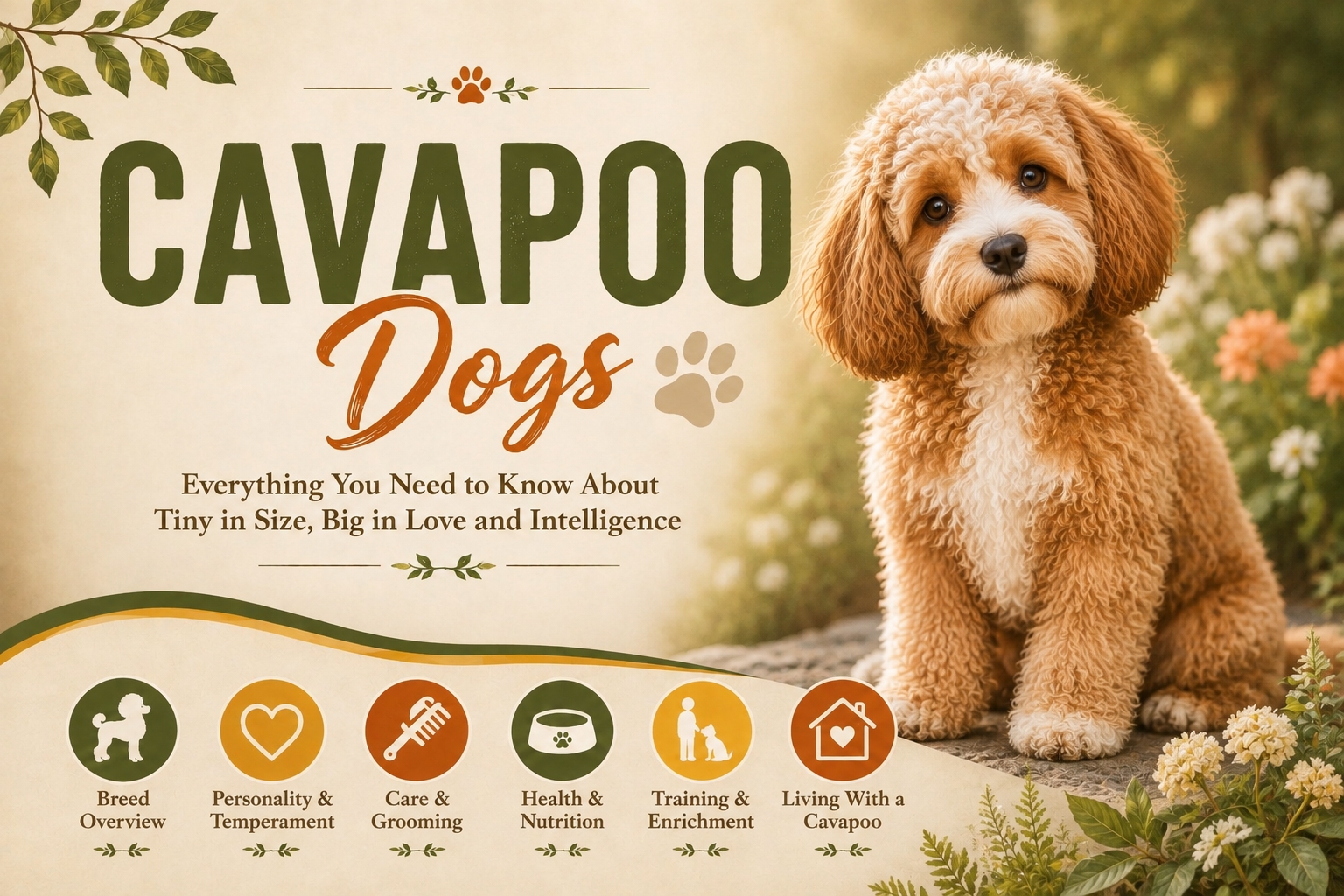
Affectionate, clever, sociable and almost impossibly cute, the Cavapoo is one of the most popular small designer dogs. This Cavalier King Charles Spaniel–Poodle cross is prized as a companion dog, but there is much more to choosing one than a teddy-bear face and a curly coat.
This complete Cavapoo guide covers what prospective and current owners most want to know: how big a Cavapoo gets when full grown, temperament, training, grooming and haircuts, shedding, whether Cavapoos are hypoallergenic, health concerns, lifespan, puppies, breeders, adoption and responsible rehoming.
Introduction to the Cavapoo Dog Breed
The Cavapoo is a small companion dog created by crossing a Cavalier King Charles Spaniel with a Poodle, usually a Toy Poodle or Miniature Poodle. You may also hear the mix called a Cavalier Poodle, Cavalier Poodle cross, or Cavoodle—the latter name is especially familiar in Australia.
Cavapoos appeal to people who want a friendly, people-oriented small dog with some of the Poodle’s intelligence and lower-shedding coat characteristics combined with the Cavalier’s gentle, companionable nature. However, a Cavapoo is a crossbreed rather than a standardized purebred. Size, coat, shedding, temperament and even grooming requirements can vary significantly from one dog to another.
That variability is important. A responsible breeder can make thoughtful choices about health, temperament and parent size, but nobody can guarantee that every puppy will inherit only the traits a buyer finds desirable. The best approach is to learn about both parent breeds and be prepared for a dog that may fall anywhere between them.
Cavapoo at a Glance
- Breed type: Cavalier King Charles Spaniel × Poodle designer cross
- Also called: Cavoodle, Cavalier Poodle, Cavalier Poodle cross
- Typical adult size: Small; many full-grown Cavapoos fall roughly in the 9–25 lb range, depending heavily on the Poodle parent and family lines
- Typical height: Often around 9–14 inches at the shoulder, with variation
- Life expectancy: Commonly around 12–15 years, although individual lifespan varies
- Temperament: Affectionate, intelligent, social, playful and people-oriented
- Exercise: Moderate; daily walks plus play and mental stimulation
- Grooming: Moderate to high, depending on coat type
- Shedding: Low to moderate; not guaranteed to be non-shedding
- Apartment friendly: Usually, provided exercise, training and companionship needs are met
- Best suited to: Families, couples, singles, many seniors and owners who want an interactive companion dog
Dogs Central bottom line: The Cavapoo can be an outstanding little companion for people who have time for grooming, training, daily interaction and plenty of togetherness. If you want a very independent dog that is content to spend long days alone, this may not be your best match.
Cavapoo History & Origin
The Cavapoo belongs to the modern group of intentionally bred Poodle crosses commonly referred to as designer dogs. The exact beginnings of the Cavapoo are not documented in the same way as those of an established purebred breed, and there is no single official breed standard governing every Cavapoo.
The idea behind the cross is easy to understand. The Cavalier King Charles Spaniel is a gentle, affectionate toy spaniel known for close companionship, while the Poodle is exceptionally intelligent, athletic and comparatively low shedding. Crossing the two can produce charming companion dogs, but inheritance is never a simple fifty-fifty recipe.
Cavapoos are not eligible for traditional AKC purebred registration because they are mixed-breed dogs. Mixed-breed dogs can, however, participate in many American Kennel Club activities through the AKC Canine Partners program.
The Cavapoo has become particularly popular in the United States, Canada, the United Kingdom and Australia. In Australia, the name Cavoodle is commonly used for the same Cavalier–Poodle mix.
Cavapoo Temperament & Personality
People often describe the Cavapoo as affectionate, cheerful and eager to be involved in whatever the family is doing. That reputation makes sense when you look at the parent breeds: Cavaliers are well known for their gentle, people-focused nature, while Poodles are bright, active and highly trainable.
A well-socialized Cavapoo may be friendly with visitors, devoted to family members and playful without needing the intensity of a working terrier. Many enjoy cuddling every bit as much as walking, training or playing games.
There is a flip side to that sociability. Some Cavapoos become very dependent on human company. Dogs that are never taught how to relax alone may bark, pace, become destructive or show other signs of distress when their owners leave. Independence training should therefore begin early, in gentle, age-appropriate steps.
Common Cavapoo Personality Traits
- Affectionate and strongly attached to their people
- Bright and quick to learn
- Playful and often clownish
- Usually sociable when properly socialized
- Sensitive to harsh handling or punishment
- Often eager to participate in family activities
- Potentially prone to excessive attachment if independence is never encouraged
Remember that crossbreeds vary. One Cavapoo may be relaxed and spaniel-like, while another may inherit much more of the Poodle’s intensity and enthusiasm.
What Does a Cavapoo Look Like?
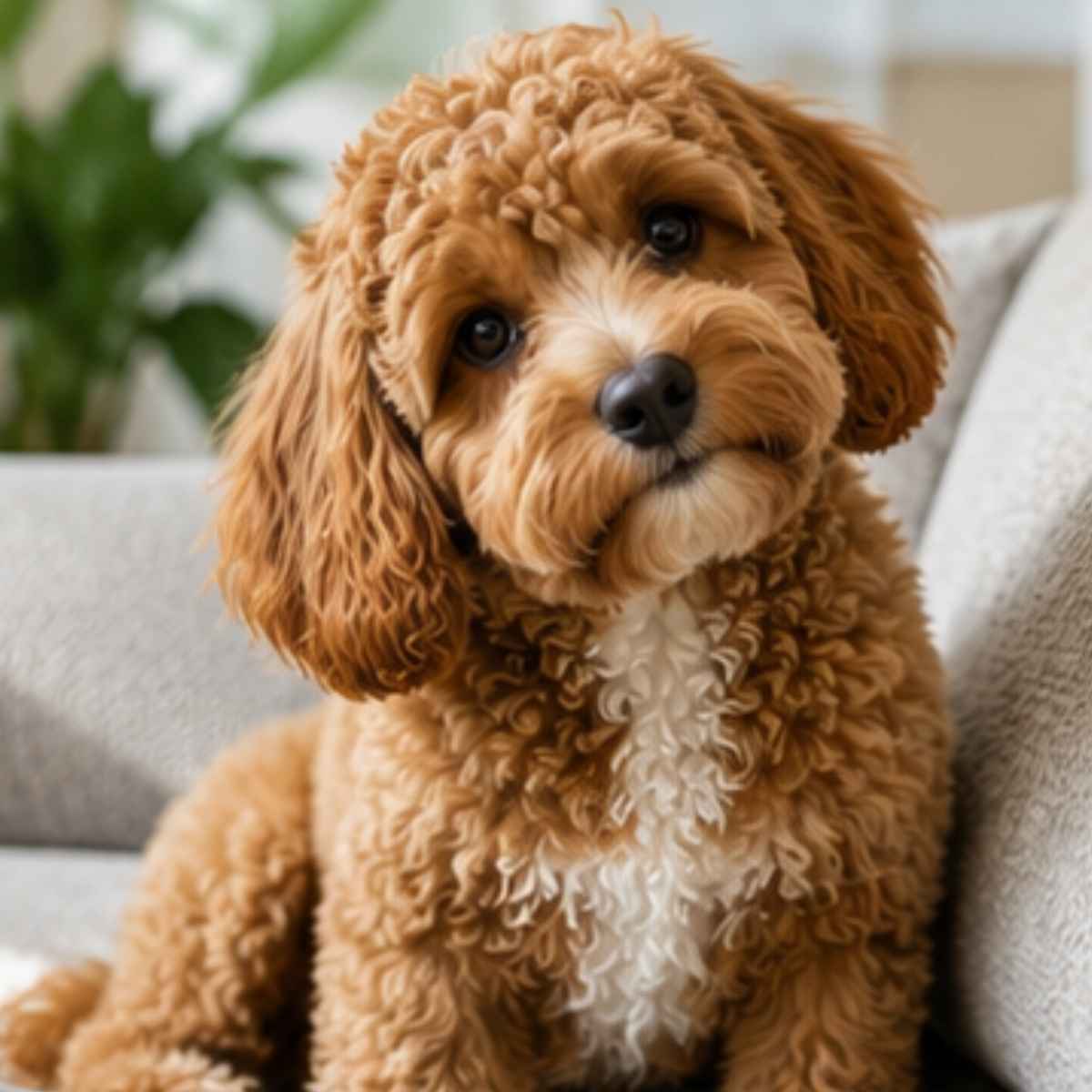
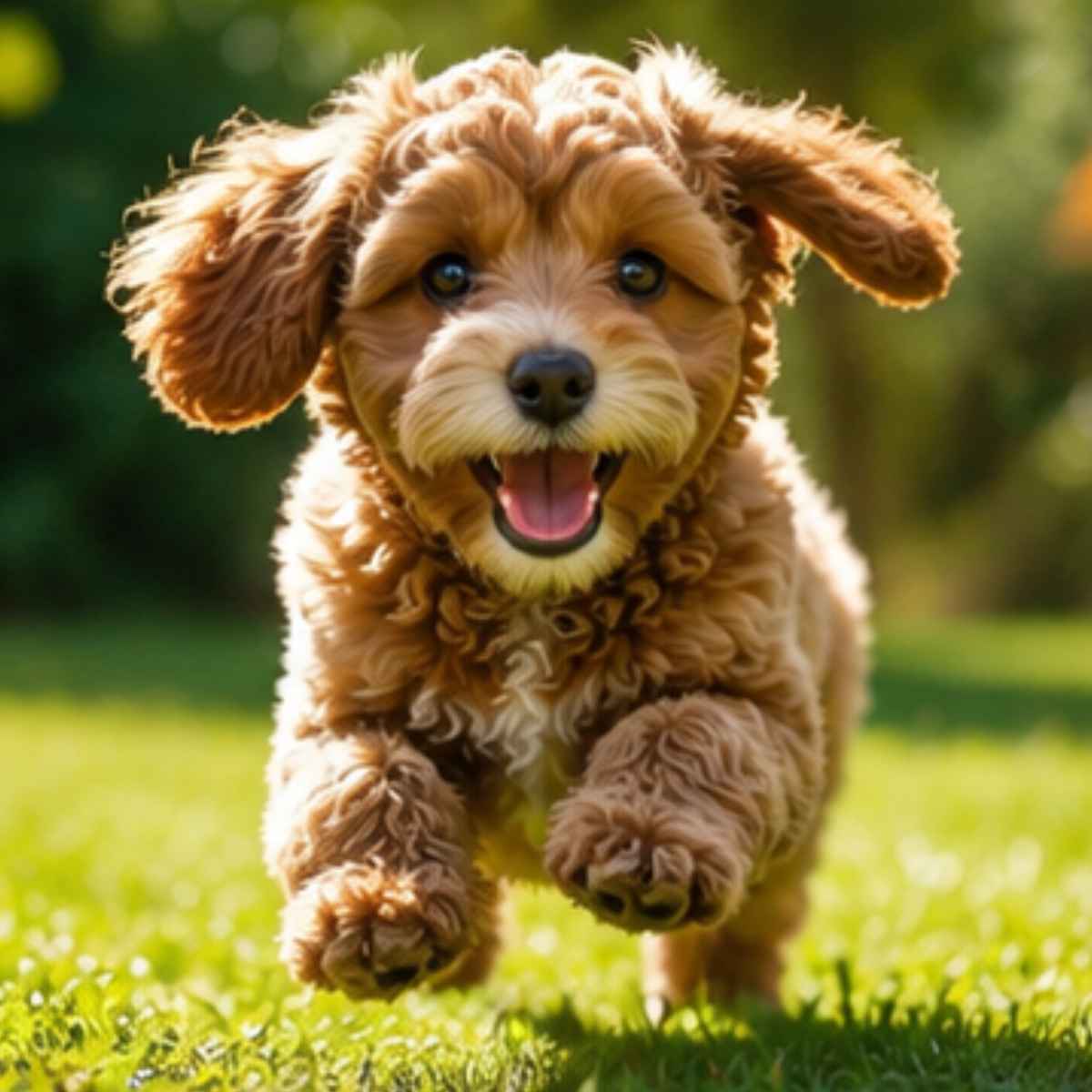
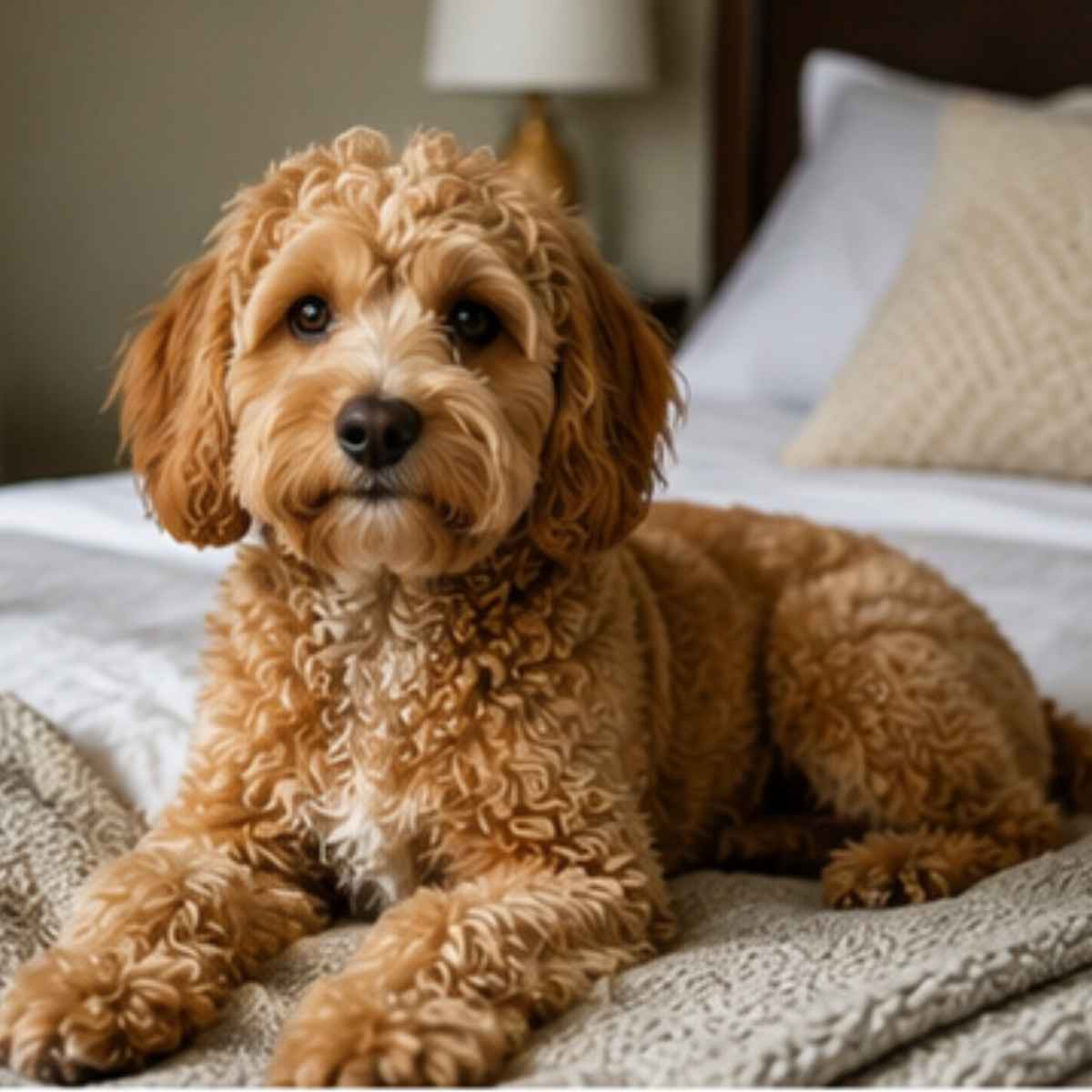
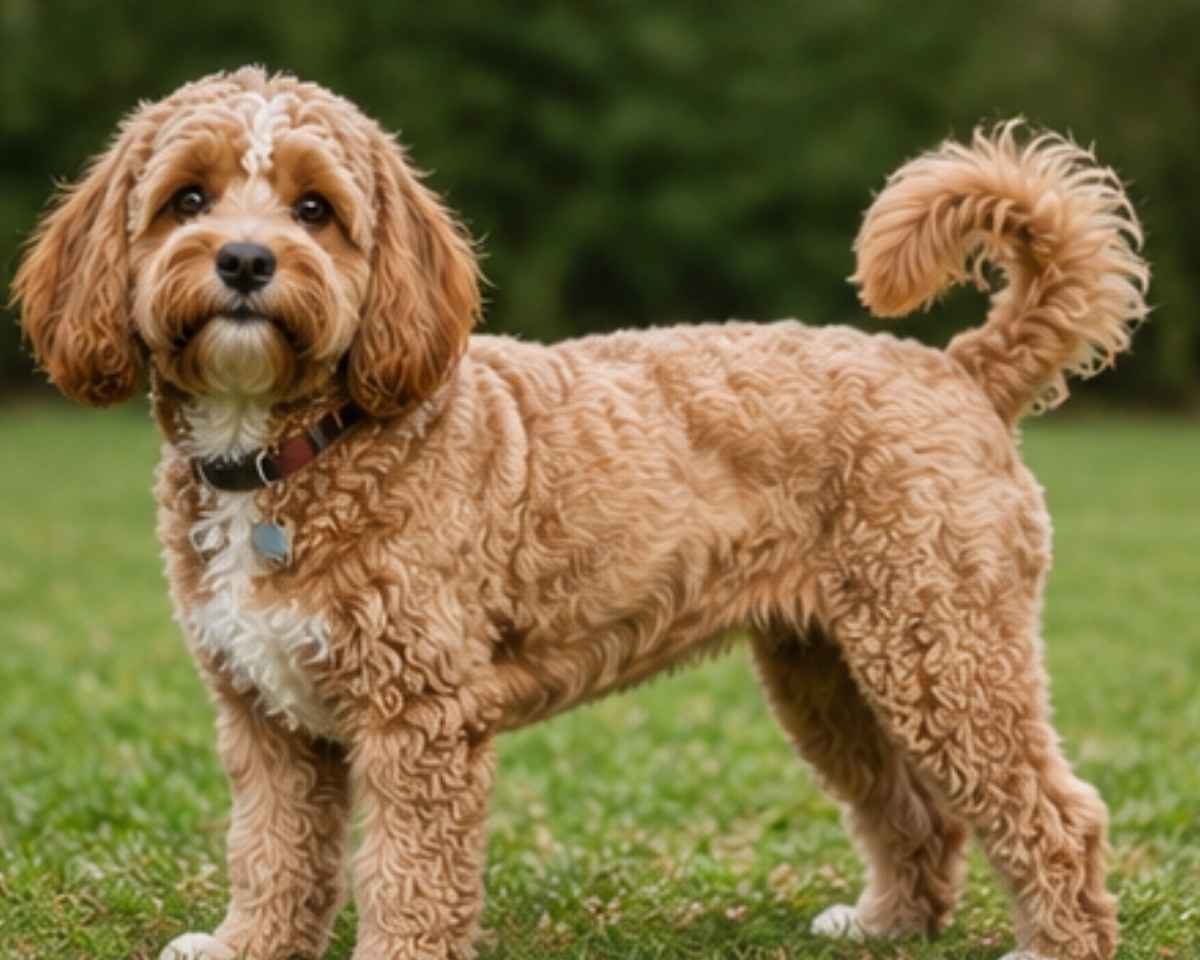
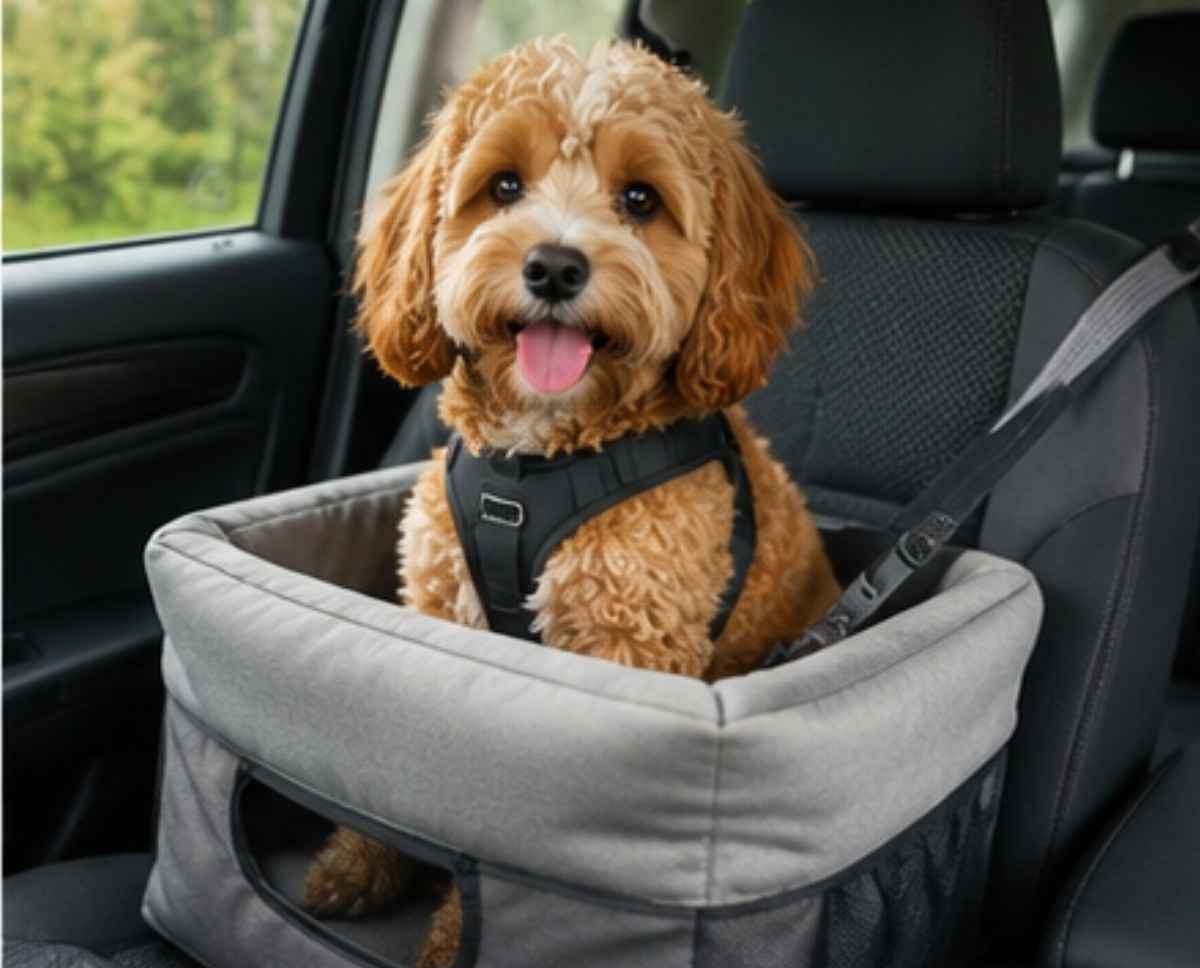
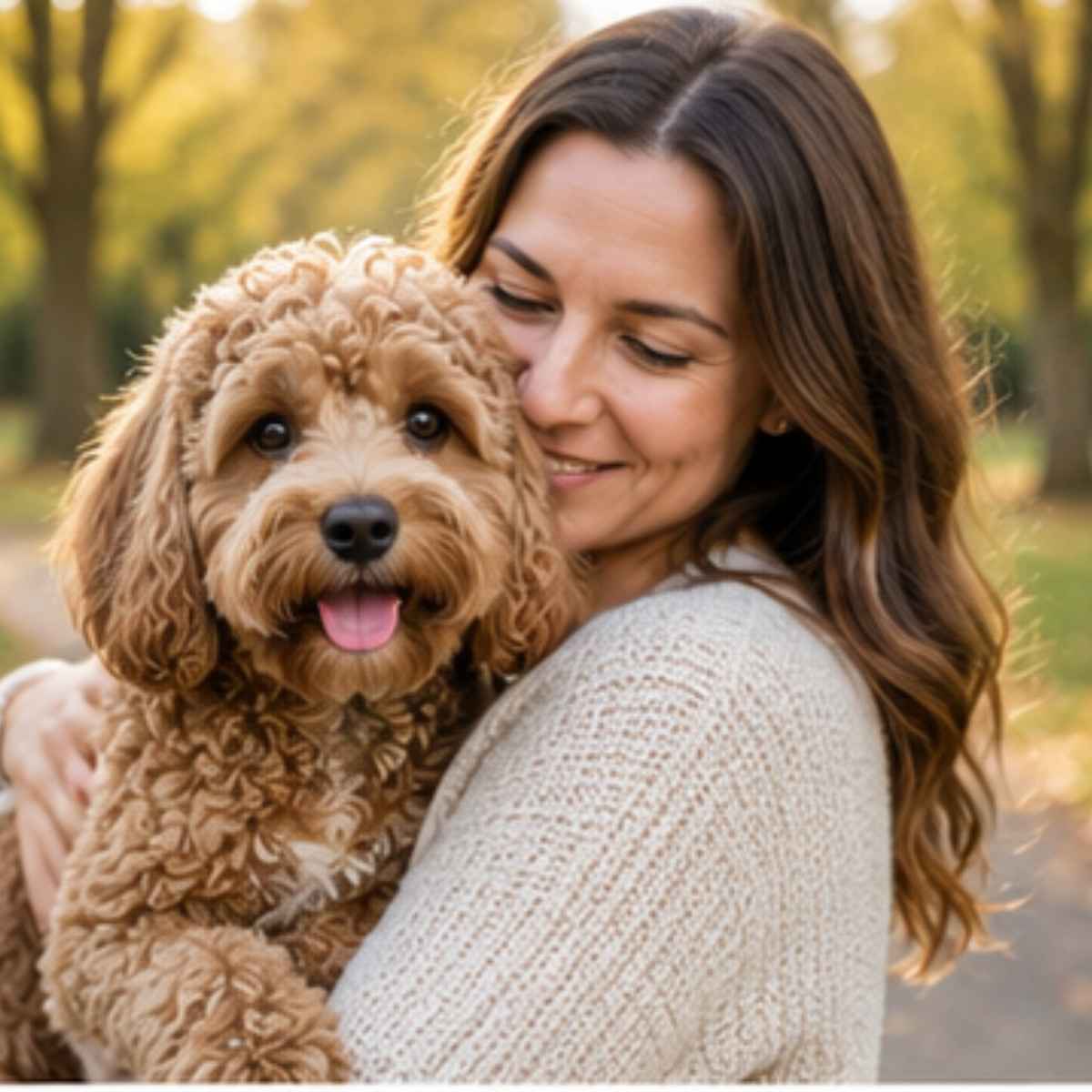
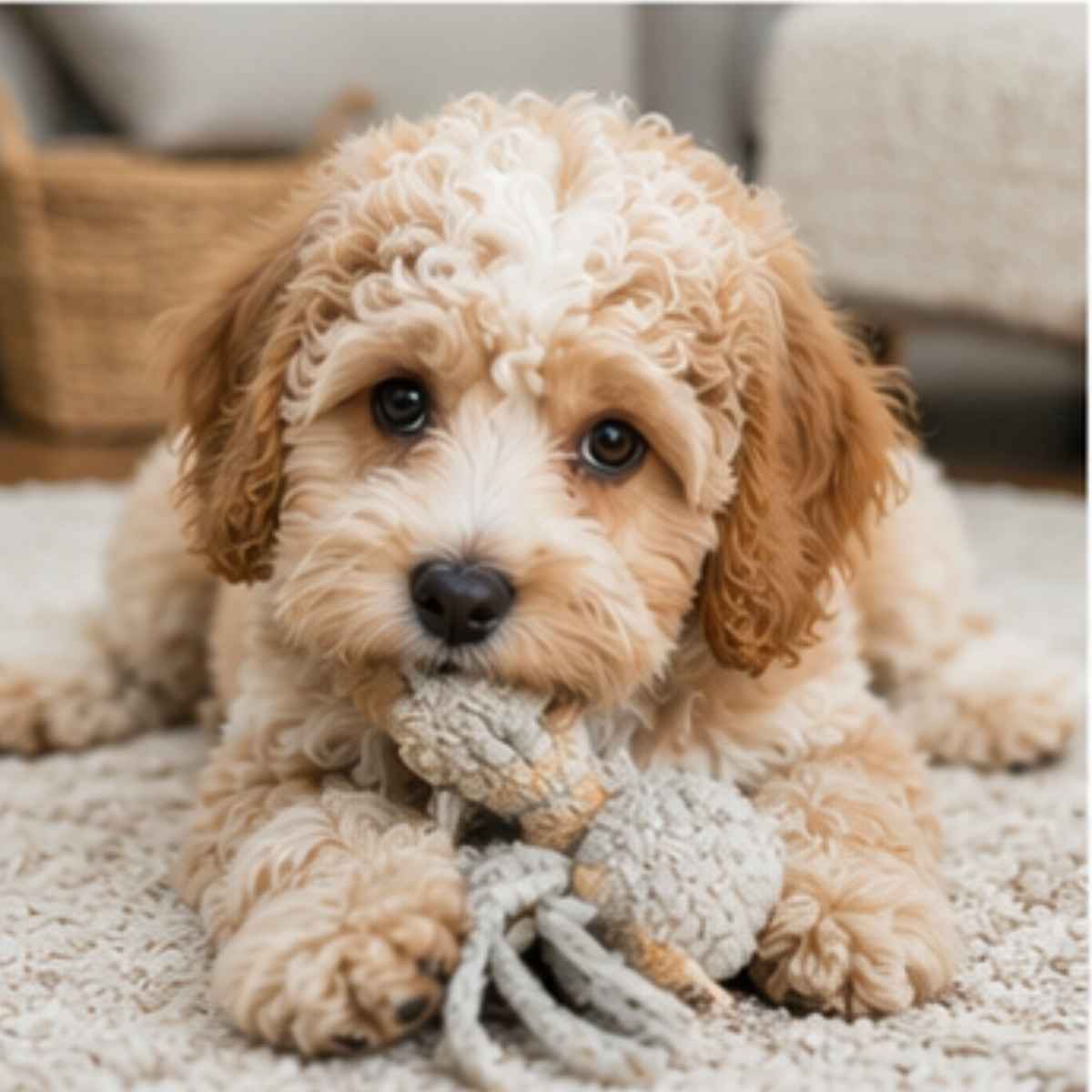
The classic Cavapoo has the soft, appealing expression that has made the mix so popular: large expressive eyes, drop ears, a compact body and a fluffy or wavy coat. But there is no single required Cavapoo appearance.
Some have loose waves and a noticeably spaniel-like face. Others are curlier and look much more Poodle-like. Straight-haired Cavapoos also occur. Coat texture can even change as a puppy matures into an adult.
Because there is no official breed standard, appearance should never be the only reason to choose a breeder. Health, stable temperament, responsible puppy raising and verifiable health testing are far more important than producing a particular teddy-bear look.
Just click any image to view full size.
How Big Does a Cavapoo Get? Full-Grown Size & Weight
“Cavapoo full grown” and “how big will my Cavapoo get?” are among the most common questions prospective owners ask. The reason there is no single answer is that Cavapoos do not have a standardized adult size.
A Cavapoo produced from a Cavalier and Toy Poodle may mature considerably smaller than one produced from a Cavalier and larger Miniature Poodle. The size of grandparents and earlier generations matters as well.
As a practical guide, many adult Cavapoos fall somewhere around 9–25 pounds and roughly 9–14 inches at the shoulder. Some healthy adults fall outside those ranges. A breeder who knows the mature sizes of dogs across several generations can usually give a more useful estimate than someone who simply labels puppies “toy” or “mini.”
Predicting a Cavapoo Puppy’s Adult Size
Ask to see the actual weights and heights of both parents and, when possible, adult dogs from previous litters. Those real family measurements are more informative than a marketing label.
If adult size is especially important because of housing, travel, mobility or another practical concern, tell the breeder exactly what you need. No ethical breeder can promise an exact mature weight, but an experienced breeder should be willing to discuss realistic possibilities.
Toy Cavapoo, Mini Cavapoo & “Teacup Cavapoo” — What Do These Names Mean?
Terms such as Toy Cavapoo and Mini Cavapoo are widely used online, but they are not official Cavapoo size divisions. They generally refer to the size of Poodle used in the cross.
A Toy Cavapoo usually has a Toy Poodle parent or substantial Toy Poodle ancestry. A Mini Cavapoo usually has Miniature Poodle ancestry. Even then, puppies within the same litter can mature at different sizes.
“Teacup Cavapoo” is a marketing term, not a recognized size category. Extremely small size should never be prioritized over health, sound structure and responsible breeding. Be wary of sellers who guarantee unusually tiny adult weights or charge a premium simply for the word “teacup.”
F1, F1b, F2 and Multigenerational Cavapoos
You may see Cavapoo puppies advertised by generation. These labels describe ancestry rather than quality.
- F1 Cavapoo: Cavalier King Charles Spaniel × Poodle.
- F1b Cavapoo: An F1 Cavapoo bred back to one of the parent breeds, commonly a Poodle.
- F2 Cavapoo: Typically an F1 Cavapoo bred to another F1 Cavapoo.
- Multigenerational Cavapoo: Cavapoo-to-Cavapoo breeding beyond the first generations, with ancestry that may vary by breeding program.
An F1b Cavapoo with more Poodle ancestry may be more likely to have a curlier, lower-shedding coat, but generation labels do not guarantee coat type, allergy friendliness, temperament or health. Responsible breeding still depends on careful selection and health testing of the dogs being bred.
Cavapoo Coat Types & Colors
Cavapoo coats can be curly, wavy or comparatively straight. Wavy “fleece” coats are especially popular, but coat type can vary considerably even among littermates.
Common Cavapoo colors include:
- Red
- Apricot
- Cream
- White
- Black
- Brown or chocolate
- Black and white
- Tan and white
- Particolor combinations
- Tricolor patterns influenced by the Cavalier parent
Color may lighten or change as a Cavapoo matures, particularly when Poodle fading genes are involved. Choose a puppy for health, temperament and suitability rather than color alone.
Are Cavapoos Hypoallergenic? Do Cavapoos Shed?
No dog is completely hypoallergenic. People with dog allergies usually react to proteins associated with dander, saliva and other secretions rather than simply to loose hair.
Cavapoos are often described as hypoallergenic because Poodles tend to shed relatively little. Some Cavapoos do inherit a low-shedding, curly Poodle-type coat. Others shed more, particularly when their coat resembles the Cavalier side of the family.
If allergies are important in your household, do not rely on promises that a particular puppy is “100% hypoallergenic.” Spend time around adult dogs from the breeder’s lines if possible, discuss your allergies with your healthcare provider, and remember that coat type alone cannot guarantee whether an individual person will react.
For more help, see our guide to small dog breeds that don’t shed much and our guide to hypoallergenic small dogs.
Cavapoo Grooming, Haircuts & Coat Care
Cavapoos can be relatively high-maintenance in the grooming department. The soft coat that makes them so appealing can mat quickly, especially behind the ears, under the collar or harness, in the armpits and around the legs.
Many Cavapoos benefit from thorough brushing several times a week, with curlier or longer coats requiring more frequent attention. A comb should be able to pass gently through the coat to the skin; brushing only the fluffy outer layer can leave tight mats hidden underneath.
Many owners use a professional groomer approximately every six to eight weeks, although the ideal schedule depends on coat length, texture and the haircut chosen.
Popular Cavapoo Haircuts
- Puppy cut: A practical, even trim that keeps the coat manageable.
- Teddy bear cut: A rounded face and fluffy finish that emphasizes the classic Cavapoo look.
- Short summer trim: Easier to maintain, though sun and temperature protection still matter.
- Longer natural coat: Attractive, but usually requires much more frequent brushing and combing.
Routine care should also include nail trimming, dental care, ear checks and bathing as needed. Drop ears can trap moisture, so contact your veterinarian if you notice redness, odor, discharge or persistent scratching.
Cavapoo Exercise Needs
Most healthy adult Cavapoos need moderate daily exercise rather than marathon workouts. A combination of walks, play, training and sniffing opportunities generally suits them better than simply marching around the same block every day.
For many adults, roughly 45–60 minutes of activity spread through the day is a useful starting point, but needs vary with age, size, health and individual energy level. Puppies need shorter, age-appropriate sessions and should not be pushed into repetitive high-impact exercise while still developing.
Poodle influence can make some Cavapoos surprisingly athletic. Many enjoy retrieving, beginner agility, trick training, scent games and swimming when introduced safely.
Training a Cavapoo
Cavapoos are often easy to train because both parent breeds are intelligent and people-oriented. The Poodle is famously quick to learn, while Cavaliers are typically eager to please.
Use reward-based training with food, toys, praise and access to things your dog values. Short, upbeat sessions tend to work particularly well.
Training Priorities for Cavapoo Puppies
- House-training and a predictable toilet routine
- Comfortable crate or safe-area training
- Gentle handling for grooming, ears, paws and teeth
- Loose-leash walking
- Recall
- Polite greetings without jumping
- Learning to settle
- Gradual independence and calm alone-time practice
- Positive exposure to people, dogs, sounds, surfaces and everyday environments
Because Cavapoos can be sensitive, harsh corrections can damage confidence and are unnecessary. Consistency, clear routines and reinforcement of the behaviors you want are much more productive.
Are Cavapoos Good Family Dogs?
For many households, yes. Cavapoos are popular family companions because they tend to be affectionate, interactive and adaptable. They often enjoy being included in outings, games and quiet evenings at home.
The best match is a household that can provide companionship, grooming, daily activity and consistent training. Families who are away for very long stretches every day should think carefully about whether a highly social companion dog fits their routine.
Are Cavapoos Good With Children?
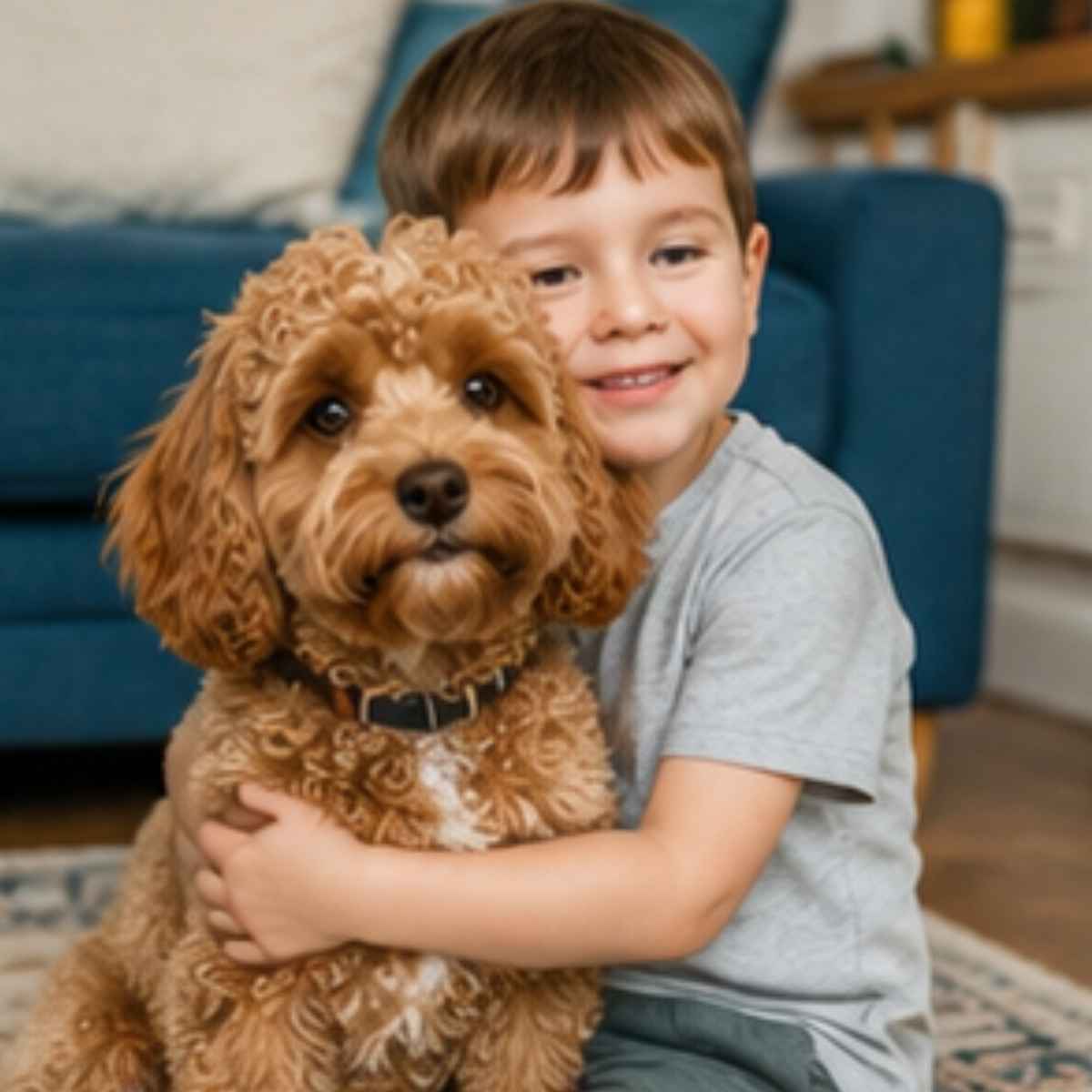
Many Cavapoos live happily with children, especially when the dog is well socialized and children understand how to interact respectfully with a small animal.
Very small Cavapoos can be physically vulnerable to rough handling. Young children and dogs should always be supervised together. Teach children not to climb on the dog, pull ears, disturb meals or sleep, or chase a dog that is trying to move away.
Are Cavapoos Good With Other Dogs and Cats?
Cavapoos are often sociable with other dogs and may live successfully with cats, especially when introduced carefully. Individual temperament and early experiences matter more than the label “Cavapoo.”
Introductions should be gradual, calm and supervised. Give every pet its own resting area, food space and ability to retreat. Do not assume that a friendly puppy automatically understands another animal’s boundaries.
Can Cavapoos Live in Apartments?
Yes. Their compact size makes Cavapoos physically well suited to apartments and condos, but small size does not eliminate exercise, training or enrichment needs.
The biggest apartment challenges are often barking and difficulty being left alone. Teaching calm behavior, providing appropriate daily activity and preventing separation-related problems is more important than square footage.
For more options, see our guide to the best small dogs for apartments.
Cavapoo Health Issues
Cavapoos can be healthy dogs, but crossing two breeds does not automatically remove inherited disease. A Cavapoo can potentially inherit conditions seen in either the Cavalier King Charles Spaniel or the Poodle.
Health concerns worth discussing with your veterinarian and breeder include:
- Mitral valve heart disease: An especially important concern in Cavalier lines.
- Patellar luxation: A kneecap problem found in several small breeds, including Cavaliers and Toy/Miniature Poodles.
- Hip dysplasia: Both Cavalier and Miniature Poodle breeding programs may include hip evaluation.
- Eye disorders: Both parent breeds have recommended ophthalmic screening.
- Progressive retinal atrophy (PRA-prcd): DNA testing is recommended for Toy and Miniature Poodles.
- Syringomyelia and related neurological concerns: Seen in Cavalier King Charles Spaniels and worth discussing with a knowledgeable breeder and veterinarian.
- Ear problems: Floppy, hair-covered ears can be prone to moisture and debris buildup.
- Dental disease: Small dogs benefit from a consistent dental-care routine.
Health Testing to Ask a Cavapoo Breeder About
Because Cavapoos combine two breeds, responsible breeders should understand the recommended health screening for both parent breeds, not merely run a generic DNA panel.
For Cavalier King Charles Spaniels, the AKC-listed parent-club recommendations include patella, hip, cardiac and ophthalmologist evaluations. For Miniature Poodles, recommendations include patella, hip and ophthalmologist evaluations plus PRA-prcd DNA testing. Toy Poodle recommendations include patella and ophthalmologist evaluations plus PRA-prcd DNA testing.
Ask for documentation rather than accepting “vet checked,” “health guaranteed,” or “DNA tested” as substitutes for complete parent-specific screening.
Important: This section is general educational information, not veterinary advice. If your Cavapoo has symptoms or you are concerned about an inherited condition, consult your veterinarian.
How Long Do Cavapoos Live?
A Cavapoo’s lifespan is commonly estimated at around 12–15 years, although individual dogs may live shorter or longer lives.
Genetics matter, but so do everyday choices: keeping a healthy body condition, providing appropriate exercise, maintaining dental care, attending regular veterinary visits and seeking treatment promptly when something changes can all support long-term wellbeing.
Cavapoo Nutrition & Feeding
Feed your Cavapoo a complete and balanced dog food appropriate for life stage, body size and activity level. Puppies need food formulated for growth, while adults should be fed to maintain a lean, healthy body condition.
Package feeding charts are starting points rather than exact prescriptions. Monitor your dog’s body condition and adjust portions with guidance from your veterinarian. Treats, chews and training rewards count toward daily calories.
Because Cavapoos are small and often highly food motivated, gradual weight gain can be easy to miss under a fluffy coat. Make a habit of feeling the ribs and monitoring the waist rather than judging body condition only by appearance.
Fresh water should always be available. If your Cavapoo has digestive problems, suspected food allergies, pancreatitis, kidney disease or another medical condition, ask your veterinarian for individualized nutrition advice.
Life With a Cavapoo
Living with a Cavapoo usually means living with a dog who wants to participate. They may follow you from room to room, supervise household chores, curl up beside you while you work and suddenly announce that it is time for a game.
For the right owner, that close companionship is one of the breed mix’s greatest pleasures. For someone who prefers a distant, highly independent dog, it can feel demanding.
Expect to build grooming, walking, training and play into your normal routine. Cavapoos generally do best when those needs are treated as part of family life rather than occasional chores.
Cavapoo Enrichment Activities
Exercise keeps the body active; enrichment gives a clever Cavapoo’s brain something worthwhile to do.
- Food puzzles and stuffed enrichment toys
- Hide-and-seek with treats or toys
- Short trick-training sessions
- Sniff walks where the dog gets time to investigate
- Gentle retrieve games
- Beginner scent work
- Age-appropriate agility foundations
- Learning names for favorite toys
- Mat training and relaxation games
- Rotating toys rather than leaving everything out all the time
Choose activities that suit your dog’s size, confidence, health and age. Enrichment should be fun, not frustrating.
Cavapoo Puppies: What to Expect
Cavapoo puppies are undeniably appealing, but the first year is a period of rapid learning rather than an extended photo shoot. A puppy needs frequent toilet breaks, supervised exploration, sleep, socialization, grooming practice and consistent training.
Begin brushing, combing, tooth care, ear handling and nail handling early so routine care does not become a battle later. Puppies should also learn gradually that short periods away from their favorite person are safe and normal.
Ask your breeder what food the puppy is eating, what socialization has already been provided, how the puppy has been introduced to grooming, what veterinary care has been completed and which health tests were performed on the parents.
Need naming inspiration? Visit our existing Cavapoo dog names guide.
Finding Cavapoo Puppies for Sale Near You
Searches for Cavapoo puppies for sale, Cavapoos for sale near me and Cavapoo puppies near me are extremely popular. That demand also attracts high-volume sellers, brokers and scammers.
Do not choose a puppy simply because it is nearby or available immediately. Take time to verify the breeder, understand the health testing behind the litter and learn how the puppies are raised.
We’ve created a dedicated resource for this shopping-intent topic so the main breed guide can remain focused on understanding the dog itself.
Next step: Read our guide to finding Cavapoo puppies for sale near you.
That guide can cover current pricing factors, how to evaluate advertisements, questions to ask, warning signs, contracts, deposits, transportation, scams and how to locate responsible breeders.
Cavapoo Breeders: What Responsible Breeding Looks Like
A responsible Cavapoo breeder should know far more than how to produce puppies with curly coats. Look for someone who understands the health concerns of both Cavaliers and Poodles, selects stable parents, raises puppies in an enriched environment and is willing to answer difficult questions.
Questions to Ask a Cavapoo Breeder
- What health testing was completed on both parents?
- Can I see the actual test results?
- Which size of Poodle is in this breeding?
- What are the mature sizes of dogs in previous generations?
- How are the puppies socialized before leaving?
- How have they been introduced to grooming and handling?
- What happens if I can no longer keep the dog?
- What support do you provide after the puppy goes home?
- Can I meet the mother and see where the puppies are raised?
Looking for a breeder? Visit the Dogs Central Cavapoo Breeders Directory.
A directory listing should be the beginning of your research, not the end. Buyers are still responsible for interviewing breeders and verifying health information for themselves.
Cavapoo Adoption & Rehoming
Cavapoos are extremely popular, which means well-adjusted young dogs may not remain available for adoption for long. Rescue is still worth exploring, particularly if you are open to an adult dog or Cavapoo-type mix, but availability can be unpredictable.
Where we can often provide more immediate help is responsible rehoming. Life changes. Health, housing, finances, family circumstances or an owner’s ability to provide care may change even when the dog is deeply loved.
If you need to rehome a Cavapoo, avoid rushing into a “free to good home” advertisement. A thoughtful home-to-home process gives you time to describe your dog’s needs honestly, screen potential adopters and choose a family whose lifestyle is genuinely suitable.
Pet Rehoming Network helps owners find carefully considered new homes for dogs and other companion animals while allowing pets to remain with their owners during the search whenever possible.
Cavapoo vs. Cockapoo, Maltipoo, Havapoo & Other Poodle Mixes
If you like the Cavapoo but are still comparing small designer dogs, look at the parent breeds behind each mix rather than choosing by appearance alone.
Cavapoo vs. Cockapoo
The Cockapoo combines a Poodle with a Cocker Spaniel and may be somewhat more energetic or sporting in character. Cavapoos often appeal to people looking for a smaller, very companion-focused dog. Individual dogs vary considerably.
Cavapoo vs. Maltipoo
The Maltipoo combines a Maltese with a Poodle and is often smaller than many Cavapoos. Both mixes can be affectionate and low shedding, but neither is guaranteed to be hypoallergenic.
Cavapoo vs. Havapoo
Havapoos combine a Havanese with a Poodle. Both mixes are typically social companion dogs with significant grooming needs. Family lines and individual temperament matter more than broad stereotypes.
Explore more in our Small Designer Dog Breeds Guide.
Frequently Asked Questions About Cavapoos
What is a Cavapoo mixed with?
A Cavapoo is a cross between a Cavalier King Charles Spaniel and a Poodle, usually a Toy or Miniature Poodle. Cavapoo is also commonly called Cavoodle in Australia.
How big will a Cavapoo get?
There is no single full-grown Cavapoo size because the mix is not standardized. Many adults are roughly 9–25 pounds and around 9–14 inches tall, but parent size and family genetics can produce dogs outside this range.
Are Cavapoos hypoallergenic?
No dog is completely hypoallergenic. Some Cavapoos inherit a low-shedding Poodle-type coat and may release less loose hair, but shedding and allergen exposure vary from dog to dog.
Do Cavapoos shed?
Some shed very little; others shed noticeably more. Curly Poodle-like coats tend to retain more loose hair, while straighter Cavalier-like coats may shed more freely.
Are Cavapoos easy to train?
Many are. Both parent breeds are intelligent and people-oriented. Reward-based training, early socialization and consistent routines generally suit Cavapoos well.
Are Cavapoos good family dogs?
They can be excellent family companions when their grooming, exercise, training and social needs are met. Small Cavapoos need gentle handling around young children.
How long do Cavapoos live?
Many Cavapoos live around 12–15 years, although genetics, health, body condition, preventive care and individual circumstances all influence lifespan.
What is an F1b Cavapoo?
An F1b Cavapoo is typically an F1 Cavapoo bred back to one of the original parent breeds, most commonly a Poodle. The label describes ancestry; it does not guarantee coat, temperament or health.
What is a Toy Cavapoo?
Toy Cavapoo is an informal term generally used when Toy Poodle ancestry is involved. It is not an official Cavapoo size category, and adult size still varies.
Is a “teacup Cavapoo” a real breed size?
No. “Teacup” is a marketing term rather than a recognized Cavapoo size category. Health and sound breeding should always matter more than producing the smallest possible dog.
How much does a Cavapoo cost?
Cavapoo prices vary widely by region, breeder, health testing, demand, puppy age and other factors. Rather than using price alone to judge a breeder, focus on documented health testing, temperament, puppy raising and lifetime breeder support. See our dedicated Cavapoo puppies for sale guide for purchasing guidance.
Are Cavapoos high maintenance?
They can be moderately high maintenance because their coat needs regular brushing and professional grooming, and their social nature means they need substantial interaction. They are not usually difficult dogs, but they are not “maintenance free.”
Trusted Cavapoo Health & Breed Resources
Because the Cavapoo is a crossbreed, the most useful health information comes from understanding both parent breeds.
About This Cavapoo Guide
Our goal at Dogs Central is to build a genuinely useful, continually improving resource for people who live with—or are considering—small dogs. This Cavapoo guide is designed to answer the practical questions owners ask most often while also directing readers to deeper resources when a topic deserves its own page.
As our Cavapoo library grows, we’ll add original photographs, infographics, grooming resources, puppy-buying guidance, breeder listings, comparison guides and real-life Cavapoo stories.
This guide is growing. Bookmark it and check back as Dogs Central continues expanding its Cavapoo resources.
Written for Dogs Central by Deborah G. Moore.