
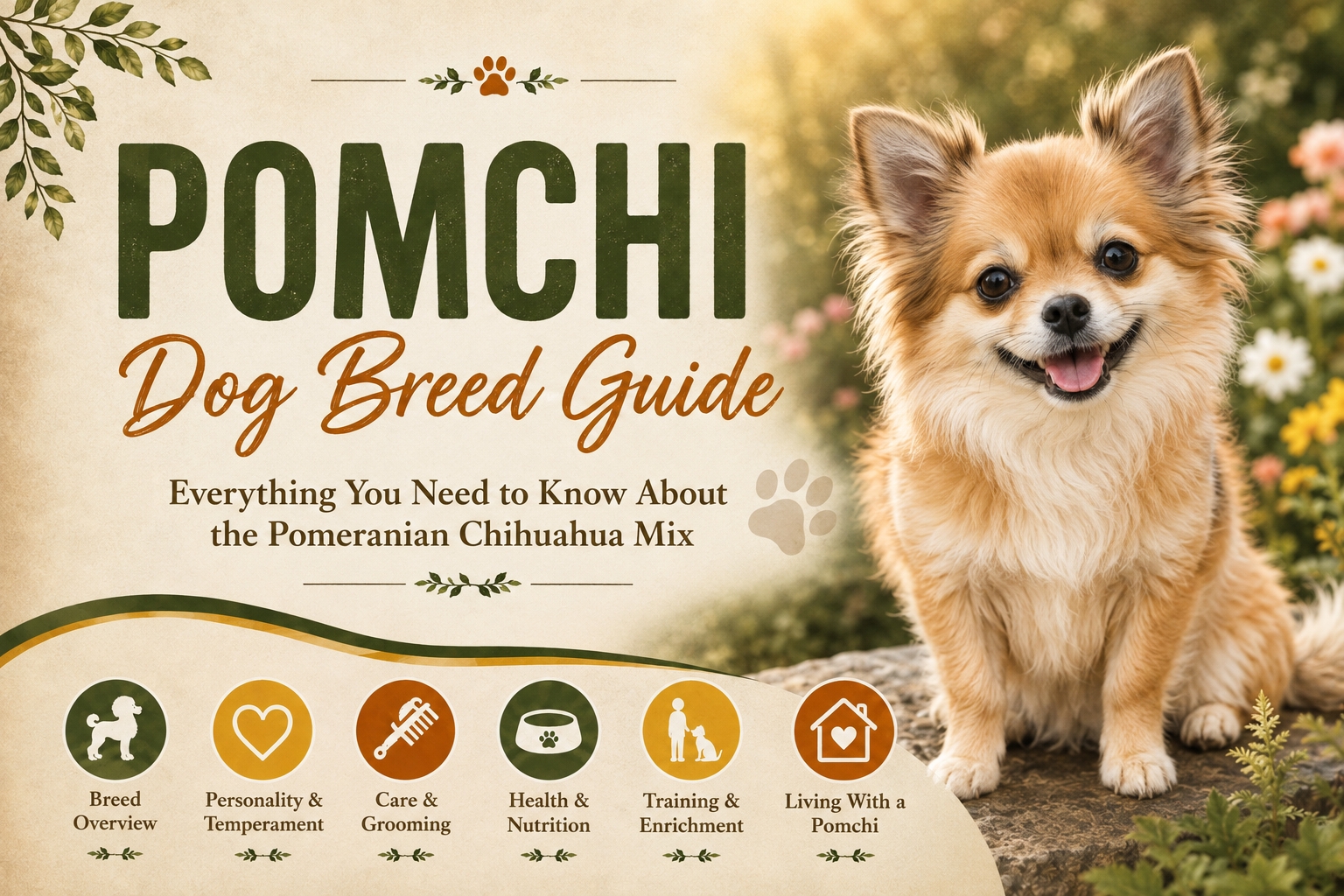
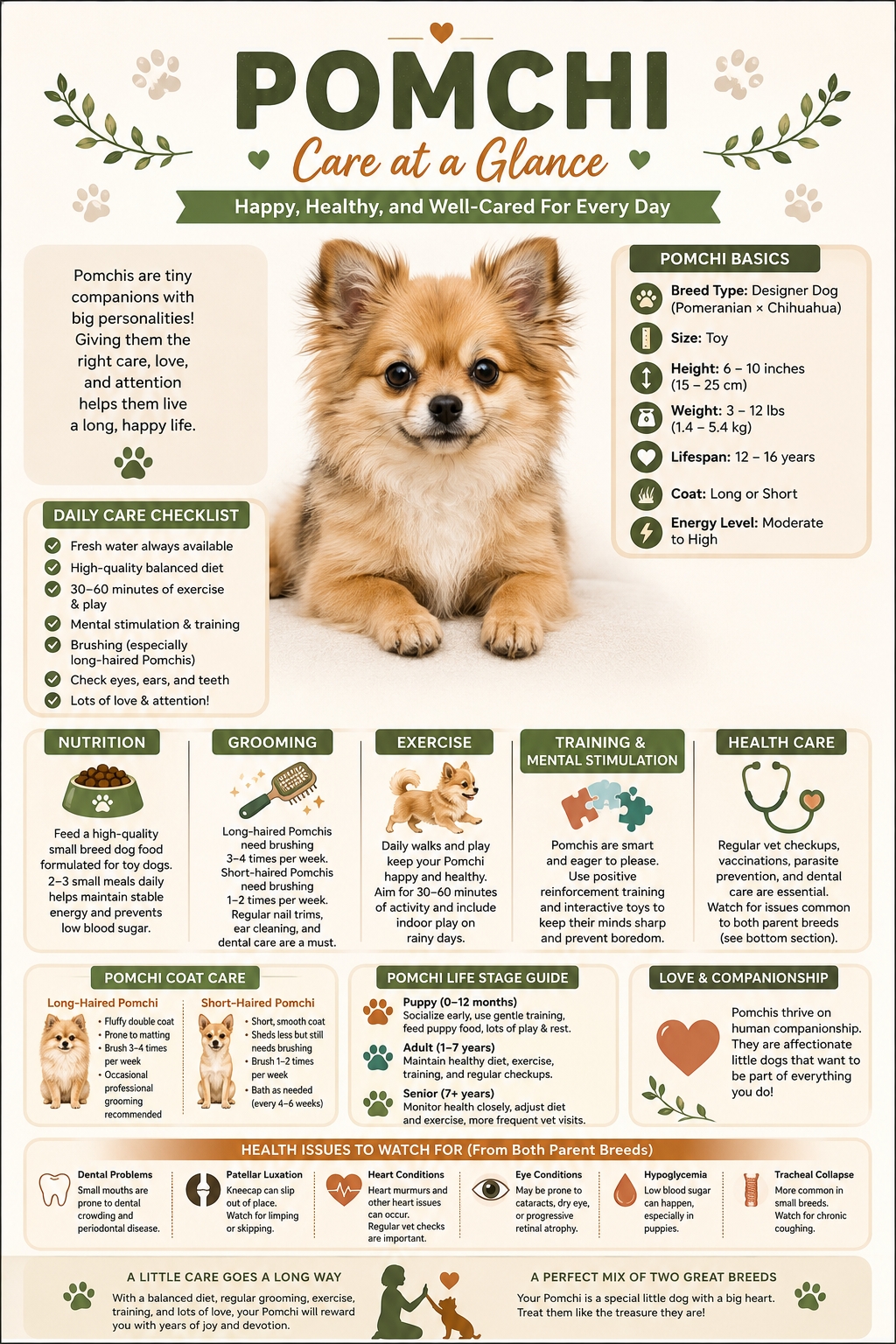
Tiny dog. Enormous opinions. The Pomchi—a Pomeranian Chihuahua mix—combines two of the world’s smallest companion breeds, both famous for packing far more personality into a few pounds than seems physically possible.
A Pomchi may be fluffy and fox-faced like a Pomeranian, sleek and fine-coated like a smooth Chihuahua, or land somewhere delightfully in between. The same variability applies to personality. Many are affectionate, alert, clever and intensely attached to their people, but some lean toward the outgoing showmanship of the Pom while others inherit more of the Chihuahua’s one-person devotion and reserve around strangers.

That unpredictability is part of understanding any designer dog. A Pomchi is not a standardized purebred breed, and there is no official formula guaranteeing a particular adult size, coat, color or temperament. Prospective owners should learn about both the Pomeranian and Chihuahua before deciding whether this little cross is right for them.
This complete Dogs Central guide covers what people most often want to know about the Pomeranian Chihuahua mix: full-grown size and weight, short- and long-haired Pomchis, temperament, barking, grooming, shedding, health issues, lifespan, feeding, training, puppies, responsible breeders, adoption and everyday life with one of these charismatic little dogs.
Pomchi at a Glance
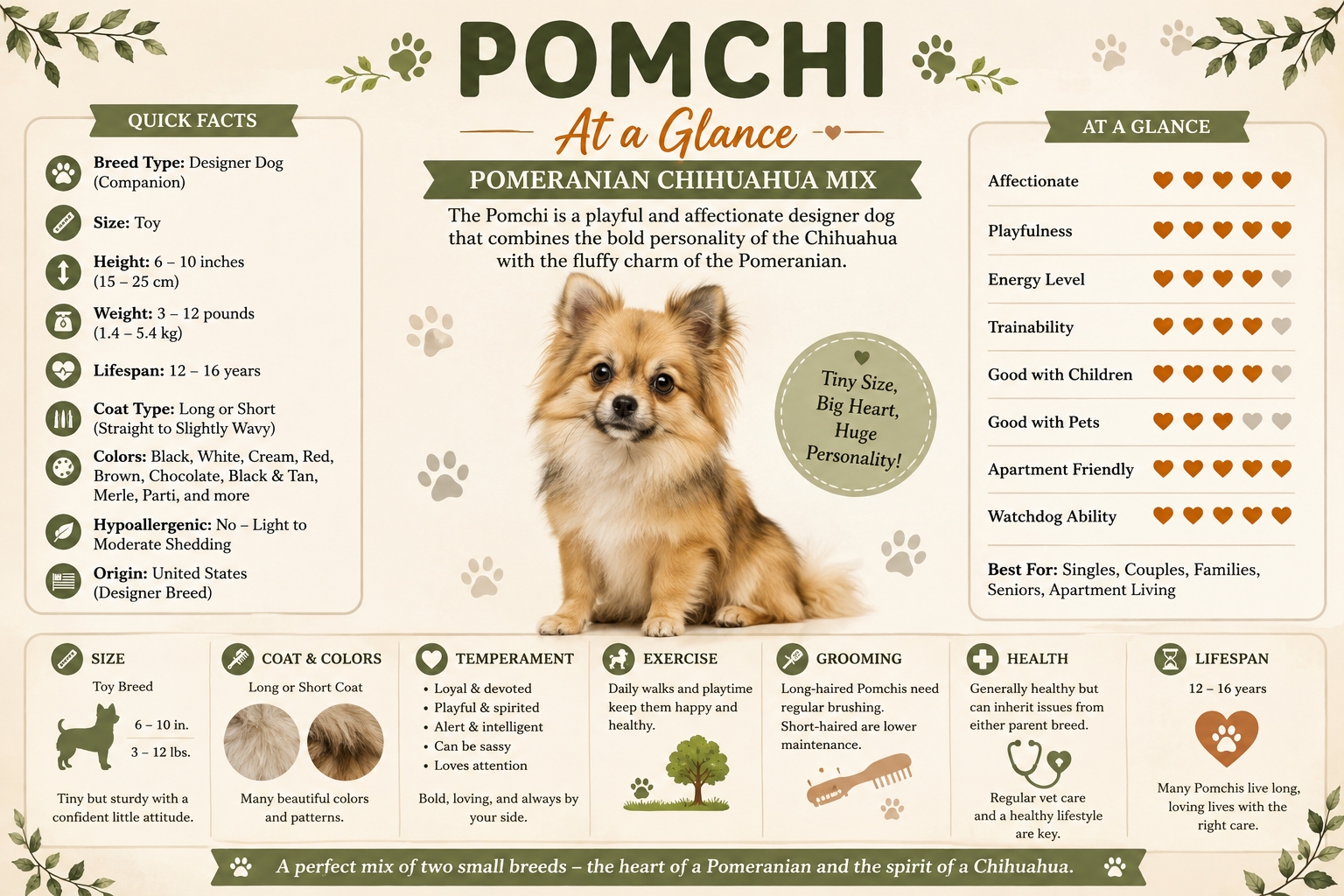
| Other names | Pomeranian Chihuahua mix, Chihuahua Pomeranian mix; “Pomchi” is the most widely used designer name |
|---|---|
| Parent breeds | Pomeranian × Chihuahua |
| Breed type | Designer crossbreed / mixed-breed companion dog |
| Typical adult weight | Often about 4–10 pounds; individuals can fall outside this range |
| Typical height | Often roughly 6–10 inches at the shoulder, with variation |
| Coat | Short, medium or longer; smooth, plush or fluffy depending on inheritance |
| Colors | Black, black and tan, cream, white, chocolate/brown, red/orange, sable and many combinations |
| Shedding | Low to moderate or more noticeable seasonally; varies substantially by coat |
| Hypoallergenic? | No |
| Energy | Moderate; playful and lively but exercise needs are manageable for most homes |
| Trainability | Good with patient, positive training; consistency matters |
| Barking | Often moderate to high if alert barking is not thoughtfully managed |
| Typical lifespan | Often around 12–16 years; individual longevity varies |
| Apartment friendly | Yes, provided barking, exercise and house-training are addressed |
| Best with children | Usually older, gentle, dog-savvy children because of the Pomchi’s tiny size |
| Best suited to | People wanting a very small, affectionate, interactive companion and who enjoy having a dog closely involved in daily life |
Dogs Central reality check: Because the Pomchi is a cross between two breeds rather than a standardized purebred, these figures are useful ranges—not guarantees. A puppy’s adult coat, size and temperament cannot be predicted with perfect accuracy.
What Is a Pomchi?
 A Pomchi is a Pomeranian Chihuahua mix. The name combines “Pom” from Pomeranian with “Chi” from Chihuahua. You may also see people use phrases such as Chihuahua Pomeranian mix, Pomeranian-Chihuahua cross or simply Pom/Chi mix.
The Pomchi is not an American Kennel Club-recognized purebred breed and does not have one official breed standard dictating exactly how every Pomchi should look or behave. That distinction matters. Two healthy Pomchis can look surprisingly different while both being genuine crosses of the same two parent breeds.
One puppy may inherit a dense Pomeranian-like coat, compact body, small upright ears and plumed tail. A littermate may have a finer Chihuahua-style coat, more delicate build and a distinctly Chihuahua-like head. Temperament can vary too. Genetics do not divide themselves neatly into “50 percent Pom appearance plus 50 percent Chihuahua personality.”
Is a Pomchi the Same as a Chimeranian?
Some websites and breeders use other informal names for Pomeranian-Chihuahua crosses. “Pomchi” is the clearest and most commonly understood term. Regardless of the nickname, focus on the actual parentage, health and temperament rather than a fashionable label.
F1, F1b and Multigenerational Pomchis
An F1 Pomchi generally means a first-generation cross between a Pomeranian and a Chihuahua. An F1b may refer to a Pomchi bred back to one of the parent breeds, while later-generation Pomchis may have Pomchi parents or more complex pedigrees.
Generation labels describe ancestry; they do not guarantee adult size, coat length, shedding level, health or temperament. Ask to see the actual pedigree and health information for the parents rather than assuming “F1b” or “multigen” automatically means better or more predictable.
Explore the Dogs Central Small Designer Dog Breeds Guide
Pomchi History & the Two Parent Breeds
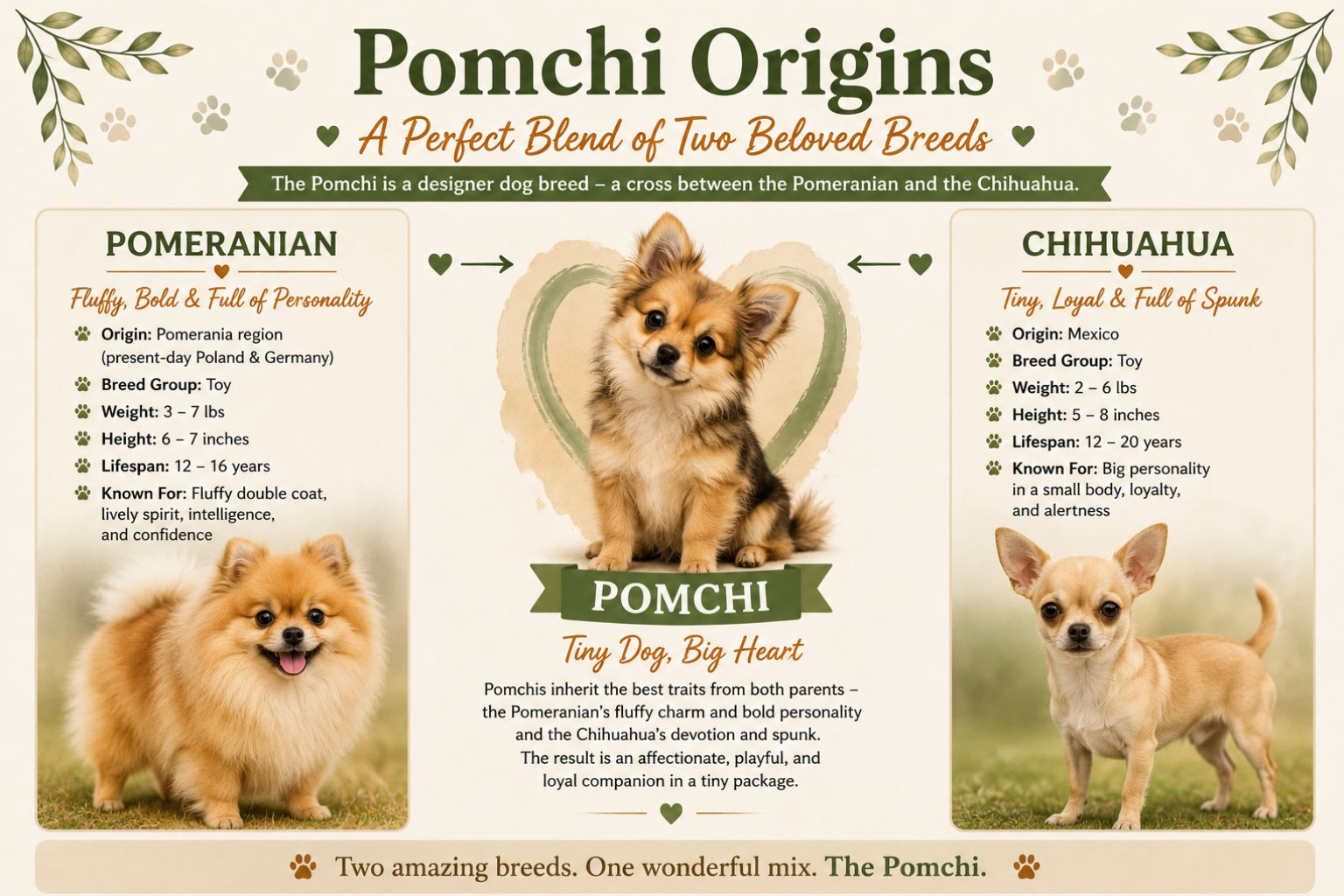
Like many modern designer crosses, the Pomchi does not have a neatly documented origin story with one founder and one universally accepted date. Pomeranians and Chihuahuas have certainly been crossed informally for many years, while intentional breeding and use of the name Pomchi became more visible as designer companion dogs grew in popularity.
The useful history, therefore, lies largely in understanding the two parent breeds.
The Pomeranian Parent
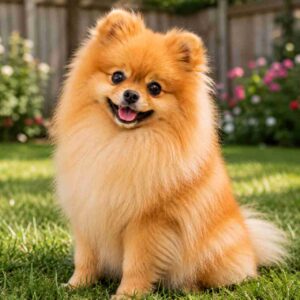 The Pomeranian is a tiny spitz descended from much larger northern dogs. Modern Poms typically weigh only a few pounds, but they retain the alertness, intelligence and confidence associated with their spitz ancestry. Their luxurious double coat, plumed tail, bright expression and extroverted personality make them instantly recognizable.
Pomeranians are often lively, curious, affectionate and very aware of what is happening around them. They can also be vocal. A Pomchi that strongly favors this side of the family may be fluffy, outgoing and convinced that neighborhood surveillance is part of its job description.
The Chihuahua Parent
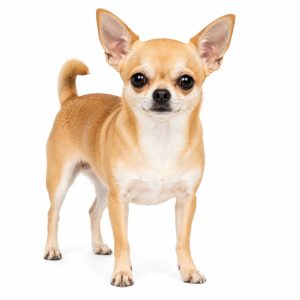 The Chihuahua is another extraordinarily small dog, but with a very different history and appearance. Chihuahuas come in smooth- and long-coated varieties and are famous for loyalty, alertness and strong attachments to their chosen people.
Some Chihuahuas are social butterflies; others are more selective about strangers. Their tiny bodies should never be mistaken for timid personalities. Many are courageous, expressive and quite certain their opinions deserve to be heard.
What Happens When You Combine Them?
Potentially, you get a very small dog that is bright, devoted, alert, playful and full of character. You can also get a dog prone to barking, wary behavior or over-attachment if genetics and early socialization lean that way.
That is why responsible Pomchi breeding should be about much more than producing an adorable face. The parents’ physical health, stable temperament and quality of life matter enormously.
What Does a Pomchi Look Like?
There is no single Pomchi look. That is one of the first things prospective owners should understand when browsing photographs of these dogs.
Most Pomchis are very small, fine- to moderately boned dogs with expressive eyes and ears that are often upright by adulthood. Many carry their tails high or curled over the back, particularly when Pomeranian influence is strong. The muzzle may be finer and more Chihuahua-like or somewhat shorter and foxier like a Pom.
The coat creates the most obvious variation. A fluffy Pomchi may look like a lighter-coated miniature spitz with Chihuahua features peeking through. A short-haired Pomchi can look much more obviously Chihuahua-like, sometimes with a slightly fuller tail or thicker coat than a typical smooth Chihuahua.
Pomchi Ears
Both parent breeds normally have erect ears, so adult Pomchis frequently do as well. Puppies, however, can go through stages where one or both ears tip, flop or change carriage as they grow. Do not manipulate, tape or supplement a puppy simply to force an ear position without veterinary guidance.
Pomchi Tail
A high-set, curved or plumed tail is common, particularly in fluffier dogs. Others have a less dramatic tail. Tail appearance is cosmetic and should not be used as a measure of a dog’s quality as a companion.]
Full-Grown Pomchi Size & Weight
Most full-grown Pomchis are tiny dogs. A common adult range is approximately 4–10 pounds, although some are smaller or larger depending on the parents and family lines. Height often falls around 6–10 inches at the shoulder.
Both parent breeds are toy-sized. The Pomeranian breed standard is only 3–7 pounds, while Chihuahuas are also extremely small. Still, pet dogs do not all fall perfectly within show-ring standards, and mixed-breed inheritance creates additional variation.
How Big Will My Pomchi Get?
The best clues are the actual adult sizes of the parents and close relatives. A breeder who knows several generations of both lines can make a more informed estimate than someone who simply points to a puppy’s current weight.
Even then, it is an estimate. Growth charts and multiplication formulas can be interesting, but no formula can guarantee a Pomchi puppy’s final adult weight.
When Is a Pomchi Full Grown?
Most toy-sized dogs complete the majority of their height growth relatively early, often within the first year, although body condition, coat and maturity continue changing afterward. Your veterinarian can help assess whether an individual puppy is growing appropriately.
“Teacup Pomchi,” “Mini Pomchi” and “Toy Pomchi”
Teacup Pomchi is not a separate breed or officially recognized size. Neither is “miniature Pomchi.” These are marketing descriptions.
A Pomchi is already the product of two very small breeds. Deliberately selecting for extreme tininess can increase concerns about fragility, low blood sugar in very young puppies, dental crowding and other toy-dog problems. Never choose a breeder because they promise the smallest puppy possible.
Healthy structure, sound temperament and appropriate health screening are far more important than bragging rights over a number on the scale.
Pomchi Temperament & Personality
 Pomchis are often affectionate, alert, clever, lively and deeply attached to their people. They are tiny companion dogs with a tendency to notice everything. A well-socialized Pomchi can be an engaging little sidekick—happy to play, learn tricks, supervise the household and then curl up close to someone they love.
But “cute and cuddly” is not a complete temperament description. Both parent breeds can be bold, vocal and suspicious of unfamiliar people or situations. Without thoughtful socialization, a Pomchi can become barky, fearful, possessive or overly dependent.
Are Pomchis Clingy?
Many can be. Both Pomeranians and Chihuahuas are companion breeds that often form strong human bonds. Some Pomchis want to follow their favorite person from room to room and participate in absolutely everything.
That devotion is charming until the dog cannot relax unless physically attached to someone. Teach independence gently from puppyhood: comfortable naps away from you, brief positive separations, food toys enjoyed alone and calm settling in a safe area.
Are Pomchis Smart?
Yes, usually. Both parent breeds are intelligent and observant. Pomchis often learn household routines very quickly—which includes routines you did not intend to teach.
If barking makes the door open, barking works. If refusing dinner produces chicken from the refrigerator, refusing dinner works. If tiny paws on a human leg reliably result in being picked up, the Pomchi has just trained the human.
The answer is not harshness. It is clarity and consistency.
 Are Pomchis Affectionate?
 Are Pomchis Affectionate?
Many are extremely affectionate with their trusted people. Some are indiscriminately social; others reserve their deepest affection for one or two family members. Early positive experiences with different people can help prevent the dog’s social world from becoming unnecessarily narrow.
Pomchi Intelligence & Training
A Pomchi can be very trainable, but successful training requires treating the dog like a dog—not an accessory that happens to have feet.
Because they are so small, undesirable behaviors are often tolerated. Jumping, barking, guarding laps, snapping during handling or refusing to walk on leash may seem less urgent in a six-pound dog than in a sixty-pound dog. But the little dog still needs skills, boundaries and confidence.
 Best Training Approach
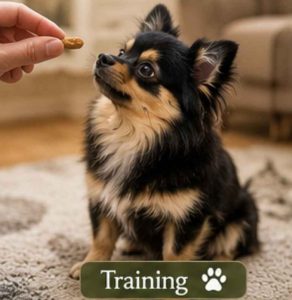 Best Training Approach
Use reward-based methods, very short sessions and meaningful rewards. Pomchis often respond beautifully to food, toys, praise and access to things they enjoy. Break new behaviors into small steps and finish while the dog is still engaged.
Useful foundation skills include:
- Responding happily to their name
- Coming when called
- Walking comfortably on a harness and leash
- Settling on a mat or bed
- Leaving and dropping objects
- Allowing gentle handling of feet, ears and mouth
- Waiting briefly at doors
- Being comfortable when not in someone’s lap
- Remaining calm when visitors arrive
House-Training a Pomchi
Toy dogs can be challenging to house-train, partly because their bladders are small and owners sometimes miss subtle signals. Cold, rain and snow can also make outdoor toileting less appealing to a tiny dog.
Use a predictable schedule. Take a puppy to the designated toilet area after waking, eating, drinking, active play and naps, plus frequent trips in between. Reward immediately after successful toileting. Supervise closely indoors and clean accidents thoroughly with an enzymatic cleaner.
Punishment after an accident does not teach where the dog should go; it can simply teach the puppy that toileting in front of humans is unsafe.
Socialization Is More Than Meeting Dogs
A Pomchi puppy should learn that the world contains vacuum cleaners, doorbells, umbrellas, bicycles, children at a safe distance, friendly visitors, car rides, veterinary handling, different surfaces, traffic sounds and dogs of many shapes and sizes.
Good socialization is positive exposure without overwhelming the puppy. Forcing a frightened puppy into someone’s arms or dropping them into chaotic dog-park interactions is not socialization.
Explore Small Dog Training Resources
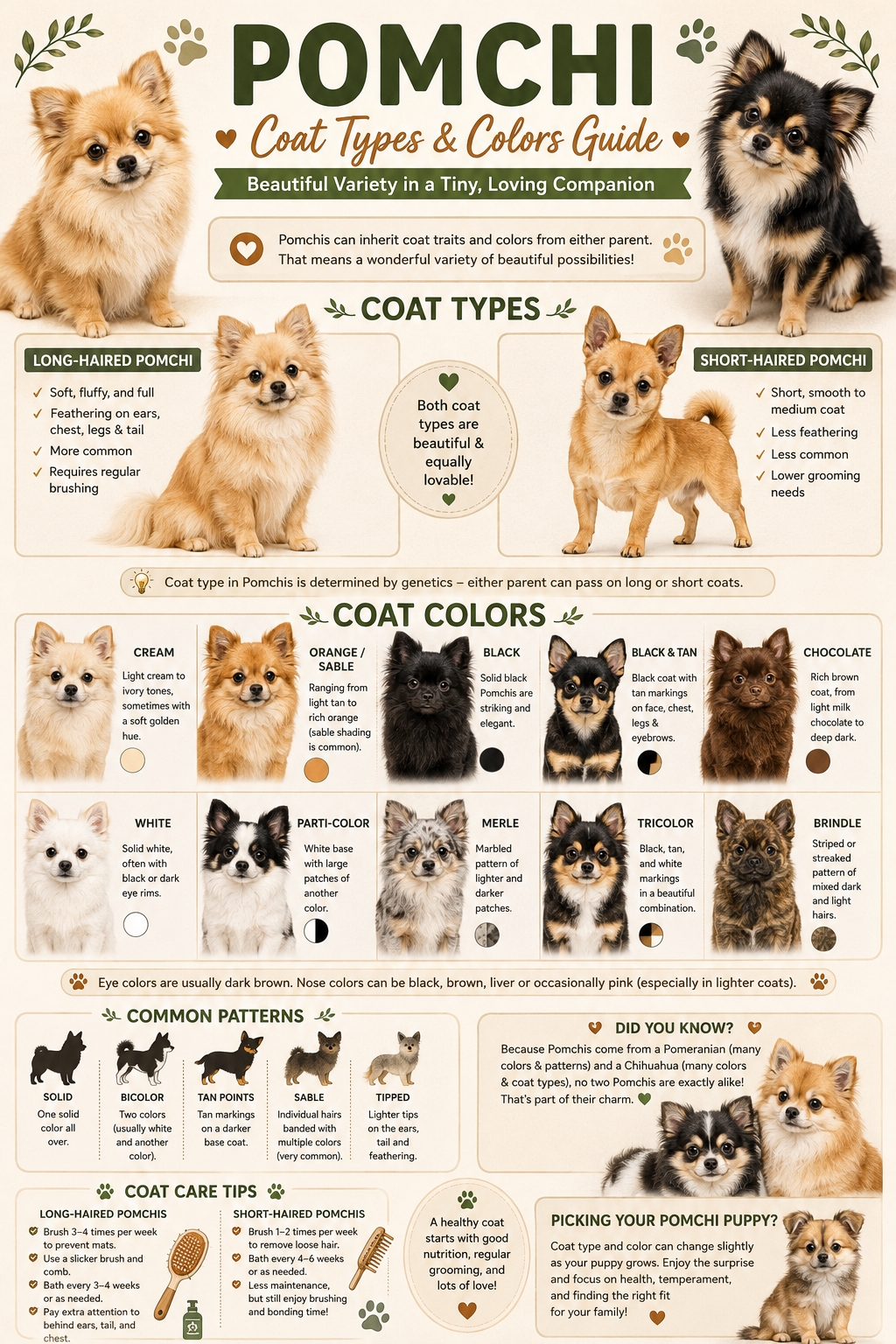
Pomchi Coat Types & Colors
Pomchi coats vary because both parent breeds contribute different possibilities. Pomeranians have a profuse double coat, while Chihuahuas occur in both smooth- and long-coated varieties.
Long-Haired Pomchi
A long-haired Pomchi may have feathering around the ears, chest, legs and tail, sometimes developing a distinctly fluffy outline. Dogs that inherit substantial Pomeranian coat can have a dense undercoat and more noticeable seasonal shedding.
Short-Haired Pomchi
A short-haired Pomchi often shows stronger smooth-coat Chihuahua influence. The coat may lie close to the body, although some dogs still have extra density or tail feathering. Short hair is easier to brush but does not necessarily mean no shedding.
Pomchi Colors
Because both parent breeds occur in many colors, Pomchis can be remarkably varied. You may see:
- Black
- Black and tan
- Black and white
- Chocolate or brown
- Brown and white
- Cream
- White
- Red or orange
- Sable
- Tan
- Parti-color and other combinations
Color can change as a puppy matures, particularly in coats influenced by Pomeranian genetics.
Merle Pomchis
Merle-patterned dogs are marketed online, but unusual color should never take priority over health and responsible breeding. Anyone considering a merle puppy should ask detailed questions about the pedigree, genetic color testing and how the breeder avoids merle-to-merle matings, which can substantially increase the risk of serious sensory defects.
Dogs Central recommendation: never pay a premium simply because a breeder labels a Pomchi “rare,” “lavender,” “blue merle” or another fashionable color. Buy the breeding program, health and temperament—not the paint job.
Do Pomchis Shed? Are Pomchis Hypoallergenic?
Pomchis do shed, and they are not considered hypoallergenic dogs. The amount of shedding varies with coat type.
A short-haired Pomchi may shed small hairs throughout the year. A fluffier double-coated dog may release more hair and experience more noticeable seasonal coat changes. Long hair can sometimes make shed hair easier to see, but coat length alone does not determine the amount shed.
Why Is My Pomchi Shedding So Much?
Seasonal shedding may be normal, particularly in a dog with a Pomeranian-like double coat. However, sudden hair loss, bald patches, itching, inflamed skin, excessive licking or a dramatic change in coat quality deserves veterinary attention. Parasites, allergies, skin disease, hormonal conditions, nutrition and other medical issues can affect the coat.
Can Allergy Sufferers Live With a Pomchi?
Possibly, depending on the person—but the Pomchi is not a low-allergen guarantee. People with dog allergies can react to proteins associated with dander, saliva and urine as well as material carried on the coat.
If allergies are important to your decision, spend meaningful time around the actual dog before committing whenever possible.
Read Our Guide to Hypoallergenic Small Dogs & Dog Allergies
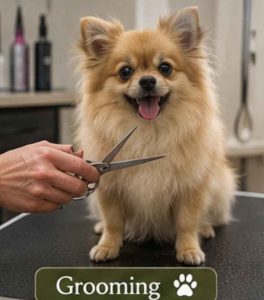
Pomchi Grooming & Haircuts
Pomchi grooming ranges from fairly simple to surprisingly involved. The deciding factor is the coat your individual dog inherited.
 Brushing
 Brushing
Short-coated dogs may need only a quick brushing once or twice a week to remove loose hair and distribute skin oils. Longer or denser coats should be checked and brushed several times weekly, with particular attention behind the ears, under the legs, around the harness area and anywhere friction encourages tangles.
Use tools appropriate to the dog’s coat rather than aggressively raking a tiny dog’s skin.
Bathing
Bathe as needed using a gentle dog shampoo and rinse thoroughly. A dog that spends most of its life indoors may not need frequent full baths, but paws, sanitary areas and facial hair can be cleaned between baths.
Pomchi Haircut Styles
Long-haired Pomchis are sometimes given a neat outline trim, sanitary trim or tidy “teddy bear” style. If your Pomchi has a true Pomeranian-like double coat, avoid casually shaving the body for cosmetic reasons. Discuss appropriate coat management with a groomer experienced with double-coated toy breeds.
A short-haired Pomchi generally needs no haircut at all.
Nails, Ears and Eyes
Keep nails short enough that they do not alter the dog’s gait. Check ears regularly for redness, odor or debris, and ask your veterinarian about persistent tear staining or eye irritation rather than assuming it is merely cosmetic.
Make Grooming Cooperative
Start handling paws, brushing, examining teeth and touching ears when the puppy is young. Pair handling with tiny rewards. A six-pound dog can still be terrified of grooming, and forcing restraint every few weeks creates unnecessary stress for everyone.
[INFOGRAPHIC PLACEHOLDER: “Pomchi Grooming & Haircut Options” with short coat, natural long coat, tidy trim and teddy-bear-inspired trim.]
Pomchi Exercise Needs & Enrichment
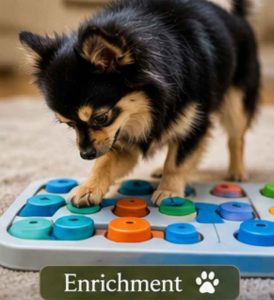 Pomchis are small enough that exercise is manageable, but they are not decorative objects. Most need daily physical activity plus opportunities to sniff, explore, play and think.
A couple of short walks, active indoor play and training or enrichment sessions may suit many adults. Younger, particularly energetic individuals may want more. Adjust exercise for age, health, weather and the dog’s build.
Good Pomchi Activities
- Sniffing walks
- Short positive training sessions
- Food puzzles and snuffle mats
- Hide-and-seek with treats or toys
- Gentle fetch
- Trick training
- Safe indoor obstacle games
- Exploring new dog-friendly places
A Pomchi’s brain can tire before its legs do. Ten minutes of thoughtful scent work may be more satisfying than simply pacing the same sidewalk.
Weather Safety
Tiny dogs lose body heat more readily than larger dogs, and short-coated Pomchis may be particularly sensitive to cold. In very hot weather, walk during cooler periods and avoid hot pavement. Clothing can be practical for genuinely cold-sensitive dogs; it does not need to become a fashion requirement.
Pomchi Barking & Common Behavior Traits
Pomchis can be vocal. Both parent breeds are alert and quick to notice movement and sound. Without training, a Pomchi may announce the mail carrier, neighbors in the hallway, a leaf moving suspiciously across the yard and possibly the refrigerator making an unfamiliar noise.
Barking is not a character flaw. It is communication and often a self-reinforcing behavior. The goal is to understand why the dog is barking and teach a more useful response.
Alert Barking
Block unnecessary visual triggers where practical, reward calm behavior before barking escalates and teach the dog to move away from the door or window on cue. Repeatedly shouting “quiet” over the barking often just adds another voice to the chorus.
Fearfulness and Defensive Behavior
A tiny dog lives in a world of giant feet, reaching hands and much larger animals. Respect early signs of discomfort. Do not force strangers to pick up a Pomchi who is trying to retreat.
Fear can turn into growling, lunging or snapping when warnings are ignored. Gentle socialization and giving the dog appropriate choices can build confidence.
Resource Guarding and Lap Guarding
Some very attached little dogs begin guarding a favorite person, bed, food or lap. Take this seriously. Do not punish growling; it is valuable information. Prevent rehearsal, teach trades and calm off-lap behavior, and consult a qualified reward-based professional if guarding is escalating.
Explore Small Dog Behavior Resources
Pomchi Separation Anxiety & Time Alone
Pomchis often love company, and some struggle with being alone. That does not mean every Pomchi develops separation anxiety, but building comfortable independence is an important life skill.
Start with very brief absences while the puppy is calm. Provide a safe resting area and something enjoyable to do. Gradually increase time rather than suddenly leaving a dog who has never practiced solitude for an entire workday.
Signs of a genuine separation-related problem can include persistent barking or howling, frantic attempts to escape, destruction around exits, drooling, pacing or inability to eat when alone. Severe cases deserve professional help; they are not solved by allowing the dog to “cry it out.”
Can a Pomchi Be Left Alone All Day?
A full workday alone every day is not an ideal arrangement for many companion-focused Pomchis, especially puppies. Adults vary. If your schedule requires long absences, plan for appropriate breaks and honestly consider whether a more independent dog would suit your lifestyle better.
Are Pomchis Good Family Dogs?
Pomchis can be loving family companions in the right household. Their small size, affection and moderate exercise needs are appealing, but physical fragility must be taken seriously.
 Are Pomchis Good With Children?
 Are Pomchis Good With Children?
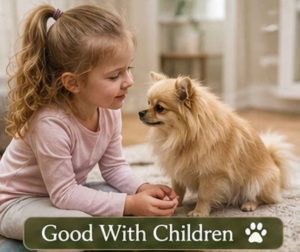
They are generally best matched with older, gentle children who understand how to interact respectfully with a tiny dog. A young child can accidentally injure a Pomchi by dropping, stepping on, squeezing or falling onto the dog.
Equally important, dogs should not be expected to tolerate chasing, grabbing, hugging or being disturbed while eating or sleeping. Adults must supervise interactions and give the dog a child-free retreat.
Are Pomchis Good With Other Dogs?
Many live happily with other dogs, particularly when socialized well. Size difference matters. A friendly large dog can accidentally hurt a Pomchi during enthusiastic play. Supervise mixed-size households carefully and choose playmates based on behavior, not simply friendliness.
Are Pomchis Good With Cats?
They can be. A Pomchi raised with a dog-savvy cat may coexist beautifully. Introduce slowly, provide escape routes for the cat and prevent chasing from becoming a habit.
What About Birds, Rabbits and Other Small Pets?
Manage interactions carefully. Individual prey drive varies, and no small pet should be assumed safe simply because the dog is also small.
Explore Small Dogs for Families
Are Pomchis Good Apartment Dogs?
Physically, yes. Behaviorally, it depends on the barking.
A Pomchi needs very little floor space and can receive much of its play indoors, making the cross well suited to condos and apartments. But shared walls magnify alert barking. Hallway footsteps, elevators and neighboring doors can become constant triggers.
Apartment owners should prioritize calm-door training, gradual exposure to building sounds and adequate exercise. Do not wait until neighbors complain to address barking.
House-training also requires planning in high-rise buildings. A tiny puppy may not be able to wait through a long elevator ride after waking. Have a realistic toilet routine from day one.
See the Best Small Dogs for Apartment Living
Are Pomchis Good Dogs for Seniors?
 A Pomchi can be a delightful senior companion for someone who wants a small, affectionate dog and is comfortable with the breed’s training and grooming needs.
Advantages include manageable exercise, small food portions, easy transport and companionship in a compact package. Challenges include barking, house-training, dental care and the physical risk created by having a tiny dog underfoot.
For someone with balance or mobility concerns, a six-pound dog darting around feet can be a genuine fall hazard. An adult Pomchi with known temperament and established house manners may be a better choice than a busy puppy.
Explore the Best Small Dogs for Seniors
Are Pomchis Good for First-Time Dog Owners?
They can be, especially for a first-time owner willing to learn about reward-based training, toy-dog safety, dental care and early socialization.
The main trap is assuming tiny equals easy. A Pomchi still needs house-training, recall training, polite behavior, veterinary care and emotional resilience. Owners who consistently teach skills usually find life much easier than those who carry the puppy everywhere and postpone training until adolescence.
A first-time owner who wants a silent, highly independent, wash-and-wear dog may find the Pomchi less suitable.
Explore Small Dogs for First-Time Owners
Pomchi Health Issues
Pomchis can live long, healthy lives, but mixed-breed status does not make them automatically healthier than their parents. A Pomchi can inherit vulnerabilities seen in either Pomeranians or Chihuahuas.
Potential concerns worth discussing with a veterinarian include:
Patellar Luxation
Luxating patella occurs when the kneecap slips out of its normal position. It is a recognized concern in many toy breeds, including both Pomchi parent breeds. Signs can include intermittent skipping, carrying a hind leg or lameness. Severity ranges widely.
Dental and Periodontal Disease
Tiny jaws can crowd teeth, and toy dogs are particularly vulnerable to dental disease. Daily home dental care and regular veterinary assessment should be considered basic Pomchi care, not an optional extra.
Heart Disease
Both parent breeds have cardiac conditions within their health-screening recommendations. Responsible breeding dogs should receive appropriate cardiac evaluation rather than merely being described as “vet checked.”
Eye Problems
Eye screening is recommended for both parent breeds. Pomchis may also have relatively prominent eyes, making owners wise to watch for redness, squinting, discharge, cloudiness or injury.
Tracheal Problems
Small dogs can be susceptible to tracheal collapse, which may cause a characteristic honking cough, breathing difficulty or exercise intolerance. Use a well-fitted harness rather than putting unnecessary pressure on the neck, and have persistent coughing assessed by a veterinarian.
Legg-Calvé-Perthes Disease
This orthopedic disorder affecting the femoral head occurs in some toy and small breeds. Pomeranian health-screening guidance recognizes it as a condition breeders may screen for. Limping or hip pain in a young dog warrants veterinary investigation.
Hypoglycemia in Very Small Puppies
Very young, exceptionally tiny puppies can be vulnerable to dangerously low blood sugar, particularly if they are stressed, ill or not eating. This is one reason extreme “teacup” breeding should never be treated as harmless fashion.
Seizures and Neurologic Concerns
Seizure disorders occur in dogs, including within the Chihuahua parent breed. Any collapse, seizure-like episode, disorientation or unusual neurologic behavior requires veterinary assessment.
Alopecia and Coat Problems
Pomeranians are known to experience certain hair-loss syndromes. A Pomchi with Pomeranian-type coat may develop coat or skin problems, but unexplained hair loss should always be medically evaluated rather than assumed to be cosmetic.
Responsible Health Testing for Pomchi Parents
Because there is no single official Pomchi health-testing program, responsible breeders should look to the established recommendations for both parent breeds.
For Chihuahuas, national breed-club/AKC recommendations include patella, cardiac and ophthalmologist evaluations. Pomeranian health guidance similarly emphasizes patellar and cardiac evaluation plus an eye or other approved health elective, with additional screening options depending on the breeding program.
Ask for the parents’ registered names and independently verifiable results. “DNA tested,” “vet checked” and “healthy parents” are not substitutes for breed-appropriate screening.
Veterinary note: This guide provides general educational information and is not a diagnosis or substitute for care from your veterinarian.
Explore Small Dog Health Resources
How Long Do Pomchis Live?
A reasonable expectation for many Pomchis is approximately 12–16 years, with some individuals living longer and others having shorter lives because of genetics, illness, injury or other factors.
Both parent breeds are relatively long-lived toy dogs, which gives the Pomchi the potential for many years of companionship. But a lifespan estimate is not a guarantee.
Helping a Pomchi Live a Long, Healthy Life
- Keep the dog lean rather than overweight.
- Provide daily exercise and mental stimulation.
- Brush teeth consistently and obtain veterinary dental care when needed.
- Attend regular wellness examinations.
- Keep vaccines and parasite prevention appropriate to your veterinarian’s recommendations and local risk.
- Use a harness and manage jumping/fall risks in fragile dogs.
- Feed a complete and balanced diet appropriate for life stage.
- Investigate new coughing, limping, behavior changes, weight loss or other symptoms early.
For a puppy buyer, longevity planning begins before the puppy comes home: choose a breeder who health-tests the parents and prioritizes stable temperament and sound structure rather than extreme size or color.
Pomchi Dental Care: A Small-Dog Priority
Dental care deserves its own section because tiny dogs can develop significant periodontal disease surprisingly early.
Brush your Pomchi’s teeth daily if possible using toothpaste formulated for dogs. Introduce brushing gradually and reward cooperation. Human toothpaste is not appropriate for dogs.
Ask your veterinarian to examine the mouth at routine visits. Persistent bad breath, red or bleeding gums, loose teeth, reluctance to chew, dropping food or facial swelling should not be dismissed as normal aging.
Puppies also need monitoring as adult teeth erupt. Retained baby teeth are relatively common in toy breeds and can contribute to crowding.
Pomchi Nutrition & Feeding
Pomchis need surprisingly little food by human standards. That makes portion accuracy important: a few extra treats represent a much larger percentage of daily calories for a six-pound dog than for a Labrador.
What Should a Pomchi Eat?
Choose a complete and balanced food appropriate for the dog’s life stage and size. Puppies need puppy food formulated to support growth; adults need maintenance nutrition; senior needs vary according to health and body condition.
Your veterinarian can help determine daily calories and portion size based on the dog’s actual weight, body condition, activity and food.
How Often Should You Feed a Pomchi?
Adult Pomchis commonly do well on two measured meals daily. Young toy-breed puppies may require more frequent meals because of their small size and limited energy reserves. Follow your veterinarian’s advice for an individual puppy, especially one that is unusually small.
Watch the Treats
Training treats should be tiny—often crumb-sized is plenty. Use part of the dog’s measured daily food for training when practical. Table scraps and frequent high-calorie treats can quickly turn a tiny dog overweight.
How Can You Tell if a Pomchi Is Overweight?
You should generally be able to feel the ribs beneath a light covering of tissue and see a waist when viewed from above. Fluffy coats can hide weight gain, so use your hands rather than relying on appearance alone.
[INFOGRAPHIC PLACEHOLDER: “Pomchi Nutrition” covering measured portions, two adult meals, puppy meal frequency, tiny treats, healthy body condition and fresh water.]
Explore Small Dog Nutrition & Feeding Guides
What Is It Really Like Living With a Pomchi?
A well-adjusted Pomchi can be a wonderfully entertaining little housemate. Expect a dog that notices routines, enjoys being near you and may appoint itself assistant manager of the household.
Morning might involve an enthusiastic greeting, breakfast and a short toilet walk. During the day, many adults are happy alternating naps with play, neighborhood reconnaissance and bursts of activity. They often enjoy errands and outings when safely transported and properly socialized.
The challenges are equally real. Barking can become habitual. House-training requires consistency. Tiny bodies need protection from falls and rough play. Teeth need attention. A highly attached Pomchi may need deliberate practice being alone.
In return, owners often get an interactive companion that fits almost anywhere physically while making itself emotionally impossible to overlook.
Pomchi Safety Around the Home
- Use gates or supervision around stairs for very small puppies.
- Do not allow children to carry the dog unsupervised.
- Discourage repeated jumping from high furniture; provide safe steps or ramps where appropriate.
- Check blankets and recliners before sitting or closing mechanisms.
- Supervise outdoors—tiny dogs can be vulnerable to larger animals and wildlife.
- Use a secure, properly fitted harness and identification.
Explore the Small Dog Care Guide
Pomchi Puppies: What to Expect
Pomchi puppies are exceptionally small, curious and impressionable. Their first months should be about far more than keeping them cute and clean. This is when they learn whether people, handling, household sounds, other animals and the outside world are safe.
Early Socialization
A thoughtfully raised puppy should experience ordinary household life: vacuum cleaners, television, kitchen sounds, visitors, gentle handling, different floor surfaces and age-appropriate outdoor experiences. Puppies should have opportunities to play, rest, investigate and recover—not spend most of their lives isolated in pens or crates.
Crate Training
A crate can be useful for safe transport, sleep and short periods of management when introduced positively. It should never be a puppy’s primary living environment. Puppies need movement, human interaction, play, learning and appropriate toileting opportunities.
Puppy “Uglies” and Coat Changes
Fluffy puppies can pass through awkward adolescent coat stages as puppy hair changes to adult coat. Pomeranian owners sometimes affectionately call this the “puppy uglies.” A Pomchi with substantial Pom coat influence may also look temporarily less fluffy while maturing. That is not a reason to panic—or shave the dog.
When Do Pomchi Ears Stand Up?
Ear carriage can change during puppy development. Because both parent breeds normally have upright ears, many Pomchis eventually have erect ears, but there is no exact deadline and no need to force a cosmetic outcome.
Pomchi Puppy Names
Pomchis lend themselves to names inspired by their tiny size, outsized confidence, fluffy coats and colors. Ideas include Pixie, Pippin, Teddy, Mochi, Bean, Coco, Pepper, Foxy, Sunny, Ruby, Cricket and Ziggy.
We will expand this into a dedicated Pomchi names guide as the Pomchi silo grows.
Browse Hundreds of Small Dog Name Ideas
Pomchi Puppy Guide: Choosing & Raising a Healthy Pomeranian Chihuahua Mix Puppy
Pomchi Breeders & Pomchi Puppies for Sale
Searches for Pomchi puppies for sale, Pomchi breeders and Pomchi puppies for sale near me are common. The important question is not merely where a puppy is available—it is how that puppy was bred and raised.
Dogs Central believes small companion puppies should be raised in a home environment where they experience ordinary family life. Adult breeding dogs should be valued family members, not breeding inventory housed separately in kennel buildings or routinely confined in stacked cages or crates.
What a Responsible Pomchi Breeder Should Be Able to Show You
- The identities and adult sizes of both parents
- Health testing appropriate to both the Pomeranian and Chihuahua sides
- Independent verification of health results where available
- A clean, enriching home puppy-raising environment
- Age-appropriate socialization and handling
- Veterinary records for the puppy
- A written contract
- A commitment to take back or help rehome a dog if the owner can no longer keep it
- Honest discussion of barking, coat variability, adult size and health—not just sales claims
Red Flags
Be cautious when a seller:
- Always has many litters or many unrelated breeds available
- Will not show where adult dogs and puppies live
- Markets primarily around “teacup,” “micro,” rare colors or guaranteed tiny size
- Claims mixed breeding automatically eliminates genetic disease
- Says “DNA tested” without showing what was tested and why
- Offers immediate shipping with little interest in you
- Will not provide parent identities or verifiable health information
- Uses stock photos or refuses a live video call when distance makes an in-person visit impossible
- Prices a puppy as a luxury object based almost entirely on color or tiny size
How Much Does a Pomchi Puppy Cost?
Prices vary enormously by location, breeder, parentage and demand. A high price does not prove quality, and an unusually cheap puppy can be a warning sign. Instead of choosing by price alone, evaluate what the breeder has invested in health screening, veterinary care, quality nutrition, puppy raising and lifetime support.
Our dedicated puppy guide will go much deeper into evaluating Pomchi puppies and avoiding scams.
Visit the Responsible Small Dog Breeders Showcase
Planned breeder directory: Responsible Pomchi Breeders & Pomchi Puppies for Sale
Pomchi Adoption, Rescue & Rehoming
Pomchis and Pomeranian-Chihuahua mixes do appear in shelters, foster-based rescues and private rehoming situations. Because mixed-breed dogs are not always labeled consistently, search not only for “Pomchi” but also Pomeranian mix, Chihuahua mix and small mixed-breed dogs.
When adopting an adult, ask about house-training, barking, behavior around strangers, handling, other pets, children, time alone and any known medical or dental needs. One advantage of adopting an adult is that size, coat and much of the dog’s mature personality are already visible.
Need to Rehome a Pomchi?
Sometimes life circumstances make keeping a beloved dog impossible. Thoughtful rehoming is not the same as abandoning a pet. A carefully managed home-to-home process can help an owner find a suitable adopter while sharing honest information about the dog’s health, temperament and needs.
Dogs Central focuses on breed education. Our sister service, Pet Rehoming Network, specializes in compassionate private pet rehoming and adoption support.
Pomchi Adoption & Rehoming – Pet Rehoming Network (planned resource if not yet published)
Pomchi vs. Pomeranian vs. Chihuahua
If you are deciding among the Pomchi and its two parent breeds, remember that a Pomchi can inherit traits from either side. A purebred Pomeranian or Chihuahua generally offers more predictability in appearance than their cross.
| Trait | Pomchi | Pomeranian | Chihuahua |
|---|---|---|---|
| Breed status | Designer cross | Established purebred | Established purebred |
| Typical size | Very small; variable | Very small | Very small |
| Coat | Short to fluffy/long | Dense double coat | Smooth or long coat |
| Shedding | Variable | Moderate; seasonal coat changes | Varies by coat |
| Temperament | Affectionate, alert, variable mix of parent traits | Outgoing, lively, alert | Devoted, alert, often selective |
| Barking potential | Moderate–high | Moderate–high | Moderate–high |
| Predictability | Lower | Higher within breed variation | Higher within breed variation |
Pomchi vs. Pomeranian
Choose a Pomeranian if the classic plush double coat and more standardized Pom appearance are important to you. Consider a Pomchi if you like both parent breeds and genuinely accept that the dog may look or behave more like either one.
Pomchi vs. Chihuahua
A Chihuahua gives you a choice between recognized smooth- and long-coat varieties and greater predictability of breed type. A Pomchi may have more coat, a more spitz-like outline or a temperament blending traits from both sides.
Pomchi vs. Long-Haired Chihuahua
These dogs can sometimes look remarkably similar in photographs. Pedigree or DNA information is more reliable than guessing based on fluffiness. A long coat alone does not prove Pomeranian ancestry.
Complete Pomeranian Breed Guide | Complete Chihuahua Breed Guide
Pomchi Pros & Cons
| Potential Advantages | Potential Challenges |
|---|---|
| Very compact and easy to transport | Tiny body can be physically fragile |
| Affectionate and engaging | Can become overly attached |
| Moderate exercise needs | May bark frequently without training |
| Often bright and trainable | House-training can require patience |
| Can thrive in apartments | Shared-building noises can trigger alert barking |
| Many coat colors and appearances | Coat, shedding and adult appearance are less predictable than in a purebred |
| Potentially long-lived | Toy-dog dental and health concerns require proactive care |
| Can be a wonderful close companion | Not ideal for rough handling or very young unsupervised children |
Is a Pomchi Right for You?
A Pomchi May Be a Great Match If You…
- Want a very small dog with a big personality
- Enjoy an affectionate companion that likes being involved in your day
- Are willing to train rather than excuse behavior because the dog is tiny
- Can manage barking thoughtfully
- Will provide regular dental and veterinary care
- Can protect a toy-sized dog from rough handling and unsafe play
- Accept variability in coat, size and temperament
- Enjoy short walks, play and interactive enrichment
You May Prefer Another Breed If You…
- Need a reliably quiet dog
- Want a dog comfortable being alone for very long periods
- Have very young children who are not yet able to handle a tiny dog safely
- Want a highly predictable coat and adult appearance
- Dislike regular training and socialization
- Want a rugged companion for rough outdoor activities
- Are choosing primarily because someone advertised an unusually tiny “teacup” puppy
The right Pomchi is not simply the cutest puppy in the photograph. It is a healthy, well-raised individual whose needs fit comfortably into the life you can provide for the next decade and beyond.
Need More Help? Read Choosing the Right Small Dog
Pomchi Frequently Asked Questions
What is a Pomchi?
A Pomchi is a cross between a Pomeranian and a Chihuahua. It is also commonly called a Pomeranian Chihuahua mix or Chihuahua Pomeranian mix.
How big does a full-grown Pomchi get?
Many adult Pomchis weigh roughly 4–10 pounds and stand around 6–10 inches tall, but mixed-breed size varies. The adult sizes of the parents and close relatives provide the best clues.
How long do Pomchis live?
Many Pomchis have a lifespan in the neighborhood of 12–16 years. Genetics, health, body condition, dental care, veterinary care, nutrition and accident prevention all influence individual longevity.
What is a Pomchi’s temperament like?
Pomchis are often affectionate, alert, clever, playful and devoted. Some are outgoing while others are more selective with strangers. Early socialization and the temperaments of both parents matter.
Do Pomchis bark a lot?
They can. Both Pomeranians and Chihuahuas are alert breeds, so Pomchis may be quick to announce noises, visitors and movement. Early training and management can prevent alert barking from becoming excessive.
Do Pomchis shed?
Yes. Shedding varies by coat. Short-haired Pomchis may shed small hairs year-round, while fluffier dogs with Pomeranian-like undercoats can shed more noticeably, particularly during seasonal coat changes.
Are Pomchis hypoallergenic?
No. Pomchis are not considered hypoallergenic, and no dog is guaranteed allergy-free.
Can a Pomchi have short hair?
Yes. A Pomchi can inherit a smooth, close coat, especially from a smooth-coat Chihuahua parent. Others have medium, long or fluffy coats.
Can Pomchis have long hair?
Yes. Long-haired and fluffy Pomchis are common when puppies inherit longer coat traits from a Pomeranian, long-coat Chihuahua or both.
What colors do Pomchis come in?
Pomchis can be black, black and tan, black and white, cream, white, brown/chocolate, red/orange, sable, tan and many combinations. Coat color can change as a puppy matures.
Are Pomchis good with kids?
They can be affectionate family dogs, but their tiny size makes them best suited to gentle, respectful children who understand safe handling. Adult supervision is essential.
Are Pomchis good apartment dogs?
Yes, their size and exercise needs fit apartment life well. Barking is the main issue to address in buildings with shared walls.
Are Pomchis easy to train?
They are usually intelligent and capable learners. Positive reinforcement, consistency and very short training sessions work well. House-training may require extra patience because of their tiny size.
How much exercise does a Pomchi need?
Most need moderate daily activity: short walks, play and mental enrichment. Exercise should be adjusted for age, weather, health and the dog’s individual energy level.
How often should a Pomchi be groomed?
Short-coated Pomchis may need brushing once or twice weekly, while long or dense coats often need brushing several times a week. Nails, teeth, ears and eyes also need routine care.
What health problems can Pomchis have?
Potential concerns inherited from the parent breeds include patellar luxation, dental disease, heart and eye problems, tracheal issues and some orthopedic or neurologic conditions. Responsible breeding should include health screening relevant to both parents.
Is a teacup Pomchi a real breed?
No. “Teacup” is a marketing term, not a separate Pomchi breed or recognized size. Pomchis are already very small dogs, and breeding for extreme tininess can add health and fragility concerns.
How much does a Pomchi puppy cost?
Pomchi prices vary widely by region and breeder. Price alone is a poor measure of quality. Evaluate parent health testing, temperament, puppy raising, veterinary care and breeder support instead.
Where can I find Pomchi puppies for sale?
Look for a responsible home-based breeder who health-tests both parent breeds and raises puppies with extensive household socialization. Avoid sellers whose main pitch is tiny size, rare colors, immediate availability or shipping with little screening.
Can I adopt a Pomchi?
Yes. Pomchis and similar Pomeranian-Chihuahua mixes appear in shelters, rescues and private rehoming situations. Search using several labels because mixed-breed dogs are not always identified consistently.
Final Thoughts: Small Dog, Serious Commitment
The Pomchi is easy to fall for. A bright-eyed little dog with a fluffy tail, enormous ears and the confidence to run a household from ankle height has undeniable charm.
But the best reason to choose a Pomchi is not simply that the puppies are adorable. It is that you genuinely enjoy the qualities these dogs can bring: closeness, alertness, intelligence, playfulness and a very interactive relationship with their people.
Learn about both parents. Accept that a crossbreed comes with variation. Choose health and temperament over extreme size and fashionable color. Socialize the puppy thoughtfully, train with kindness and consistency, take dental care seriously, and protect that tiny body without preventing the dog from experiencing the world.
Do that, and a Pomchi can become exactly what so many small-dog lovers treasure: a very little companion who somehow occupies a very large place in the family.
Related Dogs Central Guides
- Pomeranian Breed Guide
- Chihuahua Breed Guide
- Small Designer Dog Breeds Guide
- Types of Small Dogs With Pictures
- Hypoallergenic Small Dogs
- Small Dogs That Don’t Shed Much
- Small Dog Care Guide
- Small Dog Training
- Small Dog Nutrition
- Responsible Small Dog Breeders Showcase
Trusted Resources
- Orthopedic Foundation for Animals – CHIC Program
- American Pomeranian Club – Pomeranian Health Testing
- American Kennel Club – Chihuahua Health & Breed Information
About This Guide: Our Pomchi Resource Is Growing
Dogs Central is building an expanding library devoted to small dogs and the people who love them. This Pomchi guide will continue to grow as we add original photographs, coat-color and grooming infographics, puppy resources, owner experiences, breed comparisons and responsible breeder showcases.
If you share your life with a Pomchi, check back as we continue building the Pomchi section into a practical resource for prospective owners and longtime Pomchi families alike.