
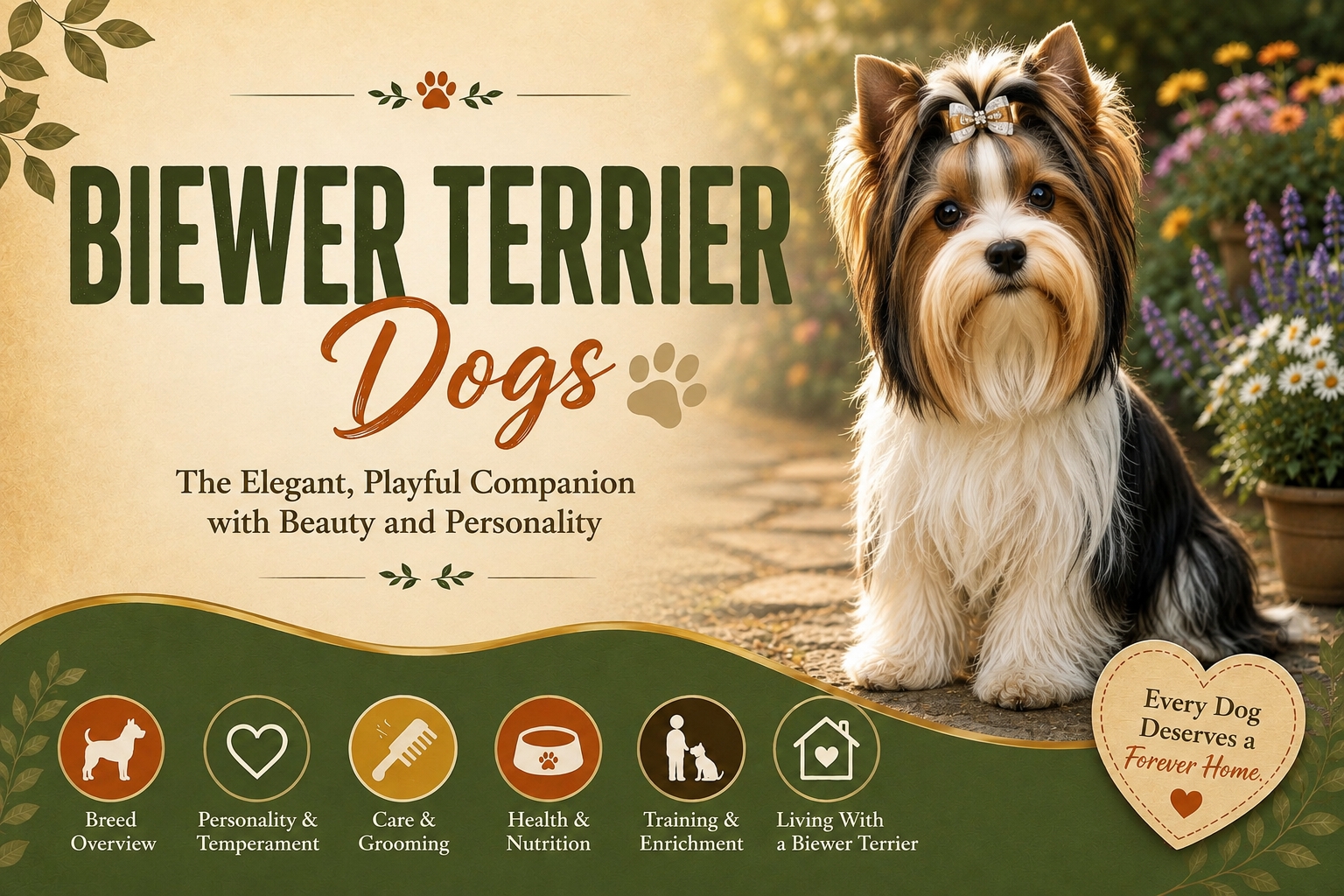
Tiny, elegant and almost impossibly cheerful, the Biewer Terrier is a playful companion dog wrapped in a flowing tricolored coat. You may also see these dogs called Biewer Yorkie Terriers, Biewer Yorkshire Terriers or simply Biewer Yorkies. Those names are widely used online, but the breed’s official name is Biewer Terrier, pronounced “Beaver Terrier.”
Although the breed developed from Yorkshire Terrier ancestry, the modern Biewer Terrier is recognized as a distinct purebred dog-not merely a white Yorkie, a parti-colored Yorkshire Terrier or a designer Yorkie mix.
Biewer Terriers are affectionate, portable and well suited to smaller homes. They can be excellent companions for adults, seniors and families with considerate older children. Their tiny size does not make them effortless, however. They need regular grooming, careful protection from injury, patient house-training and considerably more companionship than their glamorous, self-assured appearance might suggest.
This complete guide covers Biewer Terrier temperament, size, grooming, health, training, puppies, breeders, rescue, popular mixes and everyday life with this delightful little dog.
Biewer Terrier Guide Menu
Biewer Terrier Quick Snapshot
| Trait | Biewer Terrier facts |
|---|---|
| Official breed name | Biewer Terrier |
| Other names people use | Biewer Yorkie, Biewer Yorkie Terrier, Biewer Yorkshire Terrier |
| Pronunciation | “Beaver Terrier” |
| Origin | Germany |
| Breed group | Toy Group |
| Original purpose | Companion dog |
| Height | Approximately 7-11 inches |
| Weight | Approximately 4-8 pounds |
| Lifespan | Approximately 12-16 years |
| Coat | Long, straight, silky and single-layered |
| Colors | Black or blue, white, and tan or gold |
| Shedding | Low |
| Grooming | High in full coat; moderate in a pet trim |
| Exercise | Low to moderate |
| Apartment suitability | Excellent when barking is managed |
| Children | Best with calm, gentle older children |
| Companionship needs | High |
Biewer Terrier Breed Report Card
| Quality | Rating | What owners should know |
|---|---|---|
| Affection | 5/5 | Usually forms close bonds and enjoys frequent family contact |
| Companionship needs | 5/5 | Prefers being included in everyday life |
| Apartment living | 5/5 | Small and adaptable, although alert barking needs training |
| Exercise needs | 2.5/5 | Short walks and active play are usually sufficient |
| Trainability | 4/5 | Bright and responsive with patient, consistent methods |
| Grooming | 4.5/5 | A long coat requires frequent brushing and professional care |
| Shedding | 1.5/5 | Sheds relatively little but still needs substantial coat care |
| First-time owners | 4/5 | A good possibility for prepared owners |
| Senior owners | 4.5/5 | Affectionate and manageable, but fall risks require planning |
| Young children | 2/5 | Tiny body can be injured by rough handling or accidental falls |
These scores describe common breed tendencies, not guarantees. Genetics, socialization, training, health and individual personality all matter.
Is a Biewer Terrier Right for You?
A Biewer Terrier may be right for you if you want a very small, affectionate dog that enjoys participating in your daily routine. Most need only moderate exercise, but they still require play, training, social experiences and opportunities to walk rather than spending their lives being carried.
This breed may be a particularly good fit if you:
- Want a cheerful, people-oriented companion.
- Live in an apartment, condominium or smaller home.
- Prefer short walks and indoor games to strenuous exercise.
- Can provide frequent companionship.
- Are willing to brush the coat or maintain a shorter pet trim.
- Can protect a tiny dog from falls and rough animals.
- Will use positive, consistent training.
- Have calm older children or an adult household.
A Biewer Terrier may not be your best match if you:
- Need a dog that can remain alone for long workdays.
- Want a wash-and-wear coat.
- Have toddlers who may grab, chase or drop a dog.
- Own large, boisterous pets with rough play styles.
- Want a rugged hiking or jogging companion.
- Expect a tiny dog to need no training.
The best Biewer home is attentive, reasonably calm and prepared for toy-dog safety. Square footage matters far less than companionship, routine and responsible care.
About the Biewer Terrier
The Biewer Terrier is an elegant tricolored toy dog with a long, silky coat, high-set plumed tail and distinctive ponytail. Beneath the polish is a playful little comedian. Many Biewers carry toys around the house, invent games and retain a puppy-like outlook well into adulthood.
Despite the word “Terrier,” the Biewer belongs to the Toy Group. It was developed primarily for companionship rather than traditional terrier work. Individuals may still chase small moving creatures, but the breed’s central purpose is to love and live closely with people.
Is a Biewer Terrier the same as a Biewer Yorkie?
People frequently use Biewer Yorkie, Biewer Yorkie Terrier and Biewer Yorkshire Terrier as informal names for the Biewer Terrier. Historically, the breed was known as the Biewer Yorkshire Terrier a la Pom Pon, so the association is understandable.
Today, however, the official recognized name is Biewer Terrier. A genuine Biewer Terrier has documented Biewer Terrier ancestry. A parti-colored Yorkshire Terrier remains a Yorkshire Terrier, and a Yorkie mix does not become a Biewer because it has black, white and tan markings.
This distinction is important when researching puppies. Ask whether the dog is a registered Biewer Terrier, a parti Yorkie or an intentional cross. Appearance and advertising language alone cannot establish breed identity.
Biewer Terrier History and Origin
The breed’s recorded history began in Germany in 1984 when tricolored puppies were born to Yorkshire Terriers owned by experienced breeders Werner and Gertrud Biewer. The prominent white markings differed from the traditional Yorkshire Terrier coat. The Biewers were captivated and began selectively breeding dogs with the unusual pattern.
An early puppy named Schneeflockchen von Friedheck-often translated as “Snowflake”-became closely associated with the developing breed. German singer Margot Eskens reportedly helped inspire the elaborate early name Biewer Yorkshire Terrier a la Pom Pon.
Biewer Terriers arrived in the United States in the early 2000s. American enthusiasts organized pedigrees and worked toward recognition. Genetic analysis helped document the dogs as a distinct breed population rather than merely a Yorkshire Terrier color variety.
The American Kennel Club accepted the breed into its Foundation Stock Service in 2014, moved it into the Miscellaneous Class in 2019 and granted full recognition in 2021. The Biewer Terrier became the AKC’s 197th recognized breed and joined the Toy Group. The United Kennel Club had recognized it in 2016.
Biewer Terrier Temperament and Personality
The typical Biewer Terrier is affectionate, playful, curious and highly companionable. Many follow their people from room to room, supervise household activities and settle nearby when the excitement is over.
Official descriptions often call the breed whimsical, and the word fits. A Biewer may parade through the house with a favorite toy, produce a sudden burst of indoor running or develop funny routines for attracting attention.
Biewers are intelligent and usually learn quickly when training is rewarding. They can also become selective listeners when household rules are inconsistent. Short sessions using food, praise and play work better than harsh correction.
Well-socialized Biewer Terriers are often friendly or politely curious with strangers. Some announce visitors and hallway noises enthusiastically. Alert barking can be reduced by rewarding quiet behavior, limiting window patrol and providing appropriate exercise and enrichment.
“Small-dog syndrome” is not an unavoidable breed characteristic. Barking, guarding and snapping often worsen when tiny dogs receive no training or are repeatedly placed in situations that frighten them. A Biewer deserves the same humane education and respect as a larger dog.
Biewer Terrier Size and Appearance
Adult Biewer Terriers generally stand about 7 to 11 inches tall and weigh approximately 4 to 8 pounds. The body is slightly longer than tall, although a square outline is acceptable. The topline should remain level and movement should look smooth and confident.
The head is moderately rounded, with dark eyes and small, upright V-shaped ears. The high-set tail curves over the body and carries a long plume. In full coat, hair falls straight along both sides as though divided by a center part.
A four-pound dog is extremely vulnerable. Household risks include falls from furniture, being stepped on, reclining chairs, open railings, large dogs and predatory wildlife. Pet stairs, non-slip rugs, secure gates and careful supervision can prevent many injuries.
Terms such as teacup Biewer, micro Biewer and pocket Biewer are not recognized varieties. Be cautious when a seller charges more for extreme tininess, guarantees an exact adult weight or makes size the main selling point. The healthiest puppy is not necessarily the smallest.
Biewer Terrier Coat, Colors and Shedding
The Biewer Terrier has a long, straight, silky single coat without a dense undercoat. Recognized coloring combines black or blue, white, and tan or gold. Puppies may change noticeably as they mature: dark areas can lighten toward steel blue and tan markings may become richer gold.
Many family pets wear a shorter puppy cut. This does not create a short-haired variety; it is simply a practical grooming choice.
Biewers shed relatively little, but no dog is completely non-shedding or truly hypoallergenic. Allergies are commonly triggered by proteins in saliva and skin cells as well as hair. Anyone with dog allergies should spend time with adult Biewers before bringing one home.
Biewer Terrier Grooming
A full coat may need daily brushing or combing. A shorter pet trim usually needs attention several times weekly and professional grooming approximately every four to eight weeks.
Pay special attention behind the ears, beneath the harness, under the front legs, inside the legs and around the tail. Use a gentle brush followed by a metal comb to find tangles close to the skin. Severe mats should be handled by an experienced groomer rather than cut blindly with scissors.
Most Biewers benefit from bathing every two to four weeks, depending on coat length and lifestyle. Use dog-formulated shampoo and conditioner, dry thoroughly and avoid concentrated heat.
Other routine care includes:
- Daily toothbrushing whenever possible.
- Nail trimming approximately every two to four weeks.
- Weekly ear checks.
- Cleaning facial hair as needed.
- Trimming hair between paw pads for traction.
- Checking skin, feet and coat regularly.
Dental care is particularly important because small jaws can leave teeth crowded. Persistent bad breath, bleeding gums, loose teeth or difficulty eating require veterinary attention.
Biewer Terrier Exercise and Enrichment
Biewers do not need marathon exercise, but they should not spend their lives on a lap. Many healthy adults do well with about 30 minutes of physical activity divided throughout the day, plus indoor play and mental enrichment.
Suitable activities include short walks, gentle fetch, hide-and-seek, food puzzles, scent searches and trick training. Use a properly fitted harness rather than placing leash pressure on the delicate neck.
Avoid forced jogging, repeated high jumps and rough play with larger dogs. Puppies need short opportunities to explore followed by plenty of sleep. Senior dogs still benefit from gentle daily movement adapted to their health.
Training a Biewer Terrier
Biewer Terriers are generally bright and trainable. Begin with essential skills such as name response, recall, wait, leave it, polite leash walking, settling on a mat and accepting grooming.
Several two- or three-minute lessons are often more effective than one long session. Use tiny rewards so training treats do not overwhelm a toy dog’s daily diet.
Socialization should introduce the puppy gradually to different people, surfaces, sounds, car rides, grooming, veterinary handling and calm dogs. The goal is confident neutrality-not forcing the puppy to greet everyone.
Teach the dog to enter a carrier and rest briefly without constant contact. These skills support safer travel and help prevent complete emotional dependence.
House-Training a Biewer Terrier
House-training may require patience because puppies have small bladders and may dislike rain, cold or snow. Take the puppy to its bathroom location after waking, eating, drinking, playing and leaving its crate. Reward immediately after success.
Supervise closely indoors and use a safe pen or crate when active supervision is impossible. Clean accidents with an enzymatic cleaner without scolding. Punishment can teach a puppy to hide rather than eliminate in the correct place.
An indoor grass system or dog toilet may be useful for high-rise residents, severe weather, mobility limitations or senior dogs. Keep the rules consistent so the dog understands where elimination is permitted.
A previously reliable dog that begins having accidents needs veterinary assessment. Urinary disease, digestive illness, pain, medication and age-related changes can all cause regression.
Barking and Behavior Challenges
Biewers may bark at visitors, hallway noises, outdoor animals or delivery drivers. Reduce alert barking by calling the dog away, rewarding quiet and limiting repeated practice at windows.
Demand barking grows when noise reliably produces food, play or attention. Teach polite alternatives such as sitting quietly before meals, toys, doorways and lap access.
Fearful barking, guarding and snapping should not be dismissed as “just a little dog.” Pain and fear can change behavior. Consult a veterinarian for sudden changes and seek a qualified reward-based professional for aggression, severe fear or separation distress.
Biewer Terrier Nutrition and Feeding
Feed a nutritionally complete diet appropriate for the dog’s life stage. Most healthy adults do well with two measured meals daily, although some benefit from three smaller meals.
Because the breed is tiny, portions and treats must be measured carefully. Long hair can conceal weight gain, so feel the dog’s ribs and waist rather than relying only on appearance.
Young toy-breed puppies require several small meals. Missing meals, illness, chilling or stress can contribute to dangerously low blood sugar in vulnerable puppies. Weakness, trembling, confusion, collapse or seizures require urgent veterinary care.
Avoid supplements and unconventional homemade diets unless guided by a veterinarian or board-certified veterinary nutritionist. Grain-free food is not necessary for most dogs.
Biewer Terrier Health and Lifespan
Biewer Terriers typically live about 12 to 16 years. The breed is relatively young, so information about the frequency of every inherited condition continues to develop.
Health concerns owners and breeders should understand include:
- Patellar luxation: instability of the kneecap that may cause skipping, limping or pain.
- Progressive retinal atrophy: inherited retinal disease that can lead to vision loss.
- Primary lens luxation: displacement of the eye’s lens, potentially causing pain and glaucoma.
- Legg-Calve-Perthes disease: deterioration of the femoral head affecting the hip joint.
- Liver and portosystemic-shunt concerns: possible signs include poor growth, digestive trouble or unusual neurological episodes.
- Dental disease: crowding, plaque and retained puppy teeth are important toy-breed concerns.
- Hypoglycemia: principally a concern for very young, unusually small or ill dogs.
- Accidental injury: falls and encounters with larger animals are major preventable risks.
Routine preventive care should include wellness examinations, dental monitoring, appropriate vaccination and parasite control, weight management, microchipping and age-appropriate screening.
Health Testing for Biewer Terrier Breeding Dogs
The current core Biewer Terrier CHIC screening protocol includes:
- ACVO eye examination by a veterinary ophthalmologist.
- DNA testing for prcd-PRA.
- DNA testing for primary lens luxation.
- Patellar luxation evaluation registered with OFA.
Additional screening may include cardiac evaluation, Legg-Calve-Perthes evaluation, serum bile-acid testing, degenerative myelopathy testing and hyperuricosuria testing.
A CHIC number means the required tests were completed and results made public. It does not mean every result was normal. Puppy buyers should examine the individual records in the OFA database.
Living With a Biewer Terrier
Living with a Biewer means sharing daily life with a dog that usually wants to be involved. A balanced routine includes measured meals, regular bathroom breaks, short walks, play, training, grooming and quiet time with the family.
Inspect the home for gaps in railings, unstable furniture, recliners, slippery floors, small objects and open doors. Teach everyone to watch underfoot. A secure harness, identification tag and registered microchip provide additional protection.
Biewer Terrier Companionship Needs
Companionship is one of this breed’s strongest needs. Many Biewers follow their owners closely and dislike being excluded from household life.
Healthy independence remains important. Encourage the dog to use its own bed, enjoy food puzzles, settle behind a gate and tolerate brief departures. A second pet may provide company but cannot replace human involvement.
Can Biewer Terriers Be Left Alone?
An adult can learn to remain alone for reasonable periods, but the breed is poorly suited to spending long workdays alone routinely. Puppies, seniors and dogs with medical conditions need more frequent care.
Provide exercise and a bathroom break before leaving, a safe resting area, water and suitable enrichment. Arrange a midday visit when necessary.
Persistent howling, escape attempts, destruction near exits, drooling or frantic behavior may indicate separation-related distress rather than disobedience. A camera can help reveal what happens after departure. Severe cases need veterinary and behavioral support.
Biewer Terriers in Apartments
Biewers are excellent apartment candidates when their needs are met. They require little space and can play indoors, but they still need outdoor experiences, sniffing and socialization.
Common apartment challenges include hallway barking, elevator anxiety and slow access to a bathroom area. Window coverings, background sound, quiet training and a reliable bathroom plan can help.
Biewer Terriers and Children
Biewer Terriers can enjoy respectful children, but their tiny bodies are easily injured. They are generally better suited to calm older children than toddlers.
Children should sit on the floor during early interactions, allow the dog to approach, avoid tight hugs and leave it alone while eating or sleeping. Carrying should be reserved for mature children under close supervision.
Provide a dog-only retreat during visits from grandchildren or other young guests. Adult supervision means actively watching-not simply being elsewhere in the house.
Biewer Terriers for Senior Owners
The Biewer can be an excellent senior companion: affectionate, portable and satisfied with moderate exercise. Challenges include grooming, house-training, bending and the risk of tripping over a dog that follows closely.
Non-slip rugs, clear pathways, pet ramps and a trained place cue can improve safety. An adult or senior Biewer may be easier than a puppy because its temperament, size and energy are already apparent.
Every owner should identify willing primary and backup caregivers. A written plan should include veterinary information, feeding, medications, grooming, behavior and microchip details.
Biewer Terriers With Dogs, Cats and Other Pets
Many Biewers live happily with friendly dogs and cats. Introductions should be gradual, with separate bowls, beds and escape routes. A large friendly dog can still cause accidental injury, so supervise mismatched sizes and play styles.
Birds, rabbits, guinea pigs, hamsters, rodents and reptiles require secure separation. Although developed for companionship, an individual Biewer may chase a small moving animal. Never rely on small size or previous calm behavior as proof of safety.
Biewer Terriers for First-Time Owners
A prepared first-time owner can do very well with this breed. The manageable size and moderate exercise needs help, but owners must still commit to house-training, socialization, grooming, dental care and companionship.
The biggest mistake is assuming that a small dog will naturally be easy. Puppy classes and early professional guidance can prevent many problems.
Choosing Biewer Terrier Pet-Care Specialists
Groomer
Choose a groomer experienced with long-haired toy breeds. Ask how dogs are secured, dried and supervised, and whether the groomer will call before shaving a matted coat. Show photographs of the desired trim because “puppy cut” can mean different things.
Trainer
Choose a humane, reward-based trainer who adapts exercises for tiny dogs. Avoid anyone using intimidation, physical domination, painful tools or “alpha” explanations. Private training may suit fearful, reactive or separation-distressed dogs better than group classes.
Dog walker
Ask whether walks are solo or grouped, which dog sizes are combined, how dogs are transported and how weather or uncontrolled-dog encounters are handled. Solo walks are often safest for a four-to-eight-pound dog.
Pet sitter
Provide written instructions for feeding, medication, bathroom routines, harness use, grooming and emergencies. A sitter should understand that the Biewer must not be left outdoors alone or introduced to unfamiliar animals without permission.
Cost of Owning a Biewer Terrier
The purchase or adoption fee is only the beginning. Initial expenses may include veterinary care, microchipping, carrier, harnesses, gates, grooming tools, training, insurance and pet ramps.
Ongoing costs include food, preventive care, dentistry, professional grooming, pet sitting and emergencies. Grooming is one of the breed’s most predictable recurring expenses.
A very cheap puppy may lack appropriate health testing or early care, but a high price does not prove responsible breeding. Evaluate records and practices, not price alone.
Biewer Terrier Puppies
Biewer puppies need frequent meals, bathroom breaks, sleep, grooming practice, socialization and protection from falls. Puppy-proof stairs, railings, cords, recliners and small objects before arrival.
The Biewer Terrier Club of America recommends that puppies be at least 12 weeks old before leaving their breeders. Additional time allows careful monitoring of feeding, growth and social development.
Choose a puppy based on health, temperament and compatibility rather than the smallest size or prettiest markings. An experienced breeder who observes the litter daily can help make a suitable match.
Finding a Reputable Biewer Terrier Breeder
A responsible breeder prioritizes health, temperament and sound structure. Ask for the registered names of both parents and verify their health results in the OFA database.
Good breeders raise puppies in a clean, stimulating environment, introduce grooming and household sounds, provide veterinary records and use a written contract. They interview buyers and require the dog to be returned to them or placed with their involvement if the owner can no longer provide care.
Warning signs include:
- No verifiable health-testing records.
- “Vet checked” offered as a substitute for screening.
- Guaranteed teacup size or exact adult weight.
- Extra charges for extreme tininess.
- Puppies sent home unusually young.
- Numerous breeds always available.
- Parking-lot sales or refusal to show the raising environment.
- Pressure to send an immediate deposit.
- No contract or return requirement.
Registration proves registry status, not breeder quality. A commercial DNA panel also does not replace breed-specific examinations.
Biewer Terrier Rescue and Adoption
Biewers occasionally become available through breed clubs, toy-dog rescues, shelters and private rehoming. Because the breed is uncommon, adopters may need patience and a wider search area.
Ask about house-training, time alone, grooming, children, other pets, medical history and any guarding or biting. An adult may be easier to evaluate than a puppy, while a senior Biewer can be a wonderful match for a quieter home.
Pet Rehoming Network showcases privately rehomed dogs available for adoption and other pets seeking new homes.
Give an adopted dog a calm, predictable adjustment period. Limit visitors, maintain familiar food when possible and introduce resident pets gradually.
Popular Biewer Terrier Mixes
Biewer mixes are less established than many Yorkie or Poodle crosses, and informal names vary.
- Biewer Terrier-Yorkshire Terrier: Sometimes advertised as a Biewer Yorkie, although that term is also used inaccurately for purebred Biewers.
- Biewer Terrier-Toy Poodle: May be called a Biewerpoo or Biewerdoodle. Coat and shedding remain unpredictable.
- Biewer Terrier-Maltese: Likely to be tiny, affectionate and grooming-intensive.
- Biewer Terrier-Shih Tzu: May inherit a dense coat and shortened muzzle; avoid extreme facial structure.
- Biewer Terrier-Chihuahua: Often delicate, alert and strongly attached to family.
Mixed ancestry does not guarantee better health. Both parents should receive the screening appropriate to their respective breeds.
Biewer Terrier Frequently Asked Questions
Is the correct name Biewer Terrier or Biewer Yorkshire Terrier?
The official recognized name is Biewer Terrier. Biewer Yorkshire Terrier is a historical and still-common alternative, while Biewer Yorkie and Biewer Yorkie Terrier are informal names used by owners and sellers.
Is a Biewer Terrier just a Yorkie with white markings?
No. The breed developed from Yorkshire Terrier ancestry but is now recognized separately. A parti Yorkie remains a Yorkshire Terrier.
How do you pronounce Biewer?
It is pronounced “Beaver.”
How big does a Biewer Terrier get?
Most adults weigh approximately 4 to 8 pounds and stand 7 to 11 inches tall.
How long do Biewer Terriers live?
Their typical lifespan is approximately 12 to 16 years.
Do Biewer Terriers shed?
They shed relatively little, but the long coat requires frequent maintenance.
Are Biewer Terriers hypoallergenic?
No dog is completely hypoallergenic. Some allergy sufferers tolerate their low-shedding coat better than other coats, but individual reactions vary.
Do Biewer Terriers bark a lot?
They have a moderate tendency to alert bark. Training and management make a substantial difference.
Are Biewer Terriers easy to train?
They are generally bright and responsive, although house-training can require patience.
Can Biewer Terriers stay alone?
Adults can learn to stay alone for reasonable periods, but the breed is not well suited to long daily absences.
Are Biewer Terriers good with children?
They are best with calm older children who understand the physical vulnerability of a toy dog.
Are Biewer Terriers good for seniors?
Often yes. They are portable, affectionate and moderately active, but grooming and fall prevention require planning.
What health tests should Biewer breeders perform?
Current core screening includes an ophthalmologist’s eye examination, prcd-PRA DNA test, primary lens luxation DNA test and patellar evaluation.
Are chocolate or rare-colored Biewers recognized?
Heavily marketed rare colors may fall outside the recognized standard. Color should never take priority over health, temperament and documented ancestry.
At what age should a Biewer puppy go home?
The national parent club recommends at least 12 weeks of age.
Final Thoughts on the Biewer Terrier
The Biewer Terrier combines elegant beauty with an affectionate, playful personality. Whether someone searches for a Biewer Terrier, Biewer Yorkie Terrier or Biewer Yorkshire Terrier, the dog they are usually hoping to find is the same charming tricolored companion-but the official breed name and documented ancestry matter.
For the right owner, a responsibly bred or carefully adopted Biewer can offer 12 to 16 years of comedy, closeness and devoted companionship. The best match is someone who appreciates both sides of the breed: the glamorous little dog with the flowing ponytail and the cheerful household shadow carrying a favorite toy from room to room.
Trusted Biewer Terrier Resources
- American Kennel Club: Biewer Terrier
- Biewer Terrier Club of America
- Biewer Terrier History
- Biewer Terrier Health Resources
- Orthopedic Foundation for Animals CHIC Program
- United Kennel Club: Biewer Terrier