
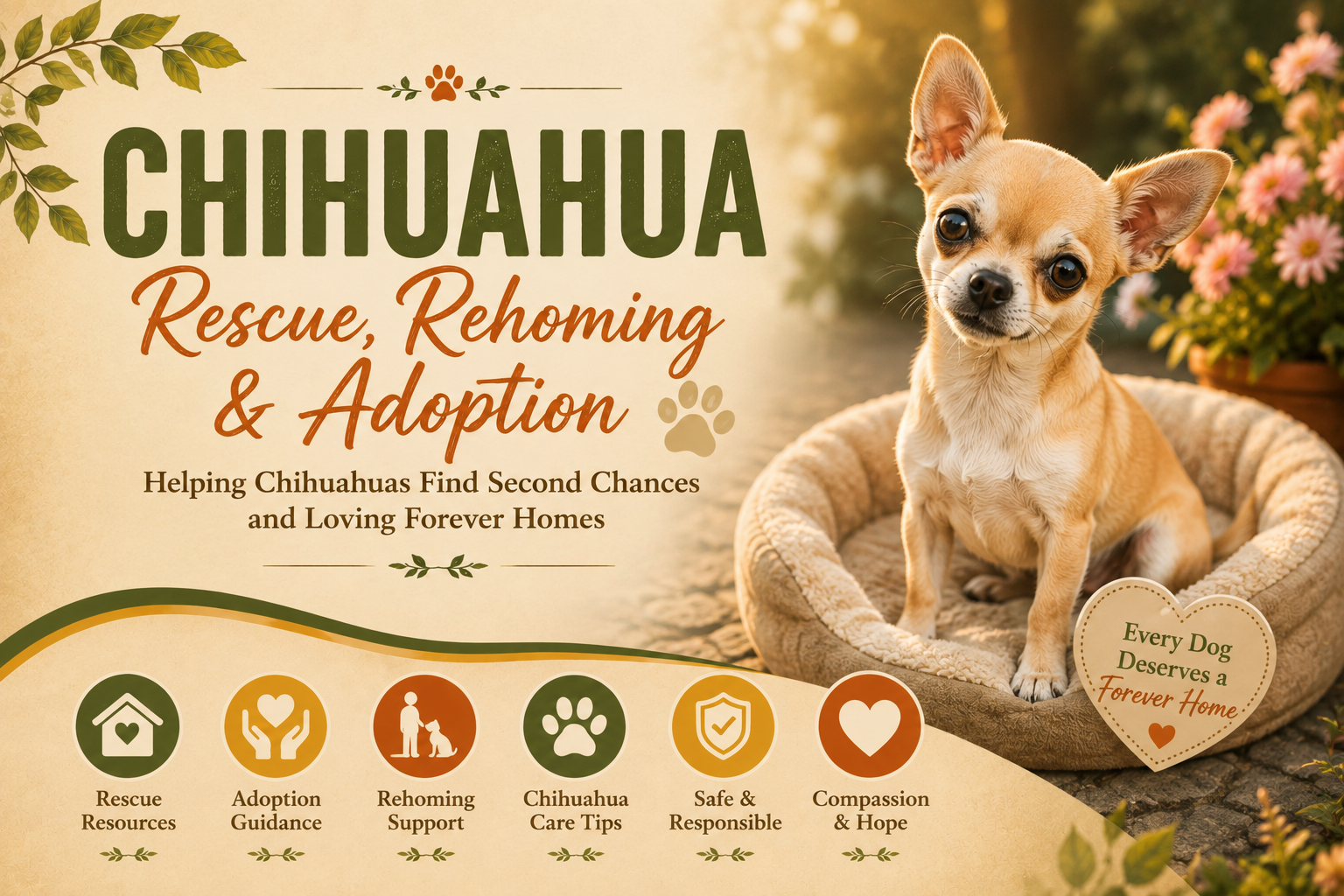
Helping Chihuahuas find loving homes — whether you want to adopt one or need to find a safe new home for a Chihuahua you love.
Chihuahuas may be tiny, but they have enormous personalities and an extraordinary ability to bond with their people. Unfortunately, they also turn up in shelters, foster homes and private rehoming situations for reasons ranging from housing changes and illness to mismatched expectations about life with the breed.
This guide is for both sides of that journey. If you are hoping to adopt a Chihuahua, we will help you decide whether the breed fits your life, find reputable rescue options, prepare your home and make the transition easier. If you are facing the painful decision to rehome your own Chihuahua, you will also find practical, judgment-free guidance on finding a safe new home.
The short answer
A rescued Chihuahua can be a wonderful companion for the right household. Choose the individual dog rather than the cutest photograph, give the dog time to settle, and work with a reputable rescue or carefully managed rehoming service. If you must rehome a Chihuahua, starting early and screening potential adopters carefully can greatly improve your options.
Why Adopt a Chihuahua?
Adoption gives a Chihuahua who needs a home another chance at stability, companionship and security. It can also be a practical way to find a dog whose adult personality is already visible.
Many rescued Chihuahuas are adults or seniors. That should not be viewed as a disadvantage. An adult dog may already be house-trained, accustomed to household routines and past the intense puppy stage. A foster-based rescue may also be able to tell you whether a particular Chihuahua enjoys other dogs, tolerates cats, prefers a quiet household, travels well or needs a patient adopter with behavioural experience.
Adoption can be especially rewarding when the match is made according to temperament and lifestyle rather than appearance alone.
- You give a dog in need a new beginning.
- You may know more about an adult dog’s established personality before committing.
- Reputable rescues often provide veterinary care before placement.
- Foster carers may be able to provide detailed information about everyday behaviour.
- Your adoption can free rescue or shelter space for another dog in need.
Is a Rescue Chihuahua Right for You?
Chihuahuas are not decorative accessories. They are intelligent, alert companion dogs with opinions, preferences and surprisingly bold personalities. Many bond very closely with one or more people and want to be included in daily life.
| If this describes you… | What to consider |
|---|---|
| You live in an apartment or small home | A Chihuahua’s size can be convenient, but barking, toilet routines and separation distress still require training and management. |
| You are a senior or prefer a smaller companion | Many adult Chihuahuas can be excellent companions, especially when energy level and temperament are well matched. |
| You have very young children | Individual dogs vary, but their small size makes accidental injury a real concern. Calm handling and close supervision are essential. |
| You already have pets | Many Chihuahuas live happily with compatible dogs and cats. Ask specifically about the individual dog’s history and arrange careful introductions. |
| You work long hours away from home | A dog that is strongly people-oriented or already struggles with being alone may need a different arrangement. |
| You want a dog for many years | Chihuahuas can be long-lived. Adoption is a serious long-term commitment, including for an adult dog. |
Perhaps the most important rule is this: adopt the Chihuahua that fits your life, not simply the Chihuahua whose photograph captures your heart first.
Before You Adopt a Chihuahua
Think about your normal week, not your ideal week
Consider work, school, travel, visitors, other pets, children and how often the dog would realistically be alone. Think about who will care for the Chihuahua when you are ill or away.
Budget for more than food
Adoption fees are only the beginning. Plan for veterinary examinations, dental care, vaccinations or titers as advised by your veterinarian, parasite prevention where appropriate, identification, grooming supplies, quality food, training help and emergencies.
Ask about the individual dog
A good rescue wants the placement to succeed. Be candid about your household and ask equally candid questions about the dog. A shy Chihuahua who needs a calm adult home may be a poor match for a busy family, while an outgoing, resilient dog may flourish there.
Do not assume a rescue dog is a “damaged” dog
Dogs lose homes for countless reasons that have little or nothing to do with behaviour. Housing restrictions, changes in family circumstances, illness, financial difficulties and an owner’s inability to continue providing care can all lead to rehoming.
Dogs Central Tip
A foster carer’s description of how a Chihuahua behaves at home is often more useful than how the dog behaves during one exciting or stressful meet-and-greet.
Questions to Ask Before Saying “Yes”
Ask the rescue, shelter or current owner questions that help you understand the actual dog in front of you:
- Why is this Chihuahua available for adoption or rehoming?
- How does the dog behave with unfamiliar adults?
- Has the dog lived with children? What ages?
- How does the dog respond to other dogs and cats?
- Is the Chihuahua reliably house-trained in the current home?
- How long can the dog comfortably be left alone?
- Does the dog show fear, guarding, reactivity or separation-related behaviour?
- What veterinary records are available?
- Are there ongoing medications, dental needs or known medical conditions?
- What food and daily routine is the dog accustomed to?
- What does the dog enjoy most?
- What situations make the dog uncomfortable?
- What type of home does the foster carer, rescue or current owner believe would be best?
Then ask yourself equally important questions: Can I realistically meet this dog’s needs? Am I comfortable with the challenges disclosed to me? Do I have a plan if training or veterinary costs are higher than expected?
Where to Find Chihuahua Rescues
Breed-specific rescues can be particularly helpful because their volunteers know Chihuahua behaviour, common health concerns and the kinds of homes in which different Chihuahuas tend to thrive. General shelters, humane societies and all-breed rescues are also important places to look.
Canada
Canadian Chihuahua Rescue and Transport (CCRT)
CCRT describes itself as Canada’s only national Chihuahua rescue organization. It rescues, fosters, rehabilitates and rehomes Chihuahuas in need.
United States
Chihuahua Rescue & Transport (CRT)
CRT is a foster-based nonprofit that has placed Chihuahuas and Chihuahua mixes since 1996 and currently operates through Midwest, Southeast and Southwest regions.
United Kingdom
British Chihuahua Rescue
British Chihuahua Rescue is a registered charity dedicated to Chihuahuas needing rehoming because of changed circumstances, hardship, neglect or an owner’s ill health.
Australia
Tiny Tails Chihuahua Rescue Australia Inc.
Tiny Tails is an Australian registered charity focused on Chihuahuas and other small dogs, including vulnerable, elderly and special-needs dogs.
Can’t find a breed-specific rescue near you?
Check local humane societies, SPCA/RSPCA organizations, municipal shelters, reputable all-breed rescues and carefully managed private rehoming programs. Availability changes constantly, so it can be worth checking more than once.
Rescue organizations, service areas and adoption requirements can change. Confirm current information directly with the organization before applying.
Preparing Your Home for a Rescue Chihuahua
Preparing for a Chihuahua means thinking small. Gaps that would never concern a Labrador owner can become escape routes. A jump from furniture that seems minor for a larger dog can be significant for a tiny one.
- Check fencing, gates, balconies and railings for small openings.
- Set up a quiet sleeping area where the dog can retreat undisturbed.
- Use appropriately sized bowls, bedding, collars or harnesses.
- Keep medications, toxic foods, household chemicals and small swallowable objects safely stored.
- Plan where feeding and toilet routines will happen before the dog arrives.
- If you have other pets, arrange calm, gradual introductions rather than immediately putting everyone together.
Ask what food the Chihuahua is currently eating and, when possible, avoid changing everything at once. A familiar diet and routine can provide valuable continuity during an otherwise enormous transition.
Bringing Your Chihuahua Home: The First Days and Weeks
The first job is not to show your new Chihuahua how exciting their new life will be. It is to show them that their new life is safe and predictable.
The first 24 hours
- Keep the household relatively quiet.
- Show the dog where water, bedding and toilet areas are located.
- Offer opportunities to explore without forcing interaction.
- Supervise closely outdoors, even in fenced areas.
- Use a secure leash or harness for outings.
- Expect temporary changes in appetite, sleep or toilet habits as the dog adjusts.
Skip the welcome party
Do not invite the neighborhood, extended family and every friend you know over to meet your new rescue dog. Give your Chihuahua time to learn the sounds, smells, people and routines of the household first. New hands, voices and attention can be overwhelming when a dog has just undergone a major life change.
The first week
Build a simple routine around meals, toilet trips, walks, rest and gentle interaction. Reward behaviours you want to see. Avoid punishing fear or confusion.
The first few months
You may see new aspects of the dog’s personality as confidence develops. This does not necessarily mean the dog has suddenly “changed.” A dog that was initially quiet may begin playing, barking, testing boundaries or expressing preferences once the environment feels safe.
You may hear the popular “3-3-3” guideline describing roughly three days to decompress, three weeks to learn a routine and three months to feel at home. Treat it as a reminder to be patient, not as a timetable your dog is required to follow. Some Chihuahuas settle quickly; others need much longer.
Common Challenges After Chihuahua Adoption
House-training setbacks
Even a previously house-trained Chihuahua can have accidents after a move. Return to a clear schedule, supervise carefully and reward success. If urination or bowel habits change suddenly or seem unusual, consult your veterinarian rather than assuming the problem is behavioural.
Fearfulness
Allow frightened dogs to approach at their own pace. Avoid cornering, grabbing or repeatedly exposing the dog to something frightening in the hope that they will simply “get over it.” A qualified reward-based trainer or veterinary behaviour professional can help with persistent fear.
Difficulty being alone
Some Chihuahuas become intensely attached to new caregivers. Build independence gradually rather than suddenly leaving a newly adopted dog for a full workday.
Barking and alert behaviour
Chihuahuas can be alert watchdogs. Management, reinforcement of quiet behaviour and reducing unnecessary triggers are generally more productive than yelling at a barking dog.
Resource guarding
Do not deliberately take valued items away to “prove” that you can. Manage the environment, trade for better items and seek professional help when guarding creates a bite risk or significant household conflict.
Health concerns
Arrange a veterinary examination after adoption and bring all available medical records. Establishing a relationship with a veterinarian early makes it easier to address dental care, weight, mobility, heart health and any breed-specific concerns over time.
Need to Rehome Your Chihuahua?
Sometimes loving a dog and being able to keep that dog become two different things.
Illness, loss of housing, financial hardship, a move, family changes, caregiving responsibilities, allergies or other circumstances can leave a responsible owner facing a decision they never expected to make.
You do not need to prove that you are a bad person before you are allowed to ask for help. If keeping your Chihuahua is no longer safe or sustainable, responsible rehoming can be an act of care.
The goal is not to judge why a home must change. The goal is to make the next home as safe, suitable and permanent as possible.
Start before the situation becomes an emergency
When circumstances allow, begin looking for help early. More time gives you a better opportunity to prepare an honest profile, collect veterinary records, speak with rescues, screen applicants and arrange thoughtful meetings.
Be completely honest about your Chihuahua
Tell prospective adopters about medical conditions, medications, fears, house-training, behaviour around children and animals, bite history if any, and anything else that could affect the placement. Hiding a problem may get a dog adopted faster, but it can also set that dog up to lose another home.
How Pet Rehoming Network can help
Pet Rehoming Network provides owner-assisted rehoming support designed to help pet owners present their dog thoughtfully, reach potential adopters and move through the screening and adoption process with support.
Chihuahua rehoming information: [PET-NET-CHIHUAHUA-REHOMING-URL]
A message to owners
Needing to rehome a dog can be deeply emotional. Focus on what you can do now: provide accurate information, seek help early, screen carefully and choose the home that best fits your Chihuahua. A thoughtful transition is far kinder than allowing guilt to prevent you from planning responsibly.
Chihuahua Rescue Snapshot: Why Availability Can Vary So Much
Chihuahua availability can be surprisingly regional. California has a documented history of Chihuahua overpopulation, including past efforts to transport Chihuahuas to other parts of the United States where adopters were easier to find. At the same time, Canada’s national Chihuahua rescue may have only a small number of adoptable dogs available at a particular moment.
The practical lesson for adopters is simple: do not assume the number of Chihuahuas in your local shelter represents the situation everywhere. One community may have many small dogs needing homes while another has a waiting list of adopters.
Transport and cross-regional rescue work can sometimes help correct those imbalances, although every organization has its own geographic limits, adoption policies and transport rules.
Chihuahua Adoption Checklist
| Before Adoption | Ready? |
|---|---|
| I understand the Chihuahua’s known medical and behavioural history. | □ |
| Everyone in my household agrees to the adoption. | □ |
| My housing allows dogs and I understand any size, number or breed rules. | □ |
| I have considered how the dog will fit with children and existing pets. | □ |
| I can afford routine veterinary care and unexpected expenses. | □ |
| I have a plan for workdays, vacations and emergencies. | □ |
| I have made my home and yard safe for a very small dog. | □ |
| I have appropriate food, bedding, identification and walking equipment. | □ |
| I am prepared to give the dog time to decompress rather than expecting instant adjustment. | □ |
| I know whom I will contact if training or behavioural help is needed. | □ |
| I am prepared to make a long-term commitment to this individual dog. | □ |
Frequently Asked Questions About Chihuahua Rescue and Adoption
Are rescue Chihuahuas usually older dogs?
No. Rescues and shelters may have Chihuahuas ranging from puppies to seniors, although the mix varies constantly. Adult and senior dogs can be excellent choices because their personalities and energy levels may be easier to assess.
Are rescue Chihuahuas good with children?
Some are and some are not. The individual dog’s history and temperament matter, and the child’s age and behaviour matter too. Because Chihuahuas are small, interactions with younger children require particularly careful supervision.
Can a rescue Chihuahua live with cats?
Many can. Ask whether the dog has actually lived with cats or has been evaluated around them. Introductions should still be gradual and supervised.
How long does it take an adopted Chihuahua to settle in?
There is no universal schedule. Some appear comfortable within days; others need weeks or months. Predictable routines, adequate rest and patient handling are more important than trying to meet a particular timeline.
Do Chihuahuas remember their previous owners?
Dogs can form strong social attachments and may show signs of missing familiar people and routines after a move. That does not prevent them from forming secure new relationships. Give the dog time and allow the new bond to develop naturally.
Can an older Chihuahua still be trained?
Yes. Adult and senior dogs can continue learning. Training may need to take mobility, hearing, vision or other age-related needs into account, but age alone is not a reason to stop teaching useful skills.
Should I adopt a Chihuahua puppy or an adult?
Choose according to your lifestyle. Puppies require intensive supervision, socialization and training. Adults may offer a more predictable temperament and could already have useful household skills.
Is adoption better than buying from a breeder?
Adoption gives a dog in need a home and is an excellent choice for many families. Someone seeking a puppy for a particular purpose may instead choose an ethical, health-focused breeder. In either case, avoid impulse decisions and prioritize the welfare of the dog.
What if a rescue will not approve my application?
Ask politely whether they can explain the reason. A refusal may reflect the needs of one particular dog rather than a judgment that you should never own a Chihuahua. Different rescues have different policies, and another dog may be a much better match.
What should I do if I need to rehome my Chihuahua urgently?
Contact reputable local rescues, shelters and rehoming services as early as you can. Gather veterinary records and prepare an accurate description of your dog. If there is an immediate safety or welfare emergency, contact an appropriate local animal welfare organization or veterinary service rather than waiting for a private adoption.
Continue Learning About Chihuahuas
Before publication, replace the placeholders below with the exact current Dogs Central URLs after checking the Dogs Central live URL reference. Do not guess slugs.
- Complete Chihuahua Breed Guide
- Chihuahua Health Guide
- Chihuahua Grooming Guide
- Chihuahua Training Guide
- Chihuahua Nutrition Guide
- Chihuahua Behavior Guide
Share Your Chihuahua Rescue Story
Have you adopted, fostered or responsibly rehomed a Chihuahua? Real experiences can help other dog lovers understand what rescue is actually like. Consider sharing how you found your dog, what surprised you, what helped during the transition and what you wish you had known beforehand.
Final Thoughts
A rescue Chihuahua does not need a perfect adopter. The dog needs a suitable, committed person who is willing to learn, prepare and provide a safe home.
Likewise, an owner who can no longer keep a Chihuahua does not need condemnation. That person needs a responsible path forward.
When adopters, owners, rescues and rehoming organizations approach the process with honesty and compassion, more Chihuahuas have the chance not merely to find a home, but to find the right home.
The Dogs Central Goal
Help people make good decisions before adoption, support them after adoption, and give caring owners responsible options when life changes. Better information can help more dogs find — and keep — loving homes.