
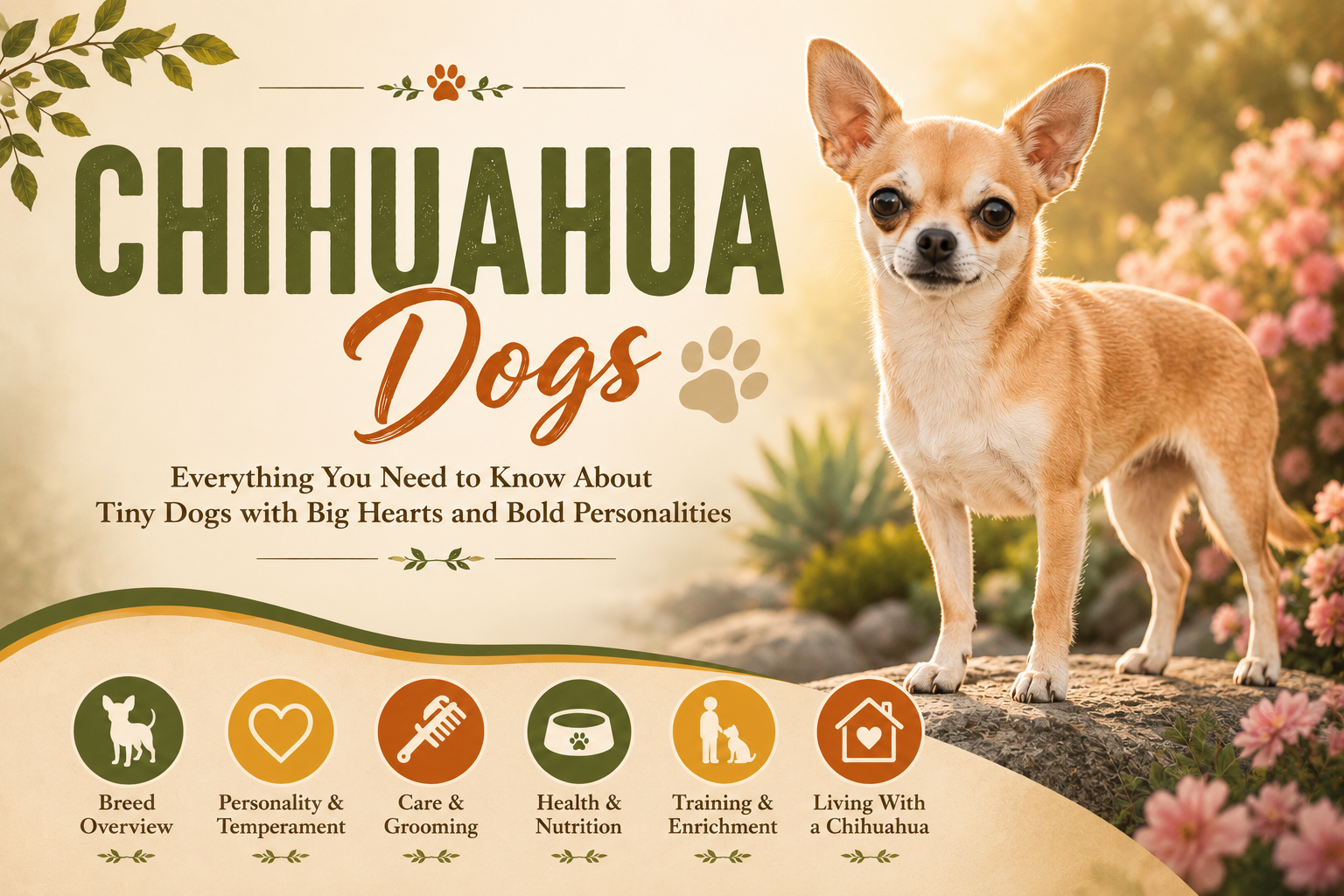
Chihuahua Dog Breed Guide: Temperament, Types, Health, Lifespan, Care & More
Small dog. Enormous personality. Zero awareness of being pocket-sized.
Chihuahuas may be the smallest recognized dog breed, but nobody remembered to tell them. Bright, intensely loyal, expressive and often spectacularly self-assured, these tiny Mexican companion dogs can pack the confidence of a much larger animal into a body light enough to carry under one arm.
That combination is part of their charm—and part of the reason Chihuahuas are so often misunderstood. A well-bred, well-socialized Chihuahua is not supposed to be a trembling ornament or an ill-tempered “ankle biter.” This is an alert, intelligent little dog capable of learning manners, enjoying walks, playing games, participating in dog sports and developing an extraordinarily close relationship with the people they trust.
They are not effortless pets simply because they are tiny. Chihuahuas need thoughtful socialization, positive training, dental care, protection from cold and physical injury, appropriate exercise and owners willing to treat them as dogs rather than accessories. Give them that, and a Chihuahua can be a funny, affectionate, portable and remarkably long-lived companion.
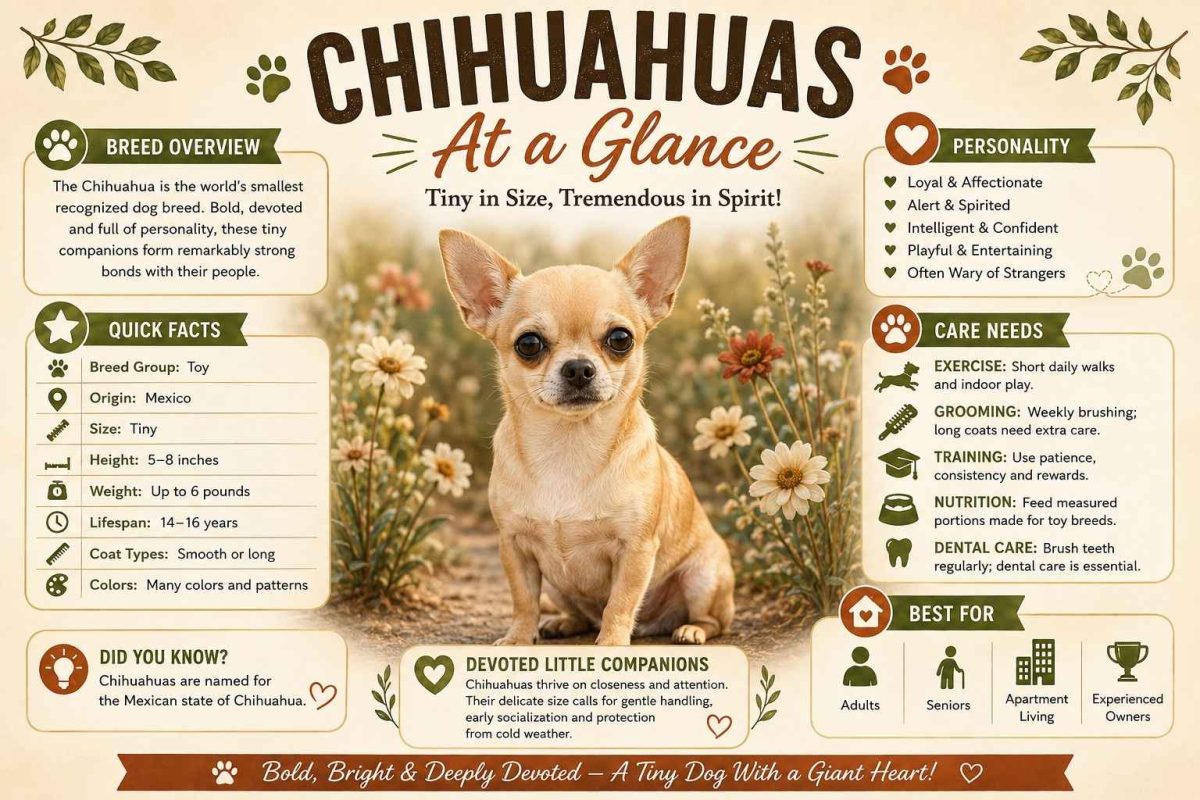
Chihuahua at a Glance
| Origin | Mexico; ancestry is associated with ancient companion dogs of pre-Columbian Mexico |
|---|---|
| Breed group | Toy |
| Weight | AKC standard: not over 6 pounds; pet Chihuahuas may fall outside show-standard weight |
| Coat varieties | Smooth Coat and Long Coat |
| Temperament | Alert, devoted, lively, expressive, sensitive and often bold |
| Exercise | Moderate; daily walks, play and mental activity |
| Grooming | Low to moderate, depending on coat |
| Shedding | Yes; amount varies by dog and coat |
| Apartment living | Excellent physical fit; barking needs management |
| Children | Often best with gentle, dog-savvy older children because of the breed’s tiny size |
| Cold tolerance | Low; many need protection in chilly weather |
| Best suited to | People wanting a close, interactive small companion and willing to train and socialize one properly |
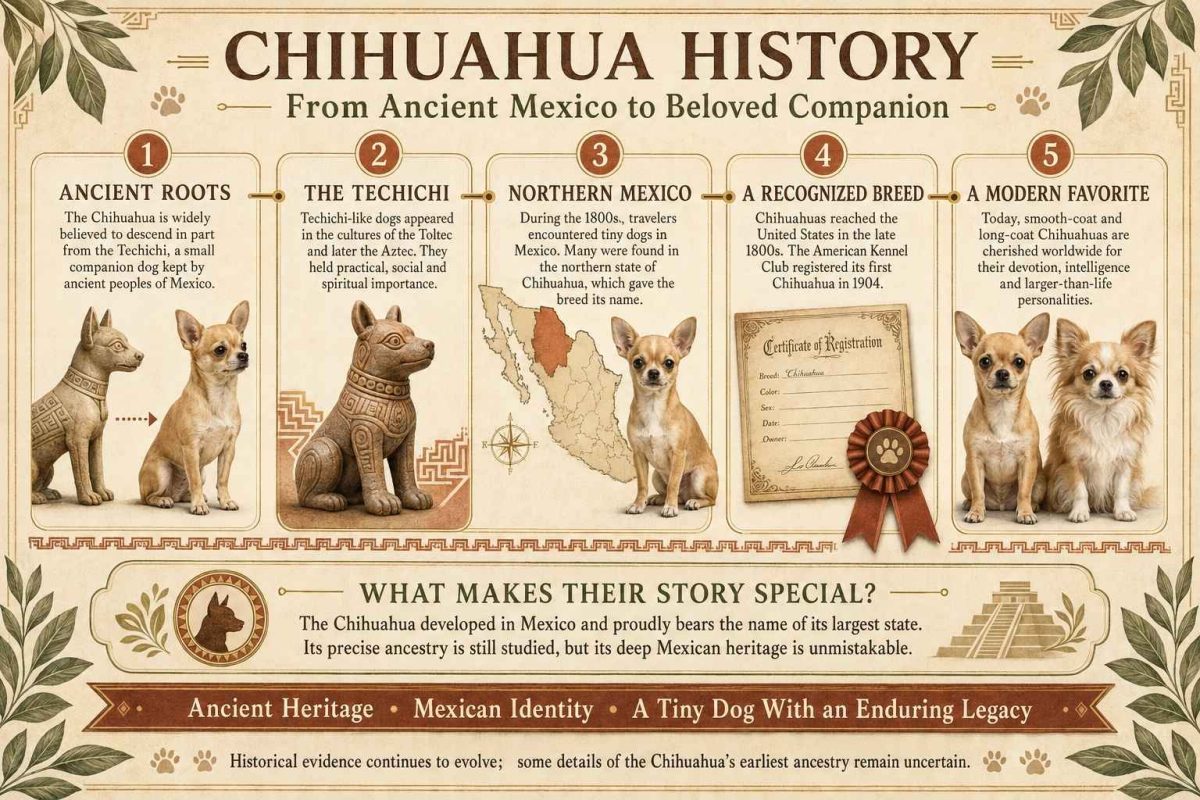
Chihuahua History and Origin: Where Do Chihuahuas Come From?
The Chihuahua is unmistakably associated with Mexico and takes its modern name from the Mexican state of Chihuahua. Its deeper ancestry reaches much farther back than the modern show ring.
Ancient Mexican civilizations kept small companion dogs, including the Techichi associated with the Toltec culture. Later Aztec society also kept small dogs that held practical, cultural and spiritual significance. Exactly how those ancient dogs relate genetically to today’s Chihuahua is a more complicated historical question than popular breed legends sometimes suggest, so it is best to distinguish established history from attractive stories that have been repeated for generations.
By the nineteenth century, small dogs from Mexico were attracting the attention of American dog enthusiasts. The American Kennel Club registered its first Chihuahua in 1904, and the Chihuahua Club of America was founded in 1923. The Smooth Coat and Long Coat were eventually treated as the breed’s two coat varieties.
What Were Chihuahuas Bred For?
The modern Chihuahua is fundamentally a companion dog. Unlike a terrier developed to dispatch vermin or a herding breed designed to move livestock, today’s Chihuahua’s principal job is living closely with people. That history helps explain the breed’s intense interest in its humans, alertness to changes in the environment and talent for becoming deeply woven into everyday household life.
Calling the Chihuahua “just” a lap dog undersells it, however. These are active little dogs with functioning legs, curious brains and an ability to learn. A Chihuahua can enjoy walking, trick training, scent games, obedience and appropriately scaled dog sports as much as it enjoys tunneling beneath a blanket.
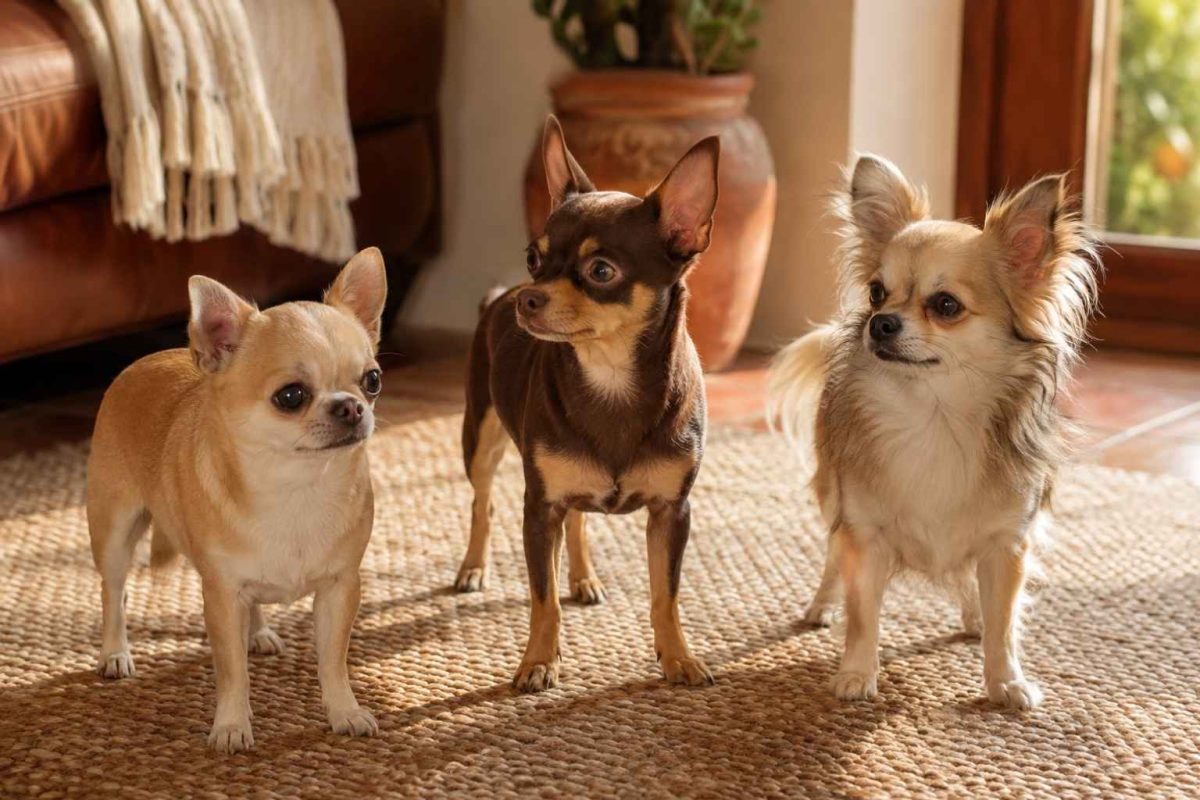
Chihuahua Appearance, Full-Grown Size and Weight
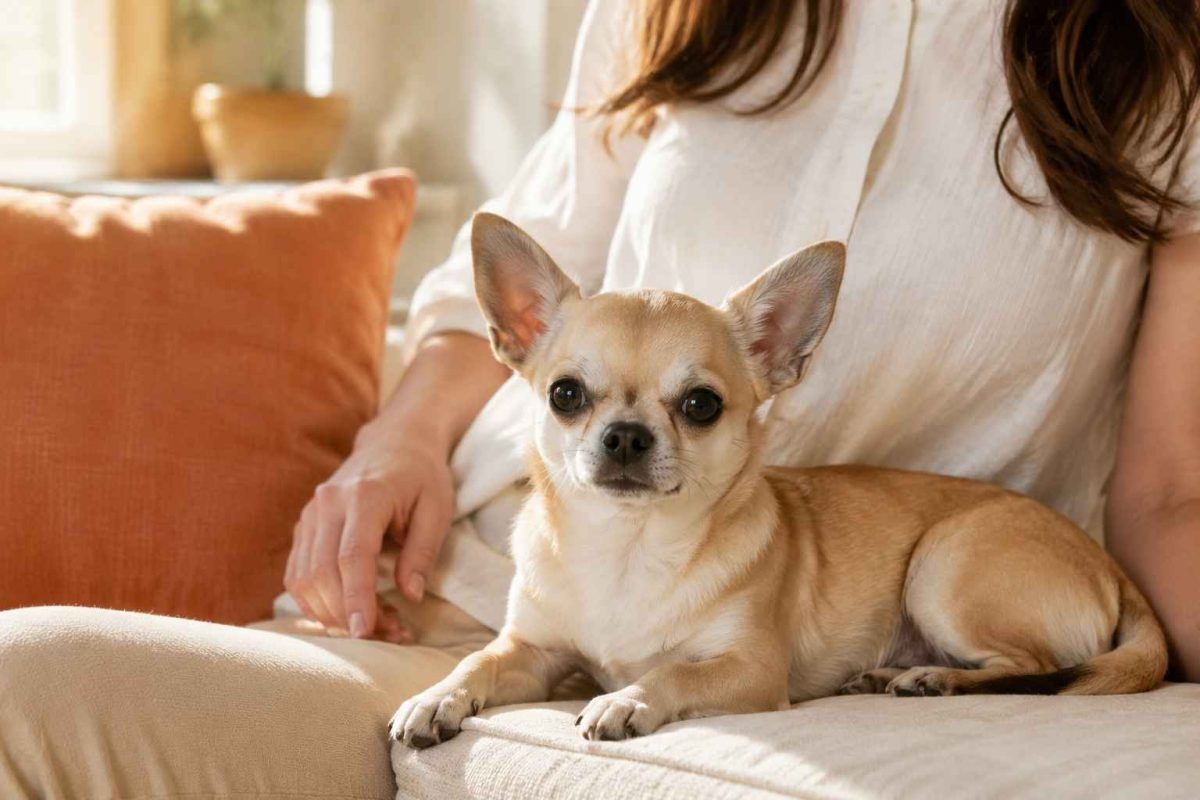
A full-grown Chihuahua is a compact, fine-boned toy dog with large erect ears, bright expressive eyes and a distinctive alert expression. The AKC standard calls for a well-balanced dog weighing no more than six pounds and describes the body as slightly longer than tall.
Real companion Chihuahuas do not all emerge from the same cookie cutter. Some pets are larger than the show standard, and being seven or eight pounds does not make an otherwise Chihuahua-looking family dog a different breed. Health and appropriate body condition matter more to a pet owner than forcing an individual dog to conform to a show-ring number.
How Big Do Chihuahuas Get?
Adult size depends on genetics, sex, body structure, nutrition and whether the dog is actually a purebred Chihuahua. Puppies can be difficult to predict precisely. Be wary of anyone guaranteeing that a very young puppy will mature at an unusually tiny weight.
The Famous Chihuahua Ears and Apple-Dome Head
Large upright ears are one of the breed’s signatures. The official standard also describes a rounded “apple dome” skull, a well-defined stop and a moderately short, slightly pointed muzzle. A molera—a soft area where skull bones have not completely joined—may be present in some Chihuahuas. It should not be treated casually as proof of breed purity, nor should owners assume every skull abnormality is a harmless molera.
Why Extreme Miniaturization Matters
Small size is part of Chihuahua breed type; extreme fragility should not be the goal. A dog marketed primarily for being exceptionally tiny may face greater practical risks from falls, rough handling, missed meals during puppyhood and other hazards. Responsible ownership favors a sound, thriving dog over bragging rights about ounces.
Types of Chihuahuas: Long Hair, Short Hair, Apple Head, Deer Head and “Teacup”
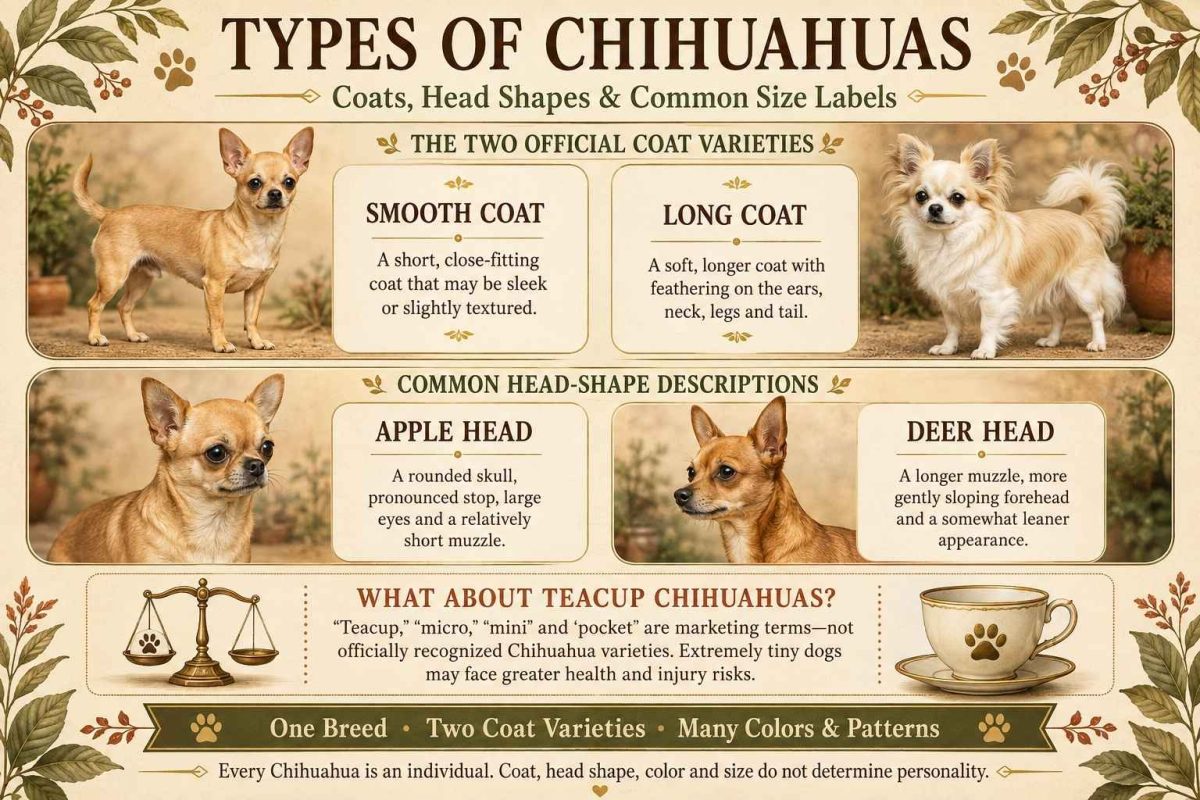
Search online and you may encounter a bewildering assortment of supposed Chihuahua “types.” The simplest fact is this: major breed standards recognize two coat varieties—Smooth Coat and Long Coat. Labels such as apple head, deer head and teacup describe appearance or marketing categories; they are not additional AKC-recognized Chihuahua varieties.
Smooth Coat Chihuahua
The Smooth Coat Chihuahua has short, close, glossy hair. “Smooth” does not mean hairless and it does not mean non-shedding. Some have more undercoat than others. Grooming is straightforward, but loose hairs can still find their way onto clothing and furniture.
Long-Haired Chihuahua
The Long Coat Chihuahua has soft hair that may be flat or slightly wavy, with characteristic feathering and a fuller tail. The long coat is a genuine Chihuahua variety, not evidence that a Chihuahua must have been crossed with a Pomeranian or Papillon. Coat fullness varies considerably among individuals.
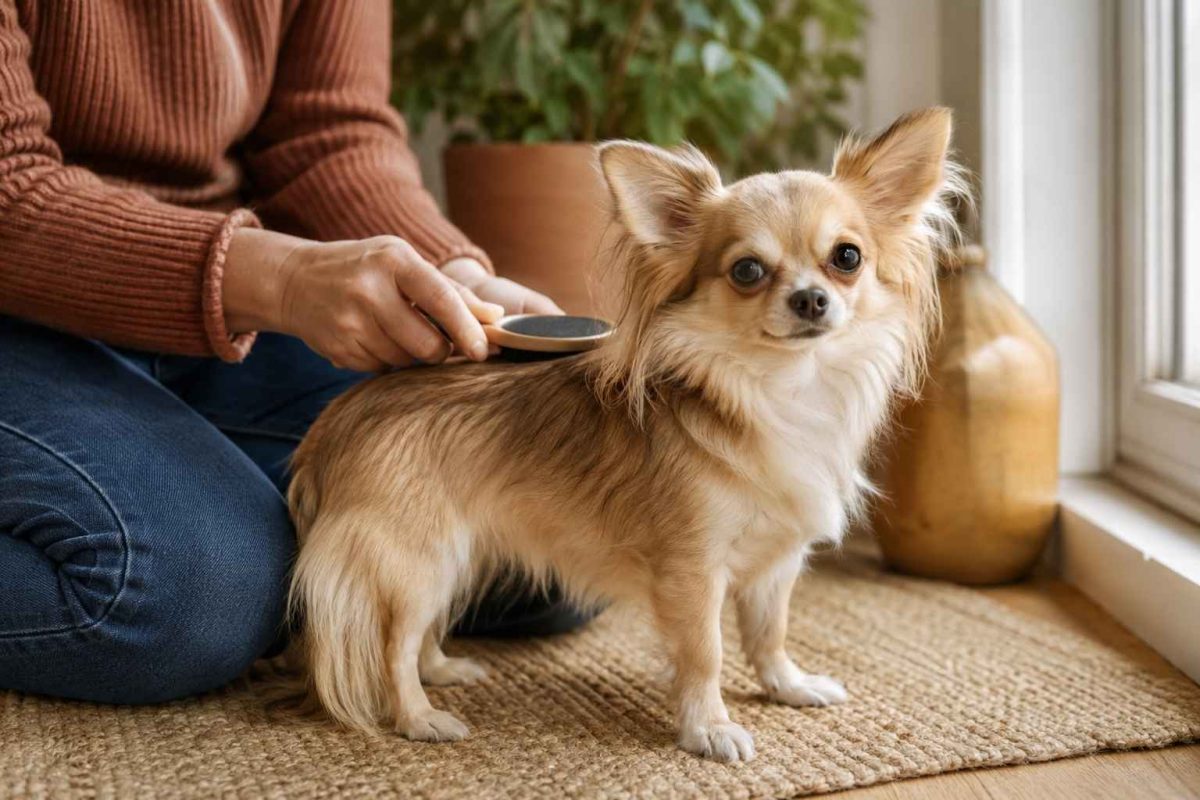
Long-haired Chihuahuas usually need more brushing around the ears, chest, tail and feathering than smooth coats, but they do not generally require elaborate clipping. Their natural coat is part of their appeal.
Apple Head Chihuahua
“Apple head” describes the rounded skull and pronounced stop associated with the breed standard. It is a useful descriptive phrase, but it should not be used to imply that apple-head Chihuahuas are a separate breed.
Deer Head Chihuahua
Dogs called deer-head Chihuahuas generally have a less rounded head, longer muzzle and often a leggier or more streamlined appearance. Many are beloved pets. The term is descriptive rather than an officially recognized Chihuahua variety, and a pronounced deer-head appearance does not match the AKC ideal as closely as the apple-dome head.
Is There Such a Thing as a Teacup Chihuahua?
There is no separate “teacup Chihuahua” variety in the AKC breed standard. Chihuahua is already a very small breed. “Teacup,” “micro,” “mini,” “pocket” and similar labels are commonly used to market especially tiny dogs.
Do not pay a premium simply because a seller promises an extraordinarily small adult. Ask instead about the parents’ mature sizes, the puppy’s growth and health, veterinary care, temperament, health screening and how the litter has been raised. Tiny should never outrank healthy.
Are There Different Chihuahua Breeds?
No. Long-haired and smooth-coated Chihuahuas are varieties of the same breed. Head-shape labels and marketing size terms do not create additional Chihuahua breeds.
Chihuahua Coat Types, Colors and Shedding
Few toy breeds offer quite as much visual variety in such a small package. Chihuahuas can appear in many colors and markings, while coat length ranges from sleek Smooth Coats to feathered Long Coats.
Color terminology can become complicated, particularly when breeders use fashionable descriptions. For a family companion, color should come well after health, temperament and responsible breeding practices.
Do Chihuahuas Shed?
Yes. Both coat varieties shed. The amount varies with the individual, season, coat density, health and environment. Short hair can be particularly good at embedding itself in fabric even when the total volume of shed coat is modest.
Are Chihuahuas Hypoallergenic?
No dog can be guaranteed not to trigger allergies, and Chihuahua is not generally considered a hypoallergenic breed. People with dog allergies may react to proteins in dander, saliva and urine rather than simply to visible hair. Spend meaningful time around adult Chihuahuas before bringing one home if allergies are a concern.
Choosing Color Responsibly
There is nothing wrong with loving a particular color. The problem begins when unusual color is treated as more important than soundness. Be cautious when “rare” coloring is used to justify an extraordinary price without equally transparent information about health, pedigree, temperament and breeding practices.
Chihuahua Temperament and Personality
Chihuahuas tend to be alert, lively, affectionate and intensely interested in their people. Many select a favorite person and become that person’s devoted shadow. They can be comical, cuddly and surprisingly brave, but also sensitive to unfamiliar people, environments and handling.
The caricature of the snarling Chihuahua is often partly a human-created problem. When a tiny dog shows discomfort, people may laugh, pick it up, pass it around or ignore warning signals that would be respected immediately in a larger dog. Repeatedly removing a dog’s ability to choose distance can teach it that louder warnings are necessary.
Are Chihuahuas Aggressive?
A Chihuahua should not be assumed to be aggressive simply because of breed. Fear, inadequate socialization, pain, resource guarding, rough handling, learned behavior and genetics can all influence aggression. Small dogs deserve the same thoughtful behavior assessment and training as large dogs.
Do not deliberately provoke growling because it looks funny on video. Growling is communication. Determine why the dog is uncomfortable and address the underlying problem.
Are Chihuahuas Affectionate?
Often extremely so. Many love laps, blankets, body contact and sleeping close to their people. Others are more independent. Affection should remain voluntary; a Chihuahua that is continually grabbed because it is easy to lift may become defensive about handling.
Do Chihuahuas Bond With One Person?
Some form a particularly intense attachment to one person, but that does not mean they are incapable of loving a family. Encourage pleasant interactions with several trusted people so one-person devotion does not turn into guarding or panic whenever the favorite human disappears.
Are Chihuahuas Smart? Intelligence and Trainability
Yes. Chihuahuas are intelligent, observant dogs capable of learning far more than many owners ask of them. Their challenge is rarely an inability to learn. More often, humans unconsciously teach them that rules are optional because the consequences of bad manners seem small.
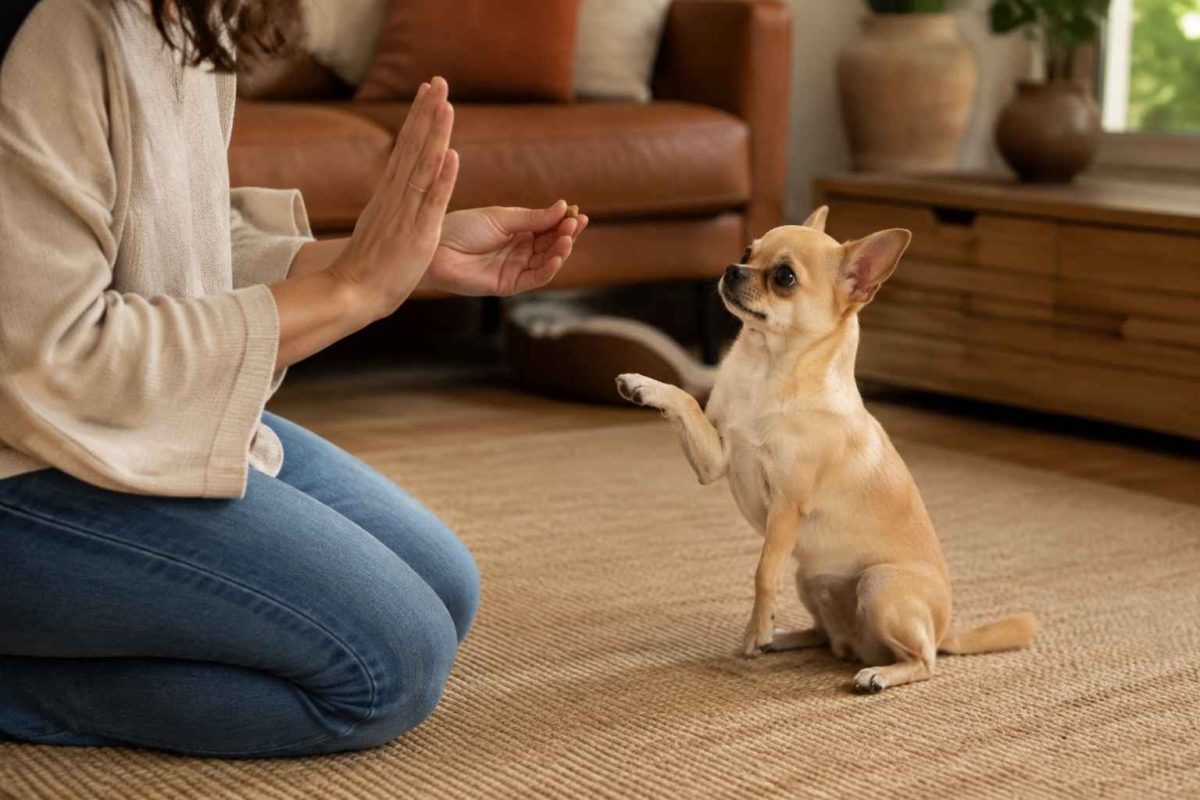
They can learn obedience cues, tricks, cooperative grooming behaviors, recall, scent games and household routines. Positive reinforcement works particularly well because many Chihuahuas are sensitive and quickly notice what earns something valuable.
Intelligence does not mean automatic obedience. A clever Chihuahua may be excellent at discovering which family member drops food, which bark opens the patio door and exactly how long to wait before you abandon the request to “come.” Consistency matters.
Training a Chihuahua: Manners, Socialization and House Training
Train a Chihuahua as though it were a 60-pound dog that happened to arrive in miniature. Reward the behaviors you want, prevent rehearsal of behaviors you do not want and make expectations understandable and consistent.
Early Socialization
Good socialization means carefully introducing a puppy to the world while keeping experiences safe and positive. It does not mean forcing a frightened puppy into everyone’s arms. Introduce different people, surfaces, sounds, appropriate dogs, handling, grooming, travel and household experiences at a pace the puppy can manage.
House Training a Chihuahua
House training can require patience. A tiny puppy has a tiny bladder, and cold rain or snow can make outdoor toileting less appealing. Use a predictable schedule, frequent opportunities, close supervision and immediate rewards for toileting in the correct place.
Do not punish accidents. Clean them thoroughly and adjust management. If a previously reliable adult suddenly begins having accidents, consider a veterinary evaluation rather than assuming stubbornness.
Leash and Recall Training
A Chihuahua should learn to walk rather than being carried everywhere. Use appropriately fitted lightweight equipment and teach leash skills gradually. Recall deserves special attention because a loose Chihuahua is vulnerable to traffic, larger animals and simply disappearing through a surprisingly small opening.
Handling Skills
Teach comfort with paws, mouth, ears, harness, brushing and gentle restraint using rewards. Cooperative handling pays dividends for nail trims, dental care and veterinary visits.
Why Harsh Training Is a Poor Fit
Intimidation can make a sensitive or defensive dog more fearful. Reward-based training can be both kind and firm: the dog gets clear boundaries, predictable consequences and reinforcement for making good choices.
Chihuahua Barking, Shaking and Other Common Behaviors
Do Chihuahuas Bark a Lot?
Many are naturally alert and quick to announce changes. Hallway footsteps, visitors, delivery drivers, another dog outside or a mysterious sound behind the refrigerator can all merit investigation. Genetics and individual temperament matter, but owners can strongly influence whether alert barking becomes chronic barking.
Reward quiet behavior, reduce repeated exposure to triggers when practical, teach an alternative behavior such as going to a mat and avoid screaming over the dog. If barking is driven by fear or separation distress, address that cause rather than treating noise as the entire problem.
Why Do Chihuahuas Shake?
There is no single explanation. A Chihuahua may tremble because it is cold, excited, frightened, stressed or highly aroused. Small dogs lose heat readily, so temperature deserves consideration. But shaking should never automatically be dismissed as “just a Chihuahua thing.”
New, persistent or severe trembling—especially with weakness, pain, vomiting, disorientation, collapse, appetite changes or other symptoms—warrants veterinary attention. In a tiny puppy, weakness and trembling can be particularly concerning.
Why Do Chihuahuas Burrow Under Blankets?
Warmth and comfort are powerful incentives for a small, heat-seeking companion dog. Many Chihuahuas adore enclosed, warm sleeping places. Make sure everyone in the household knows to check blankets and cushions before sitting or moving them.
Chihuahua Attachment, Separation Anxiety and Time Alone
A Chihuahua’s devotion can become difficult if the dog never learns that short periods apart are safe. Start independence skills before there is a problem: comfortable resting away from your body, brief departures, food toys or safe enrichment and a predictable routine.
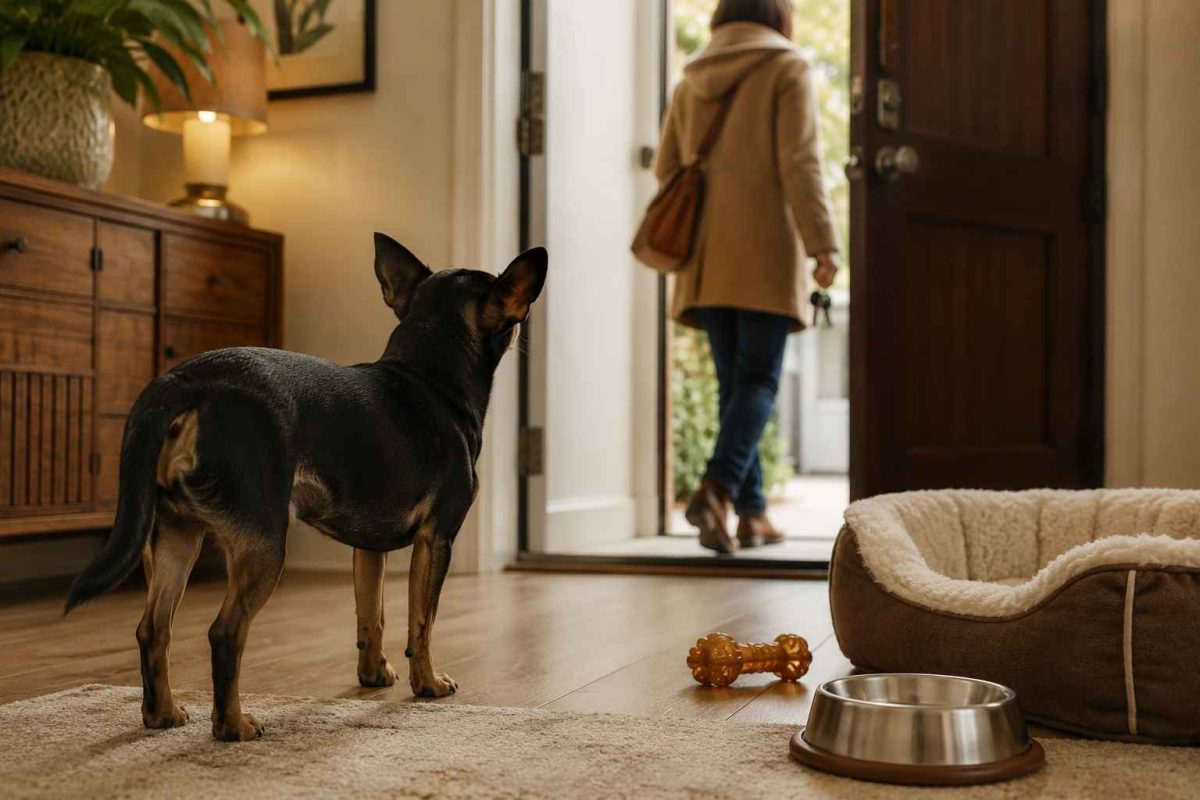
Do not confuse true separation anxiety with ordinary protest or boredom. A dog that panics when left may vocalize continuously, attempt escape, eliminate, drool, pace or become destructive. Significant separation-related distress deserves a structured behavior plan and, when appropriate, help from a veterinarian or qualified behavior professional.
Being portable can ironically make independence harder: if the Chihuahua accompanies someone every minute of every day, being alone may never become a practiced life skill.
Chihuahua Exercise Needs and Enrichment
Chihuahuas do not need marathon mileage, but they do need daily exercise. Short walks, sniffing, play, training and mental challenges support healthy weight, confidence and behavior.
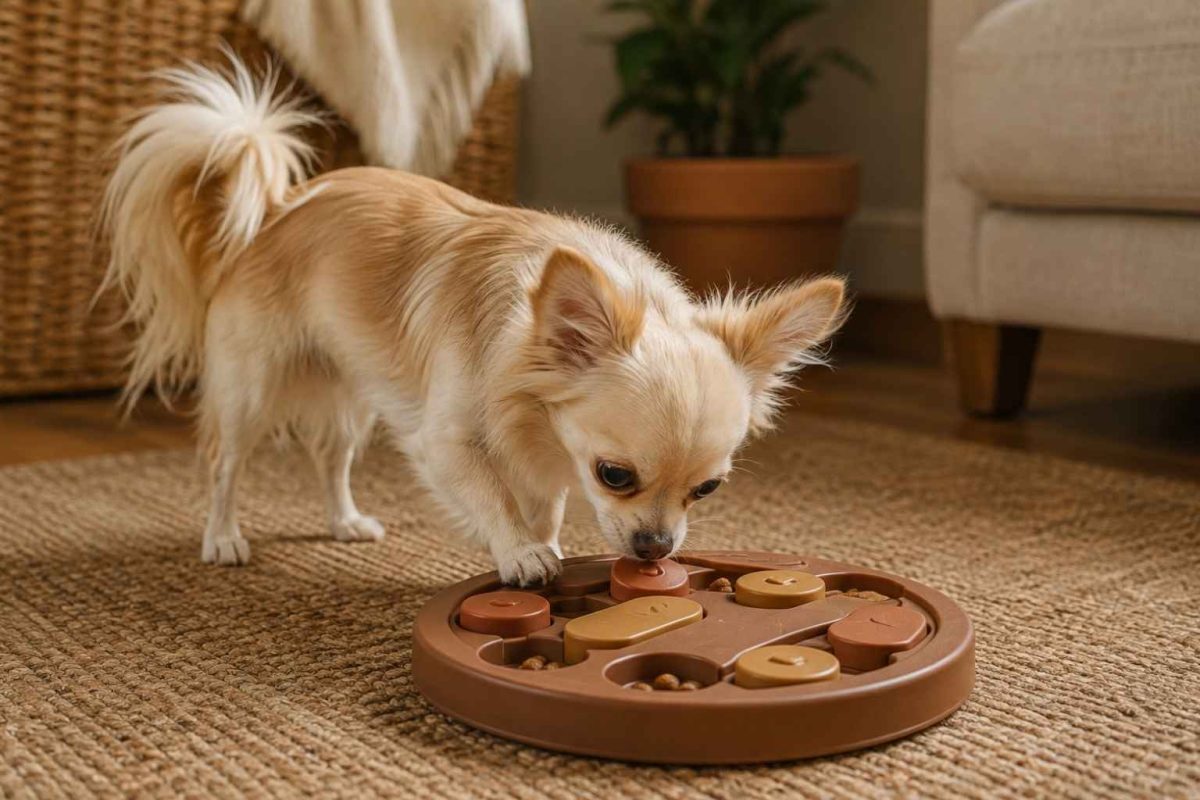
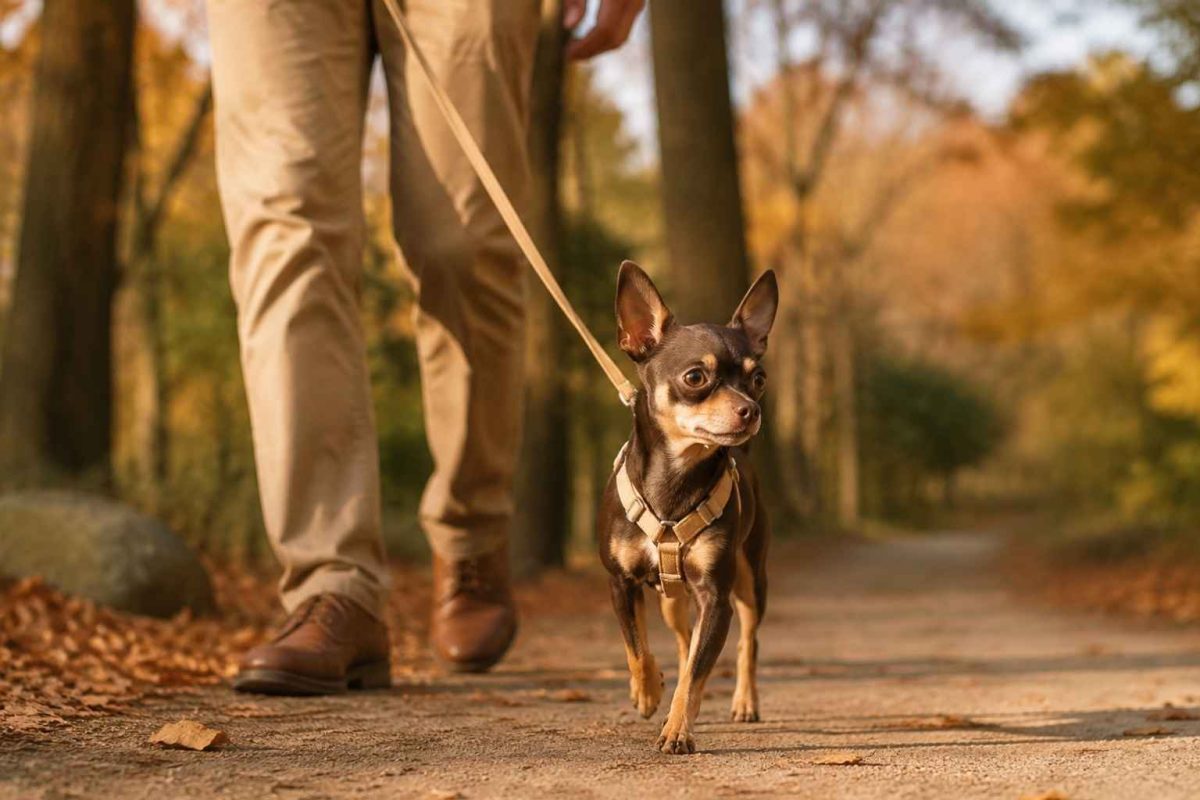
A healthy adult may enjoy more activity than stereotypes suggest. Adjust duration and intensity to age, conditioning, weather and health rather than assuming tiny legs cannot go anywhere.
Good Activities for Chihuahuas
- Daily neighborhood walks at an appropriate pace
- Sniff-and-explore walks
- Indoor fetch with lightweight toys
- Food puzzles and scatter feeding
- Trick training
- Hide-and-seek
- Simple scent games
- Short positive obedience sessions
- Supervised play with compatible dogs
Cold-Weather Exercise
Many Chihuahuas genuinely become cold quickly. A properly fitted sweater or coat can be functional equipment rather than fashion. In very cold conditions, shorten outdoor sessions and provide indoor activity. Protect paws from ice, salt and extreme temperatures.
Hot Weather
Tiny does not mean immune to heat. Avoid strenuous activity during dangerous heat, provide shade and water and never leave a Chihuahua in a hot vehicle.
Chihuahua Grooming, Coat Care, Nails and Dental Care
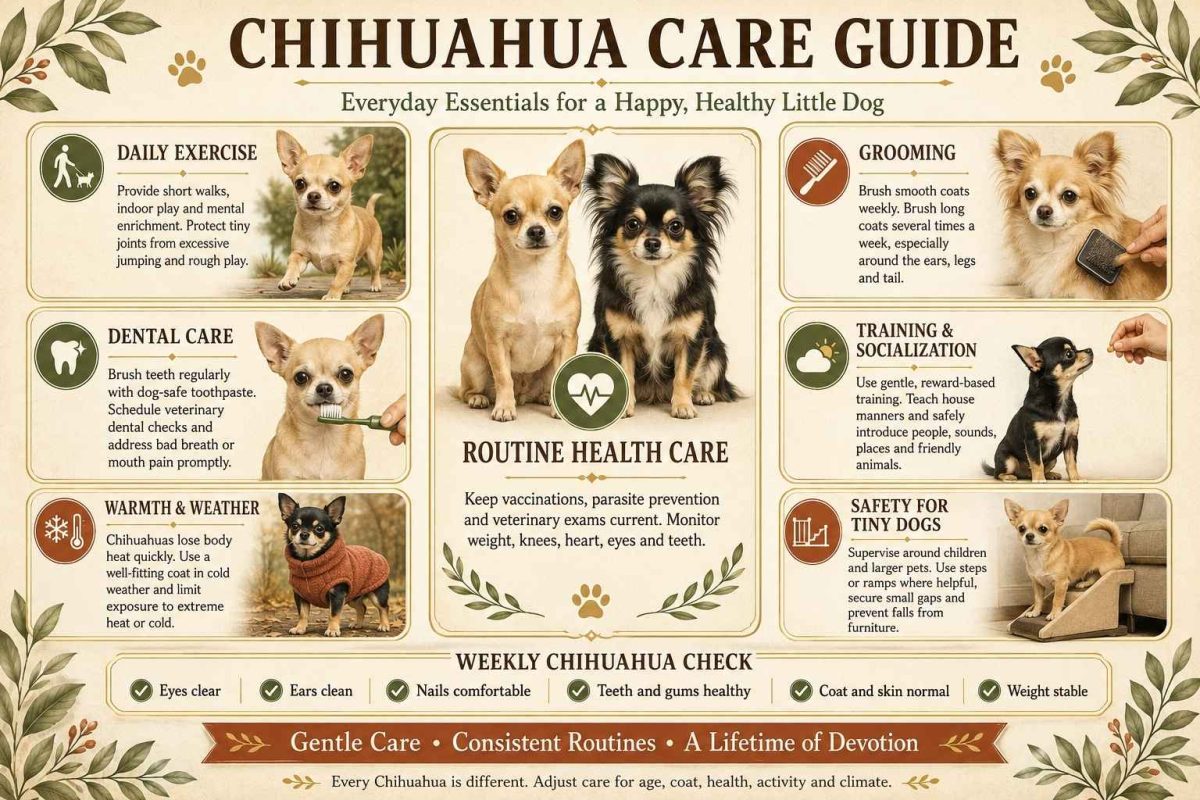
Routine grooming is relatively manageable, but Chihuahua care has one area that deserves disproportionate attention: the mouth.
Smooth Coat Grooming
Brush periodically to remove loose hair and distribute skin oils. Bathe when needed using dog-appropriate products. The short coat does not protect well against cold.
Long Coat Grooming
Brush several times a week as needed, paying particular attention to feathering, behind the ears, the chest and tail. Gently work out small tangles before they become mats. A healthy long coat generally does not require routine shaving.
Nail Care
Because a Chihuahua is light, normal walking may not wear the nails down sufficiently. Long nails can change how a dog stands and moves. Frequent small trims are often easier than waiting until the nails become very long.
Chihuahua Dental Care Is Not Optional
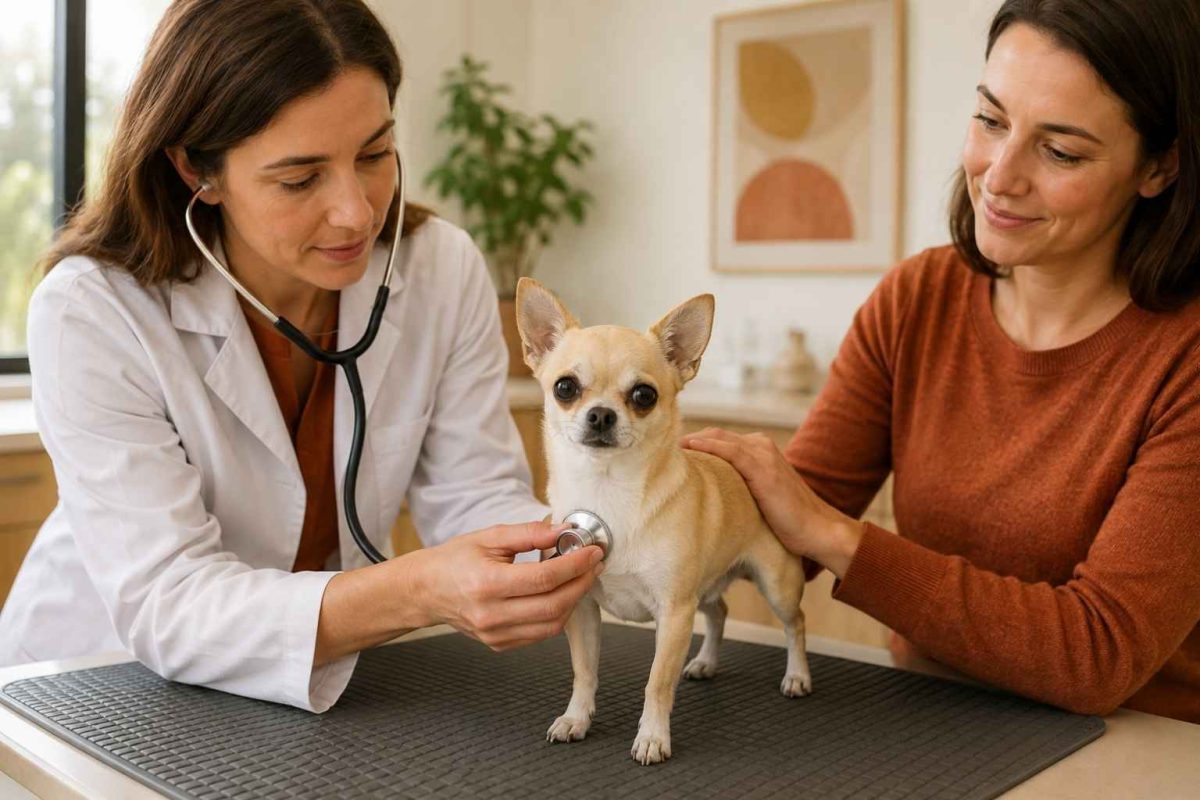
Toy dogs can develop serious dental disease, and crowded little mouths deserve proactive care. Ideally, teach tooth brushing during puppyhood using dog-safe toothpaste. Your veterinarian can advise on home dental products and when a professional dental examination or cleaning is needed.
Bad breath should not simply be accepted as normal “dog breath.” Persistent odor, red or bleeding gums, loose teeth, difficulty chewing, dropping food, facial swelling or mouth pain deserves veterinary attention.
Ears and Eyes
Check ears and eyes routinely. The breed’s prominent eyes can be vulnerable to irritation and trauma. Sudden squinting, redness, cloudiness, discharge, obvious pain or eye injury should be assessed promptly rather than treated with leftover medication.

Chihuahua Nutrition and Feeding
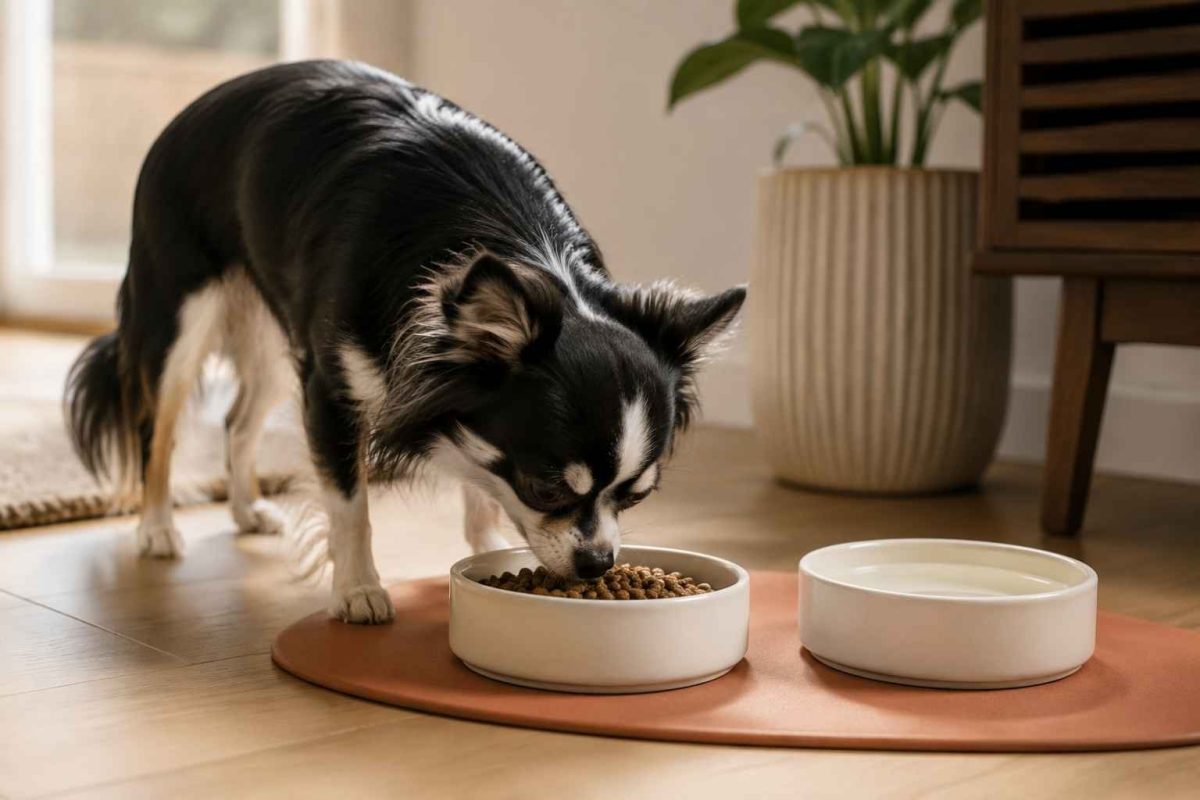
A Chihuahua needs complete and balanced food appropriate for its life stage, but tiny size makes portion accuracy unusually important. A few extra calories that would be trivial to a large dog can become significant to a five-pound Chihuahua.
How Much Should a Chihuahua Eat?
There is no responsible universal cup measurement for every Chihuahua. Calorie needs vary with body weight, age, activity, neuter status, health and the energy density of the food. Start with the feeding guidance for the specific diet, measure rather than guess, assess body condition regularly and adjust with veterinary guidance.
Adult Feeding
Many healthy adults do well on measured meals rather than unrestricted free feeding. Treats count toward daily calories. For training, a Chihuahua-sized reward may be only a crumb-sized piece.
Feeding Chihuahua Puppies
Young toy-breed puppies have small stomachs and limited energy reserves. Breeder and veterinary guidance about meal frequency is particularly important in very small puppies. A puppy that becomes weak, unusually sleepy, uncoordinated, trembly or unwilling to eat needs prompt attention.
Weight Management
Do not judge healthy weight by a number alone. Body condition matters. You should be able to feel the ribs without digging through a heavy fat layer, while the dog should have an appropriate waist and abdominal tuck for its build. Ask your veterinarian to show you how to assess body condition.
Picky Eating
Repeatedly replacing balanced meals with tastier table foods can train a healthy dog to hold out for upgrades. At the same time, appetite loss in a Chihuahua—especially a puppy or a dog with other symptoms—should not automatically be labeled fussiness. Dental pain, gastrointestinal illness and other medical problems can affect eating.
Chihuahua Health Issues and Preventive Care
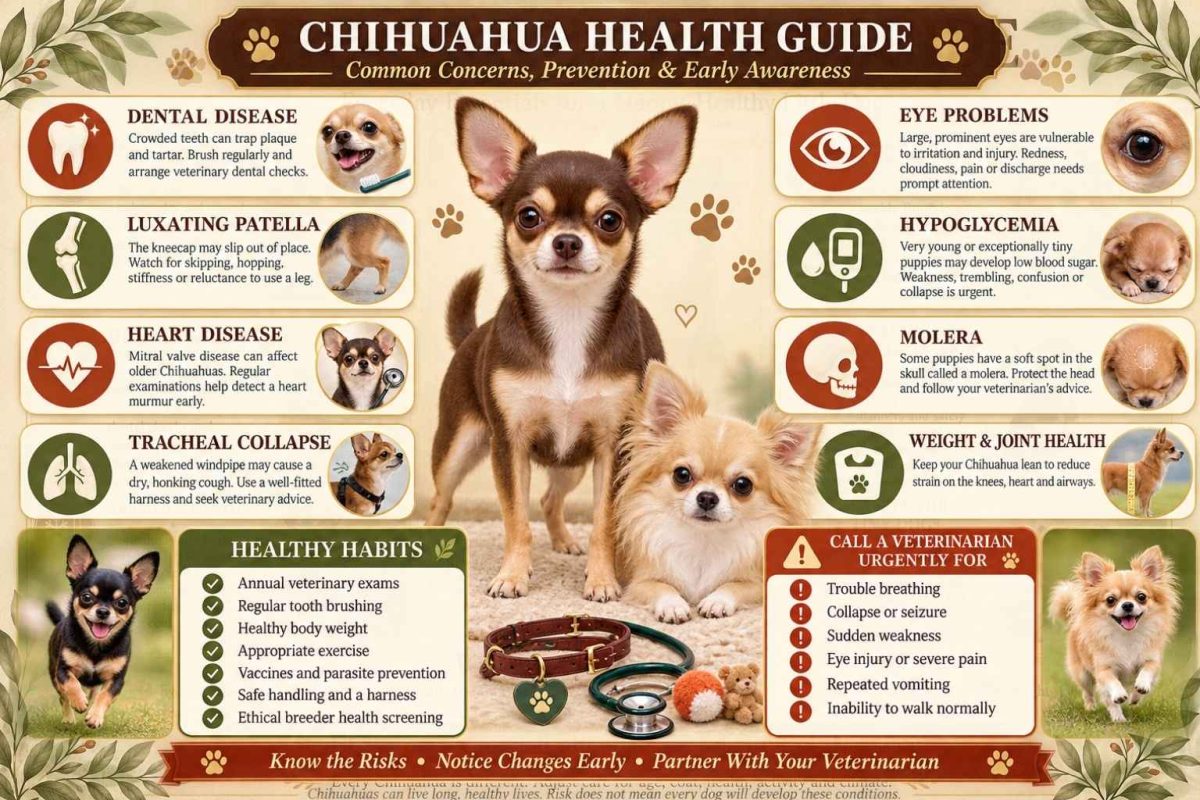
Chihuahuas can be robust, long-lived dogs, but longevity does not make them immune to disease. Responsible owners should understand problems seen in the breed and responsible puppy buyers should ask for meaningful health screening rather than accepting “vet checked” as a substitute.
Dental Disease
Dental and periodontal problems are a major practical concern in tiny dogs. Daily home care, regular oral examinations and professional treatment when indicated can protect comfort and help preserve teeth.
Patellar Luxation
A luxating patella is a kneecap that moves out of its normal groove. Signs may include intermittent skipping, holding up a hind leg, lameness or discomfort. Severity varies; veterinary evaluation determines whether monitoring, medical management or surgery is appropriate.
Heart Disease
Small dogs can develop cardiac disease as they age, and responsible breeding programs use cardiac evaluation to help reduce inherited risk. A murmur does not by itself tell you the exact disease or prognosis. Coughing, exercise intolerance, rapid or difficult breathing, weakness or collapse warrant veterinary assessment.
Tracheal Problems
Tracheal collapse can cause a characteristic harsh cough and breathing difficulty in affected toy dogs. Maintaining healthy weight and avoiding unnecessary pressure on the neck can be sensible, but coughing has many possible causes and should be properly diagnosed.
Eye Problems and Injury
Large exposed eyes are part of the Chihuahua look, but they are vulnerable. Eye pain can become urgent quickly. Squinting, rubbing, marked redness, cloudiness or trauma merits prompt veterinary attention.
Hypoglycemia in Tiny Puppies
Very young or exceptionally small puppies may be vulnerable to low blood sugar, particularly when stressed, chilled, ill or not eating adequately. Weakness, tremors, disorientation, seizures or collapse are emergencies. New owners should leave the breeder and veterinarian with clear feeding and emergency instructions rather than relying on internet home remedies.
Molera and Neurologic Concerns
A molera has long been associated with the breed, but an opening in the skull should not be used by owners to self-diagnose neurologic symptoms. Seizures, abnormal gait, persistent pain, behavioral changes or other neurologic signs require veterinary evaluation.
Injury Prevention
Some of the most important Chihuahua health protection is ordinary household management. Prevent jumping from dangerous heights, supervise around large or exuberant dogs, teach children safe handling, use gates around stairs when appropriate and know where the dog is before moving a recliner or sitting on a blanket-covered sofa.
Health Testing When Choosing a Puppy
Ask breeders which health examinations they perform on breeding dogs, which results are independently recorded and why those tests matter in Chihuahuas. Patella and cardiac screening are important areas to discuss, along with any current testing recommended by the national breed club. Health testing reduces risk; it cannot guarantee that a puppy will never become ill.
This guide provides general educational information and is not a substitute for diagnosis or treatment from your veterinarian.
Chihuahua Lifespan and Life Expectancy
Chihuahuas are widely regarded as a long-lived breed, and it is reasonable for prospective owners to plan for a commitment that may extend well into the dog’s teens. Exact lifespan cannot be predicted for an individual dog, and published averages vary depending on the population studied.
Rather than treating 14, 16 or 18 as a promise, focus on factors you can influence: healthy body condition, dental care, preventive veterinary care, safe exercise, appropriate nutrition, parasite prevention, early investigation of new symptoms and protection from avoidable injury.
Helping a Chihuahua Live a Long, Healthy Life
- Keep the dog lean and appropriately active.
- Make dental care routine rather than waiting for obvious disease.
- Attend regular veterinary examinations.
- Investigate new coughing, exercise intolerance, pain, appetite change or behavior change.
- Prevent falls and unsafe interactions with much larger animals.
- Use age-appropriate nutrition.
- Continue enrichment and gentle exercise into the senior years.
Senior Chihuahuas
Older Chihuahuas may need more frequent veterinary monitoring, easier access to favorite furniture, warmer bedding, modified exercise and adjustments for hearing, vision, dental or mobility changes. Do not write off new symptoms as “just old age.” Pain, heart disease, dental disease and other treatable problems can masquerade as normal aging.
A senior Chihuahua can remain funny, affectionate and engaged for years. The goal is not merely a long life, but as many comfortable, interested and Chihuahua-ish years as possible.
Are Chihuahuas Good Family Dogs? Children, Dogs and Cats
Chihuahuas can thrive in families, but household fit matters more than a blanket yes or no.
Chihuahuas and Children
The primary concern is often the dog’s safety. A fall from a child’s arms, an accidental kick or rough play can seriously injure a tiny dog. Calm older children who understand canine body language and respect boundaries are generally a more natural fit than toddlers.
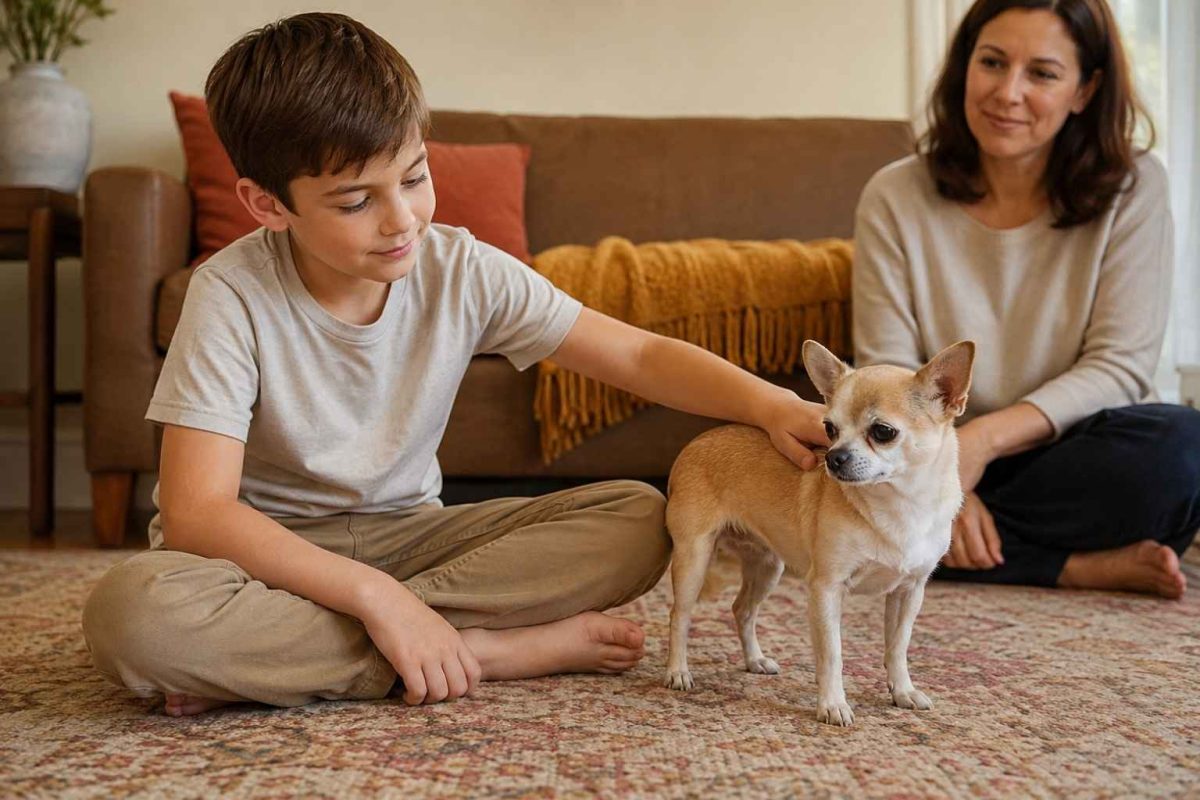
Adults should supervise interactions, teach children to let the dog approach voluntarily and provide a child-free resting place. A dog should never be expected to tolerate poking, chasing, squeezing or being disturbed while sleeping.
Chihuahuas and Other Dogs
Many live happily with other dogs, including other Chihuahuas. Match play styles carefully. A friendly 70-pound adolescent dog can injure a Chihuahua without any aggression whatsoever. Supervise until you understand the relationship.
Chihuahuas and Cats
They can coexist very successfully with cats when temperaments are compatible and introductions are gradual. Give the cat escape routes and do not permit either animal to harass the other. A confident cat may outweigh the Chihuahua.
Other Small Pets
Use secure housing and careful management around birds, rodents and other small animals. Individual prey interest varies, and “small dog” does not mean “safe unsupervised with every small pet.”
Are Chihuahuas Good Apartment Dogs?
Physically, Chihuahuas are exceptionally well suited to apartments, condos and small homes. They need little floor space and can receive meaningful exercise without a private yard. Behaviorally, however, barking can determine whether apartment life is peaceful.
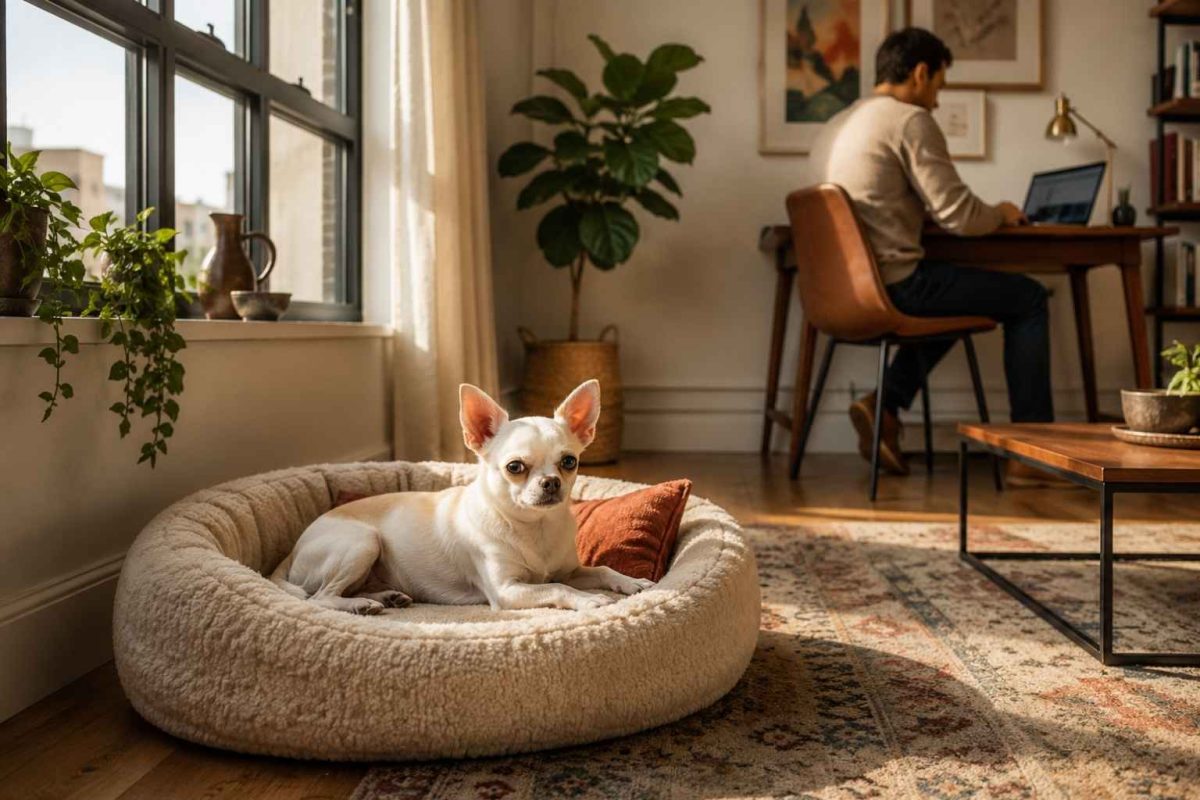
Do not wait for hallway reactivity to become a year-long habit. Reward calm responses to sounds, use visual barriers or white noise where helpful, provide daily walks and enrichment and teach a settle behavior.
An apartment Chihuahua still needs to go outside, sniff, explore and experience the world. A small home should not become a small life.
Compare other compact companions in Dogs Central’s guide to the best small dogs for apartments.
Are Chihuahuas Good Dogs for Seniors?
Often, yes. Their modest exercise requirements, small food bills, portability and love of companionship can make Chihuahuas wonderful senior companions. An adult Chihuahua may be particularly appealing to someone who wants to skip puppy house training and the most chaotic developmental stage.
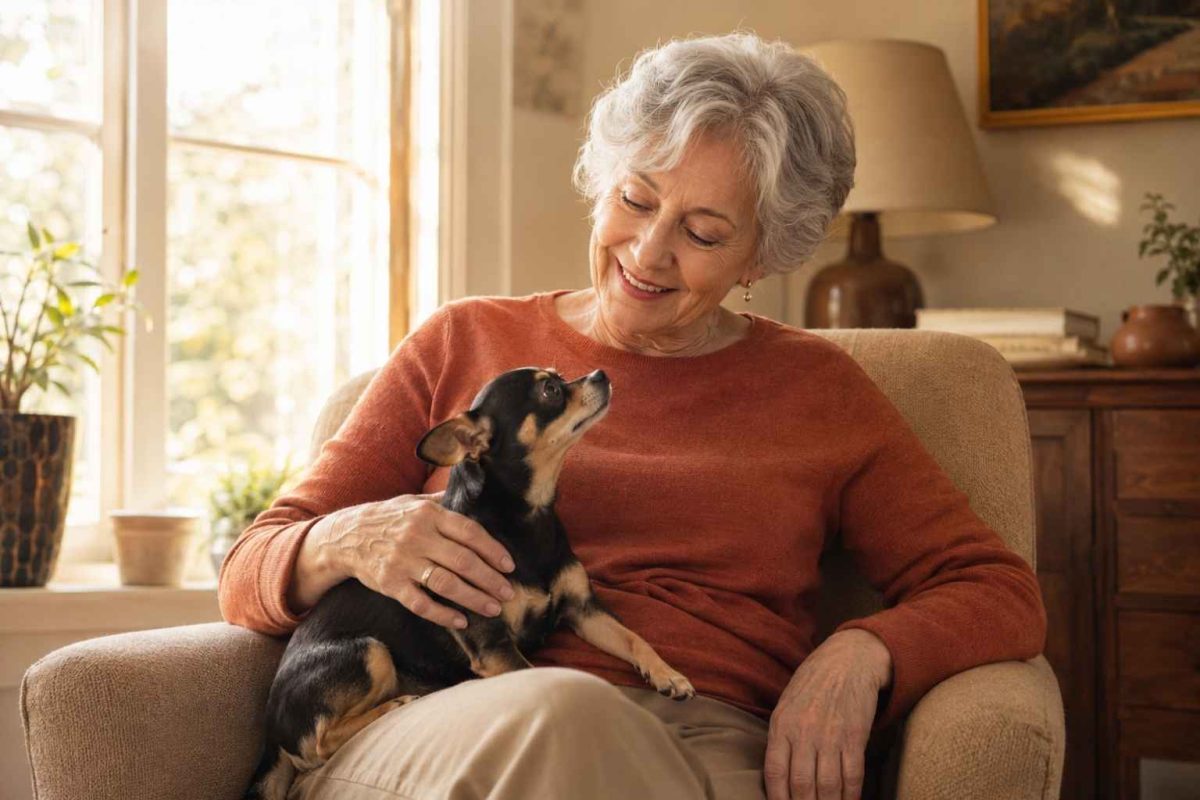
There are practical considerations. Chihuahuas can get underfoot, creating a fall hazard. Their potential longevity means future-care planning matters when an older person adopts a puppy. Nail trimming, dental care and veterinary transportation also need to be manageable.
For more possibilities, see Best Small Dogs for Seniors.
Are Chihuahuas Good for First-Time Dog Owners?
They can be. The breed’s small size and manageable exercise needs simplify some aspects of ownership, but first-time owners need to resist two common mistakes: overprotecting the dog from normal life and undertraining behavior because it seems harmless in miniature.
A first-time owner who enjoys learning about positive training, socialization and canine body language may do very well. Someone wanting a dog that requires virtually no training, can be carried everywhere and automatically loves every stranger may be disappointed.
What Is It Really Like to Live With a Chihuahua?
Expect company. Many Chihuahuas want to know where you are, what you are doing and whether the blanket currently covering your legs has room for one more occupant.
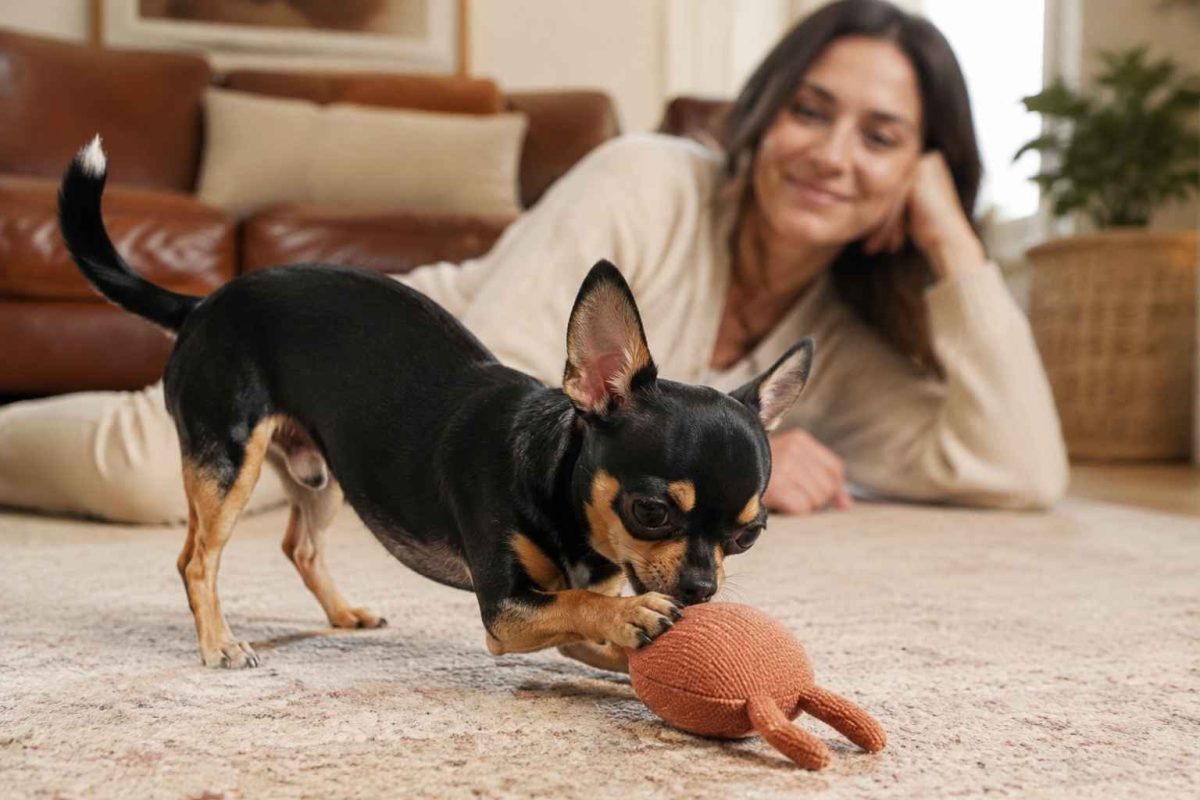
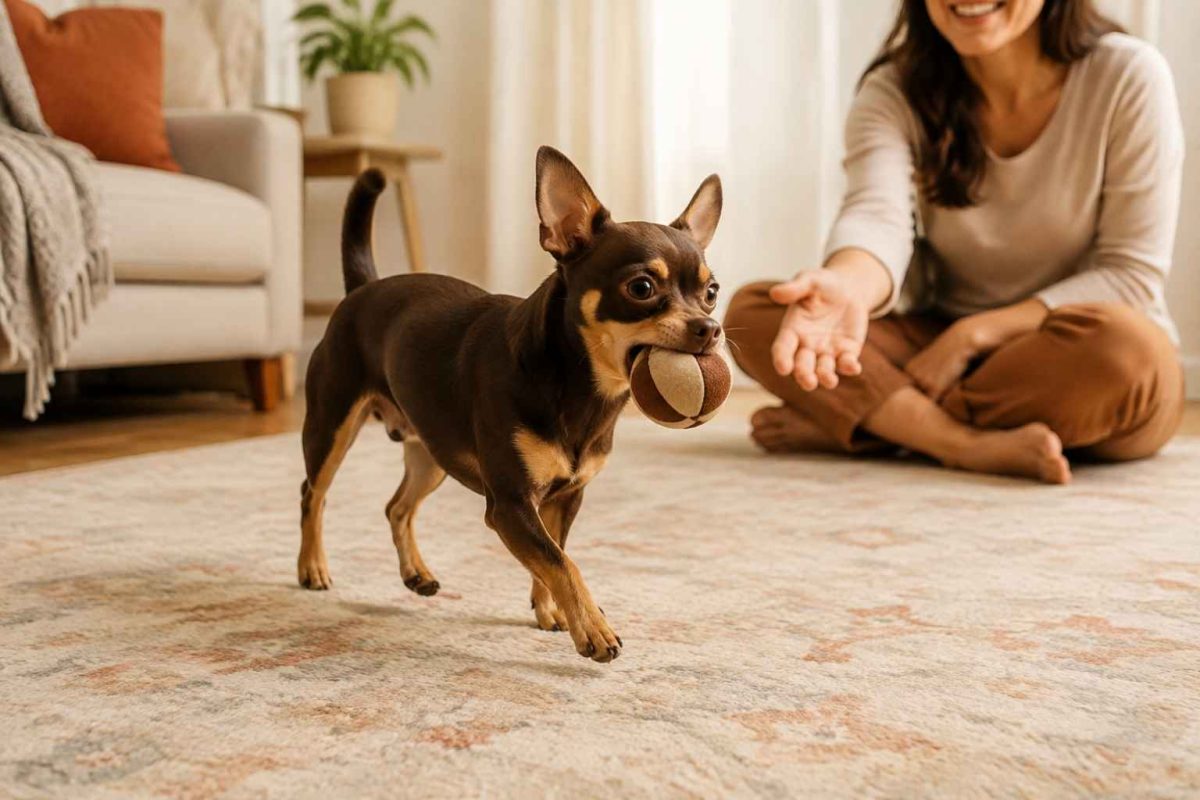
They take up little physical space but can occupy considerable emotional space. They notice routines. They may announce visitors. They learn who dispenses snacks. They seek warmth with almost scientific determination.
A sensible Chihuahua household also develops unusual habits: checking laundry piles before stepping on them, inspecting blankets before sitting, closing gates carefully and monitoring interactions with larger dogs. Tiny companions require a little situational awareness.
A Typical Day
A healthy adult may enjoy breakfast, a morning toilet break and sniffing walk, several naps near its person, short play or training sessions, another walk, dinner and an evening devoted to lap occupation. Individual dogs range from relaxed homebodies to surprisingly athletic adventurers.
Travel
Chihuahuas are conveniently portable, but safe travel still means secure restraint or an appropriate carrier rather than riding loose or on a driver’s lap. Introduce carriers and car travel positively before a long journey.
Chihuahua Puppies: Tiny Dogs With Big Developmental Needs
Chihuahua puppies are extraordinarily small, which makes thoughtful puppy raising especially important. They need frequent appropriate meals, safe handling, sleep, veterinary care, positive socialization and protection from falls and rough play.
Do not keep a puppy isolated until it is older and then expect instant confidence. Work with your veterinarian on a safe socialization plan that balances disease prevention with the developmental importance of positive early experiences.
Before Bringing a Chihuahua Puppy Home
- Puppy-proof gaps that a larger puppy could never fit through.
- Use secure gates around dangerous stairs or rooms.
- Choose lightweight, properly fitted walking equipment.
- Arrange veterinary care.
- Ask the breeder for the current feeding schedule and food.
- Create a warm, quiet sleeping area.
- Plan frequent toilet trips.
- Teach every family member safe handling.
If you are actively looking for a puppy, continue with our comprehensive Chihuahua Puppies Guide, which explains how to evaluate breeders and puppies, health testing, pricing, “teacup” claims, online scams, contracts and the many searches commonly phrased as “Chihuahua puppies for sale near me.”
Chihuahua Puppy Names
A dog this expressive deserves a name with personality. Our Chihuahua Names Guide is the place for Mexican-inspired names, tiny-but-mighty choices, elegant names, funny names and ideas inspired by Chihuahua colors and character.
Finding a Responsible Chihuahua Breeder
A responsible Chihuahua breeder should be trying to produce sound, healthy, temperamentally stable dogs—not the smallest possible puppy or the most profitable “rare” color.
Expect a good breeder to ask questions about you as well. Placement matters when a puppy may be part of a family for well over a decade.
Questions Worth Asking
- What health screening has been completed on the sire and dam?
- Can I verify the results?
- What are the parents’ temperaments and mature weights?
- How are the puppies raised and socialized?
- At what age do puppies go to their new homes?
- What veterinary care has the litter received?
- What does the contract require if I can no longer keep the dog?
- What support do you provide after purchase?
Red Flags
- Heavy emphasis on “micro,” “teacup,” extreme size or rarity
- No meaningful health-screening documentation
- Pressure to send money immediately
- Refusal to answer ordinary questions
- Many breeds or litters with puppies constantly available
- No interest in where the puppy will live
- Unwillingness to discuss the puppy’s mother or raising environment
- A price being presented as proof of quality
Our Chihuahua puppy buyer’s guide goes much deeper into responsible acquisition. Readers who want to discover breeders can also visit the Dogs Central Chihuahua Breeder Showcase.
Chihuahua Adoption and Rehoming
Adoption can be an excellent route to Chihuahua ownership. Adult dogs have the advantage of a more visible mature size and personality, and a foster home or current owner may be able to tell you about house training, barking, children, cats, dogs and daily habits.
Ask for honest medical and behavioral history and give a newly adopted dog time to decompress. A Chihuahua that hides or seems reserved on day one may look very different after several weeks of safety and predictable routine.
Owners sometimes also face circumstances in which keeping a beloved Chihuahua is no longer possible. Responsible rehoming means being honest about the dog’s needs, carefully screening prospective adopters and choosing the home rather than simply choosing the fastest response.
For available dogs, adoption guidance and compassionate help finding a suitable new home for a Chihuahua, visit Pet Rehoming Network’s Chihuahua Adoption & Rehoming resource.
Popular Chihuahua Mixes
The Chihuahua’s tiny size and distinctive personality have made it a parent breed in many intentionally bred and accidental crosses. Mixed-breed dogs can inherit any combination of traits from either parent, so a cute portmanteau name cannot predict adult size, coat, health or temperament.
- Chiweenie: Chihuahua × Dachshund
- Chug: Chihuahua × Pug
- Chorkie: Chihuahua × Yorkshire Terrier
- Pomchi: Chihuahua × Pomeranian
- Chipin: Chihuahua × Miniature Pinscher
- Chihuahua–Shih Tzu mix: often called a Shichi
- Chihuahua–Poodle mix: often called a Chipoo or Chi-Poo
- Chihuahua–Papillon mix: often called a Chion
- Chihuahua–Jack Russell Terrier mix: often called a Jack Chi
When considering any Chihuahua mix, research both parent breeds rather than assuming the cross will inherit only the convenient qualities of each.
Chihuahua Pros and Cons
Reasons People Love Chihuahuas
- Exceptionally compact
- Deeply affectionate with trusted people
- Usually manageable exercise needs
- Suited to apartments
- Portable for travel
- Intelligent and trainable
- Often long-lived
- Two distinct coat varieties and many appearances
- Enormous personality in a tiny body
Potential Challenges
- Physically vulnerable to rough handling and falls
- Can be vocal
- May become overattached or protective
- House training can require patience
- Needs serious dental care
- Often dislikes cold weather
- Not always ideal for homes with very young children
- Easy for owners to accidentally reinforce poor manners
- Long lifespan requires long-term planning
Is a Chihuahua the Right Dog for You?
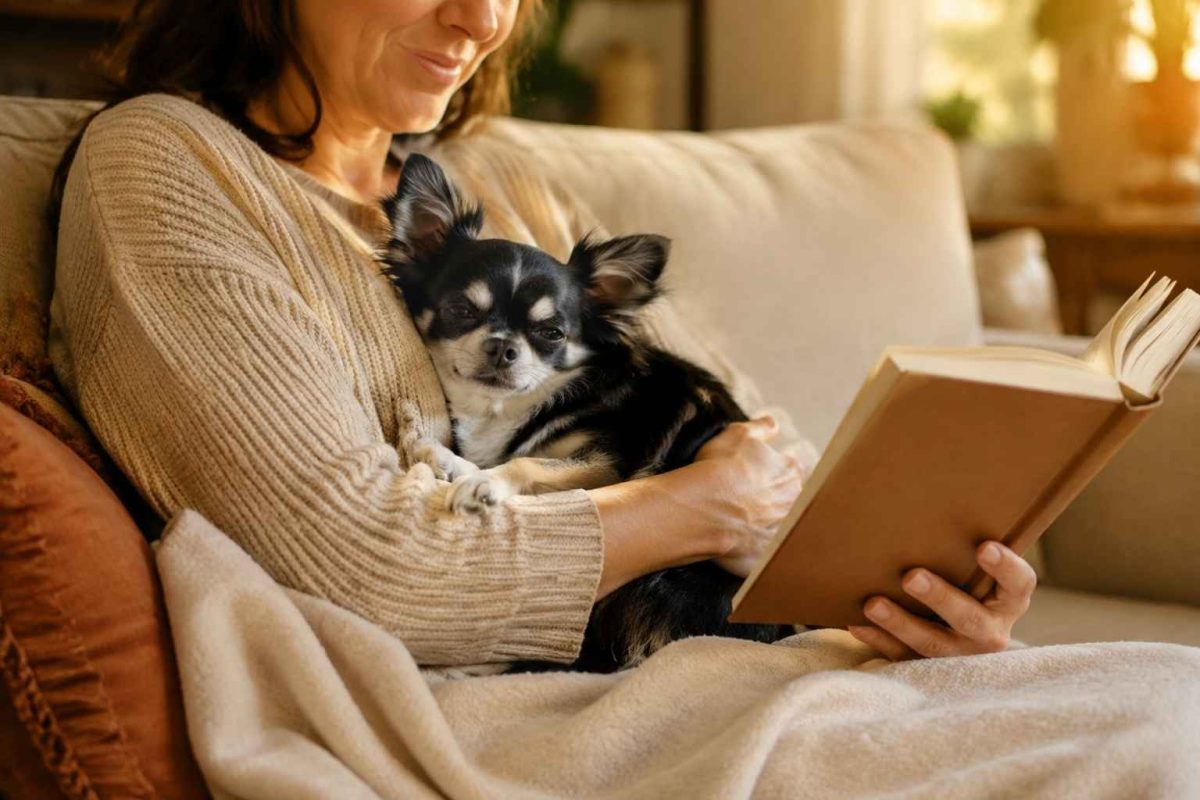
A Chihuahua may be an excellent match if you want a very small dog that is emotionally present, intelligent, affectionate and happy to participate in daily life. They can suit apartments, retirees, experienced dog owners and thoughtful first-time owners alike.
You May Love Living With a Chihuahua If You…
- Want a close companion rather than an independent dog
- Enjoy training and interacting with your dog
- Can protect a tiny dog from rough handling
- Are willing to prioritize dental care
- Do not mind providing warm clothing in cold weather
- Can work patiently on barking and socialization
- Are prepared for a potentially very long commitment
You May Prefer Another Breed If You…
- Have very young children who cannot yet interact gently
- Want a rugged dog for rough physical play
- Expect a small dog to need no training
- Are away for very long periods every day and want an extremely independent pet
- Strongly dislike alert barking and do not want to train around it
- Want a dog comfortable outdoors for long periods in cold weather
The best Chihuahua is not the tiniest, fanciest-colored or most expensive one. It is the healthy, temperamentally suitable individual whose needs fit the life you can genuinely provide.
Frequently Asked Questions About Chihuahuas
How big does a full-grown Chihuahua get?
The AKC show standard specifies a Chihuahua not over six pounds. Pet Chihuahuas can be larger and still be wonderful companion dogs. Adult size depends strongly on genetics.
How long do Chihuahuas live?
Chihuahuas are known for longevity and many live well into their teens. An individual’s lifespan depends on genetics, health, preventive care, body condition, dental health, safety and chance; no age range should be treated as a guarantee.
Why do Chihuahuas shake so much?
They may tremble from cold, excitement, fear, stress or other causes. Persistent, severe or unexplained shaking—particularly when accompanied by other symptoms—should be discussed with a veterinarian rather than dismissed as normal breed behavior.
Are apple-head and deer-head Chihuahuas different breeds?
No. These terms describe head shape and overall appearance. The official AKC standard describes an apple-dome skull; “deer head” is an informal descriptive term.
Are long-haired Chihuahuas purebred?
Yes. Long Coat is one of the Chihuahua’s two recognized coat varieties. A long coat does not mean the dog must be a Chihuahua mix.
Are teacup Chihuahuas a real breed?
No. “Teacup” is not a separate AKC Chihuahua variety. It is a marketing term commonly used for unusually small dogs.
Do Chihuahuas bark a lot?
Many are alert and vocal, but barking varies by individual and can be influenced by socialization, environment and training.
Are Chihuahuas aggressive?
They are not inherently destined to be aggressive. Fear, pain, genetics, inadequate socialization, guarding and poor handling can contribute to aggressive behavior in any dog. Respect Chihuahua warning signals instead of dismissing them because the dog is small.
Are Chihuahuas smart?
Yes. They are observant and capable learners. Positive reinforcement and consistent expectations can produce an impressively well-trained little dog.
Are Chihuahuas hard to potty train?
Some owners find house training challenging, partly because puppies have small bladders and many Chihuahuas dislike bad weather. Frequent opportunities, supervision, routine and immediate rewards help.
Can Chihuahuas live with cats?
Yes, many do very well with cats. Introductions should be gradual, and both animals need safe ways to disengage.
Are Chihuahuas good with children?
They can be affectionate family dogs, but their tiny bodies make rough handling dangerous. Homes with calm, respectful older children are often the easiest fit.
Can a Chihuahua live with a big dog?
Sometimes, but compatibility and management matter enormously. Even friendly rough play from a much larger dog can injure a Chihuahua.
Can Chihuahuas be left alone?
Healthy adult Chihuahuas can learn to spend reasonable periods alone, but many are highly people-oriented. Build independence gradually rather than allowing constant companionship to become the only state the dog can tolerate.
Do Chihuahuas need sweaters?
Many benefit from warm clothing in cold weather because their small bodies lose heat readily, particularly short-coated dogs. Clothing should fit comfortably and never restrict movement or breathing.
Do Chihuahuas shed?
Yes. Both Smooth Coat and Long Coat Chihuahuas shed, although the amount varies.
Are Chihuahuas hypoallergenic?
No Chihuahua can be guaranteed hypoallergenic. People with dog allergies should spend time around the breed before committing to ownership.
What were Chihuahuas bred for?
The modern Chihuahua is primarily a companion breed, with historical roots in the small dogs of Mexico.
Are Chihuahuas good apartment dogs?
Yes. Their size and exercise requirements suit small homes very well. Alert barking is usually the main apartment-living challenge to address.
Where can I find answers to more Chihuahua questions?
Visit the complete Dogs Central Chihuahua FAQ for our growing question-and-answer library covering Chihuahua behavior, health, care, puppies, types, training and everyday life.
Trusted Chihuahua Resources
Final Thoughts: A Very Small Dog Worth Taking Seriously
The Chihuahua’s comedy comes partly from contrast: a dog that can fit beneath your sweater may sincerely believe it should supervise the entire street. But underneath the jokes is a capable companion that deserves to be taken seriously.
Socialize the Chihuahua instead of sheltering it from the world. Train it instead of excusing behavior because it is tiny. Protect it without preventing it from being a dog. Care for its teeth, keep it lean, let it walk, listen when it communicates discomfort and choose health and temperament over exaggerated size or fashionable color.
Do that, and the reward can be extraordinary: a bright-eyed little friend who takes up almost no room on the sofa—and somehow an enormous amount of room in your life.