
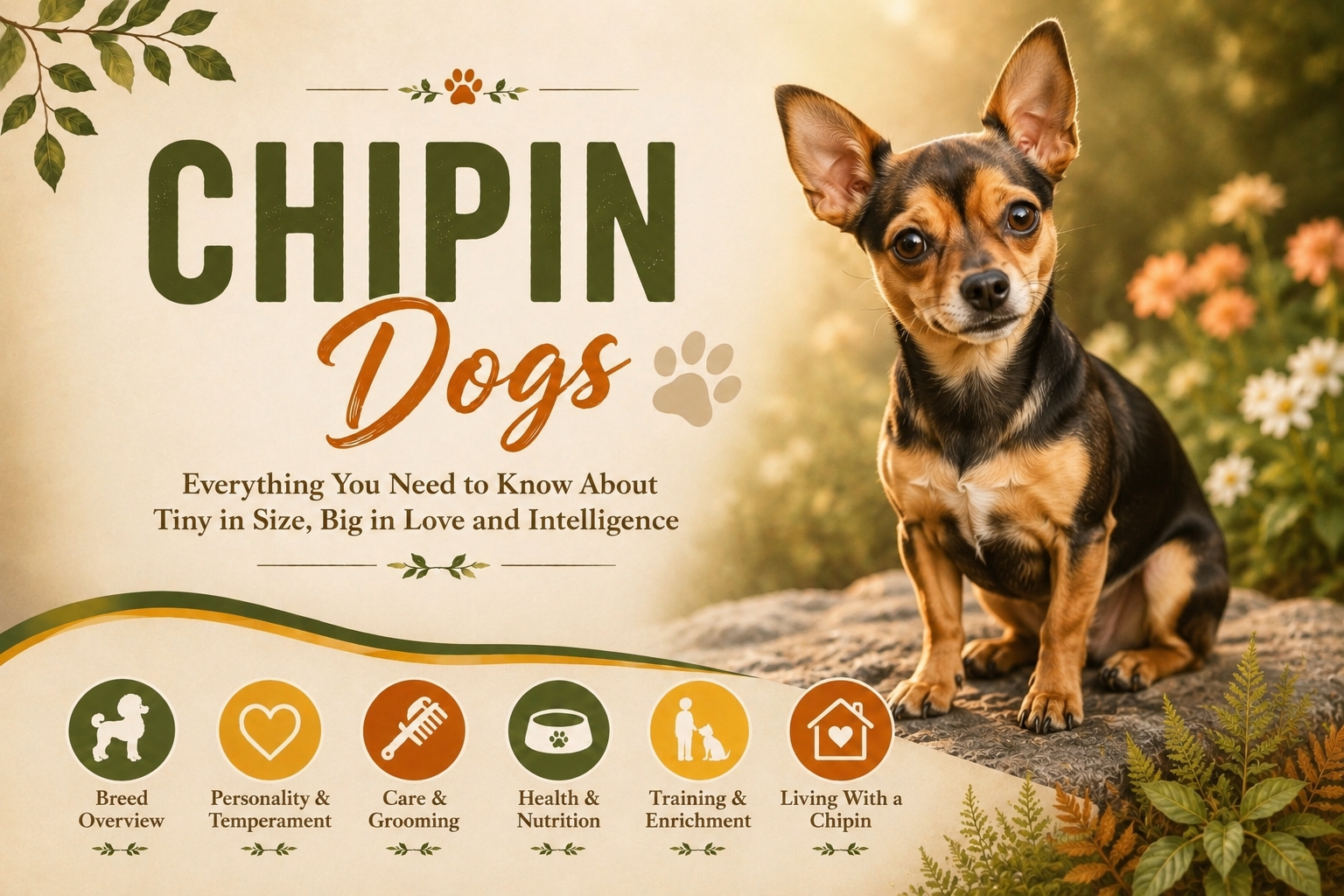
Meet the Chipin: Chihuahua Miniature Pinscher Mix
The Chipin is a small mixed-breed dog produced from a Chihuahua and a Miniature Pinscher. Like other designer crosses, the Chipin isn’t a standardized purebred breed, so individual dogs can vary considerably in appearance, size and personality.
What you can generally expect is a compact, alert and intelligent companion. Both parent breeds are tiny dogs with remarkably large personalities. Chihuahuas are famous for their devotion and confidence, while Miniature Pinschers are energetic, curious and famously self-assured.
Put those qualities together and you may get a little dog who believes the entire neighborhood falls under their jurisdiction.
That confidence is part of the Chipin’s considerable charm—but it also means early training and socialization matter. A five- or ten-pound dog still needs manners, boundaries and opportunities to learn that unfamiliar people, animals and experiences aren’t automatically causes for alarm.
Chipin at a Glance
- Parent breeds: Chihuahua × Miniature Pinscher
- Also called: Minchi, Pinhuahua and Chihuahua Min Pin mix
- Size: Toy to small
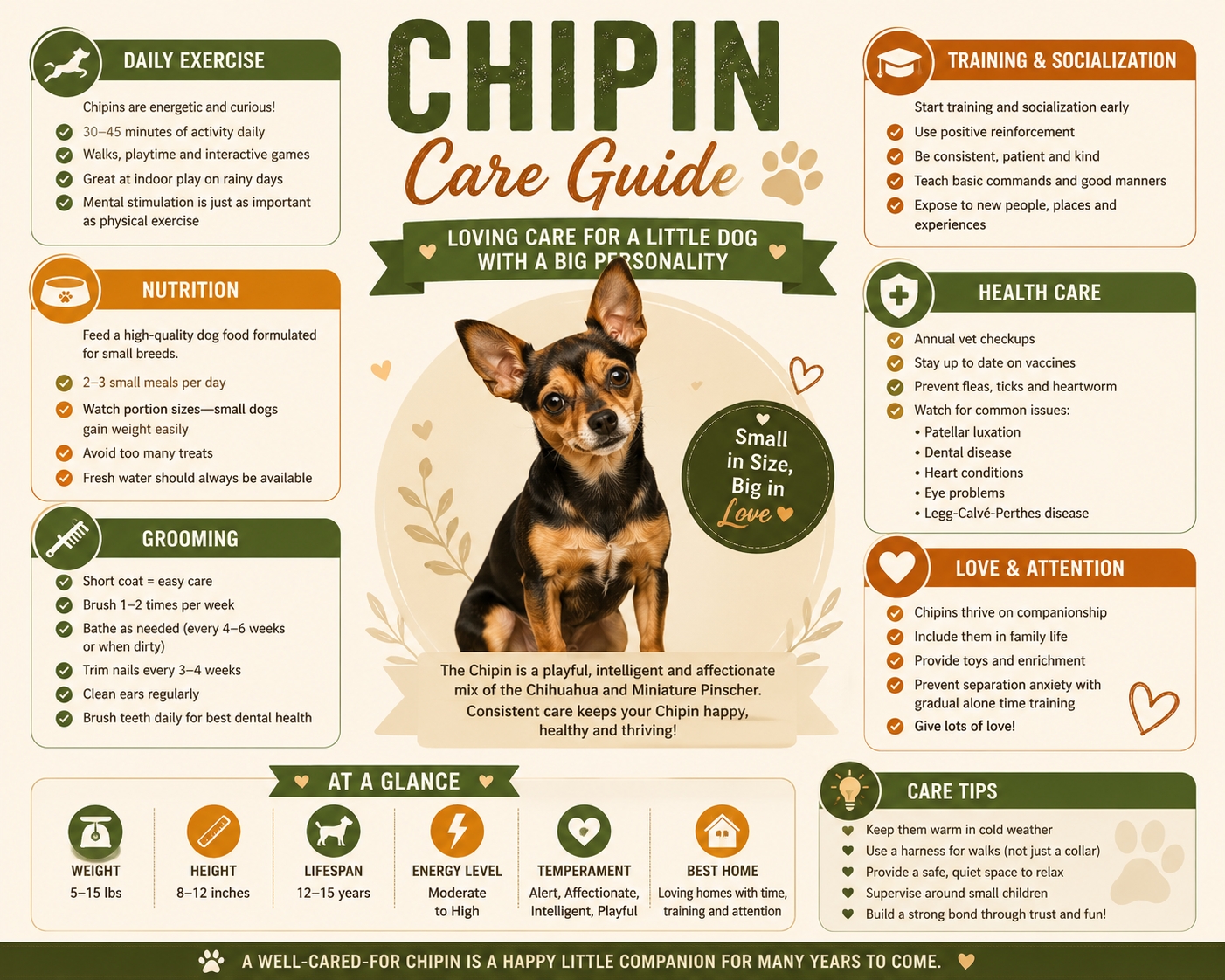
- Typical weight: Approximately 5–15 pounds
- Typical height: Approximately 8–12 inches
- Temperament: Alert, affectionate, energetic, curious and confident
- Energy level: Moderate to high
- Trainability: Intelligent, although sometimes independent
- Grooming: Usually easy
- Shedding: Usually moderate
- Apartment friendly: Yes, with adequate exercise and barking management
- Best suited to: People who enjoy active, interactive little companion dogs
Chipin History & Origin
Unlike established purebred dogs with carefully documented histories, the Chipin doesn’t have a definitive origin story. Chihuahua–Miniature Pinscher mixes have undoubtedly occurred accidentally for many years, while intentional breeding of the combination is associated with the more recent popularity of designer dogs.
The Chipin’s heritage becomes much more interesting when we look at the two parent breeds.
The Chihuahua
The tiny Chihuahua is named for the Mexican state of Chihuahua and is one of the world’s most recognizable companion breeds. Despite its diminutive size, the Chihuahua is known for confidence, alertness and intense devotion to its people.
The Miniature Pinscher
The Miniature Pinscher—or Min Pin—is a small German breed developed from older European dogs. Contrary to a surprisingly persistent misconception, the Miniature Pinscher is not simply a miniature Doberman Pinscher.
Min Pins are athletic, energetic and famously self-possessed. Their combination of curiosity and confidence earned the breed the nickname “King of Toys.”
A Chipin can inherit characteristics from either side of this family tree, which is why understanding both parent breeds is more useful than expecting every Chipin to fit one exact description.
What Does a Chipin Look Like?
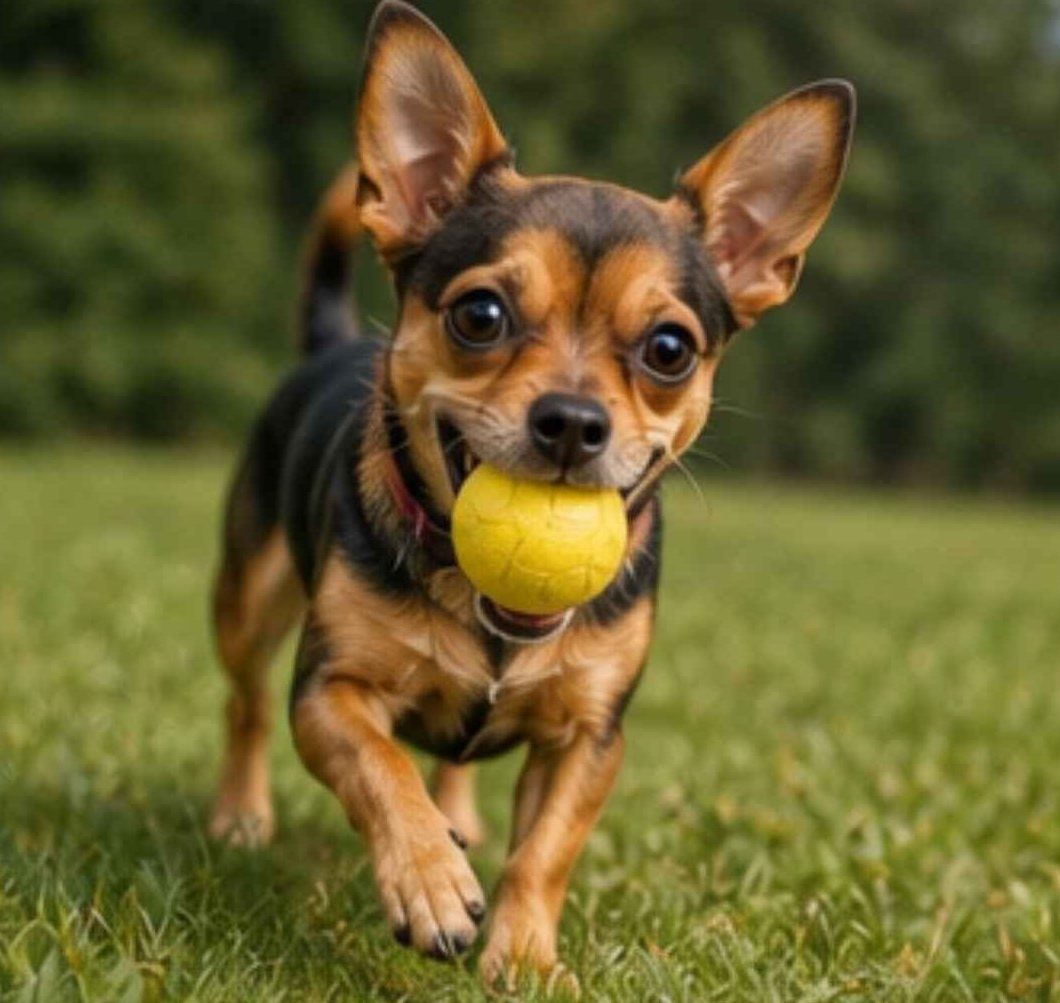
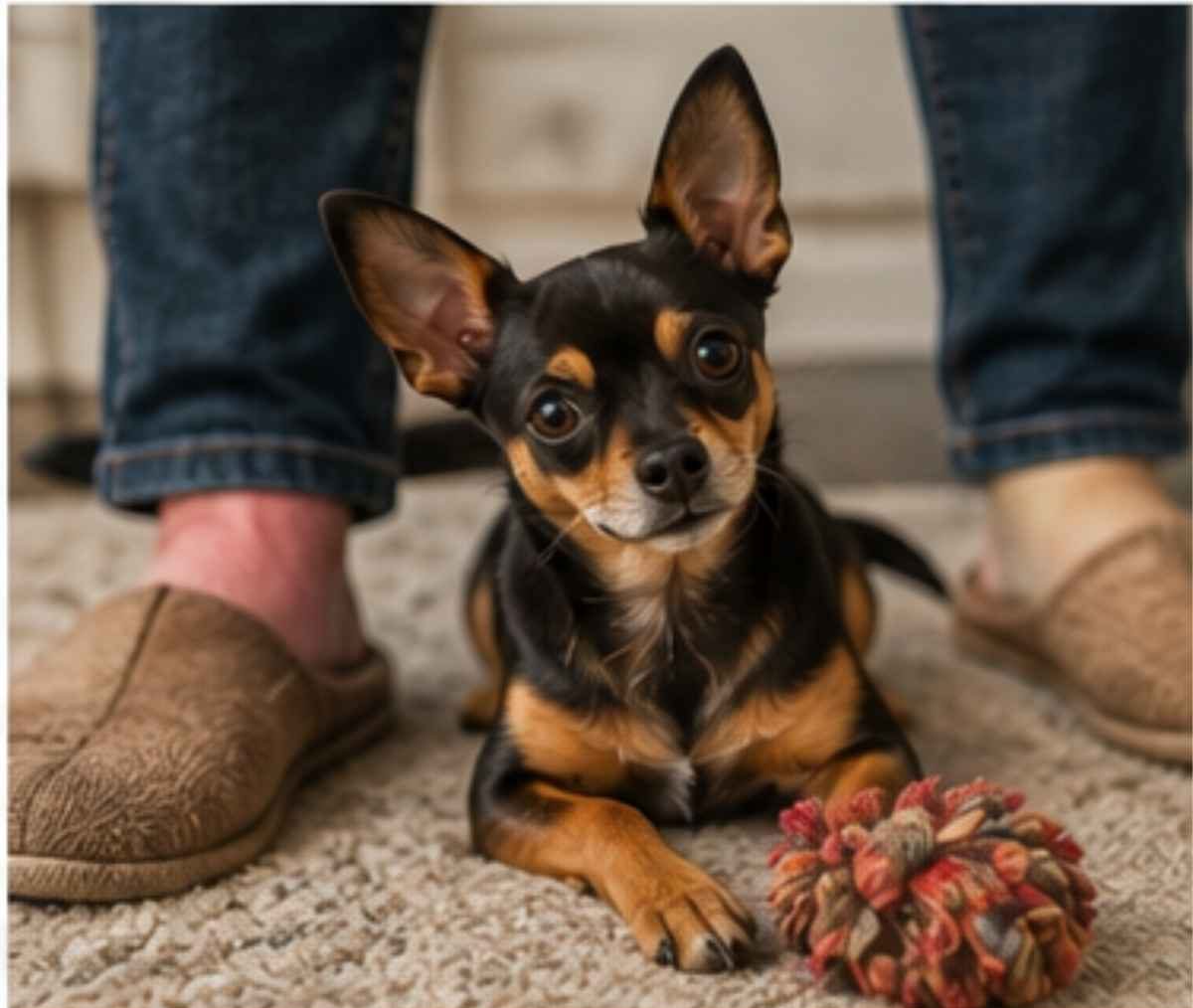
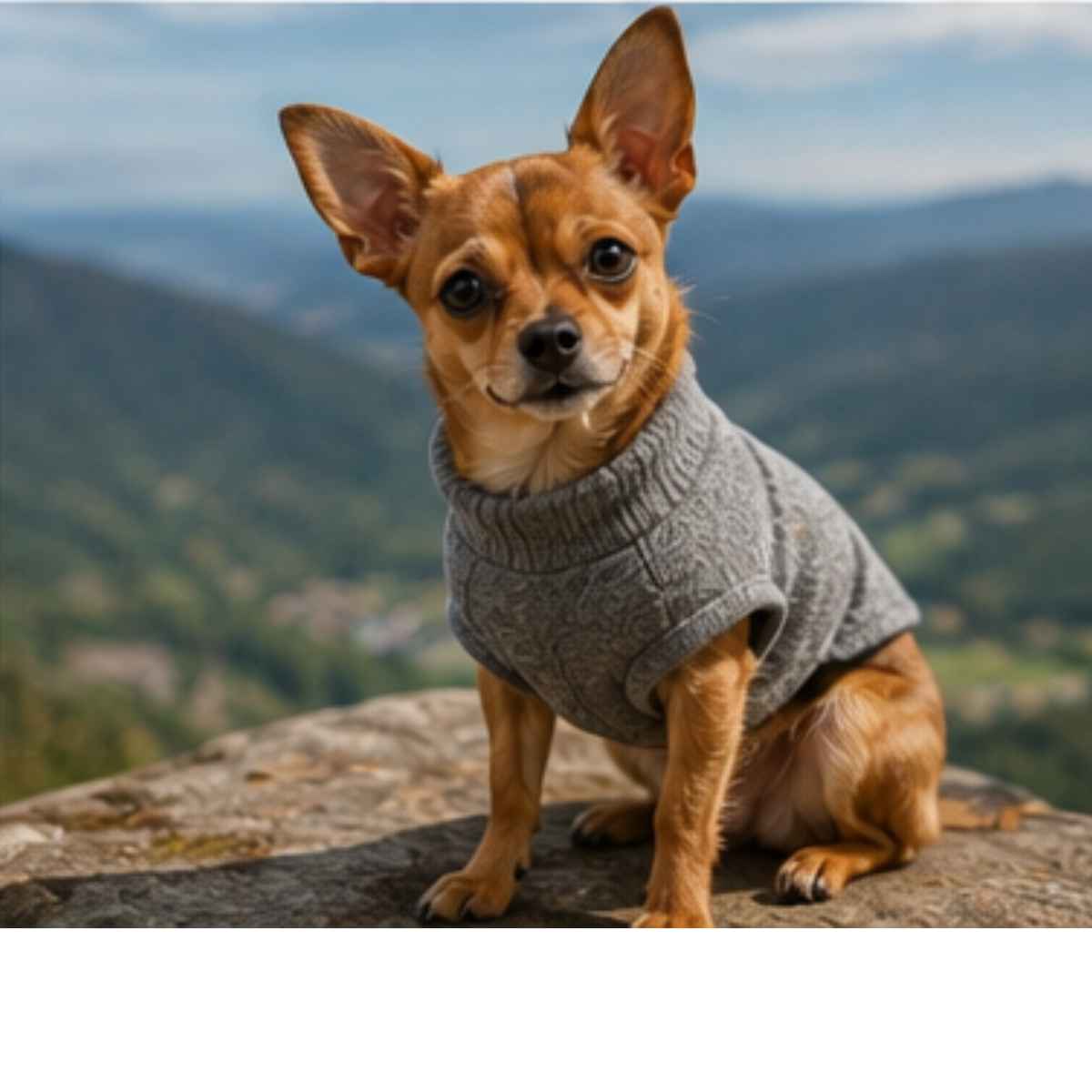
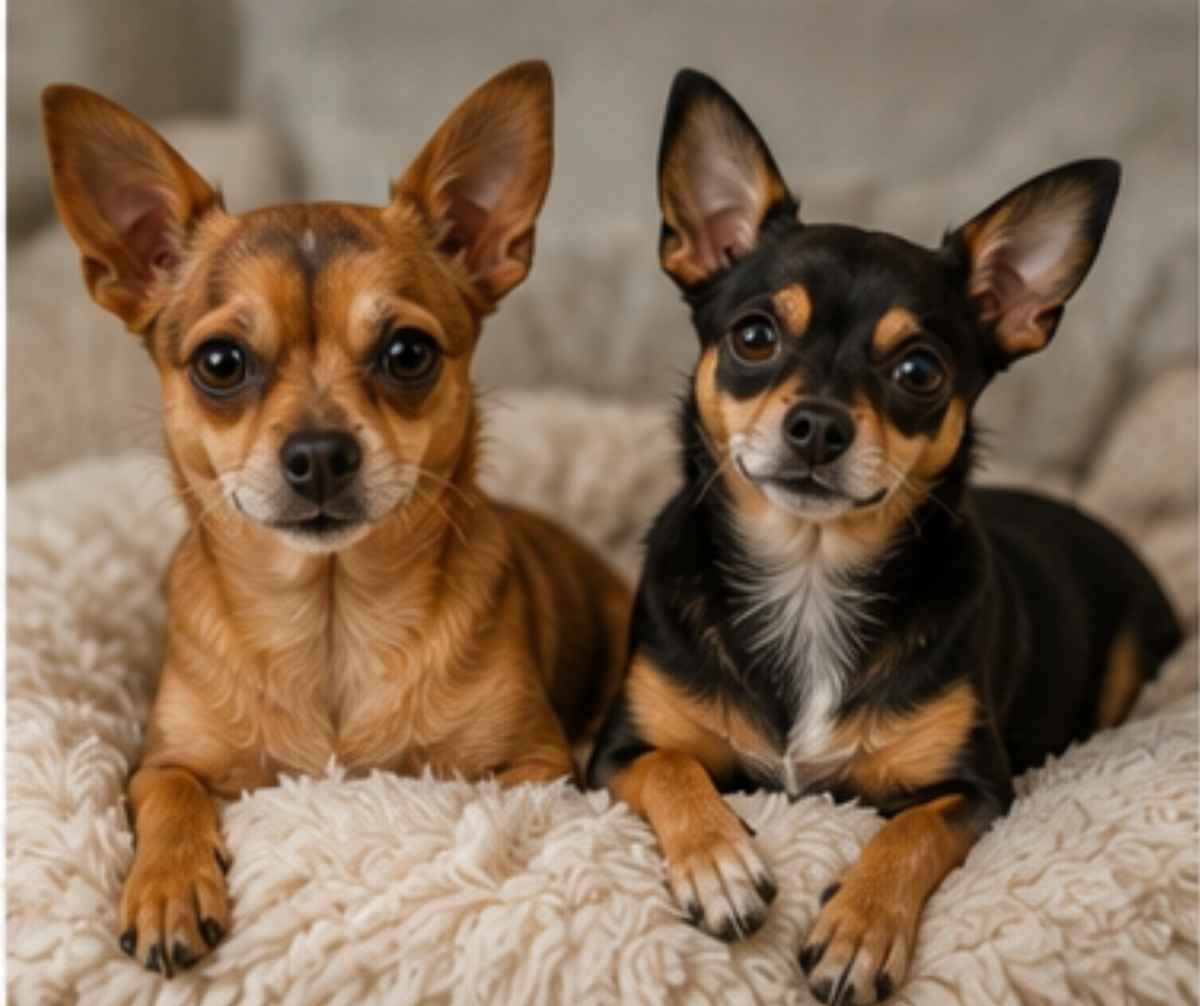
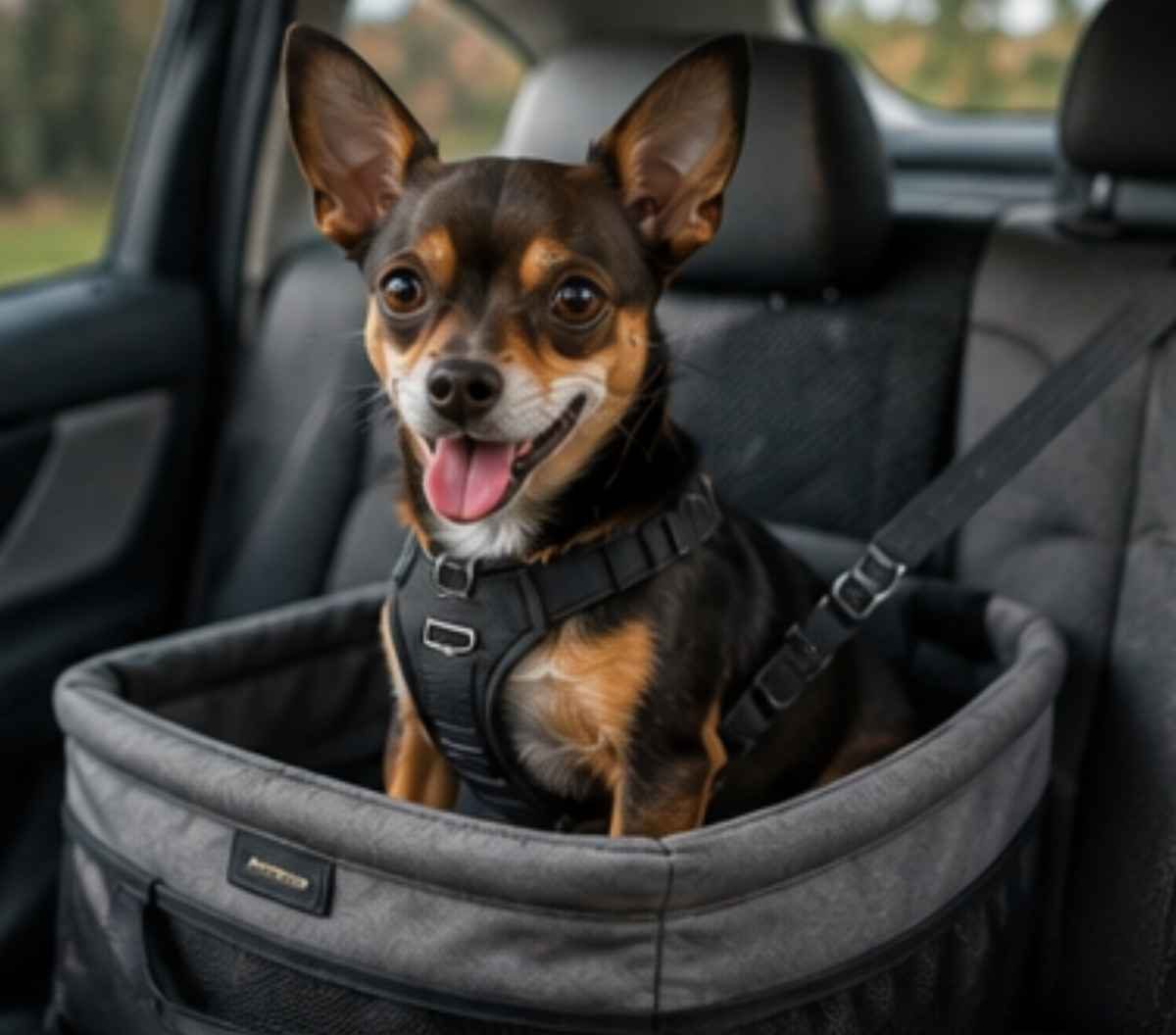
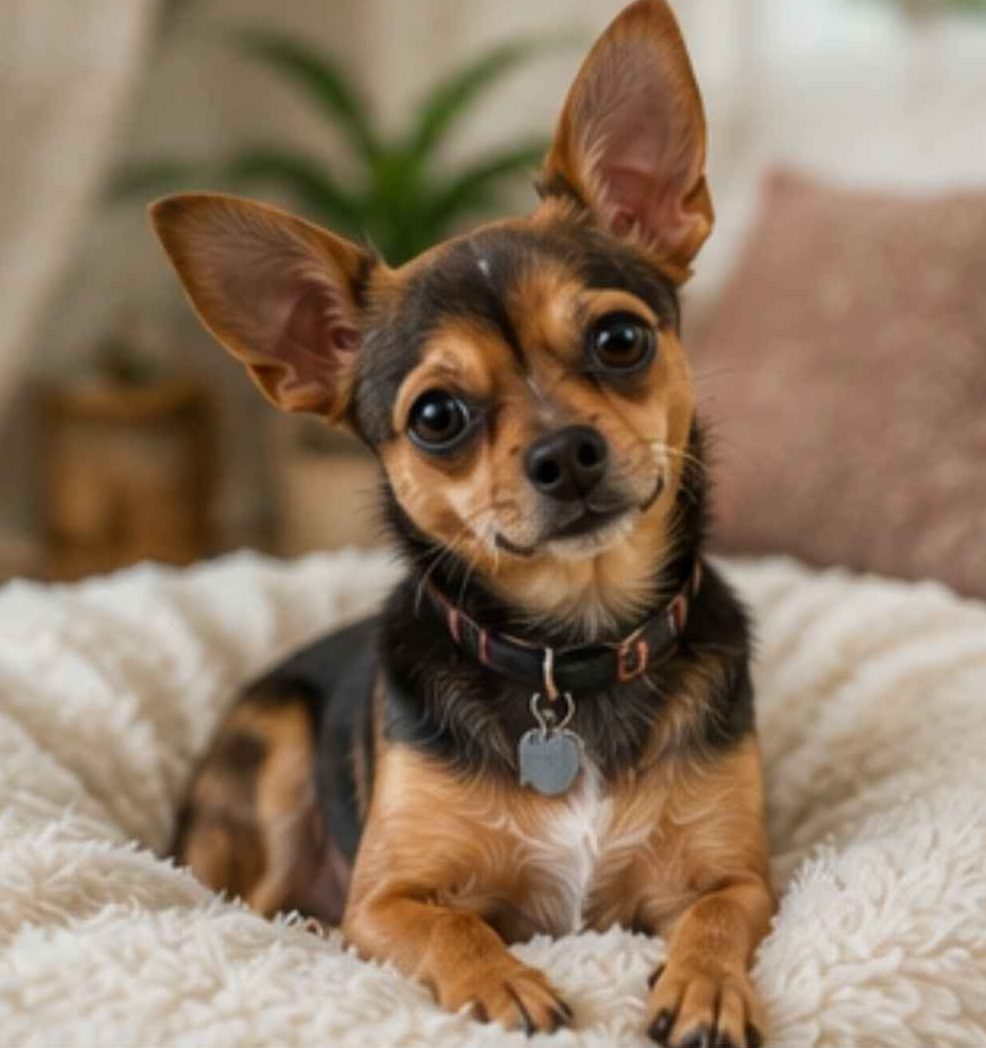
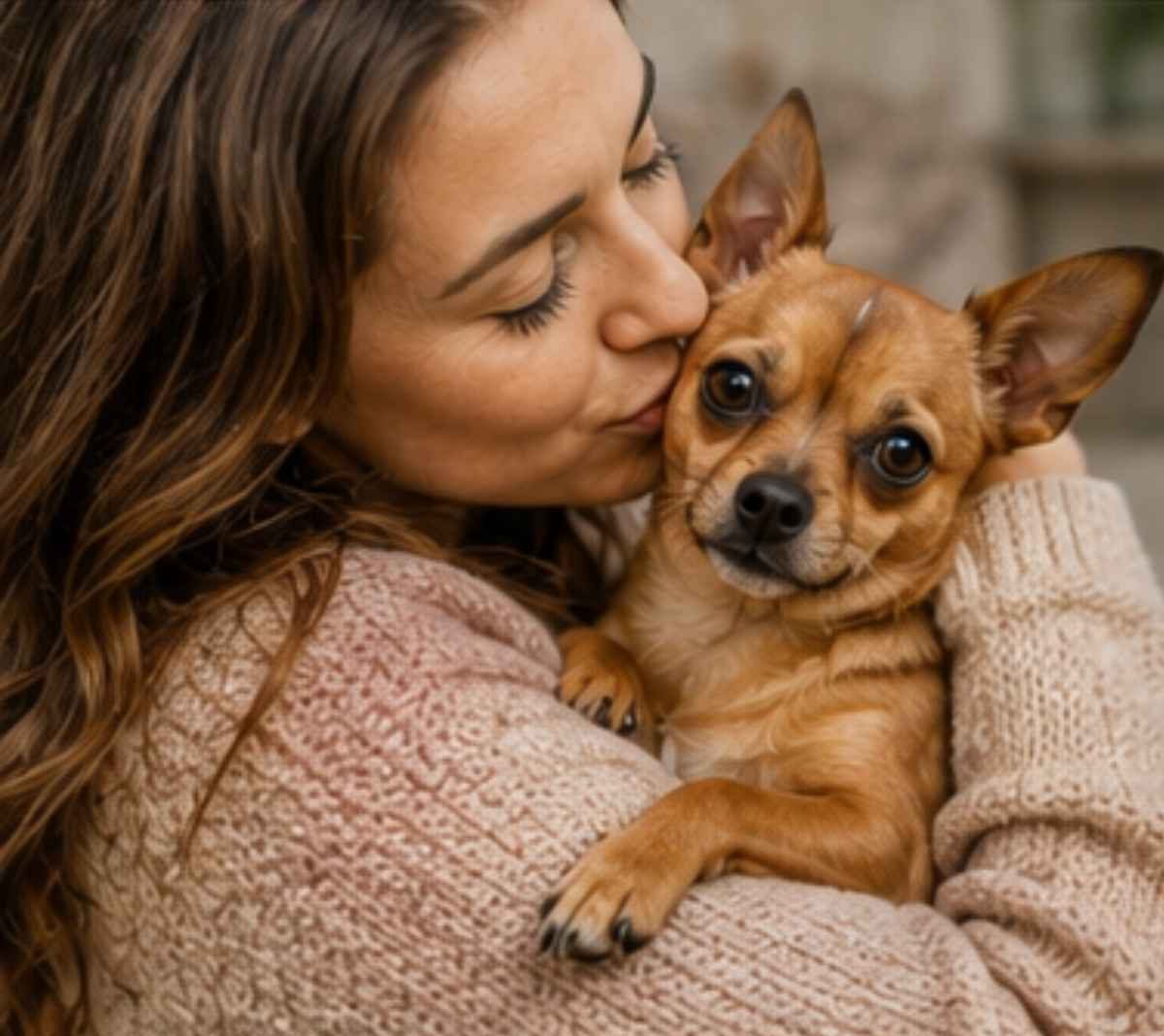
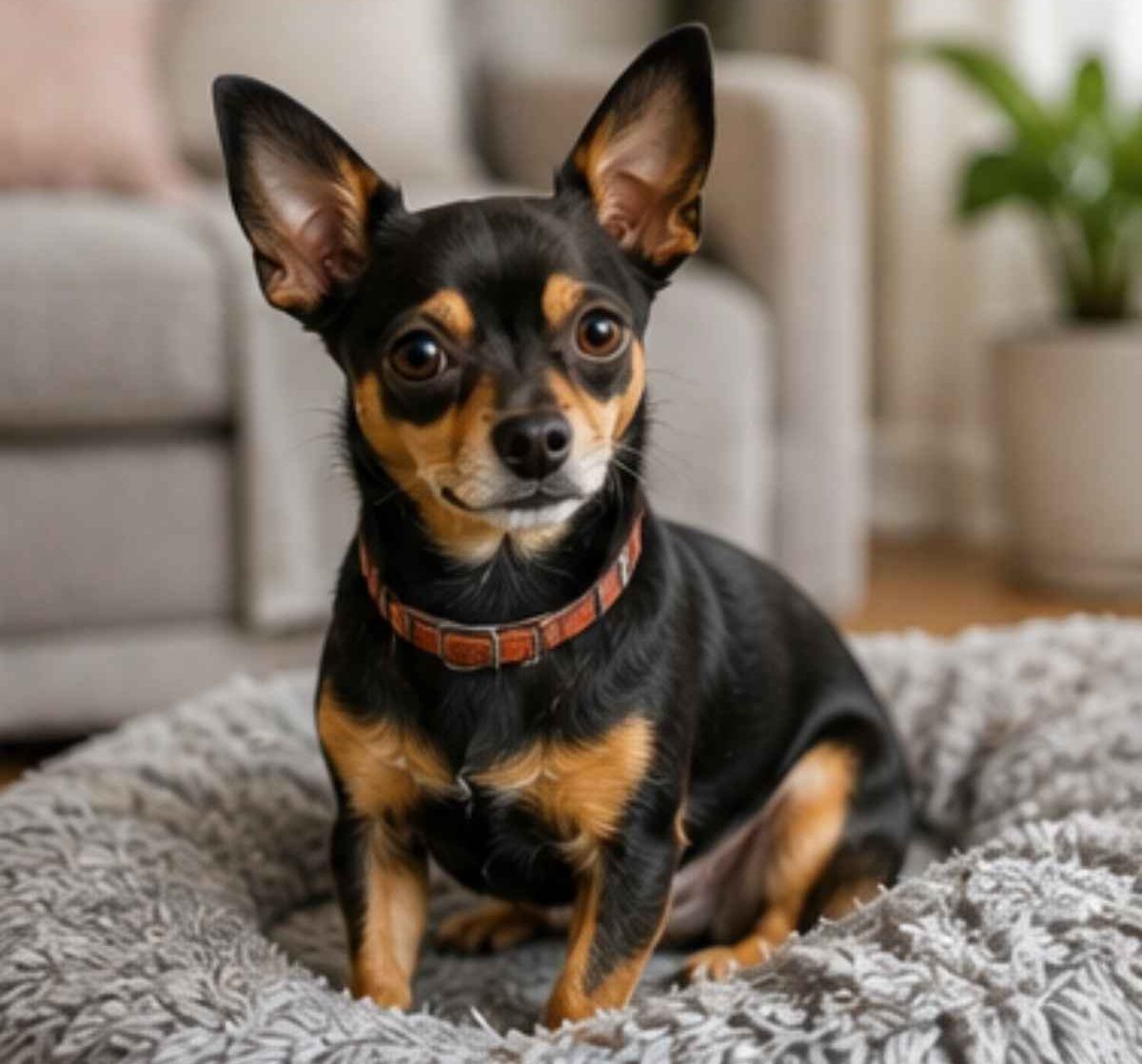
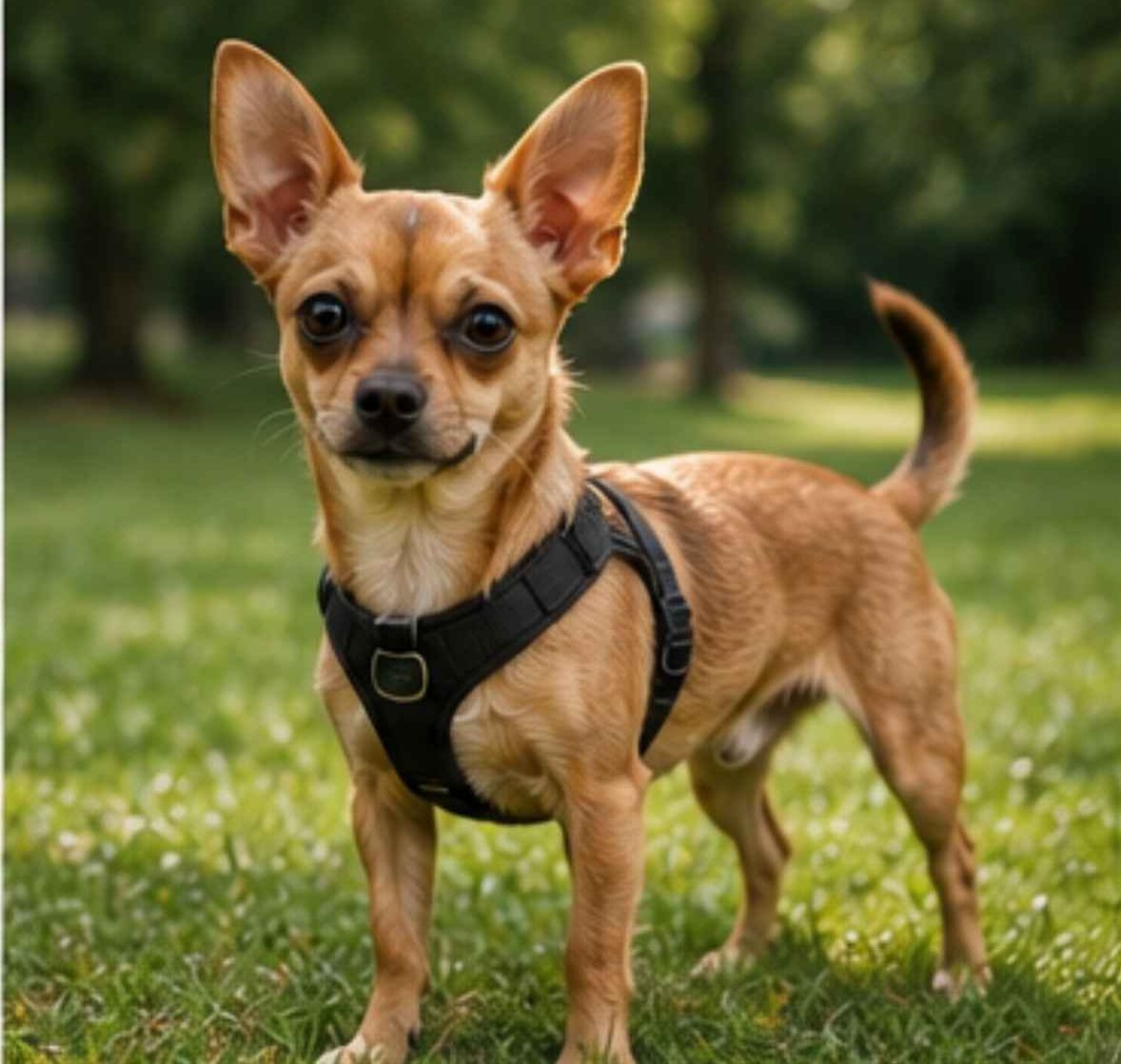
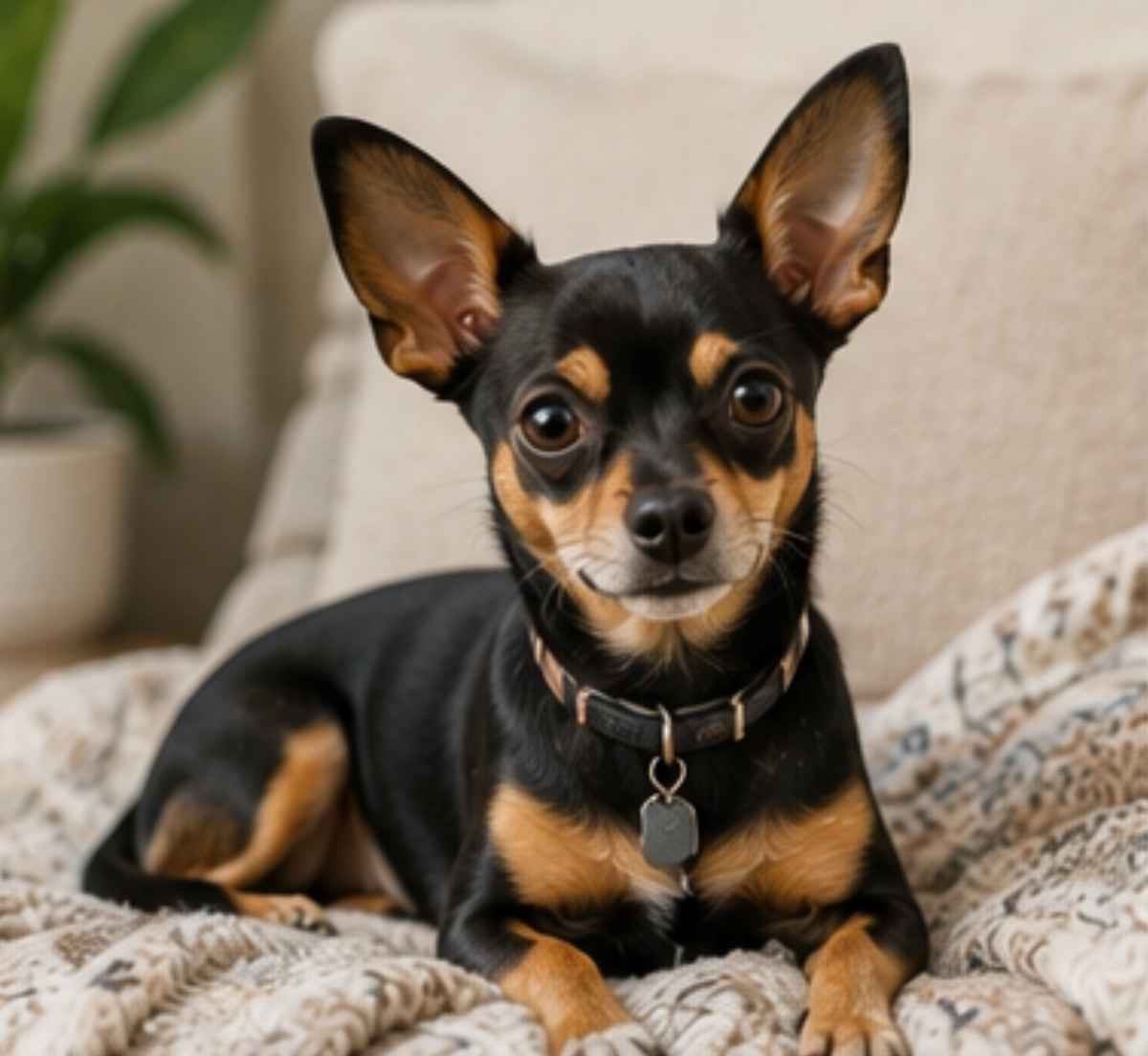
A typical Chipin is compact, fine-boned to moderately sturdy, with an alert expression and prominent ears. Many have short, sleek coats and a somewhat athletic outline influenced by the Miniature Pinscher.
The ears may stand upright or partly upright, and the eyes are usually expressive and dark. Some Chipins strongly resemble oversized or leggier Chihuahuas, while others look remarkably like small Min Pins.
Because this is a mixed breed rather than a standardized breed, there is no required Chipin appearance.
Just click an image to view large sized.
How Big Does a Chipin Get?
Chipins are generally very small dogs. Many adults weigh approximately 5 to 15 pounds and stand around 8 to 12 inches at the shoulder. Pet Rehoming Network’s Chipin information gives a typical range of about 5–12 pounds and 8–12 inches. Individual dogs may fall outside these ranges.
Adult size depends on the size and genetics of both parents. Chihuahuas themselves vary considerably in build, so it is impossible to guarantee an exact mature weight simply because a puppy is called a Chipin.
If adult size is particularly important, ask about the actual weights of the parents and mature dogs from previous litters.
Chipin Temperament & Personality
Imagine combining two tiny dogs that have never received the memo about being tiny. That’s a useful starting point for understanding the Chipin.
Many Chipins are affectionate and intensely devoted to their families. They can be funny, playful and extremely entertaining companions. They’re also frequently alert and quick to notice anything unusual.
Common Chipin characteristics may include:
- Affectionate
- Alert
- Bright and inquisitive
- Playful
- Energetic
- Confident
- Loyal
- Sometimes suspicious of strangers
- Potentially vocal
- Occasionally stubborn or independent
Genetics are only part of temperament. Early experiences, socialization, training and the dog’s individual personality matter enormously.
A Chipin shouldn’t be excused from training because of its size. Allowing a tiny dog to bark, guard people, lunge or behave rudely because it seems harmless can create considerable stress for both dog and owner.
Chipin Coat Types & Colors
Many Chipins inherit the Miniature Pinscher’s smooth, close-fitting coat or the Chihuahua’s smooth coat, making them relatively easy to groom.
However, because Chihuahuas also come in a long-coated variety, a Chipin with long-haired Chihuahua ancestry can occasionally have a somewhat longer coat.
Colors and patterns can include:
- Black and tan
- Chocolate and tan
- Red
- Fawn
- Cream
- Black
- Brown
- White markings
- Various mixed and multicolor patterns
Color has no bearing on whether an individual Chipin will be the right companion for your household. Temperament, health and responsible breeding or adoption deserve far greater consideration.
Chipin Grooming & Care
Compared with many fluffy designer dogs, Chipins are refreshingly straightforward to groom.
A short-coated Chipin generally benefits from weekly brushing to remove loose hair and distribute natural skin oils. Baths can be given as needed rather than according to a rigid schedule.
Routine care should include:
- Weekly brushing
- Nail trimming as needed
- Regular ear checks
- Frequent tooth brushing with dog-safe toothpaste
- Routine veterinary dental examinations
Dental care deserves particular attention in small dogs. Getting a Chipin puppy accustomed to gentle tooth brushing early can make lifelong dental care much easier.
Small, short-coated dogs may also feel cold more readily than larger or heavily coated breeds. Appropriate protection may be necessary during cold-weather outings.
Chipin Exercise Needs
Chipins may have little legs, but that doesn’t necessarily mean they want a sedentary life.
The Miniature Pinscher contributes considerable energy and athleticism, while many Chihuahuas are far more active than their reputation as lap dogs suggests.
Daily walks combined with play, training and opportunities to sniff and explore will suit many adult Chipins. Because they are small, exercise can also include indoor games during unpleasant weather.
Exercise should always be appropriate for the dog’s age, health and physical condition. Puppies should not be pushed into repetitive strenuous activity while their bodies are developing.
Training Your Chipin
The Chipin is usually intelligent enough to learn quickly—and clever enough to discover exactly which household rules are negotiable.
Reward-based training works particularly well. Use small treats, toys, praise and access to favorite activities to reinforce good behavior.
Important Early Lessons
- House-training
- Reliable recall
- Loose-leash walking
- Polite greetings
- Comfort with handling and nail care
- Learning to settle quietly
- Appropriate responses to visitors
- Gradual independence
- Positive socialization with people, animals and everyday environments
House-training can require patience with very small dogs because their small bladders mean they may need more frequent opportunities to go outside.
Keep training positive and consistent. Harsh punishment can create fear without teaching the dog what you actually want them to do.
Are Chipins Good Family Dogs?
A well-socialized Chipin can be a loving family companion, but suitability depends on the individual dog and the household.
Their tiny size makes them vulnerable to accidental injury from rough handling, falls or being stepped on. Families with young children need especially careful supervision.
Older children who understand how to interact gently with animals may find a Chipin an enthusiastic little friend.
Chipins With Other Dogs and Pets
Many Chipins live happily with other dogs, particularly when they have been socialized appropriately. Some, however, can be remarkably confident around dogs many times their size.
Confidence is charming; poor judgment around a much larger dog isn’t.
Supervise interactions carefully and don’t allow a tiny dog to provoke or harass another animal simply because the behavior looks amusing.
Successful living with cats and other pets depends heavily on the individual animals, their previous experiences and careful introductions.
Are Chipins Good Apartment Dogs?
Physically, Chipins are extremely easy to accommodate in apartments, condos and smaller homes.
The bigger consideration is noise. Both parent breeds can be highly alert, and some Chipins become enthusiastic watchdogs who believe every hallway sound deserves an announcement.
Early training that rewards quiet behavior can make apartment living considerably more peaceful.
Chipin Health Issues
Being a mixed-breed dog doesn’t make a Chipin automatically free from inherited health problems. A Chipin may potentially inherit health concerns associated with either parent breed.
Issues worth discussing with your veterinarian include:
- Patellar luxation: Loose or slipping kneecaps are an important concern in both parent breeds.
- Heart disease: Chihuahuas can be affected by heart conditions including mitral valve disease and patent ductus arteriosus.
- Eye disease: Eye problems occur in Chihuahuas and Miniature Pinschers.
- Legg-Calvé-Perthes disease: A condition involving the hip joint that can occur in Miniature Pinschers and other small dogs.
- Epilepsy: Seizure disorders are reported in both parental breed populations.
- Dental disease: Small mouths can make diligent dental care particularly important.
Health Testing for Chipin Parents
If you’re purchasing a deliberately bred Chipin puppy, ask what health screening was completed on both parents.
The Chihuahua Club of America recommendations listed by the American Kennel Club include patella, cardiac and ophthalmologist evaluations. For Miniature Pinschers, the AKC lists a patella evaluation as the recommended parent-club test, while the Miniature Pinscher Club of America’s health information discusses additional concerns and screening options.
A generic DNA test or a statement that the parents are “vet checked” isn’t the same thing as documented breed-appropriate health screening.
Veterinary note: This information is educational and isn’t a substitute for veterinary diagnosis or treatment. Always discuss health concerns involving your own dog with your veterinarian.
How Long Do Chipins Live?
Chipins are generally expected to be relatively long-lived small dogs. Estimates vary because the Chipin isn’t a standardized breed with a large centralized health database. A lifespan in the neighborhood of 12 to 15 years is often cited, but no individual dog’s lifespan can be predicted.
Good breeding, maintaining a healthy weight, appropriate exercise, dental care, preventive veterinary care and prompt attention to illness can all contribute to lifelong wellbeing.
Chipin Nutrition & Feeding
Feed your Chipin a complete and balanced food appropriate for the dog’s age, size and activity level.
Because Chipins are tiny, relatively small amounts of extra food can make a surprisingly large difference to body weight. Measure meals and remember that training treats and chews count toward the day’s calories.
Monitor body condition rather than relying exclusively on the feeding amount printed on a food package. Your veterinarian can help determine an appropriate weight and daily calorie intake for your individual dog.
Fresh water should always be available.
Life With a Chipin
Life with a Chipin is rarely dull.
These little dogs tend to be very aware of what their people are doing. Your Chipin may follow you around the house, burrow under a blanket beside you, investigate every package that enters the front door and alert you to developments that you hadn’t realized qualified as developments.
They combine portability with personality. A Chipin doesn’t require a large home, but does need attention, interaction, exercise and something interesting to do.
For owners who appreciate a bright, funny little companion with opinions of their own, that can be precisely the attraction.
Chipin Enrichment Activities
Keeping a Chipin’s brain busy can be every bit as important as exercising those little legs.
- Treat-search games
- Food puzzles
- Short trick-training sessions
- Hide-and-seek
- Sniff walks
- Small-dog-safe fetch games
- Learning the names of toys
- Beginner scent games
- Interactive toys
- Mat and relaxation training
Rotate activities to keep them interesting. Enrichment doesn’t have to be complicated or expensive—a few pieces of kibble hidden around a safe room can turn breakfast into an adventure.
Chipin Puppies
A Chipin puppy is extremely small, extremely curious and remarkably capable of getting underneath, behind or inside things you didn’t realize had an underneath, behind or inside.
Puppy-proof carefully. Block unsafe gaps, secure electrical cords, keep medications and toxic foods inaccessible, and remember that jumping from furniture can be dangerous for a tiny puppy.
The first months should concentrate on:
- House-training
- Positive socialization
- Handling and grooming practice
- Basic manners
- Learning to be comfortable alone for short periods
- Safe interaction with other dogs
- Building confidence without overwhelming the puppy
Don’t postpone training because your Chipin is tiny. Those first months are when some of the most important lifelong habits are established.
Chipin Puppy Name Ideas
A tiny dog with this much personality deserves a good name. Short, cheerful names are particularly easy to use during training.
Some fun possibilities include:
- Bean
- Chico
- Coco
- Dash
- Dot
- Gizmo
- Juno
- Louie
- Minnie
- Nacho
- Peanut
- Pepper
- Pip
- Pixie
- Roo
- Rosie
- Scout
- Taco
- Tilly
- Ziggy
Chipin Adoption & Rehoming
Finding a Chipin specifically through a shelter or rescue can take patience because these dogs aren’t nearly as common as Chihuahuas and other small mixed breeds. You may also encounter Chihuahua–Miniature Pinscher mixes in rescue whose exact ancestry is unknown.
There is another side to adoption that matters enormously: helping a beloved Chipin when an owner can no longer provide the home that dog needs.
People rehome dogs for many reasons. Housing changes, family circumstances, financial difficulties, allergies, illness or an owner’s changing ability to provide care can create a situation nobody anticipated when the dog first came home.
Responsible rehoming isn’t about abandoning a pet. Done carefully, it means finding a new family whose home, lifestyle and expectations genuinely suit the individual dog.
Our friends at Pet Rehoming Network offer Chipin adoption and rehoming resources for owners and people hoping to adopt a Chihuahua Miniature Pinscher mix.
If you need to find a new home for your Chipin, the service can help you present your dog’s personality, needs and history honestly and connect with prospective adopters while your dog remains safely with you whenever circumstances allow.
Need to rehome a Chipin? Visit Chipin Adoption & Rehoming through Pet Rehoming Network.
Frequently Asked Questions About Chipins
What is a Chipin dog?
A Chipin is a Chihuahua and Miniature Pinscher mix. It is a mixed-breed or designer dog rather than a recognized purebred breed.
How big does a Chipin get?
Many Chipins weigh roughly 5–15 pounds and stand approximately 8–12 inches tall, although individual dogs can fall outside these ranges.
Are Chipins good apartment dogs?
Usually, yes. Their tiny size suits small homes well. However, they still need exercise, mental stimulation and training, particularly if alert barking becomes a problem.
Do Chipins shed?
Yes. Most Chipins have relatively easy-care coats but still shed to some degree. Weekly brushing can help remove loose hair.
Are Chipins hypoallergenic?
No. Neither the Chihuahua nor Miniature Pinscher is considered a reliably low-allergen breed, and no dog can be guaranteed to be completely hypoallergenic.
Are Chipins easy to train?
Chipins are usually intelligent and capable learners, although some can be independent. Short, positive, reward-based training sessions generally work well.
Are Chipins good with children?
They can be, particularly with respectful older children. Because Chipins are very small, interactions with young children require close adult supervision to prevent accidental injury.
How long do Chipins live?
A lifespan of roughly 12–15 years is commonly cited for the mix, although individual longevity varies with genetics, health and care.
Is a Chipin the same as a Minchi?
Usually. Chipin, Minchi and Pinhuahua are names used for a Chihuahua–Miniature Pinscher mix.
Is a Chipin Right for You?
The Chipin may be right for you if you want a very small dog who is affectionate, intelligent, lively and deeply involved in family life.
A Chipin May Be a Great Match If You:
- Enjoy clever, interactive dogs
- Want a companion small enough for apartment living
- Can provide daily exercise and mental stimulation
- Are willing to train and socialize a small dog properly
- Enjoy a dog with plenty of personality
- Can provide companionship and attention
You May Want to Consider Another Breed If You:
- Want a very quiet dog
- Prefer an extremely laid-back companion
- Have very young children who aren’t ready to handle a tiny dog gently
- Don’t have time for training and daily interaction
- Are bothered by watchdog barking
The Chipin’s appeal isn’t simply that it’s tiny. It’s that so much dog can somehow fit into such a tiny package.
Chipin Resources
Because the Chipin combines two established breeds, reliable information about the parent breeds is particularly useful when researching health, temperament and responsible breeding.
- Chihuahua health and breed information
- Miniature Pinscher health and breed information
- Small dog training and socialization resources
- Small dog nutrition and dental care resources
- Chipin Adoption & Rehoming – Pet Rehoming Network
About Our Chipin Breed Guide
Dogs Central is building a comprehensive library devoted to small dogs—their personalities, care, health, training and the realities of sharing everyday life with them.
This Chipin guide is intended to grow along with that library. As new Dogs Central resources become available, we’ll add original photographs and infographics, owner stories, enrichment ideas, related articles and additional practical information for Chipin lovers.
Have a Chipin of your own? We’d love to celebrate the real dogs behind the breed mix through future stories, photographs and owner experiences.
Last updated: August 2026