
The Pembroke Welsh Corgi may be one of the world’s most recognizable small dogs, but the familiar short legs, upright ears and cheerful expression tell only half the story. Underneath that famously cute outline is a genuine cattle-herding dog: quick-thinking, bold, athletic, vocal, people-oriented and very capable of developing its own ideas about how a household should be run. That combination is exactly why Pembrokes inspire such devotion. They can be affectionate family companions, enthusiastic training partners, hilarious little supervisors and surprisingly serious working dogs—all in a body that stands only about a foot high. But they also shed heavily, need meaningful exercise and mental stimulation, may herd moving children, can be accomplished barkers, and deserve careful attention to weight, orthopedic health and responsible breeding. This comprehensive guide looks beyond the Corgi smile to explain what living with a Pembroke is really like. You’ll find detailed information about temperament, intelligence, training, barking, size, full-grown weight, tails, red and tricolor coats, fluffy Corgis, grooming, exercise, family compatibility, health testing, degenerative myelopathy, back care, lifespan, feeding, puppies, breeders, price, adoption and the important differences between Pembroke and Cardigan Welsh Corgis.
All About Pembroke Welsh Corgis – Your Complete Pembroke Corgi Dog Breed Guide
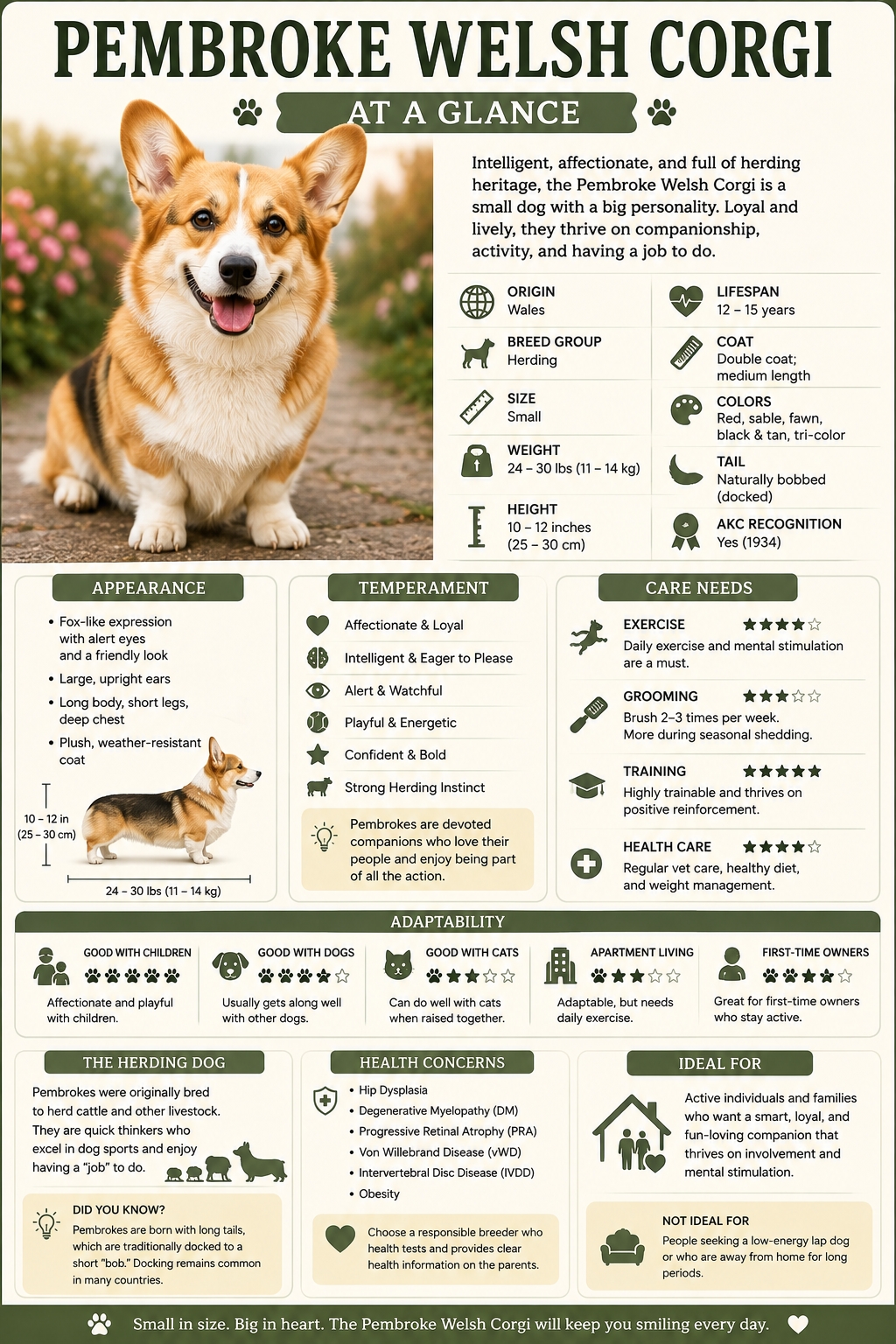
Pembroke Welsh Corgi at a Glance
The Pembroke Welsh Corgi is a small but substantial herding dog: low to the ground, quick on its feet, highly intelligent and usually eager to be involved in whatever its people are doing. The familiar smiling face and short legs can make the breed look almost toy-like in photographs, but the Pembroke is not a toy breed. It was developed to move livestock and still carries the stamina, alertness, confidence and problem-solving ability of a working dog.
| Origin | Pembrokeshire, Wales |
|---|---|
| AKC Group | Herding Group |
| Height | 10–12 inches at the shoulder |
| Weight | Up to 30 lb for males and 28 lb for females under the AKC standard; many healthy adults are in the mid-20-pound range |
| Build | Moderately long, low, sturdy and athletic |
| Coat | Weather-resistant double coat |
| Accepted colors | Red, sable, fawn, and black and tan, with or without permitted white markings |
| Temperament | Bold but kindly, alert, intelligent, people-oriented and active |
| Trainability | High, although clever dogs can also be creative rule-testers |
| Exercise | Moderate to high; daily physical activity plus mental work |
| Shedding | Moderate to heavy, with seasonal coat blows |
| Typical lifespan | Often around 12–15 years, with individual variation |
| Best suited to | People who want a bright, active, highly involved companion and are willing to train, exercise and manage shedding |


What Is a Pembroke Welsh Corgi?
A Pembroke Welsh Corgi is one of two distinct Welsh Corgi breeds. The other is the Cardigan Welsh Corgi. Although people casually use “Corgi” for both, the breeds have separate standards, histories and physical characteristics.
Pembrokes are famous for their short legs, foxlike expression, upright ears and cheerful appearance, but their working heritage explains far more about them than their looks do. They were cattle dogs. A useful farm dog needed enough nerve to influence livestock, enough agility to avoid hooves, enough intelligence to make decisions and enough stamina to keep working. Those qualities did not disappear when Pembrokes moved from farms into family homes.
That is why a Pembroke can be affectionate and cuddly one moment and intensely interested in controlling a moving ball, barking at a delivery driver or reorganizing a group of running children the next. The breed tends to be highly observant and socially engaged. Many Pembrokes want to know where everyone is, what they are doing and whether the activity might reasonably involve a Corgi.
For the right household, that involvement is part of the charm. For someone expecting a quiet decorative lap dog, it can be a surprise.


Pembroke Welsh Corgi History & Origins
The Pembroke Welsh Corgi developed in Wales as a practical working farm dog. Its history is associated particularly with Pembrokeshire in southwest Wales. The exact details of early ancestry are difficult to prove because working farm dogs were shaped for usefulness long before modern pedigree records existed, but the Pembroke became established as a low, agile cattle-driving dog.
Cattle work helps explain the breed’s distinctive proportions. A low dog could move close to livestock and get beneath the arc of a kick more readily than a taller dog. But short legs alone would have been useless without speed, courage and judgment. The Pembroke had to react quickly, read movement and keep working around animals many times its own weight.
Pembrokes and Cardigans were once shown together and were interbred during part of their modern history. In 1934 they were formally recognized as separate breeds in Britain, and the American Kennel Club likewise recognized the distinction that year. Today they are bred separately.
The Royal Connection
The Pembroke’s extraordinary public visibility owes much to Queen Elizabeth II, whose lifelong association with Corgis made the breed recognizable far beyond dog-show circles. Royal popularity, however, should not obscure the breed’s original identity. The Pembroke was a working dog before it became a cultural icon.
Welsh Folklore and the “Fairy Saddle”
Corgis also appear in Welsh folklore, including stories that fairies used the little dogs as mounts or to pull coaches. Some versions connect the lighter markings over a Corgi’s shoulders with a fairy saddle. It is charming folklore rather than breed history, but it has become part of the breed’s cultural mythology.
Pembroke Welsh Corgi vs Cardigan Welsh Corgi
The Pembroke and Cardigan are not varieties of one breed. They are separate breeds that share Welsh herding history and a low silhouette. If you are trying to identify a dog from a photograph, the tail is useful—but it is not the whole story.
| Feature | Pembroke Welsh Corgi | Cardigan Welsh Corgi |
|---|---|---|
| Typical build | Generally lighter and somewhat more refined | Heavier-boned and more substantial |
| Height | 10–12 inches | 10.5–12.5 inches |
| Weight | Up to 30 lb males / 28 lb females under AKC standard | Ideal 30–38 lb males / 25–34 lb females |
| Ears | Medium, erect, tapering to a rounded point | Noticeably larger and more rounded |
| Tail | Natural tail length varies; historically docked in countries where docking is practiced | Long, low-set, foxlike brush is characteristic |
| Colors | Red, sable, fawn, black and tan, with permitted white | Broader range including brindle and blue merle |
| Blue merle | Not an accepted Pembroke color | Accepted Cardigan color |
| General social impression | Often notably outgoing and socially forward | Often somewhat more reserved or deliberate with strangers |
Individual dogs vary, so personality should never be predicted from breed labels alone. Still, the distinction matters when choosing a breeder, interpreting health information or deciding which Corgi better suits your household.
Read our complete Welsh Corgi guide for an overview of both breeds, or visit the Cardigan Welsh Corgi Breed Guide for an in-depth look at the long-tailed Corgi.


Pembroke Welsh Corgi Appearance & Breed Type
A correct Pembroke should look low, strong, active and balanced rather than exaggerated. The official standard describes a dog with substance and stamina in a small space. The head is foxlike, the expression intelligent and interested, and the ears erect and mobile.
The body is moderately long relative to height, but a Pembroke should not look like an impossibly stretched dog on tiny legs. Sound movement matters. This is a herding breed whose structure was intended to permit useful, efficient motion.
Why Are Pembroke Corgis So Short?
Pembrokes are a chondrodysplastic breed. Their characteristic short limbs result from inherited skeletal development that produces disproportionate dwarfism. This is part of established breed type, not a miniature version of an otherwise taller dog.
Short stature helped low herding dogs work around cattle, but modern owners should resist exaggeration. A dog does not become “more Corgi” because it is extremely low, excessively heavy or deliberately kept overweight.
Head, Eyes and Ears
The Pembroke’s head should be foxy without looking fine or fragile. Eyes are oval and brown in harmony with coat color. Blue or very pale eyes are not normal breed-standard Pembroke traits. Ears are upright, firm and responsive to sound.
Movement
Good movement should be free and smooth. The breed’s popularity on social media has made the stationary Corgi outline famous, but functional gait tells you much more about structure than a posed photograph. A Pembroke should be capable of purposeful exercise, not merely waddling adorably from room to room.

Pembroke Welsh Corgi Size, Weight & Full-Grown Development
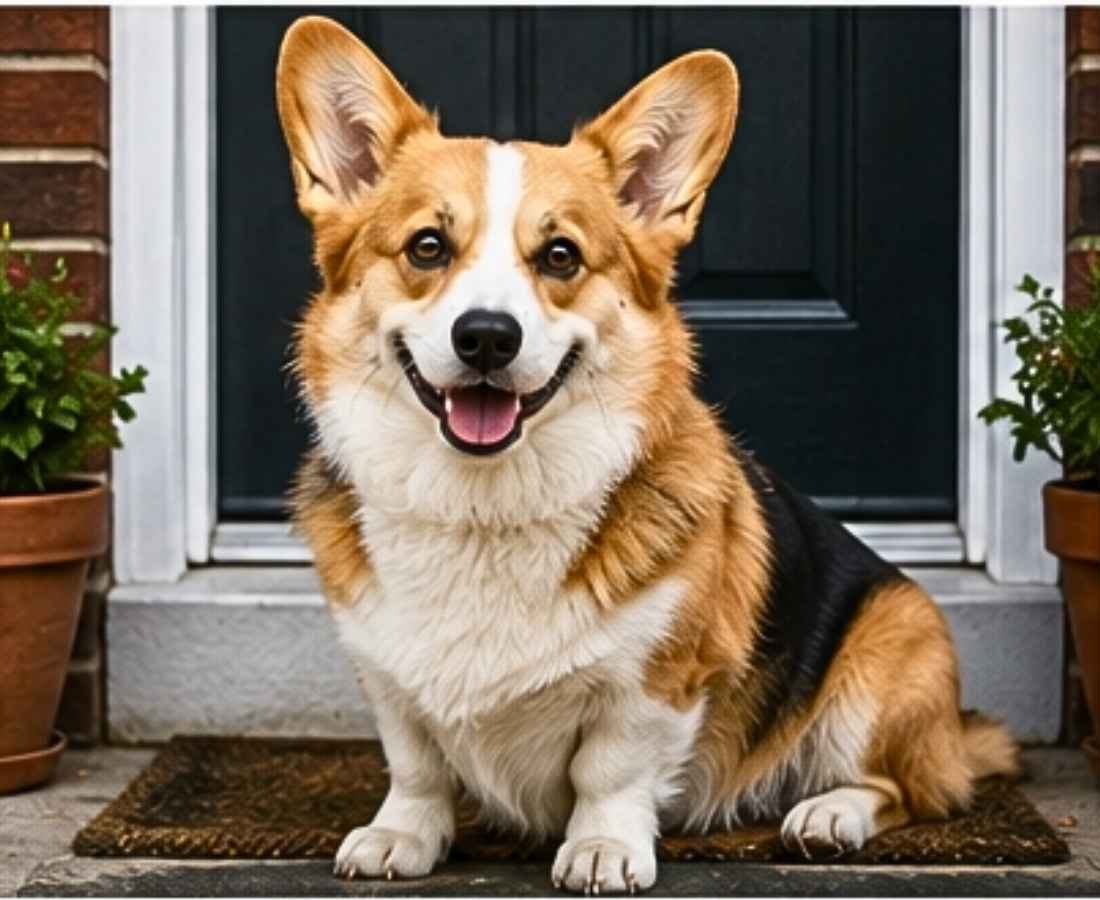
Adult Pembrokes stand about 10 to 12 inches at the shoulder. Under the AKC breed standard, males should not exceed 30 pounds and females should not exceed 28 pounds. In show condition, approximately 27 pounds for a medium-sized male and 25 pounds for a female are cited as preferred examples, but body condition and proportion matter more than chasing a single number.
How Big Does a Pembroke Welsh Corgi Get?
A full-grown Pembroke is small in height but surprisingly substantial in the hands. People who have only seen carefully angled photographs sometimes expect a tiny dog. In reality, an adult can be a solid, muscular companion with enough power to pull on a leash and enough weight to be awkward to lift if injured.
When Is a Pembroke Corgi Full Grown?
Most Pembrokes are close to adult height by around a year, but physical maturity continues afterward. Chest, muscle and overall adult substance can continue developing into the second year. Adolescents often pass through lean or awkward stages before filling out.
Pembroke Welsh Corgi Weight Chart: Use Trends, Not Targets
Puppy growth charts can be useful for spotting trends, but they should not be used to force a puppy toward a predetermined weight. Litter size, sex, genetics, diet and individual development all affect growth. Your veterinarian can assess whether a puppy is maintaining an appropriate body condition.
Is There a Mini Pembroke Corgi?
There is no separate recognized “mini Pembroke Welsh Corgi” variety. Deliberately marketing unusually small dogs as miniature or teacup Corgis deserves caution. Extreme smallness is not a breed improvement, and selecting primarily for novelty size can distract from health, structure and temperament.
Keeping an adult lean is particularly important. Extra body fat adds avoidable load to the spine, hips and short limbs and can make normal activity harder.

Pembroke Corgi Tails: Are They Born Without Tails?
Some Pembroke Welsh Corgis are born with naturally short tails, while others are born with longer tails. Historically, tails were docked in countries and contexts where docking was customary. In places where cosmetic docking is prohibited or uncommon, full-tailed Pembrokes are increasingly familiar.
Does a Full Tail Mean the Dog Is a Cardigan?
No. Tail length alone does not determine breed. A Pembroke with a natural full tail remains a Pembroke. A Cardigan has a long tail as part of its breed type, but it also differs in ancestry, size, bone, ears, outline and accepted colors.
Why Do Some Pembroke Corgis Have No Tail?
There are two different explanations: natural bobtail genetics and docking. A naturally bobtailed puppy is born with a shortened tail. A docked puppy is born with more tail and has part of it surgically removed very early in life. Laws and accepted practices differ by country.
Tail Docking Is Not a Health Requirement
A Pembroke does not need a docked tail in order to live as a healthy family companion. Prospective owners who have preferences about natural tails should discuss them with breeders well before a litter is born, especially because local laws and breeder practices vary.
Pembroke Welsh Corgi Colors: Red, Sable, Fawn, Tricolor & Black
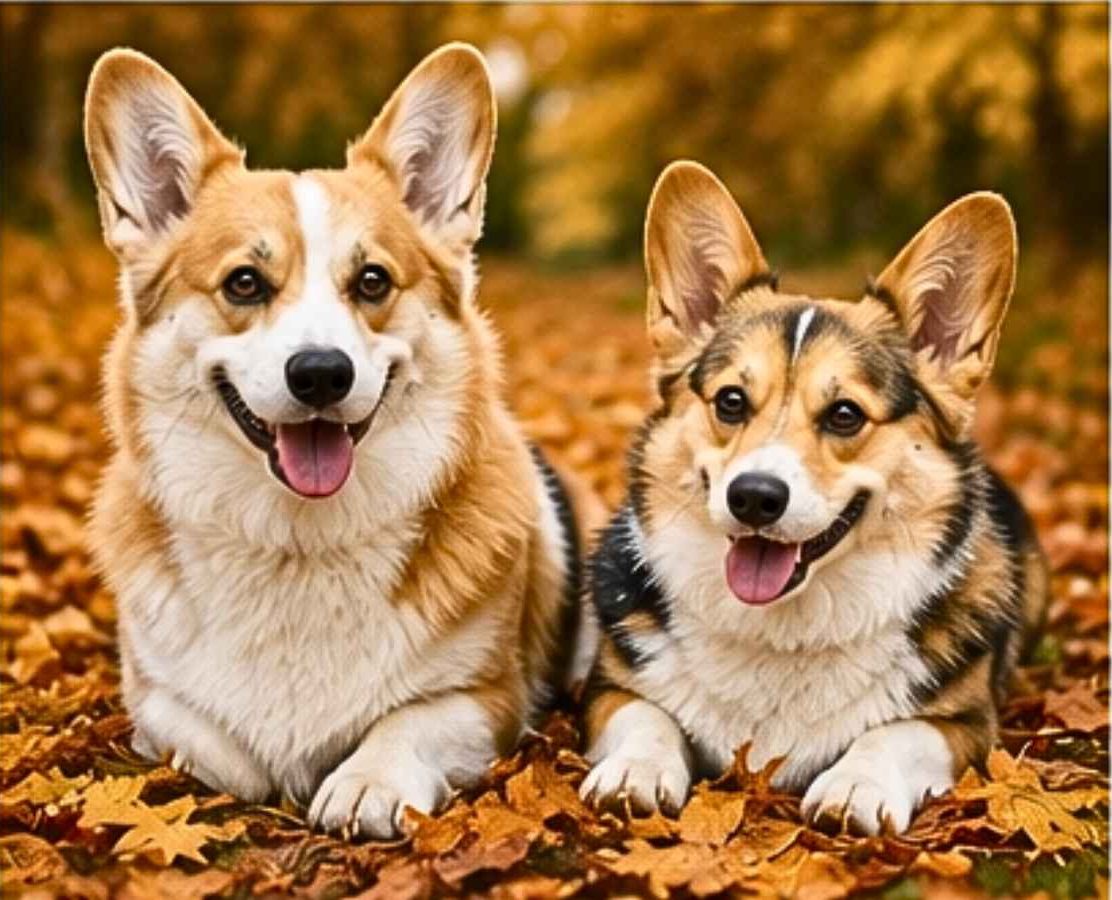
Pembrokes occur in a relatively defined range of colors. Under the AKC standard, the outer coat may be red, sable, fawn, or black and tan, with or without permitted white markings. In everyday language, black-and-tan Pembrokes with white are usually described as tricolor.
Red Pembroke Welsh Corgis
Red is the color many people picture first. It ranges from lighter warm shades to deeper red, typically with white on areas such as the chest, neck, legs, muzzle or blaze where permitted.
Sable Pembroke Welsh Corgis
Sable dogs have red or fawn base color with darker tipping that can create shading over the back, neck or head. The amount of dark overlay varies.
Fawn Pembroke Welsh Corgis
Fawn is a lighter accepted color. It may appear creamier or more muted than a typical red.
Tricolor Pembroke Welsh Corgis
Tricolor Pembrokes combine black, tan and white. Owners often distinguish between red-headed and black-headed tris based on how the adult head coloring develops. Puppy coats can change considerably as the dog matures, so very young puppies may not show their final balance of color.
Can a Pembroke Welsh Corgi Be Black?
People searching for a “black Pembroke Corgi” are usually looking at a tricolor dog with extensive black. Solid black is not one of the standard Pembroke colors. The accepted dark pattern is black and tan, often accompanied by white markings.
Are Blue Merle Pembroke Corgis Purebred?
Blue merle is not an accepted Pembroke Welsh Corgi color. Merle is a recognized color pattern in Cardigan Welsh Corgis, which is one reason confusion occurs. A dog advertised as a “purebred merle Pembroke” should prompt careful questions about ancestry and documentation rather than excitement over rarity.
What About Blue Eyes?
Blue eyes are not a normal desired trait under the Pembroke standard. In a dog being marketed alongside merle coloring, blue eyes should increase your reason to investigate ancestry rather than accept a “rare Pembroke” premium.
Fluffy Pembroke Corgis
“Fluffy” Pembrokes have a recessively inherited long-coat phenotype with exaggerated feathering. They can be beautiful companion dogs, but the coat is considered a very serious fault under the breed standard because it differs from the practical weather-resistant working coat. A fluffy coat does not make a dog unhealthy or less lovable; it simply is not correct show coat.
Choose the Dog, Not the Color
Color should come after health, temperament, structure and breeder quality. Be especially cautious when a seller uses words such as “rare,” “exotic,” “blue,” “merle” or “designer color” to justify a large premium while avoiding meaningful discussion of health testing and pedigree.

Coat, Shedding, Grooming & Haircuts
Pembrokes have a double coat consisting of a dense undercoat and a coarser weather-resistant outer coat. It was designed for a working dog exposed to Welsh weather, not for low-maintenance housekeeping. Pembrokes shed.
How Much Do Pembroke Corgis Shed?
Expect regular hair throughout the year and heavier seasonal shedding when the undercoat is released. Individual coat density, climate, indoor living and reproductive status can affect shedding patterns. During a coat blow, loose undercoat may come out in impressive tufts.
How Often Should You Brush a Pembroke?
A thorough brushing once or twice a week is a reasonable baseline for many dogs, with more frequent grooming during heavy shedding. The goal is to remove loose undercoat without scraping or irritating the skin. A slicker brush, pin brush and undercoat tool can all be useful when used appropriately.
Does a Pembroke Corgi Need Haircuts?
Normally, no. The natural coat should not require routine clipping or sculpting. The official standard expects the coat in natural condition, aside from tidying the feet and optional whisker trimming for show presentation.
Shaving a normal double-coated Corgi for convenience is generally unnecessary. If a medical procedure requires clipping, follow veterinary advice. For ordinary grooming, brushing and bathing are usually the better approach.
Bathing
Bathe when dirty or when coat condition warrants it. Rinse shampoo thoroughly through the dense coat and dry the undercoat well. A damp undercoat can stay wet longer than the surface suggests.
Nails, Feet, Ears and Teeth
Keep nails short enough that they do not alter comfortable foot placement. Check ears for odor, redness or discharge rather than cleaning aggressively by habit. Brush teeth regularly with dog-safe toothpaste. Dental care matters even though Pembrokes are not tiny toy dogs; periodontal disease is common across companion dogs.
Are Pembroke Welsh Corgis Hypoallergenic?
No. They shed both hair and allergen-carrying dander. Someone with dog allergies should spend meaningful time around adult Pembrokes before making a commitment rather than relying on a breeder’s reassurance.
Pembroke Welsh Corgi Temperament & Personality
The classic Pembroke personality combines confidence, intelligence, affection and alertness. The official standard calls for an outlook that is bold but kindly and specifically rejects excessive shyness or viciousness. In ordinary homes, that often translates into a dog that is socially engaged, expressive and intensely interested in family activity.
Affectionate Without Being Helpless
Many Pembrokes are affectionate and enjoy physical closeness, but they are not necessarily passive lap dogs. A Corgi may cuddle happily and then spring up because someone opened a refrigerator three rooms away. They tend to remain aware of their environment.
People-Oriented
The breed club describes Pembrokes as people-oriented dogs that need involvement with family or work. A Pembroke relegated to a backyard with little interaction is likely to be unhappy and may invent activities such as barking, digging or fence-running.
Boldness and Confidence
A well-socialized Pembroke often approaches life with considerable confidence. That can be delightful, but owners should teach manners early. A 25-pound dog with cattle-dog determination can become surprisingly bossy if every demand is rewarded.
Sense of Humor—or Excellent Reinforcement History?
Owners often describe Corgis as funny, clownish or mischievous. Some of that is anthropomorphic, but the observation points to something real: these dogs notice cause and effect. If stealing a sock reliably makes three humans chase them through the house, they may conclude that sock theft is an outstanding recreational program.
Individual Variation Matters
Not every Pembroke is extroverted, cuddly, tolerant of every dog or eager to greet strangers. Genetics, early environment, socialization, health and learning history all shape adult behavior. Meet adult relatives when possible and choose breeders who pay close attention to temperament rather than assuming “all Corgis are friendly.”
Are Pembroke Welsh Corgis Smart?
Yes. Pembrokes are highly intelligent dogs, but “smart” should not be confused with “automatically obedient.” Herding intelligence includes noticing movement, making decisions quickly and persisting when a task matters. Those same traits can produce an excellent training partner—or a dog that learns exactly which household member is easiest to manipulate.
What Pembrokes Learn Quickly
- Household routines and schedules
- Food locations and treat-delivery patterns
- Training cues taught consistently
- Games involving scent, searching and problem solving
- Which behaviors reliably get attention
- How to open, push, nose or investigate things that were not intended as dog puzzles
Use that intelligence constructively. Short training sessions, food puzzles, scent games, trick training, rally-style exercises and controlled herding outlets can make everyday life much easier.
Why Boredom Matters
An under-stimulated Pembroke does not stop being intelligent. It simply directs intelligence elsewhere. Barking at windows, patrolling the fence, shredding cardboard, stealing laundry and herding household members can all become self-rewarding activities.
Training a Pembroke Welsh Corgi
Training should begin the day a Pembroke puppy comes home. The goal is not military precision; it is creating a common language before an observant, confident puppy develops habits you did not intend to teach.
Use Reward-Based Training
Pembrokes generally respond very well to food, toys, play and social rewards. Reward-based training makes cooperation valuable and allows you to teach complex skills without relying on intimidation. The breed club specifically describes Pembrokes as sensitive and recommends gentle handling rather than severe physical correction.
Priorities for a Pembroke Puppy
- Name response and attention
- Reliable recall foundations
- Loose-leash walking
- Leave it and drop it
- Comfort with grooming and nail handling
- Calm greetings instead of jumping or demand barking
- Settling on a mat
- Waiting at doors
- Comfortable confinement and alone-time skills
- Trading objects instead of guarding them
Herding and Heel Nipping
Pembrokes were bred to influence livestock movement. Puppies may become intensely interested in ankles, running children, bicycles or fast-moving pets. Do not punish a puppy for possessing an inherited behavioral tendency, but do not allow the behavior to rehearse unchecked either.
Interrupt and redirect to appropriate toys or trained behaviors. Teach children not to turn nipping into a chase game. Reward the puppy for moving with people without grabbing clothing or heels.
Recall
A Corgi’s confidence can make off-leash freedom look easier than it is. Build recall with high-value rewards and gradually increasing distractions. Do not repeatedly call the dog for unpleasant endings to fun, and do not assume intelligence makes a dog immune to squirrels, livestock, traffic or wildlife.
Leash Skills
Pembrokes are low but strong. A determined adult can pull surprisingly hard. Teach loose-leash walking before the dog has months of practice towing a person toward every interesting smell.
Adolescence
Adolescent Pembrokes may temporarily become more distractible, vocal or selective about responding. This is not evidence that training “stopped working.” Keep criteria clear, reinforce generously and manage situations where the young dog is not yet ready to succeed.
Do Pembroke Welsh Corgis Bark a Lot?
Many do. Pembrokes are alert herding dogs, and vocal behavior can be part of how they respond to movement, novelty, excitement and perceived changes in their environment. Some individuals are much quieter than others, but a person who absolutely requires a silent dog should not assume a Pembroke will fit that requirement.
Common Barking Triggers
- Doorbells and deliveries
- People or dogs passing windows
- Excitement before walks or meals
- Play and herding arousal
- Boredom
- Demanding attention
- Unfamiliar noises
- Being left alone when independence has not been taught
Reducing Nuisance Barking
First identify why the dog is barking. A dog barking from boredom needs a different plan from one barking because every passerby is visible through a front window. Manage triggers, reinforce quiet alternatives and make sure exercise and enrichment are adequate.
A “quiet” cue is useful, but management is often more powerful. Frosted window film, moving furniture away from lookout posts, background sound and planned enrichment can prevent hundreds of repetitions of a behavior you do not want.
Can Pembroke Corgis Be Left Alone?
Pembrokes are strongly people-oriented and usually prefer being included in daily life. That does not mean a healthy adult can never spend time alone. It means independence should be taught rather than assumed.
Begin with brief, uneventful separations while a puppy is relaxed. Provide safe resting space and appropriate enrichment, and vary the routine so departure cues do not always predict a long absence. A puppy’s bladder capacity and emotional maturity also limit how long it can reasonably be left.
Separation Anxiety vs. Boredom
Chewing or barking while alone is not automatically separation anxiety. True separation-related distress can include panic, persistent vocalization, escape attempts, drooling, inability to eat, elimination despite house training or frantic behavior linked specifically to absence.
If a dog appears panicked when left, consult a veterinarian and a qualified behavior professional. Repeatedly “letting the dog cry it out” can make genuine distress worse.
Pembroke Welsh Corgi Exercise Needs
Pembrokes need regular exercise, but they do not need endless forced running. Think in terms of a balanced daily program: walking, sniffing, play, training and opportunities to use the brain.
How Much Exercise Does an Adult Pembroke Need?
Many healthy adults thrive with roughly an hour or more of total daily activity divided across walks, play and training, but there is no universal stopwatch prescription. Age, fitness, weather, health and individual drive matter. A working-line or sport-focused dog may need considerably more structured activity than a mellow companion.
Walking
Walking is valuable for fitness, but sniffing is part of the benefit. A slow exploratory walk can be mentally richer than marching the same route at speed every day.
Dog Sports
Pembrokes can enjoy rally, obedience, scent work, tracking, herding, tricks and appropriately managed agility. Their trainability and enthusiasm make them versatile sport companions.
Puppy Exercise
A growing puppy does not need forced distance running, repeated high jumps or a rigid exercise quota. Provide age-appropriate free play, exploration, short walks and training while allowing rest. Ask your veterinarian about exercise if a puppy has orthopedic concerns or unusual gait.
Hot Weather
A dense double coat and low body position can make hot conditions uncomfortable. Exercise during cooler parts of the day, provide water and shade, and watch for excessive panting, slowing, seeking shade or other signs of heat stress.
Hiking and Outdoor Safety
Pembrokes can be enthusiastic hiking companions when fit and healthy, but short stature does not make them immune to trail hazards. Keep dogs controlled near cliffs, fast water, unstable footing and wildlife. A harness can provide useful control, particularly where a sudden lunge could have serious consequences.
Mental Enrichment for a Very Clever Little Herding Dog
Exercise tires muscles; enrichment gives the brain somewhere productive to go. Pembrokes often benefit from several short thinking activities spread through the day.
- Scatter feeding or sniffing for part of a meal
- Food puzzles and stuffed toys
- Find-it games
- Trick training
- Beginner scent work
- Hide-and-seek with family members
- Cardboard-box searches under supervision
- Shaping games in which the dog learns to offer behaviors
- Rally or obedience exercises
- Safe tug and retrieve games with rules
Rotate activities instead of leaving every toy available all the time. Novelty increases interest. Also teach an off-switch: a dog should learn that resting calmly is part of life, not evidence that entertainment staff have gone on strike.
Are Pembroke Welsh Corgis Good Family Dogs?
They can be excellent family dogs for households that enjoy an active, involved companion. Pembrokes are often affectionate, playful and highly engaged with their people. Their sturdy size can be easier around family life than a very fragile toy breed, but they still require respectful handling and thoughtful training.
The best family match is one that wants the dog included. Pembrokes tend to enjoy walks, games, training and everyday household activity. A family seeking a dog that will quietly entertain itself for most of the day may find the breed demanding.
Family Strengths
- Usually highly trainable
- Often playful and affectionate
- Sturdy enough for active households
- Interested in participating in family routines
- Good potential for dog sports and shared hobbies
- Alert watchdog tendencies
Family Challenges
- Herding and heel-nipping behavior
- Potential for considerable barking
- Heavy shedding
- Need for daily mental activity
- Easy weight gain when everyone gives treats
- Confidence that can become pushiness without boundaries
Are Pembroke Welsh Corgis Good With Kids?
Many Pembrokes live very successfully with children, especially when both dog and children are taught how to interact. The breed is playful and sturdy, but herding instincts create one important consideration: fast-moving children can trigger chasing, circling or ankle nipping.
Teach the Dog
Reward calm behavior around running and excitement. Teach leave-it, recall, place and appropriate play. Redirect nipping rather than allowing the puppy to practice it because it looks funny when the dog is small.
Teach the Children
Children should not climb on the dog, pull ears, hug tightly, disturb sleep, take food or chase a dog that is trying to move away. Give the Corgi a resting place that children understand is off-limits.
Supervision Still Matters
No breed label replaces supervision. Young children and dogs should be actively supervised, particularly around food, high-energy play and situations where the dog may feel trapped.
Pembroke Corgis With Other Dogs, Cats & Pets
Other Dogs
Many Pembrokes enjoy canine company, but individuals vary. Some are socially easygoing; others are selective or bossy. Early positive experiences help, but adult compatibility also depends on temperament, sex, resource management and the personalities of both dogs.
Cats
Pembrokes can live successfully with cats, particularly when introduced carefully. Herding and chasing behavior should be managed from the beginning. Cats need high resting places and escape routes where the dog cannot follow.
Small Pets
Do not assume a friendly Corgi is automatically safe with rabbits, guinea pigs, birds or other small animals. Manage interactions according to the species involved and the individual dog’s behavior.
Do Pembrokes and Cardigans Get Along?
They certainly can. Compatibility depends more on the individual dogs and introductions than on being two Corgi breeds. Shared energy and communication style may help, but there is no automatic guarantee.
Are Pembroke Welsh Corgis Good Apartment Dogs?
A Pembroke can live very happily in an apartment. Square footage is less important than whether the dog’s needs are met. The two main challenges are exercise and noise.
A well-exercised Pembroke that gets several outings, sniffing opportunities, training and companionship may settle beautifully in a modest home. A bored Pembroke with a panoramic view of the hallway can become the building’s unpaid security announcer.
Apartment Success Checklist
- Plan multiple daily outings rather than relying on indoor space.
- Teach calm hallway and elevator behavior.
- Manage visual triggers from windows.
- Work on barking before neighbors become part of the training plan.
- Use rugs or runners on slippery floors for traction.
- Consider stairs and elevator access as the dog ages.
Pembroke Corgis for Seniors & First-Time Dog Owners
Are Pembroke Corgis Good for Seniors?
For an active senior who wants a bright walking and training companion, a Pembroke can be wonderful. The breed’s moderate size is convenient compared with a large herding dog, but it is not featherweight. An injured or elderly 25- to 30-pound dog may be difficult to lift.
Consider the owner’s balance, ability to manage pulling, willingness to exercise daily and capacity to handle future mobility care. A calm adult Pembroke may be a better match than a busy puppy for some seniors.
Are Pembroke Corgis Good for First-Time Owners?
Yes, provided the first-time owner wants to learn. Pembrokes are trainable and generally responsive, but they are not maintenance-free starter dogs. New owners must be prepared for barking, shedding, herding behavior, exercise and the consequences of inconsistent rules.
A puppy class taught with modern reward-based methods can be particularly valuable. It helps the owner learn at the same time as the puppy.
Pembroke Welsh Corgi Health Issues
Pembrokes are often healthy and long-lived, but responsible ownership means understanding the problems that can occur rather than assuming a popular breed is automatically robust. The Pembroke Welsh Corgi Club of America emphasizes hip and eye screening in breeding dogs. The club also discusses additional tests and health concerns including von Willebrand disease, elbows, cardiac health and degenerative myelopathy.
Hip Dysplasia
Hip dysplasia involves abnormal development and fit of the hip joint and can contribute to pain and arthritis. The national breed club expects breeding animals to have hips evaluated and declared within normal limits. Puppy buyers should ask for verifiable OFA or PennHIP information rather than accepting “the parents have never had hip trouble.”
Eye Disorders
Breeding stock should receive examination by an appropriate veterinary ophthalmologist. Ask for current documentation. Eye health is not adequately represented by a puppy simply appearing to see normally.
Von Willebrand Disease
Von Willebrand disease is an inherited bleeding disorder involving clotting function. DNA testing exists for the type associated with Pembrokes. A test result should be interpreted as part of a breeding program rather than used as a marketing badge detached from the rest of the dog’s health and pedigree.
Intervertebral Disc Disease and Back Problems
Pembrokes have chondrodysplastic anatomy and can develop intervertebral disc disease. Signs can include back or neck pain, reluctance to move, a hunched posture, weakness, wobbliness, dragging paws or limbs, and in severe cases loss of bladder or bowel control. Sudden neurologic signs require prompt veterinary assessment.
Obesity
Obesity is not an inherited disease in the same way as PRA or vWD, but it is one of the most preventable threats to long-term comfort. Extra weight increases workload on joints and spine and can worsen mobility problems. The breed club specifically warns owners not to allow Pembrokes to become overweight.
Other Health Concerns
Like any breed, Pembrokes can experience cancer, autoimmune disease, cardiac disease, reproductive problems, neurologic disorders and other conditions that no single genetic panel can rule out. This is why an honest breeder discusses family history rather than presenting a list of “clear” DNA results as proof that a line has no health risks.
What Health Testing Should a Pembroke Breeder Do?
The current AKC page summarizing national breed-club recommendations lists hip evaluation and ophthalmologist evaluation for Pembroke Welsh Corgis. The PWCCA health material additionally discusses vWD and optional/additional screening such as elbows, cardiac health and DM. Ask what testing was done, why it was chosen and where results can be independently verified.
This guide provides general educational information and is not a substitute for diagnosis, treatment or individualized advice from your veterinarian.
Degenerative Myelopathy in Pembroke Welsh Corgis: What the DNA Test Does—and Does Not—Tell You
Degenerative myelopathy (DM) deserves careful explanation because Pembrokes are frequently discussed in connection with the SOD1 genetic test. The simple internet version—“at risk result means the dog will get DM”—is not accurate.
DM is a progressive neurologic disease affecting the spinal cord, usually in older dogs. Early signs can include hind-limb weakness, scuffing toes, crossing the hind legs or difficulty coordinating the rear. Other spinal and neurologic disorders can look similar, so a DNA result by itself does not diagnose a living dog with DM.
Why the SOD1 Result Is Complicated in Pembrokes
The PWCCA’s detailed explanation by veterinary geneticist Dr. Jerold Bell notes that the common SOD1 variant is extremely frequent in the breed while clinical DM is far less common. Dogs with two copies are genetically categorized as “at risk,” but many never develop clinical disease. Other genetic factors appear to influence whether disease develops.
That distinction matters enormously for breeders. If a common variant were treated as a reason to eliminate every carrier or at-risk dog from breeding, the resulting loss of genetic diversity could create other problems. Genetic tests are tools for thoughtful breeding decisions, not automatic pass/fail labels for the worth of an otherwise healthy dog.
For Puppy Buyers
Ask a breeder to explain DM in the context of the family, not merely show you a color-coded DNA panel. A knowledgeable breeder should be able to discuss close relatives, longevity, neurologic history and how genetic information influenced the mating.
For Owners of Older Pembrokes
If your dog develops rear-limb weakness, do not assume it is DM because of breed or DNA status. Disc disease, orthopedic pain and other neurologic conditions can produce similar signs and may require very different treatment. Veterinary evaluation is essential.
Protecting a Pembroke Corgi’s Back, Hips & Mobility
A Pembroke’s long, low shape should be respected without treating the dog as fragile. Healthy Pembrokes benefit from regular movement and useful muscle. The goal is not to prevent normal activity; it is to reduce avoidable strain and respond early when something changes.
Keep the Dog Lean
This is the most practical daily step. You should be able to feel ribs beneath a light covering and see a waist when viewed from above. A dense coat can hide gradual weight gain.
Build Fitness Gradually
Weekend-warrior exercise is not ideal. Regular walking, controlled play and appropriate conditioning build muscle that supports the body better than long periods of inactivity followed by intense exertion.
Provide Traction
Slippery floors can make low dogs scramble for footing. Rugs or runners can help, especially for puppies, seniors and dogs recovering from injury.
Think About Repetitive Jumping
An occasional normal jump is not the same as hundreds of daily launches from high furniture. Ramps or steps may be useful for beds, vehicles or favorite furniture, particularly as the dog ages.
Know the Emergency Signs
Sudden severe pain, inability to stand, dragging limbs, marked weakness or loss of bladder/bowel control should be treated as urgent veterinary problems. With spinal disease, waiting can matter.
Pembroke Welsh Corgi Lifespan & Aging
Pembrokes are often described as living around 12 to 15 years, and healthy individuals can remain active well into their senior years. The breed club notes that dogs into their teens are not uncommon. Lifespan statistics are useful for planning, but they cannot predict an individual dog’s future.
What Influences Longevity?
- Inherited health and family longevity
- Maintaining a healthy body condition
- Dental and preventive veterinary care
- Prompt attention to mobility or neurologic changes
- Appropriate exercise throughout life
- Accident prevention
- Quality nutrition appropriate to the individual dog
Senior Pembroke Care
Older dogs may need shorter but more frequent walks, easier access to vehicles or furniture, better traction, softer resting surfaces and more frequent veterinary monitoring. Do not assume slowing down is “just old age.” Arthritis, dental pain, endocrine disease, vision loss and other treatable problems can masquerade as aging.
Mental enrichment remains valuable in old age. Nose work, gentle training and food-search games can keep a senior involved even when high-impact exercise is no longer appropriate.
Pembroke Welsh Corgi Nutrition & Feeding
Feeding a Pembroke well is less about finding a magical “Corgi food” and more about providing a complete, balanced diet in an amount that maintains excellent body condition.
How Much Should a Pembroke Eat?
There is no single cup measurement appropriate for every dog. Calorie needs vary with age, size, reproductive status, activity, metabolism and the calorie density of the food. Start with a reasonable feeding guideline, then adjust according to body condition and veterinary advice.
Puppies
Feed a nutritionally complete puppy diet appropriate for growth. Puppies need enough energy and nutrients to develop normally, but rapid weight gain is not a goal. Keep the puppy athletic rather than deliberately plump.
Adults
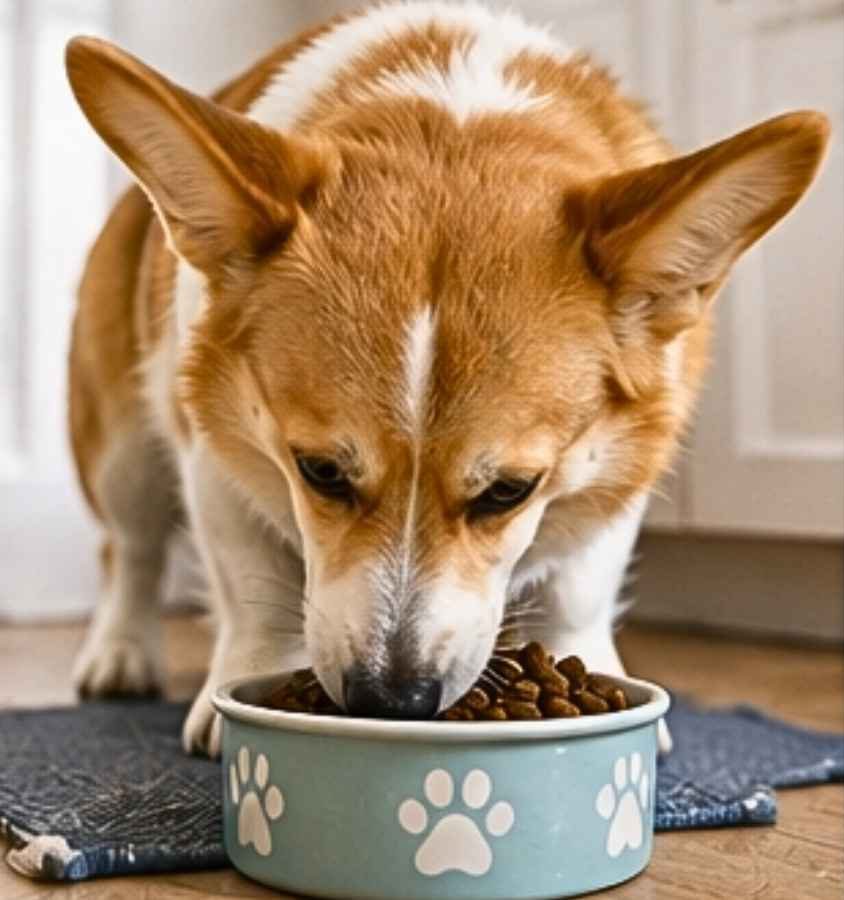
Measure meals rather than free-pouring food into a bowl. If training uses many treats, reserve part of the daily ration or choose small low-calorie rewards. Several family members independently giving “just one” snack can quietly double a small dog’s extras.
Seniors
Senior needs vary. Some older Pembrokes need fewer calories as activity declines; others need nutritional adjustments because of medical conditions or difficulty maintaining muscle. Ask your veterinarian before making major changes based solely on age.
Weight Management
Weigh the dog periodically and use body-condition assessment. If weight creeps upward, modest portion changes made early are much easier than a major diet later. Because spinal and joint comfort matter so much in a low, long dog, keeping a Pembroke lean is a health priority rather than a cosmetic preference.
Everyday Pembroke Welsh Corgi Care
A good daily routine does not need to be complicated. Pembrokes generally thrive on predictable care plus enough variety to keep life interesting.
A Practical Daily Rhythm
- Measured meals appropriate to body condition
- Several bathroom and sniffing outings
- At least one meaningful walk or exercise period
- Short training or enrichment sessions
- Time with family
- Quiet rest
- Brief handling checks for paws, ears, coat and general condition
Weekly care may include more thorough brushing, nail checks, weighing or body-condition assessment and washing bedding. Dental care should be frequent, ideally daily tooth brushing when tolerated.
Seasonal Care
During heavy shedding, increase brushing. In summer, shift exercise to cooler hours. In winter, watch for ice, salt and de-icing chemicals on paws. A low body can also collect mud, snow and road grime surprisingly efficiently.
What Is It Really Like to Live With a Pembroke Corgi?
Living with a Pembroke often means living with a small dog that behaves as though it has been appointed assistant household manager.
Many learn routines with uncanny precision. Breakfast being four minutes late may be reported. A closed bathroom door may be regarded as an administrative error. The sound of cheese packaging can apparently travel through several walls.
Humor aside, this attentiveness is why people become devoted to the breed. Pembrokes tend to participate. They are there for the walk, the gardening, the training session, the road trip and the quiet evening afterward.
The Hair Is Real
If immaculate dark clothing and hair-free upholstery are essential to your happiness, consider this carefully. Regular grooming reduces loose coat but does not abolish shedding.
The Voice Is Real, Too
Some Pembrokes narrate events. Training can greatly improve nuisance barking, but selecting a naturally quieter individual and managing the environment may matter as much as teaching a cue.
So Is the Bond
For people who enjoy an interactive dog, the breed’s involvement can be extraordinary. A Pembroke is rarely merely present in the household. It tends to become part of its operating system.
Pembroke Welsh Corgi Puppies
Pembroke puppies are appealing enough to make sensible adults forget every question they intended to ask. Try not to let that happen. A puppy will be adorable for a few months and a member of the family for, potentially, well over a decade.
What Pembroke Puppies Are Like
Expect curiosity, quick learning, busy mouths and bursts of energetic play followed by substantial sleep. Herding-related chasing and ankle interest may appear early. Puppies also need gradual exposure to handling, household sounds, different surfaces, friendly people, appropriate dogs and ordinary life.
Socialization
Socialization does not mean forcing a puppy to greet everyone. The goal is to create positive, controlled experiences that teach the puppy the world is safe and manageable. A puppy should learn that strangers can exist without interaction, that grooming is ordinary, that car rides are survivable and that new places do not require panic.
House Training
Use frequent trips outside, supervision, predictable routines and rewards for eliminating in the correct place. Punishing accidents after the fact teaches little. Puppies need more opportunities than adults and may regress temporarily during changes in routine.
Bite Inhibition and Herding Mouthiness
Puppies explore with their mouths, and Pembrokes may add movement-triggered nipping. Provide appropriate chews, interrupt overly hard play and reward calm alternatives. Avoid games that make grabbing ankles the fastest route to attention.
Choosing a Puppy
Temperament matching matters more than choosing the puppy that runs to you first. A responsible breeder who has observed the litter daily can help match activity level, confidence and social style to the household.
For a full buyer-education resource, see the Pembroke Welsh Corgi Puppies Guide. It should be your next stop if you are actively looking for a puppy.
Finding a Responsible Pembroke Welsh Corgi Breeder
A responsible breeder does much more than produce registered puppies. Good breeding combines knowledge of structure, temperament, health, pedigrees and puppy development with lifelong responsibility for the dogs produced.
Health Testing
Ask for independently verifiable hip and eye results for both parents. Ask what other testing was done and why. “DNA tested” is incomplete information unless the breeder tells you which tests, the results and how they influenced the mating.
Meet the Dogs
When possible, meet the mother and other adult relatives. Observe how they respond to people, novelty and handling. The sire may live elsewhere because responsible breeders often choose the best genetic match rather than the nearest male.
Where Are Puppies Raised?
Puppies intended as companions benefit from thoughtful exposure to normal household life. Ask where they sleep, where they spend the day, how they are handled and what socialization has been done.
A Good Breeder Interviews You
Do not be offended by questions about your home, work schedule, children, fencing, previous dogs and plans for training. A breeder who cares where puppies go should not sell solely on the basis of payment.
Contracts and Lifetime Responsibility
The PWCCA Code of Ethics expects written health information and emphasizes breeder responsibility. It specifically states that members should be prepared to accept and care for a puppy or adult returned directly to them. That willingness to take a dog back is one of the strongest signs that a breeder sees each puppy as a lifetime responsibility rather than a completed transaction.
Pet Stores, Brokers and High-Volume Sellers
The national breed club advises buyers not to purchase from pet stores or wholesalers. A third-party seller separates you from the people who selected the parents and raised the litter, making meaningful evaluation of temperament, health history and living conditions much harder.
Online Scams
Never send money solely because a website has beautiful puppy photographs and an urgent shipping story. Scammers can copy photographs and breeder text. Speak directly with the breeder, verify identities and health records, and be wary of pressure to pay immediately through methods that provide little recourse.
You can also explore the Dogs Central Small Dog Breeder Showcase as it grows. Regardless of where you find a breeder, use the same careful evaluation process.
Pembroke Welsh Corgi Price: What Does a Puppy Really Cost?
Pembroke puppy prices vary widely by region, breeder, pedigree, demand and what is included. There is no single price that proves a puppy is responsibly bred.
Why Responsible Breeding Costs Money
Expenses can include health testing, quality veterinary care, stud fees or travel, prenatal care, emergency reproductive care, puppy veterinary examinations, registration, supplies, enrichment, socialization and the breeder’s considerable time.
A High Price Is Not Proof of Quality
Popularity also creates sellers who charge premium prices because a puppy is fashionable, unusually colored or immediately available. Ask what the price actually represents. Health documentation and breeder practices matter more than a polished website.
An Extremely Low Price Can Be a Warning
A bargain-priced puppy may be legitimate in unusual circumstances, but it can also indicate a scam, high-volume breeding, lack of health testing or a seller trying to move puppies quickly. Investigate rather than assuming you found a lucky deal.
Budget Beyond Purchase Price
The purchase price is only the beginning. Plan for veterinary care, food, training, grooming tools, parasite prevention, licensing, boarding or pet care, insurance or emergency savings, equipment and possible senior mobility care.
Pembroke Welsh Corgi Puppies for Sale Near Me: How to Search Safely
“Near me” is convenient search language, but geography should not be your primary quality criterion. The closest available puppy is not necessarily the best-bred puppy, and the best breeder for your family may require a drive, a flight or a waiting list.
Start With Breeder Quality
Look for health testing, stable adult temperament, appropriate puppy raising, transparent communication and lifetime responsibility. Then consider travel.
Be Careful With Marketplace Search Results
Large puppy marketplaces can make many litters appear equally legitimate. They are not. Evaluate the actual breeder, not the platform’s design, badges or advertising language.
Do Not Let Scarcity Create Urgency
A seller who insists another buyer is about to take the puppy unless you send a deposit immediately is creating pressure at exactly the moment you should be slowing down. Verify first.
Consider an Adult Dog
If puppy timing, waiting lists or cost are difficult, an adult from a responsible breeder or a carefully screened rehoming situation may be an excellent alternative.
Pembroke Welsh Corgi Adoption & Rehoming
Purebred Pembrokes do become available for adoption and private rehoming, although demand for the breed can be high. Adult dogs may need new homes because of owner illness, housing changes, family circumstances or other situations that have nothing to do with the dog’s worth.
Questions to Ask About an Adult Pembroke
- Why is the dog being rehomed?
- What is known about health and veterinary history?
- How does the dog behave with children, dogs and cats?
- Is the dog house trained?
- How does the dog handle being alone?
- Is there resource guarding, reactivity or a bite history?
- What exercise and grooming routine is familiar?
- Are there mobility or back concerns?
If you need to rehome a Pembroke, contact the breeder first when possible. Responsible breeders commonly want to know if a dog they produced needs a new home and may require return under the contract.
For adoption and responsible private rehoming help, visit Pembroke Welsh Corgi Adoption & Rehoming on Pet Rehoming Network. A careful home-to-home transition can sometimes spare a dog the disruption of entering a shelter while allowing prospective adopters to learn directly about the dog’s routine and needs.
Pembroke Welsh Corgi Name Ideas
Pembrokes offer an absurd amount of naming inspiration: Welsh heritage, foxlike faces, food enthusiasm, royal associations and a tendency to look as though they have strong opinions about household management.
Welsh-Inspired Names
Carys, Eira, Gwen, Nia, Seren, Rhys, Bryn, Dylan, Gareth, Owen and Wynn.
Color and Nature Names
Copper, Maple, Rusty, Honey, Hazel, Rowan, Clover, Bramble, Fern and Sunny.
Small Dog, Big Personality Names
Pip, Cricket, Scout, Bandit, Boss, Tilly, Moxie, Dash and Pickle.
Choose a name you enjoy saying and that is distinct from common training cues. For many more ideas, visit the Pembroke Welsh Corgi Names Guide.
Popular Pembroke Welsh Corgi Mixes
Corgi mixes vary enormously depending on the other parent, and appearance alone may not reliably identify ancestry. A short-legged dog with Corgi-like ears is not necessarily half Pembroke.
Mixes involving Australian Shepherds, Poodles, Chihuahuas, Pomeranians, Huskies and other breeds are frequently advertised under informal names. Those names do not create a standardized breed. Size, coat, temperament, health risks and herding behavior can vary widely even within one litter.
Health in Corgi Mixes
Crossbreeding does not automatically erase inherited disease. Responsible breeding still requires consideration of health concerns from both parent breeds. If one parent is a Pembroke, Corgi-related orthopedic, eye, bleeding and neurologic considerations remain relevant alongside the other breed’s risks.
Beware of Novelty Marketing
A catchy mix name, unusual color or “designer” label is not evidence of responsible breeding. Evaluate the actual parents, testing, temperament and puppy-raising practices.
Male vs Female Pembroke Welsh Corgis
Sex can influence average size and some reproductive or hormone-related behaviors, but it is a poor shortcut for predicting the personality of an individual puppy. A confident female can be more outgoing than a reserved male; an easygoing male can be less demanding than a high-drive female.
If temperament matters—and it should—ask the breeder to match you based on observed behavior rather than choosing solely by sex. Household dynamics with an existing dog may also influence the decision.
Discuss spay/neuter timing with your veterinarian based on the individual dog’s health, lifestyle and current evidence rather than relying on a universal age rule.
Pembroke Welsh Corgi Pros & Cons
Why People Love Pembrokes
- Highly intelligent and trainable
- Affectionate and strongly people-oriented
- Playful, expressive personality
- Compact but sturdy
- Excellent potential for dog sports
- Adaptable to apartments or houses when exercised
- Usually eager to participate in family life
- Long-lived compared with many larger breeds
Potential Challenges
- Heavy shedding
- Can be quite vocal
- Herding and heel-nipping tendencies
- Needs mental stimulation as well as walks
- Easy to overfeed
- Back, hip, eye and neurologic health considerations
- Popularity attracts puppy mills, brokers, scams and careless breeding
- Confidence can become pushiness without training
Is a Pembroke Welsh Corgi Right for You?
A Pembroke is a particularly good fit for someone who wants a small dog with a working-dog brain. You do not need livestock or a farm, but you should enjoy interacting with your dog.
A Pembroke May Be Right for You If You:
- Enjoy walking, training and games
- Want an affectionate dog that participates in daily life
- Appreciate intelligence even when it comes with opinions
- Can tolerate substantial shedding
- Will teach barking and herding manners
- Are committed to keeping the dog lean
- Will research breeders carefully or adopt responsibly
You May Prefer Another Breed If You:
- Need a very quiet dog
- Want minimal shedding
- Prefer a low-energy lap dog
- Do not enjoy training
- Are away for very long hours most days
- Want a tiny dog that is easy to carry
- Are attracted mainly by the Corgi’s appearance rather than its working temperament
The right reason to choose a Pembroke is not that Corgis are adorable. They unquestionably are. The right reason is that you genuinely want to live with the energetic, clever, vocal, affectionate herding dog inside that adorable package.
Pembroke Welsh Corgi Frequently Asked Questions
Are Pembroke Welsh Corgis good family dogs?
Yes, many are excellent family companions. They are affectionate, playful and involved, but families should be prepared for exercise, shedding, barking and herding behavior.
Are Pembroke Welsh Corgis good with children?
They can be very good with children when socialized and supervised. Their herding instinct may lead to chasing or ankle nipping, so calm behavior around running children should be taught early.
Are Pembroke Welsh Corgis smart?
Yes. Pembrokes are highly intelligent working dogs that usually learn quickly. Their intelligence also means they need mental stimulation and consistent household rules.
Do Pembroke Corgis bark a lot?
Many are naturally alert and vocal. Training, exercise, enrichment and managing visual or sound triggers can reduce nuisance barking.
Do Pembroke Welsh Corgis shed?
Yes. They have dense double coats and shed year-round, with heavier seasonal shedding.
Are Pembroke Welsh Corgis hypoallergenic?
No. They shed hair and dander and are not considered hypoallergenic.
How big does a Pembroke Welsh Corgi get?
Adults stand about 10–12 inches at the shoulder. Under the AKC standard, males should not exceed 30 pounds and females 28 pounds.
How long do Pembroke Welsh Corgis live?
Many live roughly 12–15 years, although individual lifespan varies with genetics, health, body condition, veterinary care and other factors.
Are Pembroke Corgis born with tails?
Some are born with naturally short tails and others with longer tails. Historically, tails have also been docked in places where docking is practiced.
Can a Pembroke Corgi have a full tail?
Yes. A full-tailed Pembroke is still a Pembroke. Tail length alone does not distinguish Pembrokes from Cardigans.
Are blue merle Pembroke Corgis recognized?
No. Blue merle is not an accepted Pembroke Welsh Corgi color. It is an accepted color in Cardigan Welsh Corgis.
Can Pembroke Corgis have blue eyes?
Blue eyes are not a normal desired Pembroke trait under the AKC standard. Blue eyes combined with merle marketing should prompt careful questions about ancestry.
What colors do Pembroke Welsh Corgis come in?
Accepted colors include red, sable, fawn, and black and tan, with or without permitted white markings.
What is a fluffy Pembroke Corgi?
A fluffy Pembroke has a recessively inherited long coat with exaggerated feathering. Fluffies can be wonderful pets, but the coat is a serious fault under the breed standard.
What is the difference between a Pembroke and Cardigan Corgi?
They are separate breeds. Cardigans are generally heavier, have larger rounded ears, a long foxlike tail and a broader color range including blue merle and brindle.
Are Pembroke Corgis good apartment dogs?
Yes, if they receive adequate exercise, mental enrichment and barking management. They need activity more than they need a large house.
Are Pembroke Corgis good for first-time owners?
They can be, especially for owners willing to train and learn. Their intelligence makes training rewarding, but shedding, barking and herding behavior require management.
Can Pembroke Corgis live with cats?
Many can, particularly with careful introductions and early experience. Chasing and herding behavior should be managed.
How much exercise does a Pembroke Corgi need?
Healthy adults generally need meaningful daily activity combining walking, play and mental work. Exact needs vary by age, fitness and individual drive.
What health tests should Pembroke breeders do?
Current national breed-club recommendations summarized by AKC include hip and ophthalmologist evaluations. The PWCCA also discusses additional testing and health considerations such as vWD, DM, elbows and cardiac health.
Does an ‘at risk’ DM DNA result mean a Pembroke will get degenerative myelopathy?
No. In Pembrokes, the common SOD1 risk variant is far more frequent than clinical DM. Genetic status must be interpreted in context and does not by itself diagnose or predict disease with certainty.
Why do Corgis nip ankles?
Heel nipping can reflect herding behavior. Pembrokes were developed to move livestock, and movement can trigger chasing or nipping. Early redirection and training are important.
Are mini or teacup Pembroke Corgis a separate breed?
No. There is no recognized miniature or teacup Pembroke Welsh Corgi variety.
How much does a Pembroke Corgi puppy cost?
Prices vary widely. Evaluate health testing, temperament, puppy raising, contracts and breeder responsibility rather than using price alone as a quality signal.
Where can I find Pembroke Corgi puppies near me?
Start with breeder quality rather than distance. Verify health testing and breeding practices, and be willing to travel or wait for a responsibly bred puppy.
Trusted Pembroke Welsh Corgi Resources
Breed guides are most useful when they point readers toward organizations that maintain standards, health information and specialist breed knowledge. These are good starting points for deeper research: