
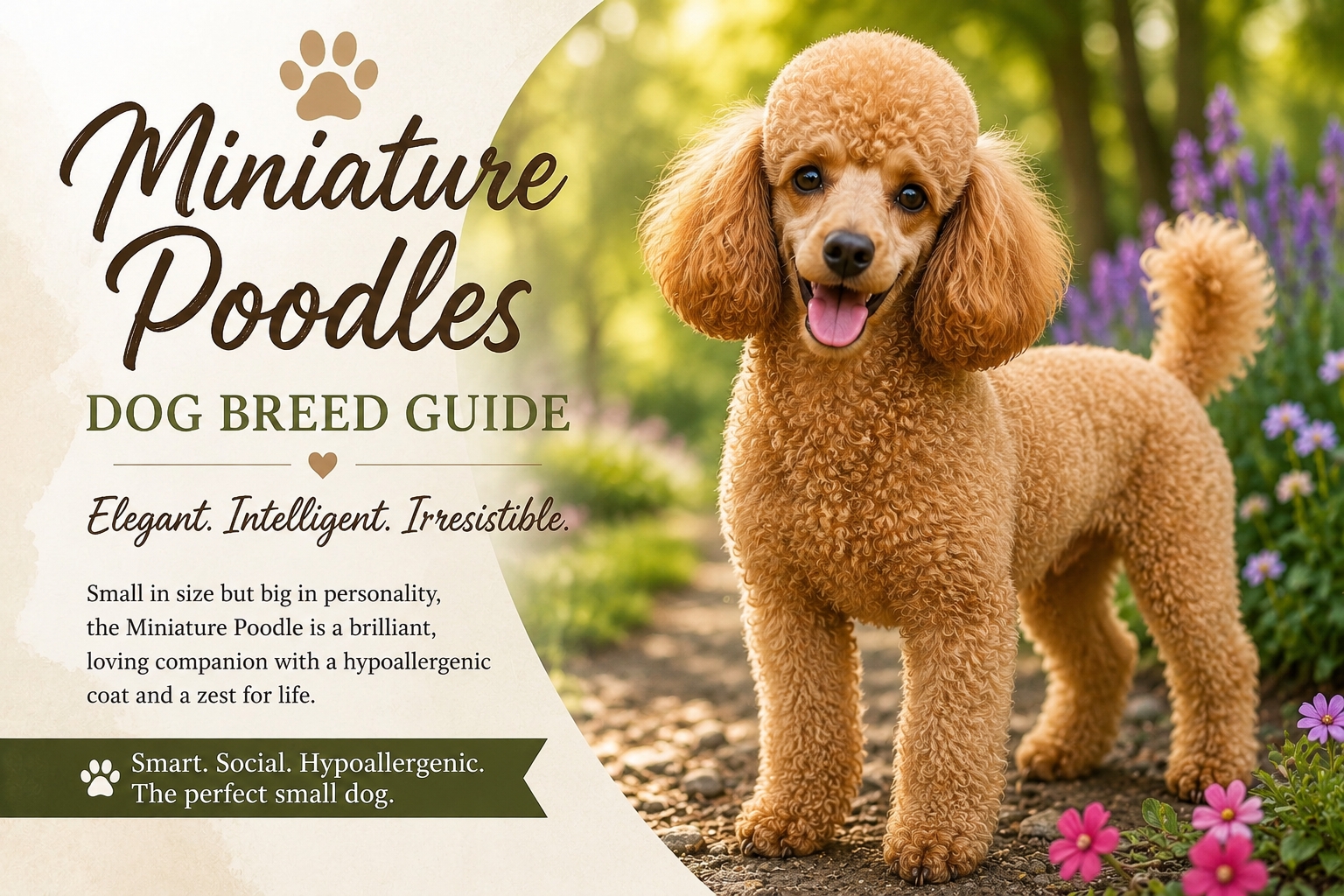
The Miniature Poodle may be the middle-sized member of the Poodle family, but there is nothing middle-of-the-road about this clever, athletic little dog. Miniature Poodles combine the trainability and sporting heritage of the larger Standard Poodle with a compact size that works beautifully in many homes. They are bright, people-oriented, energetic, remarkably versatile and often delightfully funny.
That elegant curly coat can make the Miniature Poodle look like a decorative companion, but underneath it is a sturdy, active dog descended from water-retrieving Poodles. A well-bred Miniature Poodle is not supposed to be timid, fragile or merely ornamental. This is a dog that can learn an astonishing vocabulary, master tricks before you have decided what to teach next, enjoy long walks and games of fetch, excel in dog sports and then settle beside you at home.
The trade-off? That famous low-shedding coat requires real maintenance, an under-stimulated Miniature Poodle can invent activities you did not authorize, and many become deeply attached to their people. If you want an intelligent little companion and genuinely enjoy interacting with your dog, however, the Miniature Poodle is difficult to beat.

Written by: Deborah G. Moore
Last updated: August 19, 2026
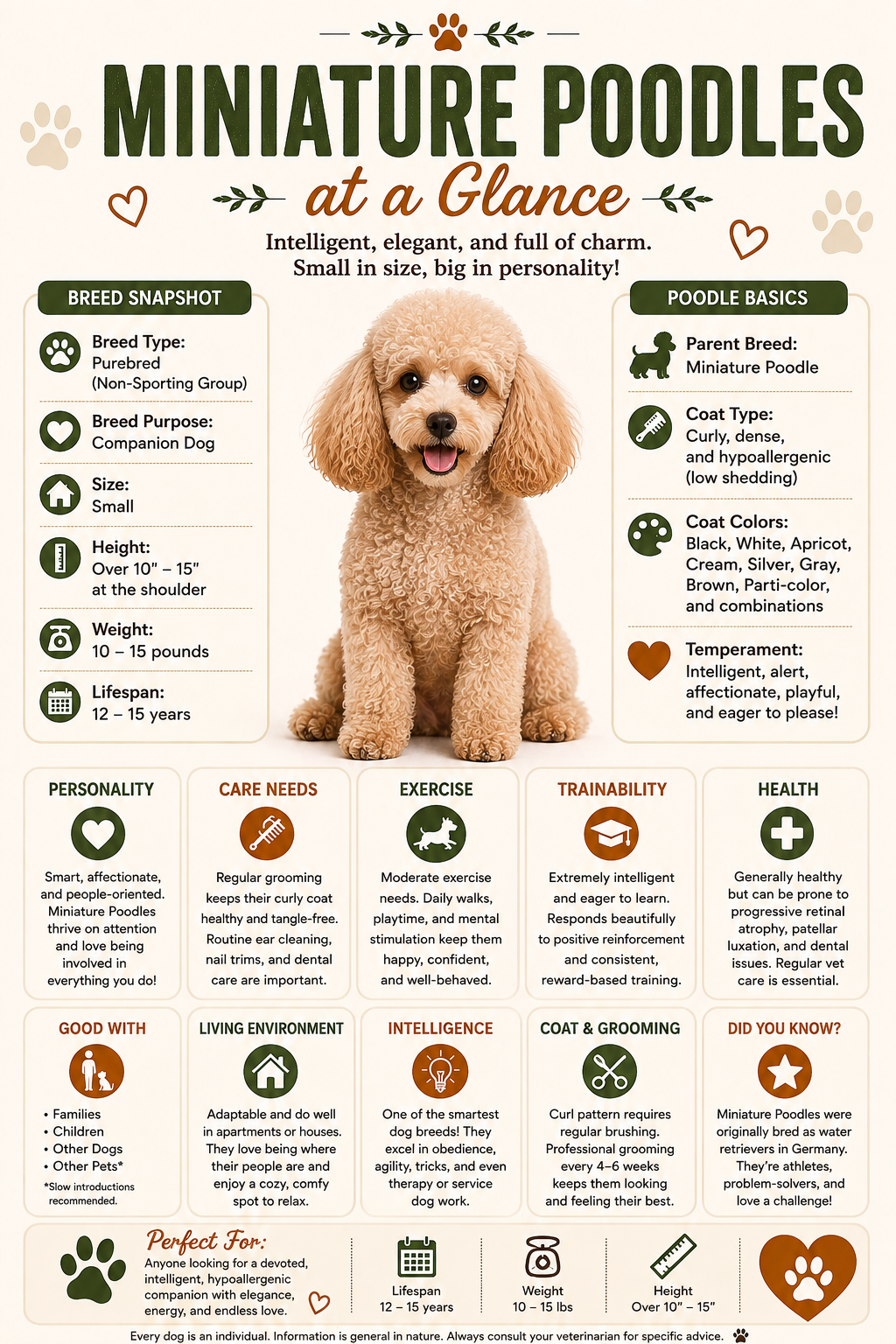
Miniature Poodle at a Glance
| Breed | Miniature Poodle |
|---|---|
| Also Called | Mini Poodle |
| Breed Family | Poodle; one of the three AKC-recognized Poodle size varieties |
| Height | Over 10 inches and no more than 15 inches at the shoulder under the AKC standard |
| Typical Weight | Often around 10–15 pounds, although healthy individuals vary |
| Coat | Dense, curly, continuously growing and very low shedding |
| Grooming | High maintenance; regular brushing plus clipping approximately every 4–8 weeks for most pets |
| Temperament | Bright, active, people-oriented, alert, responsive and often playful |
| Trainability | Excellent |
| Exercise | Moderate to fairly high for a small dog |
| Barking | Moderate; alert barking can become excessive without training |
| Shedding | Very low |
| Allergy Friendly? | Often easier for some allergy sufferers, but no dog is completely hypoallergenic |
| Apartment Friendly? | Yes, with sufficient exercise and enrichment |
| Children | Often very good with respectful children |
| Other Pets | Usually adaptable with appropriate introductions and socialization |
| Lifespan | Often long-lived; individual longevity varies |
| Best For | People who want an intelligent, interactive, trainable small dog and accept the grooming commitment |
Dogs Central quick take: The Miniature Poodle is one of the most capable all-around small dogs. It can fit an apartment without behaving like a couch ornament, keep up with an active family without requiring a farm, and learn almost anything a patient owner can teach. Its biggest practical drawback is grooming—not temperament, intelligence or adaptability.
Miniature Poodle vs. Toy Poodle: What Is the Difference?
This is one of the most frequently searched Poodle questions, and the answer is simpler than many websites make it.
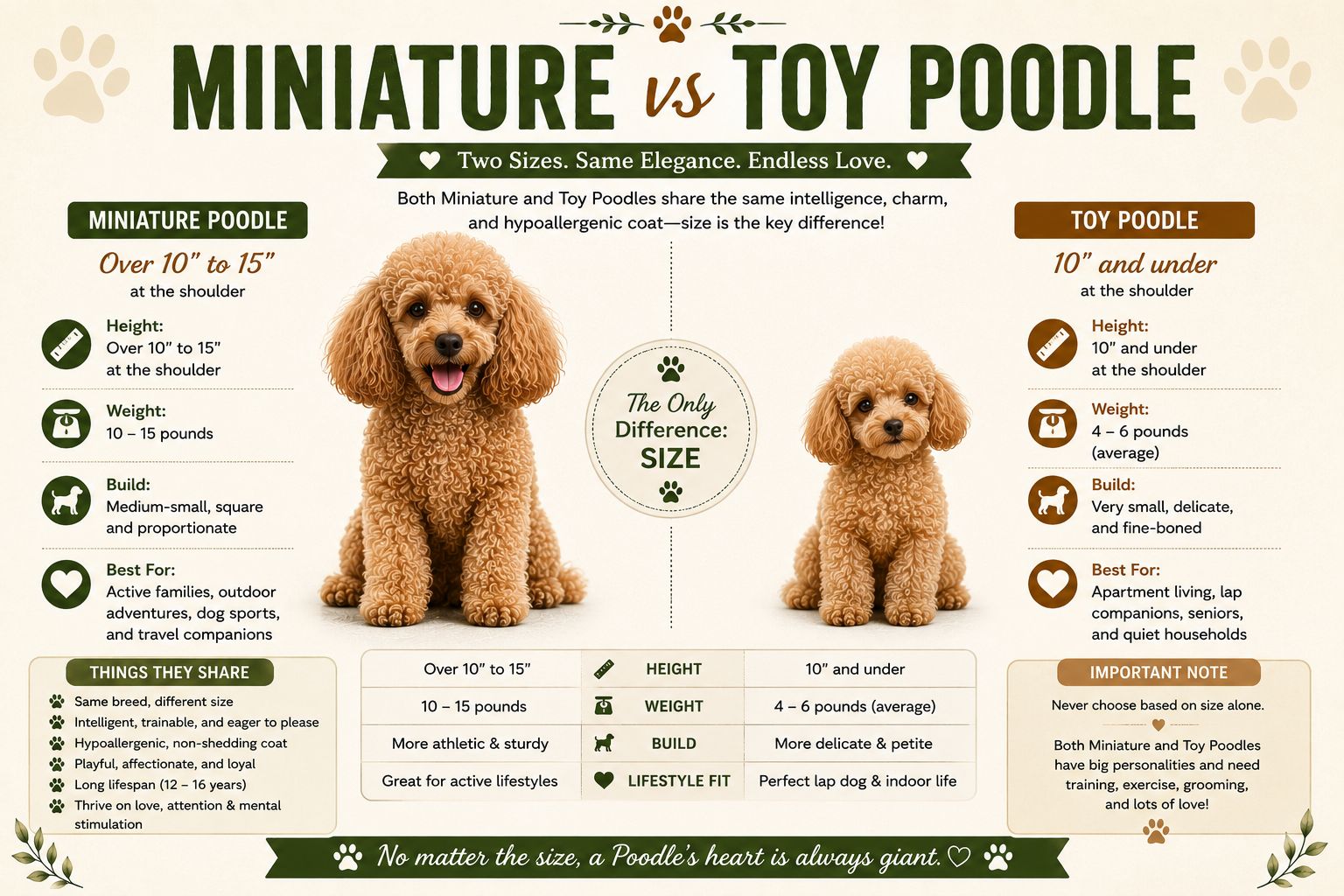
Under the American Kennel Club standard, Miniature and Toy Poodles are varieties of the same breed, separated primarily by height. A Miniature Poodle stands over 10 inches and no more than 15 inches at the shoulder. A Toy Poodle stands 10 inches or under. The Standard Poodle stands over 15 inches.
The varieties share the same basic breed standard for appearance and temperament. In everyday life, however, size can influence practicality. A Miniature generally has more physical substance than a Toy and may be a particularly appealing choice for active households or families that want a small dog without going quite as tiny.
| Miniature Poodle | Toy Poodle | |
|---|---|---|
| AKC Height | Over 10 to 15 inches | 10 inches or under |
| Build | Compact but comparatively sturdy | Very small and light |
| Exercise | Active; often excellent for walking, training and sports | Active too, but smaller body changes exercise scale |
| Young Children | Often the more physically robust choice | Requires extra care because of tiny size |
| Grooming | High | High |
| Intelligence | Exceptionally high | Exceptionally high |
A “mini poodle” is simply an informal way of saying Miniature Poodle. A “toy mini Poodle” or “mini Toy Poodle” is not a separate officially recognized size. Be cautious when sellers blur established size terminology to market unusually tiny puppies.
Read our Toy Poodle Breed Guide if you are deciding between the two varieties.
Miniature Poodle History & Origins
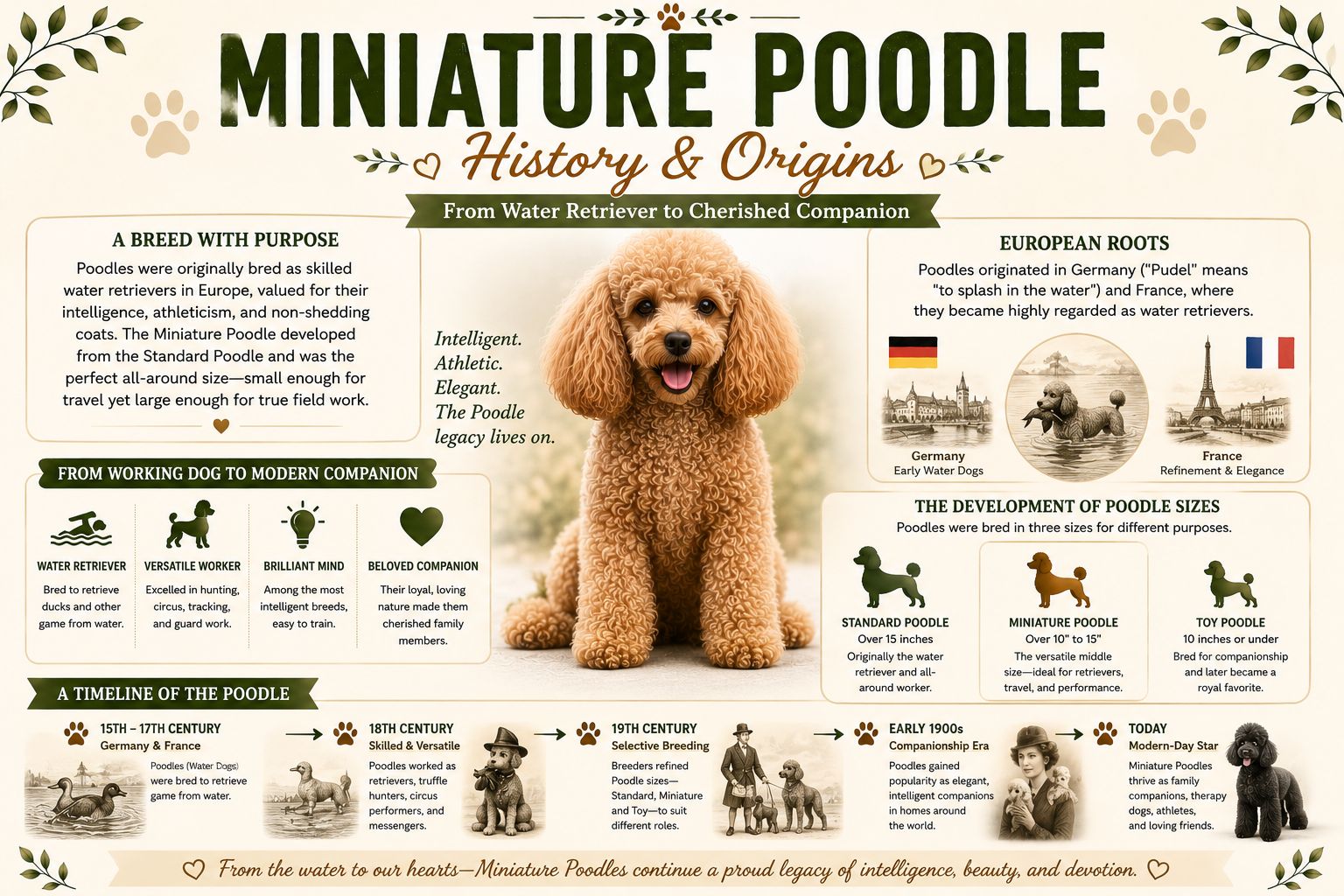
Poodles are strongly associated with France, where the breed became enormously popular and is the national dog, but the breed’s deeper working history is tied to water retrieving in Europe and especially Germany. The name “Poodle” is generally connected to German words associated with splashing in water.
The elaborate coat clips that modern people sometimes view as fashion also have practical working roots. Poodles were water dogs, and strategic clipping helped reduce the burden of a heavy wet coat while leaving protection over important areas.
Miniature and Toy Poodles were developed by breeding down from larger Poodles while retaining the characteristic Poodle type, intelligence and coat. The Miniature became a particularly useful middle ground: small enough to be an easy household companion yet athletic, clever and sturdy enough for an active life.
That history explains a lot about the dog in your living room today. The Poodle is not merely “smart for a companion dog.” It comes from generations of dogs expected to work with people, respond to direction, retrieve and solve problems. Modern Miniatures often retain an obvious appetite for learning and doing.
What Does a Miniature Poodle Look Like?
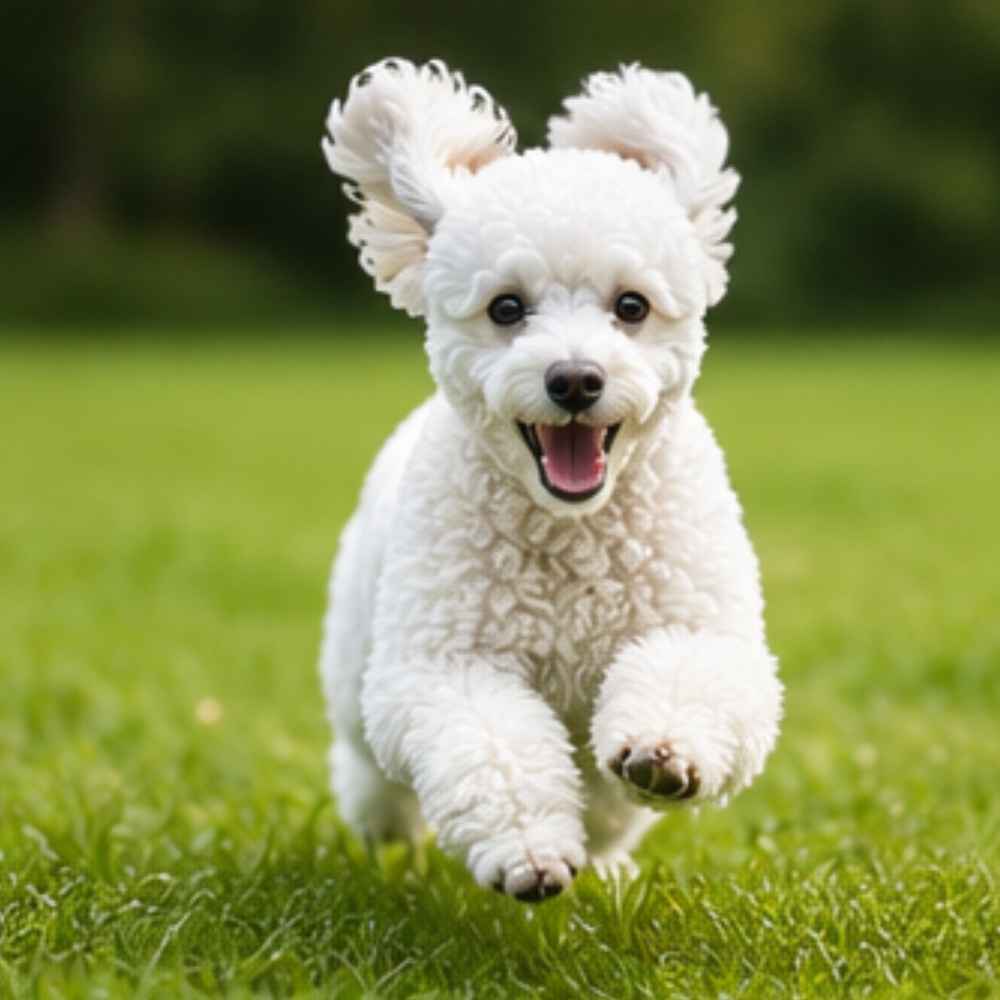
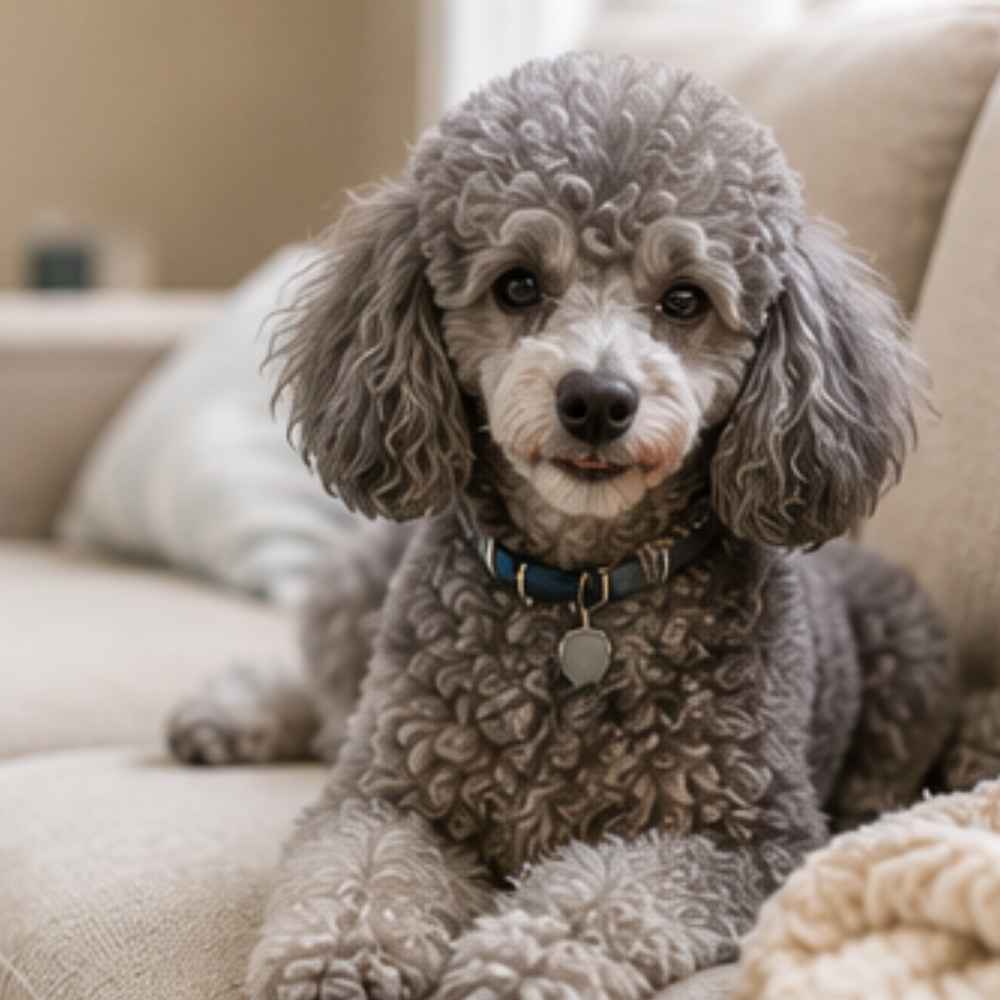
A correctly proportioned Miniature Poodle should look like a scaled-down Poodle rather than a shortened or exaggerated version of one. The breed is squarely built, elegant and athletic, with a long, refined head, dark expressive eyes, hanging ears, a proud carriage and a naturally curly dense coat.
Underneath the fluff is more athlete than teddy bear. A Miniature Poodle should have enough muscle and sound structure to move freely and actively. When clipped very short, many first-time owners are surprised by how slender and graceful the dog underneath the coat actually is.
The familiar fluffy round face seen on many pets is a grooming style, not the dog’s natural facial shape. Traditional Poodle grooming often shaves the face and feet, revealing the breed’s elegant muzzle and fine bone structure. A teddy-bear trim leaves more facial hair and creates a softer, rounder expression.
Ears hang close to the head and can grow abundant hair. The eyes should contribute to the alert, intelligent expression for which Poodles are famous—the look that sometimes makes owners suspect the dog understands considerably more than is convenient.
Miniature Poodle Size: How Big Does a Mini Poodle Get?
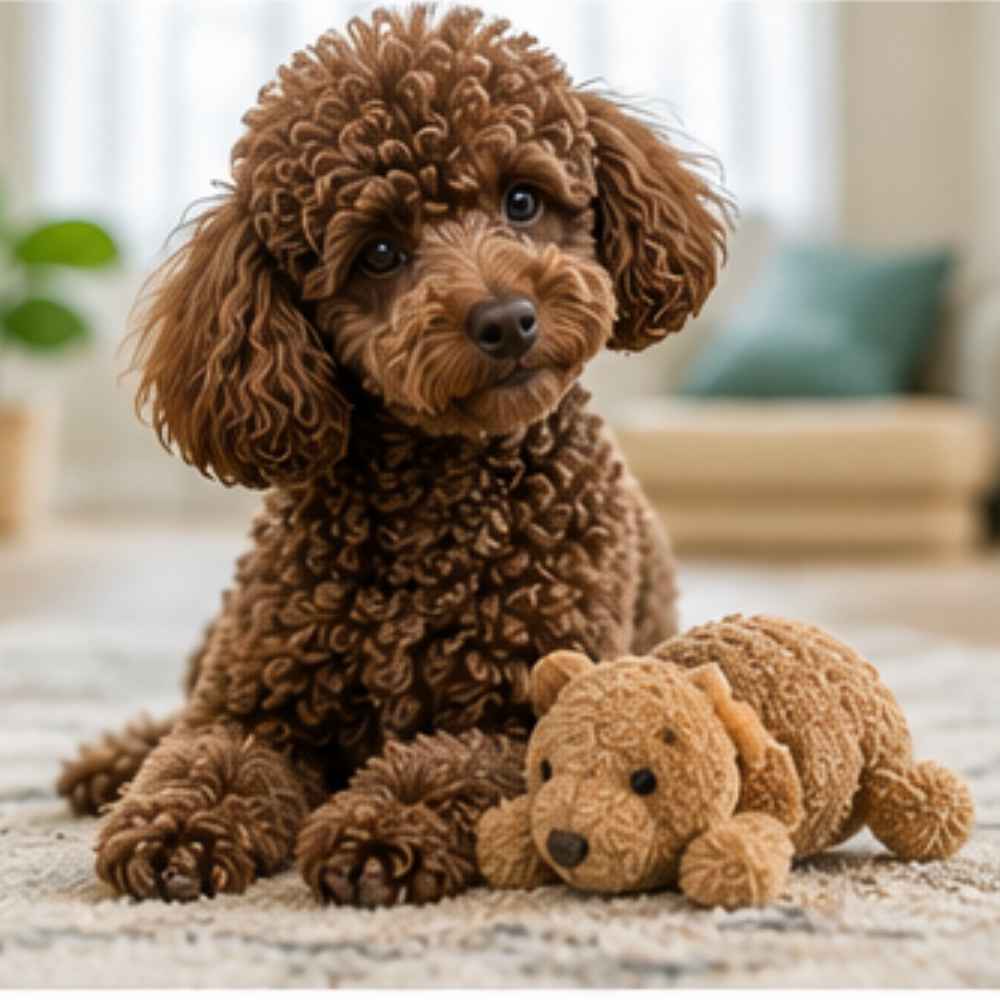
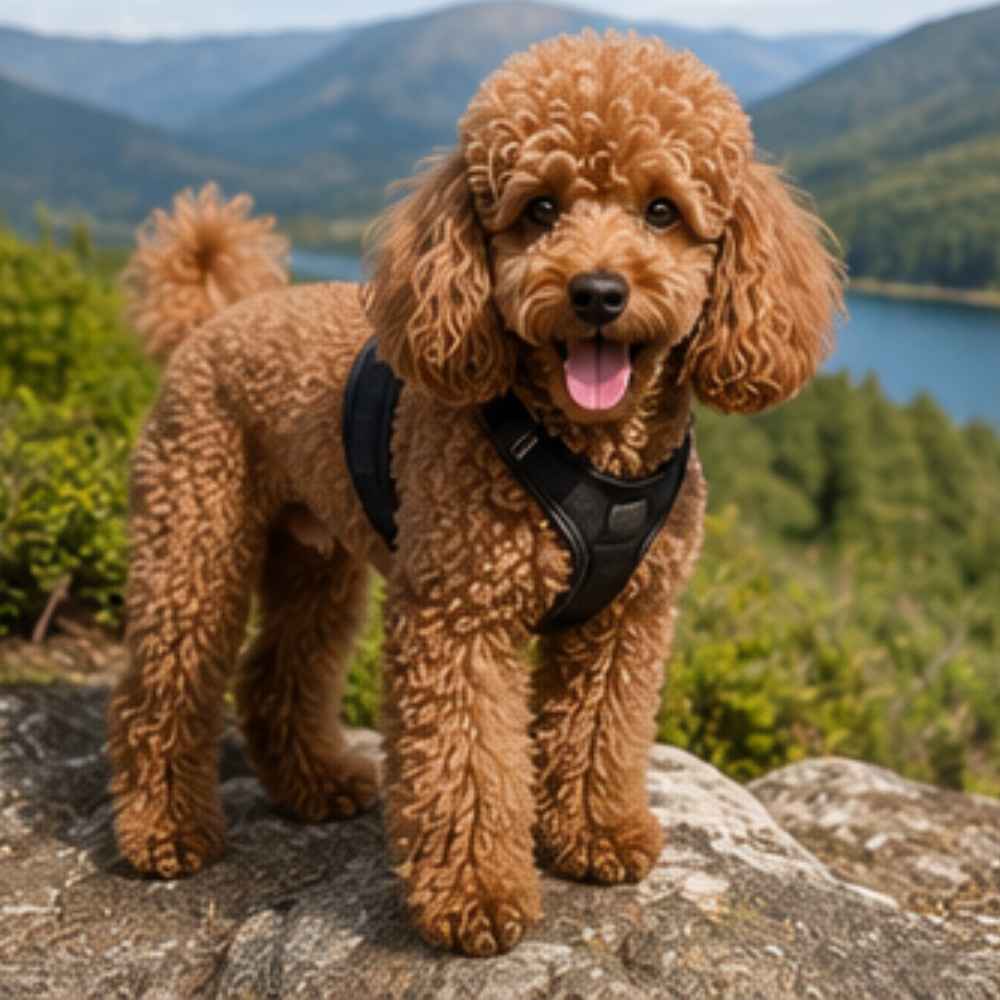
An adult Miniature Poodle is defined by height, not by a particular weight. Under the AKC breed standard, a Miniature is over 10 inches and no more than 15 inches tall at the highest point of the shoulder. The Poodle Club of America notes that many Miniatures fall toward the 13–15-inch portion of that range.
Many adult Miniature Poodles weigh roughly 10–15 pounds, but weight varies with height, frame, sex, muscle and individual build. A healthy 15-inch Miniature can naturally weigh more than a fine-boned dog near the bottom of the height range.
Full-Grown Mini Poodle Size
If you are trying to estimate the size of a puppy, the parents are much more informative than an online “puppy weight calculator.” Ask the breeder for the actual measured heights and healthy adult weights of the sire and dam, and ask about mature dogs from previous litters.
Be wary of breeders who promise an exact adult weight for a very young puppy. Genetics does not work with that degree of precision.
What About a “Medium Poodle”?
“Medium Poodle” can be confusing for North American shoppers. The AKC recognizes three Poodle varieties: Standard, Miniature and Toy. Some other kennel-club systems recognize an additional medium size. Therefore, a dog marketed as a “Medium Poodle” in the United States is not automatically a distinct AKC Poodle variety.
When Do Miniature Poodles Stop Growing?
Miniature Poodles do much of their obvious height growth during puppyhood, but physical maturation does not happen on a single birthday. A young dog may reach close to adult height while still filling out, developing muscle and maturing mentally.
Rather than obsessing over weekly weight predictions, monitor steady healthy development with your veterinarian. Keep puppies lean, feed an appropriate complete puppy diet, provide age-appropriate activity and avoid intentionally overfeeding in an effort to make a puppy grow faster.
Growth rate also varies between individuals. A puppy from larger Miniature lines may follow a different trajectory from one whose parents sit close to the Toy/Miniature height boundary.
Miniature Poodle Temperament & Personality
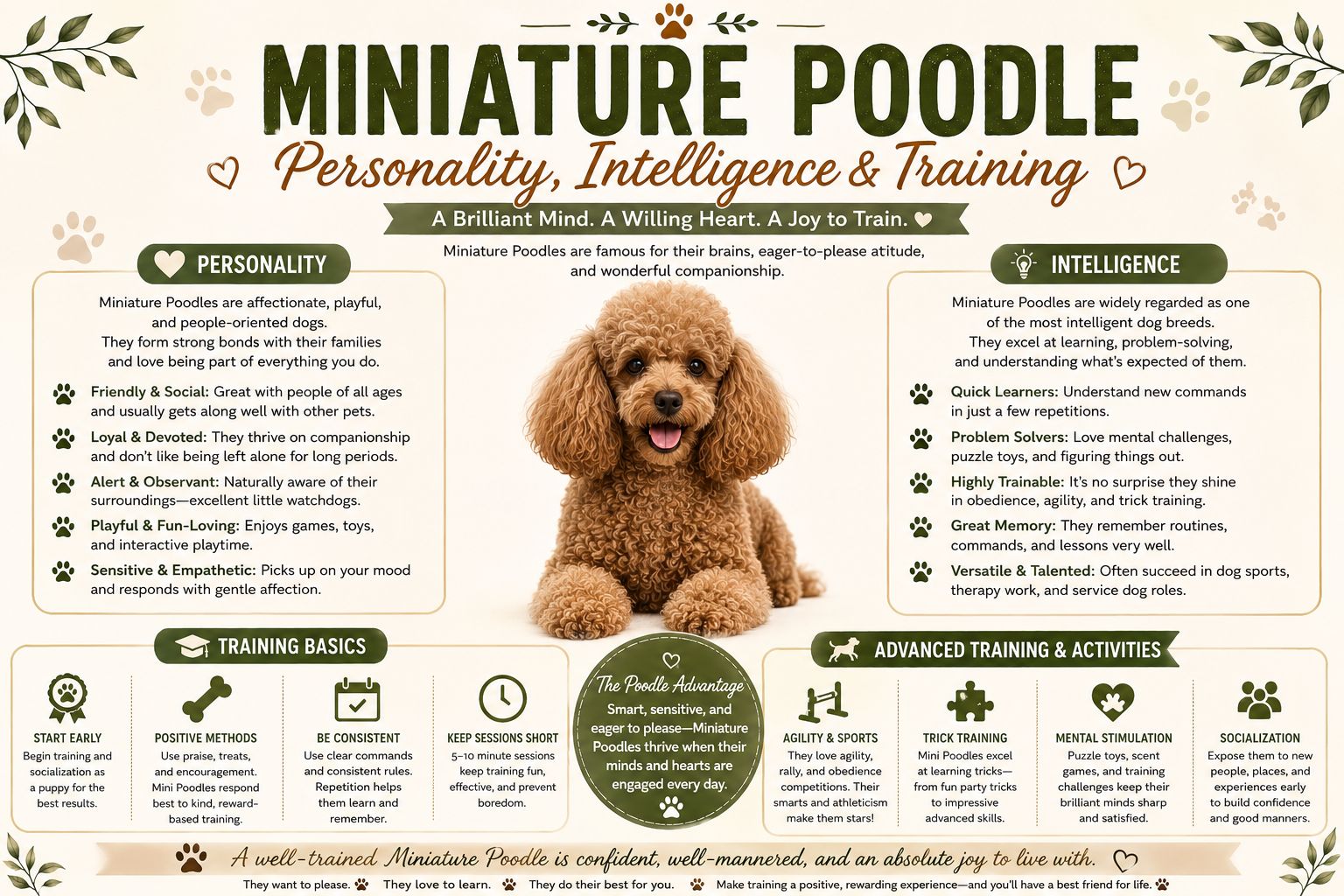
A typical well-bred Miniature Poodle is bright, responsive, lively, people-oriented and alert. The breed standard calls for a very active, intelligent dog and considers shyness or sharpness undesirable.
In real life, Miniature Poodles often behave like enthusiastic little participants rather than passive pets. They watch what you do, learn household routines quickly and frequently want to be included. Many are affectionate without being permanently glued to a lap; others are enthusiastic snugglers. Individual personality and early experience matter.
Are Mini Poodles Good Dogs?
For the right household, they can be outstanding dogs. Their combination of intelligence, manageable size, low shedding, athletic ability and trainability is unusual. But “good” does not mean effortless.
A bored Poodle can become noisy, restless or creatively naughty. A poorly socialized one may become worried about unfamiliar people or situations. An owner who dislikes grooming may quickly resent the coat. Their intelligence magnifies both good training and inconsistent habits.
Are Miniature Poodles Aggressive?
Aggression is not a defining or desirable Miniature Poodle trait. Responsible breeding should prioritize stable temperament. As with any dog, however, fear, pain, inadequate socialization, guarding behavior, learned responses or poor breeding can contribute to aggressive behavior in an individual.
Do not dismiss growling, snapping or sudden behavior changes as “small dog syndrome.” A veterinarian should assess new or unexplained behavior changes, particularly if pain could be involved, and qualified reward-based behavior help is appropriate when safety is a concern.
Sensitive Does Not Mean Fragile
Poodles tend to notice people closely. Heavy-handed handling and harsh corrections can therefore be both unnecessary and counterproductive. Calm, clear, reward-based training usually makes much better use of the breed’s extraordinary learning ability.
How Smart Are Miniature Poodles?
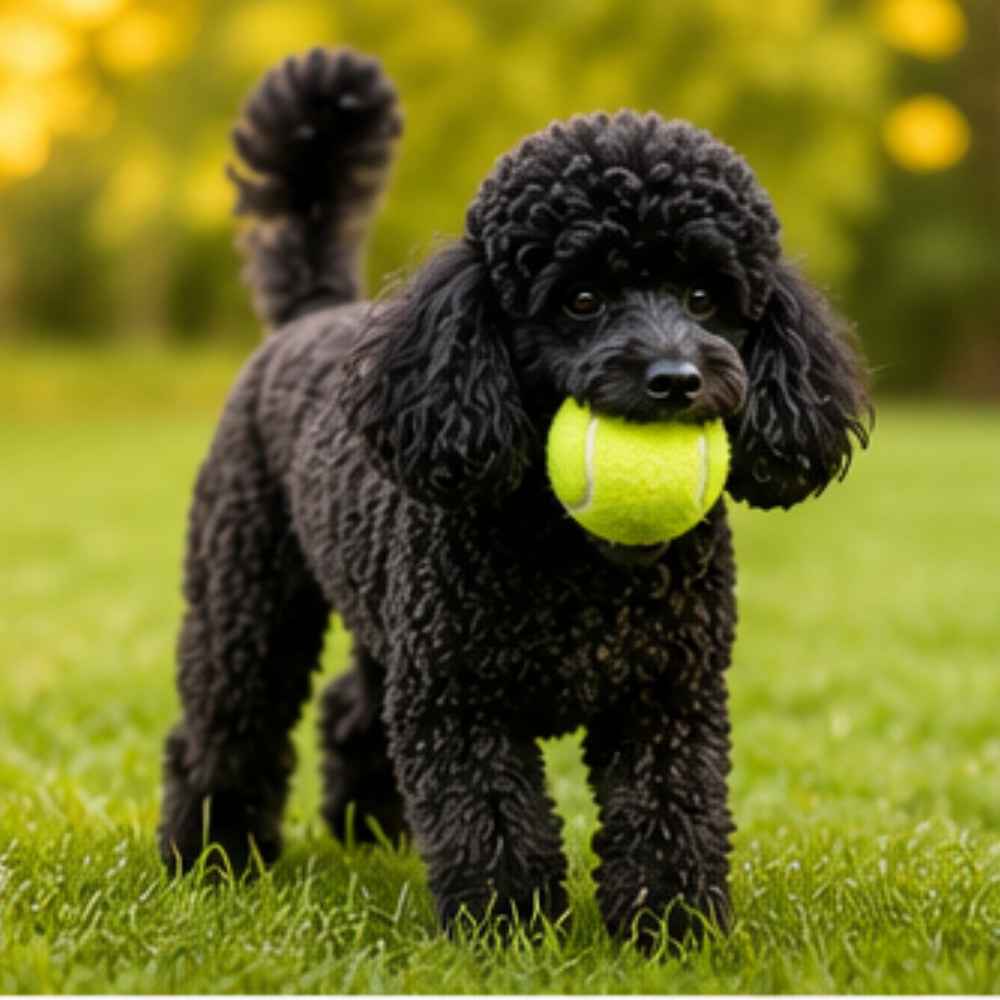
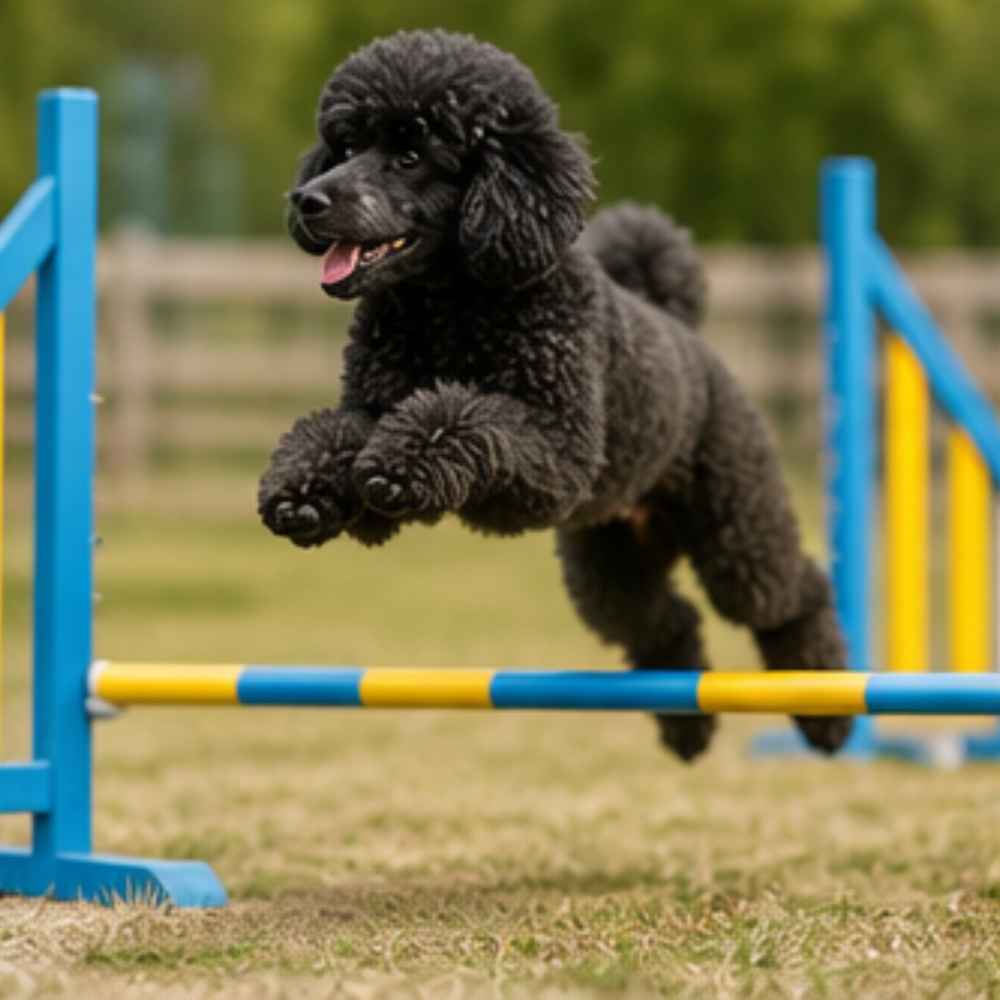
Very. Intelligence is one of the defining characteristics of the Poodle, and Miniatures are exceptionally capable learners.
That intelligence shows up in more ways than performing obedience exercises. A Miniature Poodle may learn the names of toys, recognize routines, anticipate where you are going based on which shoes you put on, figure out puzzle feeders quickly and discover precisely which family member is most likely to share lunch.
The important question is not simply “Are Mini Poodles smart?” but “What will you do with that intelligence?”
Good outlets include trick training, scent games, retrieving, food puzzles, obedience, rally, agility foundations, hide-and-seek and learning useful household skills. Five minutes of focused problem-solving can sometimes satisfy a bright dog more effectively than another lap around the block.
The downside of intelligence is that Poodles learn accidental lessons just as efficiently as intentional ones. If barking makes you open the door, stealing socks starts a thrilling chase, or refusing food produces chicken, your Miniature Poodle may consider the training program an enormous success.
Miniature Poodle Coat Types & Colors
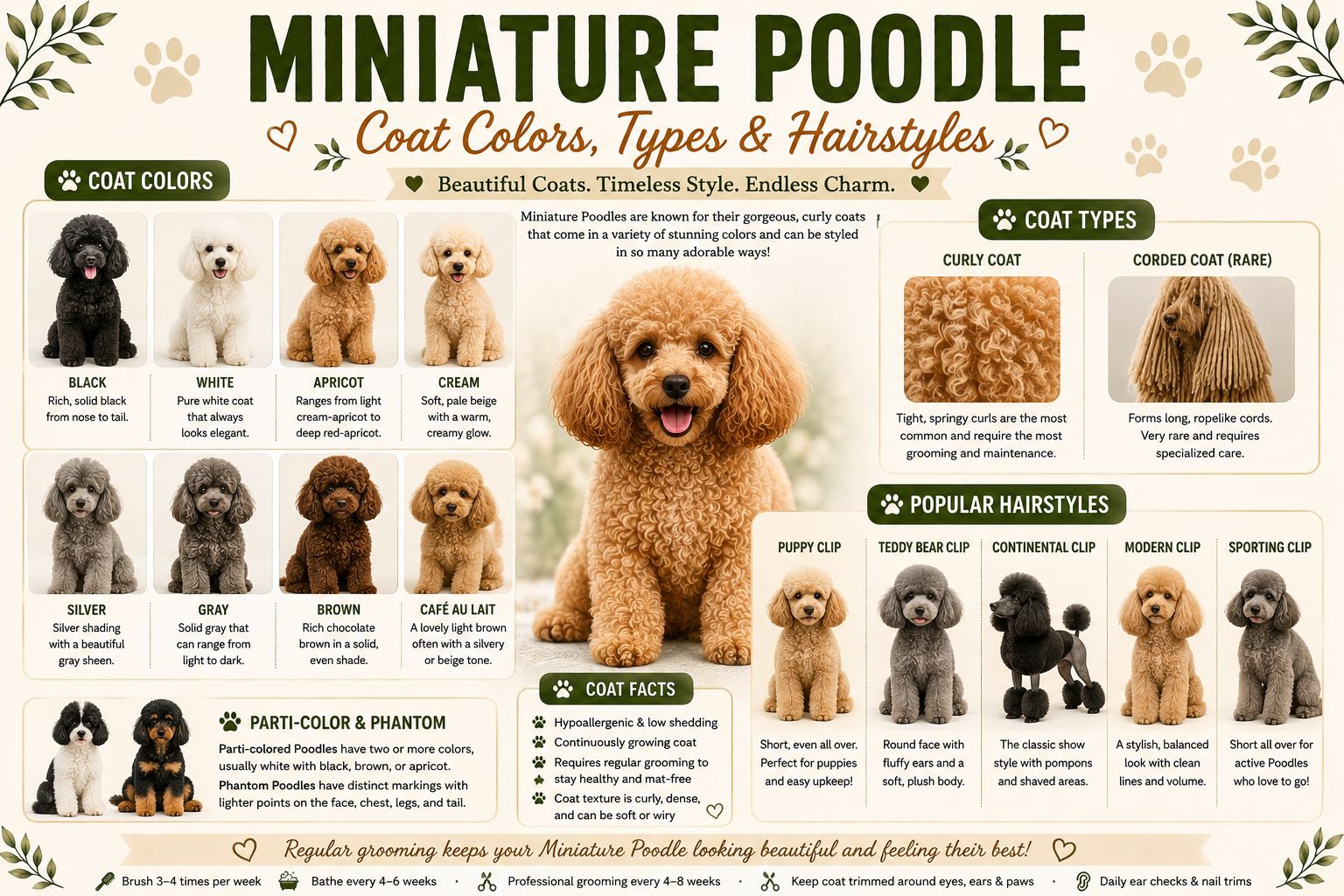
The Miniature Poodle has a dense, curly coat that grows continuously and can be shaped into many styles. The coat is one of the breed’s great attractions—and one of its greatest responsibilities.
Recognized Poodle colors include familiar shades such as:
- Black
- White
- Brown
- Apricot
- Red
- Cream
- Blue
- Gray
- Silver
- Silver beige
- Café au lait
Color terminology can be surprisingly complicated. Puppies may also change shade as they mature. For example, some coats progressively lighten, making the eventual adult color less obvious in puppyhood.
Color should never outrank health, temperament and responsible breeding when choosing a puppy. “Rare” color marketing can be extremely effective at separating buyers from extra money without making the dog healthier, happier or more Poodle-like.
Black Miniature Poodles
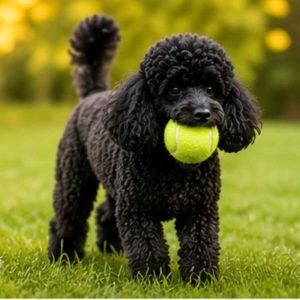 Search interest in black Miniature Poodles is particularly high, and it is easy to understand why. A rich black curly coat gives the breed a striking, elegant silhouette, especially when paired with the Poodle’s dark eyes and proud carriage.
Black is an established Poodle color, not a special type of Miniature Poodle. A black Miniature should have the same basic temperament, exercise needs, grooming requirements and health considerations as other Miniatures.
Dark coats can show lint and light-colored debris, while facial detail can disappear in photographs without good lighting—hardly major ownership issues, but familiar realities to anyone trying to photograph a black curly dog indoors.
Choose the dog, breeder and health background first; choose your favorite color within those responsible options second.
Do Mini Poodles Shed? Are Miniature Poodles Hypoallergenic?
Miniature Poodles shed very little compared with many breeds, but “hypoallergenic” does not mean allergen-free.
Loose hairs tend to become caught in the curly coat rather than dropping freely around the home. That is wonderful if you dislike dog hair on furniture, but trapped hair contributes to tangles and mats unless it is brushed and combed out.
People with dog allergies may react to proteins found in dander, saliva and urine—not simply to shed hair. Individual people and individual dogs vary. No ethical breeder should guarantee that a particular puppy cannot trigger allergies.
If allergies are important to your decision, spend meaningful time around adult Poodles before committing to a puppy and discuss significant allergy concerns with your healthcare professional.
For more options, see our guide to hypoallergenic and allergy-friendly small dogs and small dogs that shed very little.
Mini Poodle Grooming, Haircuts & Coat Care
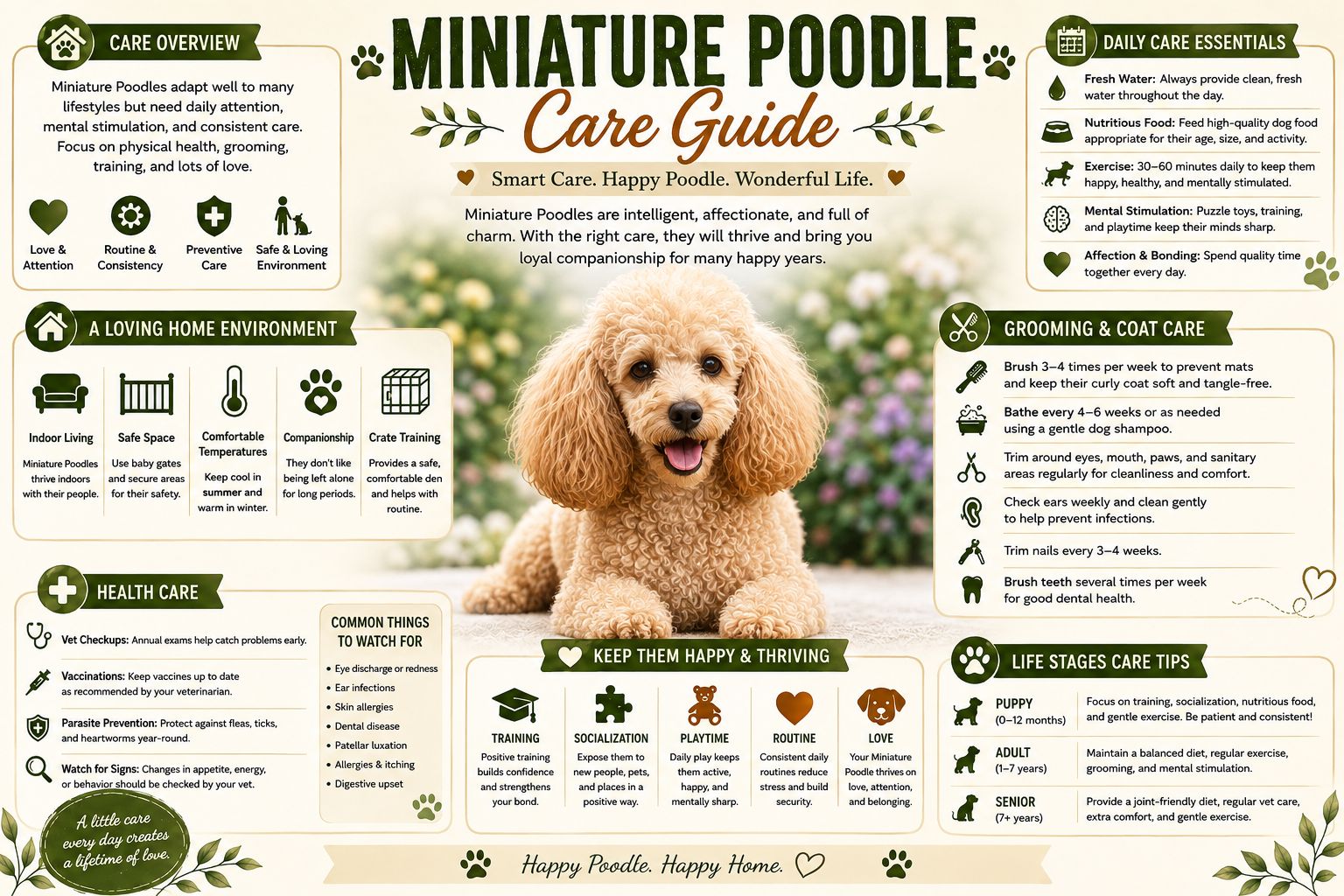
Miniature Poodles are low shedding, not low maintenance. This distinction may be the single most important grooming fact for prospective owners.
The curly coat keeps growing and mats readily if neglected. Most pet Miniatures need regular brushing and combing at home plus professional clipping on a consistent schedule. Many owners book grooming approximately every four to eight weeks depending on coat length, style, lifestyle and how much maintenance they perform between appointments.
Brushing
Do not merely brush the surface and assume the job is finished. Mats often form close to the skin, particularly behind the ears, in the armpits, around harness areas, on the legs and where moisture or friction encourages tangling.
A metal comb is useful for checking your work after brushing. If the comb cannot move through the coat comfortably from near the skin outward, tangles remain.
Popular Mini Poodle Haircuts
Pet owners have many practical choices:
- Puppy cut / all-over pet trim: manageable, soft-looking and practical.
- Teddy bear trim: rounded face and plush body for a cuddly appearance.
- Sporting-style trim: shorter and athletic, useful for active dogs.
- Clean face and feet: classic Poodle styling that helps keep food and outdoor debris out of facial and foot hair.
- Longer sculpted styles: beautiful but substantially more work.
Show clips are governed by competition rules and are not required for pet Poodles. Your companion does not need a Continental clip to be a “real Poodle.”
Ears
Check ears regularly for redness, odor, discharge or discomfort. Hairy drop ears can create a warm environment, but ear-care practices should be individualized. Do not aggressively pluck or clean healthy ears without appropriate guidance; your veterinarian or experienced groomer can advise you.
Nails
Keep nails short enough that they do not alter comfortable movement. Frequent small trims are often easier than waiting until nails are markedly overgrown.
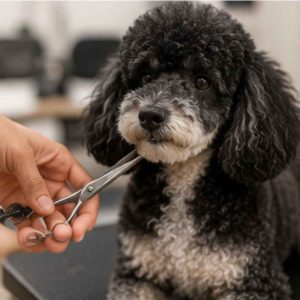
Start Grooming Training in Puppyhood
A Poodle will be handled and groomed throughout life. Teach a puppy that brushing, combing, foot handling, facial handling, dryers and grooming tables predict calm rewards rather than battles. Cooperative-care training may be one of the most valuable gifts you give this breed.
Explore our Small Dog Grooming Guide for more everyday grooming help.
How Much Exercise Does a Miniature Poodle Need?
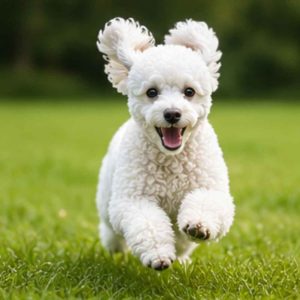 Miniature Poodles are active small dogs. They usually need daily physical exercise plus opportunities to use their brains.
A healthy adult may enjoy brisk walks, retrieving games, swimming where safe, hiking, training and dog sports. Exact exercise needs vary with age, health, individual energy and conditioning, so there is no magical number of minutes that fits every dog.
Puppies need a different approach. Free play, exploration, training and varied age-appropriate movement are preferable to forcing a growing puppy through repetitive high-impact exercise.
Mental Exercise Counts
A Miniature Poodle can walk for an hour and still come home looking for a project. Scent searches, trick sessions, retrieving by name and puzzle toys make exercise more satisfying because they engage the dog’s brain as well as legs.
If your Miniature is pacing, barking at every sound, pestering constantly or inventing household crimes, consider whether the dog needs more meaningful engagement—not simply more miles.
How to Train a Miniature Poodle
Miniature Poodles are among the most trainable small dogs, but intelligence does not eliminate the need for thoughtful training. It simply means the dog is learning all the time—including when you are not formally training.
Use Positive Reinforcement
Reward behaviors you want with food, toys, access to activities, praise and play. Keep sessions short enough that the dog remains eager. Poodles often thrive when training feels like a cooperative puzzle rather than a contest of wills.
Teach Useful Life Skills
Beyond sit and down, prioritize:
- coming when called;
- walking comfortably on leash;
- settling on a mat;
- waiting at doors;
- dropping and leaving objects;
- comfortable handling for grooming and veterinary care;
- calm greetings;
- being alone for age-appropriate periods;
- and disengaging from exciting sights or sounds.
Socialization Is Not “Meet Everybody”
Good socialization teaches a puppy to feel safe and function calmly around the world. That includes different people, surfaces, noises, environments, friendly animals and everyday handling—but the puppy does not need to greet every person or dog.
Quality matters more than sheer quantity. Protect a worried puppy from being overwhelmed and pair new experiences with safety and good things.
House Training
Miniature Poodles are capable learners, but puppies still have immature bladder control. Frequent opportunities, close supervision, a predictable routine and immediate rewards for toileting in the correct place work far better than punishment after accidents.
See our Small Dog Training Guide for more help.
Do Miniature Poodles Bark a Lot?
Miniature Poodles can be alert barkers, but excessive barking is not inevitable.
They notice things. A delivery at the door, footsteps in the hall, a squirrel on the fence or a mysterious leaf behaving suspiciously can all receive commentary. In an apartment, that sensitivity needs management before it becomes a habit.
Helpful strategies include:
- rewarding calm behavior before barking escalates;
- reducing repeated visual access to triggers;
- teaching a reliable settle or station behavior;
- providing enough exercise and mental stimulation;
- avoiding accidentally rewarding demand barking;
- and addressing fear or separation distress rather than treating all barking as disobedience.
Yelling at an alert dog often sounds remarkably like joining the barking. Teach the behavior you want instead.
Can Miniature Poodles Be Left Alone?
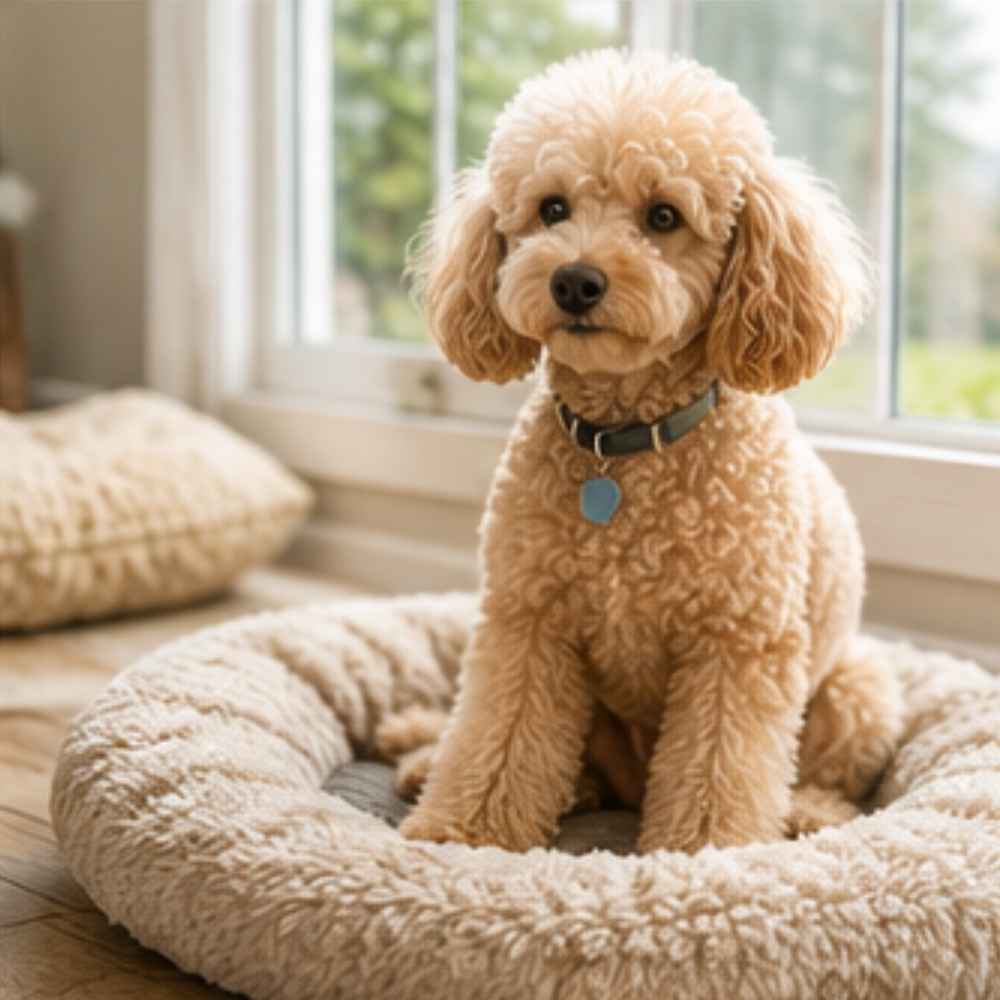
Miniature Poodles tend to be people-oriented and many prefer company, but a healthy adult should ideally learn to tolerate reasonable periods alone. That ability is taught gradually; it should not first be tested when a new puppy is suddenly left for a full workday.
Practice short, uneventful departures while the puppy or new adult remains comfortable. Provide a safe resting area and appropriate enrichment, and build duration slowly.
True separation anxiety is more than ordinary boredom or a puppy protesting briefly. Dogs with separation-related distress may vocalize persistently, panic, attempt escape, drool, eliminate or become destructive specifically around absence. Severe cases deserve veterinary and qualified behavioral support.
Someone who routinely wants a dog to spend very long days alone may find the highly social Miniature Poodle a poor match.
Are Miniature Poodles Good Family Dogs and Good With Children?
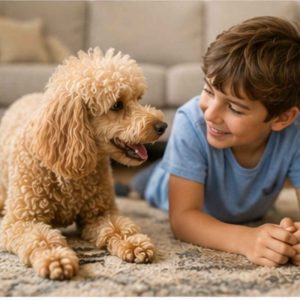 Miniature Poodles can be excellent family dogs. They are playful, trainable, interactive and generally sturdy enough to participate in family life while remaining compact.
The important phrase is respectful children. Even a comparatively sturdy Miniature is a small dog. Children should not carry a dog unsafely, climb on it, disturb it while sleeping or eating, chase it into corners or treat it as a toy.
Adults should supervise young children and dogs together. Give the dog a child-free resting place and teach children to recognize when the dog wants space.
A well-socialized Miniature can be a wonderful older child’s training partner. Trick training, scent games and age-appropriate grooming participation can create an excellent relationship when adults remain responsible for the dog’s care.
Are Miniature Poodles Good With Dogs, Cats & Other Pets?
Many Miniature Poodles live happily with other dogs and cats, especially with thoughtful introductions and appropriate early experience.
Individual compatibility matters more than a breed label. A calm adult cat may dislike a bouncy adolescent Poodle that repeatedly invites chase, while a dog-social Miniature may adore canine company.
Introduce new animals gradually. Use gates, leashes and separate safe spaces where needed, reward calm behavior and prevent rehearsals of chasing.
Poodles have sporting ancestry, so do not assume every individual is automatically safe with very small pets such as rodents or birds. Manage interactions according to the actual animals involved.
Are Miniature Poodles Good Apartment Dogs?
Yes. Their compact size and low shedding make Miniature Poodles highly practical apartment companions provided their exercise, enrichment and barking needs are addressed.
A yard is convenient, not mandatory. In fact, a Poodle with a yard but little interaction can be less fulfilled than an apartment dog receiving interesting walks, training and regular outings.
Apartment owners should work early on calm hallway behavior, elevator manners, settling despite neighbor noises and avoiding prolonged window barking.
See our guide to small dogs for apartment living for more apartment-friendly breeds.
Are Miniature Poodles Good Dogs for Seniors?
 For many active seniors, the Miniature Poodle can be an outstanding companion. It offers a manageable physical size without the extreme fragility of some tiny toy dogs, is highly trainable and can adapt well to apartments or smaller homes.
The main considerations are exercise and grooming. This is not necessarily a low-energy lapdog, and professional grooming represents an ongoing appointment and expense.
A calm adult Miniature may be easier than a puppy for someone who wants companionship without months of housetraining, chewing and adolescent exuberance. Adult adoption can therefore be especially worth considering.
Are Miniature Poodles Good for First-Time Dog Owners?
Usually, yes—especially for a first-time owner who enjoys learning and is prepared for grooming.
The breed’s responsiveness makes training rewarding. Its size is manageable, and the dog can adapt to many lifestyles. But first-time owners sometimes underestimate three things:
- the grooming commitment;
- the amount of mental engagement a clever dog appreciates;
- and how quickly an intelligent dog learns inconsistent household rules.
If you are willing to attend a good puppy or training class, establish grooming routines early and make the dog part of your daily life, a Miniature Poodle can be a terrific first dog.
Miniature Poodle Health Issues & Recommended Health Testing
Miniature Poodles are often long-lived dogs, but responsible ownership and breeding require awareness of inherited and acquired health concerns. No breeder can guarantee a dog will never become ill, and a simple “vet check” or consumer DNA panel is not equivalent to the health screening recommended for breeding dogs.
Progressive Retinal Atrophy (PRA-prcd)
Progressive retinal atrophy describes inherited retinal disease that can lead to vision loss. The Poodle Club of America recommends a DNA test for PRA-prcd for Miniature Poodle breeding stock, along with ongoing specialist eye examinations.
Patellar Luxation
A luxating patella is a kneecap that moves out of its normal position. Severity varies. Some dogs have few obvious signs while others experience lameness or require treatment. Patellar evaluation is part of the national breed club’s recommended Miniature Poodle screening.
Hip Dysplasia
Although people often associate hip dysplasia with large breeds, Miniature Poodles are among the Poodle varieties for which hip evaluation is recommended. The Poodle Club of America specifies OFA radiographic or PennHIP evaluation for breeding Miniatures.
Eye Disease
Annual examination by a board-certified veterinary ophthalmologist is recommended for breeding dogs. DNA tests identify particular genetic variants; they do not replace a clinical eye examination capable of detecting other ocular problems.
Other Health Concerns
Miniature Poodles can experience other problems seen in small dogs or Poodles, including dental disease and certain orthopedic, neurologic, endocrine or immune-mediated conditions. An individual dog’s family history is therefore valuable even when formal screening results are excellent.
What Health Tests Should a Miniature Poodle Breeder Show You?
According to the Poodle Club of America’s current health statement, Miniature Poodle breeding stock should have:
- DNA testing for PRA-prcd through an approved laboratory;
- annual ACVO eye examinations beginning at the appropriate age;
- patellar luxation evaluation;
- and hip evaluation by OFA radiograph or PennHIP.
Ask to see the actual results and verify public results when available. “Our dogs are DNA tested,” “the parents are healthy,” and “my veterinarian checked them” are not substitutes for knowing which tests were performed and what the results were.
Responsible breeders also pay attention to temperament, longevity and health patterns across the wider family—not simply whether two dogs can produce puppies.
Veterinary note: This guide provides general breed information, not diagnosis or individualized medical advice. Your veterinarian is the appropriate source for health, vaccination, nutrition and treatment decisions for your dog.
Explore our Small Dog Health Guide for more general health information.
How Long Do Miniature Poodles Live?
Miniature Poodles are generally considered a long-lived breed. Published Poodle lifespan ranges are broad because they often combine all three size varieties, and no number predicts an individual dog’s life.
Genetics, body condition, dental care, preventive veterinary care, exercise, nutrition, accident prevention and simple luck all influence longevity.
One of the best things an owner can control is body condition. Keeping a Miniature Poodle lean and fit reduces unnecessary stress on joints and supports general health. Regular veterinary examinations also become increasingly useful as the dog ages because subtle changes may be easier to address when identified early.
Miniature Poodle Dental Care
Dental care deserves its own section in a small-dog guide. Small mouths can accumulate plaque and periodontal disease, and “dog breath” should not simply be accepted as an inevitable feature of aging.
Teach tooth brushing early using dog-safe toothpaste. Your veterinarian can assess the teeth and gums during routine examinations and advise when professional dental cleaning is needed.
Dental chews and appropriate products can complement brushing, but they should not be treated as magical replacements for oral care. Never use human toothpaste, which may contain ingredients inappropriate for dogs.
Best Food for a Mini Poodle: Feeding & Nutrition
The best food for a Miniature Poodle is a complete and balanced diet appropriate for the dog’s life stage, health, activity and individual needs—not necessarily the bag with a Poodle photograph on the front.
Puppies need food formulated appropriately for growth. Adults need enough calories to support activity without gradually becoming overweight. Senior needs vary according to health and body condition.
How Much Should a Miniature Poodle Eat?
There is no universal cup measurement. Foods differ enormously in calorie density, and a highly active 15-inch Miniature may require considerably more energy than a quiet smaller adult.
Use the food label as a starting point, then adjust with your veterinarian according to body condition. You should be able to feel the ribs without digging through a thick layer of fat, and the dog should have a visible waist when viewed from above.
Don’t Let Intelligence Train the Menu
Poodles are excellent at discovering whether hesitation over breakfast causes increasingly exciting alternatives to appear. Frequent switching and table-food negotiations can accidentally create very selective eating habits.
Rule out medical reasons for appetite changes, but once a healthy feeding plan is established, consistency is useful.
Remember to count training treats. A dog that learns dozens of behaviors each week can quietly consume a surprising portion of daily calories during “school.”
Visit our Small Dog Nutrition Guide for more feeding information.
What Is Living With a Miniature Poodle Really Like?
 Living with a Miniature Poodle often feels less like owning a decorative little dog and more like acquiring a bright, curly assistant who has appointed itself to several household committees.
Your dog may follow you from room to room—not necessarily because it cannot be alone, but because something might happen and Poodles dislike missing meetings.
Expect a dog that notices patterns. The leash means a walk. A particular cupboard means treats. The laptop closing at 5 p.m. may mean playtime. Your Saturday shoes may predict an adventure. Miniatures are very good at building maps of human behavior.
They are also physically versatile. A healthy adult can be a satisfying walking companion, play vigorous games and participate in sports, yet the dog is still small enough to pick up when necessary and practical in a modest home.
The coat changes daily life more than many first-time owners expect. Grooming appointments are not optional cosmetics; they are routine care. Mud, snow, burrs and wet curls all have consequences. Owners who keep the coat short usually find everyday maintenance substantially easier.
For people who enjoy a dog that communicates, learns and participates, these are features rather than inconveniences.
Best Games & Enrichment for Miniature Poodles
Miniature Poodles deserve activities worthy of their brains. Fortunately, enrichment does not need to be expensive.
- Retrieve: a natural fit for Poodle heritage and excellent exercise.
- Find it: hide treats or toys and let the dog search.
- Toy names: teach individual names and ask for a particular toy.
- Trick chains: combine spin, bow, retrieve and place behaviors.
- Food puzzles: rotate difficulty so the puzzle remains interesting.
- Sniff walks: allow time to investigate rather than turning every walk into marching.
- Beginner agility foundations: body-awareness games can be wonderful when age appropriate.
- Rally or obedience: excellent for dogs and people who enjoy structured teamwork.
- Swimming: many Poodles enjoy water, though individuals vary and water safety still matters.
- Household jobs: put toys away, carry an item or find a family member.
A clever dog does not need entertainment every waking minute. Learning to relax is also a skill. Balance activity with deliberate calm time so you do not accidentally create a canine cruise director who demands programming from dawn to bedtime.
Miniature Poodle Puppies
Miniature Poodle puppies are quick learners, curious observers and—beneath the curls—ordinary puppies who chew, have accidents, become overtired and need patient socialization.
Early priorities should include:
- positive exposure to normal people, sounds, surfaces and environments;
- comfortable grooming and handling;
- house-training routines;
- short positive periods alone;
- safe social experiences with suitable dogs;
- recall foundations;
- settling and calm behavior;
- and learning that hands near feet, ears, face and coat predict good things.
Because grooming is lifelong, breeder handling before eight weeks and owner training afterward are particularly important for this breed.
Prospective buyers should ask for the Miniature Poodle health screening recommended by the Poodle Club of America rather than accepting vague “health tested” claims.
We will develop the full educational puppy resource at Miniature Poodle Puppies Guide, covering responsible breeders, health testing, socialization, puppy mills, online scams, contracts, prices and choosing a puppy.
Important: Dogs Central’s puppy guides are buyer-education resources, not puppy classified pages.
Miniature Poodle Names
A Miniature Poodle can carry almost any name: elegant French-inspired names, clever academic names, water and retrieving names, curly-coat names, color-inspired choices and gloriously serious human names all suit the breed.
A few starters:
Girls: Coco, Gigi, Margot, Sophie, Cleo, Ruby, Poppy, Olive, Stella, Mabel.
Boys: Louis, Hugo, Theo, Remy, Archie, Winston, Jasper, Milo, Felix, Walter.
Clever: Einstein, Curie, Pixel, Puzzle, Watson, Tesla.
Curly & cute: Teddy, Noodle, Truffle, Puff, Biscuit, Mochi.
Our future Miniature Poodle Names Guide will use the breed’s history, intelligence, colors, curls and French/German cultural connections rather than recycling a generic dog-name list.
For hundreds of ideas right now, visit the Small Dog Names Guide.
Mini Poodle Puppies for Sale Near Me & Responsible Breeders
Searches for Mini Poodles for sale, Mini Poodles near me and reputable Miniature Poodle breeders are understandably popular. But distance and immediate availability should never outrank responsible breeding.
A good breeder should be able to show you documented health testing for the parents, discuss temperament and family health history, explain how puppies are raised and socialized, provide a written contract and remain interested in the dog’s welfare after the sale.
For Miniature Poodles, ask specifically for the Poodle Club of America-recommended screening described in our health section: PRA-prcd DNA testing, annual specialist eye examination, patellar evaluation and hip evaluation.
Be cautious about sellers whose main selling points are “teacup,” “micro,” unusual color, tiny predicted weight, instant shipping or always-available puppies. Registration papers alone do not demonstrate responsible breeding.
Our breed-specific educational resource will live at /miniature-poodles/puppies/, while breeder profiles belong in the Miniature Poodle Breeder Showcase.
Miniature Poodle Adoption & Rehoming
Buying a puppy is not the only way to welcome a Miniature Poodle into your life. Adult Poodles and Poodle mixes become available through breed rescue, shelters and private rehoming, and an adult can be a wonderful choice when you would prefer to know more about mature size, temperament and energy before bringing a dog home.
Changing life circumstances can also make it impossible for a loving owner to keep a dog. Thoughtful, carefully screened home-to-home rehoming is not abandonment; done responsibly, it can protect the dog while giving the owner a meaningful role in choosing the next home.
Pet Rehoming Network already has a dedicated Miniature Poodle adoption and rehoming resource with information for both adopters and owners who need help finding the right new home.
Editorial note: That existing PRN page predates our newer breed-resource standard and should be upgraded rather than replaced with a competing Dogs Central adoption page.
Popular Miniature Poodle Mixes
The Miniature Poodle is frequently used in designer crosses because of its size, intelligence and low-shedding coat. The Poodle parent does not, however, guarantee that a mixed-breed puppy will be non-shedding, allergy-friendly or Poodle-like in temperament.
Depending on the size of the Poodle parent used, popular Poodle mixes may include:
- Cavapoo — Cavalier King Charles Spaniel × Poodle
- Cockapoo — Cocker Spaniel × Poodle
- Maltipoo — Maltese × Poodle
- Poochon / Bichpoo — Bichon Frise × Poodle
- Schnoodle — Schnauzer × Poodle
- Havapoo — Havanese × Poodle
- Yorkiepoo — Yorkshire Terrier × Poodle
- Pomapoo — Pomeranian × Poodle
- Chi-Poo — Chihuahua × Poodle
Generation labels such as F1 or F1b describe ancestry; they do not guarantee coat, health, size or temperament.
Explore our Small Designer Dog Breeds Guide for more Poodle crosses and other small companion mixes.
Male vs. Female Miniature Poodles
Individual temperament matters far more than simplistic claims that males are always cuddlier or females are always more independent.
Sex can influence certain reproductive and hormone-related considerations, but personality is shaped by genetics, early development, learning, health and the individual dog.
If choosing a puppy, tell the breeder about your actual household and ask which puppy’s temperament appears the best fit. A breeder who has lived with the litter for weeks has more useful information than a chart of male-versus-female stereotypes.
Miniature Poodle Pros & Cons
| Reasons People Love Miniature Poodles | Things to Consider Carefully |
|---|---|
| Exceptionally intelligent and trainable | Needs meaningful mental stimulation |
| Very low shedding | High grooming commitment |
| Compact but athletic | Not necessarily a low-energy lapdog |
| Often excellent family companions | Small size still requires respectful handling |
| Adaptable to apartments | Alert barking needs early training |
| Usually eager to participate in activities | Can become very people-focused |
| Often long-lived | Responsible health screening still matters |
| Excellent for tricks and dog sports | Smart dogs learn bad habits quickly too |
| Many colors and grooming styles | Coat must be clipped throughout life |
Is a Miniature Poodle Right for You?
A Miniature Poodle May Be a Great Match If You…
- want a very intelligent, trainable companion;
- prefer a low-shedding dog;
- like walking, playing and teaching your dog things;
- want a small dog with enough substance for an active lifestyle;
- can budget time and money for lifelong grooming;
- want a dog that is genuinely involved in family life;
- and enjoy a dog with personality, curiosity and opinions.
You May Prefer Another Breed If You…
- want a wash-and-wear coat;
- strongly dislike professional grooming expenses;
- want an extremely independent dog;
- expect a small dog to need almost no exercise or training;
- will routinely leave the dog alone for very long periods;
- or do not enjoy interacting with and mentally engaging a clever dog.
The Miniature Poodle’s great strength is balance: small but not necessarily delicate, elegant but athletic, affectionate but capable, and clever enough to do far more than simply look beautiful. For an owner prepared to meet the coat and brain halfway, this can be an extraordinary little companion.
Frequently Asked Questions About Miniature Poodles
What is a Miniature Poodle?
A Miniature Poodle is one of the three Poodle size varieties recognized by the American Kennel Club. It shares the same basic breed standard as Standard and Toy Poodles but is defined as standing over 10 inches and no more than 15 inches at the shoulder.
Is a Mini Poodle the same as a Miniature Poodle?
Yes. “Mini Poodle” is simply the common shortened name for a Miniature Poodle.
How big does a Mini Poodle get?
AKC Miniature Poodles stand over 10 inches and no more than 15 inches at the shoulder. Many weigh around 10–15 pounds, although healthy weight varies with the dog’s height, frame and build.
How tall is a Miniature Poodle?
The AKC height range is over 10 inches through 15 inches at the highest point of the shoulder. A dog 10 inches or under falls into the Toy variety for AKC conformation purposes.
What is the difference between a Miniature Poodle and Toy Poodle?
The official distinction is primarily height. Toy Poodles are 10 inches or under at the shoulder; Miniatures are over 10 inches and no more than 15 inches. Both are Poodles and share the same fundamental breed characteristics.
How long do Mini Poodles live?
Miniature Poodles are generally long-lived dogs, but lifespan varies with genetics, health, veterinary care, body condition and individual circumstances. Broad published Poodle ranges often extend well into the teens.
Do Miniature Poodles shed?
They shed very little compared with many breeds. Loose hairs tend to remain trapped in the curly coat, which is one reason regular brushing and clipping are essential.
Are Miniature Poodles hypoallergenic?
They are often described as hypoallergenic because they shed very little, but no dog is guaranteed to be allergen-free. People may react to proteins in dander, saliva and urine, and individual reactions vary.
Are Mini Poodles smart?
Yes. Intelligence and trainability are defining Poodle characteristics. Miniatures typically excel at learning cues, tricks, routines and problem-solving activities.
Do Miniature Poodles bark a lot?
They can be alert and vocal, particularly if barking at sounds, visitors or movement becomes rehearsed. Early training, adequate enrichment and rewarding calm behavior can keep barking manageable for many dogs.
Are Miniature Poodles aggressive?
Aggression is not a desired breed trait. Individual dogs can develop aggression because of fear, pain, genetics, learning or other factors, so concerning behavior should be assessed rather than dismissed as normal for the breed.
Are Mini Poodles easy to train?
Usually. They are fast learners and generally respond exceptionally well to clear reward-based training. Their intelligence also means they quickly learn unintended habits when owners are inconsistent.
What were Mini Poodles bred for?
Miniature Poodles descend from the larger water-retrieving Poodle. The smaller varieties were developed from larger Poodles while retaining the breed’s intelligence, athletic structure and distinctive coat.
When do Miniature Poodles stop growing?
Most obvious height growth occurs during puppyhood, but filling out and mental maturation continue after a young dog approaches adult height. Individual growth rates vary, so your veterinarian and the puppy’s family history are better guides than an exact online age promise.
What is the best haircut for a Mini Poodle?
For most pets, the best haircut is one the owner can maintain comfortably. Short all-over pet trims, sporting-style cuts and teddy-bear trims are popular. Longer coats require much more frequent brushing and combing.
How often does a Miniature Poodle need grooming?
Most pets need frequent home coat care and professional clipping on a regular schedule, often approximately every four to eight weeks depending on coat length, style and individual needs.
Is a black Mini Poodle different from other Miniature Poodles?
No. Black is an established Poodle color. A black Miniature Poodle has the same fundamental breed characteristics and care needs as Miniatures of other colors.
Are Miniature Poodles good family dogs?
They often are excellent family dogs when properly socialized and treated respectfully. They tend to enjoy interaction and play, but children should always learn appropriate handling of a small dog.
Are Miniature Poodles good apartment dogs?
Yes. Their size and low shedding are apartment-friendly, but they still require daily exercise, mental enrichment and training to prevent nuisance barking.
How much do Miniature Poodles cost?
Prices vary substantially by location, breeder, health testing and other factors. A high price does not prove quality and a low price can hide corner-cutting. Evaluate documented health screening, temperament, puppy raising and breeder responsibility rather than choosing on price alone.
Where can I find a Mini Poodle near me?
Use local searches as a starting point, not as your quality standard. A responsible breeder farther away can be a much better choice than the nearest available seller. Adoption and breed rescue are also worth checking.
Final Thoughts: A Small Poodle With a Very Big Brain
The Miniature Poodle occupies a particularly useful place in the small-dog world. It is compact enough for apartments and easy transport, sturdy enough for an active life, athletic enough for adventures and dog sports, intelligent enough to make training genuinely exciting, and low shedding enough to appeal to people who would rather keep the dog’s coat on the dog than on the sofa.
It is not maintenance-free. Grooming is a lifelong expense and responsibility. Intelligence needs an outlet. Alertness can turn into barking, and a highly social dog needs to learn healthy independence.
For people who appreciate those qualities rather than trying to suppress them, the Miniature Poodle can be an extraordinarily rewarding companion—elegant on the outside, athlete underneath, and very possibly several steps ahead of you mentally.
Related Dogs Central Guides
- Toy Poodle Breed Guide
- Miniature Poodle Puppies Guide — planned supporting guide
- Miniature Poodle Names Guide — planned supporting guide
- Miniature Poodle Breeder Showcase
- Small Dog Names Guide
- Small Dog Training
- Small Dog Grooming
- Small Dog Health
- Small Dog Nutrition
- Small Designer Dog Breeds
- Cavapoo Breed Guide
- Maltipoo Breed Guide
- Schnoodle Breed Guide
Trusted Miniature Poodle Resources
- Poodle Club of America
- Poodle Club of America — Poodle Sizes
- Poodle Club of America — Health Concerns & Testing
- Orthopedic Foundation for Animals
- American Kennel Club — Poodle
About This Miniature Poodle Guide
Dogs Central has been helping dog lovers learn about breeds and responsible dog ownership since 2002. Our goal is to build practical, genuinely useful small-dog resources that help prospective owners choose wisely and help existing owners enjoy healthier, happier lives with their dogs.
This Miniature Poodle guide is part of a growing breed library. We may expand it with new photographs, owner experiences, grooming examples, infographics, comparison guides, puppy resources and other useful material as Dogs Central continues to grow.