
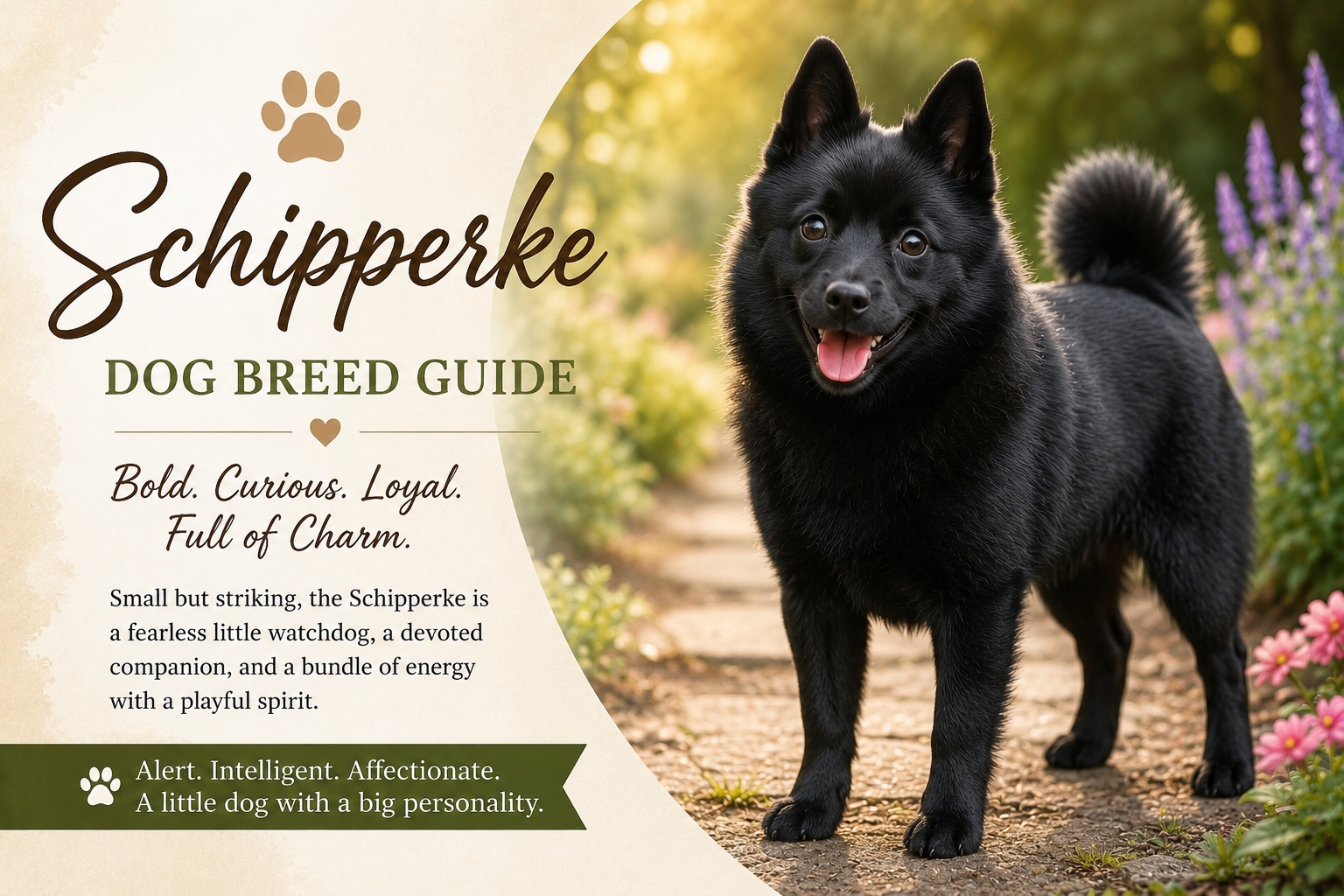
Small, black, intensely curious and seemingly convinced that everything happening within earshot is their business, the Schipperke is one of the small-dog world’s great characters. This sturdy Belgian breed was developed as an alert watchdog and vermin hunter. Today’s Schipperke still brings that working-dog confidence to family life: bright, busy, watchful, athletic and famously interested in whatever might be happening behind the next door.
Schipperkes are sometimes mistaken for tiny black Spitz dogs or miniature Pomeranians because of their upright ears, thick coat and foxlike expression. They are neither. The Schipperke is a distinct Belgian breed with its own history, structure and temperament. The American Kennel Club standard describes an agile, active watchdog and vermin hunter with a questioning, mischievous and alert expression—an unusually accurate preview of life with one.
For people who want a quiet little lap ornament, this may be rather more dog than expected. For people who love clever, animated small dogs with confidence, humor and a genuine appetite for adventure, the Schipperke can be unforgettable.
Written by: Deborah G. Moore
Last updated: August 20, 2026
Schipperke at a Glance
| Origin | Belgium |
|---|---|
| Traditional Work | Watchdog and vermin hunter |
| AKC Group | Non-Sporting |
| Suggested Height | Males 11–13 inches; females 10–12 inches |
| Build | Small, square, thickset and agile |
| Coat | Distinctive double coat with ruff, cape and culottes |
| AKC Color | Black |
| Shedding | Moderate with heavier seasonal shedding |
| Grooming | Moderate; natural coat does not require sculpting or routine clipping |
| Temperament | Curious, confident, alert, lively, independent and mischievous |
| Trainability | Very intelligent; best with engaging, consistent reward-based training |
| Exercise | Active; needs meaningful daily physical and mental activity |
| Watchdog Ability | Excellent |
| Best For | Engaged owners who enjoy active, clever dogs with strong personalities |
Dogs Central quick take: Think “small watchdog and problem-solver,” not “easy little lapdog.” A Schipperke can fit beautifully into a small home, but its mind and energy need somewhere to go.
How Do You Pronounce Schipperke?
Even people who know the breed often hesitate over the name. In English-speaking dog circles you will hear pronunciations approximating SKIP-er-kee, while historically influenced pronunciations may sound closer to SKEEP-er-kuh. Do not let pronunciation anxiety keep you from talking to breeders and owners; even experienced dog people encounter regional variation.
The breed is famously nicknamed Belgium’s “little captain,” reflecting its long association with canal boats and barges. That image is memorable, but it should not obscure the Schipperke’s broader working history as a small watchdog and formidable hunter of vermin.
Schipperke History & Belgian Origins
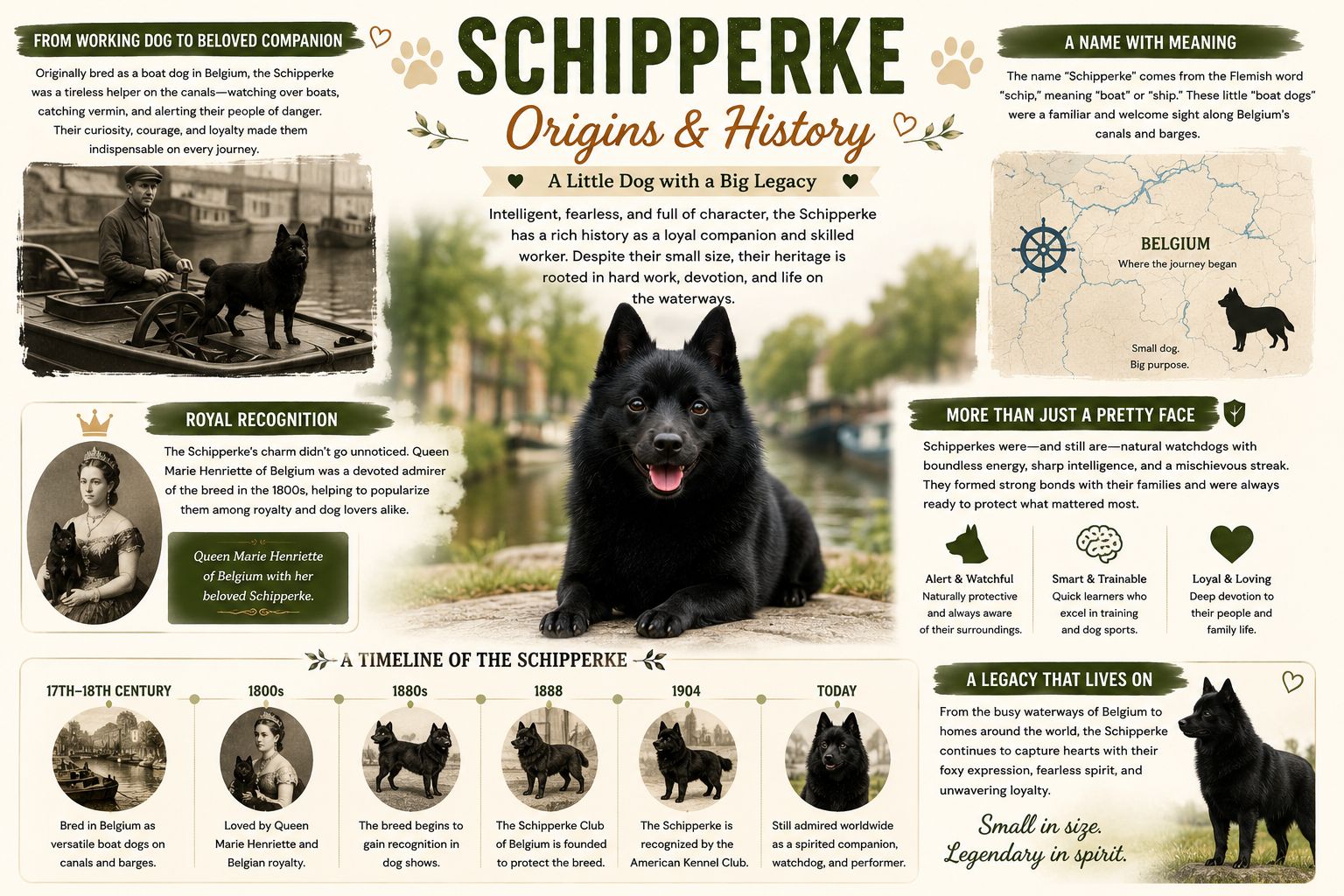
The Schipperke originated in Belgium and has a history considerably richer than the simplified story of “a little barge dog.” Small black dogs of this general type were valued by tradespeople and working households for alertness, guarding and ratting ability. Their compact size made them practical around workshops, homes and canal boats, while their confidence made them useful watchdogs far beyond what their dimensions might suggest.
The breed is linked historically to the Leauvenaar, a now-extinct black Belgian sheepdog type. That heritage helps explain why the Schipperke does not behave like a decorative toy breed despite its small stature. The modern dog retains a strong desire to investigate, patrol, chase and participate.
The “little captain” story arose from the breed’s association with barges of the Low Countries and remains part of Schipperke identity. Yet the dogs were also associated with Belgian craftsmen, including shoemakers, and were valued on land as well as water.
For a prospective owner, the history matters because it explains the modern personality. The Schipperke was useful because it noticed things. It reacted. It investigated. It dispatched pests. It guarded. Those traits did not disappear when the dog moved from a Belgian workshop to a suburban sofa.
What Does a Schipperke Look Like?
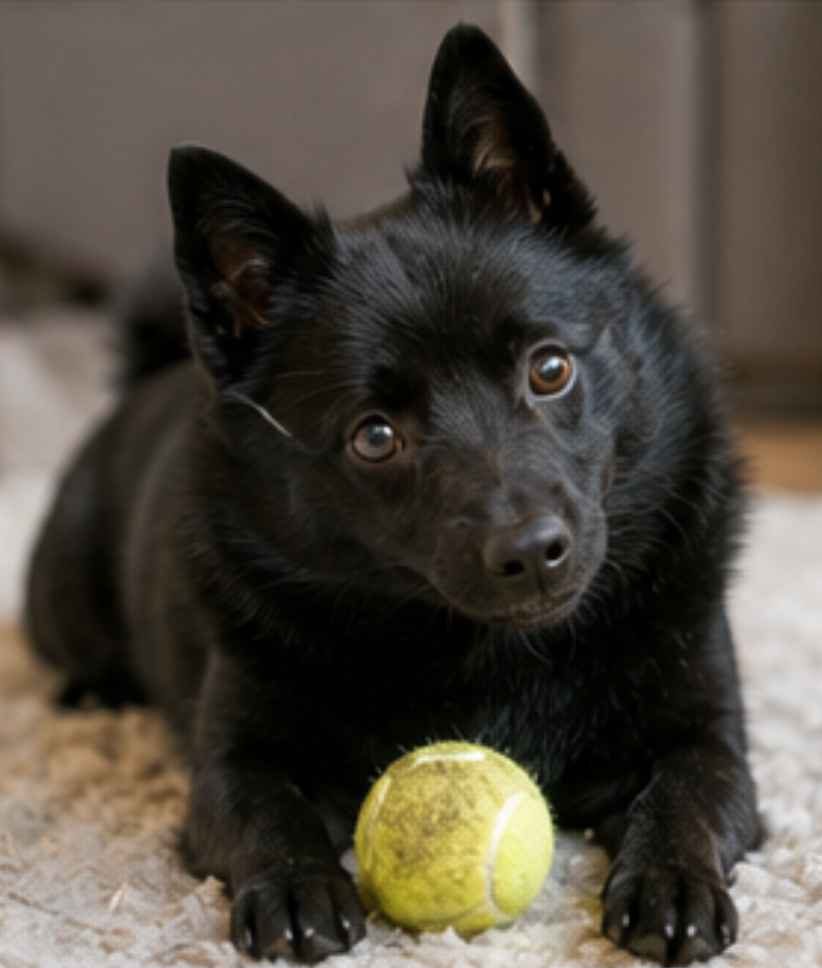
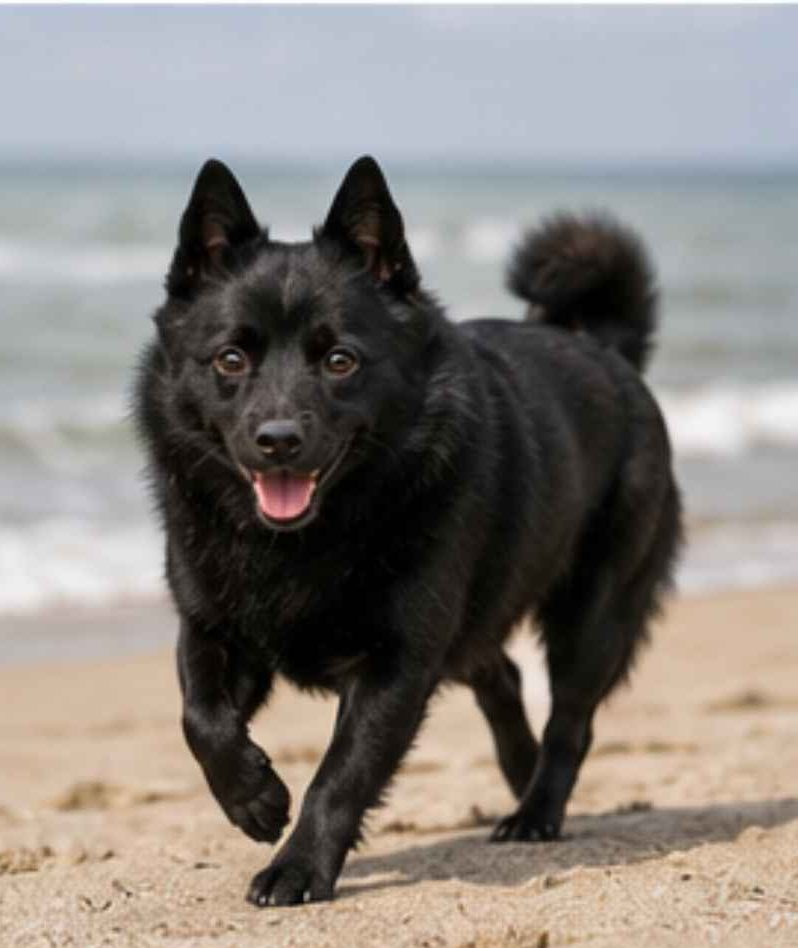
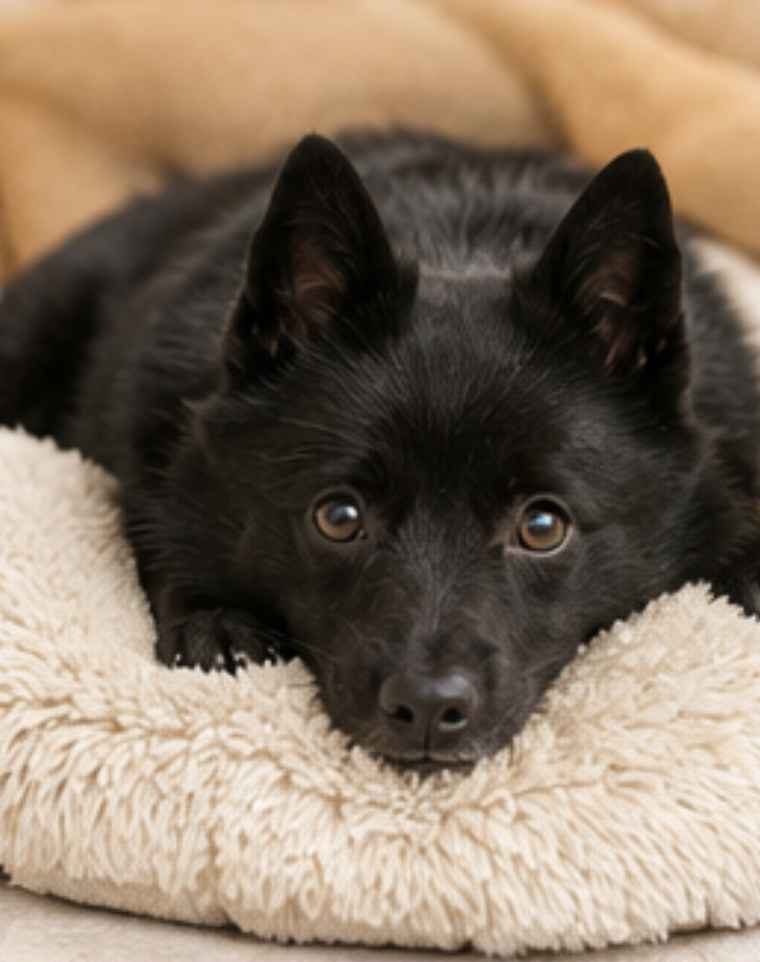
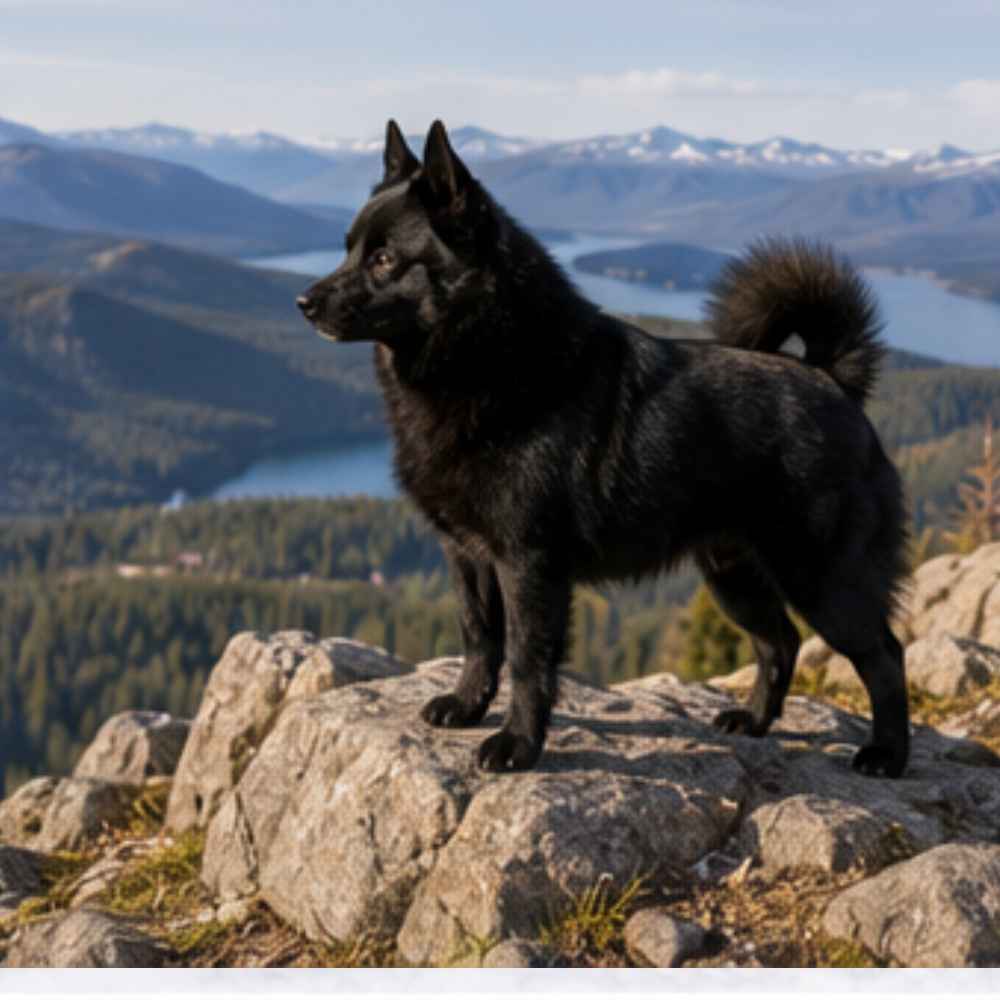
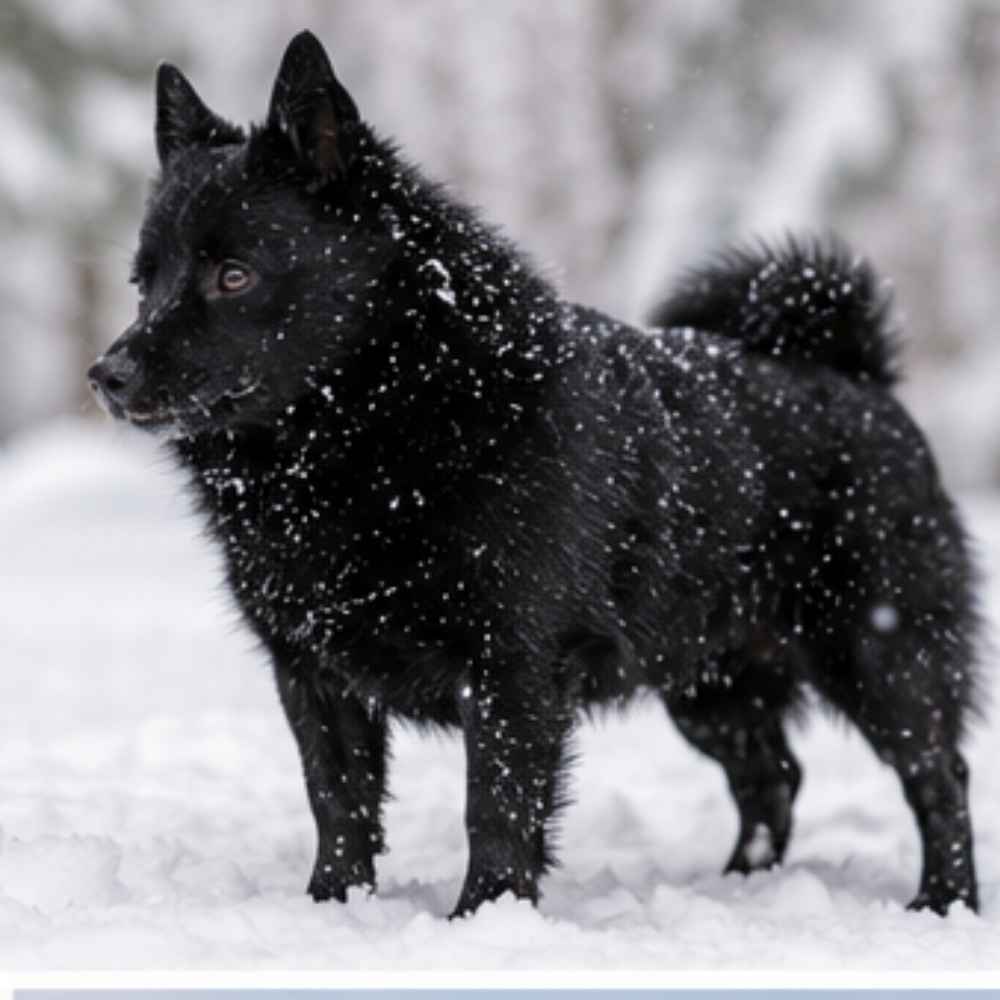
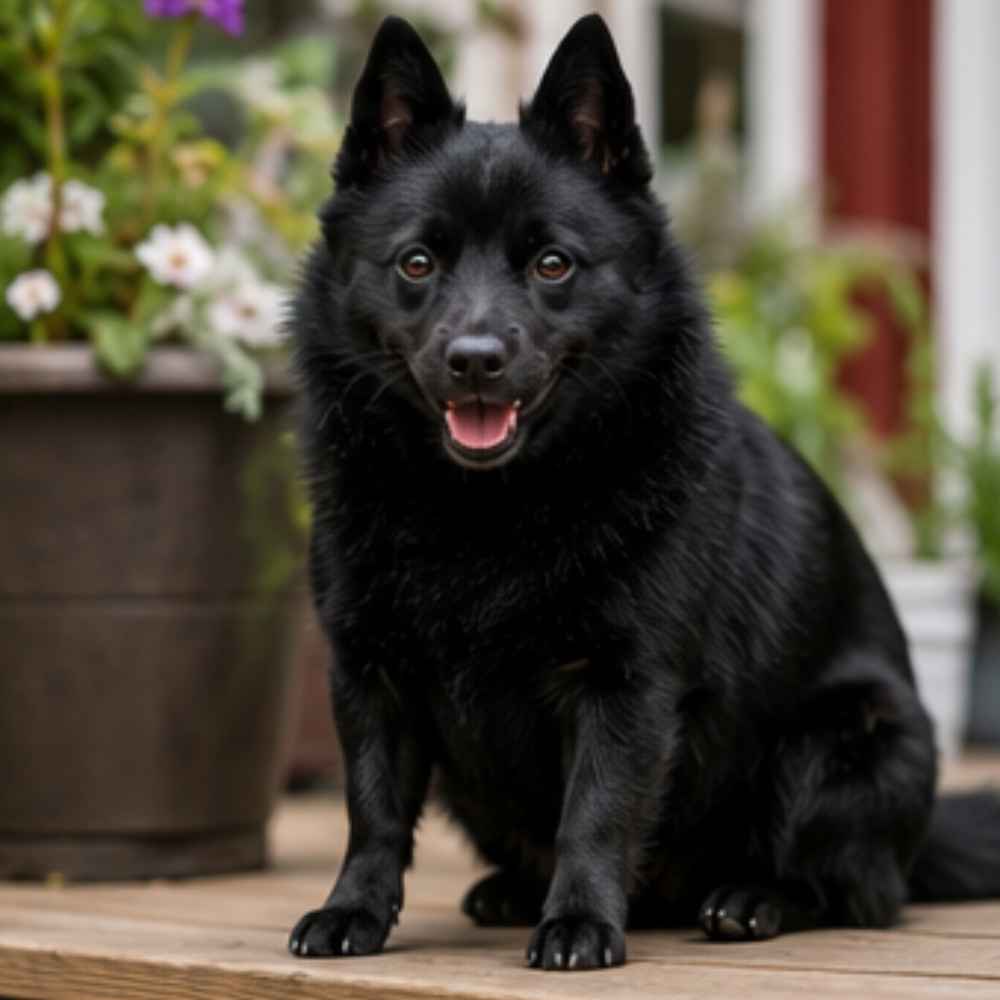
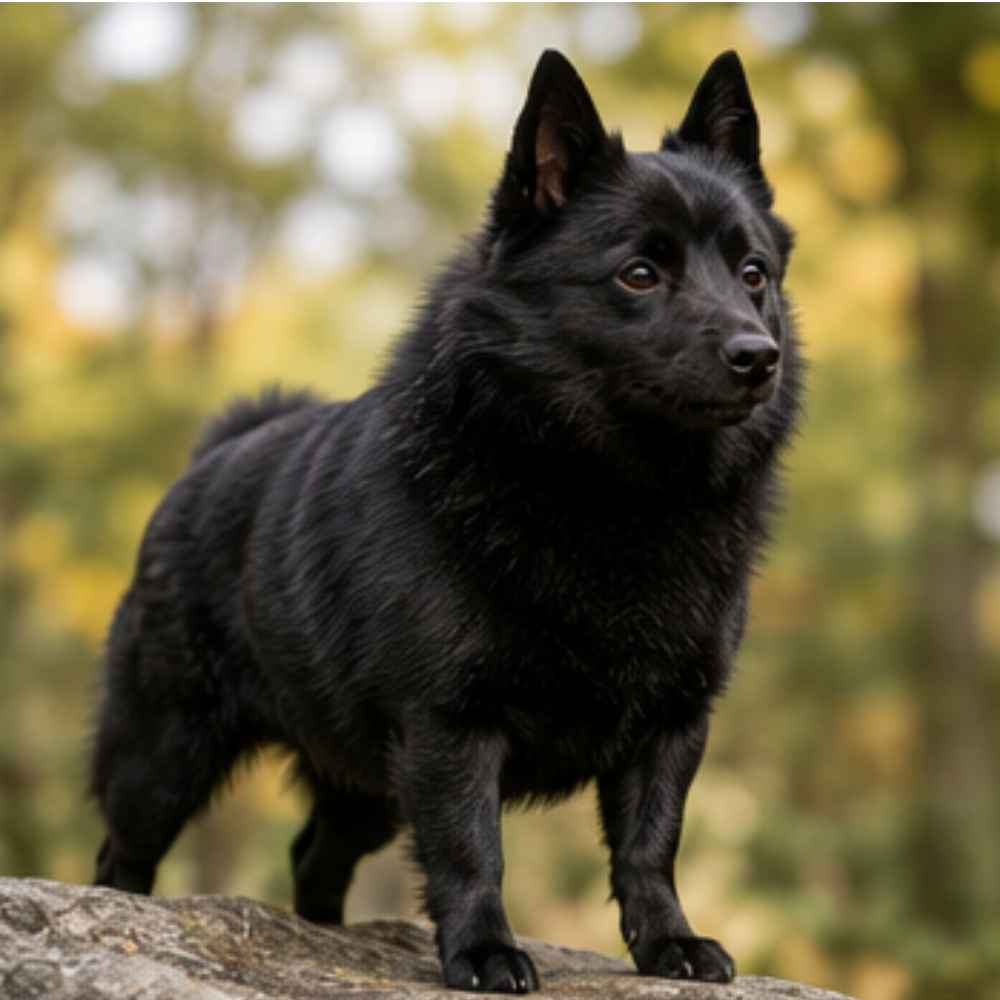
The Schipperke has one of the most recognizable silhouettes in the small-dog world. The body is square and thickset, the head tapers toward a foxlike muzzle, the small triangular ears stand erect, and the dark oval eyes contribute to an alert, questioning expression.
The coat creates much of the breed’s characteristic outline. It is not uniformly long. Longer hair around the neck forms a prominent ruff; additional coat creates a cape; longer hair across the chest forms the jabot; and the backs of the thighs carry longer culottes. Together these layers create the impression of a slope from the shoulders toward the rear.
That shape should come from correct coat and structure—not from creative trimming. The Schipperke is presented as a natural breed rather than sculpted into shape like a Poodle.
Full-Grown Schipperke Size, Height & Weight
A full-grown Schipperke is a genuinely small dog, but usually a sturdy one. The AKC standard suggests 11–13 inches at the withers for males and 10–12 inches for females, while emphasizing that quality takes precedence over size.
Weight is not specified in the AKC breed standard, and healthy weight depends on height, sex, frame and body condition. This is important when comparing online weight charts: a muscular, well-built adult should not be forced toward an arbitrary number simply because another Schipperke weighs less.
Viewed from the side, the adult should be square rather than long and low. The dog may look more substantial than its measurements suggest because of its dense coat, broad chest and thickset build.
When Is a Schipperke Full Grown?
Much of a small dog’s height is achieved during puppyhood, but filling out, coat development and mental maturity continue afterward. Schipperkes can retain adolescent enthusiasm well after they look physically adult. Use the parents and family line as your best guide to likely mature size rather than relying on exact puppy-weight formulas.
Is There a Miniature Schipperke?
No separate “Miniature Schipperke” or “Mini Schipperke” breed variety is recognized by the AKC. The Schipperke is already a small breed. Search demand for “schipperke mini” and “schipperke miniature” makes this worth stating clearly.
Be cautious if a seller markets “mini,” “micro” or “teacup Schipperkes” as a special variety and charges a premium for extreme smallness. Choose for health, temperament, sound structure and responsible breeding rather than an invented size label.
Schipperke Temperament & Personality
Curious, lively, confident, alert and mischievous are much better descriptions of a Schipperke than quiet, passive or easygoing. The breed standard describes an expression that is questioning and impudent but never mean or wild, and that wording captures the spirit remarkably well.
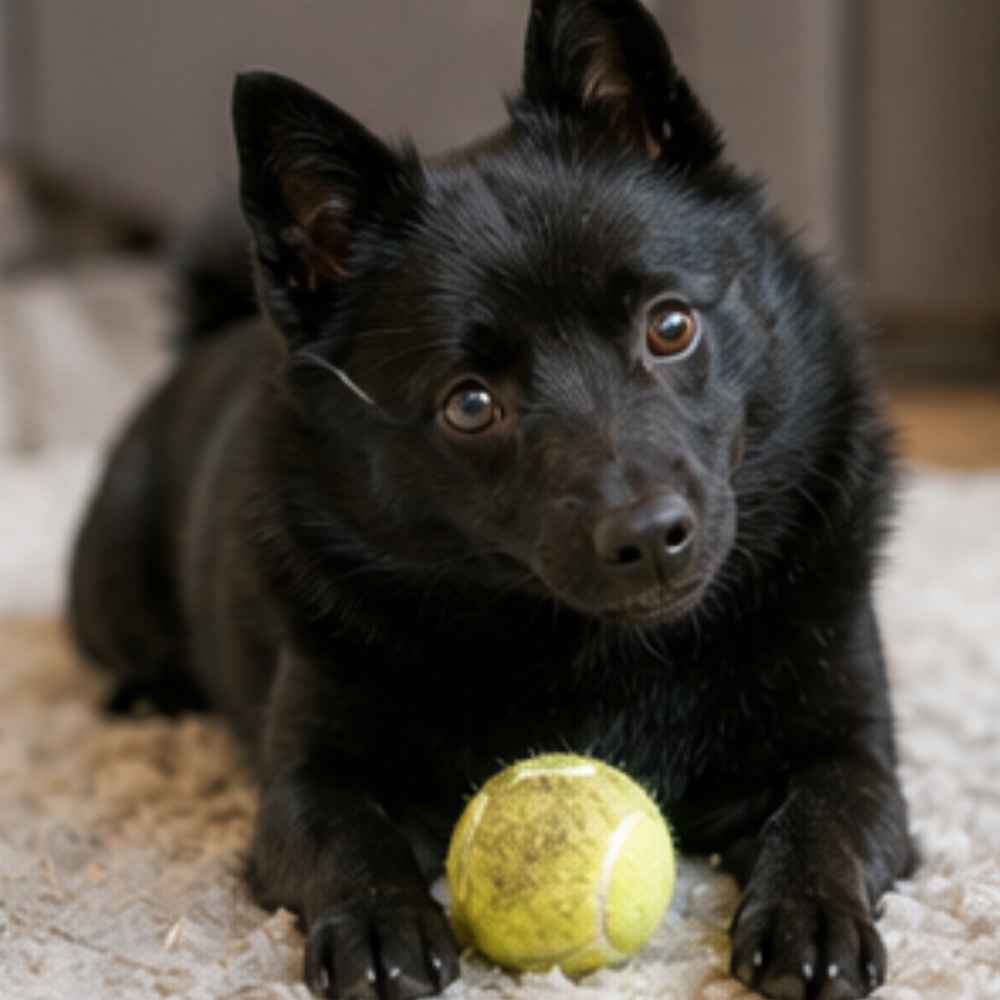
A Schipperke tends to want information. Who came through the gate? What moved behind the fence? Why did you open that cupboard? Where are you going? Is that bag important? Many owners fall in love with precisely this sense that a tiny black investigator has joined the household.
Affectionate, But Not a Stuffed Animal
Many Schipperkes form strong attachments to their people and want to be involved in family activity. Affection does not necessarily translate into a dog that wants to spend the entire day being carried. This is an active breed with its own agenda and a surprising amount of independence.
Confident Watchdog
Schipperkes were bred to notice and report. A well-socialized dog should not be indiscriminately fearful or hostile, but it may be naturally watchful around unfamiliar people and quick to announce something unusual.
Mischief Is Part of the Package
A bored Schipperke may create work. Open gates, accessible garbage, unattended food and small animals on the other side of a fence can all become projects. Good management is not an admission that training failed; it is sensible ownership of an intelligent, curious dog.
Schipperke Intelligence & Trainability
Schipperkes are highly intelligent, but intelligence and automatic obedience are not the same thing. A Schipperke can understand exactly what you asked and still appear to be reviewing whether your proposal is competitive with the squirrel in the yard.
Training works best when it is clear, rewarding, varied and relevant. Repetitive drilling can lose the attention of a dog that learns quickly. Short sessions, food rewards, toys, movement, sniffing opportunities and real-life rewards usually produce better engagement.
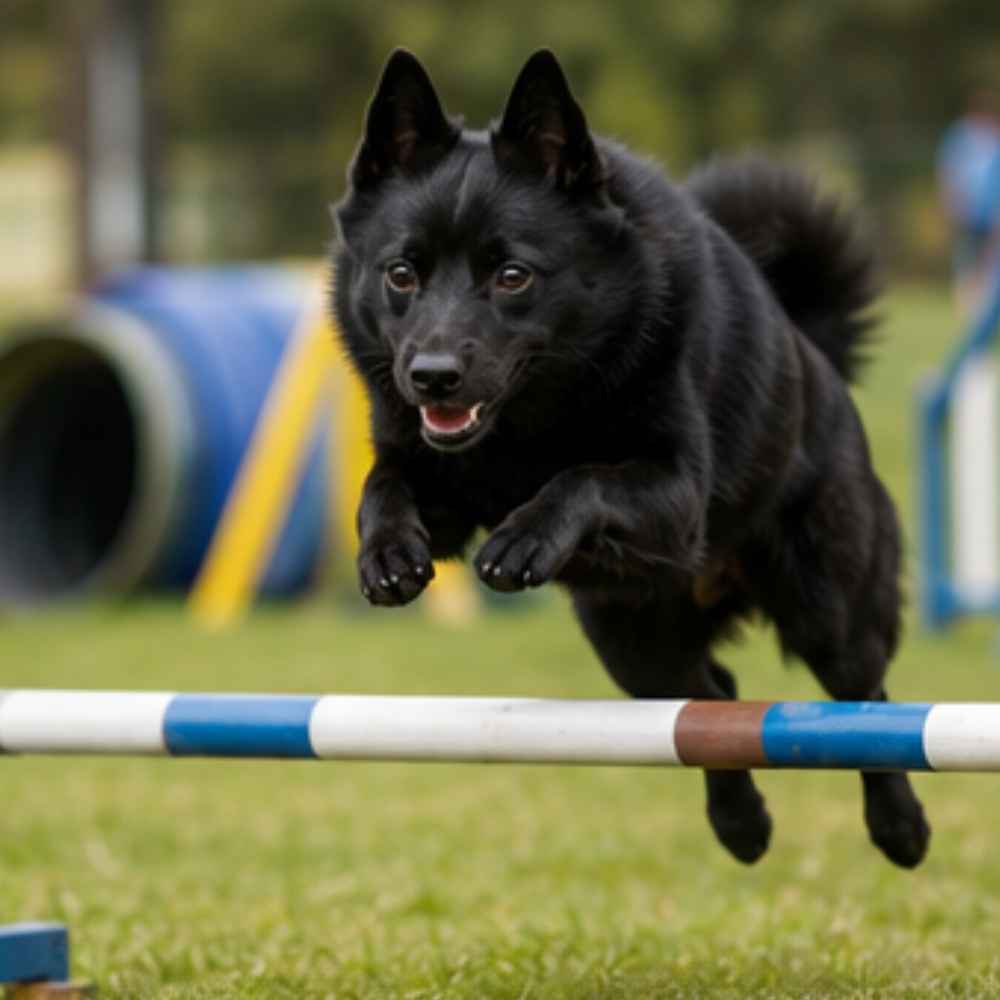
The breed can excel in activities such as obedience, rally, agility, scent work, tracking, Fast CAT, barn hunt and trick training. These outlets are not necessary for every pet, but they illustrate how much dog is packed into the Schipperke’s compact body.
Early training priorities should include recall, waiting at doors and gates, leave-it, leash skills, calm greetings, handling, settling, and disengaging from moving animals. A reliable emergency recall is especially valuable for an inquisitive breed with vermin-hunting instincts.
Schipperke Colors: Black, Cream, White, Brown, Blue & Red?
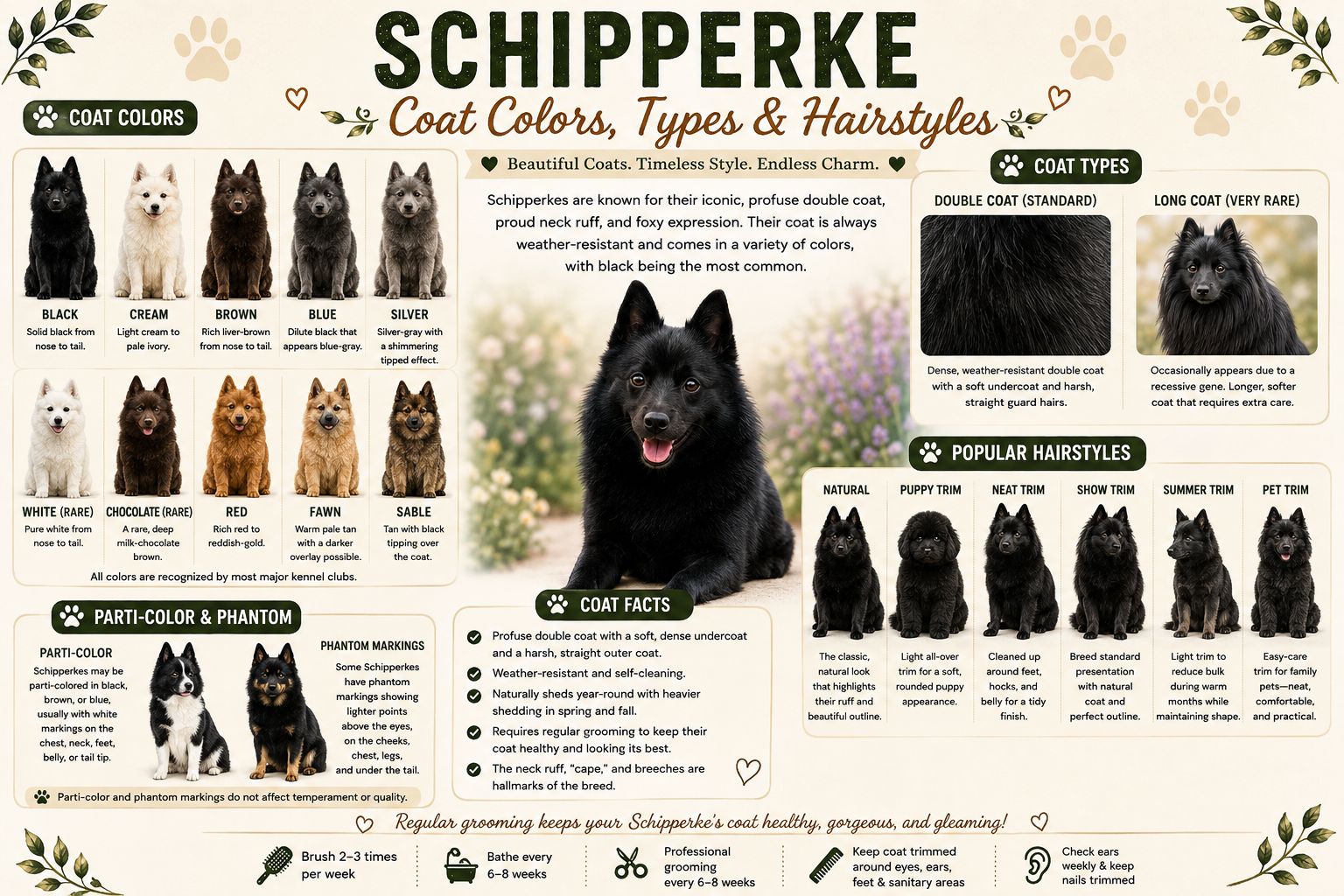
U.S. search data shows unusually strong interest in Schipperke colors, including black, white, cream, brown, blue, red and chocolate. The essential distinction is between colors people may encounter in searches or in dogs around the world and the color required by the American breed standard.
The AKC standard calls for a black Schipperke. Any color other than natural black is a disqualification under that standard. Black is therefore not simply the most familiar color—it is integral to the breed as defined for AKC conformation.
Searches for white Schipperkes, cream Schipperkes, blue Schipperkes, brown Schipperkes and red Schipperkes do exist, and non-black dogs can occur genetically or be discussed under standards outside the United States. But U.S. puppy buyers should be wary of “rare color” marketing that presents a nonstandard color as proof of greater quality or justifies an inflated price.
A puppy’s health, temperament, pedigree, breeder practices and appropriate health testing matter far more than novelty color.
Do Schipperkes Have Tails?
Yes. Schipperkes can be born with tails. The historically familiar tailless silhouette has led many people to assume the breed is naturally tailless, but tail length can vary and docking has historically contributed to the traditional appearance in countries where the practice is permitted.
Because laws and attitudes toward cosmetic docking differ by country and region, modern Schipperkes may be seen with natural tails. A tail does not make a dog “less Schipperke.” If this matters to you when choosing a puppy, discuss the breeder’s practices before a litter is born rather than after a procedure would traditionally have occurred.
Do Schipperkes Shed? Are They Hypoallergenic?
Schipperkes do shed and are not considered a hypoallergenic breed. Their double coat sheds throughout the year and can shed much more heavily during seasonal coat changes.
During a major shed, the amount of undercoat released can seem wildly disproportionate to the size of the dog. More frequent brushing helps remove loose coat before it decorates the house.
No dog is completely allergen-free. People can react to proteins in dander, saliva and urine as well as material carried on hair. Anyone with significant dog allergies should spend meaningful time with adult Schipperkes before making a commitment rather than relying on a breed label.
For genuinely low-shedding alternatives, see the established Dogs Central guides to hypoallergenic small dogs and small dogs that shed very little.
Schipperke Grooming & Coat Care
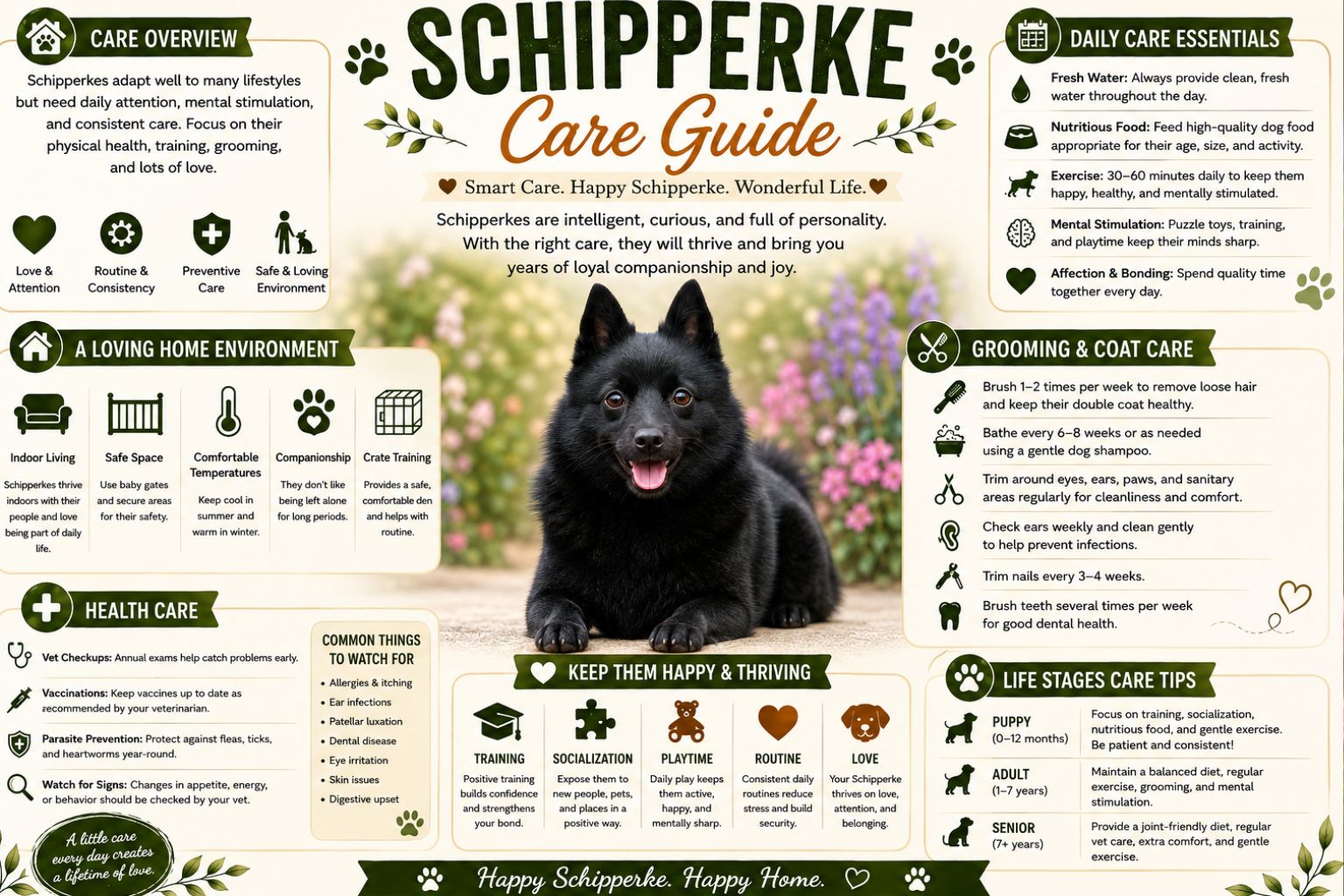
Despite the dramatic coat, Schipperke grooming is relatively straightforward. The natural coat should not require routine haircuts or sculpting. Regular brushing removes loose hair, keeps the undercoat manageable and gives you a chance to check the skin.
During seasonal shedding, increase brushing substantially. A thorough brush and comb that reaches through the coat is more useful than polishing only the outer surface.
Does a Schipperke Need a Haircut?
Generally, no. Search interest in “Schipperke haircut” may come from owners surprised by the coat, but the breed’s distinctive ruff, cape and culottes are natural features. Unnecessary clipping can alter coat appearance and texture. Practical trimming around feet may occasionally be appropriate, but a Schipperke is not a breed that needs a fashionable pet clip every six weeks.
Bathing, Nails, Ears & Teeth
Bathe as needed using dog-appropriate products rather than on an arbitrary calendar. Keep nails comfortably short, inspect ears for odor, redness or discharge, and make tooth brushing part of the routine. Start all handling in puppyhood with rewards so maintenance remains cooperative rather than becoming a wrestling match.
See the Dogs Central Small Dog Grooming Guide for more everyday care help.
Schipperke Exercise Needs & Enrichment
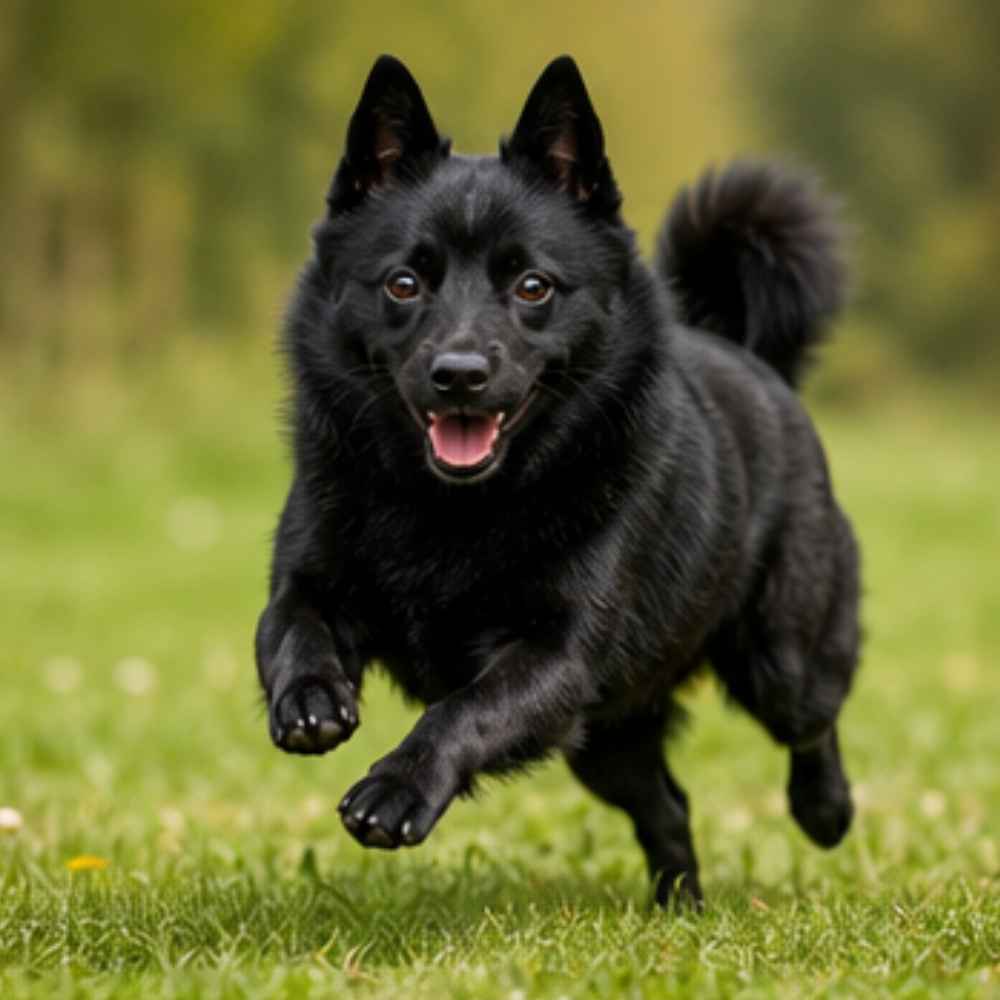
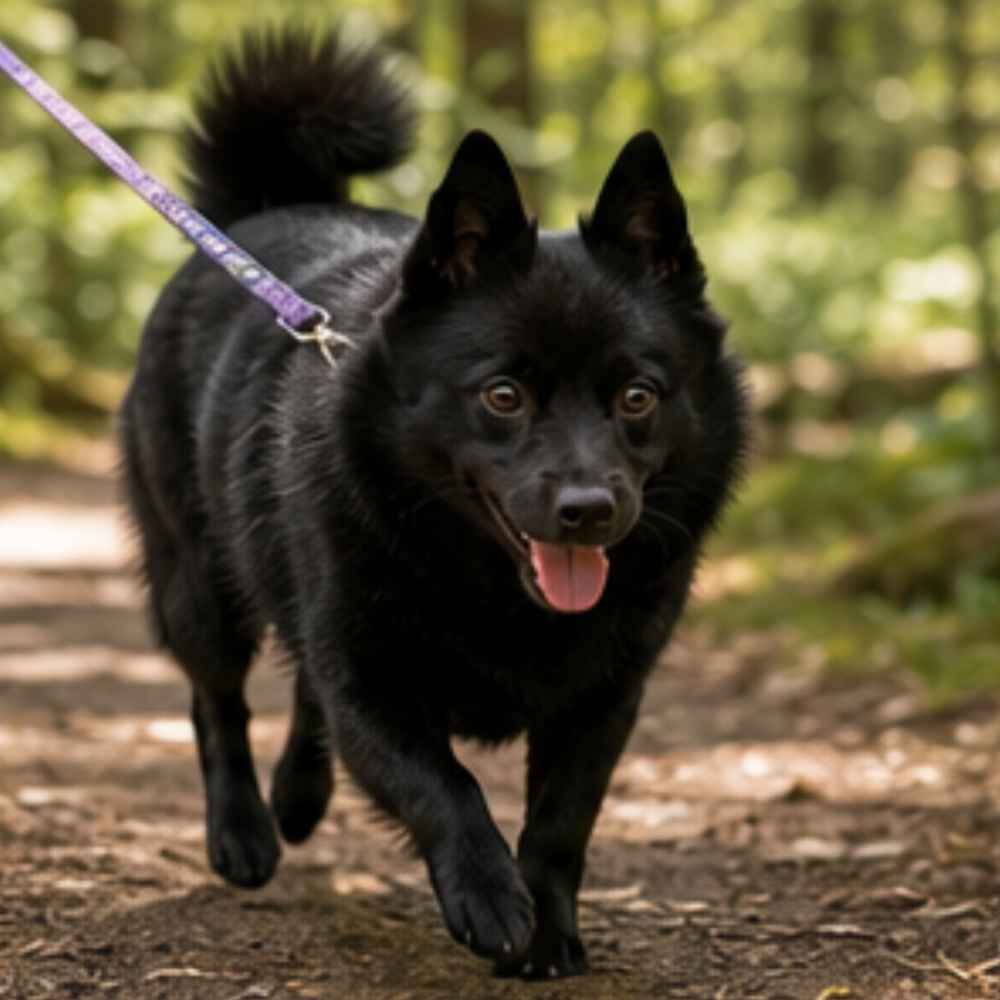
Small does not mean sedentary. The Schipperke is an active, agile breed that benefits from daily exercise plus mental work. Walks are useful, but sniffing, retrieving, training, exploring and games make those walks far more satisfying.
A securely fenced area can be valuable because the breed’s curiosity and prey drive can make off-leash freedom risky. Fences should actually be secure: a clever small dog needs only one successful escape to discover that gate inspection is a rewarding hobby.
Great Schipperke Activities
- Scent searches and “find it” games
- Trick training
- Food puzzles
- Fetch and retrieving games
- Agility foundations
- Barn hunt and controlled vermin-scent activities
- Rally and obedience
- Fast CAT and other running sports
- Hiking and varied sniff walks
- Learning names for toys and household objects
Teach an off-switch too. A Schipperke should not need entertainment every minute. Rewarding calm settling helps an active brain learn that nothing happening is sometimes the activity.
How to Train a Schipperke
The most successful Schipperke training is based on cooperation rather than intimidation. Reward the behavior you want, prevent rehearsal of behavior you do not want, and make good choices worthwhile.
Recall
Begin recall training in low-distraction environments and build gradually. Never punish the dog for eventually coming to you, even if you disliked what happened first. Use a long line in unfenced spaces while reliability develops.
Door and Gate Manners
Teach waiting as a default before doors open. This is especially useful in a breed inclined to investigate the wider world first and submit paperwork later.
Socialization
Good socialization does not mean forcing a puppy to greet everyone. Introduce people, friendly dogs, surfaces, noises, vehicles, handling and new environments at an intensity the puppy can handle comfortably. The goal is confidence and neutrality, not indiscriminate sociability.
House Training
Use frequent outdoor opportunities, close supervision and immediate rewards. Puppies have limited bladder control regardless of intelligence. Punishment after an accident teaches very little except that humans behave strangely around puddles.
For more help, visit the Small Dog Training Guide.
Do Schipperkes Bark a Lot?
Schipperkes are natural watchdogs and can be vocal. A breed selected to alert people to unusual activity is unlikely to regard every knock, footstep and delivery van as irrelevant.
That does not mean nonstop barking is inevitable. Teach a routine in which the dog can alert briefly and then disengage. Reward quiet behavior, reduce repeated access to highly stimulating window views, provide adequate exercise, and teach a mat or station behavior for visitors.
Demand barking deserves a different response from fearful barking or separation distress. Identify why the dog is vocalizing before deciding how to change it.
Can a Schipperke Be Left Alone?
Adult Schipperkes can learn to spend reasonable periods alone, but they are engaged, social dogs and are poor candidates for a life of chronic isolation. Puppies need gradual alone-time training rather than suddenly being expected to handle a full workday.
Provide a safe environment because boredom plus curiosity can become destructive exploration. Food puzzles and appropriate chews can help, but enrichment is not a substitute for adequate interaction and exercise.
If a dog panics when alone—persistent vocalization, escape attempts, drooling, destruction around exits or other signs of distress—seek veterinary and qualified behavior guidance rather than assuming stubbornness.
Are Schipperkes Good Family Dogs? What About Children?
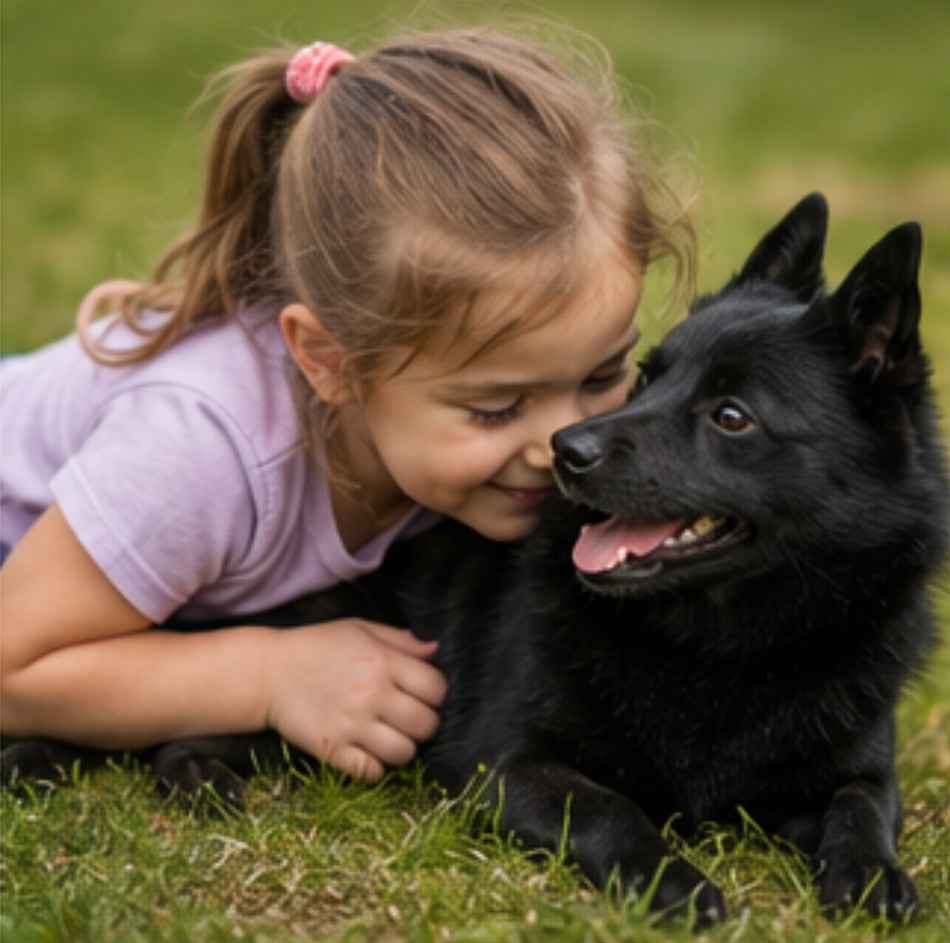
Schipperkes can be excellent family dogs in households that appreciate their active, confident nature. They often become deeply involved in family routines and can be entertaining companions for older, respectful children.
As with every small dog, children should learn not to grab, chase, climb on or disturb the dog while resting or eating. Adults should supervise young children and dogs together and provide the dog with a quiet retreat.
The breed’s sturdy build can make it feel more robust than some toy breeds, but “sturdy” does not mean indestructible. Match the individual dog’s temperament and energy to the family rather than choosing solely because the breed is small.
Are Schipperkes Good With Dogs, Cats & Other Pets?
Compatibility varies considerably by individual, upbringing and the other animal involved. Many Schipperkes live successfully with dogs and cats, particularly when raised and introduced thoughtfully.
The bigger caution involves very small pets. Schipperkes have genuine vermin-hunting history. Rodents, rabbits, birds and other small animals should not be assumed safe simply because the dog is small too.
Some individuals can also be assertive with other dogs. Early socialization, careful introductions and management matter. Choose companions based on actual temperament rather than expecting breed stereotypes to make the decision for you.
Are Schipperkes Good Apartment Dogs?
Physically, yes: they are compact and require little floor space. Behaviorally, apartment success depends on exercise and barking management.
An apartment Schipperke needs interesting daily outings, mental stimulation and early practice ignoring hallway noises, elevators, neighbors and activity outside windows. A bored watchdog with an excellent view of the lobby can appoint itself building security surprisingly quickly.
A yard is convenient but does not replace walks, training or companionship. Conversely, an engaged apartment owner can provide a richer life than a homeowner who simply opens the back door.
See Best Small Dogs for Apartments for more choices.
Schipperkes for Seniors & First-Time Dog Owners
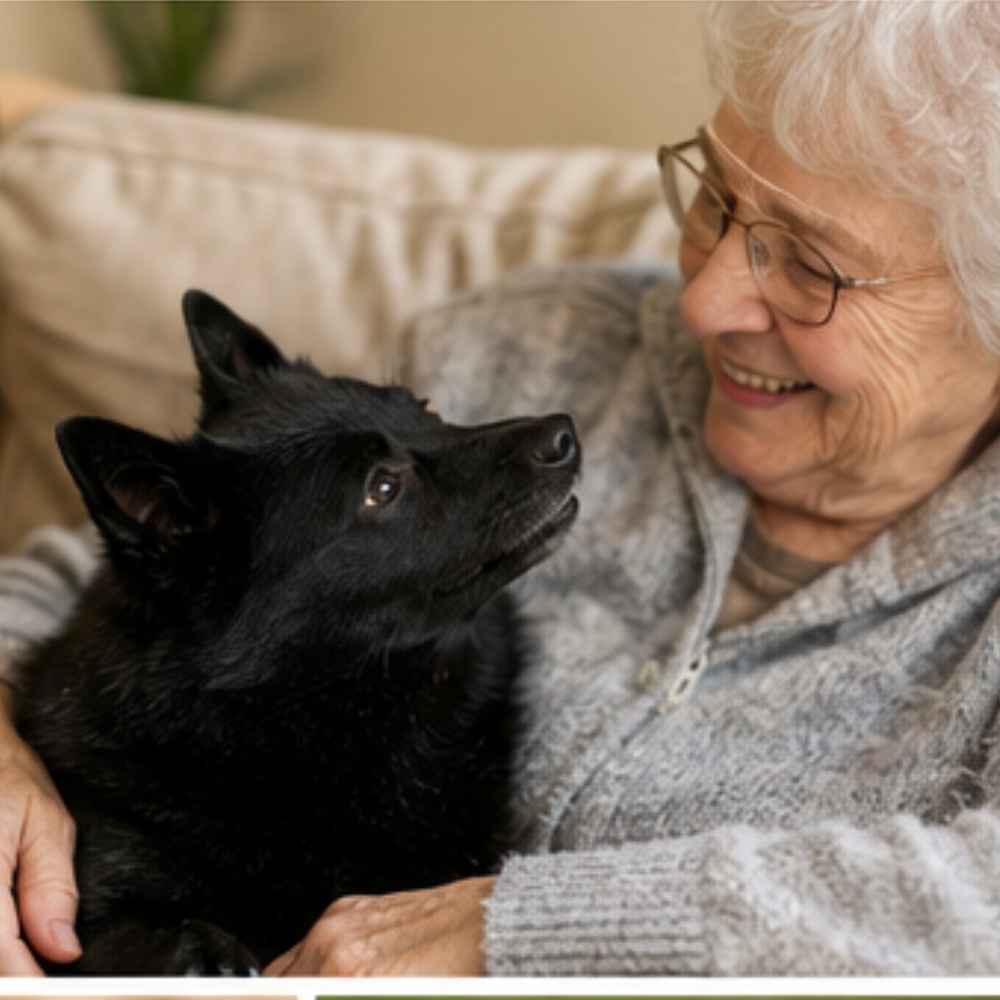
A Schipperke can suit an active senior who wants a small, intelligent walking companion and enjoys training. The dog’s manageable physical size is an advantage, and the natural coat is less labor-intensive than many long-haired small breeds.
Energy, alert barking and independence are the counterweights. Someone seeking a very placid companion may prefer another breed. An adult Schipperke with known temperament can be a particularly good option for a senior who wants to skip puppy chaos.
Is a Schipperke a Good First Dog?
It can be—but not because it is easy. A motivated first-time owner who attends a good training class, uses reward-based methods and enjoys an active dog may do beautifully. Someone choosing a Schipperke because “small dogs don’t need much training” is likely to receive an accelerated education from the dog.
Schipperke Health Issues & Recommended Health Testing
Schipperkes are often robust and long-lived, but responsible breeding requires more than a general veterinary examination. The national breed club’s health recommendations help buyers distinguish meaningful screening from vague “health tested” advertising.
MPS IIIB
Mucopolysaccharidosis type IIIB (MPS IIIB) is an inherited, progressive and ultimately fatal neurologic disease of particular importance in Schipperkes. DNA testing allows breeders to identify genetic status and make informed breeding decisions. A responsible breeder should be able to discuss MPS IIIB clearly rather than looking puzzled when you ask.
Patellar Luxation
Luxating patellas occur when the kneecap moves out of its normal position. Severity varies from incidental findings to significant lameness. Patellar evaluation is among the breed’s recommended screening tests.
Hip Problems
Hip evaluation is recommended despite the Schipperke’s small size. Screening can help identify hip dysplasia and other orthopedic concerns relevant to breeding decisions.
Eyes
Breeding dogs should receive ophthalmologist evaluation. Eye screening matters because inherited ocular problems may not be obvious to an owner looking at an apparently healthy young dog.
Thyroid
Autoimmune thyroiditis evaluation is another national breed-club recommendation. Thyroid disorders can affect many aspects of health, and formal screening is more meaningful than simply saying the parents have never seemed ill.
What Should a Responsible Schipperke Breeder Test?
Current AKC health-testing guidance lists these national breed-club recommendations:
- Patella evaluation
- Hip evaluation
- Ophthalmologist evaluation
- Thyroid evaluation
The Schipperke Club of America also emphasizes MPS IIIB DNA testing. Ask for the actual results and verify publicly recorded results when possible. A DNA panel alone does not replace orthopedic, eye and thyroid screening.
Veterinary note: This guide is educational and cannot diagnose or treat an individual dog. Discuss your dog’s health, diet, preventive care and symptoms with your veterinarian.
See the Dogs Central Small Dog Health Guide for more general health information.
How Long Do Schipperkes Live?
Schipperkes have a reputation as a relatively long-lived small breed, and many reach their teens. No lifespan figure can predict an individual dog’s future, however. Genetics, body condition, dental health, preventive veterinary care, exercise, accident prevention and chance all play roles.
Keeping a Schipperke lean is one of the simplest owner-controlled ways to support mobility and overall health. Regular veterinary examinations become especially useful with age because subtle changes in weight, thirst, activity, vision or behavior may provide early clues to health problems.
Schipperke Dental Care
Small dogs deserve serious dental care. Periodontal disease is not merely cosmetic bad breath; it can cause pain, infection and tooth loss.
Teach daily or frequent tooth brushing with dog-safe toothpaste while the dog is young. Ask your veterinarian to examine the mouth during routine visits and recommend professional cleaning when indicated. Dental chews may supplement brushing but should not be assumed to replace it.
What Should You Feed a Schipperke?
Feed a complete and balanced diet appropriate for the dog’s life stage, health and activity. There is no single food that is automatically “best for Schipperkes.” A highly active adult participating in sports has different energy needs from a quiet senior.
Use package feeding directions only as a starting point. Monitor body condition and adjust portions with veterinary guidance. Treat calories count too—particularly in a smart breed whose training program may involve frequent edible wages.
Puppies should receive an appropriate growth diet. Sudden appetite or weight changes deserve attention rather than simply changing foods repeatedly.
For more detail, visit the Small Dog Nutrition Guide.
What Is Life With a Schipperke Really Like?
Imagine living with a compact black dog who has appointed itself head of security, assistant gardener, inventory inspector and neighborhood intelligence officer.
A Schipperke may know which delivery driver has arrived before you do. It may investigate a shopping bag as though customs clearance is required. It may notice that a chair moved six inches. None of this is necessarily anxiety; curiosity and vigilance are deeply characteristic of the breed.
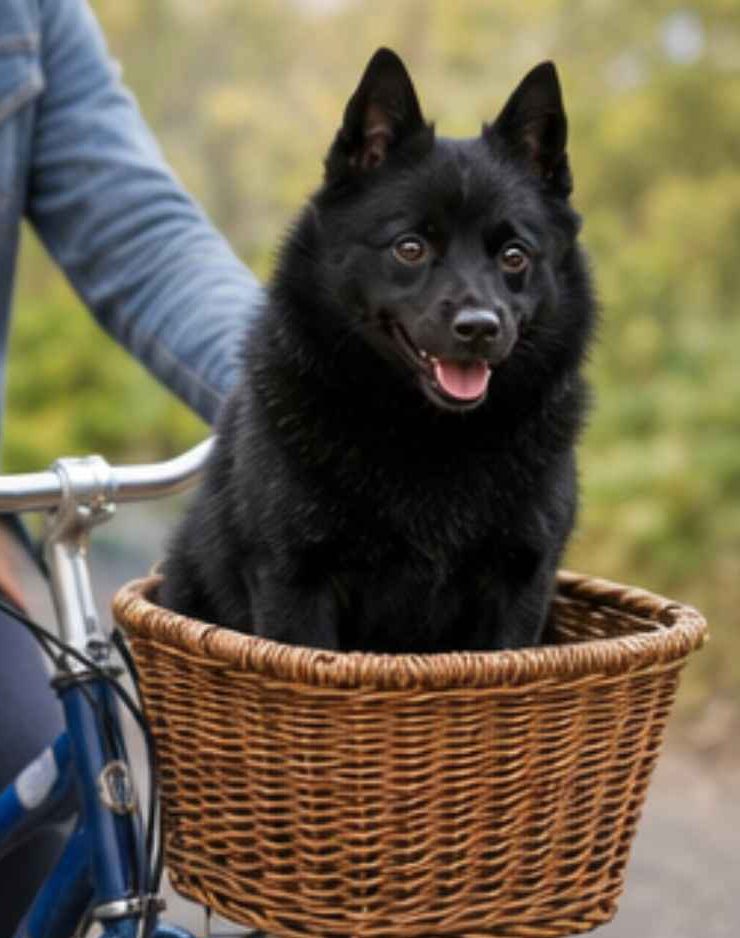
That intensity can be enormously entertaining when channeled well. Schipperkes are portable enough for many adventures, athletic enough to enjoy them, clever enough to learn useful skills and sturdy enough not to feel like porcelain ornaments.
Owners do need a sense of humor and decent management. Food should not be left where a determined investigator can reach it. Gates matter. Recall training matters. Exercise matters. Giving the dog constructive jobs matters.
In return, you get a small companion with the presence of a much larger dog—and very little chance of wondering whether it has a personality.
Schipperke Puppies
Schipperke puppies are bright, active and curious. Their small size can tempt people to relax rules that they would enforce with a large puppy, but the habits learned at ten pounds remain habits.
Prioritize socialization, recall, handling, bite inhibition, house training, calm confinement, door manners and the ability to settle. Introduce grooming, nail care and tooth brushing positively from the beginning.
Because MPS IIIB is a breed-specific inherited disease for which DNA testing exists, puppy buyers should specifically ask about the genetic status of the parents as well as the broader health screening recommended for Schipperkes.
The full Schipperke puppy guide should be created beneath the final confirmed breed silo URL. It should cover breeder evaluation, health testing, socialization, puppy development, contracts, scams, puppy mills, prices and choosing the right puppy. Per Dogs Central policy, it will be an educational buyer resource—not a puppy classified page.
Schipperke Name Ideas
The Schipperke may be one of the easiest breeds to build a genuinely breed-specific names guide around. Belgian names, nautical names, captain and canal themes, black-coat names, mischievous names and tiny-dog-with-enormous-confidence names all fit beautifully.
Belgian-inspired: Remy, Jules, Luc, Hugo, Amélie, Fleur, Anouk.
Nautical: Skipper, Captain, Buoy, Sailor, Anchor, Harbor.
Black coat: Onyx, Ink, Raven, Jet, Pepper, Licorice.
Mischief: Rascal, Bandit, Trouble, Sneaky Pete, Chaos.
Big title, small dog: Admiral, Commander, Chief, Boss, General.
For hundreds more ideas now, visit the verified Small Dog Names Guide. A dedicated Schipperke names guide can be added once the breed silo URL is confirmed.
Schipperke Puppies for Sale, Price & Responsible Breeders
The supplied U.S. search data shows strong acquisition intent around Schipperke puppies, Schipperkes for sale, Schipperke breeders, Schipperke price and “near me” searches. Those searches deserve help—but the main breed guide should not become a sales page.
Schipperkes are much less common than breeds such as Chihuahuas or Pomeranians, so responsible buyers may need to wait or travel. Immediate local availability is not a quality criterion.
What to Ask a Breeder
- Can I see the actual health-testing results for both parents?
- What are the parents’ MPS IIIB DNA statuses?
- What eye, thyroid, patella and hip screening has been completed?
- What are the temperaments of the parents and close relatives?
- How are puppies raised and socialized?
- At what age do puppies leave?
- What does the contract require if I can no longer keep the dog?
- Can you explain the breed’s barking, prey drive and exercise needs honestly?
How Much Does a Schipperke Cost?
Prices vary by region, breeder, pedigree, health testing and other factors, so a single national number becomes outdated quickly. More importantly, price is not proof of quality. A costly “rare color” puppy can be poorly bred, while an ethical breeder’s fee reflects far more than coat color or novelty.
The Dogs Central breeder showcase should use its own verified breed-specific directory URL once that URL is established. Until then, this guide deliberately does not invent one.
Schipperke Adoption, Rescue & Rehoming
Search interest for Schipperke rescue and adoption is meaningful, and an adult Schipperke can be an excellent choice for someone who wants a clearer picture of mature size, energy and temperament.
Breed rescue, shelters and private rehoming are all worth exploring. Ask the same practical questions you would ask about any adult dog: behavior around children and pets, escape tendencies, prey drive, medical history, housetraining, time alone and known triggers.
Owners sometimes need to find a new home for a beloved Schipperke because of circumstances beyond their control. Responsible home-to-home rehoming allows the dog to remain with its owner while suitable adopters are sought, and gives potential adopters the opportunity to meet the dog and owner before a placement is made.
Popular Schipperke Mixes
U.S. search data reveals surprisingly strong interest in Schipperke mixes. The most searched combinations include the Pomeranian × Schipperke and Chihuahua × Schipperke, with additional interest in Border Collie, Corgi, Labrador Retriever, Rat Terrier, Dachshund, Cocker Spaniel, Poodle and Papillon crosses.
Schipperke Pomeranian Mix
A Pomeranian-Schipperke mix may inherit upright ears, a substantial coat, alertness and a compact build from both sides, but individual size, coat and temperament remain unpredictable. Being a cross does not guarantee a particular appearance.
Schipperke Chihuahua Mix
This cross combines two small breeds that can both be alert and confident. Individual puppies may differ substantially in coat, ear shape, body type and sociability.
Other Schipperke Mixes
Searches also appear for Schipperke × Corgi, Border Collie, Labrador, Rat Terrier, Dachshund and other combinations. Treat online breed labels cautiously when parentage is unknown; visual identification of mixed-breed ancestry is unreliable.
A mixed dog can be wonderful without needing guaranteed designer traits. Evaluate the actual dog’s health, behavior and needs rather than relying on the hoped-for “best of both breeds.”
Schipperke Pros & Cons
| Reasons People Love Schipperkes | Things to Consider |
|---|---|
| Huge personality in a small body | Can be intense and strong-willed |
| Highly intelligent | Needs mental stimulation |
| Excellent watchdog | Alert barking requires management |
| Compact and portable | Curiosity can encourage escape attempts |
| Active and athletic | Not a sedentary lapdog |
| Natural coat needs no elaborate haircut | Double coat can shed heavily |
| Often long-lived | Breed-specific health testing matters |
| Fun training and sport partner | Independent thinking can challenge novice owners |
| Deeply engaging companion | Prey drive can complicate life with small pets |
Is a Schipperke the Right Dog for You?
A Schipperke May Be a Great Match If You…
- want a small dog that feels sturdy and athletic;
- enjoy training and interacting with your dog;
- appreciate confidence, curiosity and humor;
- want a capable watchdog;
- can provide daily exercise and mental enrichment;
- are prepared to manage prey drive and secure doors and fences;
- and do not mind seasonal shedding.
You May Prefer Another Breed If You…
- want a very quiet dog;
- want a low-energy lap companion;
- need a reliably low-shedding breed;
- keep small free-roaming pets and cannot separate them safely;
- dislike independent thinkers;
- or expect a small dog to require minimal training and exercise.
The Schipperke’s appeal is not that it is easy. It is that this little Belgian dog is interesting: alert, funny, capable, curious and full of life. For the right owner, that can be much more rewarding than easy.
Frequently Asked Questions About Schipperkes
What is a Schipperke dog?
The Schipperke is a small Belgian breed historically used as a watchdog and hunter of vermin. It is known for a black double coat, erect ears, foxlike expression, compact square build and curious, lively temperament.
How do you pronounce Schipperke?
English speakers commonly use a pronunciation approximating “SKIP-er-kee,” while pronunciations influenced by the breed’s Flemish origins can sound different. Regional variation is common.
What were Schipperkes bred for?
They were developed as alert watchdogs and vermin hunters and became famously associated with Belgian canal boats as well as craftsmen and working households.
How big do Schipperkes get?
The AKC standard suggests 11–13 inches at the withers for males and 10–12 inches for females. The breed is small but thickset and sturdy.
Is there a Miniature Schipperke?
No. “Miniature,” “mini,” “micro” and “teacup” are not separate AKC Schipperke varieties. The Schipperke is already a small breed.
Are Schipperkes always black?
The AKC breed standard requires natural black; any other color is a disqualification in AKC conformation. Searches for cream, white, blue, brown, chocolate and red Schipperkes exist, but these are not standard AKC colors.
Do Schipperkes shed?
Yes. They have a double coat and shed, with heavier seasonal coat loss. Regular brushing is particularly useful during these periods.
Are Schipperkes hypoallergenic?
No. They are not considered a hypoallergenic or low-shedding breed, and no dog is completely allergen-free.
Do Schipperkes need haircuts?
Generally no. Their distinctive ruff, cape and culottes form naturally, and routine sculpting or clipping is not necessary for a typical pet.
Do Schipperkes have tails?
They can. Schipperkes may be born with natural tails of varying lengths. The historically familiar tailless outline is also associated with docking traditions.
What is a Schipperke’s temperament like?
Typical Schipperkes are curious, lively, alert, confident and mischievous. They are intelligent dogs with strong watchdog instincts and an independent streak.
Are Schipperkes good family dogs?
They can be excellent family companions for households that enjoy an active, engaged dog. Children should be taught respectful handling and interactions should be supervised appropriately.
Are Schipperkes good with cats?
Some live very successfully with cats, particularly with thoughtful introductions and early experience. Individual prey drive varies, so compatibility should never be assumed.
Are Schipperkes good with other dogs?
Many are, but individual Schipperkes can be assertive. Early socialization and careful introductions are important.
Are Schipperkes good first dogs?
A committed first-time owner can succeed with one, but this is not an effortless beginner breed. Schipperkes need consistent training, exercise, enrichment and sensible management.
Do Schipperkes bark a lot?
They are natural watchdogs and can be vocal. Early training can teach appropriate alerting followed by quiet settling.
How long do Schipperkes live?
They are generally considered a long-lived small breed and many live into their teens, although individual lifespan varies with genetics, health and care.
Are Schipperkes rare?
They are considerably less common in North America than many familiar small breeds. Buyers may need to wait for a responsibly bred puppy rather than expecting immediate local availability.
How much does a Schipperke cost?
Price varies by location, breeder, pedigree and health testing. Evaluate documented health screening and breeder practices rather than assuming that either a high or low price proves quality.
What health tests should Schipperke breeders perform?
Current national breed-club recommendations include patella, hip, ophthalmologist and thyroid evaluations. MPS IIIB DNA status is also particularly important in Schipperkes.
What is the most popular Schipperke mix?
In the supplied U.S. keyword data, Pomeranian × Schipperke and Chihuahua × Schipperke combinations attract particularly strong search interest. Mixed-breed traits remain variable.
Related Dogs Central Guides
- Small Dog Names
- Small Dog Training
- Small Dog Grooming
- Small Dog Health
- Small Dog Nutrition
- Best Small Dogs for Apartments
- Hypoallergenic Small Dogs
Trusted Schipperke Resources
About This Schipperke Guide
Dogs Central has been helping dog lovers learn about breeds and responsible dog ownership since 2002. Our goal is to create practical, detailed small-dog resources that help prospective owners choose wisely and existing owners understand the dogs already sharing their homes.
This Schipperke guide can continue growing with original photographs, infographics, owner experiences, puppy resources, name ideas and carefully selected supporting articles.