

West Highland White Terrier Dog Breed Guide
 The West Highland White Terrier, affectionately known as the Westie, is one of the world’s most recognizable small dog breeds. With their brilliant white coat, bright dark eyes, and cheerful expression, Westies have been winning hearts for generations. Originally bred in Scotland to hunt foxes, badgers, and rodents, today’s West Highland White Terrier is an affectionate family companion that combines confidence, intelligence, and a surprisingly adventurous spirit.
Although compact in size, Westies have personalities that seem much larger than life. They are playful, courageous, curious, and remarkably adaptable, making them excellent companions for singles, couples, families, and many seniors who can meet their exercise and grooming needs. Their independent terrier nature also means they appreciate consistent training, daily enrichment, and plenty of opportunities to explore the world around them.
 Whether you’re considering bringing home your first Westie puppy, adopting an adult dog, or simply learning more about this charming Scottish breed, this comprehensive guide covers everything you need to know—from temperament, training, grooming, and health to choosing a responsible breeder, understanding the costs of ownership, and deciding whether a Westie is the right fit for your lifestyle.
You’ll also discover practical advice for living happily with a Westie every day, including ways to keep your dog mentally stimulated, physically active, and emotionally fulfilled throughout every stage of life.
Whether you’re thinking about bringing home your very first West Highland White Terrier, already share your life with one, or simply want to learn more about this charming little breed, you’ve come to the right place.
This guide is designed to answer virtually every question you might have about Westies—from choosing the right puppy and understanding their unique personality to grooming, health, training, nutrition, and everyday life. Whether you’re looking for a quick answer or want to become a genuine Westie expert, you’ll find it all right here.
We’ve combined decades of experience, trusted veterinary and breed resources, practical owner advice, and hundreds of helpful tips into one comprehensive guide to help you enjoy a happy, healthy life with your Westie.
Page Menu
Westie At a Glance
The West Highland White Terrier is a small, sturdy Scottish terrier known for its confident personality, distinctive white coat, and lively spirit. Despite their compact size, Westies are bold, intelligent, and full of character, making them wonderful companions for active families and individuals alike.

Height: 10–11 inches (25–28 cm)
Weight: 15–20 pounds (7–9 kg)
Life Expectancy: 13–16 years
Energy Level: Moderate to High
Exercise Needs: Approximately 45–60 minutes per day
Trainability: High with positive, consistent training
Shedding: Low
Grooming Needs: Moderate to High
Barking Tendency: Moderate to High
Good With Children: Yes, when well socialized and treated respectfully
Good With Other Dogs: Usually
Good With Cats: Often, particularly when introduced young
Apartment Friendly: Yes, with sufficient daily exercise and enrichment
Best Suited To: Individuals, couples, families, and active seniors seeking a lively, affectionate small dog
Quick Breed Snapshot
 If you’re looking for a small dog with a huge personality, the West Highland White Terrier is hard to beat. Originally bred to hunt foxes, badgers, and vermin in the rugged Scottish Highlands, today’s Westie still possesses the courage, curiosity, and determination that made the breed such an effective working terrier.
Friendly, affectionate, and endlessly entertaining, Westies thrive on being involved in family life. They’re equally happy joining you for a brisk walk, exploring the backyard, playing interactive games, or curling up nearby after an active day. Their cheerful outlook and confident nature make them excellent companions for people who enjoy an intelligent dog with plenty of character.
Although Westies are adaptable enough for apartment living, they aren’t couch potatoes. Daily exercise, regular training, and mental enrichment are essential to keep them happy and prevent boredom. Without enough stimulation, a Westie may express its terrier instincts through barking, digging, chewing, or inventing its own entertainment.
The breed’s distinctive white double coat sheds relatively little compared with many other breeds, but it requires regular brushing and routine grooming to stay clean, healthy, and looking its best. Owners should also be prepared for lifelong coat maintenance and attentive skin care, as Westies can be prone to allergies and other skin conditions.
Westies are generally affectionate without being overly dependent. They enjoy companionship and family involvement but often retain enough independence to settle nearby rather than insisting on constant attention. This balance makes them appealing to owners who want a devoted dog without choosing a particularly clingy breed.
With proper care, positive training, and plenty of companionship, a West Highland White Terrier can be a devoted family member for 13 to 16 years or more. Their spirited personality, intelligence, and unmistakable charm explain why they’ve remained one of the world’s most beloved small dog breeds for generations.
⭐ Dogs Central Recommendation
Choose a Westie because you enjoy the lively, independent personality of a true terrier—not simply because you love the breed’s adorable white coat. Their appearance may attract attention, but their intelligence, determination, grooming needs, and natural hunting instincts shape everyday life with the breed.
Dogs Central Breed Report Card
The West Highland White Terrier scores highly in many areas, particularly for companionship, adaptability, and family life. Like all terriers, however, they also have a strong independent streak, a healthy prey drive, and a tendency to bark if they become bored or under-stimulated. Here’s how the Westie performs across the traits prospective owners care about most.
| Trait | Rating | Comments |
|---|---|---|
| Family Friendliness | ⭐⭐⭐⭐⭐ | Affectionate, playful, and devoted to their family. |
| Good With Children | ⭐⭐⭐⭐☆ | Usually excellent with respectful children when properly socialized. |
| Good With Other Dogs | ⭐⭐⭐⭐☆ | Generally sociable but can be confident or assertive around unfamiliar dogs. |
| Good With Cats | ⭐⭐⭐☆☆ | Often successful when raised with cats, although prey instincts remain. |
| Good With Small Pets | ⭐⭐☆☆☆ | Natural hunting instincts make careful management essential. |
| First-Time Owners | ⭐⭐⭐⭐☆ | A rewarding breed for beginners prepared to train and groom consistently. |
| Trainability | ⭐⭐⭐⭐☆ | Quick to learn, although independence can occasionally resemble stubbornness. |
| Intelligence | ⭐⭐⭐⭐☆ | Bright, curious problem-solvers that enjoy mental challenges. |
| Exercise Needs | ⭐⭐⭐☆☆ | Moderate daily exercise plus play and enrichment keeps them content. |
| Grooming Needs | ⭐⭐⭐⭐☆ | Regular brushing and professional grooming are usually required. |
| Shedding | ⭐⭐☆☆☆ | Relatively low shedding compared with many breeds. |
| Barking Tendency | ⭐⭐⭐⭐☆ | An alert watchdog that may bark at visitors, wildlife, and unfamiliar sounds. |
| Apartment Living | ⭐⭐⭐⭐☆ | Very adaptable when exercised, trained, and mentally stimulated every day. |
| Being Home Alone | ⭐⭐⭐☆☆ | Can manage reasonable periods alone when trained gradually and given enrichment. |
| Adaptability | ⭐⭐⭐⭐⭐ | Comfortable in many households when their daily needs are met. |
| Health | ⭐⭐⭐☆☆ | Generally sturdy, but skin disease and several inherited conditions require awareness. |
| Life Expectancy | ⭐⭐⭐⭐⭐ | Typically 13–16 years, with many remaining active well into their senior years. |
Dogs Central Verdict: The West Highland White Terrier is an affectionate, spirited companion that’s equally happy exploring the outdoors or relaxing with its family. If you’re looking for a small dog with a confident personality, moderate exercise needs, and plenty of charm, the Westie is an outstanding choice. Prospective owners should be prepared for regular grooming, consistent training, possible skin-care needs, and enough mental stimulation to satisfy this intelligent little terrier.
Westie Photo Gallery
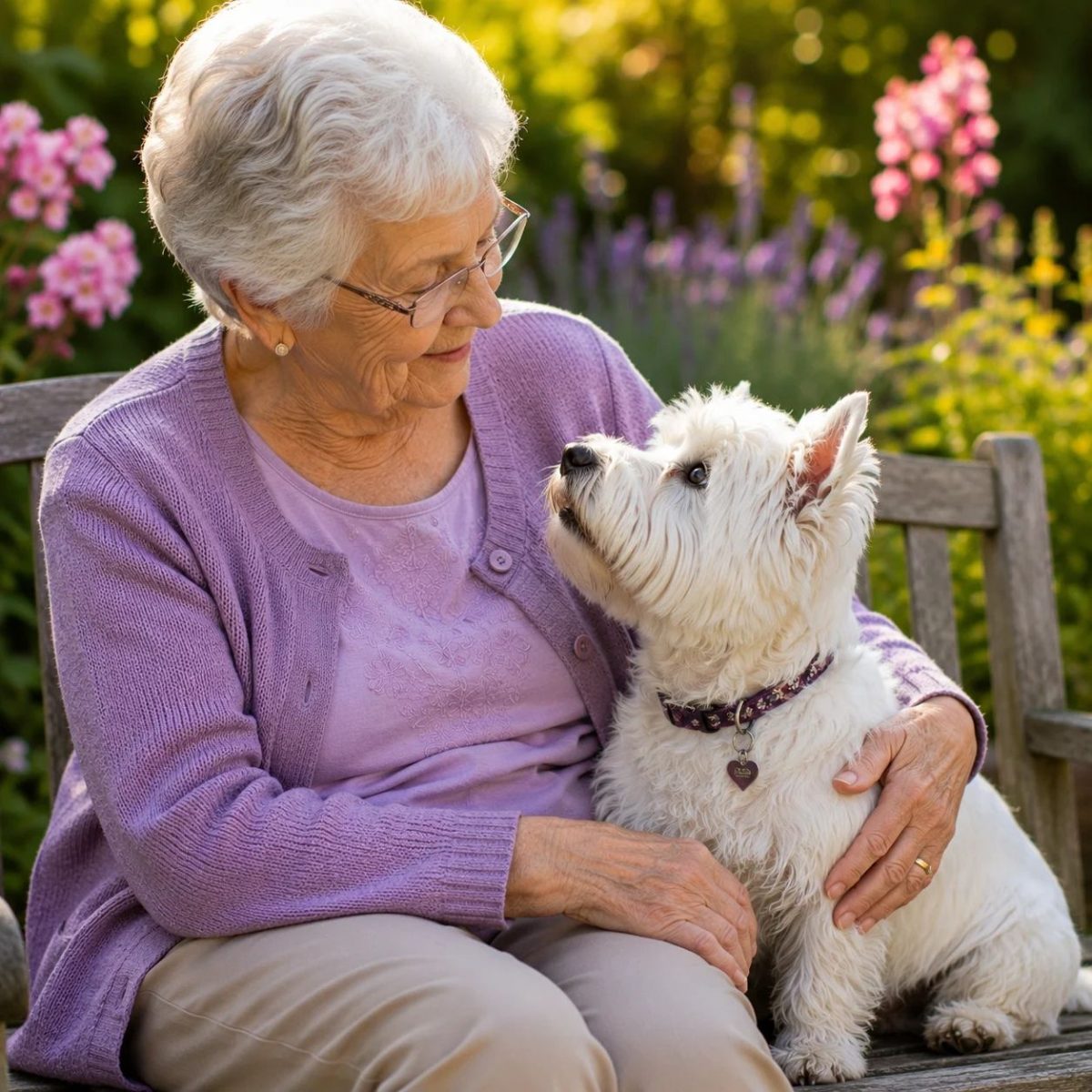
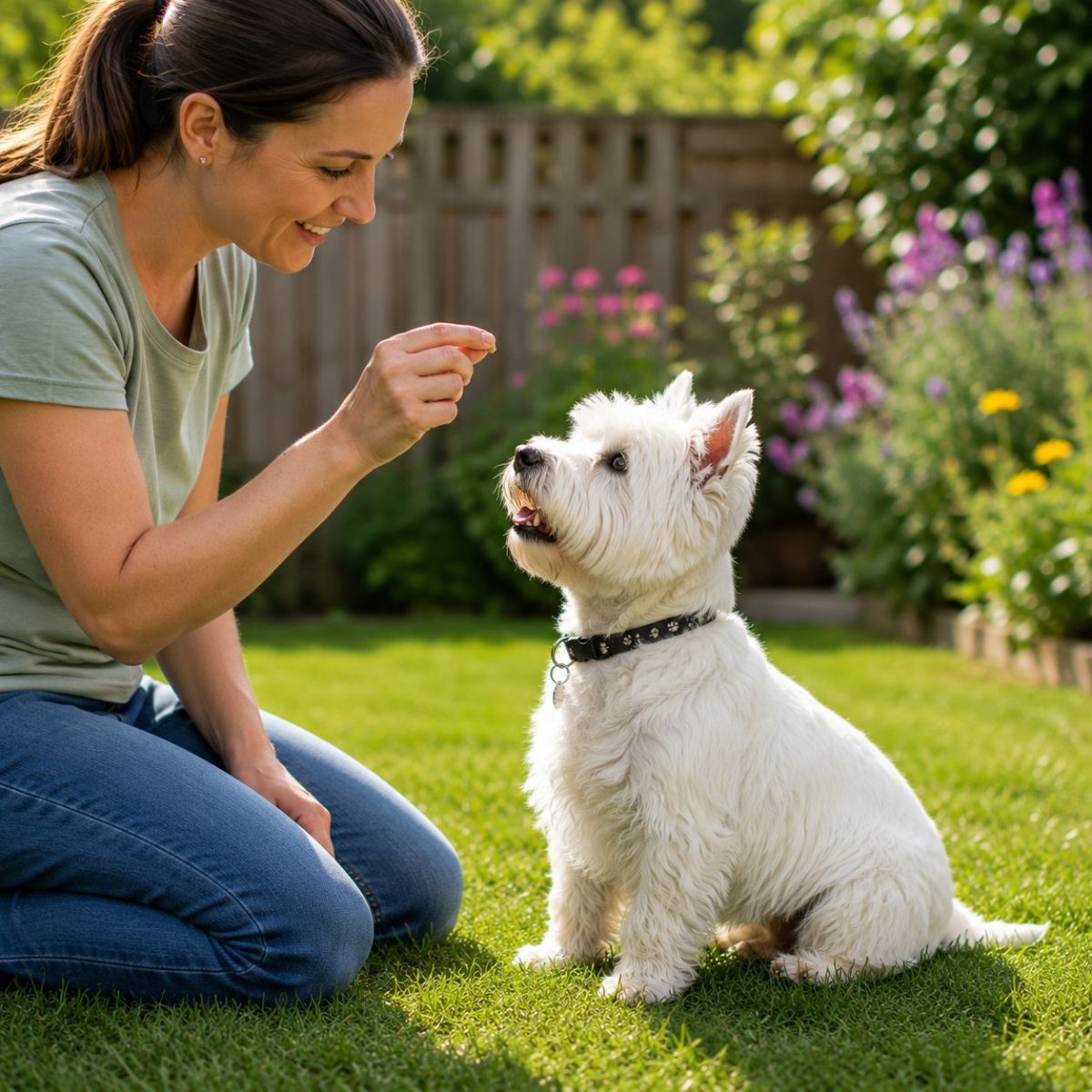
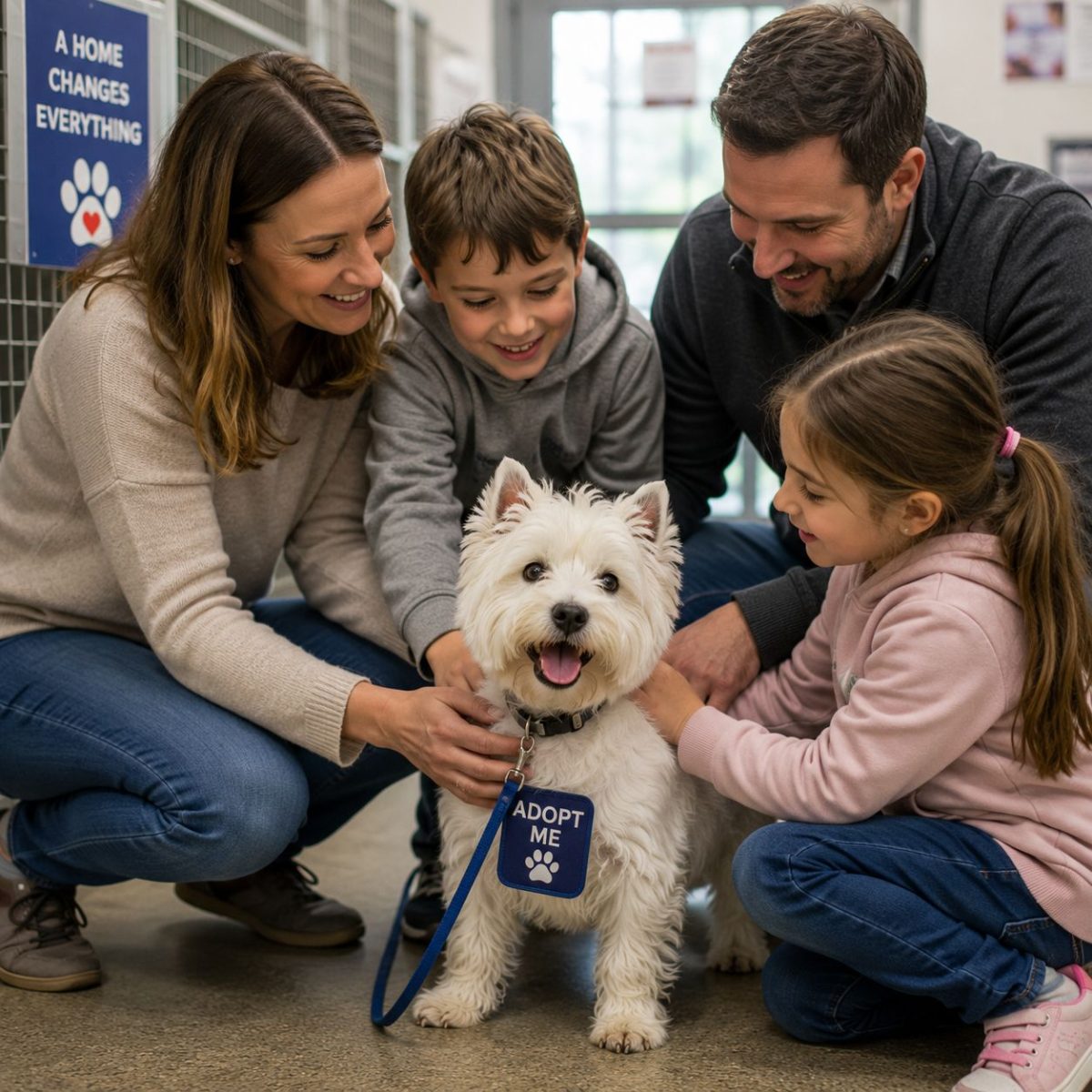
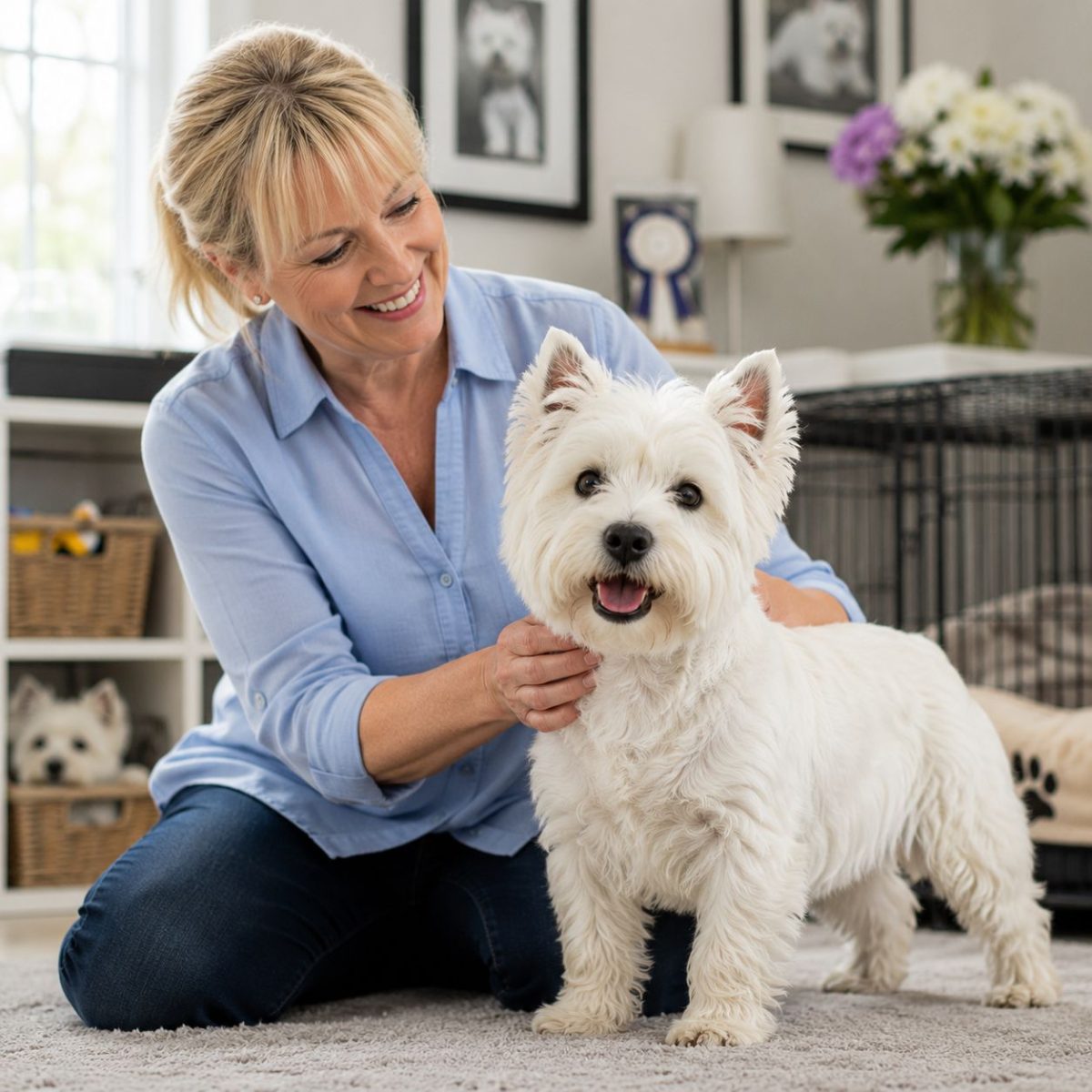
West Highland White Terriers are wonderfully expressive little dogs. From their bright, inquisitive faces to their spirited outdoor adventures an quiet moments at home, these photographs offer a glimpse into everyday life with a Westie.
Click or tap any photograph to view the full-size image.








Meet the West Highland White Terrier
 The West Highland White Terrier may be small in stature, but don’t let that fool you. Beneath that bright white coat is a confident, intelligent, and determined little dog with the heart of a much larger breed. Affectionately known as the Westie, this cheerful Scottish terrier is full of personality and approaches life with curiosity, courage, and enthusiasm.
Originally developed to hunt foxes, badgers, rats, and other vermin in the rugged Scottish Highlands, the Westie retains many of the traits that made it such an effective working dog. Westies are alert, quick-thinking, independent, and eager to investigate anything that catches their attention. While these instincts can occasionally translate into digging, barking, or chasing small animals, they also make Westies engaging companions who bring considerable entertainment to everyday life.
One of the breed’s greatest strengths is its adaptability. Westies can live happily with an active family, a retired couple, or a single owner who enjoys spending time with their dog. Their compact size makes them well suited to apartments and smaller homes, provided they receive regular walks, playtime, training, and opportunities to satisfy their naturally inquisitive minds.
Although they form deep bonds with their families, Westies usually retain the confident independence for which terriers are famous. They enjoy affection and companionship but are not always clingy. Many owners describe them as little comedians with a mischievous streak, always ready to make their family laugh with an unexpected antic or determined investigation of something new.
Westies tend to approach unfamiliar situations with interest rather than hesitation. A well-socialized Westie is often friendly with visitors, willing to explore new places, and happy to take part in family outings. Their confidence can be one of their most endearing qualities, although it also means that early training and sensible boundaries are important.
Friendly without being overly dependent, energetic without being relentlessly hyperactive, and affectionate without demanding constant attention, the West Highland White Terrier strikes an appealing balance that has made the breed a favourite companion around the world for well over a century.
❤️ A Moment Every Westie Owner Will Recognize
“I didn’t ask for a supervisor, but apparently every household task now requires Westie approval.”
From unpacking groceries to rearranging furniture, many Westies feel personally responsible for inspecting every activity in the home.
History & Origins
The West Highland White Terrier traces its roots to the rugged Highlands of western Scotland, where small, fearless terriers were bred to hunt foxes, badgers, otters, rats, and other quarry. Working alongside hunters, these determined little dogs were expected to follow animals into rocky dens and underground burrows, relying on courage, persistence, intelligence, and physical toughness to do their jobs.
 ;
;
Like many of Scotland’s native terriers, the ancestors of today’s Westie were originally found in a variety of coat colours, including white, wheaten, red, brindle, and darker shades. Over time, selective breeding helped produce several distinct Scottish terrier breeds, including the Cairn Terrier, Scottish Terrier, Skye Terrier, and West Highland White Terrier.
Why Were Westies Bred to Be White?
One of the best-known stories behind the breed involves Colonel Edward Donald Malcolm of Poltalloch. According to breed tradition, one of his reddish terriers was accidentally mistaken for a fox during a hunt and was tragically shot. Determined to prevent such an accident from happening again, Colonel Malcolm began selectively breeding white-coated terriers that would be easier to distinguish from quarry in the field.
Although historians debate some details of this story, the practical value of a white working coat is easy to understand. A pale dog was far more visible among rocks, vegetation, and dark-coloured quarry, reducing the chance that hunters would mistake the terrier for the animal being pursued.
Early Breed Names
The dogs that eventually became known as West Highland White Terriers were associated with several different names during the breed’s development. Some were called Poltalloch Terriers in reference to Colonel Malcolm’s estate, while others were known as Roseneath Terriers. As the breed became standardized, the name West Highland White Terrier was adopted to reflect both its Scottish origins and its distinctive coat.
Recognition as a Distinct Breed
By the late 1800s and early 1900s, Westies were appearing at organized dog shows and gaining recognition as a distinct breed. Their attractive appearance, lively personality, and adaptable nature quickly earned them admirers far beyond Scotland.
The breed’s popularity continued to grow as Westies made the transition from working farm and hunting dogs to household companions. Their compact size allowed them to fit comfortably into urban homes, while their sturdy construction and adventurous personality appealed to people seeking a small dog that was neither fragile nor timid.
The Modern Westie
Today, West Highland White Terriers are cherished around the world as affectionate family companions. Although relatively few modern Westies spend their days hunting vermin, many still display classic terrier instincts. They enjoy investigating scents, digging, chasing wildlife, patrolling the garden, and enthusiastically exploring their surroundings.
These behaviours are not simply amusing personality quirks. They are reminders of the breed’s working heritage and help explain why Westies benefit so greatly from scent games, interactive play, secure outdoor areas, and opportunities to investigate the world around them.
💡 Did You Know?
The Westie’s brilliant white coat was developed for practical visibility rather than fashion. Hunters wanted terriers that could be distinguished easily from foxes and other quarry while working in rough Scottish terrain.
⭐ Dogs Central Recommendation
Understanding the Westie’s working history makes many modern behaviours easier to manage. Digging, alert barking, chasing movement, and intense sniffing are deeply rooted instincts. Rather than punishing these behaviours indiscriminately, provide safe and appropriate outlets for them through scent games, designated digging areas, secure walks, and structured play.
Size, Coat & Appearance
The West Highland White Terrier may be small in stature, but there is nothing small about its presence. With its bright white coat, alert expression, and confident stance, the Westie is one of the world’s most recognizable terrier breeds. Built to work both above and below ground, these compact dogs combine strength, agility, and surprising toughness in a sturdy little package.

How Big Do Westies Get?
Adult West Highland White Terriers typically stand 10 to 11 inches (25 to 28 cm) at the shoulder and weigh between 15 and 20 pounds (7 to 9 kg). Males are often slightly larger and heavier than females, although both share the same balanced, athletic build.
Despite their compact size, Westies are solidly built dogs with deep chests, strong legs, and enough endurance for brisk walks, active play, and outdoor adventures. They should never appear fragile or overly delicate.
The Signature White Coat
The Westie’s beautiful white double coat is one of the breed’s defining features. It consists of a harsh, straight outer coat that helps repel dirt and moisture, along with a soft, dense undercoat that provides insulation in cool and wet weather.
The breed standard recognizes only one colour—white. This distinctive coat originally served a practical purpose by making working terriers easier to distinguish from foxes and other quarry.
Head, Ears & Expression
Westies have a broad, slightly rounded head with dark, medium-sized eyes that give them an alert, intelligent expression. Their small, pointed ears stand upright, adding to their lively appearance, while their black nose and dark eye rims create a striking contrast against the white coat.
The breed’s expression is often described as keen, curious, and cheerful. Even when sitting quietly, a Westie usually looks as though it is considering what to investigate next.
Body & Tail
The Westie’s body is compact, muscular, and well balanced. The chest is deep, the back is level, and the legs are strong enough to support the breed’s active, adventurous lifestyle.
The tail is traditionally described as carrot-shaped and is carried upright rather than curled over the back. Historically, the tail was valued for being strong enough to help hunters retrieve a dog from a burrow if necessary, although a Westie should never be lifted or pulled by the tail.
When Do Westies Reach Full Size?
Most Westie puppies reach their full height by around 10 to 12 months of age, although they may continue filling out and developing muscle until approximately 18 months old.
Growth rates vary among individual dogs. A puppy may look somewhat leggy during certain stages before developing the compact, balanced appearance associated with the adult breed.
Maintaining a Healthy Body Condition
Because Westies are small and naturally sturdy, excess weight can be easy to overlook. A healthy adult should have a visible waist when viewed from above, and the ribs should be easy to feel beneath a light covering of muscle and fat.
⭐ Dogs Central Recommendation
Judge your Westie’s health by body condition rather than relying only on the number on the scale. Even a small amount of excess weight can place unnecessary strain on the joints and reduce comfort during exercise.
💡 Did You Know?
A healthy Westie coat often sheds dried mud surprisingly well. Once the coat dries, much of the dirt can be brushed away rather than requiring an immediate bath.
❤️ A Moment Every Westie Owner Will Recognize
“Five minutes after grooming, he found the only muddy puddle in the entire park.”
Owning a white dog means appreciating the spotless moments—and learning to laugh when they do not last very long.
Temperament & Personality
The West Highland White Terrier is often described as a big dog in a small body, and it is easy to understand why. Confident, fearless, and full of character, Westies approach life with enthusiasm and curiosity. They are intelligent enough to solve problems, independent enough to think for themselves, and affectionate enough to become deeply devoted family companions.
Unlike some small dogs that prefer to be carried or protected from every unfamiliar situation, Westies generally see themselves as capable little adventurers. They enjoy exploring new places, meeting people, investigating scents, and taking an active role in family life.

Confident and Curious
Westies are naturally curious dogs. A new sound, unfamiliar object, or interesting scent is usually treated as something worth investigating. This confidence can make them enjoyable travel companions and eager participants in family outings.
It can also lead them into trouble if their environment is not secure. A gap beneath a fence, a squirrel across the road, or an open garden gate may prove difficult for an inquisitive terrier to resist.
Affectionate but Usually Not Clingy
Most Westies form strong emotional bonds with their families and enjoy spending time near the people they love. Many happily curl up beside their owner in the evening or follow family members from room to room.
At the same time, they often retain enough independence to settle nearby without demanding constant physical contact. Some are enthusiastic lap dogs, while others prefer to sit beside you rather than on you.
Playful and Entertaining
 Westies tend to retain a playful spirit throughout much of their lives. They enjoy toys, games, short bursts of energetic activity, and interactive attention from their owners.
Their expressive faces and determined personalities often make them natural comedians. Many owners find that a Westie can turn an ordinary household moment into something memorable simply by insisting on being involved.
Independent Terrier Thinking
Westies were bred to work without constant human direction. When pursuing quarry underground, they needed to make decisions quickly and independently. That history still influences the breed today.
A Westie may understand a command perfectly but pause to decide whether following it is currently the most rewarding option. This does not mean the dog is unintelligent. In fact, it often demonstrates the opposite.
Alert and Vocal
Westies usually make excellent little watchdogs. Their keen hearing and natural alertness mean they are quick to announce visitors, delivery vehicles, unfamiliar noises, and activity outside the home.
Without training, alert barking can become excessive. Teaching a calm response to the doorbell and a reliable quiet cue helps owners enjoy the benefits of an attentive dog without allowing barking to control the household.
Are Westies Cuddly?
Many Westies are affectionate and enjoy physical closeness, particularly after exercise or in the evening. However, individual preferences vary. Some love being held, while others prefer sitting beside their favourite person with all four feet firmly on the furniture.
Are Westies Stubborn?
Westies can certainly appear stubborn, especially when distracted by a scent or engaged in an activity they find rewarding. More accurately, they are independent thinkers that respond best when training is positive, interesting, and worthwhile.
Do Westies Choose One Favourite Person?
Some Westies form an especially close bond with one member of the household, but most remain affectionate and engaged with the entire family. Early socialization and shared care responsibilities help prevent one person from becoming the dog’s only source of comfort or attention.
Are Westies Good Watchdogs?
Yes. Westies are alert, observant, and usually quick to sound the alarm. They are excellent at letting you know that someone has arrived, although their small size means they are watchdogs rather than guard dogs.
⭐ Dogs Central Recommendation
Do not try to eliminate barking completely. Instead, teach your Westie which situations deserve attention and how to become quiet once you have acknowledged the alert.
⚠️ Beginner Mistake to Avoid
Do not mistake confidence for permission to skip socialization. Even naturally outgoing puppies need positive exposure to people, dogs, sounds, surfaces, handling, and unfamiliar environments.
💡 Owner Tip
Westies are happiest when included in everyday life. Walks, errands, training games, garden time, and quiet evenings together all help satisfy their need for companionship and involvement.
Life With a Westie
 Living with a West Highland White Terrier is rarely dull. These cheerful little dogs have an impressive ability to make themselves part of everything you do. Whether you are preparing breakfast, gardening, folding laundry, watching television, or heading out for a walk, your Westie will probably want to know what is happening.
They Like to Be Involved
Westies thrive when they are treated as genuine members of the family. They enjoy joining daily routines and often position themselves where they can observe household activity.
A Westie does not necessarily need constant entertainment, but most want to feel included. Being shut away from the family for long periods can lead to frustration, barking, or attention-seeking behaviour.
They Appreciate Routine
Regular mealtimes, walks, rest periods, and evening routines help Westies feel secure. Many quickly learn the household schedule and may remind you when a familiar activity appears to be running late.
Routine does not mean every day must be identical. In fact, Westies benefit from variety within a predictable structure, such as taking different walking routes or introducing new enrichment games.
They Are Often Good at Settling
After their exercise and mental needs have been met, many adult Westies are quite content to relax near their family. They may nap in a sunny spot, watch through a window, or curl up beside someone on the sofa.
Puppies and adolescents usually need more help learning how to settle. Providing appropriate chew toys, a comfortable resting area, and calm reinforcement helps develop this important skill.
They Notice Everything
A bird in the garden, a parcel at the door, a neighbour closing a gate, or a bag being opened in the kitchen may immediately capture a Westie’s attention. Their alertness and curiosity make them engaging companions, but they also mean that owners need to teach calm responses to everyday activity.
They Can Be Surprisingly Determined
If a Westie decides that something deserves investigation, it may be difficult to redirect without a strong reward. Secure fencing, careful lead handling, and regular recall practice are especially important for this breed.
They Bring Humour Into the Home
Many owners describe Westies as natural entertainers. Their expressive reactions, confident posture, and determination to participate in household life often make them seem almost theatrical.
They are the kind of dogs that may inspect a grocery bag, rearrange their bedding, bark at a suspicious garden ornament, and then settle beside you as though they have completed an important day’s work.
❤️ Living With a Westie
If you enjoy an intelligent, active companion with a strong personality, a Westie can reward you with years of loyalty, laughter, and affection. They do best in homes where their individuality is appreciated but sensible boundaries remain consistent.
❤️ A Moment Every Westie Owner Will Recognize
“I moved one chair, and he spent ten minutes investigating what had happened to the entire room.”
Westies are remarkably observant. Even a small household change may require a complete terrier inspection.
A Day in the Life of a Westie
Every dog is different, but a typical day with a healthy adult Westie usually includes outdoor exploration, family involvement, play, rest, and several opportunities to investigate something that humans may not consider important.

🌅 7:00 a.m. – Rise and Shine
Your Westie is usually ready to greet the day with enthusiasm. After a quick stretch and a cheerful tail wag, it is time for a bathroom break and a patrol of the garden or immediate outdoor area.
Even if nothing appears to have changed overnight, your Westie may strongly disagree. New scents, birds, damp grass, and evidence of visiting wildlife all deserve careful inspection.
🍳 7:30 a.m. – Breakfast Time
Many Westies are enthusiastic eaters. Breakfast is often followed by a check of what everyone else is doing, particularly if human food is being prepared nearby.
A puzzle feeder, slow-feeding bowl, or small scent game can add mental stimulation to the first meal of the day.
🚶 9:00 a.m. – Morning Walk
A neighbourhood walk gives your Westie a chance to exercise, sniff, observe, and practise good lead manners. For many dogs, the opportunity to investigate scents is just as valuable as the physical distance covered.
Allowing reasonable sniffing time can make the walk more satisfying and may help your dog return home calmer.
😴 11:00 a.m. – Time to Rest
After exercise and breakfast, many adult Westies are ready for a nap. They may choose a sunny patch, a favourite bed, or a place near the family.
Even while resting, they often remain alert enough to notice a door opening, a cupboard being accessed, or a delivery vehicle stopping nearby.
🎾 2:00 p.m. – Play or Training
A short game of fetch, gentle tug, trick training, or a puzzle toy provides useful afternoon stimulation. Sessions do not need to be long. Five or ten focused minutes can be highly rewarding.
🐿️ 4:00 p.m. – Garden Patrol
A securely fenced garden gives your Westie another chance to sniff, explore, and monitor local wildlife. Digging may be especially tempting during this part of the day.
Owners who value their flower beds may wish to provide a designated digging area filled with safe soil or sand.
🍽️ 6:00 p.m. – Dinner
Evening mealtime is another highlight. Measured portions help prevent gradual weight gain, particularly in dogs that receive training treats throughout the day.
🛋️ 8:00 p.m. – Family Time
Many Westies enjoy spending the evening near their people. Some curl up beside someone on the sofa, while others choose a nearby bed where they can supervise the room.
This is also a good time for gentle brushing, dental care, or a calm chew activity.
🌙 10:00 p.m. – Bedtime
After one final outdoor break, most Westies are ready to settle for the night. A consistent bedtime routine can help puppies and newly adopted dogs learn what to expect.
⭐ Dogs Central Recommendation
Use a daily rhythm rather than an inflexible schedule. Westies benefit from predictable meals, walks, rest, and family time, but they also enjoy enough variety to keep life interesting.
💡 Did You Know?
Sniffing is mentally demanding. A slow walk filled with scent exploration may leave a Westie more satisfied than a longer walk that offers no opportunity to investigate.
Enriching Daily Life for a Westie
West Highland White Terriers may be small, but they were developed to think independently, investigate their surroundings and pursue animals hiding underground. A short walk and a bowl of food are not always enough to satisfy that active terrier mind.
A fulfilled Westie needs opportunities to sniff, search, solve problems, play and make choices. Mental enrichment is especially important for Westies living in apartments, spending several hours alone or receiving less outdoor exercise because of weather, age or health limitations.

Why Westies Need Mental Enrichment
Without enough constructive activity, a bored Westie may invent entertainment. Common results can include excessive barking, persistent digging, chewing household objects, patrolling windows, chasing small animals or repeatedly demanding attention.
These behaviours are not necessarily signs of a “bad” dog. They often reflect normal terrier instincts that have not been given an acceptable outlet.
Dogs Central Recommendation
Give your Westie at least one purposeful mental activity every day. A ten-minute scent game, short training session or food puzzle can sometimes be more satisfying than simply extending an ordinary walk.
Let Your Westie Use Their Nose
Scent-based activities are among the easiest and most effective ways to enrich a Westie’s day. Sniffing allows dogs to gather information, make decisions and use natural searching behaviours.
Simple scent activities include:
- Scattering part of a meal across a clean lawn or snuffle mat
- Hiding treats around one room and encouraging your Westie to find them
- Placing food beneath several lightweight cups and allowing the dog to choose
- Creating a short indoor scent trail with tiny pieces of food
- Allowing relaxed “sniff walks” instead of requiring constant forward movement
Begin with easy hiding places so your Westie understands the game. Gradually make the search more challenging as confidence grows.
Food Puzzles and Interactive Feeders
Many Westies enjoy working for part of their daily food. Puzzle toys, slow feeders, treat-dispensing balls and stuffed rubber toys can turn a meal into a productive activity.
Choose puzzles that match your dog’s experience level. A puzzle that is too easy may be finished immediately, while one that is too difficult can cause frustration. Supervise new toys until you know your Westie will use them safely rather than chewing pieces from them.
Beginner Mistake to Avoid
Do not add large quantities of treats on top of your Westie’s normal meals. Use part of the dog’s measured daily food allowance for puzzles, training and scent games so enrichment does not quietly lead to weight gain.
Games That Appeal to Terrier Instincts
Westies often enjoy games involving pursuit, searching, tugging and controlled digging. Suitable options may include:
- Short games of fetch with a soft toy
- Tug using clear start-and-stop cues
- Hide-and-seek with family members
- Searching through a box filled with loosely crumpled paper and hidden treats
- Digging in a designated sandbox or soil-filled digging area
- Following a flirt pole at a controlled pace
- Finding a favourite toy hidden nearby
Games involving rapid turns or repeated jumping should be adapted for puppies, senior dogs and Westies with joint or back problems.
Creating an Approved Digging Area
Digging is deeply rooted in terrier behaviour. Some Westies rarely dig, while others consider landscaping a personal responsibility.
Rather than expecting every Westie to abandon the instinct completely, owners can create a designated place where digging is allowed. A child-sized sandbox, sturdy soil box or small section of the garden can work well.
Bury a toy or a few treats just beneath the surface and praise your Westie for using the approved area. If the dog begins digging elsewhere, interrupt calmly and redirect them to their own spot.
Real Life Moment
A Westie who suddenly begins digging furiously may not be misbehaving for attention. The dog may have heard or smelled an insect or small animal beneath the ground. That powerful determination is part of the breed’s original working character.
Rotating Toys
Leaving every toy available all the time can make them less interesting. Keep a small selection accessible and rotate toys every few days. An older toy often feels new again after it has been out of sight for a while.
Many Westies enjoy:
- Durable rubber food toys
- Small balls that are too large to swallow
- Soft toys for carrying and shaking
- Tug toys
- Snuffle mats
- Beginner and intermediate puzzle toys
Inspect toys regularly and remove anything damaged enough to expose stuffing, hard fragments or loose pieces.
Training as Enrichment
Training does not need to feel formal. Practising “touch,” “find it,” “go to bed,” “spin,” “wait” or the names of favourite toys can provide valuable mental exercise.
Several short sessions usually work better than one long lesson. Westies can be enthusiastic learners, but repetition without variety may cause them to lose interest.
Enrichment for Westies Home Alone
Before leaving a Westie alone, provide exercise, a toilet break and a calm settling period. A safe food puzzle or long-lasting activity may help the dog relax as the household becomes quiet.
Do not leave unfamiliar toys with an unsupervised dog. Test them first while you are present, and avoid items that your Westie attempts to tear apart or swallow.
Background sound, a comfortable resting area and blocked access to highly stimulating windows may help dogs that bark at every passing person, vehicle or animal.
Enrichment for Senior Westies
Older Westies still benefit from novelty and purposeful activity, even when vigorous exercise is no longer comfortable.
Senior-friendly enrichment may include:
- Easy scent searches
- Slow food puzzles
- Gentle training refreshers
- Short outings to interesting but quiet locations
- Soft toys for carrying
- Several brief sniff walks instead of one long walk
Adapt activities to changes in vision, hearing, mobility and dental comfort.
Did You Know?
Mental effort can be tiring. A Westie may settle contentedly after a brief scent game or training session even when the activity involved very little running.
Westie Exercise Needs
Westies are energetic, sturdy little dogs that generally need more activity than their compact size suggests. They are not usually satisfied with spending the entire day indoors followed by a quick trip outside for toileting.
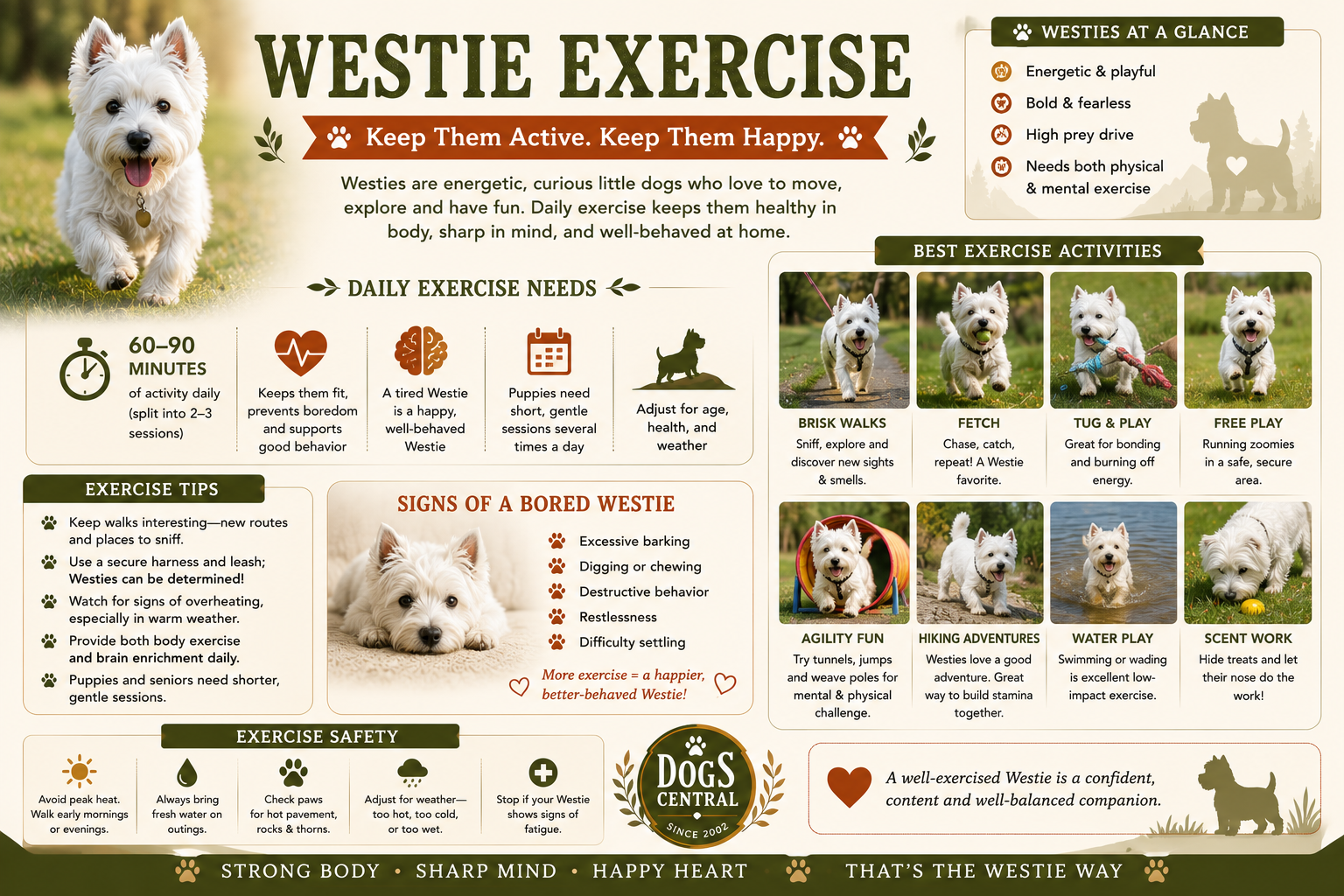
Most healthy adult Westies benefit from approximately 45 to 60 minutes of total daily physical activity, divided into two or more outings or play sessions. Individual needs vary according to age, health, temperament, fitness and the intensity of the activity.
How Much Exercise Does an Adult Westie Need?
A typical adult Westie may do well with:
- One brisk walk of 25 to 30 minutes
- A second shorter walk or active play session
- Several brief opportunities for sniffing, training and exploration
Some Westies happily participate in longer hikes and active family outings, while others are content with moderate walks and games at home. Build endurance gradually rather than assuming every small terrier is immediately prepared for strenuous exercise.
Dogs Central Recommendation
Balance brisk movement with time to sniff. A walk should not be treated only as distance to be covered. Sniffing, observing and exploring are important parts of the experience for a terrier.
Walking a Westie
Westies usually enjoy walks and often approach the world with bold curiosity. Because they may react quickly to squirrels, birds, rabbits or unfamiliar dogs, reliable leash handling is important.
A comfortable, well-fitted harness can reduce pressure on the neck, particularly for dogs that pull or cough when excited. Identification should be attached securely, and microchip information should remain current.
Allowing a Westie to walk off leash should be limited to securely fenced areas unless the dog has an exceptionally reliable recall. Even a well-trained terrier may temporarily ignore an owner when prey drive takes over.
Can Westies Be Good Hiking Companions?
Many healthy adult Westies enjoy moderate hiking. Their sturdy build, confidence and enthusiasm can make them lively companions on suitable trails.
Before attempting a longer hike:
- Increase distance gradually
- Choose terrain appropriate for a small dog
- Bring water and allow regular rest breaks
- Check the weather and ground temperature
- Inspect paws and coat after the outing
- Keep the dog leashed where wildlife may be present
Very steep climbs, repeated jumping from rocks and long distances over hard surfaces may be unsuitable for puppies, seniors or dogs with orthopedic problems.
Exercise Needs of a Westie Puppy
Westie puppies need daily activity, but their exercise should consist mainly of short walks, free play, gentle exploration, training and rest. Puppies do not need forced long-distance exercise.
A young puppy may have bursts of intense energy followed by sudden sleep. Several brief play and training periods spread throughout the day are generally more appropriate than one exhausting outing.
Avoid repetitive high-impact activities such as:
- Long runs beside a bicycle
- Repeated jumping from furniture
- Constant stair climbing
- Extended walks beyond the puppy’s comfort
- Endless ball chasing with abrupt turns
Beginner Mistake to Avoid
Do not try to “wear out” a Westie puppy with excessive exercise. An overtired puppy may become more excitable, mouthy and difficult to settle rather than calmer.
Exercise for a Senior Westie
Senior Westies usually continue to benefit from daily movement. Regular gentle exercise supports mobility, muscle condition, weight control and mental wellbeing.
Adjust the routine when an older dog begins to slow down. Several short walks may be more comfortable than one long outing. Choose level surfaces, allow extra sniffing time and watch for stiffness, lagging behind or reluctance to continue.
A sudden decline in exercise tolerance should not automatically be dismissed as normal aging. Pain, heart disease, respiratory problems and other medical conditions can also reduce stamina.
Indoor Exercise for Bad-Weather Days
Westies can remain active indoors when weather makes outdoor exercise difficult.
Useful indoor activities include:
- Walking through the house while practising leash manners
- Short games of fetch in a clear hallway
- Hide-and-seek
- Food searches
- Tug with rules
- Trick training
- Walking around safely arranged household obstacles
Indoor exercise should take place on secure footing. Slippery floors can make rapid turns and jumping unsafe.
Do Westies Get the Zoomies?
Yes. Many Westies occasionally race around the house or yard in sudden bursts of excitement. These episodes are often called zoomies and are generally normal.
Zoomies may occur after a bath, after toileting, during evening excitement or following a period of restraint. Clear a safe path and avoid chasing the dog, which may increase excitement.
Frequent frantic activity accompanied by difficulty settling may indicate that the dog needs a better balance of sleep, exercise, mental enrichment and calm routine.
Signs a Westie May Need More Activity
A Westie receiving too little physical or mental activity may:
- Bark repeatedly for attention
- Chew or shred household items
- Dig persistently
- Pace or patrol windows
- Harass other pets
- Demand constant play
- Struggle to settle in the evening
Increasing activity may help, but sudden behavioural changes should also be discussed with a veterinarian. Pain, anxiety and medical problems can sometimes resemble boredom.
Signs of Too Much Exercise
Exercise should be reduced and veterinary advice considered if a Westie shows:
- Persistent limping
- Unusual stiffness after rest
- Reluctance to walk or climb
- Repeatedly lying down during outings
- Excessive panting that does not settle
- Sore, worn or damaged paw pads
- A noticeable decline in energy
Real Life Moment
A Westie may confidently charge ahead at the beginning of a walk and then expect to be carried home once the excitement wears off. Build distance gradually and remember that enthusiasm is not always the same as physical conditioning.
Training a West Highland White Terrier
Westies are intelligent, observant and capable of learning quickly. They are also independent terriers that were bred to work without waiting for constant human direction. This combination can produce a dog that understands exactly what is being requested while still considering whether cooperation is worthwhile.
Successful Westie training depends less on force and more on clarity, consistency, timing and motivation.

Are Westies Easy to Train?
Westies are usually capable learners, but they are not always naturally obedient. Many respond well when lessons are brief, upbeat and rewarding. Repetitive drilling, harsh corrections or unclear expectations can cause resistance or disengagement.
For many owners, the challenge is not teaching a Westie a cue. It is helping the dog perform that behaviour reliably when something more interesting appears.
Dogs Central Recommendation
Keep training sessions short enough that your Westie finishes wanting more. Three to five focused minutes several times a day may produce better results than one long lesson.
 Best Training Methods for Westies

Westies generally respond best to reward-based training using food, toys, praise, access to sniffing or other things the individual dog values.
A practical training session should:
- Teach one clear skill at a time
- Reward the correct response promptly
- Use small, high-value rewards when distractions are present
- End before the dog becomes bored or frustrated
- Practise in several locations
- Gradually increase difficulty
A cue learned in the kitchen may seem completely different to a dog when practised in the garden, on the sidewalk or near another animal. This is why training must be repeated in varied environments.
Essential Skills to Teach a Westie
Useful foundation skills include:
- Responding to their name
- Coming when called
- Walking without constant pulling
- Leaving dropped or dangerous objects
- Dropping an item willingly
- Waiting at doors
- Settling on a mat or bed
- Remaining comfortable during grooming
- Accepting gentle handling of paws, ears and mouth
- Staying calm when visitors arrive
Recall Training
Recall is especially important for a breed with strong chasing instincts. Begin indoors or in a securely enclosed area where success is likely.
Call your Westie in a cheerful voice, reward generously when the dog arrives and then release them again when appropriate. Coming to the owner should not always mean that play ends, the leash goes on or something unpleasant happens.
Practise with a long training line outdoors before considering any off-leash freedom. Never test recall near traffic or in an unsecured area.
Beginner Mistake to Avoid
Do not repeatedly call a Westie who is ignoring you. Each unsuccessful repetition teaches the dog that the cue is optional. Reduce the distance, improve the reward or move to an easier environment.
Leash Training
Many Westies pull because the world ahead is exciting. Pulling also works: when the dog leans forward and the person follows, the dog reaches the desired smell or destination.
Teach loose-leash walking in a quiet location before expecting success on a busy street. Reward the dog for remaining near you, change direction before the leash becomes tight and use permission to sniff as a reward.
Progress may be slow at first, but consistency matters. Allowing pulling on some walks while correcting it on others makes the rule difficult to understand.
House Training a Westie Puppy
House training requires supervision, predictable routines and frequent opportunities to succeed.
Take a puppy outside:
- Immediately after waking
- After eating or drinking
- After energetic play
- After training sessions
- Before bedtime
- Whenever the puppy begins sniffing, circling or wandering away
Reward outdoor toileting immediately. Clean indoor accidents with an enzymatic cleaner and avoid punishment, which may teach the puppy to hide rather than clarify where toileting should occur.
Crate Training
A crate can provide a safe resting space and assist with travel, veterinary recovery and house training. It should be introduced gradually and should never be used as punishment.
Begin by feeding near or inside the open crate, placing comfortable bedding inside and allowing the puppy to enter voluntarily. Close the door only for very brief periods at first, gradually increasing duration while the dog remains relaxed.
A crate is not a substitute for exercise, companionship or toilet breaks.
Teaching a Westie to Settle
Active little dogs often receive plenty of practice becoming excited but very little instruction in becoming calm. Teaching a mat or bed cue can help a Westie relax while the family eats, answers the door or watches television.
Reward the dog for stepping onto the mat, then for lying down and eventually for remaining there calmly. Quietly place occasional treats between the dog’s paws so relaxation—not constant staring at the owner—is reinforced.
Barking
Westies are alert and may bark at visitors, outside noises, other animals or anything they consider unusual. The goal is not necessarily complete silence, but helping the dog alert briefly and then disengage.
Useful strategies include:
- Blocking access to highly stimulating windows
- Rewarding the dog for turning away from the trigger
- Teaching a “thank you” or “quiet” routine
- Providing sufficient exercise and mental stimulation
- Avoiding enthusiastic shouting, which may sound like joining the barking
Persistent barking may also be associated with fear, separation distress or frustration and should be addressed according to its cause.
Digging
Digging is normal terrier behaviour. Training is most effective when management and redirection are used together.
Prevent access to vulnerable flower beds when supervision is not possible. Provide an approved digging area and make it rewarding. Interrupt unwanted digging calmly, guide the dog to the correct location and praise the new choice.
Punishing the dog after discovering a hole does not explain which earlier action caused the owner’s reaction.
Chasing Small Animals
Many Westies have a strong instinct to chase rodents, birds, rabbits and sometimes cats that run. Early socialization can improve behaviour around familiar animals, but training does not erase prey drive.
Use secure fencing, a leash or long line and carefully managed introductions. Do not rely on verbal control alone around vulnerable small pets.
Did You Know?
A Westie that lives peacefully with the family cat may still chase unfamiliar cats outdoors. Familiarity and prey drive can produce very different responses.
Resource Guarding
Some dogs become tense when people approach food, chews, toys or stolen objects. Avoid forcibly removing items unless immediate safety requires it.
Teach trading by offering something better than the object the dog has. Practise “drop” using safe, low-value items and reward generously. Growling should be treated as useful communication rather than punished, because suppressing the warning does not remove the discomfort.
Seek qualified professional help if guarding is intense, escalating or directed toward children.
Jumping on People
A friendly Westie may jump to greet visitors. Teach an alternative such as sitting or keeping all four paws on the floor.
Visitors should avoid rewarding jumping with touching, talking or eye contact. Attention begins when the dog is grounded and pauses when jumping resumes.
Training Around Children
Children should not be expected to manage a Westie’s training alone. An adult should supervise and teach both the dog and the child how to interact safely.
Children can participate by tossing rewards for simple cues, helping prepare food puzzles or calling the dog during carefully managed recall games. They should not take food away, climb on the dog, disturb sleep or attempt to discipline unwanted behaviour.
Socialization
Early socialization should introduce a puppy gradually to people, friendly vaccinated dogs, household sounds, grooming, travel, different surfaces and varied environments.
Socialization does not mean forcing the puppy to interact with everyone. The goal is to create safe, positive experiences while allowing the puppy to observe at a comfortable distance.
Continue positive exposure throughout adolescence. Some Westies become more cautious, territorial or reactive as they mature if social experiences stop after puppyhood.
Handling and Grooming Training
Because Westies require lifelong coat, nail, ear and dental care, cooperative handling should begin early.
Briefly touch a paw, reward and release. Lift an ear, reward and release. Introduce the brush for only a few strokes at first. Gradually build duration while keeping the dog comfortable.
Waiting until the coat is tangled or the nails are overgrown can make a puppy’s first serious grooming experience unnecessarily difficult.
Real Life Moment
A Westie may appear extremely cooperative during training at home and then forget everything when a squirrel crosses the path. This does not mean the dog is unintelligent. It means the distraction is currently more powerful than the training history.
When to Seek Professional Training Help
Contact a qualified reward-based trainer or veterinary behaviour professional when a Westie displays:
- Fear or aggression toward people or animals
- Severe separation-related distress
- Intense resource guarding
- Unmanageable barking or reactivity
- Panic during grooming or handling
- Behaviour that places the dog or household at risk
Early assistance is usually easier than waiting until the behaviour becomes firmly established.
Westie Grooming and Coat Care
The West Highland White Terrier’s bright white coat is one of the breed’s most recognizable features. It is also a practical working coat that requires consistent care to remain clean, comfortable and free from tangles.
A properly maintained Westie coat consists of a harsh outer layer over a softer undercoat. The traditional texture helps protect the dog from weather, dirt and rough vegetation. However, coat texture can vary considerably between individual dogs, especially among pet-bred Westies.

How Much Grooming Does a Westie Need?
Most Westies benefit from:
- Brushing and combing several times each week
- Professional grooming approximately every 6 to 8 weeks
- Regular nail trimming
- Routine ear checks
- Frequent dental care
- Occasional bathing as needed
- Daily attention to the face if staining or food buildup develops
Westies kept in a longer, more traditional coat require more home maintenance than dogs wearing a shorter pet trim.
Dogs Central Recommendation
Ask your groomer to show you exactly how to brush and comb the coat between appointments. Many owners brush only the surface while small tangles remain close to the skin, particularly behind the ears, beneath the collar and around the legs.
Brushing a Westie

Brushing removes loose hair, dirt and small tangles while distributing natural oils through the coat. A metal comb should be used after brushing to confirm that no hidden knots remain.
Common trouble spots include:
- Behind the ears
- Under the front legs
- Around the collar or harness
- Along the chest
- Inside the back legs
- Around the tail
- Under the chin and beard
Work in small sections and brush gently from the skin outward. Hold the hair close to the skin when easing out a tangle so the coat is not pulled sharply.
Useful Grooming Tools
A basic home grooming kit may include:
- A good-quality pin brush or soft slicker brush
- A stainless-steel comb with both wide and narrow teeth
- A detangling spray suitable for dogs
- Dog nail clippers or a nail grinder
- Dog toothbrush and canine toothpaste
- Soft cloths for cleaning the face and beard
- Styptic powder for minor nail-trimming accidents
Choose tools appropriate for the individual dog’s coat. A groomer can help determine whether a brush is reaching through the full coat without scratching the skin.
Hand-Stripping Versus Clipping
Westie owners often encounter two main grooming methods: hand-stripping and clipping.
Hand-Stripping
Hand-stripping removes dead outer hairs from the root so new, harsh coat can grow in its place. This method helps preserve the traditional texture, shape and weather-resistant qualities of the coat.
It is most commonly used for show dogs and for owners who want to maintain a classic working-terrier coat. Proper hand-stripping takes skill and can require regular appointments with a groomer experienced in stripped terrier coats.
Clipping
Clipping shortens the coat with electric clippers or scissors. It is convenient, widely available and often preferred for family pets.
Over time, repeated clipping may soften the coat, lighten its texture or make it appear fluffier. This is not harmful in itself, but the coat may no longer have the same crisp appearance or protective quality as a hand-stripped coat.
Did You Know?
Hand-stripping does not mean pulling healthy hair painfully from the skin. A skilled groomer removes loose, mature outer hairs that are ready to come away. Improper technique, however, can cause discomfort or skin irritation.
Which Grooming Method Is Best?
The best choice depends on the owner’s goals, the dog’s coat, local groomer availability, budget and the dog’s tolerance for grooming.
Hand-stripping may be appropriate when:
- The owner wants to preserve traditional coat texture
- The dog is shown in conformation
- An experienced terrier groomer is available
- The dog is comfortable with frequent coat work
Clipping may be more practical when:
- The Westie is primarily a family companion
- The owner prefers easier coat maintenance
- The dog is elderly or uncomfortable standing for long sessions
- A skilled hand-stripper is not available locally
Neither choice makes someone a better or worse owner. Comfort, skin health and consistent maintenance matter more than preserving a show-ring finish.
How Often Should a Westie Be Professionally Groomed?
Many pet Westies visit a professional groomer every 6 to 8 weeks. Dogs in longer coats, those prone to tangling or those maintained through rolling hand-stripping may need more frequent appointments.
A professional grooming visit may include:
- Brushing and combing
- Clipping or hand-stripping
- Bathing and drying
- Nail trimming
- Ear cleaning when appropriate
- Trimming around the feet, face and sanitary areas
Discuss your preferred coat length and appearance clearly. Bringing a photograph can help prevent misunderstandings, particularly if you want a traditional rounded Westie head rather than a very short all-over trim.
How Often Should a Westie Be Bathed?
Most Westies should be bathed when they are visibly dirty, develop an odour or require bathing as part of a veterinary skin-care plan. For many pets, this may mean every 4 to 8 weeks, although individual needs vary.
Frequent bathing is not automatically harmful when a gentle dog shampoo is used and the coat is rinsed thoroughly. However, harsh shampoos, human products and incomplete rinsing can dry or irritate sensitive skin.
Brush out tangles before bathing. Water can tighten existing knots and make them more difficult to remove.
Beginner Mistake to Avoid
Do not use whitening shampoo at every bath simply because the coat is white. Some brightening products can be drying or irritating. Choose products according to the dog’s skin condition, not just coat colour.
Keeping the White Coat Clean
A Westie does not need to remain brilliantly white every moment of the day. Normal outdoor play may temporarily leave the paws, beard and underside looking less than pristine.
Between baths, owners can:
- Wipe muddy paws with a damp cloth
- Rinse salt, sand or lawn chemicals from the feet
- Dry the beard after drinking
- Remove food residue after meals
- Use a damp cloth to clean minor surface dirt
- Brush dried soil from the coat once it loosens
Avoid applying household cleaners, bleach, peroxide mixtures or unapproved whitening products to the coat.
Face and Beard Care
The hair around a Westie’s mouth can collect water, food and saliva. Regular wiping helps prevent odour, discoloration and skin irritation.
Use a soft damp cloth and dry the area afterward. Stainless-steel food and water bowls are easy to sanitize and may be helpful for dogs prone to chin irritation.
Persistent staining, redness, sores, odour or itching around the mouth should be evaluated by a veterinarian rather than treated only as a cosmetic issue.
Tear Staining
Some Westies develop reddish-brown staining beneath the eyes. Mild staining may be cosmetic, but excessive tearing can also result from eye irritation, blocked tear drainage, eyelid problems, allergies or hair rubbing against the eye.
Clean the area gently with a damp cloth and keep facial hair neatly trimmed. Do not use harsh stain removers near the eyes.
Veterinary attention is appropriate if tearing increases suddenly or is accompanied by squinting, redness, discharge, swelling or apparent pain.
Ear Care
Westies have upright ears that usually receive reasonable airflow, but they can still develop wax buildup, irritation or infection.
Check the ears weekly for:
- Redness
- Strong odour
- Dark or excessive discharge
- Swelling
- Repeated scratching
- Head shaking
- Sensitivity when touched
Clean only as recommended by your veterinarian or groomer, using a canine ear-cleaning product. Do not insert cotton swabs deeply into the ear canal.
Recurring ear problems may be associated with allergies or other skin disease and deserve veterinary investigation.
Nail Care
Westie nails should be trimmed often enough that they do not click heavily on hard floors or alter the dog’s stance. For many dogs, this means every 2 to 4 weeks.
Long nails can affect traction, posture and comfort. Dewclaws require special attention because they do not wear down naturally against the ground.
Begin nail handling early. Trim only a small amount at first and reward cooperation. Dogs with dark nails may be easier to maintain through frequent tiny trims rather than waiting until the nails are very long.
Paw and Foot Care
Check the feet regularly for:
- Cracked or worn pads
- Redness between the toes
- Grass seeds or other debris
- Snow or ice clumps
- Excess hair between the pads
- Broken nails
- Licking or chewing
Hair growing between the pads may need careful trimming to improve traction and reduce debris buildup. Persistent paw licking is often a sign of irritation, allergy, infection or discomfort rather than simply a habit.
Dental Care
Small dogs are particularly vulnerable to dental disease, and Westies benefit from preventive care throughout life.
Daily tooth brushing with dog-safe toothpaste offers the strongest home protection. Begin slowly by allowing the dog to taste the toothpaste, then touch the lips and gums before gradually introducing a soft toothbrush.
Dental chews and veterinary dental diets may provide additional support, but they do not fully replace brushing or professional veterinary assessment.
Watch for:
- Persistent bad breath
- Red or bleeding gums
- Visible tartar
- Difficulty chewing
- Dropping food
- Pawing at the mouth
- Loose or broken teeth
Dogs Central Recommendation
Make dental handling part of the grooming routine from puppyhood. Even a few seconds of calm practice each day can make lifelong tooth brushing and veterinary mouth examinations much easier.
Preparing a Westie Puppy for Grooming
A puppy’s early grooming lessons should be brief, gentle and rewarding. The goal is not to complete a perfect grooming session but to build trust and comfort.
Practise:
- Standing on a nonslip mat
- Accepting a few brush strokes
- Having each paw held briefly
- Allowing the ears and mouth to be examined
- Hearing clippers, dryers and nail grinders from a distance
- Remaining calm while the face is wiped
Stop before the puppy becomes overwhelmed. Frequent successful mini-sessions are more valuable than one long struggle.
Grooming an Older Westie
Senior Westies may become less comfortable standing for long periods or having stiff joints repositioned. Grooming appointments may need to be shorter, more frequent or adapted around medical needs.
A padded nonslip surface, gentle handling and rest breaks can improve comfort. Inform the groomer about arthritis, heart disease, breathing problems, skin growths, hearing loss or cognitive changes.
A sudden new intolerance of grooming may indicate pain and should not automatically be interpreted as stubbornness.
Real Life Moment
A Westie may look beautifully clean when leaving the groomer and discover a muddy patch within minutes of arriving home. The goal of grooming is health and comfort—not keeping an adventurous terrier permanently spotless.
When Grooming Problems Need Veterinary Attention
Contact a veterinarian if you notice:
- Persistent itching or chewing
- Red, inflamed or broken skin
- Hair loss
- Strong skin or ear odour
- Recurring hot spots
- Darkened or thickened skin
- Greasy or unusually flaky coat
- Pain when touched or brushed
- Sudden changes in coat quality
Westies are prone to skin problems, and grooming products alone cannot correct an underlying allergy, infection or medical condition.
Westie Shedding and Allergies
Westies are often described as low-shedding dogs. This is generally accurate, but it does not mean they release no hair or that they are guaranteed to be suitable for people with allergies.
Do Westies Shed?
Yes, Westies shed, but usually much less visibly than many double-coated breeds. Dead hair is often retained within the coat until it is removed through brushing, hand-stripping or grooming.
Owners may notice:
- Small amounts of hair on clothing or furniture
- Loose hair in the brush or comb
- More shedding during seasonal coat changes
- Additional coat loss if the skin is unhealthy
Regular grooming helps control loose hair and prevents it from contributing to tangles.
Are Westies Hypoallergenic?
No dog breed is completely hypoallergenic. People can react to proteins found in a dog’s dander, saliva and urine—not only to shed hair.
Because Westies tend to release less loose hair into the home, some allergy sufferers may tolerate them better than heavier-shedding breeds. Others may still react strongly.
Beginner Mistake to Avoid
Do not choose a Westie solely because someone has labelled the breed hypoallergenic. Spend meaningful time around adult Westies before making a commitment, ideally indoors and on more than one occasion.
Why Allergy Reactions Differ
Allergy sensitivity varies from person to person and from dog to dog. One individual may tolerate a particular Westie and react to another.
Reactions can also be affected by:
- The amount of close physical contact
- Whether the dog sleeps in the bedroom
- Indoor ventilation
- Carpets and upholstered furniture
- How frequently the home is cleaned
- The dog’s skin health
- Outdoor allergens carried indoors on the coat
Reducing Dog Allergens in the Home
Families with mild sensitivities may reduce exposure by:
- Keeping the dog out of the allergic person’s bedroom
- Using a vacuum with effective filtration
- Washing dog bedding regularly
- Cleaning hard floors and soft furnishings frequently
- Using appropriate air filtration
- Washing hands after prolonged handling
- Having a less-sensitive family member perform brushing
- Maintaining the dog’s skin and coat health
Medical advice should come from a qualified healthcare professional, particularly when a family member has asthma or a history of significant allergic reactions.
Westies and Skin Allergies
Westies themselves are known for being susceptible to allergic skin disease. Environmental allergens, food-related reactions, parasites and contact irritants may all contribute to itching and inflammation.
Possible signs include:
- Frequent scratching
- Licking or chewing the feet
- Recurring ear infections
- Redness of the belly, paws or face
- Hair loss
- Darkened skin
- Musty or unpleasant odour
- Repeated bacterial or yeast infections
These symptoms should not be managed indefinitely with random food changes, frequent shampooing or home remedies. Proper diagnosis may involve a veterinary examination, parasite control, infection testing, dietary trials or referral to a veterinary dermatologist.
Dogs Central Recommendation
Keep a simple record of when itching worsens, where it occurs, what the dog eats and which treatments have been tried. A clear history can help the veterinarian identify patterns and avoid repeating unsuccessful approaches.
Can Bathing Help a Westie With Allergies?
Veterinary-recommended bathing can remove pollen, dust and other allergens from the coat and may help treat certain skin conditions. The correct shampoo and bathing schedule depend on the diagnosis.
Some dogs need medicated baths more frequently than healthy dogs, while others become more irritated when unsuitable products are used. Follow veterinary instructions carefully and rinse the coat thoroughly.
Food Allergies and the Westie Coat
Food allergy is possible, but it is not the only or most obvious explanation for every itchy Westie. Environmental allergies, fleas, mites and secondary infections can produce similar signs.
A true veterinary elimination diet must be followed strictly for the prescribed period. Switching among several commercial foods without a controlled plan may make diagnosis more difficult.
When Increased Shedding Is Not Normal
A noticeable increase in coat loss may result from:
- Skin infection
- Allergic inflammation
- Parasites
- Hormonal disease
- Poor nutrition
- Stress
- Medication effects
- Excessive grooming or coat damage
Patchy hair loss, broken skin, severe itching or changes in skin colour warrant veterinary assessment.
Did You Know?
A dog can be low-shedding and still leave allergens throughout the home. Reduced hair on the furniture does not necessarily mean reduced exposure to saliva or dander proteins.
Is a Westie a Good Choice for an Allergy-Sensitive Household?
A Westie may be worth considering for someone with mild dog allergies, but there is no guarantee of compatibility.
Before adopting or purchasing a Westie:
- Spend several hours around adult dogs of the breed
- Visit more than once if possible
- Interact indoors, where allergens are more concentrated
- Discuss the decision with a medical professional
- Consider whether household cleaning routines are realistic
- Avoid relying on a brief meeting with a young puppy
A lifelong placement should not depend on marketing claims that any breed is allergy-proof.
Westie Nutrition and Feeding
A West Highland White Terrier needs a complete, balanced diet matched to the dog’s age, body condition, activity level and health. Westies are small enough that seemingly modest extras—table scraps, dental chews and training treats—can add a significant number of calories to the day.
There is no single food that is best for every Westie. A healthy puppy, an active adult, a sedentary senior and a dog being treated for skin or digestive disease may each need a different feeding plan.
 ;
;
What Is the Best Food for a Westie?
Choose a food that is:
- Complete and balanced for the dog’s life stage
- Produced by a company with appropriate nutritional expertise and quality-control practices
- Suitable for the Westie’s individual health needs
- Fed in portions that maintain a lean, healthy body condition
- Accepted and digested comfortably by the dog
The ingredient list alone does not reveal whether a diet is properly formulated, digestible or appropriate for a particular dog. Marketing terms such as “premium,” “holistic” and “natural” do not guarantee nutritional superiority.
Dogs Central Recommendation
Choose food according to nutritional adequacy, manufacturer expertise and your dog’s individual needs—not the attractiveness of the package or the current popularity of particular ingredients.
Dry Food, Wet Food or a Combination?
Westies can do well on dry food, wet food or a carefully balanced combination of the two.
Dry Food
Dry food is convenient to measure, store and use in puzzle feeders. It may also be more economical for daily feeding. However, ordinary kibble does not replace tooth brushing unless it is a specifically designed veterinary dental diet.
Wet Food
Wet food contains more moisture and may be appealing to selective eaters, senior dogs or Westies with dental discomfort. Once opened, it must be stored and handled according to the manufacturer’s instructions.
Combination Feeding
Some owners feed both wet and dry food. This can work well provided the total daily amount is measured and the foods together do not supply more calories than the dog requires.
How Much Should a Westie Eat?

The correct quantity depends on the food’s calorie density and the dog’s age, size, activity, reproductive status and metabolism. Feeding charts on packages provide a starting point, not an exact prescription.
Monitor the dog in front of you. A healthy adult Westie should generally have:
- Ribs that can be felt beneath a light covering of tissue
- A visible waist when viewed from above
- An abdominal tuck when viewed from the side
- Good muscle condition
- Stable energy and body weight
If the dog is gaining or losing weight unexpectedly, adjust portions with veterinary guidance rather than relying only on the package recommendation.
How Often Should a Westie Be Fed?
Most healthy adult Westies do well with two measured meals per day. Dividing the daily food allowance may reduce hunger between meals and makes it easier to monitor appetite.
Young puppies generally require more frequent meals because of their small stomachs and developing bodies. The breeder and veterinarian should provide an age-appropriate feeding schedule.
Free-feeding—leaving a full bowl available throughout the day—can make it difficult to measure intake, notice appetite changes and prevent weight gain.
Beginner Mistake to Avoid
Do not continually refill the bowl whenever it appears empty. Measure the Westie’s entire daily allowance, including food used for training and enrichment.
Feeding a Westie Puppy
Westie puppies need food formulated for growth. Their diet must provide appropriate levels and proportions of energy, protein, vitamins and minerals for healthy development.
When bringing a puppy home, continue the breeder’s established food and schedule initially unless a veterinarian recommends otherwise. Moving homes is already stressful, and an abrupt food change can add digestive upset.
If changing diets, transition gradually over several days while watching for vomiting, diarrhea, loss of appetite or significant discomfort.
Avoid encouraging rapid growth through excessive feeding. A puppy should grow steadily while remaining lean rather than becoming round or heavy.
Feeding an Adult Westie
An adult Westie’s calorie needs may change according to exercise, season, neuter status and lifestyle. A dog accompanying an active owner on regular outings may need more food than a Westie whose activity consists mainly of short neighbourhood walks.
Review body condition monthly. Small weight increases are easier to correct before they become substantial.
Feeding a Senior Westie
Older Westies do not all need the same “senior” diet. Some require fewer calories as activity declines, while others need dietary adjustments for kidney disease, digestive problems, dental discomfort or loss of muscle.
Senior dogs should be monitored for:
- Unexplained weight gain or loss
- Loss of muscle over the back or hindquarters
- Changes in thirst or urination
- Difficulty chewing
- Reduced appetite
- Digestive changes
- New food-seeking behaviour
These changes should be discussed with a veterinarian rather than attributed automatically to aging.
Preventing Obesity
Westies can gain weight when portion sizes gradually increase or treats are given frequently. Because the breed is small, even a few extra pounds can represent a substantial increase over ideal body weight.
Excess weight can make exercise harder and may worsen joint, mobility, respiratory and metabolic problems.
To help maintain a healthy weight:
- Measure meals rather than estimating by eye
- Include treats in the daily calorie allowance
- Use tiny training rewards
- Weigh the dog regularly
- Maintain suitable daily activity
- Ask the veterinary team to record body and muscle condition
- Reduce portions promptly if a consistent upward trend develops
Real Life Moment
A small piece of cheese may look insignificant to a person, but it represents a much larger indulgence to a Westie-sized dog. Treat size should match the dog—not the human hand offering it.
Treats and Training Rewards
Westies often respond enthusiastically to food rewards. Treats can be valuable for training, grooming and cooperative veterinary care, but they should remain a modest part of the total diet.
Good training rewards are:
- Very small
- Soft enough to eat quickly
- Easy to divide into tiny portions
- Appealing enough for the difficulty of the task
Part of the regular meal can be reserved for easy training at home. Higher-value rewards may be needed around strong distractions.
Should Westies Eat a Grain-Free Diet?
A Westie does not automatically need a grain-free diet. Grain avoidance should not be treated as a routine solution for itching, tear staining or digestive concerns.
Dogs can react to dietary ingredients, but identifying a true food allergy requires a structured veterinary plan. Randomly switching foods may complicate diagnosis and may expose the dog to unnecessarily restrictive diets.
Food Allergies and Elimination Diets
Skin irritation, recurring ear disease and paw licking can have many causes. Food-related allergy is one possibility, but environmental allergy, parasites and secondary infection may produce similar symptoms.
When food allergy is suspected, a veterinarian may recommend a carefully controlled elimination diet using an appropriate novel-protein or hydrolyzed diet. For the trial to provide meaningful information, all unapproved treats, flavoured medications, chews and table food must be avoided.
Over-the-counter foods labelled as limited-ingredient are not always suitable substitutes for a veterinary elimination trial.
Dogs Central Recommendation
Do not repeatedly change a Westie’s food every time itching flares. Work with a veterinarian to distinguish nutritional reactions from environmental allergy, infection, parasites and other causes.
Can a Westie Eat a Homemade Diet?
A homemade diet can be appropriate when it has been formulated specifically for the dog by a qualified veterinary nutrition professional. Recipes assembled from internet suggestions, meat alone or unmeasured combinations of household ingredients may be deficient or unbalanced.
Puppies and dogs with medical conditions are particularly vulnerable to nutritional errors. Supplements should not be added to a complete commercial diet unless there is a clear reason and appropriate guidance.
Raw Diets
Raw diets carry potential concerns involving nutritional balance, bones, gastrointestinal injury and exposure to harmful bacteria. Contamination may affect not only the dog but also people handling the food, bowls, waste and contaminated household surfaces.
Families considering raw feeding should discuss the risks and nutritional requirements with their veterinarian, especially when young children, seniors or immunocompromised people live in the home.
Foods Westies Should Not Eat
Keep potentially dangerous foods and substances securely out of reach. These include:
- Chocolate
- Grapes and raisins
- Onions, garlic and related concentrated products
- Foods or gum containing xylitol
- Alcohol
- Macadamia nuts
- Large quantities of fatty table food
- Cooked bones
- Caffeine-containing products
- Unbaked yeast dough
Contact a veterinarian or animal poison service promptly when a dog may have swallowed something unsafe. Do not wait for symptoms to appear.
Water and Hydration
Fresh, clean water should be available throughout the day. Increased thirst, repeated emptying of the water bowl or noticeable reduction in drinking can be medically significant.
Water needs may increase during warm weather, exercise, lactation and certain illnesses. Bring water on walks and outings rather than relying on puddles or communal outdoor bowls.
Signs a Diet May Need Veterinary Review
Ask the veterinarian to review the feeding plan if the Westie develops:
- Unexplained weight change
- Persistent vomiting or diarrhea
- Recurring abdominal discomfort
- Loss of appetite
- Excessive hunger
- Loss of muscle
- A dull or rapidly changing coat
- Suspected food reactions
- A medical condition requiring dietary management
Westie Health and Lifespan
West Highland White Terriers are often lively, long-lived companions, but the breed has several health concerns prospective and current owners should understand. Awareness is not a prediction that an individual Westie will develop every listed condition. It allows owners to choose breeders carefully, recognize warning signs and seek veterinary care promptly.
How Long Do Westies Live?
Many Westies live into their early to mid-teens. Lifespan varies according to genetics, preventive care, body condition, environment, accident risk and the management of chronic disease.
Supporting a long, comfortable life includes:
- Maintaining a lean body condition
- Providing suitable daily exercise
- Keeping vaccinations and parasite prevention current
- Practising regular dental care
- Monitoring the skin, ears, eyes, paws and mobility
- Scheduling routine veterinary examinations
- Investigating changes rather than dismissing them as normal aging
Dogs Central Recommendation
Learn what is normal for your own Westie: appetite, water intake, stool, energy, breathing, skin, gait and behaviour. Subtle changes are easier to recognize when you know the dog’s usual patterns.
Commonly Reported Westie Health Concerns
Health problems recorded in Westies include dental disease, ear disorders, allergic skin disease, excess weight and overgrown nails. The breed may also experience orthopedic, eye, respiratory and inherited conditions.
The presence of a condition on a breed-health list does not mean every Westie is affected. Some concerns are common, while others are uncommon but important because of their seriousness or hereditary component.
Allergic Skin Disease
Westies are particularly associated with itchy, inflammatory skin problems. Allergies may involve environmental triggers, food-related reactions, fleas or other causes. Secondary bacterial or yeast infections can intensify the discomfort.
Possible signs include:
- Repeated scratching
- Chewing or licking the feet
- Redness of the ears, face, paws or belly
- Recurring ear infections
- Hair loss
- Darkened or thickened skin
- Greasy skin or unpleasant odour
- Repeated skin infections
Chronic itching should not be viewed as simply “a Westie thing.” Early diagnosis and consistent treatment may prevent years of discomfort and repeated infections.
Ear Disease
Ear inflammation and infection may occur independently or as part of an underlying allergic skin problem.
Seek veterinary advice when a Westie develops:
- Head shaking
- Persistent ear scratching
- Redness or swelling
- Strong odour
- Dark or excessive discharge
- Pain when the ear is touched
- A head tilt or balance change
Recurring infections require investigation of the underlying cause. Repeatedly cleaning or applying leftover medication may temporarily alter symptoms without solving the problem.
Dental Disease
Dental disease is common in small dogs and has been identified as a frequent disorder in Westies. Plaque and tartar can progress to painful inflammation, infection, loose teeth and bone loss around the tooth roots.
Daily brushing with canine toothpaste, regular veterinary examinations and professional dental treatment when recommended provide the strongest preventive approach.
Bad breath should not be considered an unavoidable feature of aging. It can be an early sign of oral disease.
Patellar Luxation
Patellar luxation occurs when the kneecap moves out of its normal groove. Severity ranges from an occasional brief skip to persistent lameness and joint damage.
Signs may include:
- Skipping on one hind leg
- Suddenly carrying a leg for several steps
- Difficulty jumping
- Hind-limb stiffness
- Reluctance to exercise
A veterinary examination is needed to determine severity and whether weight management, activity modification, rehabilitation or surgery should be considered.
Legg-Calvé-Perthes Disease
Legg-Calvé-Perthes disease affects the head of the thigh bone at the hip and is most often recognized in young small-breed dogs. Reduced blood supply causes deterioration of the bone and resulting pain.
Possible signs include progressive hind-leg lameness, muscle loss, stiffness and pain when the hip is moved. Veterinary assessment and imaging are required for diagnosis.
Craniomandibular Osteopathy
Craniomandibular osteopathy is an uncommon developmental bone disorder sometimes called “lion jaw.” It affects the bones of the skull and jaw in growing dogs.
Signs can include:
- Pain when opening the mouth
- Difficulty eating or chewing
- Drooling
- Swelling around the jaw
- Intermittent fever
- Reduced appetite
A puppy showing mouth pain or difficulty eating needs prompt veterinary attention. The condition should also be discussed with the breeder because hereditary factors are involved.
Eye Problems
Westies can develop eye conditions such as dry eye, cataracts and other disorders affecting comfort or vision.
Seek veterinary care for:
- Squinting
- Redness
- Cloudiness
- Persistent discharge
- Excessive tearing
- Rubbing at the face
- Bumping into objects
- Sudden reluctance in dim light or on stairs
Eye pain and sudden vision changes should be treated as urgent concerns.
Pulmonary Fibrosis
Westies are associated with a chronic lung disorder commonly known as Westie lung disease. Pulmonary fibrosis causes scarring within the lungs and progressively reduces efficient oxygen exchange.
Possible signs include:
- Faster or more difficult breathing
- Reduced exercise tolerance
- Persistent cough
- Prolonged recovery after activity
- Weakness or fainting
- Bluish or unusually pale gums
Breathing difficulty requires prompt veterinary assessment. Severe distress, collapse or blue-tinged gums is an emergency.
Bladder and Urinary Problems
Any Westie may develop urinary disease. Changes such as straining, frequent attempts to urinate, blood in the urine, accidents in a previously house-trained dog or difficulty passing urine require veterinary attention.
An inability to urinate is an emergency.
Weight and Mobility
Excess weight can place additional strain on a Westie’s knees, hips, back and other joints. It may also reduce exercise tolerance and make chronic illness harder to manage.
Owners sometimes fail to notice gradual gain because they see the dog every day and the coat disguises body shape. Use hands as well as eyes when assessing condition.
Beginner Mistake to Avoid
Do not judge healthy weight by comparing your Westie with other dogs of the breed. Evaluate the individual dog’s ribs, waist, abdominal tuck and muscle condition with help from the veterinary team.
Preventive Veterinary Care
A preventive-care plan may include:
- Routine physical examinations
- Vaccination based on lifestyle and regional risk
- Parasite prevention and testing
- Dental assessment
- Weight and body-condition monitoring
- Skin and ear evaluation
- Age-appropriate blood and urine testing
- Discussion of behaviour and mobility changes
The appropriate schedule varies by age and medical history. Senior dogs and Westies with chronic conditions may need more frequent monitoring.
Health Screening by Responsible Breeders
A responsible breeder should be able to discuss health concerns within the breed and within their own family of dogs. Statements such as “our dogs have never had any problems” are not a substitute for documented screening.
Prospective owners should ask:
- Which health examinations were completed on both parents?
- Where can the results be independently verified?
- What health problems have appeared in related dogs?
- What is the typical longevity within the breeder’s lines?
- Has the breeder produced dogs with serious skin, orthopedic, neurologic or respiratory disease?
- What support is offered if a puppy develops an inherited condition?
Health testing reduces risk; it cannot guarantee that a puppy will never become ill.
Keeping a Personal Health Record
Maintain a simple record containing:
- Vaccination and parasite-control history
- Laboratory and imaging results
- Current and previous medications
- Food and known reactions
- Weight and body-condition trends
- Skin and ear flare-ups
- Dental procedures
- Changes in mobility or breathing
Photographs of skin changes and short videos of intermittent coughing, limping or unusual behaviour can also help the veterinarian understand problems that are not present during the appointment.
Signs That Require Prompt Veterinary Care
Contact a veterinarian promptly when a Westie develops:
- Difficulty breathing
- Collapse or profound weakness
- Repeated vomiting or severe diarrhea
- Inability to urinate
- A swollen or painful abdomen
- Sudden loss of balance or coordination
- Seizure activity
- Severe eye pain or sudden vision loss
- Persistent refusal of food or water
- Major trauma
- Rapidly worsening pain
Real Life Moment
A lively Westie may try to continue normal activities despite discomfort. Changes such as pausing before stairs, avoiding a favourite chair or falling behind on walks can be early signs of pain even when the dog is not crying.
Westies and Family Life
 Westies can be affectionate, amusing and deeply involved family companions. They often want to know what everyone is doing and may move from room to room so they remain close to household activity.
Their small size can make them seem like an easy choice for every family, but Westies retain the confidence, independence and quick reactions of a working terrier. The best home provides companionship, respectful handling, training and suitable outlets for their energy.
Are Westies Good Family Dogs?
Westies can be excellent family dogs when their temperament and needs suit the household. They are often playful, sturdy for their size and capable of forming close bonds with several family members.
A good match is more likely when the family:
- Enjoys an active, involved companion
- Provides daily walks and mental activity
- Uses consistent reward-based training
- Supervises interactions with children
- Accepts some barking, digging and terrier independence
- Can maintain the coat and monitor skin health
- Does not expect a silent, passive lapdog
Are Westies Good With Children?
Many Westies enjoy living with respectful children, especially when the dog has been socialized positively and the children understand how to interact appropriately.
Westies are sturdier than some very delicate toy breeds, but they are still small dogs. They can be injured by rough handling, falls or being picked up incorrectly.
Children should learn to:
- Pet the dog gently
- Leave the dog alone while eating or sleeping
- Avoid hugging, climbing on or cornering the dog
- Keep faces away from the dog’s face
- Ask an adult before offering food
- Let the dog move away
- Use quiet voices around a resting dog
Dogs Central Recommendation
Create a child-free resting place where the Westie can sleep or chew undisturbed. The dog should never have to defend access to rest.
Westies and Toddlers
Toddlers move unpredictably, fall, grab and may approach dogs while carrying food. They cannot reliably follow safety rules, so active adult supervision is essential.
Supervision means an attentive adult is close enough to intervene immediately. Simply being elsewhere in the same room is not enough.
Use gates, pens and separate spaces when direct supervision is not possible. Management protects both the child and the dog while good habits develop.
Choosing a Westie for a Family With Children
Temperament matters more than appearance or sex. Look for a puppy or adult dog that recovers well from ordinary surprises, accepts gentle handling and shows appropriate curiosity without extreme fear or uncontrolled intensity.
A responsible breeder should consider the family’s experience, the children’s ages and the personalities of individual puppies when recommending a match.
An adult rescue Westie can also be an excellent family companion when the organization has observed the dog in a home environment and can provide an honest behavioural history.
Are Westies Good With Other Dogs?
Many Westies live successfully with other dogs. Early socialization, compatible temperaments and careful introductions improve the likelihood of success.
Some Westies are socially confident and playful, while others may be selective, territorial or unwilling to tolerate rude behaviour. Terrier confidence can occasionally lead a Westie to challenge a much larger dog.
Introduce dogs:
- On neutral ground when possible
- With one capable handler per dog
- Without forcing immediate face-to-face contact
- Using parallel movement and relaxed distance
- With toys and food initially removed from shared spaces
- Through brief, positive sessions
Supervise until both dogs have demonstrated reliable comfort together.
Living With Two Westies
Two Westies can provide companionship and play, but a second dog also doubles grooming, veterinary costs, training responsibilities and the potential for barking or competitive behaviour.
Each dog should have:
- Individual attention
- Separate training sessions
- A personal resting space
- Safe access to food and valued items
- Time away from the other dog when needed
Do not add a second dog solely to resolve separation anxiety or entertain an under-stimulated first dog. The new dog may copy the existing problem rather than cure it.
Are Westies Good With Cats?
Some Westies live peacefully with cats, particularly when raised with a confident, dog-experienced cat and introduced carefully. Others have a strong urge to chase.
The cat should have:
- High escape routes
- Dog-free rooms or gated spaces
- Separate food and litter areas
- The ability to approach or withdraw voluntarily
Keep the Westie leashed initially and reward calm observation. Prevent chasing from the beginning because every successful pursuit can strengthen the behaviour.
Beginner Mistake to Avoid
Do not hold the cat in front of the Westie for an introduction. Both animals may feel trapped, and the resulting fear or excitement can create a poor first association.
Westies and Small Pets
Westies were developed to pursue small animals. Rabbits, guinea pigs, hamsters, gerbils, pet rodents and birds should be protected through secure housing and physical separation.
A Westie appearing calm beside a cage does not guarantee safety. Movement, sound or an escaping animal can trigger an immediate chase response.
Westies and Visitors
Many Westies announce visitors enthusiastically. Some greet newcomers with confidence, while others need time and space before interacting.
Teach a predictable arrival routine:
- Move the dog away from the opening door
- Use a leash, gate or mat station
- Reward quiet behaviour
- Ask visitors to ignore jumping
- Allow the dog to approach voluntarily
A Westie should not be forced to accept petting from unfamiliar people.
Can Westies Be Left Alone?
Adult Westies can usually learn to spend reasonable periods alone, but they are companion dogs and should not routinely be isolated for most of every day.
Build alone time gradually. Provide a toilet break, suitable exercise and a calm departure routine. A safe food puzzle may help some dogs settle.
Signs of separation-related distress can include:
- Persistent barking or howling
- Destructive behaviour near doors or windows
- Drooling or frantic pacing
- Indoor toileting linked specifically to absences
- Refusal to eat when alone
- Panic as departure preparations begin
Severe distress is not stubbornness or revenge. It may require a structured behaviour plan and professional support.
Westies in Busy Households
A well-socialized Westie may enjoy a lively home, but every dog needs predictable rest. Constant visitors, children, other pets and noise can leave a dog overstimulated.
Provide quiet periods and do not assume that remaining in the centre of activity means the dog never needs a break.
Real Life Moment
A Westie may follow the family from room to room all day and then object when someone closes the bathroom door. Their independent terrier character does not prevent them from being remarkably curious about household business.
Westies and Older Adults
Westies can be rewarding companions for active older adults who enjoy walking, grooming and consistent daily routines. Their compact size is convenient, but their energy, pulling strength, quick reactions and tendency to move underfoot should be considered honestly.
A mature, well-trained Westie may suit some households better than a busy puppy. Prospective owners should also plan for grooming appointments, veterinary transportation and the dog’s care during illness or reduced mobility.
Who Should Supervise the Westie’s Care?
Adults should retain primary responsibility for:
- Feeding and measuring portions
- Exercise
- Grooming
- Veterinary appointments
- Medication
- Training decisions
- Supervision around children and other animals
Children can participate, but the dog’s welfare should never depend on a child consistently remembering every responsibility.
Can a Westie Live in an Apartment?
Yes. A Westie can live happily in an apartment, condominium or small home when the dog receives adequate exercise, enrichment, training and opportunities to toilet outdoors.
Westies do not require a large house, but they do require an involved owner. A yard is convenient rather than essential, and access to outdoor space does not replace walks, training or companionship.
Why Westies Can Adapt Well to Apartments
Qualities that can make the breed suitable for smaller homes include:
- Compact size
- Moderate space requirements
- Ability to exercise through walks and indoor games
- Interest in interactive activities
- Low visible shedding when properly groomed
- Strong attachment to household life
However, apartment suitability depends on behaviour as much as body size. Barking, hallway reactivity and difficulty being left alone can create problems in close neighbourhoods.
Dogs Central Recommendation
Before choosing a Westie for an apartment, consider the building—not just the floor space. Noise transfer, elevator access, outdoor toileting routes, pet rules and nearby walking areas all affect daily life.
Barking in an Apartment
Westies are alert terriers and may bark at doors, elevators, hallway footsteps, neighbouring dogs and activity outside windows.
Reduce nuisance barking by:
- Choosing a resting area away from the front door
- Using curtains or window film to reduce visual triggers
- Adding background sound during busy periods
- Rewarding the dog for noticing and then disengaging
- Teaching a mat or quiet routine
- Providing adequate exercise and enrichment
- Avoiding repeated yelling
Do not wait for complaints before addressing frequent barking. Record the dog while you are away to determine whether barking continues after departure.
Exercise Without a Yard
An apartment Westie may receive more meaningful exercise than a dog left alone in a backyard. Daily activity can include:
- Two or more walks
- Sniffing and exploration
- Short indoor training sessions
- Food puzzles
- Hallway fetch where safe and permitted
- Tug and scent games
- Visits to secure exercise areas
A yard does not exercise a dog automatically. Most Westies still need interaction and outings beyond the property.
Toilet Breaks
Apartment living requires a realistic toilet schedule. Puppies, senior dogs and Westies with medical conditions may need to go outside more frequently than healthy adults.
Consider:
- How long it takes to reach the outdoor area
- Elevator delays
- Severe weather
- The owner’s work schedule
- Mobility limitations
- Safe late-night access
Young puppies may need to be carried through common areas until vaccinations and local disease risk have been discussed with the veterinarian.
Stairs and Elevators
Healthy adult Westies can usually manage ordinary stairs, but repeated flights may be difficult for puppies, seniors and dogs with knee, hip or back problems.
Elevators introduce close encounters with people and dogs. Teach the Westie to wait before entering, stand calmly and remain near the owner. Avoid forcing the dog into a crowded elevator when another animal is causing visible tension.
Shared Hallways and Entrances
Narrow common areas can make greetings difficult because dogs have limited room to move away.
Use a short, controlled leash and teach cues such as:
- Wait
- Let’s go
- Look at me
- Find it
- Behind
Listen before opening the apartment door and create distance when another dog is approaching.
Neighbour Considerations
Responsible apartment ownership includes:
- Following pet and leash rules
- Cleaning up waste immediately
- Preventing persistent barking
- Keeping the Westie out of restricted areas
- Avoiding uncontrolled greetings in common spaces
- Preventing urine damage near entrances and landscaping
Good neighbour relationships can make long-term apartment living much easier for both dog and owner.
Leaving an Apartment Westie Alone
A dog left alone in a detached home may bark without the owner realizing it. In an apartment, the same behaviour can affect several households immediately.
Before leaving:
- Provide exercise and a toilet break
- Allow time for the dog to settle
- Close blinds where visual triggers are intense
- Use safe enrichment already tested under supervision
- Keep departures calm
- Use a camera or audio recording periodically
If the dog shows panic rather than ordinary boredom, seek professional guidance instead of relying only on longer walks or more durable toys.
Beginner Mistake to Avoid
Do not assume a small dog is automatically quiet or easy to manage in limited space. A bored, alert Westie can make a much larger impact on neighbours than a calm large dog.
Indoor Safety
Apartment hazards may include:
- Open balconies
- Loose balcony screening
- Gaps in railings
- Unsecured windows
- Slippery floors
- Accessible household chemicals
- Food and medication dropped in shared corridors
Never allow a Westie onto an open balcony without direct supervision. Balcony height does not remove the risk of climbing, squeezing through gaps or reacting impulsively to a bird or nearby animal.
Setting Up a Westie-Friendly Apartment
A practical setup may include:
- A comfortable bed away from the busiest doorway
- A nonslip mat for grooming and training
- A secure storage area for food and supplies
- Washable covers on favourite resting places
- A gate or barrier for managing visitors
- A toy and puzzle rotation
- A quiet space for uninterrupted rest
Can a Westie Live in a Studio Apartment?
A Westie can live in a studio apartment when the owner provides sufficient activity outside the home and creates predictable areas for rest, feeding and enrichment.
Limited floor space makes training calm behaviour especially important. The dog should learn that not every moment indoors involves play or attention.
Is Apartment Living Suitable for a Westie Puppy?
It can be, but puppy raising in an apartment requires extra planning. Frequent toilet trips, elevator travel, noise exposure, safe socialization and preventing disturbance to neighbours all require consistent effort.
A puppy may cry, bark or have accidents during the adjustment period. Owners should arrange realistic daytime care rather than expecting a young puppy to remain alone through a full workday.
Apartment Living With a Senior Westie
An apartment can be comfortable for an older Westie if outdoor access remains manageable. Elevators may be helpful, while long corridors, stairs and slippery floors can become difficult as mobility changes.
Use nonslip runners, consider ramps or steps for furniture and increase toilet opportunities when necessary. A sudden increase in accidents should receive veterinary attention.
Real Life Moment
An apartment Westie may quickly learn the sounds of every neighbour, elevator and delivery person in the building. Teaching which sounds require no response is an important part of urban life.
Is a Westie a Good Apartment Dog Overall?
A Westie can be an excellent apartment companion for an owner who provides daily exercise, addresses barking early and enjoys an intelligent, involved terrier.
The breed may be a poor match when the dog will be left alone for very long periods, the building has strict noise restrictions or the owner wants a quiet dog requiring little outdoor activity.
Apartment success depends less on square footage than on routine, training, enrichment and consideration for neighbours.
Are Westies Good for First-Time Dog Owners?
A West Highland White Terrier can be a rewarding first dog for an owner who is prepared for an intelligent, energetic and sometimes strong-minded terrier. Westies are small enough to fit comfortably into many homes, but they are not fragile decorative dogs or effortless lap companions.
The breed tends to suit first-time owners who enjoy learning about training, can provide daily activity and are willing to maintain the coat and monitor the skin carefully.
Why a Westie Can Be a Good First Dog
Qualities that may appeal to a first-time owner include:
- A manageable physical size
- An affectionate and engaging personality
- Good potential for apartment or house living
- Moderate daily exercise needs
- Intelligence and enthusiasm for reward-based training
- Relatively low visible shedding
- A sturdy build compared with some very delicate small breeds
- A long potential lifespan
Many Westies are confident, amusing companions that quickly become involved in household routines. Their expressive personalities can make training and daily life highly rewarding.
Why a Westie Can Be Challenging for a Beginner
First-time owners should also be prepared for:
- Independent decision-making
- A strong instinct to chase small animals
- Alert barking
- Digging
- Selective hearing around distractions
- Regular grooming expenses
- Potential skin and ear problems
- The need for consistent boundaries
- A dog that may resist repetitive or forceful training
A Westie may understand a cue quickly but still choose to investigate a scent, bark at the window or pursue movement. This does not make the dog untrainable. It means the owner must practise skills gradually and make cooperation worthwhile.
Dogs Central Recommendation
A first-time Westie owner should plan to attend a well-run reward-based puppy or beginner training class. The value lies not only in teaching basic cues but also in learning how to read canine body language, manage distractions and prevent unwanted habits.
What a First-Time Westie Owner Needs to Learn
Before bringing a Westie home, a new owner should understand the basics of:
- House training
- Crate and confinement training
- Positive socialization
- Loose-leash walking
- Recall training
- Managing barking
- Preventing resource guarding
- Cooperative grooming
- Recognizing skin and ear problems
- Maintaining a healthy body condition
No owner needs to know everything before adoption or purchase, but they should be willing to learn and seek qualified help early.
Puppy or Adult Westie for a First-Time Owner?
A puppy offers the opportunity to shape habits from the beginning, but puppies require frequent toilet trips, socialization, supervision, training and tolerance for chewing, waking and unpredictable behaviour.
An adult Westie may be easier for some first-time owners, particularly when the dog has a known temperament, established house training and a foster family or responsible breeder who can describe daily behaviour accurately.
A mature dog can still need training and adjustment. However, the owner may have a clearer idea of the dog’s energy, coat, sociability and comfort around children or other pets.
Questions First-Time Owners Should Ask Themselves
- Can I provide walks and enrichment every day?
- Am I comfortable managing barking and prey drive?
- Can I afford professional grooming and veterinary care?
- Will I brush, comb, clean teeth and handle the paws regularly?
- Can I supervise interactions with children and other pets?
- Am I prepared to use gates, leashes and management rather than relying on obedience alone?
- Can I arrange care when the dog cannot be left alone?
- Will I seek professional help before behaviour problems escalate?
Common First-Time Owner Mistakes
New owners sometimes underestimate the breed because Westies are small and appealing. Common mistakes include:
- Allowing pulling or barking because the puppy is still small
- Giving too many treats
- Delaying grooming practice
- Trusting the dog off leash too soon
- Using punishment for normal terrier behaviour
- Assuming socialization means letting every person or dog approach
- Waiting until the coat is tangled before visiting a groomer
- Changing food repeatedly whenever itching occurs
- Allowing children to disturb the dog while resting
Beginner Mistake to Avoid
Do not postpone training because an unwanted behaviour seems cute in a tiny puppy. Jumping, pulling, guarding, barking and refusing handling usually become more difficult to change after months of rehearsal.
What Makes a Westie Easier to Live With?
Westies tend to become more manageable when owners provide:
- A predictable daily routine
- Clear and consistent household rules
- Short, rewarding training sessions
- Regular sniffing and exploration
- Appropriate outlets for digging and chasing instincts
- A calm resting place
- Early grooming and handling practice
- Secure fencing and thoughtful leash use
When a Westie May Not Be the Best First Dog
The breed may be frustrating for someone who:
- Wants immediate obedience with minimal training
- Dislikes barking
- Cannot provide regular grooming
- Plans to leave the dog alone for long periods
- Has unprotected small pets
- Wants a reliably off-leash dog
- Prefers a very calm or highly dependent companion
- Cannot manage recurring skin-care expenses if they arise
Real Life Moment
A first-time owner may confidently teach a Westie to sit in the kitchen, only to discover that the dog appears to have forgotten the lesson outdoors. The skill has not disappeared; it simply needs to be practised again around increasing distractions.
Overall First-Time Owner Assessment
A Westie can be a good first dog for an informed and involved owner. The breed is less suitable for someone seeking a completely easy, quiet or maintenance-free pet.
Preparation matters more than previous ownership experience. A thoughtful beginner who attends training classes, establishes routines and takes grooming seriously may provide a better home than an experienced owner who underestimates the breed.
Westie Pros and Cons
Westies have many qualities that devoted owners find irresistible, along with several traits that can be difficult in the wrong household. A realistic decision should consider both sides rather than focusing only on appearance or cheerful breed descriptions.
Potential Advantages of Living With a Westie
- Affectionate companionship: Many Westies form close bonds and enjoy participating in family life.
- Compact size: They fit comfortably into apartments, condominiums and smaller homes.
- Sturdy personality: Westies often have confidence and resilience beyond what their size suggests.
- Playful nature: They can remain entertaining and spirited well into adulthood.
- Intelligence: Westies can learn many household skills, tricks and routines.
- Moderate exercise needs: They are active without usually requiring hours of intense running.
- Low visible shedding: Regular grooming can keep loose hair relatively manageable.
- Adaptability: They can succeed in urban, suburban and rural homes with appropriate care.
- Good travel size: Their compact build can make transportation more manageable.
- Long potential lifespan: Many Westies remain valued family companions into their teens.
Potential Challenges of Living With a Westie
- Independent temperament: They may understand a cue without responding immediately.
- Prey drive: Chasing wildlife, cats or small pets can be a serious concern.
- Barking: Westies may alert to doors, neighbours, animals and unfamiliar sounds.
- Digging: Garden beds and lawns may attract determined terrier attention.
- Grooming requirements: The coat needs brushing, combing and regular professional maintenance.
- Skin concerns: Allergies and recurring infections can require ongoing care.
- Recall limitations: Off-leash reliability may remain difficult around prey.
- Possible dog selectivity: Some adults are less tolerant of unfamiliar dogs.
- Weight gain: Their small bodies can accumulate excess calories quickly.
- Strong opinions: A Westie may resist handling or routines that were not introduced positively.
Why the Same Trait Can Be a Pro or a Con
Many Westie traits are neither universally good nor bad. Their value depends on the household.
For example:
- Alertness can make a Westie an excellent little watchdog or a disruptive apartment neighbour.
- Independence can feel charming to one owner and frustrating to another.
- High curiosity can make outings entertaining but also encourage chasing and digging.
- Strong family involvement can feel affectionate but may become demanding without calm-time training.
- Terrier determination can support confident training progress or prolong unwanted habits.
Dogs Central Recommendation
Do not ask only whether Westies are good dogs. Ask whether normal Westie behaviour would fit comfortably into your daily life for the next 12 to 15 years.
Who Usually Appreciates the Breed Most?
Westies often suit people who enjoy:
- A dog with visible personality
- Daily walks and interactive games
- Short training sessions
- A companion that participates in household life
- Regular grooming routines
- Humour, persistence and a little mischief
Who May Find the Breed Difficult?
Westies may be less enjoyable for people who strongly prefer:
- A quiet dog
- A dog that rarely questions instructions
- Minimal grooming
- Reliable off-leash freedom
- A companion content with very little daily activity
- A dog unlikely to react to small-animal movement
Is a Westie Right for You?
The West Highland White Terrier is best suited to an owner who values personality, intelligence and active companionship more than effortless obedience. A Westie can bring enormous joy to the right home, but appearance alone is not a good reason to choose the breed.
A Westie May Be a Good Match If You:
- Want a small but confident dog
- Enjoy daily walks and interactive play
- Appreciate terrier humour and independence
- Can provide consistent reward-based training
- Are willing to supervise the dog outdoors
- Can maintain the coat or pay a professional groomer
- Will monitor skin, ears, teeth and weight
- Want an involved family companion
- Can provide mental enrichment as well as physical exercise
- Accept that some barking, digging and chasing instincts may remain
A Westie May Not Be the Best Match If You:
- Need a very quiet dog
- Want dependable off-leash freedom
- Have freely roaming rabbits, rodents or birds
- Dislike brushing and grooming appointments
- Expect a dog to obey automatically without ongoing practice
- Are away from home for most of every day
- Prefer a low-energy lapdog
- Cannot manage potential allergy-related veterinary costs
- Do not want to use gates, leashes or secure fencing
- Have very young children but cannot supervise consistently
Lifestyle Compatibility
Consider how the breed would fit into an ordinary weekday—not only weekends, holidays or ideal weather.
A realistic Westie day may involve:
- An early toilet break
- A morning walk or play session
- Measured meals
- Short training or scent games
- Management around doors, windows and wildlife
- Another walk later in the day
- Brushing, dental care or handling practice
- Time resting near the family
Owners should also consider how the dog will be cared for during long workdays, vacations, illness and major life changes.
Home Environment
A Westie does not need a large house, but the home should support safe management.
Helpful features include:
- Secure doors and gates
- A safely enclosed yard or reliable leash routine
- A quiet resting space
- Easy-to-clean grooming areas
- Separation from vulnerable small pets
- Nonslip flooring for puppies and seniors
- Storage that keeps food and medications out of reach
Time Commitment
Westies require more than feeding and brief toilet breaks. Time is needed for:
- Exercise
- Training
- Enrichment
- Grooming
- Veterinary care
- Social companionship
- Supervision during puppyhood
A well-adjusted adult may fit smoothly into a working household, but puppies and newly adopted dogs generally need more support.
Financial Commitment
Prospective owners should be able to cover routine care and unexpected illness. Westies may require professional grooming and can develop chronic skin or ear conditions that involve repeated veterinary appointments and medication.
Pet insurance or a dedicated emergency fund should be considered before the dog comes home rather than after a major medical problem develops.
Emotional Fit
The ideal owner is patient enough to work with an independent dog without turning every disagreement into a battle.
Westies tend to thrive with people who can:
- Laugh at minor terrier mischief
- Remain consistent without becoming harsh
- Recognize when behaviour reflects fear, pain or unmet needs
- Reward progress rather than demand perfection
- Provide structure while allowing safe choices
Real Life Moment
A Westie may refuse to walk through a puddle, then enthusiastically dig in wet soil five minutes later. Living with the breed often involves accepting that terrier logic is internally consistent even when humans cannot see the pattern.
Should You Choose a Westie Puppy?
A puppy may suit you if you have time for:
- Frequent toilet trips
- Nighttime disruption
- Chewing and mouthing
- Socialization
- Daily training
- Grooming preparation
- Careful supervision
A puppy should not be chosen merely because it appears easier to shape. Genetics, early rearing and individual temperament still matter greatly.
Should You Choose an Adult Westie?
An adult may be a better option for someone who wants a clearer understanding of:
- Final size and coat
- Energy level
- Sociability
- Behaviour around children or pets
- House-training history
- Grooming tolerance
- Medical needs
Adult rescue dogs may need transition time and training, but they can form exceptionally strong bonds with new families.
Dogs Central Recommendation
Meet several adult Westies before deciding. Puppies show only a small portion of the temperament, coat maintenance and daily behaviour you will live with once the dog matures.
Final Compatibility Check
A Westie may be right for you when the breed’s challenges still feel manageable after you understand them fully. The best match is not the person who sees no disadvantages. It is the person who can meet the dog’s needs without resentment.
Cost of Owning a Westie
The cost of owning a Westie extends far beyond the purchase or adoption fee. Prospective owners should plan for food, grooming, routine veterinary care, training, supplies and unexpected medical expenses throughout a lifespan that may reach well into the dog’s teens.
Exact costs vary by country, region, lifestyle, health and the services available locally. The figures below are planning categories rather than fixed quotations.
Initial Purchase or Adoption Cost
A responsibly bred Westie puppy may cost considerably more than a puppy advertised through an unverified seller. The purchase price may reflect health screening, veterinary care, careful breeding, socialization, registration, support and the substantial cost of raising a litter properly.
Adoption fees from a rescue or shelter are usually lower and may include:
- Veterinary examination
- Vaccination
- Microchipping
- Spay or neuter surgery
- Parasite treatment
- Behavioural assessment
A lower acquisition fee does not necessarily mean lower lifetime cost. Any Westie may require medical care, training or grooming after coming home.
Initial Setup Costs
Before the dog arrives, owners may need:
- Collar and identification tag
- Harness
- Standard leash and training line
- Crate or secure confinement area
- Bed and washable bedding
- Food and water bowls
- Food
- Training rewards
- Brush, comb and grooming supplies
- Nail-care tools
- Toothbrush and dog-safe toothpaste
- Toys and food puzzles
- Baby gates or barriers
- Cleaning supplies
- Vehicle restraint or travel carrier
Buying durable, correctly sized essentials is usually more economical than replacing unsuitable items repeatedly.
Food Costs
Westies eat less by volume than large dogs, but food cost depends on the chosen diet and any medical requirements.
Expenses may increase when a dog needs:
- A veterinary therapeutic diet
- A controlled elimination diet
- Wet food because of dental or medical needs
- Prescription supplements
- Special handling or storage
Owners should also include treats, dental products and food used in puzzles when estimating the annual budget.
Professional Grooming Costs
Many pet Westies visit a groomer approximately every 6 to 8 weeks. Prices vary according to location, coat condition, grooming method, dog behaviour and whether the coat is clipped or hand-stripped.
Hand-stripping is often more expensive because it is time-intensive and requires specialist skill.
Additional charges may apply for:
- Severe matting
- Special skin-care products
- Extended handling time
- Flea treatment
- Missed appointments
- Senior or medically complex dogs needing extra support
Beginner Mistake to Avoid
Do not budget only for occasional haircuts. Westie coat care is a recurring lifetime expense, and delaying appointments can lead to matting, discomfort and higher grooming charges.
Routine Veterinary Costs
Regular expenses may include:
- Preventive examinations
- Vaccinations
- Parasite testing and prevention
- Dental examinations
- Blood and urine testing
- Microchip registration updates
- Spay or neuter surgery when applicable
- Age-related screening
Dental treatment under anesthesia can become a significant expense, particularly if disease is allowed to progress.
Potential Skin and Ear Expenses
Chronic skin disease may require ongoing spending on:
- Veterinary appointments
- Diagnostic testing
- Prescription medication
- Medicated shampoo
- Ear treatment
- Therapeutic diets
- Allergy management
- Specialist consultation
Some Westies experience mild or occasional issues, while others require long-term management.
Training Costs
Training expenses may include:
- Puppy classes
- Beginner obedience classes
- Private lessons
- Behaviour consultations
- Secure training equipment
- Enrichment toys
Early training is often less expensive than addressing a well-established problem later.
Pet Insurance
Pet insurance may help reduce the financial impact of unexpected illness or injury. Policies differ in:
- Monthly premium
- Deductible
- Reimbursement percentage
- Annual or lifetime limits
- Coverage for hereditary conditions
- Dental coverage
- Prescription diet coverage
- Waiting periods
- Exclusions for pre-existing conditions
Read the policy carefully before enrolling. Insurance is generally most useful when arranged before a medical problem appears.
Emergency Fund
Owners without insurance should maintain an accessible emergency fund. Even insured owners may need to pay the veterinary clinic first and wait for reimbursement.
Emergency expenses can arise from:
- Accidents
- Toxin ingestion
- Foreign-body obstruction
- Breathing difficulty
- Sudden eye problems
- Orthopedic injury
- Hospitalization
- Specialist referral
Dogs Central Recommendation
Build the dog’s financial safety net before it is needed. A monthly contribution to insurance, savings or both is easier to manage than finding a large amount during an emergency.
Boarding, Walking and Daycare
Additional services may be needed when owners work long hours, travel or become ill.
Possible expenses include:
- Dog walkers
- Pet sitters
- Boarding kennels
- In-home boarding
- Dog daycare
- Transportation to grooming or veterinary appointments
Not every Westie enjoys daycare or group boarding. Temperament and health should guide the choice rather than convenience alone.
Senior-Care Costs
Expenses often increase as dogs age. Senior Westies may require:
- More frequent examinations
- Laboratory monitoring
- Pain management
- Prescription diets
- Dental treatment
- Mobility aids
- Home modifications
- Shorter or specialized grooming visits
Hidden Costs of Ownership
Owners should also consider:
- Damage caused by chewing or digging
- Replacement toys and bedding
- Cleaning products
- Fencing or gate repairs
- Pet deposits or additional rent
- Travel restrictions
- Time away from work for appointments
- Care during family emergencies
Can You Afford a Westie?
Affording a dog does not require unlimited income, but it does require realistic planning. The household should be able to provide routine care without neglecting preventive needs and have a strategy for unexpected illness.
A Westie may become financially difficult when the budget accounts only for food and the initial purchase price.
Real Life Moment
The least expensive Westie to acquire can become the most expensive to own if poor breeding, inadequate early care or undisclosed health problems lead to years of veterinary treatment.
Choosing a Responsible Westie Breeder
 A responsible West Highland White Terrier breeder does much more than produce puppies. Ethical breeders protect the physical health, temperament and long-term welfare of the breed while accepting responsibility for every dog they bring into the world.
Finding the right breeder may require patience. A carefully raised puppy is worth waiting for, and availability should never be prioritized over health, temperament and responsible placement.
What Responsible Westie Breeders Do
A responsible breeder should:
- Understand the breed’s health concerns
- Complete appropriate health screening on breeding dogs
- Choose breeding pairs for health, temperament and structure
- Raise puppies in a clean, stimulating environment
- Provide veterinary care and appropriate parasite control
- Begin socialization and handling before puppies leave
- Ask detailed questions about prospective homes
- Provide a written contract
- Remain available for advice throughout the dog’s life
- Require the dog to be returned to them if the owner cannot keep it
Health Testing
Ask the breeder which health examinations were completed on both parents and how the results can be verified.
A responsible discussion should include:
- Conditions known to affect Westies
- Health within the parents’ extended family
- Longevity in previous generations
- Skin and allergy history
- Orthopedic health
- Eye health
- Serious illnesses previously produced by the breeder
Veterinary checkups alone are not the same as formal health screening. Statements that the parents “have always been healthy” do not provide evidence about inherited risk.
Dogs Central Recommendation
Ask to see the original health records or independently verifiable results before paying a deposit. Responsible breeders expect informed questions and should not pressure buyers to decide immediately.
Meeting the Mother and Other Adult Dogs
When possible, meet the puppy’s mother and observe other related adult dogs. The father may live elsewhere if an outside stud was used.
Adult dogs should appear:
- Clean and appropriately groomed
- Comfortable in their surroundings
- In healthy body condition
- Free from obvious untreated skin disease
- Alert without showing uncontrolled fear or aggression
A nursing mother may look somewhat tired or have a temporarily altered coat, but she should still receive appropriate care and appear comfortable around the breeder.
Where Puppies Are Raised
Puppies benefit from being raised where they experience normal household activity or an equally enriched environment.
The area should be:
- Clean
- Dry
- Safe
- Warm enough for the puppies’ age
- Large enough for movement and play
- Equipped with appropriate bedding and enrichment
Puppies should not spend their early lives isolated in barren cages or sheds with little handling.
Early Socialization
Before puppies leave, a breeder should introduce them gradually to:
- Different people
- Household sounds
- Gentle grooming
- Safe surfaces and objects
- Short periods of individual separation
- Crates or travel carriers
- Age-appropriate play
- Positive handling of paws, ears and mouth
Good socialization is thoughtful and controlled. It does not mean overwhelming puppies with constant visitors or unsafe exposure.
How Puppies Are Matched to Homes
A good breeder does not always allow buyers to select solely by colour, markings or order of deposit.
The breeder should consider:
- Household activity level
- Experience with terriers
- Children
- Other dogs
- Cats and small pets
- Work schedule
- Interest in showing or dog sports
- Temperament preferences
Matching improves the likelihood that the puppy’s personality will suit the home.
Questions a Breeder Should Ask You
Responsible breeders screen buyers. Questions may involve:
- Why you chose a Westie
- Who lives in the home
- Your housing arrangements
- How long the dog will be alone
- Previous dog experience
- Plans for training and grooming
- Current pets
- Veterinary references
- What will happen if you can no longer care for the dog
A seller who asks nothing beyond payment may be more interested in completing the sale than protecting the puppy.
Questions to Ask the Breeder
- Why did you choose this particular breeding pair?
- What are the strengths and weaknesses of each parent?
- Which health tests were completed?
- Can I verify the results?
- What health problems have occurred in related dogs?
- How are the puppies socialized?
- How do you evaluate temperament?
- At what age do puppies leave?
- What vaccinations and parasite treatments will they receive?
- What food are they eating?
- What grooming experience will they have?
- What support do you offer after purchase?
- What happens if I cannot keep the dog?
- May I review the contract before paying a deposit?
The Puppy Contract
A written contract should clearly explain:
- Identification of the puppy and parents
- Purchase price
- Registration details
- Health records supplied
- Any health guarantee and its limitations
- Buyer responsibilities
- Breeding restrictions where applicable
- Return-to-breeder requirements
- What happens if a serious inherited condition develops
Read the entire contract before agreeing. A health guarantee that requires surrendering a beloved ill dog in exchange for another puppy may provide little meaningful protection.
Age at Placement
Puppies should remain with their mother and littermates until an appropriate age under the laws and professional standards of the breeder’s region. Very early separation can interfere with social development, bite inhibition, feeding and emotional adjustment.
A breeder offering unusually young puppies for immediate pickup should be treated cautiously.
Registration Papers
Registration confirms that a dog has recorded ancestry within a registry. It does not by itself guarantee health, ethical breeding, good temperament or high-quality care.
Registration should be viewed as one piece of documentation—not proof that the breeder is responsible.
Red Flags
Be cautious when a seller:
- Always has puppies available
- Produces many breeds or designer mixes
- Refuses to discuss health testing
- Will not show where puppies are raised
- Offers delivery without meaningful conversation
- Uses urgency to demand an immediate deposit
- Cannot provide veterinary records
- Does not ask questions about your home
- Promises that puppies are completely hypoallergenic
- Markets unusual size or colour claims as rare
- Allows puppies to leave unusually early
- Will not take a dog back
- Sells through parking-lot meetings or anonymous arrangements
Beginner Mistake to Avoid
Do not assume that a polished website, professional photographs or a high price proves responsible breeding. Verify health testing, living conditions, contracts and long-term breeder support.
Online Puppy Scams
Westie puppies are frequently used in fraudulent advertisements because the breed is popular and visually distinctive.
Possible warning signs include:
- Prices dramatically below the regional norm
- Identical photographs appearing on multiple sites
- Refusal to conduct a live video call
- Requests for payment through untraceable methods
- Unexpected shipping or insurance charges
- Claims that the puppy must be shipped immediately
- Inconsistent answers about location, age or veterinary care
- Copied testimonials or stolen breeder identities
Verify the breeder independently rather than relying only on contact details supplied in the advertisement.
Deposits and Waiting Lists
Responsible breeders may use deposits and maintain waiting lists, but the terms should be clear in writing.
Before paying, confirm:
- Whether the deposit is refundable
- What happens if no suitable puppy is available
- Whether the breeder may decline the placement
- How puppies are assigned
- The expected timing
- What documentation you will receive
Do not send money simply because the seller claims several other buyers are waiting.
Visiting in Person or by Video
An in-person visit is ideal when practical and safe. When distance prevents this, a live video call should show:
- The puppy moving naturally
- The mother when available
- The living environment
- Littermates
- The breeder interacting with the dogs
Pre-recorded videos do not confirm that the person advertising the puppy currently possesses it.
Bringing the Puppy Home
A responsible breeder should send the puppy home with:
- Veterinary and vaccination records
- Microchip information when applicable
- Registration documents or instructions
- A copy of the contract
- Feeding information
- A small supply of familiar food
- Grooming guidance
- Routine and socialization information
- Contact details for future support
Lifetime Responsibility
One of the clearest signs of an ethical breeder is a lifelong commitment to the dogs they produce.
The breeder should want to hear about:
- Health developments
- Temperament concerns
- Major achievements
- Changes in ownership circumstances
- The dog’s eventual lifespan and cause of death
This information helps the breeder make better future decisions and supports individual owners when problems arise.
Real Life Moment
A responsible breeder may tell you that a particular puppy is not the right match for your household. That can be disappointing, but it often demonstrates greater care than allowing every buyer to choose based only on appearance.
Walking Away From the Wrong Breeder
It can be emotionally difficult to leave after seeing a puppy in poor conditions. Purchasing that puppy may feel like a rescue, but the payment also rewards the seller and supports future litters.
Document serious welfare concerns and report them to the appropriate local authority or animal-welfare organization. Then continue searching for a responsible breeder or legitimate rescue.
Westie Adoption and Rescue
 Adopting a West Highland White Terrier can be a wonderful way to welcome this lively, affectionate breed into your life. Westies enter rescue for many reasons, including changes in an owner’s health, housing difficulties, financial hardship, divorce, relocation or a mismatch between the dog’s needs and the household.
A rescued Westie is not necessarily poorly behaved, unhealthy or mistreated. Many are much-loved dogs whose families can no longer care for them. Others may need medical treatment, grooming, training or time to regain confidence.
Where Can You Adopt a Westie?
Westies may be available through:
- Breed-specific Westie rescue organizations
- All-breed dog rescues
- Municipal animal shelters
- Humane societies and SPCAs
- Responsible breeders rehoming returned adult dogs
- Owner-assisted pet rehoming services
- Veterinary or professional referral networks
Because Westies are a popular breed, suitable dogs may attract considerable interest. A careful rescue organization will focus on finding the most compatible home rather than accepting the first application received.
Dogs Central Recommendation
Apply to several reputable organizations and remain open to an adult or senior Westie. A dog that does not match your original age or appearance preference may be an excellent match for your actual lifestyle.
Westie Breed Rescue Organizations
Breed-specific rescues often have extensive experience with terrier behaviour, Westie grooming and common breed health concerns. Some operate through foster homes rather than public shelters.
A foster-based rescue may be able to describe:
- House-training habits
- Behaviour when left alone
- Comfort around children
- Relationships with dogs and cats
- Barking patterns
- Grooming tolerance
- Exercise needs
- Known medical conditions
- Adjustment to ordinary household routines
No organization can predict every future behaviour, but information gathered in a foster home can help families make an informed decision.
Adopting Through a Shelter
Westies and Westie mixes occasionally enter municipal shelters and humane societies. Shelter staff may have limited information about the dog’s previous life, particularly when the dog was found as a stray.
Ask what staff members have observed regarding:
- Handling
- Leash behaviour
- Food and toy interest
- Reactions to other dogs
- Comfort around unfamiliar people
- Signs of fear or distress
- Medical and grooming needs
Behaviour in a shelter can be affected by noise, confinement and stress. A quiet dog may become more energetic after settling into a home, while an excitable dog may become calmer once the shelter pressure is removed.
Owner-Assisted Rehoming
Some Westies are rehomed directly by their owners with help from a responsible rehoming service. This arrangement can allow the dog to remain in a familiar home while a suitable adopter is found.
The current owner may be able to provide detailed information about the Westie’s:
- Daily routine
- Medical history
- Food
- Training
- Grooming
- Likes and dislikes
- Behaviour around family members and pets
- Reason for rehoming
Prospective adopters can view dogs currently seeking new homes through the Pet Rehoming Network dog adoption listings.
Questions to Ask Before Adopting
Ask the rescue, shelter, foster family or current owner:
- Why is the Westie being rehomed?
- How long has the organization or foster family known the dog?
- Has the dog lived with children?
- Has the dog lived with cats or other dogs?
- Does the dog guard food, toys, beds or people?
- How does the dog behave when left alone?
- Is the Westie house-trained?
- Does the dog bark excessively?
- How does the dog respond to grooming and veterinary handling?
- Does the dog have allergies, ear disease or other medical needs?
- Is medication required?
- Has the dog ever bitten or attempted to bite?
- What type of home would suit the dog best?
Honest organizations should be willing to discuss known concerns. No dog is perfect, and responsible disclosure improves the likelihood of a lasting placement.
Reviewing Veterinary Records
Request all available veterinary information, including:
- Vaccination history
- Parasite prevention
- Microchip information
- Spay or neuter status
- Dental history
- Skin and ear treatments
- Allergy medications
- Previous surgery
- Laboratory or imaging results
- Current food and medication
Arrange an examination with your own veterinarian soon after adoption, even when the rescue has already provided medical care.
Meeting an Adoptable Westie
During the first meeting, allow the dog time to observe and approach. Avoid crowding, hugging or placing your face close to the dog.
Observe:
- How quickly the dog relaxes
- Whether the dog seeks or avoids contact
- Reactions to gentle handling
- Interest in food and toys
- Comfort walking on leash
- Recovery after an unexpected sound or movement
- Ability to disengage from exciting surroundings
A single meeting offers only a snapshot. Dogs may behave differently after they feel secure in a new home.
Beginner Mistake to Avoid
Do not choose an adoptable Westie solely because the dog appears frightened and you feel compelled to rescue them immediately. Compassion matters, but the household must still be able to meet the dog’s behavioural, medical and financial needs.
Introducing an Adopted Westie to Resident Dogs
Begin with a carefully managed meeting on neutral ground when possible. Walk the dogs in the same direction with enough space to remain relaxed before allowing closer interaction.
During the early adjustment period:
- Feed dogs separately
- Remove high-value toys and chews
- Provide separate beds and resting spaces
- Supervise indoor interactions
- Use gates or pens when supervision is not possible
- Give each dog individual attention
Do not expect the dogs to share everything immediately. Peaceful coexistence is a more important early goal than constant play.
Introducing an Adopted Westie to a Cat
Keep the Westie leashed initially and ensure that the cat has high escape routes and dog-free areas.
Reward the dog for calm behaviour and for looking away from the cat. Prevent chasing from the first day. Even a Westie described as cat-friendly should be introduced carefully because behaviour can change in a new environment.
The First Few Days
A newly adopted Westie may be tired, restless, unusually quiet, clingy, cautious or overstimulated. Keep the first several days calm and predictable.
Provide:
- A quiet resting place
- The dog’s familiar food
- Regular toilet opportunities
- Short, low-pressure walks
- Limited visitors
- Simple household boundaries
- Time to observe without being constantly handled
Avoid taking the dog immediately to crowded stores, dog parks, parties or busy family gatherings.
The Adjustment Period
Some Westies settle quickly, while others need several weeks or months before their full personality emerges. Behaviour may change as the dog becomes more comfortable.
An initially quiet Westie may begin barking, playing, guarding toys or testing boundaries. This does not necessarily mean the adoption is failing. The dog may simply feel secure enough to behave more normally.
Real Life Moment
A newly adopted Westie may sleep for much of the first few days and become significantly more energetic during the following weeks. The quiet dog seen on adoption day may have been exhausted or overwhelmed rather than naturally inactive.
Establishing a Routine
A predictable schedule helps a newly adopted dog understand what happens next.
Try to keep regular times for:
- Meals
- Toilet breaks
- Walks
- Rest
- Training
- Grooming practice
- Bedtime
Introduce rules kindly and consistently from the beginning. Allowing behaviour temporarily and changing expectations later can create confusion.
Training an Adopted Westie
Begin with useful foundation skills such as:
- Responding to the new name
- Coming indoors when called
- Waiting at doors
- Settling on a bed
- Walking comfortably on leash
- Trading objects
- Accepting grooming
Keep sessions short and rewarding. Avoid testing the dog excessively during the first weeks.
Supporting a Westie With an Unknown History
When little is known about the dog’s past, proceed carefully with situations such as:
- Children
- Food and valued chews
- Handling of feet and ears
- Being lifted
- Unfamiliar dogs
- Veterinary procedures
- Grooming
- Being left alone
Management is not a failure. Gates, leashes, separate feeding and gradual introductions allow everyone to remain safe while you learn more about the dog.
Adopting a Senior Westie
Senior Westies are often overlooked despite offering many advantages. Their adult size and temperament are established, and they may require less intense exercise and supervision than a puppy.
A senior dog may need:
- More frequent veterinary monitoring
- Dental treatment
- Medication
- Mobility support
- More frequent toilet breaks
- A gentler grooming routine
- Soft bedding and nonslip flooring
Adopting an older dog can provide deeply meaningful companionship, but prospective owners should prepare emotionally and financially for age-related care.
Adoption Fees and Agreements
A reputable rescue normally charges an adoption fee and requires a written agreement. The fee helps cover veterinary treatment, transportation, food, grooming and foster care.
The agreement may require:
- Safe housing and veterinary care
- Use of identification and a microchip
- Compliance with local licensing laws
- No transfer to another person without permission
- Return of the dog to the rescue if the adoption cannot continue
Read the agreement before signing and ask questions about any condition you do not understand.
Red Flags When Adopting
Use caution when a person or organization:
- Refuses to provide known medical or behavioural information
- Will not allow a reasonable meeting
- Pressures you to send money immediately
- Cannot confirm possession of the dog
- Uses photographs copied from another advertisement
- Offers shipment without meaningful screening
- Provides inconsistent explanations about the dog’s history
- Has no adoption agreement
- Refuses to accept the dog back if the placement fails
When an Adoption Is Not the Right Match
Sometimes a placement does not work despite good intentions. Contact the rescue, shelter or rehoming organization promptly rather than concealing problems or transferring the dog privately.
Early communication may allow the organization to provide:
- Training support
- Veterinary guidance
- Behavioural assessment
- Temporary assistance
- A responsible return or alternative placement
Dogs Central Recommendation
Choose an organization that remains involved after adoption. Responsible rescue includes support and a safe return plan—not simply transferring possession of the dog.
!– PLANNING FOR YOUR WESTIE’S FUTURE –>
Planning for Your Westie’s Future
One of the greatest gifts you can give your Westie is the security of knowing that they will always be cared for—even if you become ill, experience an emergency, or are unexpectedly unable to look after them.
This is especially important for senior dog owners, people who live alone,and anyone whose Westie depends entirely on them for daily care. Making a plan in advance can prevent confusion, reduce stress, and help ensure that your dog remains with someone trustworthy.
Choose an Emergency Caregiver
Speak with a trusted family member or friend who knows your Westie and would be willing to provide temporary or permanent care if needed. Do not assume that someone will automatically be able to take your dog. Discuss the arrangement clearly and make sure your chosen caregiver understands your wishes.
It is also sensible to name an alternate caregiver in case your first choice is unavailable when the time comes.
Include Your Westie in Your Estate Planning
You may wish to discuss your Westie’s future with a qualified estate-planning professional. Depending on the laws where you live, your will or other legal documents may be able to identify a caregiver and provide money for your dog’s continued care.
Any financial provision should take expected expenses into account, including food, veterinary care, medications, grooming, insurance, boarding, and other everyday needs. Because estate and inheritance laws vary, obtain professional advice rather than relying on an informal verbal arrangement alone.
Dogs Central Recommendation
Every dog owner should have both an immediate emergency plan and a long-term care plan. A little preparation today can provide peace of mind and help ensure that your beloved companion continues to receive the love, stability, and care they deserve.
Create a Westie Care Information Folder
Keep a clearly labelled paper folder in an easy-to-find location, and consider giving a copy to your chosen caregiver. Include:
- Your veterinarian’s name, telephone number, and address
- Your Westie’s medical history and vaccination records
- Current medications, dosages, and treatment instructions
- Feeding schedule, portion sizes, and usual food
- Known allergies, sensitivities, and foods to avoid
- Daily exercise, bathroom, sleeping, and household routines
- Grooming requirements and preferred groomer
- Microchip number and registry contact information
- Pet insurance details, if applicable
- Behaviour, fears, habits, favourite toys, and comforting routines
- Contact information for your chosen and alternate caregivers
- A copy of any written care agreement or relevant legal instructions
Make Your Emergency Plan Easy to Find
Carry an emergency contact card in your wallet stating that you have a dog at home and identifying the person who should be contacted. You can also place a notice inside your home where emergency responders are likely to see
it.
Make sure your caregiver has access to your home, knows where your Westie’s supplies are kept, and can locate the care information folder without delay.
Review the Plan Regularly
Revisit your arrangements at least once a year and whenever your Westie’s health, medication, diet, residence, or caregiver changes. Keep telephone numbers, veterinary details, legal documents, and written instructions up to
date.
Westies form deep bonds with their families. A thoughtful plan can make an unexpected transition much less frightening for your dog and much easierfor the people who step in to help.
West Highland White Terrier Frequently Asked Questions
Are Westies good family dogs?
Westies can be excellent family companions for households that enjoy an active, confident small dog. They generally do best with respectful children, consistent training, daily exercise and careful supervision around young children and other pets.
Are Westies good with children?
Many Westies live happily with children who understand how to treat dogs gently. Adult supervision is essential, particularly with toddlers who may grab, chase or disturb a resting dog.
Are Westies easy to train?
Westies are intelligent and capable learners, but their independent terrier nature can make them selective about responding. Brief, rewarding and varied training sessions usually work better than force, punishment or repetitive drilling.
Are Westies difficult to house-train?
Most Westies can be house-trained successfully with frequent outdoor trips, close supervision and immediate rewards. Progress may be slower when routines are inconsistent or the puppy is given too much unsupervised freedom.
How much exercise does a Westie need?
Most healthy adult Westies benefit from approximately 45 to 60 minutes of total daily activity, divided among walks, play, training and exploration. Puppies, seniors and dogs with medical conditions require an adjusted routine.
Can a Westie live in an apartment?
Yes. Westies can adapt well to apartments when they receive sufficient walks, mental enrichment and training. Barking, hallway reactivity and toilet access require thoughtful management.
Do Westies bark a lot?
Westies can be vocal and alert. They may bark at visitors, outdoor movement, neighbouring dogs and unfamiliar sounds. Early training and environmental management can reduce excessive barking, although the breed is unlikely to be completely silent.
Do Westies shed?
Westies shed, but usually less visibly than many other breeds. Dead hair tends to remain within the coat until it is removed through brushing, combing, clipping or hand-stripping.
Are Westies hypoallergenic?
No dog is completely hypoallergenic. Some allergy-sensitive people tolerate Westies better because they release relatively little loose hair, but reactions to dander and saliva can still occur.
How often should a Westie be groomed?
Most Westies need brushing and combing several times each week and professional grooming approximately every 6 to 8 weeks. Dogs maintained in a traditional hand-stripped coat may need a different schedule.
Should a Westie be clipped or hand-stripped?
Hand-stripping preserves the traditional harsh coat texture, while clipping is convenient and common for family pets. The best option depends on the dog, the owner’s goals, groomer availability, budget and the dog’s comfort.
How often should a Westie be bathed?
Many Westies are bathed every 4 to 8 weeks or whenever they become dirty. Dogs receiving treatment for skin disease may require a veterinarian-prescribed bathing schedule.
Why do Westies have skin problems?
The breed is susceptible to allergic and inflammatory skin disease. Environmental allergens, food-related reactions, parasites and secondary infections may contribute. Persistent itching should be evaluated by a veterinarian.
Why does my Westie lick their paws?
Paw licking may result from allergies, infection, parasites, injury, pain, trapped debris, anxiety or habit. Frequent or intense licking, redness, odour or hair loss warrants veterinary assessment.
Are Westies good with other dogs?
Many Westies live successfully with other dogs, particularly when socialized and introduced carefully. Some adults can be selective or overly confident around unfamiliar dogs, so individual temperament matters.
Are Westies good with cats?
Some Westies coexist peacefully with cats, especially when raised with them. Others have a strong chasing instinct. Introductions should be gradual, and the cat should always have safe escape routes and dog-free areas.
Can Westies live with rabbits or small pets?
Westies were bred to pursue small animals. Rabbits, rodents, birds and similar pets should be securely housed and physically separated from the dog. Supervision alone may not provide sufficient protection.
Can Westies be left alone?
Most adult Westies can learn to remain alone for reasonable periods, but they should not routinely spend most of every day without companionship, exercise or toilet breaks. Alone time should be introduced gradually.
Do Westies have separation anxiety?
Some Westies develop separation-related distress, although it is not inevitable. Warning signs include persistent barking, destruction near exits, pacing, drooling and panic when the owner prepares to leave.
Do Westies like to cuddle?
Many Westies enjoy sitting close to their owners and receiving affection, but individual preferences vary. Some are devoted lap dogs, while others prefer companionship without being held for long periods.
Are Westies lap dogs?
A Westie may enjoy lap time, but the breed is generally more active, curious and independent than a traditional passive lapdog. Most need daily exercise and purposeful activity.
Do Westies dig?
Many Westies dig because the behaviour is rooted in their terrier heritage. Providing an approved digging area and preventing access to vulnerable garden sections can make the instinct easier to manage.
Can Westies walk off leash?
Some Westies develop strong recall skills, but prey drive can override training when wildlife appears. Secure fencing, leashes and long training lines are usually safer than relying on verbal control in open areas.
Are Westies good hiking dogs?
Many healthy adult Westies enjoy moderate hikes when distance and difficulty are increased gradually. Owners should bring water, protect the paws and avoid unsuitable terrain or extreme temperatures.
Can Westies swim?
Some Westies can swim, but ability and confidence vary. Their enthusiasm around water should never be mistaken for guaranteed swimming skill. Use close supervision and a properly fitted canine life jacket around deep or moving water.
Are Westies good for seniors?
Westies can be excellent companions for active older adults who can manage daily walks, grooming and veterinary care. Their tendency to move quickly underfoot and pull toward distractions should be considered.
Are Westies suitable for first-time dog owners?
Yes, provided the owner understands terrier behaviour and is prepared for training, grooming, barking and prey drive. A well-prepared beginner can be very successful with the breed.
How long do Westies live?
Many Westies live into their early or mid-teens. Genetics, body condition, preventive veterinary care, dental health and management of chronic disease all influence longevity.
What health problems are common in Westies?
Health concerns associated with Westies include allergic skin disease, ear disorders, dental disease, orthopedic conditions, eye problems and pulmonary fibrosis. Individual risk varies, and responsible health screening can reduce the likelihood of some inherited conditions.
What should a Westie eat?
A Westie should receive a complete, balanced diet appropriate for age, body condition and health. Portions should be measured, and treats should be included within the dog’s daily calorie allowance.
Do Westies need grain-free food?
No. Westies do not automatically require grain-free food. Dietary changes for itching or digestive problems should be guided by a veterinarian rather than based on marketing claims.
How often should a Westie eat?
Most healthy adult Westies do well with two measured meals per day. Young puppies usually require more frequent feeding according to their breeder’s and veterinarian’s recommendations.
How much does a Westie cost to own?
Costs vary by location and the dog’s needs. Owners should budget for food, professional grooming, preventive veterinary care, dental treatment, training, supplies, insurance or emergency savings and possible long-term skin or ear treatment.
Where can I find a responsible Westie breeder?
Begin with recognized national or regional Westie breed clubs. Verify health screening, meet adult dogs when possible, review the contract and avoid sellers who offer immediate shipping without meaningful screening.
Can Westies be adopted through rescue?
Yes. Westies and Westie mixes are rehomed through breed rescues, shelters, humane societies and owner-assisted rehoming organizations. Adult and senior dogs can make excellent companions.
Did You Know?
The Westie’s small white body was designed for practical terrier work, but the breed’s confidence often makes it behave as though it occupies considerably more space.
Continue Exploring Dogs Central
Choosing a dog involves more than finding a breed with an appealing appearance. Continue exploring Dogs Central to compare breed temperament, exercise needs, grooming requirements, health considerations and compatibility with your household.
Explore Small Dog Breed Guides
Compare other popular small dogs and learn how their personalities, care needs and lifestyles differ from those of the West Highland White Terrier.
Small Dog Care
Learn about nutrition, preventive health, grooming, dental care, exercise, training and everyday life with a small companion dog.
Choosing the Right Small Breed Dog
Consider activity level, barking, shedding, grooming, children, other pets and the practical cost of responsible dog ownership.
Dog Adoption and Rescue
Discover how to evaluate an adoptable dog, prepare your home and support a successful transition during the first weeks together.
Dogs Central Recommendation
Compare at least three breeds before making a decision. Understanding how the Westie differs from similar small dogs can help you recognize whether its terrier personality truly suits your home.
Trusted Westie Resources
The following organizations provide additional information about West Highland White Terriers, responsible breeding, canine health, veterinary nutrition and dog welfare.
- West Highland White Terrier Club of America
Breed information, health education, breeder guidance and Westie rescue resources. - American Kennel Club (AKC)
West Highland White Terrier breed information, breed standard and responsible dog ownership resources. - Canadian Kennel Club (CKC)
Canadian breed information, registration guidance, events and responsible breeder education. - The Kennel Club (UK)
United Kingdom breed information, health guidance and West Highland White Terrier breed standards. - Orthopedic Foundation for Animals (OFA)
Searchable canine health-screening records and information about inherited disease testing. - World Small Animal Veterinary Association (WSAVA)
Evidence-based global resources relating to companion-animal nutrition, health and veterinary care. - American Animal Hospital Association (AAHA)
Pet-owner guidance concerning preventive medicine, vaccinations, dental care, nutrition and senior health. - Pet Rehoming Network
Owner-assisted dog rehoming services and listings of dogs seeking carefully matched adoptive homes.
Breed clubs and canine registries can be useful starting points, but inclusion in a directory does not replace the need to investigate an individual breeder, rescue or service carefully.
Beginner Mistake to Avoid
Do not rely on a single website, social media group or breeder for every decision. Combine breed-specific knowledge with advice from your veterinarian and qualified training or behaviour professionals.
Living Well With a West Highland White Terrier
The West Highland White Terrier combines a cheerful appearance with the determination, courage and curiosity of a genuine working terrier. Westies can be affectionate family companions, entertaining walking partners and deeply devoted members of the household.
The breed is most successful with owners who appreciate its independence rather than trying to suppress it. Daily exercise, mental enrichment, patient training, regular grooming and attentive health care allow the Westie’s best qualities to shine.
For the right household, life with a Westie is rarely dull. Beneath that unmistakable white coat is a bright, spirited little dog with strong opinions, considerable charm and a remarkable ability to become the centre of family life.