
 ;
;
Meet the Jack Russell Terrier
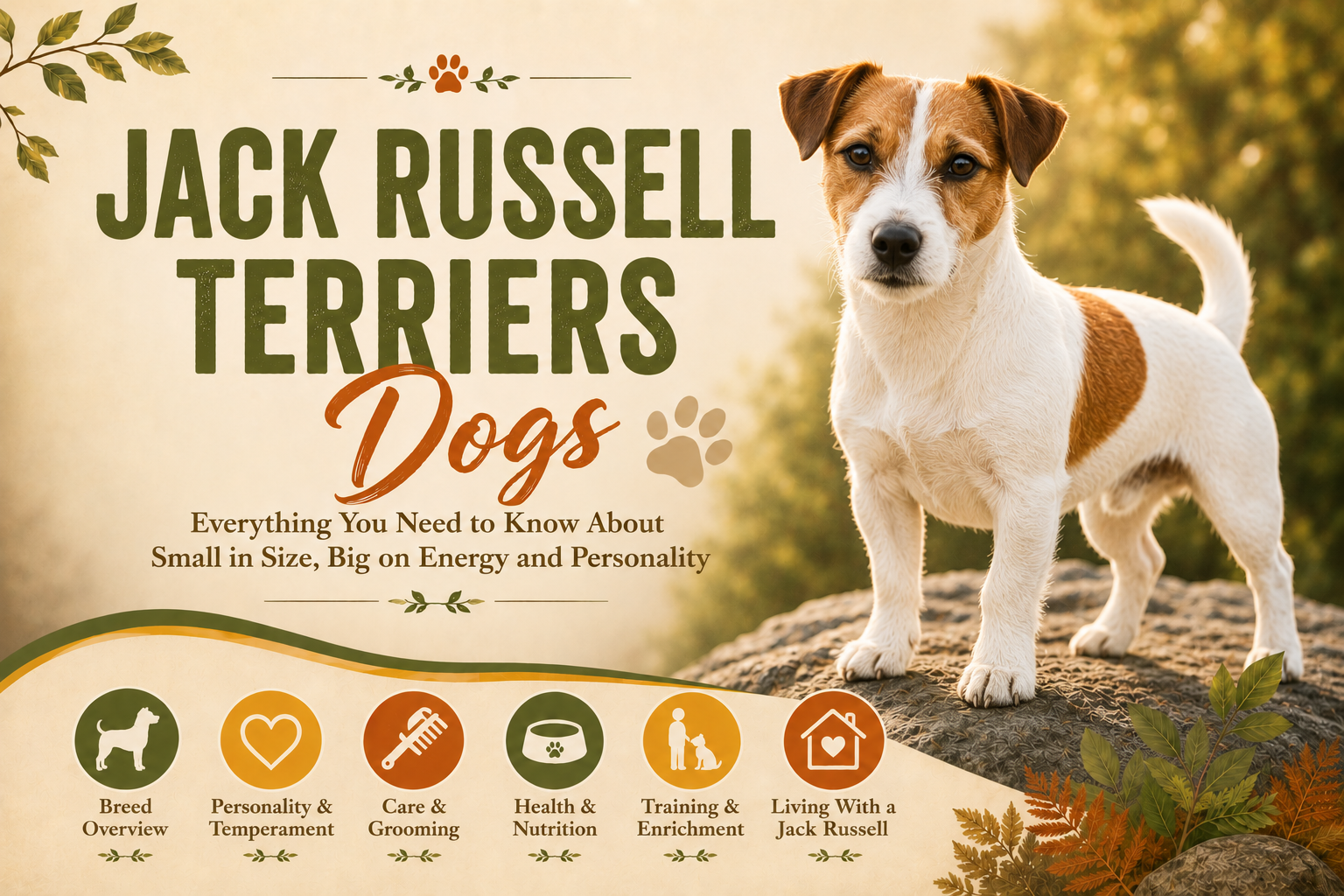
Life with a Jack Russell Terrier is never boring. These fearless little dogs pack an astonishing amount of intelligence, energy, and determination into a compact body. Whether they’re chasing a ball, exploring a hiking trail, learning a new trick, or simply making you laugh with their larger-than-life personality, Jack Russells approach every day with boundless enthusiasm.
Originally developed in England during the early 1800s by Reverend John “Jack” Russell as a fox-hunting terrier, the breed was prized for its courage, stamina, and ability to work tirelessly alongside horses and hounds. Modern Jack Russell Terriers may spend less time hunting, but they still possess the same athletic ability, keen intelligence, and independent spirit that made them exceptional working dogs.
Although they stand only about 10 to 15 inches tall, Jack Russell Terriers are anything but delicate lap dogs. They thrive on activity and need plenty of daily exercise, training, and mental stimulation to stay happy. Given the opportunity, they’ll happily accompany you on long walks, hiking adventures, agility courses, or energetic games of fetch before settling down to enjoy time with their family.
Jack Russells aren’t the ideal breed for everyone. Their confidence, high prey drive, and seemingly endless energy can overwhelm owners looking for a quiet, low-maintenance companion. However, for active individuals and families who enjoy spending time outdoors and appreciate a dog that’s always ready for the next adventure, few breeds are as loyal, entertaining, and rewarding.
In this complete Dogs Central breed guide, you’ll discover everything you need to know about the Jack Russell Terrier, including personality, temperament, size, exercise needs, training, grooming, health, nutrition, family compatibility, apartment living, adoption, and how to decide whether this remarkable little terrier is the right fit for your lifestyle.
❤️ Dogs Central Recommendation
The Jack Russell Terrier is one of the most rewarding small dog breeds for active owners who enjoy training, outdoor adventures, and interactive play. If you’re looking for a dog that can keep up with your lifestyle—and keep you smiling every day—the Jack Russell Terrier deserves a place near the top of your shortlist.
History of the Jack Russell Terrier
The Jack Russell Terrier owes its name to the Reverend John “Jack” Russell, an English clergyman and enthusiastic fox hunter who began developing the breed in the early 1800s. His goal was simple: create a small, fearless terrier with enough stamina to keep pace with horses and hounds while having the courage and agility to flush foxes from their dens without harming them.
Unlike many dog breeders of his era, Reverend Russell cared far more about working ability than appearance. He selected dogs for intelligence, endurance, confidence, and determination rather than coat color or show-ring perfection. As a result, early Jack Russell Terriers varied considerably in size and markings, but they all shared the same remarkable drive and fearless spirit.
Over the next two centuries, the breed became a favorite among farmers, hunters, and active families throughout Britain, Australia, Europe, and North America. Their versatility made them excellent ratters, farm dogs, and companions, while their energetic personalities eventually led them into modern dog sports such as agility, flyball, obedience, and earthdog trials.
Today, the Jack Russell Terrier remains one of the world’s most athletic small dog breeds. Although many now spend their days as beloved family pets rather than working in the field, they have lost very little of the energy, intelligence, curiosity, and determination that made them famous. Owners quickly discover that beneath the small frame is the heart of a tireless working dog that still craves activity, purpose, and adventure.
📖 Did You Know?
The Jack Russell Terrier and the Parson Russell Terrier share the same ancestry but are now recognized as separate breeds by many kennel clubs. Jack Russell Terriers are generally shorter and slightly longer in body, while Parson Russell Terriers have a more square, leggy build that reflects the original fox-hunting ideal.
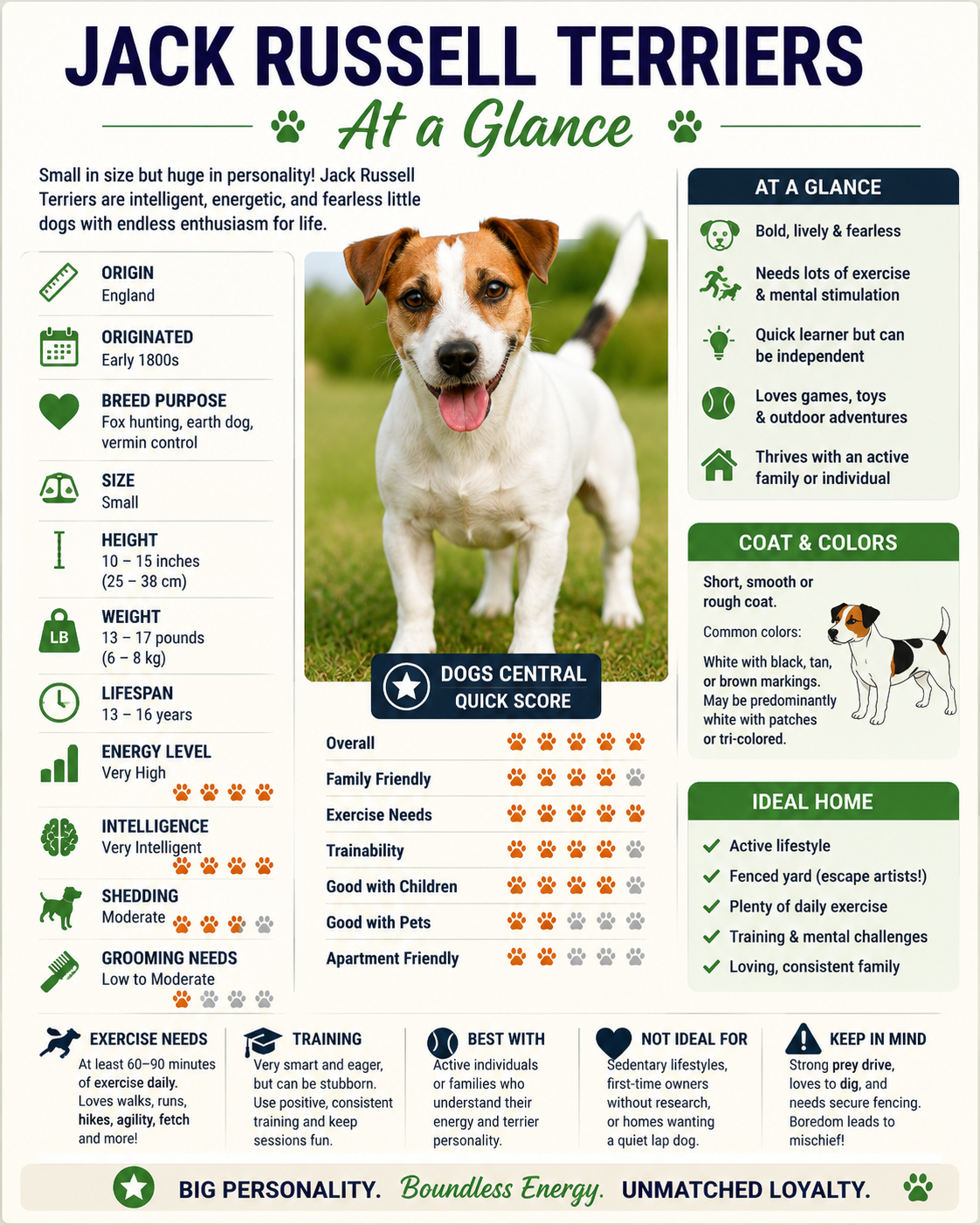
Jack Russell Terrier at a Glance
The infographic above provides a quick snapshot of the Jack Russell Terrier’s most important characteristics. Originally developed as a fearless fox-hunting dog, today’s Jack Russell Terrier remains one of the most energetic, intelligent, and athletic small breeds. Their confidence, curiosity, and determination make them exceptional companions for active owners who enjoy hiking, running, training, and interactive play.
While Jack Russell Terriers are affectionate and devoted to their families, they are far from low-maintenance. These clever little dogs thrive when they have a job to do, whether it’s learning new tricks, participating in agility, playing games, or exploring the outdoors. Without enough physical exercise and mental stimulation, their intelligence can quickly turn into mischief, often leading to excessive barking, digging, or attempts to escape.
If you’re looking for a lively, entertaining companion that will happily join you on life’s adventures, the Jack Russell Terrier is an outstanding choice. The following sections explore the breed in greater detail, including personality, appearance, exercise needs, training, grooming, health, nutrition, and how well they fit different lifestyles, helping you decide whether this remarkable little terrier is the perfect companion for your home.
🏆 Dogs Central Awards
Every breed has its strengths, and the Jack Russell Terrier excels in areas that reward intelligence, athleticism, and enthusiasm. While they aren’t the perfect choice for every household, they are among the most entertaining and capable small dogs for active owners. Here’s how the Jack Russell Terrier performs in the Dogs Central Awards.
🥇 Dogs Central Gold Award
One of the Best Small Dogs for Active Owners
Few small breeds can match the Jack Russell Terrier’s stamina, intelligence, and love of adventure. Whether you’re hiking, running, camping, or participating in dog sports, this energetic terrier is happiest when included in the action.
🥈 Dogs Central Silver Award
One of the Smartest Small Dog Breeds
Jack Russell Terriers are exceptionally intelligent and capable of learning an impressive range of commands, tricks, and canine sports. Their independent streak means training requires patience and consistency, but they thrive when challenged mentally.
🥉 Dogs Central Bronze Award
One of the Best Small Adventure Companions
Compact enough to travel easily yet tough enough for long walks and outdoor adventures, Jack Russell Terriers make outstanding companions for people who love an active lifestyle.
⭐ Dogs Central VerdictThe Jack Russell Terrier is an outstanding breed for active individuals and families who have the time and energy to meet its exercise and training needs. While their intelligence and confidence can be challenging for inexperienced owners, those willing to invest the effort are rewarded with a loyal, entertaining companion that’s always ready for the next adventure.
Jack Russell Terrier Personality & Temperament
If there’s one word that perfectly describes the Jack Russell Terrier, it’s spirited. These little dogs approach life with boundless enthusiasm, endless curiosity, and a determination that’s far larger than their compact size. They are intelligent, confident, playful, and always eager to explore the world around them.
Bred to work independently while hunting foxes, Jack Russell Terriers are natural problem-solvers. They enjoy figuring things out for themselves and aren’t afraid to take the initiative. This intelligence makes them highly trainable, but it also means they can be stubborn at times. Owners quickly learn that a bored Jack Russell is often a mischievous Jack Russell.
Despite their independent streak, Jack Russell Terriers form strong bonds with their families and love being involved in everyday activities. They thrive on interaction and are happiest when they have a job to do, whether that’s playing fetch, learning new tricks, participating in agility, or simply joining their owners on daily walks and adventures.
These energetic terriers are naturally alert and make excellent watchdogs. They’ll quickly let you know when visitors arrive or something unusual catches their attention. While this vigilance can be an advantage, early training is important to prevent excessive barking from becoming a habit.
Jack Russell Terriers generally retain their playful, puppy-like personalities well into adulthood. Their sense of fun, clownish antics, and seemingly endless energy make them entertaining companions, but they are not the best choice for owners seeking a calm, laid-back lap dog. Most would rather chase a tennis ball than spend the afternoon sleeping on the sofa.
❤️ Dogs Central Recommendation
Jack Russell Terriers are happiest with owners who enjoy an active lifestyle and can provide daily exercise, training, and mental enrichment. Interactive toys, puzzle games, scent work, and regular adventures help satisfy their busy minds and energetic bodies.
⚠️ Beginner Mistake to Avoid
Don’t underestimate a Jack Russell Terrier because of its size. These dogs need far more physical activity and mental stimulation than many larger breeds. Without enough exercise and engagement, they can develop unwanted behaviors such as excessive barking, digging, chewing, or escaping from the yard.
Jack Russell Terrier Size & Appearance
Don’t let their small size fool you—the Jack Russell Terrier is built like an athlete. Compact, muscular, and surprisingly powerful, these energetic little dogs were developed to keep pace with horses and hounds while hunting foxes across the English countryside. Every part of their body reflects their working heritage, from their strong legs and deep chest to their alert expression and agile movement.
Most Jack Russell Terriers stand between 10 and 15 inches (25–38 cm) tall at the shoulder and weigh between 13 and 17 pounds (6–8 kg). Although individuals vary slightly in size, they should always appear balanced, athletic, and ready for action rather than delicate or heavily built.
One of the breed’s most recognizable features is its expressive face. Jack Russells have dark, almond-shaped eyes that radiate intelligence and curiosity, while their V-shaped ears fold forward, giving them an alert yet friendly appearance. Their tails are typically carried upright when the dog is active, reflecting the breed’s confident and energetic personality.
The breed comes in three coat varieties: smooth, broken, and rough. Smooth-coated dogs have short, sleek fur that’s easy to maintain, while broken and rough coats feature longer, wiry hair that gives the breed a slightly more rugged appearance. Regardless of coat type, the coat should be weather-resistant and predominantly white with black, tan, or tri-color markings.
Despite their compact size, Jack Russell Terriers possess remarkable agility, speed, and stamina. They can jump surprisingly high, squeeze through small openings, and are well known for their impressive climbing and digging abilities. It’s this combination of athleticism and determination that has earned them a reputation as one of the most capable working terriers in the world.
📏 Breed Snapshot
Jack Russell Terriers may be small enough to fit comfortably into your lap, but they’re built to work, run, jump, and explore. Their muscular body and athletic build allow them to excel in agility, earthdog trials, hiking, and countless other canine sports.
Jack Russell Terrier Photo Gallery
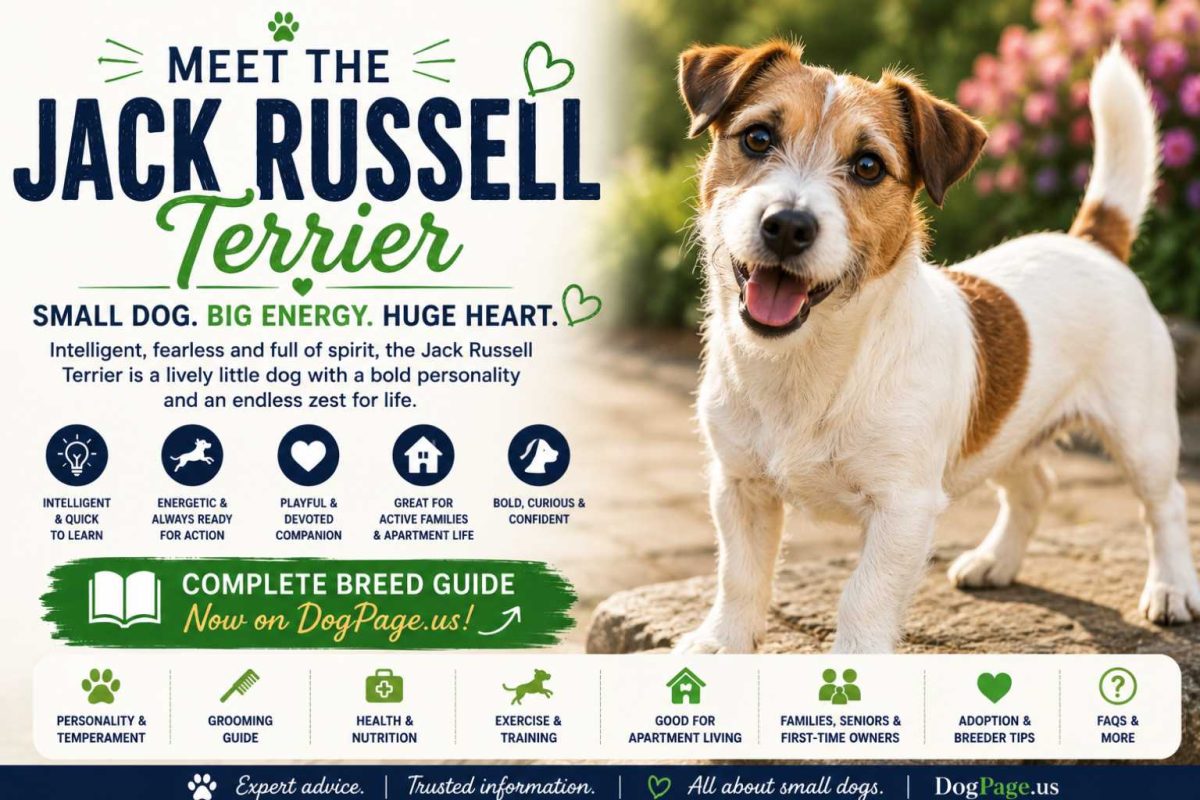
Jack Russell Terriers are among the most expressive and photogenic of all small dog breeds. Their bright eyes, alert ears, athletic build, and unmistakable “ready for anything” attitude shine through in every stage of life. Whether they’re racing across a field, mastering an agility course, relaxing with their family, or giving you that famous head tilt, these little terriers are full of personality.
The gallery below showcases the Jack Russell Terrier in a variety of everyday situations, helping you appreciate the breed’s appearance, coat types, intelligence, and energetic lifestyle. You’ll see smooth, broken, and rough-coated Jack Russells of different ages and colors enjoying family life, outdoor adventures, training sessions, and much more.
As you browse the images, notice the breed’s muscular yet compact build, confident posture, and alert expression. These physical characteristics are the result of more than 200 years of selective breeding for endurance, agility, and determination. Although each dog has its own unique markings and personality, all share the lively spirit that has made the Jack Russell Terrier one of the world’s most popular small working breeds.

📸 Dogs Central Tip
When evaluating any dog breed, don’t rely on a single photograph. Looking at dogs of different ages, coat types, and lifestyles provides a much better understanding of what the breed truly looks like and whether it’s a good match for your home and lifestyle.
Jack Russell Terrier Coat Colors & Types
Although Jack Russell Terriers are best known for their lively personalities, their coats are equally distinctive. The breed comes in three coat types—smooth, broken, and rough—all of which were developed to protect working dogs from the elements while hunting in fields, hedgerows, and underground dens. Regardless of coat type, every Jack Russell Terrier should have a weather-resistant double coat that is practical rather than ornamental.
Most Jack Russell Terriers are predominantly white with black, tan, or tri-color markings. The high percentage of white wasn’t chosen for appearance alone—it helped hunters distinguish their dogs from foxes in the field. While markings vary considerably from one dog to another, all healthy Jack Russells share the same alert expression, athletic build, and unmistakable terrier confidence.
Smooth-coated Jack Russell Terriers have short, dense hair that lies close to the body and requires the least maintenance. Broken coats feature a combination of smooth and wiry hair, often with distinctive facial furnishings that give the dog a charming, scruffy appearance. Rough-coated Jack Russells have the longest, wiriest coats and benefit from regular brushing and occasional hand stripping to maintain their natural texture.
No matter which coat type you prefer, Jack Russell Terriers are moderate shedders throughout the year. Regular brushing helps remove loose hair, keeps the coat healthy, and gives owners an opportunity to check for skin problems, parasites, or minor injuries after outdoor adventures.
🎨 Dogs Central Tip
Choose a Jack Russell Terrier based on temperament, health, and compatibility with your lifestyle—not coat color. While coat type influences grooming needs, all Jack Russell Terriers share the same intelligent, energetic, and adventurous personality that defines the breed.
Jack Russell Terrier Exercise Needs
If you’re considering adding a Jack Russell Terrier to your family, be prepared for one thing above all else—they need plenty of exercise. This is one of the most energetic small dog breeds in the world. Originally bred to spend long days hunting foxes across fields and farmland, Jack Russell Terriers still possess the stamina, athleticism, and determination of their hardworking ancestors.
Most healthy adult Jack Russell Terriers need at least 60 to 90 minutes of exercise every day, along with regular opportunities to challenge their minds. A leisurely stroll around the block simply isn’t enough for most individuals. These dogs thrive on brisk walks, games of fetch, hiking, agility, scent work, puzzle toys, and training sessions that allow them to burn both physical and mental energy.
Exercise is about far more than keeping your Jack Russell physically fit. Regular activity helps prevent boredom, frustration, and many of the behavioral issues the breed is known for, including excessive barking, digging, chewing, and escape attempts. A tired Jack Russell Terrier is generally a happy, well-behaved companion.
Puppies should be allowed to play frequently but shouldn’t be over-exercised while their joints are still developing. Senior Jack Russell Terriers often remain surprisingly active well into their teenage years, although they may benefit from shorter walks and lower-impact activities as they age.
❤️ Dogs Central Recommendation
Aim for a combination of physical exercise and mental enrichment every day. A morning walk followed by an evening game of fetch, agility practice, or puzzle toy is far more effective than one long walk alone. Jack Russell Terriers love having a job to do.
⚠️ Beginner Mistake to Avoid
Never assume a Jack Russell Terrier will “grow out” of its energy. While most dogs become slightly calmer with age, they remain active throughout their lives. Choosing this breed means committing to daily exercise and mental stimulation for many years.
Training a Jack Russell Terrier
Training a Jack Russell Terrier is both rewarding and challenging. These highly intelligent dogs learn new commands quickly, but they’re also independent thinkers who like to understand why they should do something. Originally bred to work away from their handlers while hunting foxes, Jack Russells were expected to make decisions on their own—a trait that’s still very much part of the breed today.
The key to successful training is making it fun, engaging, and consistent. Jack Russell Terriers respond exceptionally well to positive reinforcement using praise, treats, toys, and games. Short, upbeat training sessions are far more effective than long, repetitive drills, which can quickly lead to boredom and stubbornness.
Early socialization is just as important as obedience training. Introducing your Jack Russell Terrier puppy to a variety of people, dogs, environments, sounds, and experiences helps build confidence and reduces the likelihood of fear-based behaviors later in life. Basic commands such as sit, stay, come, leave it, and reliable recall should be priorities from an early age, particularly because of the breed’s strong prey drive.
Jack Russell Terriers excel in activities that challenge both their minds and bodies. Agility, flyball, scent work, trick training, and puzzle games are excellent ways to keep these clever dogs mentally stimulated while strengthening the bond between dog and owner. Many Jack Russells thrive when given a regular job or activity to look forward to each day.
❤️ Dogs Central Recommendation
Begin training the day your Jack Russell Terrier comes home. Consistent rules, positive reinforcement, and daily mental enrichment will help your dog develop into a confident, well-mannered companion while preventing many common behavioral problems.
⚠️ Beginner Mistake to Avoid
Don’t mistake intelligence for obedience. Jack Russell Terriers usually understand what you’re asking—they may simply decide something else is more interesting. Keep training sessions short, varied, and rewarding, and always end on a positive note.
Jack Russell Terrier Grooming Needs
Jack Russell Terriers are relatively low-maintenance dogs when it comes to grooming, making them an excellent choice for owners who prefer a breed that doesn’t require frequent trips to a professional groomer. Whether they have a smooth, broken, or rough coat, regular brushing and basic routine care are usually all that’s needed to keep them looking and feeling their best.
Smooth-coated Jack Russell Terriers benefit from a thorough brushing once or twice a week to remove loose hair and distribute natural oils throughout the coat. Broken and rough-coated dogs require more frequent brushing to prevent tangles and remove dead hair. Some owners choose to have rough-coated Jack Russells hand stripped periodically to maintain the coat’s natural texture and weather-resistant qualities.
Jack Russell Terriers are moderate shedders throughout the year, with heavier shedding often occurring during seasonal coat changes. Regular brushing helps reduce loose hair around the home while keeping the skin healthy and the coat clean.
Bathing is only necessary when your Jack Russell Terrier becomes dirty or develops a noticeable doggy odor. Over-bathing can strip the coat of its natural oils, so most dogs only need a bath every six to eight weeks or after particularly muddy outdoor adventures.
Routine care should also include trimming the nails every three to four weeks, checking and cleaning the ears as needed, and brushing the teeth several times each week to help prevent dental disease. Starting these grooming routines when your dog is young helps make them a normal and stress-free part of life.
❤️ Dogs Central Recommendation
Turn grooming into a positive bonding experience by using treats and praise. Regular brushing not only keeps your Jack Russell Terrier looking great but also allows you to check for skin problems, ticks, cuts, or lumps after walks and outdoor adventures.
⚠️ Beginner Mistake to Avoid
Don’t assume a short coat means no grooming. Jack Russell Terriers still shed regularly, and neglecting nail trimming, dental care, or ear cleaning can lead to preventable health problems. A few minutes of routine care each week goes a long way toward keeping your dog healthy.
Jack Russell Terrier Health Concerns
Jack Russell Terriers are generally a healthy and long-lived breed, with many living well into their mid-teens. Responsible breeding, regular veterinary care, proper nutrition, and maintaining a healthy weight all contribute to a long, active life. However, like all purebred dogs, Jack Russell Terriers are predisposed to certain inherited and age-related health conditions that prospective owners should understand.
Fortunately, many of these conditions are uncommon or can be successfully managed when detected early. Regular veterinary checkups and purchasing puppies from health-tested breeders significantly reduce the risk of inherited diseases.
Patellar Luxation
Patellar luxation occurs when the kneecap slips out of its normal position. It can cause an occasional skipping gait, limping, or reluctance to exercise. Mild cases may require little more than monitoring, while severe cases sometimes need surgery to restore normal function.
Primary Lens Luxation (PLL)
Primary Lens Luxation is an inherited eye disease in which the lens inside the eye becomes displaced. It can cause pain, glaucoma, and vision loss if left untreated. Responsible breeders DNA test their breeding dogs to help prevent passing this condition to future generations.
Legg-Calvé-Perthes Disease
This developmental condition affects the hip joint in young dogs. The blood supply to the head of the femur becomes disrupted, causing the bone to deteriorate. Symptoms include limping, pain, and muscle loss in the affected leg. Surgery is often very successful when treatment is needed.
Deafness
Congenital deafness occasionally occurs in predominantly white Jack Russell Terriers. Some puppies may be born partially or completely deaf. Reputable breeders often perform hearing tests (BAER testing) on breeding stock or puppies when appropriate.
Eye Disorders
Jack Russell Terriers may be affected by inherited eye conditions such as cataracts, glaucoma, and progressive retinal atrophy (PRA). Regular eye examinations help detect many of these problems before significant vision loss occurs.
Dental Disease
Like many small breeds, Jack Russell Terriers are prone to plaque buildup, tartar, and gum disease. Regular tooth brushing, dental chews, and professional cleanings help maintain healthy teeth and may reduce the risk of infections affecting other organs.
Obesity
Although naturally active, Jack Russell Terriers can become overweight if overfed or under-exercised. Extra weight places additional strain on their joints and increases the risk of arthritis, diabetes, heart disease, and reduced mobility. Maintaining a healthy body condition is one of the best ways to support long-term health.
❤️ Dogs Central Recommendation
Choose a breeder who performs appropriate genetic health testing and provides health clearances for the parents. Regular veterinary examinations, a healthy diet, routine dental care, and daily exercise will help your Jack Russell Terrier enjoy a long, active, and happy life.
⚠️ When to See Your Veterinarian
Contact your veterinarian promptly if your Jack Russell Terrier develops persistent limping, eye redness or cloudiness, sudden vision changes, unexplained weight loss, difficulty walking, or any significant change in appetite, energy level, or behavior. Early diagnosis often leads to better outcomes.
Jack Russell Terrier Feeding & Nutrition
Proper nutrition plays a vital role in keeping your Jack Russell Terrier healthy, energetic, and at an ideal weight throughout life. These active little dogs burn more calories than many breeds of similar size, but that doesn’t mean they should be overfed. A high-quality, nutritionally complete dog food appropriate for your dog’s age, size, and activity level provides the best foundation for a long, healthy life.
Jack Russell Terrier puppies require specially formulated puppy food to support their rapid growth and development. Adults generally do well on a premium maintenance diet, while senior dogs may benefit from foods designed to support aging joints, healthy weight, and overall mobility. Fresh drinking water should always be available.
Because Jack Russell Terriers are highly food-motivated, it’s easy to overdo treats during training. While treats are an excellent training aid, they should make up no more than about 10% of your dog’s daily calorie intake. Healthy rewards such as small pieces of cooked chicken, carrots, blueberries, or commercial training treats are usually better choices than high-fat table scraps.
Maintaining a healthy weight is one of the most important things you can do for your Jack Russell Terrier. Excess weight increases stress on the joints, reduces stamina, and raises the risk of arthritis, diabetes, and heart disease. You should be able to feel your dog’s ribs easily beneath a thin layer of fat and see a noticeable waist when viewed from above.
Foods to Avoid
Some human foods can be dangerous—or even life-threatening—for dogs. Never feed your Jack Russell Terrier chocolate, grapes, raisins, onions, garlic, macadamia nuts, foods containing xylitol (birch sugar), alcohol, or cooked bones. If you suspect your dog has eaten something toxic, contact your veterinarian immediately.
❤️ Dogs Central Recommendation
Feed measured meals rather than leaving food available all day. Most adult Jack Russell Terriers do well on two meals daily, which helps maintain steady energy levels and makes it easier to monitor appetite and body condition.
💡 Did You Know?
Many owners ask whether Jack Russell Terriers can eat fruits such as pineapple, bananas, blueberries, or watermelon. The answer is generally yes—in moderation. These can make healthy occasional treats, while others, such as grapes and raisins, are highly toxic. Visit our growing “Can Dogs Eat…?” guides for detailed information on safe and unsafe foods for dogs.
Are Jack Russell Terriers Good with Children?
Jack Russell Terriers can make wonderful family pets, but they are generally best suited to families with older children who understand how to interact respectfully with dogs. Their playful, energetic nature makes them enthusiastic companions for games, backyard adventures, and outdoor activities. Many Jack Russells form deep bonds with the children in their family and enjoy being included in everyday life.
Because they are intelligent and full of energy, Jack Russell Terriers often match the enthusiasm of active school-aged children. They love playing fetch, learning tricks, going for walks, and participating in family adventures. Their confidence and sturdy build also make them less fragile than some toy breeds.
Like all dogs, however, Jack Russell Terriers should never be left unsupervised with young children. Their strong prey drive and high energy level mean they can become overexcited during rough play, and they may not tolerate teasing, ear pulling, or being handled roughly. Teaching children how to approach, pet, and respect a dog’s personal space is essential for building a safe and trusting relationship.
Early socialization and obedience training also play an important role. A well-trained, well-socialized Jack Russell Terrier is far more likely to become a confident and reliable family companion than one that has received little guidance or exercise.
❤️ Dogs Central Recommendation
Jack Russell Terriers are usually an excellent choice for active families with school-aged children or teenagers who enjoy spending time outdoors. Daily walks, games, and training sessions provide wonderful opportunities for children and their dog to build a strong lifelong bond.
⚠️ Parent Tip
Always supervise interactions between dogs and young children, regardless of breed. Teach children never to disturb a dog while it’s eating, sleeping, or chewing a favorite toy, and encourage calm, respectful interactions rather than rough play.
Are Jack Russell Terriers Good with Other Pets?
Jack Russell Terriers can live successfully with other pets, but doing so often requires careful introductions, early socialization, and ongoing supervision. Because they were originally bred to hunt foxes and eliminate rodents, they possess one of the strongest prey drives of any small dog breed. This instinct remains deeply ingrained, even in well-trained family pets.
Many Jack Russell Terriers get along well with other dogs, particularly if they are raised together or properly introduced from a young age. However, their bold, confident personalities can sometimes lead to disagreements with unfamiliar dogs, especially those of the same sex. Early socialization and positive experiences with other dogs help encourage good canine manners.
Living with cats can be more unpredictable. Some Jack Russell Terriers happily coexist with cats they have been raised alongside, while others may instinctively chase them. Careful introductions and close supervision are essential, particularly during the first few weeks. Even if a Jack Russell accepts the family cat, neighborhood cats and other small animals may still trigger its hunting instincts.
Small pets such as rabbits, guinea pigs, hamsters, rats, mice, ferrets, and pet birds should be housed securely and never left unattended with a Jack Russell Terrier. Their natural prey drive can make these animals irresistible to chase, regardless of how friendly or well-trained the dog may be.
❤️ Dogs Central Recommendation
If you already have other pets, choose a Jack Russell Terrier puppy from a responsible breeder or adopt an adult dog whose temperament has been evaluated around other animals. Early socialization and positive introductions greatly improve the chances of a peaceful multi-pet household.
⚠️ Keep in Mind
Never assume that because a Jack Russell Terrier is friendly with one cat or small dog, it will automatically accept every animal it meets. Their hunting instincts can appear suddenly, particularly around fast-moving small pets. Always supervise introductions and ensure smaller animals have safe, secure enclosures.
Are Jack Russell Terriers Good Apartment Dogs?
Jack Russell Terriers can adapt to apartment living, but they are not the easiest small breed for this lifestyle. Their compact size certainly makes them suitable for smaller homes, but their energy level, intelligence, and tendency to bark mean they need far more exercise and mental stimulation than many people expect.
A Jack Russell Terrier that receives plenty of daily exercise, training, and interactive play can thrive in an apartment. However, a bored Jack Russell is likely to create its own entertainment by barking, digging, chewing, or inventing games that your neighbors may not appreciate. For this breed, a tired dog is truly a well-behaved dog.
Apartment owners should plan on at least two brisk walks each day, along with opportunities to run safely in a fenced area, play interactive games, or participate in activities such as agility, scent work, or advanced obedience. Puzzle toys and training sessions also help satisfy their active minds.
If you work long hours or spend much of the day away from home, a Jack Russell Terrier may become frustrated and develop unwanted behaviors. These dogs generally do best with owners who have an active lifestyle and can devote plenty of time to exercise and companionship.
❤️ Dogs Central Recommendation
Jack Russell Terriers can make excellent apartment companions for active owners who enjoy daily walks, hiking, jogging, or dog sports. If you’re looking for a quiet, low-energy lap dog that’s content to spend most of the day indoors, another breed may be a better choice.
⚠️ Beginner Mistake to Avoid
Don’t choose a Jack Russell Terrier simply because it’s a small dog. Size alone doesn’t determine whether a breed is well suited to apartment living. This breed’s exercise needs are much closer to those of many larger working dogs than other small companion breeds.
Are Jack Russell Terriers Good for Seniors?
Jack Russell Terriers can be wonderful companions for the right senior, but they are not the ideal choice for everyone. Unlike many small companion breeds that are content to spend much of the day relaxing, Jack Russell Terriers are energetic, intelligent, and always ready for their next adventure. They thrive with owners who enjoy an active lifestyle and can provide plenty of daily exercise and mental stimulation.
For active retirees who enjoy walking, hiking, gardening, or spending time outdoors, a Jack Russell Terrier can be an enthusiastic and loyal companion. Their cheerful personality, sharp intelligence, and affectionate nature often create a close bond with their owners. Many remain playful well into their senior years, helping to keep their owners active and engaged.
On the other hand, seniors with limited mobility or those seeking a quiet lap dog may find the breed challenging. Without sufficient exercise and training, a Jack Russell Terrier may become bored, vocal, or destructive. Their enthusiasm can also make them difficult to manage for someone with balance issues, especially if they pull on the leash or suddenly dart after a squirrel or rabbit.
For many seniors, adopting a calm adult or mature Jack Russell Terrier can be a better option than bringing home a high-energy puppy. Adult dogs often have established personalities and usually require less intensive training while still providing years of loyal companionship.
❤️ Dogs Central Recommendation
Jack Russell Terriers are an excellent choice for healthy, active seniors who enjoy daily walks, outdoor activities, and spending plenty of time with their dog. If you’re looking for a lower-energy companion, breeds such as the Cavalier King Charles Spaniel, Bichon Frise, or Shih Tzu may be a better fit.
⚠️ Senior Owner Tip
Be realistic about your current and future activity level. Jack Russell Terriers typically remain energetic for most of their lives, so choose this breed only if you’re confident you can meet its exercise and training needs for many years to come.
Are Jack Russell Terriers Good Travel Companions?
Jack Russell Terriers are excellent travel companions for owners who enjoy active adventures. Their compact size makes them easy to transport, while their curiosity and enthusiasm mean they’re often happiest when exploring new places alongside their family. Whether it’s a weekend road trip, a camping holiday, or a day at the beach, many Jack Russells are eager to come along.
Their small size also means many Jack Russell Terriers can travel comfortably in airline-approved carriers that fit beneath an airplane seat, although owners should always check individual airline requirements before booking a flight.
Like any breed, Jack Russell Terriers should be introduced to travel gradually. Short car rides during puppyhood help build confidence and reduce the likelihood of motion sickness or travel anxiety later in life. Frequent breaks for water, exercise, and bathroom stops make longer journeys more enjoyable for both dog and owner.
Because Jack Russell Terriers are energetic and easily excited, they should always be secured with a crash-tested travel harness or inside a properly secured travel crate when riding in a vehicle. Their strong prey drive also means they should remain on a leash in unfamiliar locations, as they may suddenly chase squirrels, rabbits, or other wildlife.
❤️ Dogs Central Recommendation
If you enjoy hiking, camping, cottage vacations, or exploring new places, a Jack Russell Terrier can make an outstanding travel companion. Their adventurous spirit often matches that of active owners.
✈️ Travel Tip
Pack a travel kit that includes food, water, collapsible bowls, medications, vaccination records, waste bags, a favorite toy, and a familiar blanket. Having a few comforts from home helps many dogs settle more quickly in new environments.
Is the Jack Russell Terrier the Right Dog for You?
Choosing the right dog is about much more than appearance, and the Jack Russell Terrier is a perfect example. These charming little dogs are intelligent, fearless, and endlessly entertaining, but they also demand far more exercise, training, and mental stimulation than many people expect from a small breed. For the right owner, they are exceptional companions. For the wrong owner, they can quickly become overwhelming.
If you enjoy an active lifestyle and want a dog that’s always ready for a walk, hike, game of fetch, or new adventure, the Jack Russell Terrier could be an excellent match. Their intelligence makes them highly trainable, and their loyal, affectionate nature means they thrive when included as part of the family. Many owners describe them as having a huge personality packed into a compact body.
However, if you’re looking for a calm lap dog that’s content to spend most of the day relaxing indoors, you’ll probably be happier with another breed. A bored Jack Russell Terrier often finds its own entertainment, which may include barking, digging, chewing, or rearranging your garden. These behaviors aren’t signs of a “bad dog”—they’re simply the result of an intelligent working breed whose physical and mental needs aren’t being met.
Before bringing home a Jack Russell Terrier, honestly consider how much time you can devote each day to exercise, training, play, and companionship. If you can meet those needs, you’ll likely be rewarded with a loyal, funny, and devoted friend who keeps you smiling for many years.
✅ A Jack Russell Terrier may be right for you if you:
- Lead an active lifestyle and enjoy spending time outdoors.
- Have time for daily exercise, training, and interactive play.
- Want an intelligent dog that enjoys learning new skills.
- Appreciate a confident, spirited personality with plenty of character.
- Can provide consistent leadership and positive training.
❌ You may want to consider another breed if you:
- Prefer a quiet, low-energy companion.
- Are away from home for long periods most days.
- Have small pets such as rabbits, guinea pigs, or birds.
- Don’t enjoy regular exercise or outdoor activities.
- Want a dog that requires very little training or mental stimulation.
❤️ Dogs Central Verdict
The Jack Russell Terrier earns our recommendation for active individuals, couples, and families looking for a small dog with the heart of a much larger working breed. Their intelligence, courage, and boundless enthusiasm make them unforgettable companions—but they’re happiest with owners who embrace their energetic nature rather than trying to change it.
Jack Russell Terrier Adoption & Rehoming
Whether you’re hoping to welcome a Jack Russell Terrier into your family or you’re facing the heartbreaking decision of finding a new home for your beloved dog, there are responsible options available. Every year, wonderful Jack Russell Terriers need new homes due to changes in their owners’ lives—not because they’ve done anything wrong. Moving, illness, financial hardship, allergies, or major family changes are among the most common reasons dogs are rehomed.
Adopting a Jack Russell Terrier can be an incredibly rewarding experience. Many adult dogs are already house-trained, know basic commands, and have established personalities, making it easier to find a companion that matches your lifestyle. By choosing adoption, you’re giving a deserving dog a second chance while helping reduce the demand for irresponsible breeding.
If you already share your life with a Jack Russell Terrier but can no longer provide the home they deserve, you’re not alone. Responsible rehoming is one of the kindest decisions an owner can make when circumstances change. Taking the time to carefully screen potential adopters helps ensure your dog finds a safe, loving, and permanent new family.
❤️ Dogs Central Recommendation
Whether you’re looking to adopt a Jack Russell Terrier or need compassionate help rehoming your own, our friends at Pet Rehoming Network provide trusted resources, breed-specific information, and personalized assistance throughout the process.
🐾 Learn more about adopting or rehoming a Jack Russell Terrier:
https://pet-net.net/buy-adopt-jack-russell-terrier/adoptable-dogs-puppies/
💡 Thinking About Rehoming?
Rehoming your dog doesn’t mean you’ve failed. Sometimes life’s circumstances change in ways we can’t control. The most loving choice is to carefully find a home where your Jack Russell Terrier will receive the time, attention, and care they deserve. A responsible rehoming service can guide you through the process and help ensure a successful match for both dog and adopter.
Choosing a Reputable Jack Russell Terrier Breeder
If you’ve decided to purchase a Jack Russell Terrier puppy, choosing a responsible breeder is one of the most important decisions you’ll make. A reputable breeder is committed to producing healthy, well-socialized puppies with sound temperaments—not simply making sales. They carefully plan each litter, perform appropriate health testing, and provide their puppies with the best possible start in life.
A good breeder will welcome your questions and be just as interested in learning about you as you are about their puppies. They should happily introduce you to the puppy’s mother, explain the breed’s strengths and challenges, provide veterinary records, and discuss any genetic health testing performed on the parents. Responsible breeders also begin socializing their puppies from an early age, helping them grow into confident, well-adjusted companions.
Be prepared to join a waiting list if you’re looking for a puppy from a highly regarded breeder. Ethical breeders rarely have puppies available year-round because they produce only a limited number of carefully planned litters. They also remain available to provide advice and support throughout your dog’s life and will usually insist that the dog be returned to them if you can no longer care for it.
Signs of a Responsible Breeder
- ✔ Performs appropriate health testing on breeding dogs.
- ✔ Raises puppies in a clean, home environment with plenty of human interaction.
- ✔ Encourages you to meet the puppy’s mother and, when possible, the father.
- ✔ Provides veterinary records and vaccination information.
- ✔ Asks you detailed questions to ensure their puppies are going to suitable homes.
- ✔ Offers a written contract and health guarantee.
- ✔ Will always take one of their dogs back if circumstances change.
Warning Signs to Avoid
- ❌ Puppies always available or multiple litters for sale at the same time.
- ❌ Refuses to let you visit or meet the parent dogs.
- ❌ No evidence of health testing or veterinary care.
- ❌ Puppies offered at unusually low prices or with pressure to buy immediately.
- ❌ Willing to sell a puppy to anyone without asking questions.
- ❌ Puppies raised in poor conditions or sold through pet stores or online brokers.
❤️ Dogs Central Recommendation
Never rush into buying a puppy. Take the time to research breeders, ask plenty of questions, and request documentation of health testing. A well-bred, well-socialized Jack Russell Terrier is far more likely to become a healthy, confident companion for many years to come.
💡 Consider Adoption First
Before purchasing a puppy, take a look at Jack Russell Terriers currently available for adoption. Many wonderful dogs of all ages are waiting for loving homes, and adopting can be an incredibly rewarding way to welcome a new companion into your family.
Frequently Asked Questions About Jack Russell Terriers
Are Jack Russell Terriers good family dogs?
Yes. Jack Russell Terriers can make wonderful family pets for active families. They generally do best with older children who understand how to interact respectfully with dogs.
Are Jack Russell Terriers good for first-time owners?
Not usually. While highly intelligent, they require consistent training, plenty of exercise, and mental stimulation. They are often better suited to owners with some dog experience.
How much exercise does a Jack Russell Terrier need?
Most healthy adults need at least 60 to 90 minutes of exercise every day, along with games, training, or puzzle toys to keep their active minds busy.
Do Jack Russell Terriers bark a lot?
They can. Jack Russell Terriers are naturally alert and vocal. Proper training and adequate exercise usually help prevent excessive barking.
Do Jack Russell Terriers shed?
Yes. All coat types shed moderately throughout the year, with heavier shedding during seasonal coat changes.
How long do Jack Russell Terriers live?
Most live between 13 and 16 years, with some reaching 17 years or more when provided with excellent care.
Are Jack Russell Terriers easy to train?
They are very intelligent and learn quickly, but they also have an independent streak. Positive reinforcement and consistency produce the best results.
Can Jack Russell Terriers be left alone?
Not for long periods. They thrive on companionship and may become bored or destructive if left alone for many hours each day.
Do Jack Russell Terriers like to cuddle?
Many do! While they’re famous for their energy outdoors, most Jack Russell Terriers enjoy relaxing and cuddling with their families once they’ve had enough exercise.
Are Jack Russell Terriers good apartment dogs?
They can adapt to apartment living if they receive plenty of daily exercise and mental stimulation, but they are generally easier to manage in homes with access to outdoor space.
Can Jack Russell Terriers swim?
Many enjoy swimming, but not all are natural swimmers. Introduce water gradually and always supervise your dog around pools, lakes, and the ocean.
Do Jack Russell Terriers get along with cats?
Some do, particularly if raised together. However, their strong prey drive means careful introductions and supervision are essential.
Are Jack Russell Terriers aggressive?
No. A well-socialized Jack Russell Terrier should be confident, friendly, and outgoing. Poor socialization or inadequate exercise can contribute to unwanted behaviors.
Can Jack Russell Terriers eat bananas?
Yes. Bananas are safe as an occasional treat and provide potassium, vitamin B6, and fiber. Because they contain natural sugars, they should be fed in moderation.
Can Jack Russell Terriers eat blueberries?
Yes. Blueberries are an excellent low-calorie treat packed with antioxidants and vitamins.
Can Jack Russell Terriers eat apples?
Yes. Apples are safe when the seeds and core are removed. They make a crunchy, healthy snack in moderation.
Can Jack Russell Terriers eat strawberries?
Yes. Fresh strawberries are safe as an occasional treat and provide vitamin C and antioxidants.
Can Jack Russell Terriers eat watermelon?
Yes. Seedless watermelon without the rind is a refreshing treat, particularly during hot weather.
Can Jack Russell Terriers eat pineapple?
Yes. Fresh pineapple is safe in small amounts and contains beneficial vitamins, but too much can upset the stomach.
Can Jack Russell Terriers eat cherries?
The flesh of ripe cherries isn’t toxic, but the pits, stems, and leaves contain compounds that can be dangerous. Because of the choking hazard and potential toxicity, cherries are best avoided.
What foods are poisonous to Jack Russell Terriers?
Never feed chocolate, grapes, raisins, onions, garlic, macadamia nuts, xylitol (birch sugar), alcohol, or cooked bones. Contact your veterinarian immediately if your dog eats any of these foods.
Do Jack Russell Terriers make good travel companions?
Yes. Their compact size and adventurous personality make them excellent companions for road trips, hiking, camping, and many other outdoor adventures.
At what age do Jack Russell Terriers calm down?
Many begin to settle somewhat between three and five years of age, although they usually remain energetic throughout their lives.
Are Jack Russell Terriers hypoallergenic?
No. They shed and produce dander, making them unsuitable for most people with dog allergies.
Should I adopt or buy a Jack Russell Terrier?
Both are excellent options. Adoption gives a deserving dog a second chance, while purchasing from a reputable breeder may be appropriate if you’re looking for a puppy with a known background and health history.
More Small Dog Breed Guides
If you’re still deciding which small dog is right for you, explore our growing collection of detailed breed guides. Each guide covers personality, care requirements, health, training, grooming, nutrition, and much more to help you choose the perfect canine companion.
- Chihuahua Breed Guide
- Cavalier King Charles Spaniel Breed Guide
- Miniature Pinscher Breed Guide
- Papillon Breed Guide
- Toy Poodle Breed Guide
- Bichon Frise Breed Guide
- Havanese Breed Guide
New breed guides are added regularly, so be sure to check back as our library continues to grow.
Trusted Resources
At Dogs Central, we strive to provide accurate, evidence-based information to help you make informed decisions about your dog. The following organizations offer reliable information on breed standards, responsible dog ownership, canine health, training, and veterinary care.
- American Kennel Club (AKC) – Breed information, responsible breeding, training, and dog care.
- Jack Russell Terrier Club of America (JRTCA) – The official breed club dedicated to preserving the working Jack Russell Terrier.
- Canadian Kennel Club (CKC) – Canadian breed standards and responsible dog ownership resources.
- The Kennel Club (UK) – Breed information, health advice, and responsible breeding guidance.
- World Small Animal Veterinary Association (WSAVA) – International veterinary guidelines on nutrition, preventive care, and canine health.
- American Animal Hospital Association (AAHA) – Trusted veterinary advice on preventive healthcare and wellness.