
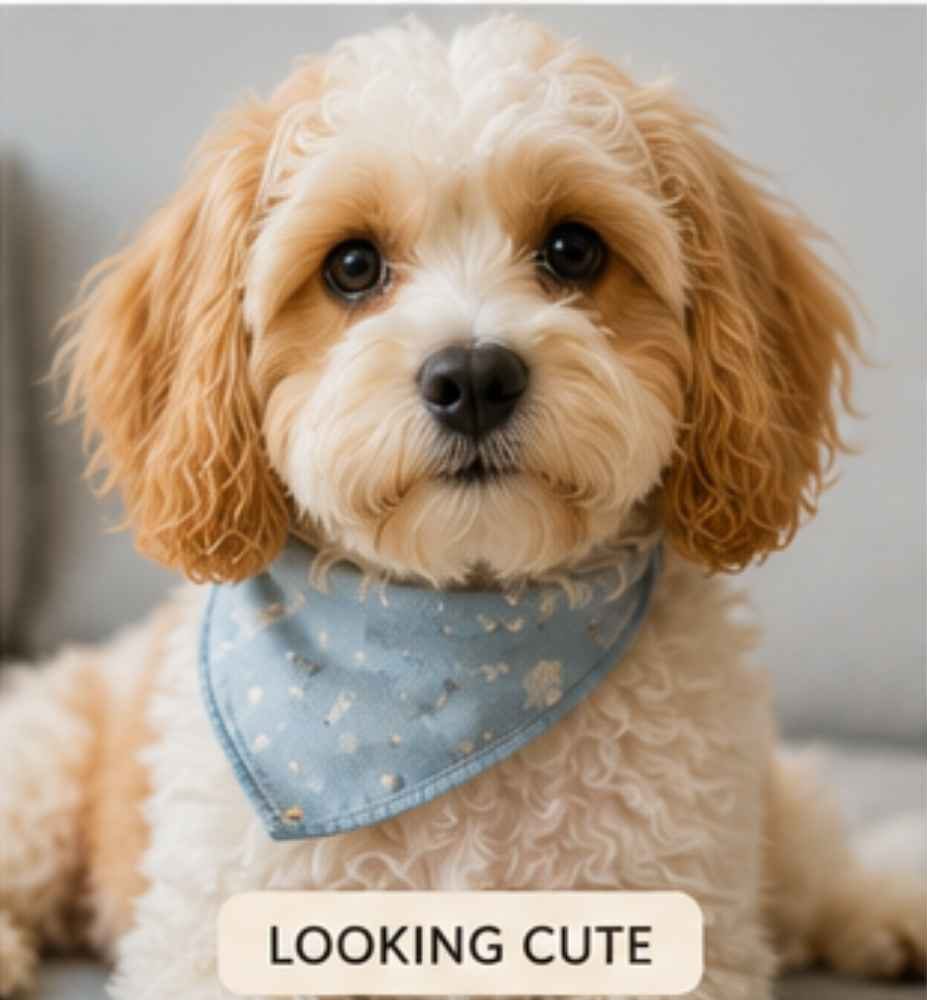
The Cavachon is a small companion dog created by crossing a Cavalier King Charles Spaniel with a Bichon Frise. Sometimes searched for simply as a Cavalier Bichon mix, Bichon Cavalier mix, or Cavalier King Charles Spaniel Bichon Frise mix, this cheerful designer dog is best known for an affectionate personality, soft teddy-bear appearance, manageable small-dog size, and strong desire to be part of family life.
Cavachons can be delightful companions, but their popularity sometimes produces an overly simple description: cute, cuddly, low-shedding and easy. Real Cavachons are more interesting than that. Their coat can range from loose waves to curls, their adult size is not perfectly predictable, some shed more than others, and many become deeply attached to their people. They also inherit potential health concerns from both parent breeds. A well-bred, well-socialized Cavachon can be a wonderful family dog, senior companion or first dog, but choosing one responsibly means looking beyond the teddy-bear face.
This complete Dogs Central guide covers what prospective and current owners most often want to know: what a Cavachon is, full-grown size and weight, temperament, lifespan, shedding, allergy considerations, colors, haircuts, grooming, exercise, training, behavior problems, health, puppies, breeders, adoption, and how Cavachons compare with Cavapoos.
Written by: Deborah G. Moore
Last updated: August 13, 2026
Cavachon at a Glance
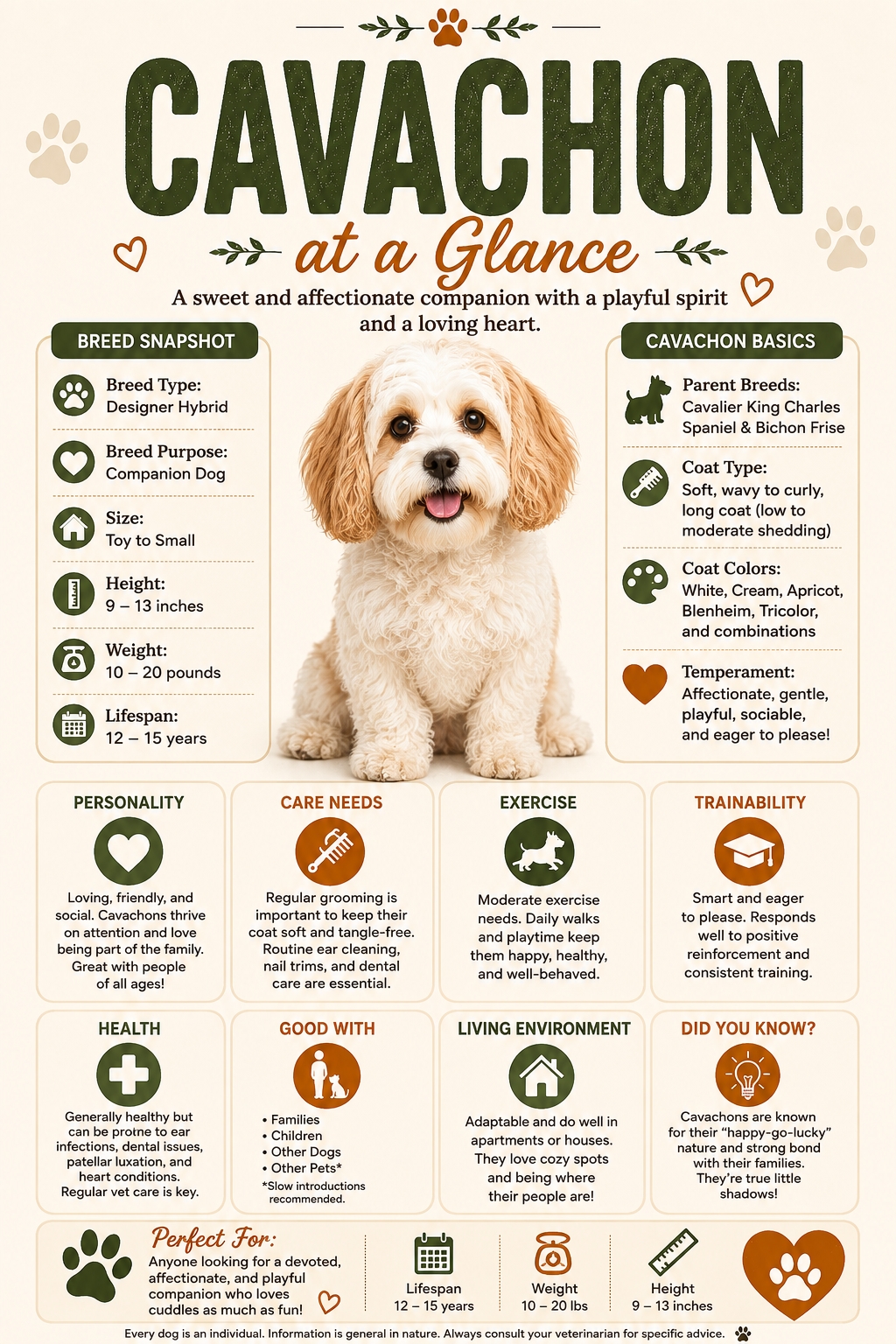
| Breed type | Designer cross: Cavalier King Charles Spaniel × Bichon Frise |
|---|---|
| Typical adult size | Small; commonly around 12–20 pounds, with individual variation |
| Typical height | Often roughly 12–13 inches at the shoulder, though there is no official Cavachon breed standard |
| Temperament | Affectionate, friendly, playful, people-oriented and often gentle |
| Energy level | Moderate |
| Trainability | Usually good with patient, positive training |
| Grooming | Moderate to high; regular brushing plus professional grooming for many coats |
| Shedding | Often low, but variable |
| Hypoallergenic? | No dog is truly hypoallergenic; some Cavachons may be easier for some allergy sufferers than heavier-shedding breeds |
| Exercise | Moderate daily walks, play and mental enrichment |
| Apartment friendly | Often yes, provided exercise, companionship and barking are managed |
| Good with children? | Often yes with respectful children and supervision |
| Good for seniors? | Often excellent for an owner who can meet grooming, exercise and companionship needs |
| Lifespan | Often approximately 12–15 years; individual health and genetics matter |
Because the Cavachon is a cross rather than a standardized pure breed, size, coat, appearance and temperament can vary even among littermates.
What Is a Cavachon?
A Cavachon is a Bichon Frise and Cavalier King Charles Spaniel mix. The name combines part of “Cavalier” with part of “Bichon.” The cross was developed primarily as a companion dog, bringing together two small breeds with long histories of living closely with people.
The Cavalier side often contributes a gentle, affectionate, sociable nature and a soft, expressive spaniel appearance. The Bichon side can contribute a cheerful personality, a plush coat, playfulness and the low-shedding characteristics for which the Bichon is known. Genetics do not work like ordering features from a menu, however. One puppy may resemble a Cavalier more strongly while another looks decidedly Bichon-like.
Is the Cavachon a recognized purebred dog?
No. Major kennel clubs do not recognize the Cavachon as a pure breed with a fixed breed standard. That does not make Cavachons lesser dogs; it simply means owners should not expect the consistency in size, coat and appearance that comes from generations of breeding to a detailed standard.
What do F1, F1b and F2 Cavachon mean?
An F1 Cavachon generally has one purebred Cavalier parent and one purebred Bichon parent. An F2 is generally produced from two F1 Cavachons. An F1b is a Cavachon bred back to one of the parent breeds. Multigenerational breeding involves Cavachons from later generations. These labels describe ancestry; they do not guarantee a particular coat, size, personality, health outcome or degree of allergy friendliness.
If a seller claims that a generation label guarantees a “non-shedding,” “hypoallergenic,” perfectly sized or disease-free puppy, treat that promise with caution.
Cavachon History & Origin
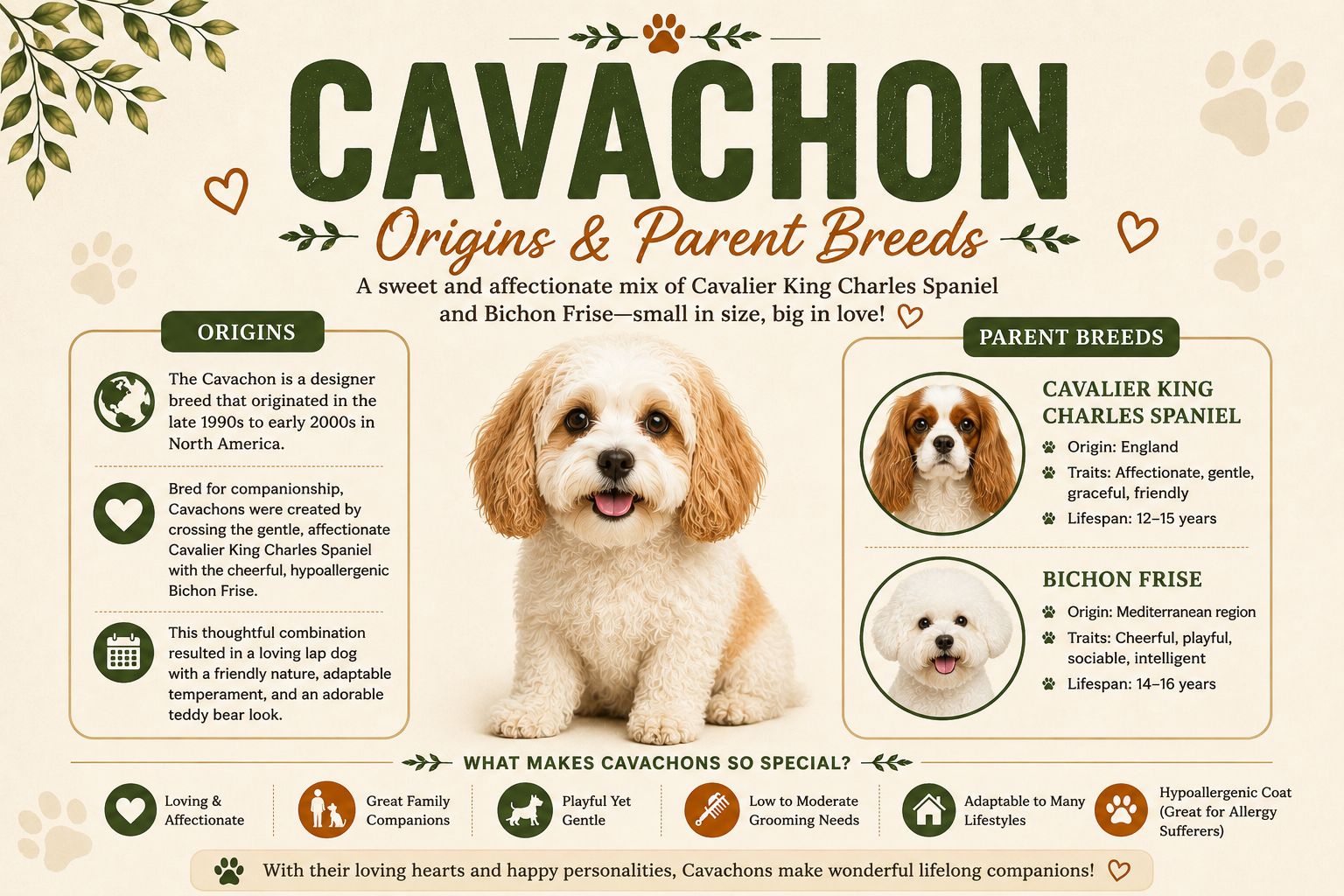
The Cavachon is a relatively modern designer cross, so its documented history is much shorter than that of either parent. Rather than having one long-established working purpose, Cavachons were developed as companion dogs. To understand them, it helps to understand the two breeds behind them.
The Cavalier King Charles Spaniel parent
The Cavalier King Charles Spaniel descends from small companion spaniels associated with British aristocracy and royal households. Modern Cavaliers are affectionate, graceful little spaniels that generally want to be close to their families. Their sweetness is one reason they appear in several popular companion-dog crosses.
The Bichon Frise parent
The Bichon Frise is another classic companion breed. Bichons are known for their white, curly coats, lively personalities, sociability and talent for charming an audience. Beneath the powder-puff styling is a bright, playful little dog that usually enjoys training and interaction.
Crossing the two can produce a dog with considerable companion-dog talent: affectionate, portable, friendly and entertaining. Responsible breeding still matters enormously. Crossing two breeds does not erase inherited disease, and the parent dogs should be selected with the health and temperament of both breeds in mind.
What Does a Cavachon Look Like?
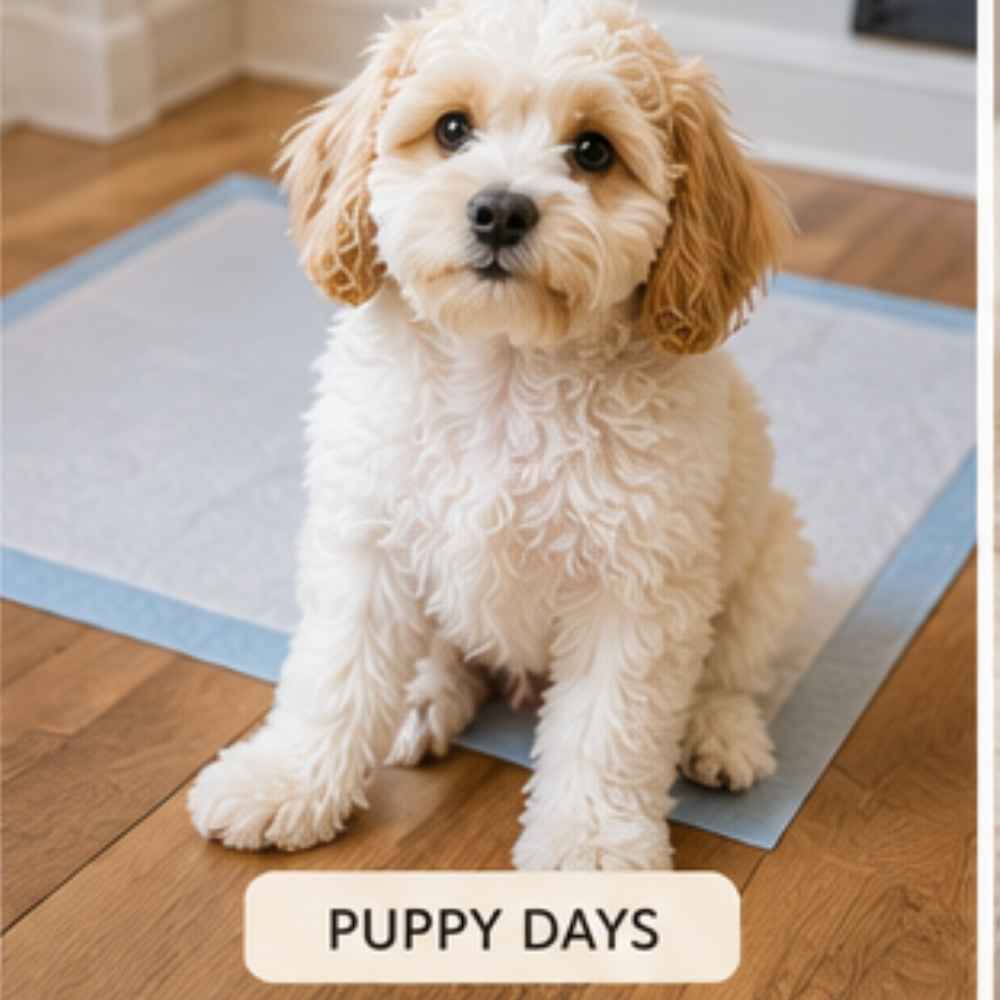
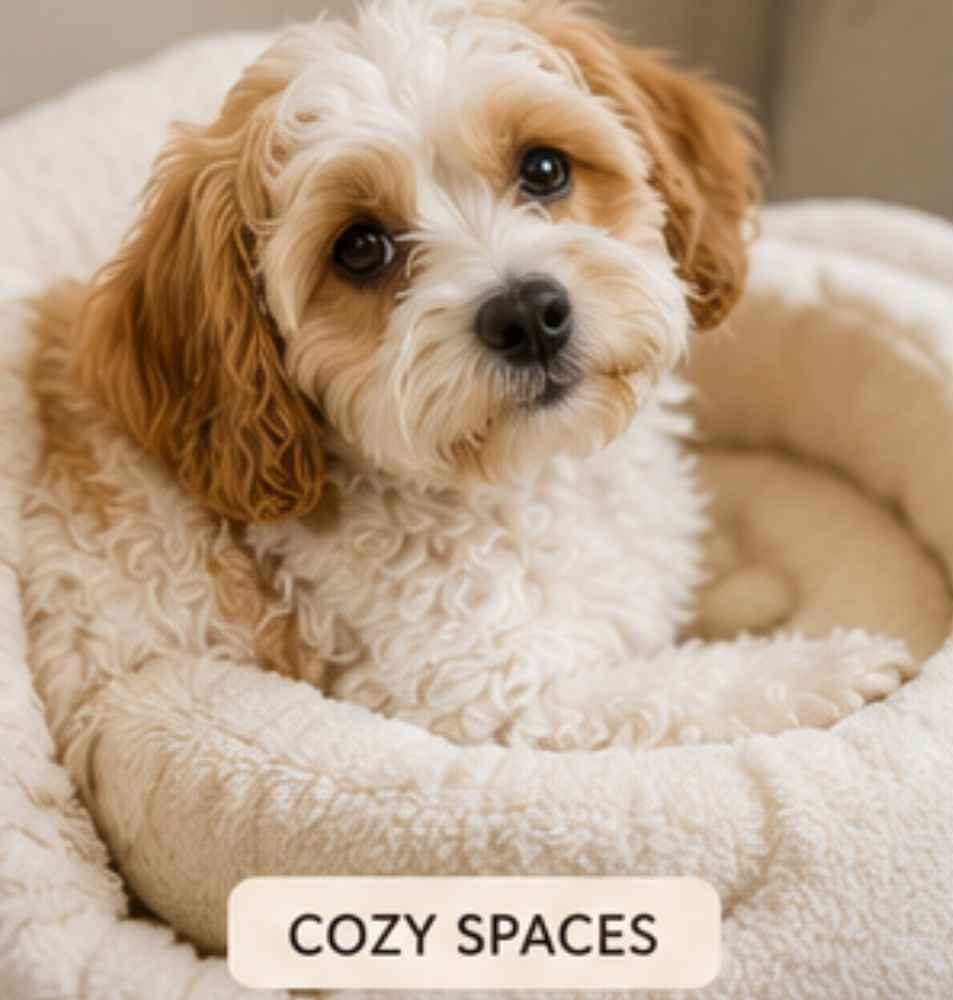
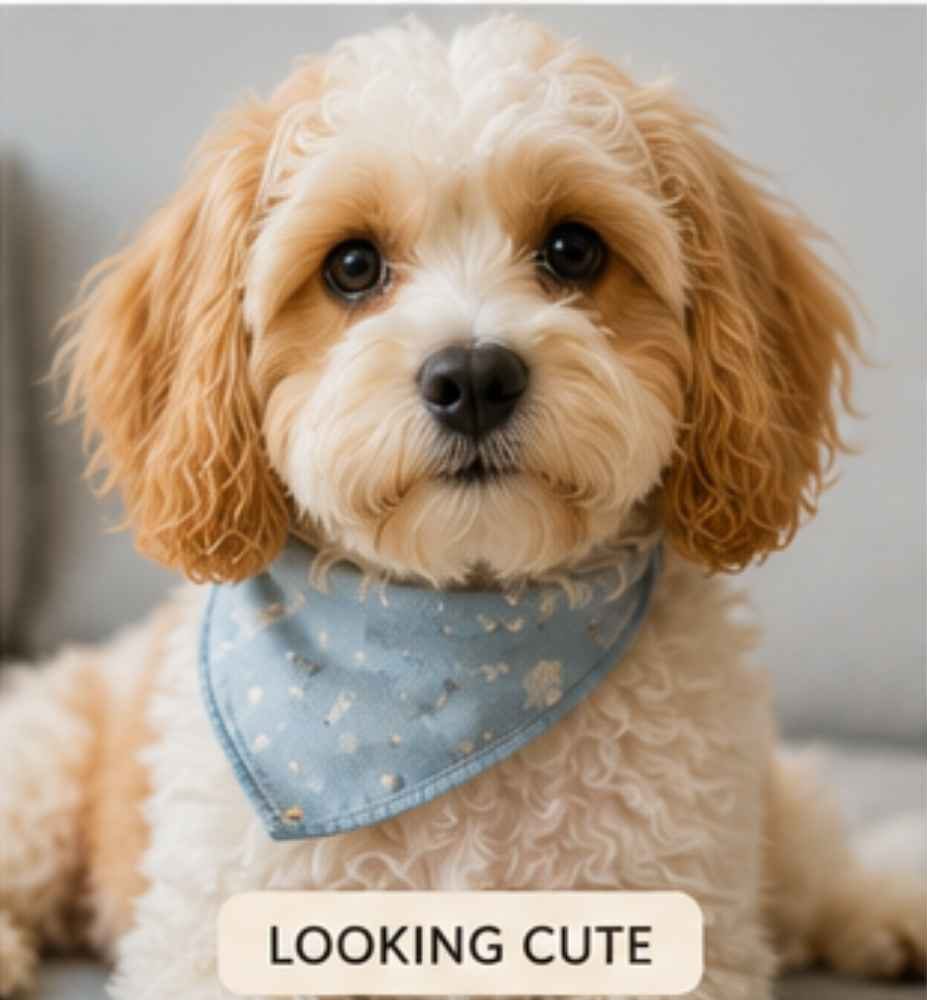
Most Cavachons have a soft, appealing “teddy bear” look: dark expressive eyes, a relatively short-to-medium muzzle, drop ears, a compact body and a fluffy or wavy coat. But there is no single correct Cavachon appearance.
Some have looser, silkier waves and more obvious spaniel feathering. Others develop a denser, curlier Bichon-like coat. Facial furnishings can make the muzzle look rounded and plush, especially after grooming. The tail is usually carried cheerfully and may be well feathered.
Adult appearance can also change considerably from puppyhood. A puppy with a darker coat may lighten as it matures, and the texture of the adult coat can differ from the puppy coat. This is one reason choosing a Cavachon solely because you want one exact color or “look” is risky.

How Big Do Cavachons Get? Full-Grown Cavachon Size & Weight
A full-grown Cavachon is usually a small dog, commonly in the neighborhood of 12–20 pounds. Some adults fall outside that range. Height is often around 12–13 inches at the shoulder, but variation is normal because Cavachons do not have an official breed standard.
Searches for “Cavachon dog full grown,” “Cavachon full size” and “how big do Cavachons get” are common for good reason: mixed-breed size is less predictable than many puppy advertisements imply. The size of both parents, grandparents and previous litters is more informative than a catchy size label.
When is a Cavachon full grown?
Most of their skeletal growth occurs during the first year. Small dogs often approach adult height before their first birthday, then continue filling out and maturing. Emotional and behavioral maturity can take longer than physical growth.
Are there toy, mini or teacup Cavachons?
Terms such as “toy,” “mini” and especially “teacup Cavachon” are marketing descriptions rather than official Cavachon varieties. Extremely small size should never be pursued at the expense of sound structure, health or stable temperament. Ask for the actual weights and health histories of the parents rather than relying on a label.
Cavachon Temperament & Personality
Cavachons are typically described as affectionate, cheerful, sociable and people-oriented. Many are happy little companions that enjoy being included in almost everything: a neighborhood walk, a visit with friends, a game in the living room or a quiet evening beside their person.
The strongest theme in the Cavachon personality is often companionship. Both parent breeds were developed to live closely with people, so a Cavachon that wants to follow you from room to room is not behaving strangely. For the right owner, that devotion is lovely. For someone who wants a highly independent dog that is routinely alone for a full workday, it can be a mismatch.
Are Cavachons calm?
Adults often have a pleasant balance between play and relaxation, but “calm” should not be confused with inactive. Puppies can be busy, bouncy and mischievous. Adolescents still need exercise, training and outlets for curiosity. A mature Cavachon whose needs are met may be very content to settle near the family after a walk and play session.
Are Cavachons friendly with strangers?
Many are naturally social, although genetics and early experiences matter. Thoughtful puppy socialization should introduce new people, surfaces, sounds, handling and environments without overwhelming the puppy. A shy puppy should not simply be labeled “sweet and quiet”; persistent fearfulness deserves attention.
Can Cavachons be therapy dogs?
Their small size, affectionate nature and sociability can make some individual Cavachons promising candidates for therapy work. Suitability depends on the individual dog having excellent temperament, comfort with handling, resilience around unfamiliar people and environments, and appropriate training. Being cuddly at home is not, by itself, enough to make a dog a therapy dog.
Cavachon Intelligence, Trainability & Training
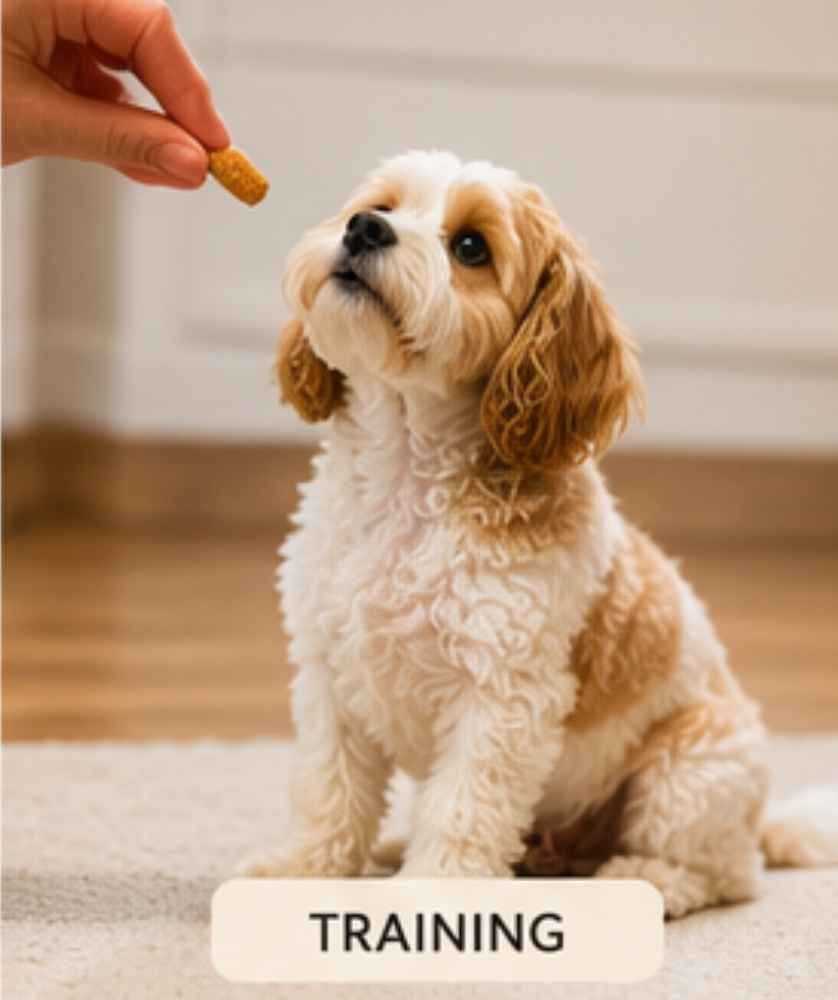
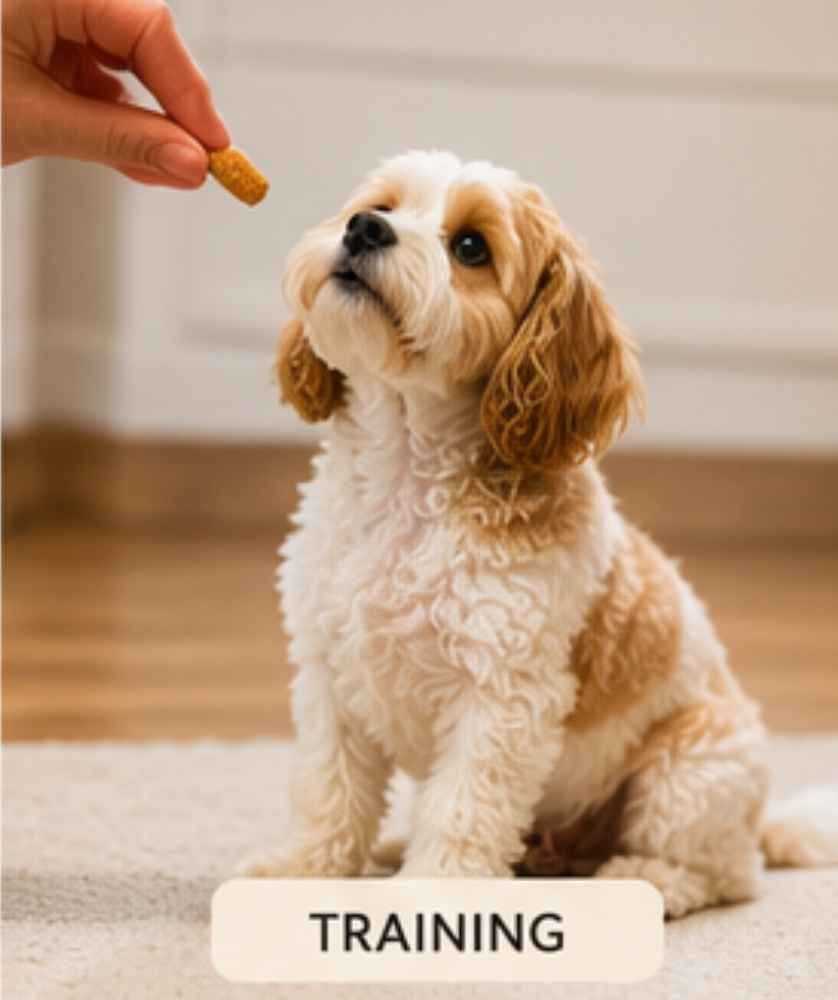
Cavachons are generally bright companion dogs and often respond very well to positive reinforcement. Food rewards, play, praise and short successful sessions usually accomplish far more than harsh corrections.
Begin with practical life skills: responding to a name, coming when called, walking politely on leash, settling on a mat, accepting grooming, being comfortable with gentle restraint, trading objects, waiting at doors and relaxing when the owner is briefly out of sight.
House training a Cavachon
Small puppies have small bladders, and house training can take patience. Take the puppy outside after waking, eating, drinking, vigorous play and naps, as well as on a frequent schedule between those events. Reward outdoor toileting immediately. Supervision, a sensible confinement area and consistency are more effective than punishment after an accident.
Recall training
A Cavachon may inherit the Cavalier’s interest in scents and moving things, so do not assume a friendly companion dog will automatically stay close outdoors. Build recall with high-value rewards and practice on a long line in safe places before considering off-leash freedom.
Grooming training is essential
One of the most useful things you can teach a Cavachon puppy is that brushes, combs, paw handling, face wiping, ear checks, tooth brushing and clippers predict good things. A dog that cooperates with grooming is easier and safer to care for throughout life.
For more general help, explore Dogs Central’s small dog training resources.
Cavachon Coat Types & Colors
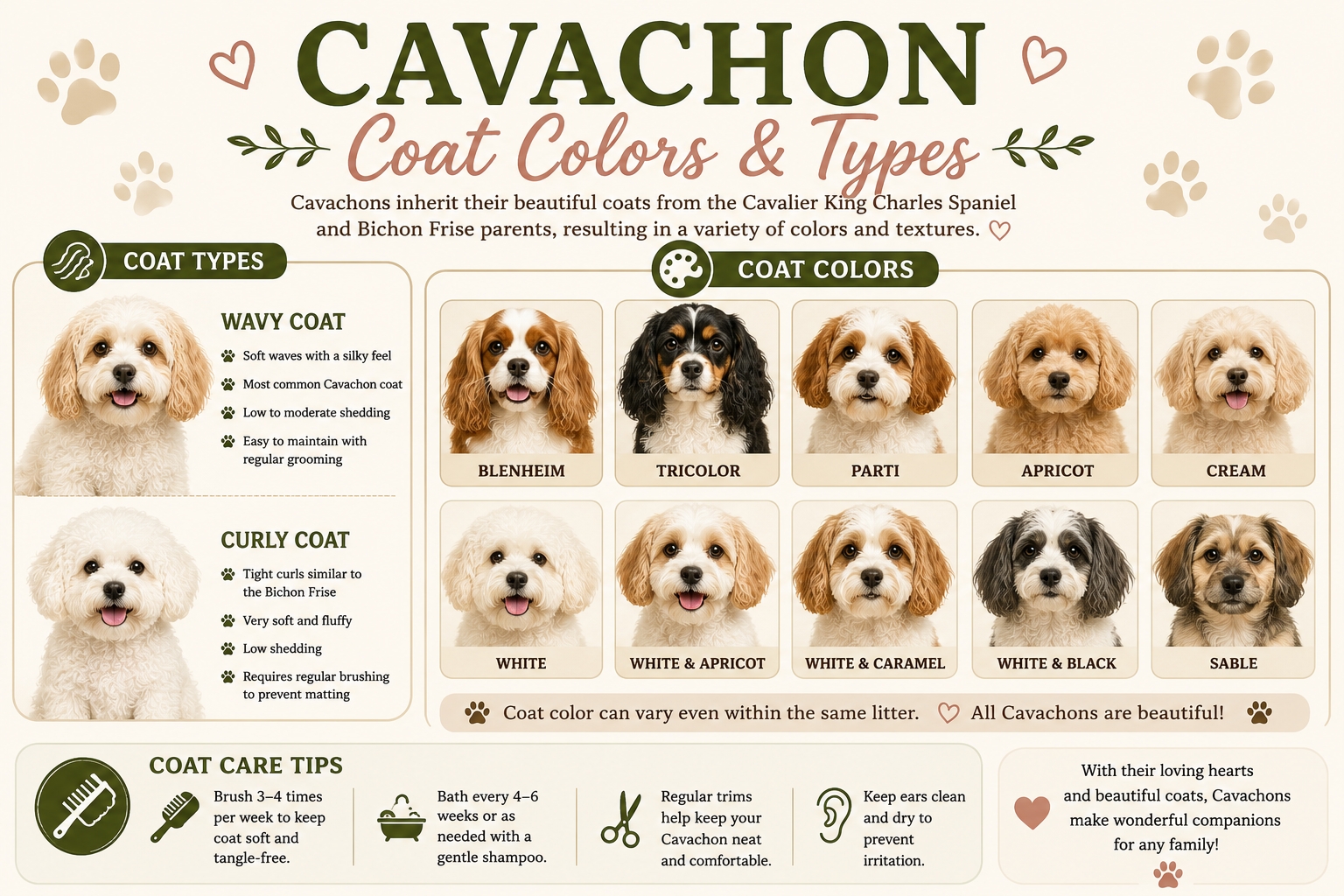
The Cavachon coat can be one of the most variable parts of the cross. It may be soft and wavy, loose-curled, more densely curled, or somewhat silkier and spaniel-like. Coat texture affects both appearance and grooming.
Common colors and patterns include:
- White or cream
- White with apricot, tan or chestnut markings
- Apricot or buff
- Black and white
- Tricolor combinations of black, white and tan
- Sable or mixed shading
Black Cavachons, black-and-white Cavachons and tricolor Cavachons attract plenty of attention, but color should come after health, temperament and responsible breeding when choosing a puppy.
Some colors fade or lighten with age. Puppy photos are therefore not a guarantee of the exact shade an adult Cavachon will retain.
Do Cavachons Shed? Are Cavachons Hypoallergenic?
Cavachons are often low-shedding, but they are not guaranteed to be non-shedding or hypoallergenic. This distinction matters, particularly for families choosing a dog because someone has allergies.
The Bichon Frise has a curly coat that tends to retain loose hair, while the Cavalier has a silky coat and does shed. A Cavachon can inherit characteristics from either side or a blend of both. One dog may shed very little; a littermate may shed noticeably more.
Dog allergies are triggered by proteins found in dander, saliva and other biological material—not simply by visible hair. No breed or cross can honestly promise zero allergens. If allergies are important to your decision, spend substantial time with adult Cavachons before committing and discuss serious allergies with your medical professional.
You can also read our guide to hypoallergenic and allergy-friendly small dogs for a more realistic look at the term “hypoallergenic.”
Cavachon Grooming, Coat Care & Haircuts
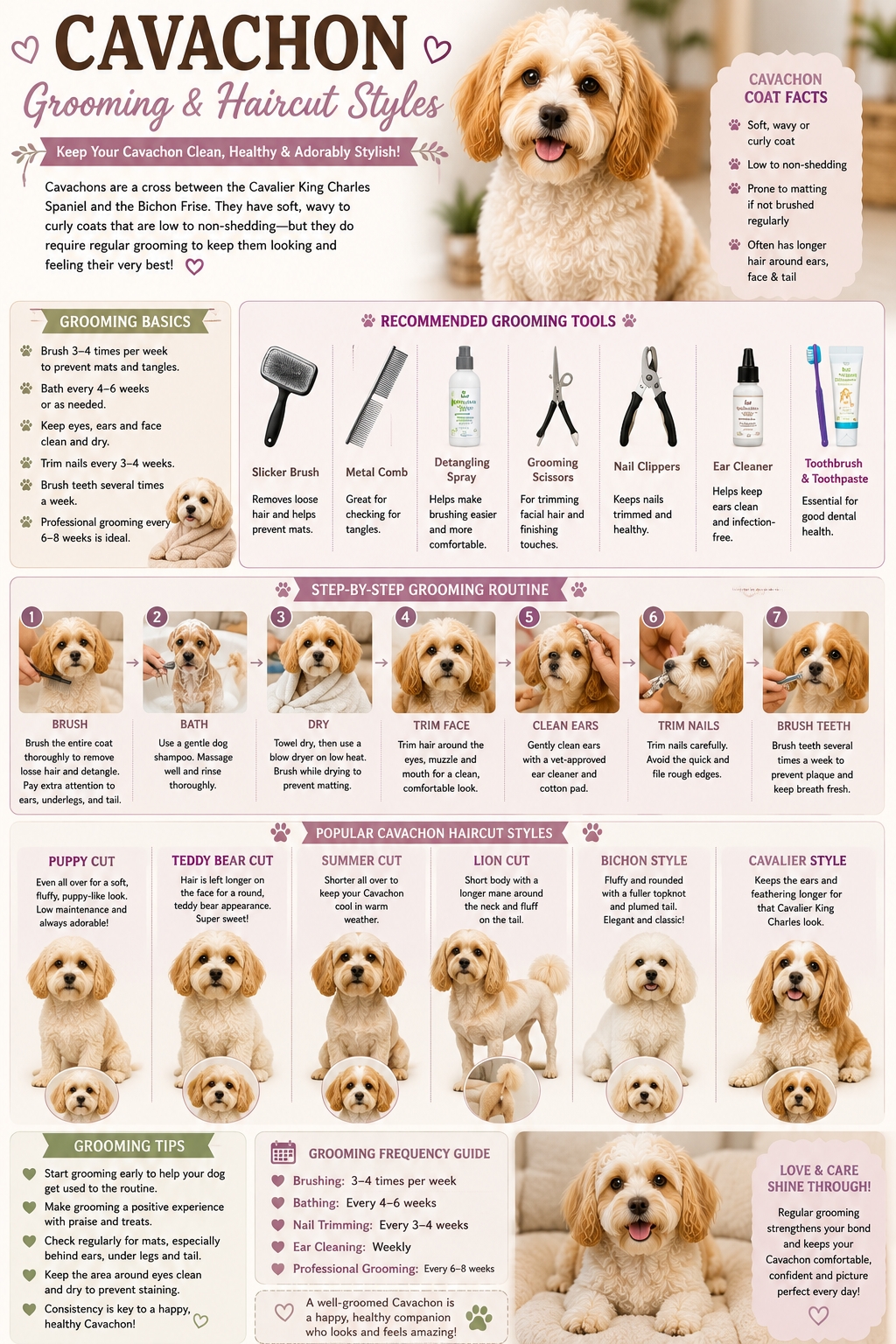
A low-shedding coat is not a low-maintenance coat. In fact, many Cavachons require more hands-on grooming because loose hair can remain trapped in the coat and contribute to tangles and mats.
Brushing
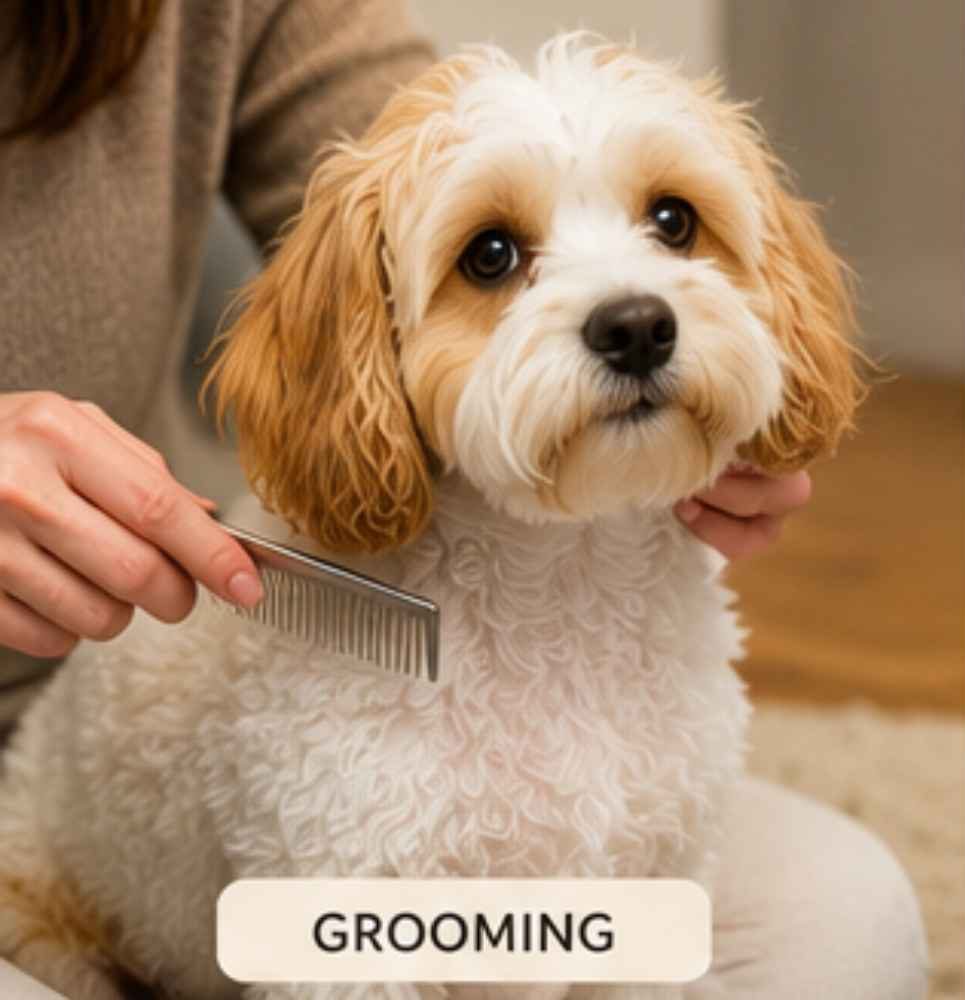
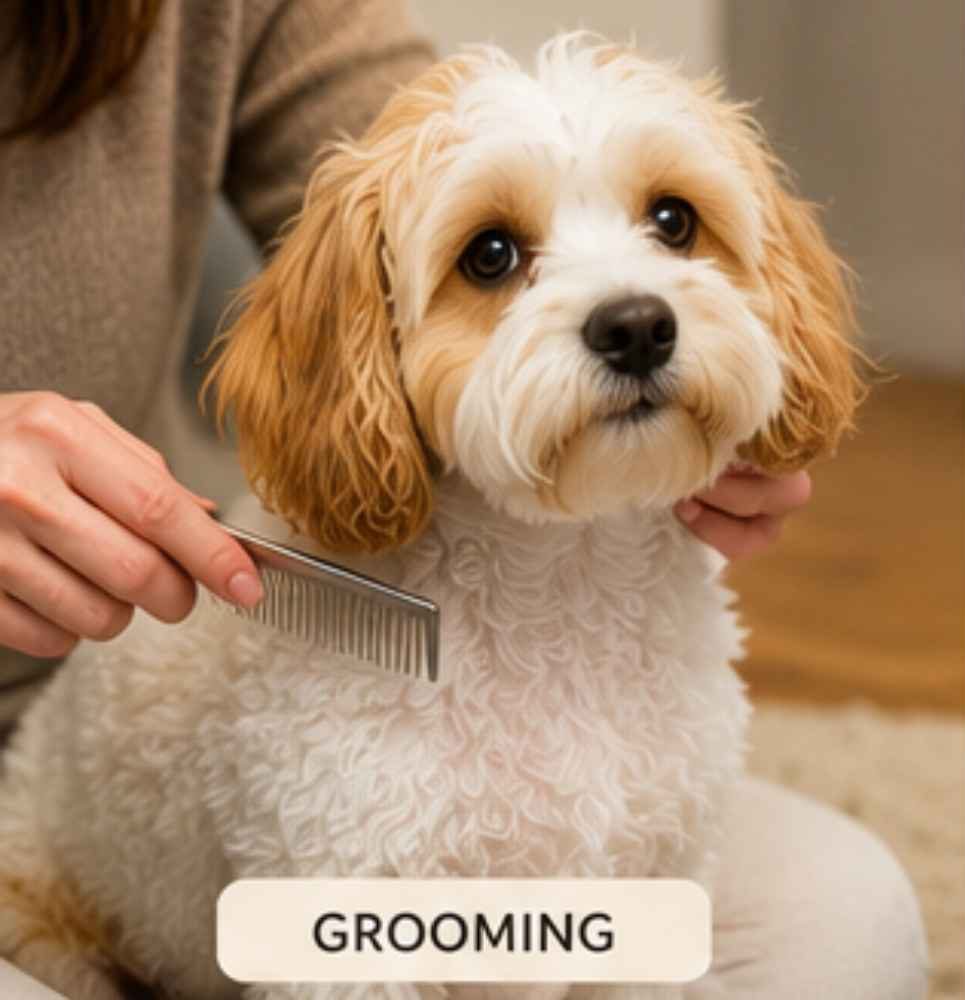
Brush and comb regularly, paying particular attention behind the ears, under the collar or harness, in the armpits, on the legs and around friction points. A brush can glide over the surface while leaving knots close to the skin, so follow brushing with a comb that reaches through the coat.
Professional grooming
Many owners schedule professional grooming every several weeks, depending on coat length, texture, lifestyle and preferred haircut. A shorter trim is easier to maintain than a long teddy-bear coat, but even a short coat still needs brushing and skin checks.
Popular Cavachon haircuts
Search interest in Cavachon haircuts, the teddy bear Cavachon haircut and the Cavachon summer cut is substantial. Common styles include:
- Teddy bear trim: a rounded face with an evenly plush body.
- Puppy cut: a practical, relatively even length over much of the body.
- Short pet trim: useful for owners who prioritize easier maintenance.
- Longer natural style: attractive but considerably more demanding to keep mat-free.
Very close shaving is not a substitute for regular maintenance, and severe matting can be painful. Your groomer can recommend a practical length based on the individual coat.
Ears, eyes and nails
Drop ears need regular checks for redness, odor, discharge or discomfort. Hair around the eyes should be kept clean and tidy. Tear staining is cosmetic, but persistent eye discharge or irritation deserves veterinary attention. Nails should be trimmed often enough that they do not become long, alter gait or make standing uncomfortable.
Explore our broader small dog grooming guide for more care tips.
Cavachon Exercise Needs & Enrichment
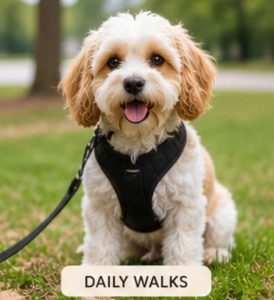 Cavachons usually have moderate exercise needs. They do not generally require the workload of a high-drive working breed, but they still need daily physical activity and mental engagement.
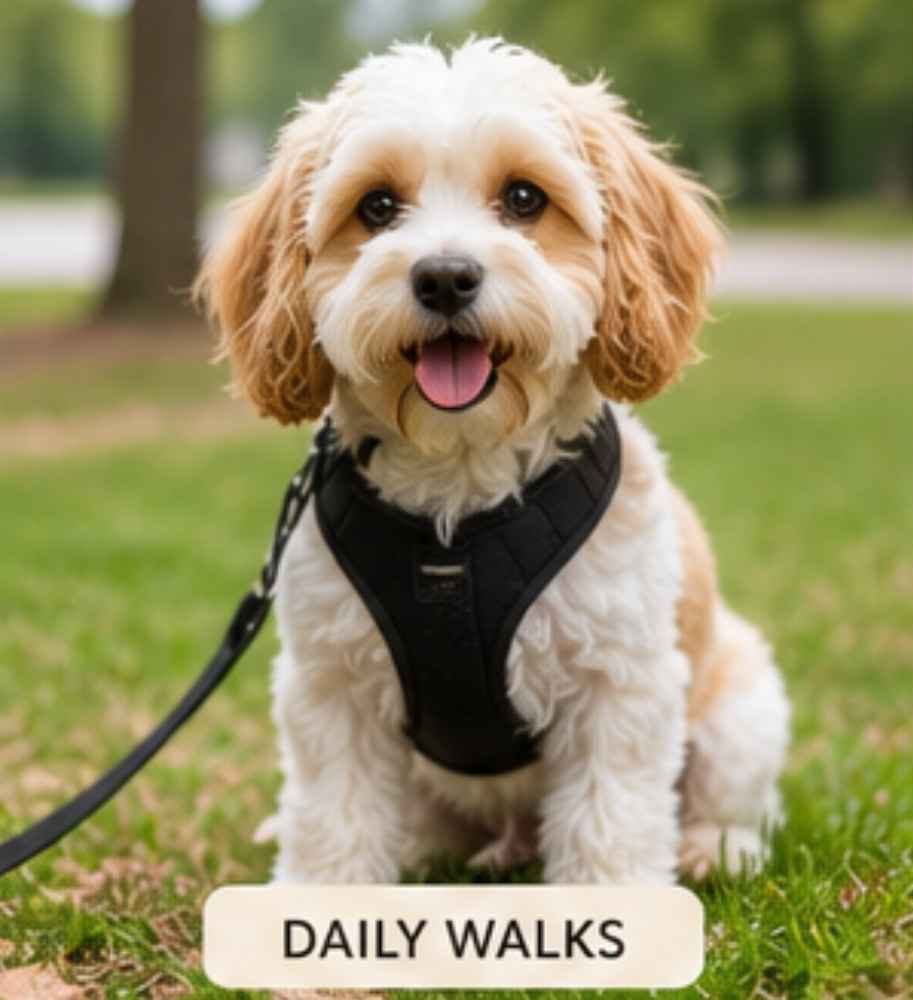
A typical adult may enjoy a couple of walks, sniffing time and interactive play each day. The exact amount should be adjusted for age, fitness, health, weather and the individual dog. Puppies need age-appropriate activity rather than forced distance exercise, while older Cavachons may prefer shorter, more frequent outings.
Good enrichment activities for Cavachons
- Sniff walks where the dog is allowed time to investigate
- Food puzzles and stuffed food toys
- Short trick-training sessions
- Hide-and-seek with people or treats
- Gentle retrieve games
- Beginner scent games
- Supervised play with compatible dogs
- Learning names for toys
- Mat training and relaxation exercises
Mental exercise matters because boredom can emerge as barking, pestering, stealing objects or other behavior people describe as “naughty.” A ten-minute training game can sometimes tire a clever little companion more effectively than simply adding another lap around the block.
Cavachon Barking & Common Behavior Problems
Cavachons are not usually described as extreme barkers, but individuals can become vocal. Door noises, people in the hallway, excitement, frustration, boredom or distress when left alone can all trigger barking.
Commonly reported Cavachon behavior problems are not unique defects of the cross. They are often ordinary companion-dog issues that respond to prevention and training:
- Alert barking
- Difficulty being left alone
- Jumping up for attention
- Pulling toward people or dogs because of excitement
- House-training setbacks
- Demand barking
- Fearfulness if socialization has been inadequate
- Guarding food or valued items in some individuals
Do not excuse poor manners simply because the dog is small enough to pick up. Teaching a Cavachon to walk, settle, greet politely and cope with ordinary frustrations makes life easier for both dog and family.
Sudden behavior change in an adult dog can also be a sign of pain or illness. A previously tolerant dog that becomes irritable, withdrawn or unusually reactive should receive a veterinary check rather than being treated as merely “stubborn.”
Can Cavachons Be Left Alone? Separation Anxiety
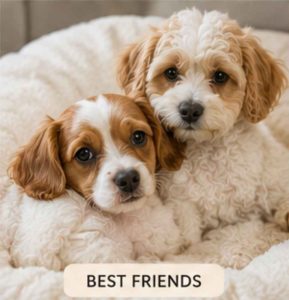 Cavachons tend to form strong attachments to people, which is part of their appeal but can also make alone-time training important. Not every Cavachon develops separation anxiety, yet the cross is not an obvious choice for someone who wants a dog that routinely spends very long days alone.
Start independence skills early. Let a puppy learn to relax in a safe pen or gated area while you move around the house. Practice very short departures that remain below the puppy’s panic threshold. Provide safe enrichment and gradually build duration rather than waiting until the first full workday to discover that the dog has never learned to be alone.
True separation anxiety is more than boredom. Signs can include panic, persistent vocalization, destructive escape attempts, drooling, pacing or inability to settle when a particular person leaves. Severe cases deserve help from a veterinarian and a qualified behavior professional.
Are Cavachons Good Family Dogs?
Many Cavachons make excellent family dogs. Their affectionate, playful nature and manageable size can fit a wide range of households. The best match is a family that wants a dog genuinely involved in daily life and is prepared for regular grooming.
Are Cavachons good with children?
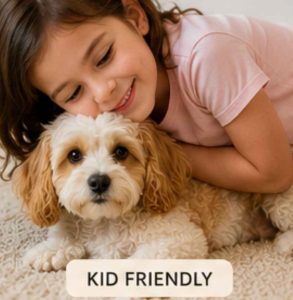
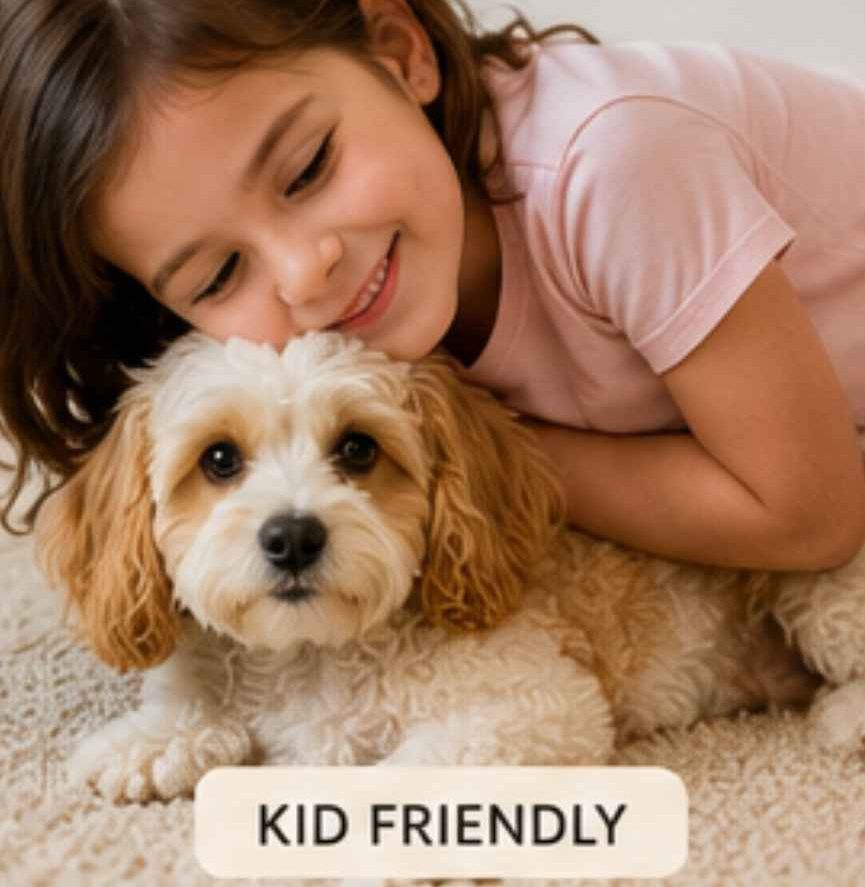
Often, yes. Both parent breeds are commonly valued as companion dogs, and many Cavachons enjoy children. But small dogs can be injured by rough handling, falls or chaotic play. Adults should supervise interactions, especially with toddlers and preschoolers, and children should learn to let the dog eat, sleep and retreat in peace.
Are Cavachons good with other dogs?
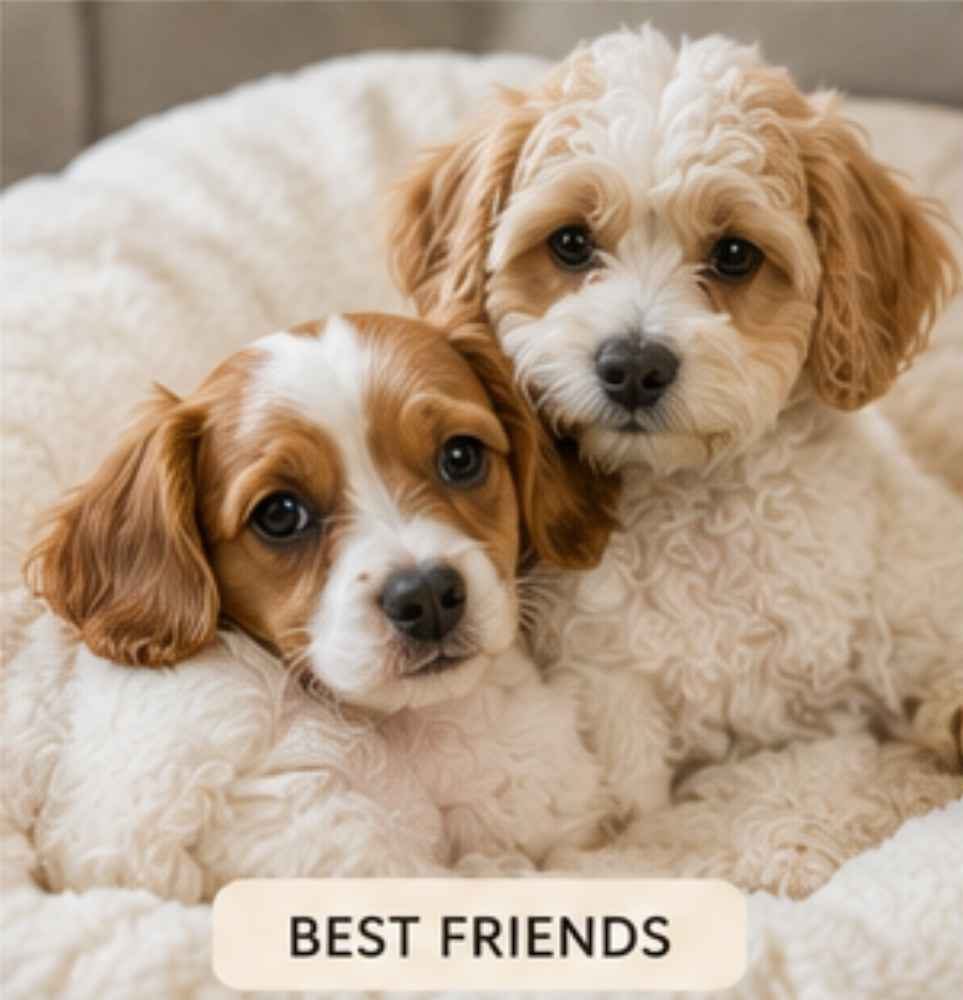
Many are sociable with other dogs when well socialized. Compatibility still depends on individual temperament, play style, age and experience. A gentle Cavachon may find a much larger, rough-playing dog overwhelming even when both dogs are friendly.
Are Cavachons good with cats?
They often can be. Introductions should be gradual and controlled, and cats need dog-free escape areas. A Cavachon with a strong chase response should not be allowed to rehearse chasing a cat simply because the dog is small.
Households with birds, rodents or other small pets should use secure management. Spaniels have sporting ancestry, and individual prey interest varies.
Are Cavachons Good Apartment Dogs?
Cavachons can be very good apartment and condo dogs because they are small, adaptable and do not require a huge yard. The more important questions are whether the dog receives enough walks and enrichment, can cope with being alone, and has been taught not to bark at every hallway sound.
Apartment owners should also plan for toilet trips in bad weather, elevator manners, close encounters with neighbors and dogs, and a quiet indoor routine. A small dog with unmet needs can create more apartment friction than a larger, calmer dog.
See our guide to the best small dogs for apartment living for additional considerations.
Are Cavachons Good for Seniors and First-Time Dog Owners?
A Cavachon can be an excellent companion for a senior who wants an affectionate small dog and is comfortable with the grooming commitment. Their size is convenient, their exercise needs are usually moderate, and many enjoy a routine that includes walks, visits and plenty of together time.
There are practical considerations. A young puppy can be surprisingly busy underfoot, and professional grooming is an ongoing expense. An adult Cavachon with a known temperament may be a particularly appealing option for someone who would rather skip puppy house training and adolescent exuberance.
Cavachons can also suit first-time dog owners. They are generally trainable and people-focused, but “beginner friendly” does not mean maintenance-free. New owners should budget for grooming, veterinary care, training and the possibility that the dog will need deliberate work on independence.
Compare more options in our best small dogs for seniors and best small dogs for first-time owners guides.
Cavachon Health Issues
Cavachons can live long, healthy lives, but a mixed breed is not automatically healthier than its parents. A Cavachon can inherit disease-associated genes and structural tendencies from either the Cavalier King Charles Spaniel or the Bichon Frise. Responsible breeding should therefore consider health testing relevant to both sides of the family.
Heart disease
Cavalier King Charles Spaniels have an important breed association with mitral valve disease. This makes cardiac health particularly relevant when evaluating Cavachon breeding stock. Ask what heart screening has been performed on the Cavalier parent and its family line rather than accepting “vet checked” as a substitute for meaningful health screening.
Eye conditions
Both parent breeds can be affected by inherited eye problems. Breeding dogs should receive appropriate eye examinations, and owners should seek veterinary care for persistent redness, squinting, cloudiness, discharge or changes in vision.
Patellar luxation
Luxating patellas, in which the kneecap moves out of its normal position, occur in many small dogs. Severity varies. Signs may include intermittent skipping, carrying a hind leg for a few steps or persistent lameness.
Hip and orthopedic concerns
Small size does not eliminate orthopedic disease. Responsible breeders should follow health-testing recommendations relevant to their breeding dogs, and owners should keep Cavachons lean to reduce unnecessary stress on joints.
Ear and skin problems
Drop ears, hair growth and moisture can contribute to ear trouble in susceptible dogs. Allergies can also present as itchy skin, recurrent ear infections, paw licking or other symptoms. Chronic problems need veterinary diagnosis rather than repeated home remedies.
Dental disease
Like many small dogs, Cavachons can be prone to plaque, tartar and periodontal disease. Dental care deserves its own routine rather than being treated as an occasional grooming extra.
Neurologic concerns from the Cavalier side
Cavaliers have recognized neurologic health concerns, including Chiari-like malformation and syringomyelia. Prospective Cavachon owners should be aware that crossing a Cavalier with another breed does not make Cavalier-associated health concerns irrelevant.
What health testing should a Cavachon breeder do?
There is no single Cavachon registry test that replaces responsible evaluation of both parent breeds. Ask for the actual names and results of health tests performed on each parent and verify results when possible. Appropriate screening may include cardiac, eye and orthopedic evaluations as recommended for the Cavalier and Bichon parent breeds.
A generic DNA panel can be useful for specific inherited variants, but “DNA tested” does not assess every important condition and does not replace examinations such as cardiac, ophthalmic or orthopedic screening.
Veterinary note: This guide provides general educational information and is not a diagnosis or substitute for advice from your veterinarian. Individual dogs may have health needs that differ from typical breed concerns.
For broader preventive-care information, visit our small dog health section.
How Long Do Cavachons Live? Cavachon Lifespan & Life Expectancy
A Cavachon’s lifespan is often roughly 12–15 years, although individual dogs may live shorter or longer lives. Genetics, body condition, dental care, preventive veterinary care, diet, exercise, accident prevention and plain luck all influence longevity.
There is no responsible way to promise that a puppy will live to a specific age. What owners can do is stack the odds in the dog’s favor: choose a puppy from health-conscious parents, keep the dog lean, provide appropriate exercise, maintain dental care, attend regular veterinary examinations and investigate changes in behavior or appetite early.
Senior Cavachons may need adjustments to exercise, diet, dental care and home setup. Runners or rugs on slippery floors, steps or ramps for furniture where appropriate, and more frequent veterinary monitoring can help an older small dog remain comfortable and engaged.
Cavachon Dental Care
Dental disease is extremely common in small companion dogs, and a Cavachon should become accustomed to mouth handling and tooth brushing early. Ideally, use a dog-specific toothbrush and toothpaste and make brushing a frequent routine.
Bad breath should not automatically be accepted as normal dog breath. Inflamed gums, heavy tartar, loose teeth, reluctance to chew, dropping food or facial sensitivity warrant veterinary attention. Professional dental cleaning may be recommended based on the individual dog’s oral health.
Dental chews can complement a dental-care plan, but they do not make brushing and veterinary assessment unnecessary. Choose products appropriate for the dog’s size and supervise chewing.
Cavachon Nutrition & Feeding
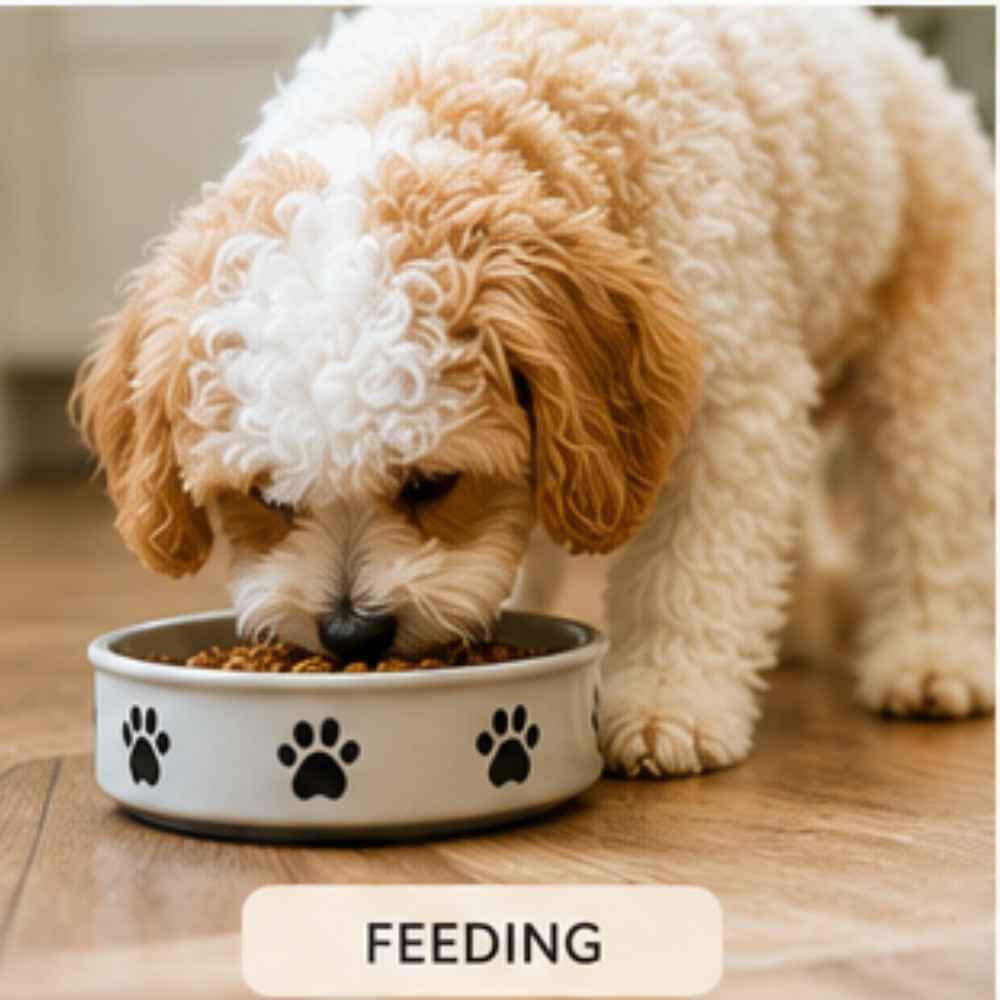
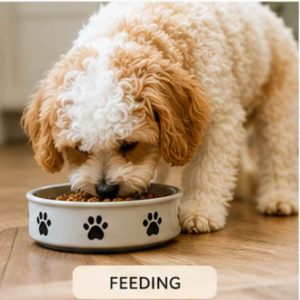 Feed a complete and balanced diet appropriate for your Cavachon’s life stage, size, health and activity level. The right amount is the amount that maintains a healthy body condition—not necessarily the serving printed on the package.
Cavachons can be persuasive little dining companions. Those expressive eyes can turn one bite from the table into a household tradition remarkably quickly. Treat calories count, and excess weight can aggravate orthopedic and other health problems.
Feeding a Cavachon puppy
Puppies need a nutritionally complete growth diet and appropriately timed meals. Your breeder and veterinarian can help establish a feeding schedule. Sudden food changes can upset digestion, so transition gradually unless your veterinarian advises otherwise.
Adult and senior Cavachons
Monitor body condition rather than assuming a fluffy dog is at a healthy weight. You should be able to feel the ribs without pressing through a thick layer of fat, and the dog should have a visible waist when viewed from above. Senior dogs may need dietary changes depending on activity, dental condition or medical needs.
Visit Dogs Central’s small dog nutrition resources for more general feeding guidance.
What Is Life With a Cavachon Really Like?
 For many owners, life with a Cavachon means having a small, cheerful shadow. They tend to notice where their people are, enjoy household routines and insert themselves enthusiastically into whatever seems interesting. They are portable enough for many outings but substantial enough that they do not feel quite as physically fragile as the tiniest toy breeds.
A realistic week includes brushing, walks, play, short training sessions, tooth care and plenty of companionship. Every few weeks there may be a grooming appointment. Mud, rain and snow can turn fluffy legs into small mops, so owners in wet climates quickly become familiar with towels by the door.
The emotional side of ownership is just as important. A Cavachon that has been selected specifically for its affectionate companion nature should not then be expected to live a highly isolated life. This is a dog for someone who actually wants canine company.
Cavachon Puppies
Cavachon puppies are extremely appealing, which is precisely why buyers should slow down and evaluate the source rather than buying the first fluffy face they see. Search volume for Cavachon puppies, puppies for sale and puppies near me is high, and high demand attracts both careful breeders and sellers focused primarily on volume.
What should a well-raised Cavachon puppy be learning?
Early puppyhood should include safe, positive exposure to normal household life, different people, gentle handling, grooming, age-appropriate surfaces and sounds, and opportunities to recover calmly from small surprises. Puppies should spend meaningful time with their mother and littermates during the appropriate developmental period.
After coming home, continue socialization without flooding the puppy. Quality matters more than simply meeting the largest possible number of people or dogs.
What should you ask before buying a Cavachon puppy?
- Can I meet the mother and see where the puppies are raised?
- Who is the father, and what is his temperament?
- What health testing was completed on both parents?
- Can I see or verify the actual results?
- What socialization and grooming exposure have the puppies received?
- What veterinary care has each puppy received?
- What happens if I cannot keep the dog later in life?
- Does the contract require the dog to be returned to or supported by the breeder?
- How do you match puppies with homes?
A responsible breeder should ask you questions too. Someone willing to sell a puppy instantly to anyone with a credit card is revealing something important about their priorities.
Cavachon puppy names
Soft, cheerful names often suit the Cavachon’s friendly appearance, but the best name is one you enjoy saying and that is easy for the dog to distinguish. For inspiration, explore the Dogs Central small dog names guide. A dedicated Cavachon names page can also be added beneath this breed silo as our Cavachon library grows.
Planned Cavachon puppy resource: Cavachon Puppies Guide.
Cavachon Breeders, Price & Finding Puppies Near You
People searching for Cavachon breeders near me, reputable Cavachon breeders, Cavachon puppies for sale or Cavachon price are usually ready to make a major decision. The most important question is not who has a puppy available fastest; it is who is producing puppies with the best chance of sound health and temperament.
Cavachon prices vary widely by location, breeder, health testing, veterinary care and other factors. A low price can be a warning sign if essential care and testing have been skipped, but an expensive puppy is not automatically well bred. Price is not proof of quality.
Red flags when shopping for a Cavachon puppy
- Many breeds or designer mixes always available
- No meaningful information about the parent dogs
- “Vet checked” presented as the only health assurance
- Pressure to pay immediately
- Meeting in a parking lot with no reasonable explanation
- Seller refuses live video, in-person visits or other reasonable identity verification
- Guaranteed “100% hypoallergenic” or “zero shedding” claims
- Heavy emphasis on “teacup,” “rare,” or unusually tiny puppies
- No contract or return policy
- Puppies routinely shipped or brokered with little discussion of the buyer’s home
Dogs Central’s breeder architecture separates education from promotion. Our planned Cavachon puppy guide will teach readers how to evaluate puppies and breeders in depth, while the Cavachon breeder showcase is the appropriate location for breeder profiles accepted for inclusion.
Also review our general guide to responsible small dog breeders and puppies before sending a deposit.
Cavachon Adoption, Rescue & Rehoming
Buying a puppy is not the only way to find a Cavachon. Adult Cavachons and occasionally puppies become available through rescues, shelters and private owner-assisted rehoming. An adult can offer a major advantage: size, coat, energy level and much of the dog’s temperament are already visible.
If you are searching for Cavachon adoption, Cavachon rescue dogs or a Cavachon rescue near you, visit Pet Rehoming Network’s Cavachon adoption and rehoming resource. It includes private-owner Cavachon adoption listings when available and information for people hoping to adopt.
Need to rehome a Cavachon?
Sometimes loving owners face circumstances that make keeping a dog impossible. Responsible rehoming should focus on finding a suitable, carefully screened home while being completely honest about the dog’s health, temperament, training and needs. Pet Rehoming Network also provides owner-assisted Cavachon rehoming help for families who need to find a new home for a cherished dog.
Whenever possible, contact the original breeder as well. Responsible breeders commonly want to know if a dog they produced needs a new home and may require or offer assistance with return or rehoming.
Cavachon vs. Cavapoo: What’s the Difference?
The Cavachon vs. Cavapoo comparison is one of the most common searches around this breed. Both crosses share the Cavalier King Charles Spaniel, but the second parent differs: a Cavachon is Cavalier × Bichon Frise, while a Cavapoo is Cavalier × Poodle.
| Trait | Cavachon | Cavapoo |
|---|---|---|
| Parent breeds | Cavalier + Bichon Frise | Cavalier + Poodle |
| Typical size | Small; often around 12–20 lb | Varies substantially with Poodle parent size |
| Coat | Wavy to curly; may be more Bichon-like or Cavalier-like | Wavy to curly; may show stronger Poodle influence |
| Shedding | Often low, but variable | Often low, but variable |
| Grooming | Regular brushing and clipping often needed | Regular brushing and clipping often needed |
| Temperament | Often affectionate, cheerful and sociable | Often affectionate, social and highly trainable |
| Best choice? | Depends on the individual dog, parent lines and your lifestyle—not the designer name alone. | |
Neither cross can promise a hypoallergenic coat, exact adult size or predetermined personality. If choosing between them, meet adult dogs, learn about both parent breeds, compare the actual parents of a prospective litter, and consider grooming and health testing as seriously as appearance.
Read our complete Cavapoo dog breed guide for a deeper comparison.
Male vs. Female Cavachon
There is no reliable rule that male Cavachons are always more affectionate, calmer or easier than females—or vice versa. Individual temperament, genetics, early socialization, training and life experience are more useful predictors of compatibility.
If choosing a puppy from a thoughtful breeder, describe the household and personality you want rather than insisting on sex alone. The breeder who has observed the litter daily may be able to identify which puppy’s confidence, energy and social style best match your home.
Cavachon Pros & Cons
Reasons people love Cavachons
- Affectionate and strongly companion-oriented
- Convenient small-dog size
- Often friendly and sociable
- Moderate exercise needs suit many households
- Can do well with respectful children and other pets
- Often adaptable to apartments and condos
- Usually responsive to positive training
- Many have low-shedding coats
- Charming, expressive teddy-bear appearance
Things to think carefully about
- Coat can require substantial grooming
- Low shedding is not guaranteed
- No dog is guaranteed hypoallergenic
- May dislike being left alone for long periods
- Health concerns from both parent breeds remain relevant
- Size, coat and temperament are less predictable than in a standardized breed
- Popularity can attract irresponsible breeders and high-volume sellers
- Small-dog dental care can be an ongoing commitment
Is a Cavachon Right for You?
A Cavachon may be an excellent fit if you want a small, affectionate companion that can join everyday family life, enjoy moderate walks and play, and settle nearby afterward. They are particularly appealing to people who enjoy a close relationship with their dog and do not mind regular grooming.
A Cavachon may suit you if:
- You want an affectionate companion rather than an independent dog.
- You can provide daily walks, play and mental stimulation.
- You are prepared to brush and pay for professional grooming as needed.
- You have time to teach the dog to be comfortable alone gradually.
- You want a dog that can potentially fit apartment, family or senior life.
- You are willing to investigate health testing rather than choosing by appearance alone.
You may prefer another breed if:
- The dog will regularly be alone for very long periods.
- You want a wash-and-wear coat with minimal grooming.
- You need an absolute guarantee that a dog will not trigger allergies.
- You want highly predictable adult size, coat and appearance.
- You are not prepared for the ongoing cost of grooming and veterinary care.
If you are still comparing possibilities, browse our small designer dog breeds guide and small dog breed hubs.
Frequently Asked Questions About Cavachons
What is a Cavachon?
A Cavachon is a designer cross between a Cavalier King Charles Spaniel and a Bichon Frise. It is also commonly searched for as a Cavalier Bichon mix or Bichon Cavalier mix.
How big does a Cavachon get?
Many full-grown Cavachons weigh around 12–20 pounds, although adults can fall outside that range. Because the cross has no official breed standard, parent size and family history matter.
How long do Cavachons live?
Cavachons often live approximately 12–15 years. Individual longevity varies with genetics, health, preventive care, body condition and other factors.
Are Cavachons hypoallergenic?
No dog is truly hypoallergenic. Many Cavachons shed relatively little, but coat and shedding vary, and dog allergens also come from dander and saliva.
Do Cavachons shed?
Many are low-shedding, but some shed more than others because a Cavachon can inherit coat traits from either parent breed.
What is a Cavachon’s temperament like?
Cavachons are commonly affectionate, playful, sociable and people-oriented. Individual temperament depends on genetics, socialization, training and experience.
Are Cavachons good family dogs?
Many are excellent family companions when children know how to interact respectfully with a small dog. Young children and dogs should always be supervised together.
Are Cavachons easy to train?
They are generally intelligent and responsive to reward-based training. Consistency is especially important for house training, polite greetings and learning to be comfortable alone.
How much exercise does a Cavachon need?
Most need moderate daily exercise consisting of walks, play and mental enrichment. Requirements vary with age, health and individual energy level.
How often does a Cavachon need grooming?
Most need regular brushing and combing, and many benefit from professional grooming every several weeks. Longer and curlier coats usually require more maintenance.
What is the best Cavachon haircut?
The best haircut is one you can maintain comfortably. Teddy-bear trims and practical puppy cuts are popular. A groomer can recommend a length that suits your dog’s coat and lifestyle.
What’s the difference between a Cavachon and a Cavapoo?
A Cavachon is Cavalier King Charles Spaniel × Bichon Frise. A Cavapoo is Cavalier King Charles Spaniel × Poodle. Both are variable designer crosses and require regular grooming.
How much does a Cavachon cost?
Prices vary widely by location and breeder. Cost alone does not establish quality. Give greater weight to parent health testing, temperament, puppy-raising practices, breeder transparency and lifetime responsibility for the dogs produced.
Where can I adopt a Cavachon?
Check local shelters and rescues and visit Pet Rehoming Network’s Cavachon adoption and rehoming page for private-owner adoption listings and rehoming information.
Trusted Resources
For additional information about the two parent breeds, canine health testing and responsible dog ownership, useful starting points include the American Kennel Club’s Cavalier King Charles Spaniel information, the American Kennel Club’s Bichon Frise information, and the Orthopedic Foundation for Animals health-testing database and resources.
Because the Cavachon is not a standardized pure breed, responsible research should focus on the health, temperament and documented screening of the actual parent dogs rather than relying on a designer-dog label alone.
Final Thoughts: The Cavachon’s Real Appeal
The Cavachon’s appeal is easy to understand. Combining two affectionate companion breeds can produce a friendly, funny, cuddly little dog that fits beautifully into everyday life. But the best reason to choose a Cavachon is not simply that the puppy looks like a teddy bear. It is that the adult dog’s likely needs—companionship, grooming, moderate exercise, training and attentive health care—fit the life you genuinely want to provide.
If you choose a puppy, put health testing and temperament ahead of color, tiny size and immediate availability. If you adopt an adult, take time to understand that individual dog’s history and needs. Either route can lead to the same wonderful destination: a small dog who becomes a very large part of the family.



About This Cavachon Guide
Dogs Central has been helping dog lovers learn about companion dogs since 2002. This Cavachon guide is part of our expanding library of practical small-dog resources. As the Cavachon section grows, we may add new owner experiences, photographs, infographics, grooming examples, puppy resources, comparison articles and other supporting guides. Our goal is to make this page more useful over time while keeping the information practical, balanced and focused on responsible dog ownership.