
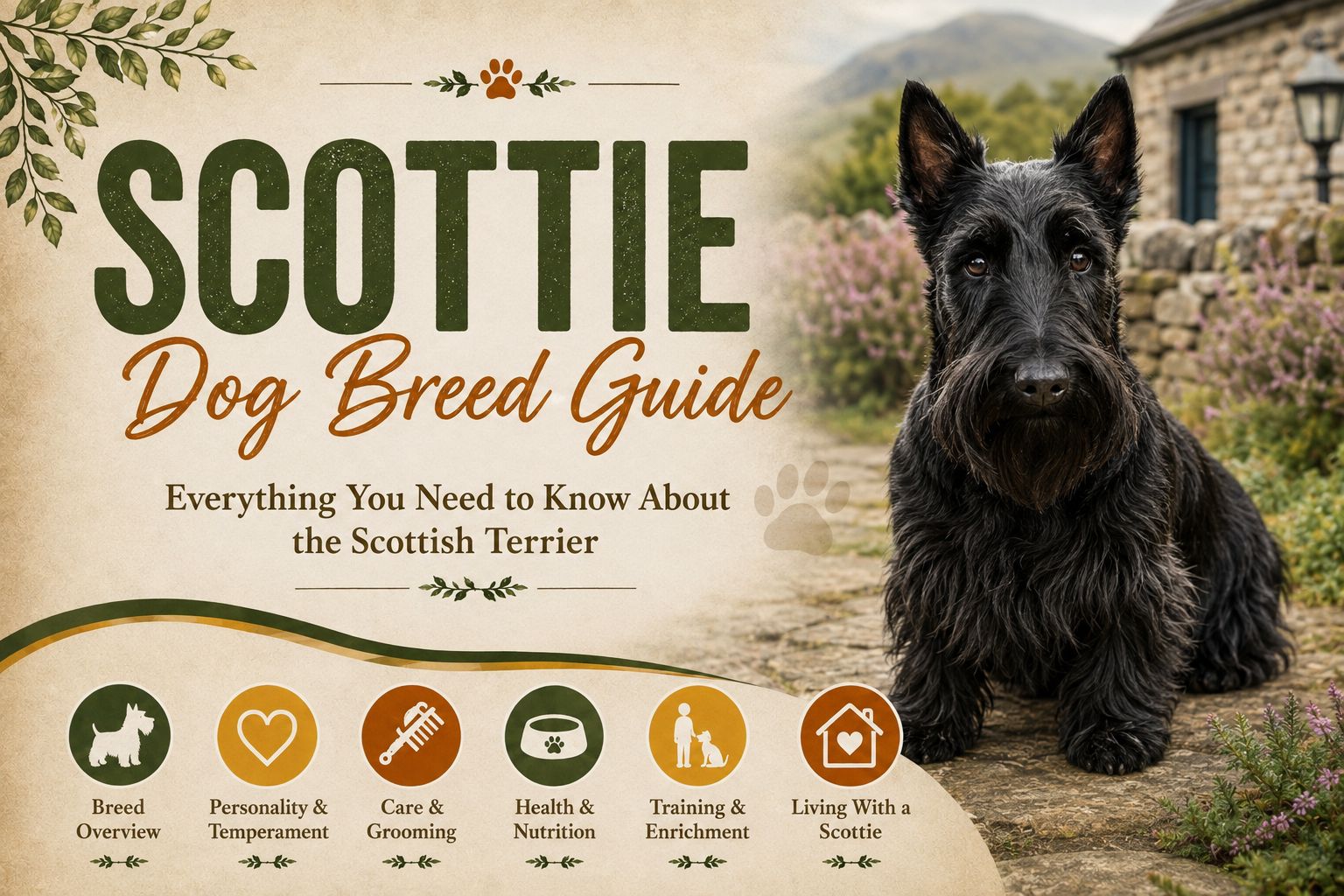
The Scottish Terrier—better known simply as the Scottie—is a compact, courageous little dog with an unmistakable silhouette and a personality far larger than its short legs suggest. Beneath the dignified beard and serious expression is a true terrier: alert, independent, determined, surprisingly playful and intensely loyal to the people it considers its own.
Scotties are not miniature lap dogs in terrier costumes. They were developed as tough working dogs capable of pursuing vermin over rugged Scottish ground and into tight spaces. That history still matters. A modern Scottie may live in an apartment and sleep on a sofa, but the breed commonly retains strong opinions, prey drive, persistence, watchdog instincts and a preference for deciding whether your suggestion was actually a good one.
They can also be wonderfully devoted companions. Scotties often show affection in a quieter, more selective way than breeds that greet every stranger as a lifelong friend. Many form exceptionally strong bonds with their families while remaining reserved with people they do not know.
This complete Dogs Central guide explores what Scottie dogs and Scottish Terriers are really like as pets, including temperament, size, colors, shedding, allergy considerations, grooming, exercise, training, children, other dogs, seniors, health, lifespan, puppies, breeders, adoption and the questions prospective owners search most often.
Scottie Dogs at a Glance
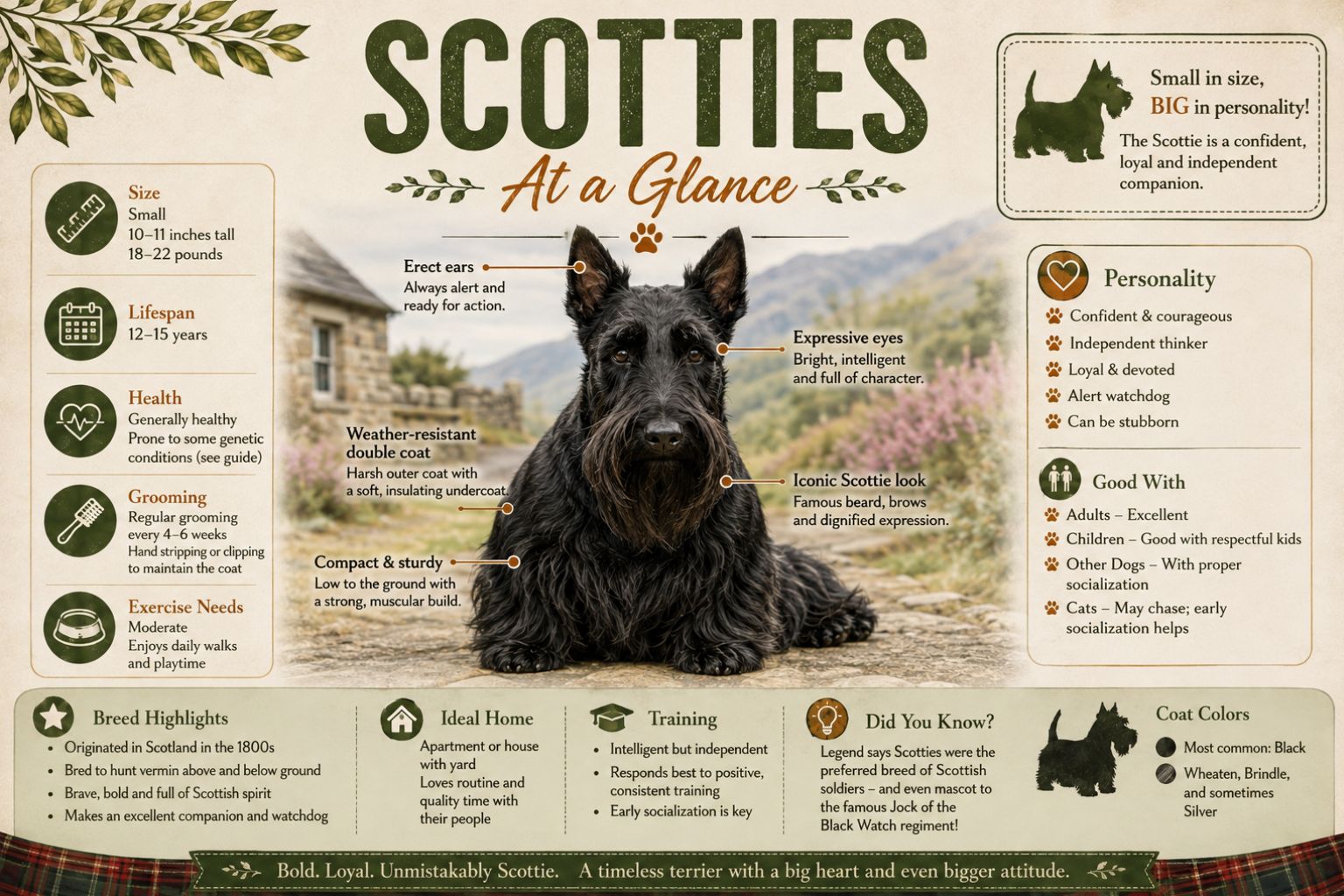
| Official breed name | Scottish Terrier |
|---|---|
| Common names | Scottie, Scottie dog |
| Origin | Scotland |
| Breed group | Terrier |
| Height | About 10 inches at the shoulder |
| Weight | Typically about 18–22 pounds, with males generally at the upper end |
| Build | Low, compact, sturdy and surprisingly substantial |
| Coat | Harsh, wiry outer coat with a soft, dense undercoat |
| Recognized colors | Black, wheaten and brindle |
| Shedding | Relatively low, but not zero |
| Grooming | Moderate to high; regular brushing plus clipping or hand stripping |
| Exercise | Moderate; daily walks, play and mental activity |
| Temperament | Independent, alert, loyal, confident, reserved and spirited |
| Prey drive | Often strong |
| Apartment suitability | Good when exercise and barking are managed |
| First-time owner suitability | Possible, but generally better for owners comfortable with independent terriers |
| Typical lifespan | Often around 12 years, with individual variation |
🐾 Dogs Central Snapshot
The Scottie is small enough for compact homes but is not a delicate toy breed. Expect a sturdy, self-possessed terrier that loves its family, notices everything, has ideas of its own and may consider squirrels, rabbits and backyard excavation legitimate personal projects.
Scottish Terrier History: A Little Dog From Rugged Scotland
Yes, Scottish Terriers really are Scottish. Their roots lie among the tough, short-legged working terriers of Scotland, dogs valued for pursuing foxes, badgers and other quarry in difficult terrain and underground.
The Scottie’s distinctive structure makes much more sense when viewed through that working history. The breed is low to the ground yet powerfully built, with substantial bone, a strong head and a weather-resistant double coat. These were functional traits long before they became the ingredients of one of the world’s most recognizable canine silhouettes.
Scottish terrier types were not always separated and named as neatly as modern breeds are today. During the nineteenth century, fanciers increasingly distinguished and standardized the dogs that became today’s Scottish Terrier. By the late 1800s the Scottie was developing a clear identity in the show world, while retaining the temperament and physical qualities associated with a working earth dog.
From Working Terrier to Cultural Icon
The Scottie’s rise did not stop at the show ring. During the twentieth century the breed became extraordinarily recognizable in Britain and North America. Scotties appeared in advertising, decorative art, toys, jewelry and household objects, and famous owners helped cement the breed’s public image.
That popularity is part of why even people who have never met a Scottish Terrier can often identify one instantly: upright ears, long head, beard, short legs and a characteristic skirt of longer coat.
Why the Scottie’s History Still Matters
Breed history is not just trivia. It explains modern behavior. A dog developed to think independently underground could not constantly wait for a handler to tell it what to do. The Scottie’s persistence, prey drive, digging, confidence and famous stubborn streak are closely related to qualities that once made the breed useful.
Understanding that history changes the training question from “How do I make this dog obey?” to “How do I make working with me worthwhile?” That is a much better starting point with a Scottie.
What Does a Scottie Dog Look Like?
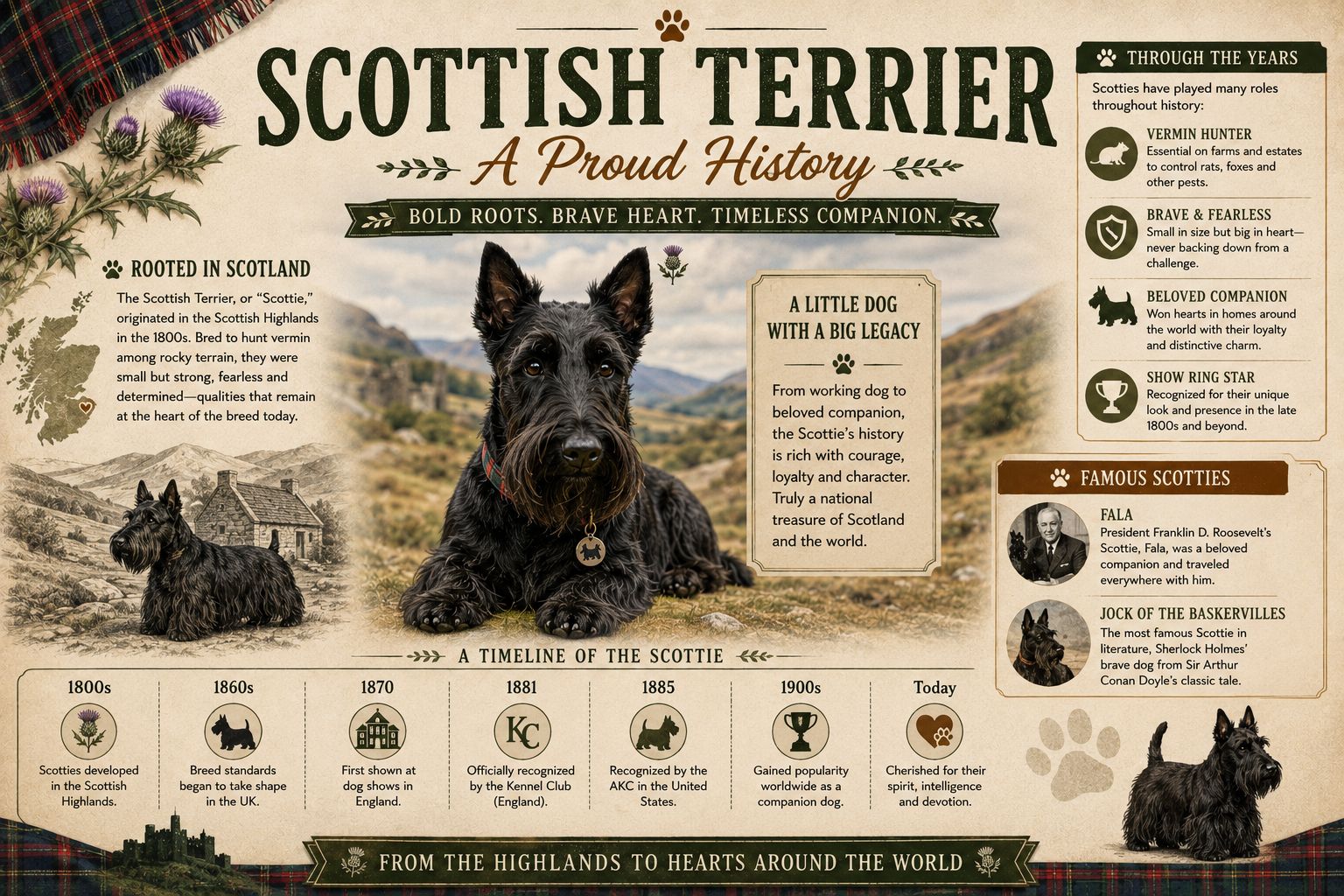
Few breeds are easier to recognize in silhouette. A well-proportioned Scottish Terrier is low, compact and powerfully built, with short sturdy legs, a relatively long head, erect ears, dark alert eyes and an upright tail.
The famous beard and eyebrows contribute to the Scottie’s serious, almost professorial expression. Longer furnishings along the underside of the body create the traditional “skirt,” while the harsh outer coat helps produce the crisp outline associated with show-groomed Scotties.
Small Dog, Substantial Body
Photographs can make Scotties look tiny. In person, many people are surprised by how solid they feel. At roughly 18–22 pounds, this is a compact dog with considerable bone and muscle—not a fragile purse-sized companion.
Are There Miniature Scottie Dogs?
There is no separate miniature Scottish Terrier breed or officially recognized “mini Scottie.” Scottish Terriers are already a small breed. Puppies marketed specifically as miniature, micro or teacup Scotties deserve careful scrutiny, particularly if extreme small size is being promoted as a special rarity.
Normal dogs within a breed vary somewhat in size. Responsible breeding should prioritize sound structure, temperament and health rather than deliberately producing unusually tiny Scotties for marketing purposes.
How Big Do Scottish Terriers Get?
Adult Scottish Terriers stand about 10 inches at the shoulder and generally weigh around 18–22 pounds. They are low rather than dainty, and their sturdy construction makes them feel like considerably more dog than their height suggests.
When Do Scottish Terriers Stop Growing?
Most Scotties achieve much of their adult height during the first year, although the body continues to fill out and mature afterward. Muscle, chest development, coat and overall adult substance can continue changing beyond the puppy’s initial growth spurt.
Growth should be steady rather than forced. Overfeeding a puppy to make it grow faster does not create a better adult and can contribute to excess weight.
Scottie Puppy Growth
There is no single weekly weight chart that every healthy Scottish Terrier puppy must follow. Sex, genetics, litter size, parental size and individual development all affect growth. Your veterinarian is better positioned to assess whether an individual puppy is maintaining an appropriate growth curve and body condition.
Scottish Terrier Temperament & Personality
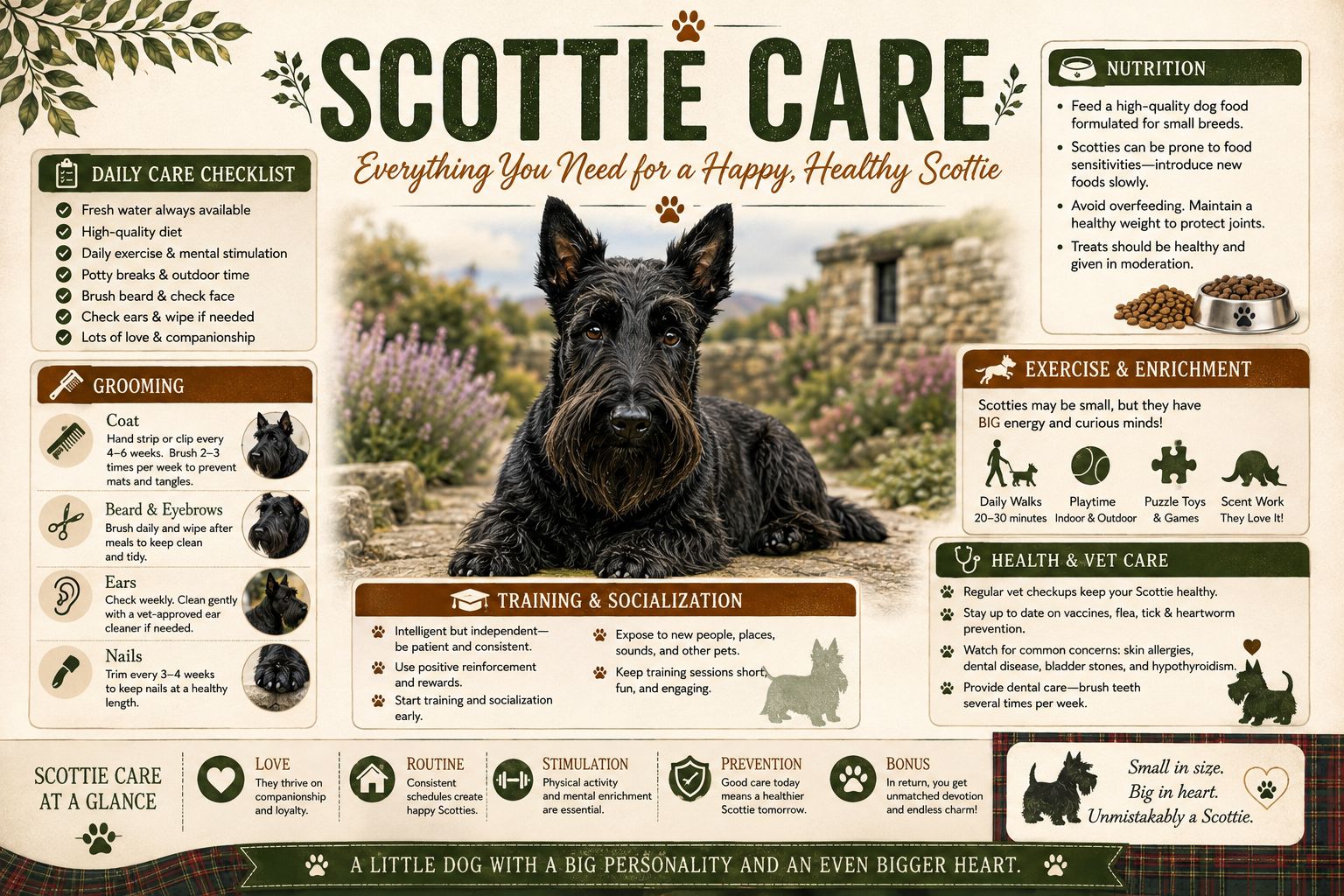
Scotties are typically confident, independent, loyal, alert and reserved. They are famous for having strong opinions, but reducing the breed to “stubborn” misses much of what makes a Scottish Terrier fascinating.
A Scottie often watches before participating. Many are not indiscriminate social butterflies. They may adore their family while treating strangers with polite suspicion until given a reason to change their minds. This reserve should not be confused with fearfulness or hostility.
Are Scottish Terriers Friendly?
With their own people, many Scotties are deeply affectionate and companionable. With strangers, they are commonly more reserved than overtly welcoming. Early, positive socialization helps a puppy learn that unfamiliar people and situations are ordinary without trying to turn a naturally discerning terrier into a dog that must greet everyone.
Are Scottish Terriers Mean?
No breed should be characterized as inherently mean. A sound Scottie should be confident and stable, not indiscriminately aggressive. However, terrier boldness, territorial tendencies, prey drive and intolerance of rude handling mean that training and socialization matter.
Pain, fear, poor breeding, inadequate socialization and coercive handling can also contribute to aggression in any breed. A sudden behavior change in an adult dog deserves veterinary attention.
Are Scotties High Energy?
Scotties have genuine terrier energy, but they are not typically nonstop endurance athletes. Many enjoy purposeful bursts of activity followed by impressive relaxation. Daily exercise and mental engagement are important, yet a healthy adult usually does not need hours of running.
Why Are Scottish Terriers So Stubborn?
What owners call stubbornness is often independence. Scotties were developed to work in situations where immediate human direction was impossible. They can learn very well, but repetitive drills and heavy-handed methods are poor matches for a dog bred to make decisions.
A Scottie is more likely to ask, metaphorically, “What’s in this for me?” Good training supplies a convincing answer.
How Do Scottish Terriers Show Affection? Are Scotties Lap Dogs?
Scotties can be extremely devoted without being constantly demonstrative. Their affection often looks different from that of a highly exuberant companion breed.
A Scottie may follow you from room to room, choose to lie nearby, bring a toy, lean against your leg, keep watch from a favorite position or quietly appear wherever the family has gathered. Some love laps and cuddles; others prefer companionship with a little personal space.
This can make the breed especially appealing to people who enjoy a close relationship with a dog but do not necessarily want a canine shadow demanding physical attention every minute.
Do Scotties Bond With One Person?
Some develop an especially strong attachment to one family member while still caring about the rest of the household. Good family involvement from puppyhood can encourage a dog to build positive relationships with everyone rather than relying exclusively on one person.
🐾 Scottie Translation
A Scottie sitting three feet away and supervising everything you do may be expressing profound devotion. Not every declaration of canine love involves climbing into your lap.
Scottie Intelligence & Trainability
Scottish Terriers are intelligent dogs, but intelligence and automatic compliance are not the same thing. A Scottie can understand a cue perfectly and still decide that the rabbit disappearing under the hedge is currently more important.
They tend to learn best when sessions are short, varied and rewarding. Food rewards, toys, permission to sniff and access to interesting activities can all be useful reinforcers.
Are Scotties Good for Obedience Training?
They can learn excellent manners and participate in dog sports, but an owner expecting the eager repetition of some sporting or herding breeds may be frustrated. Scotties often prefer a reason for doing something and can disengage when training becomes monotonous.
Train for real-life reliability rather than robotic perfection. A Scottie that willingly checks in, walks politely, leaves dangerous objects, tolerates grooming and comes away from distractions has learned enormously valuable skills.
How to Train a Scottish Terrier
Positive reinforcement, consistency and a sense of humor are particularly useful with Scotties. Harsh corrections can create conflict without producing genuine cooperation.
Start With These Skills
- Name response and attention
- Reliable recall in safely enclosed areas
- Loose-leash walking
- “Leave it” and trading objects
- Settling calmly on a mat
- Polite greetings
- Comfort with brushing, nail care and beard handling
- Waiting at doors and gates
- Comfortable short periods alone
House Training a Scottie Puppy
Use a predictable schedule, close supervision and generous rewards for toileting in the correct place. Take puppies out after waking, eating, drinking and active play. Clean accidents with an enzymatic cleaner rather than punishing the puppy.
Recall and the Terrier Brain
Recall deserves special attention because prey drive can overpower good intentions. Practice with high-value rewards and a long line in appropriate areas. Even a well-trained Scottie should not be casually trusted off leash near roads or wildlife.
Socialization Without Forcing Sociability
Expose puppies positively to people of different appearances, household sounds, traffic, grooming, veterinary handling, friendly dogs and varied environments. The goal is a confident Scottie that can move through the world comfortably—not a dog required to enjoy physical contact from every stranger.
Explore Dogs Central Small Dog Training Resources
Scottie Behavior: Barking, Digging, Chasing & Watchdog Instincts
Scotties are terriers, and several behaviors that owners sometimes call “problems” are exaggerated versions of historically useful traits.
Do Scottish Terriers Bark a Lot?
Scotties are alert and can make effective watchdogs. Many will announce visitors, unfamiliar sounds or activity outside. They are not necessarily nonstop barkers, but boredom, territorial arousal or rehearsing window barking can turn alerting into a habit.
Reward calm behavior, provide adequate activity and prevent hours of unsupervised practice at windows or fences.
Do Scotties Dig?
Many will if given the opportunity. Digging is thoroughly compatible with their earth-dog heritage. A designated digging area can be more realistic than expecting a committed terrier never to put paw to soil.
Do Scottish Terriers Have a High Prey Drive?
Often, yes. Small mammals can trigger pursuit. Secure fencing and leash management matter, and underground electronic fencing is a poor substitute for a physical barrier when a highly motivated terrier decides to chase.
Are Scottish Terriers Hunting Dogs?
The breed’s historical work involved pursuing vermin and quarry, particularly in and around the ground. Modern Scotties are primarily companions, but the instincts associated with that work remain visible in many dogs.
Explore Small Dog Behavior Resources
Scottie Dog Colors: Black, Brindle & Wheaten
Scottish Terriers are not always black. Black is the color most strongly associated with the breed in popular culture, but Scotties also occur in brindle and wheaten.
Black Scotties
The classic jet-black Scottie is instantly recognizable and accounts for much of the breed’s popular imagery. Black dogs may show occasional lighter hairs as they age.
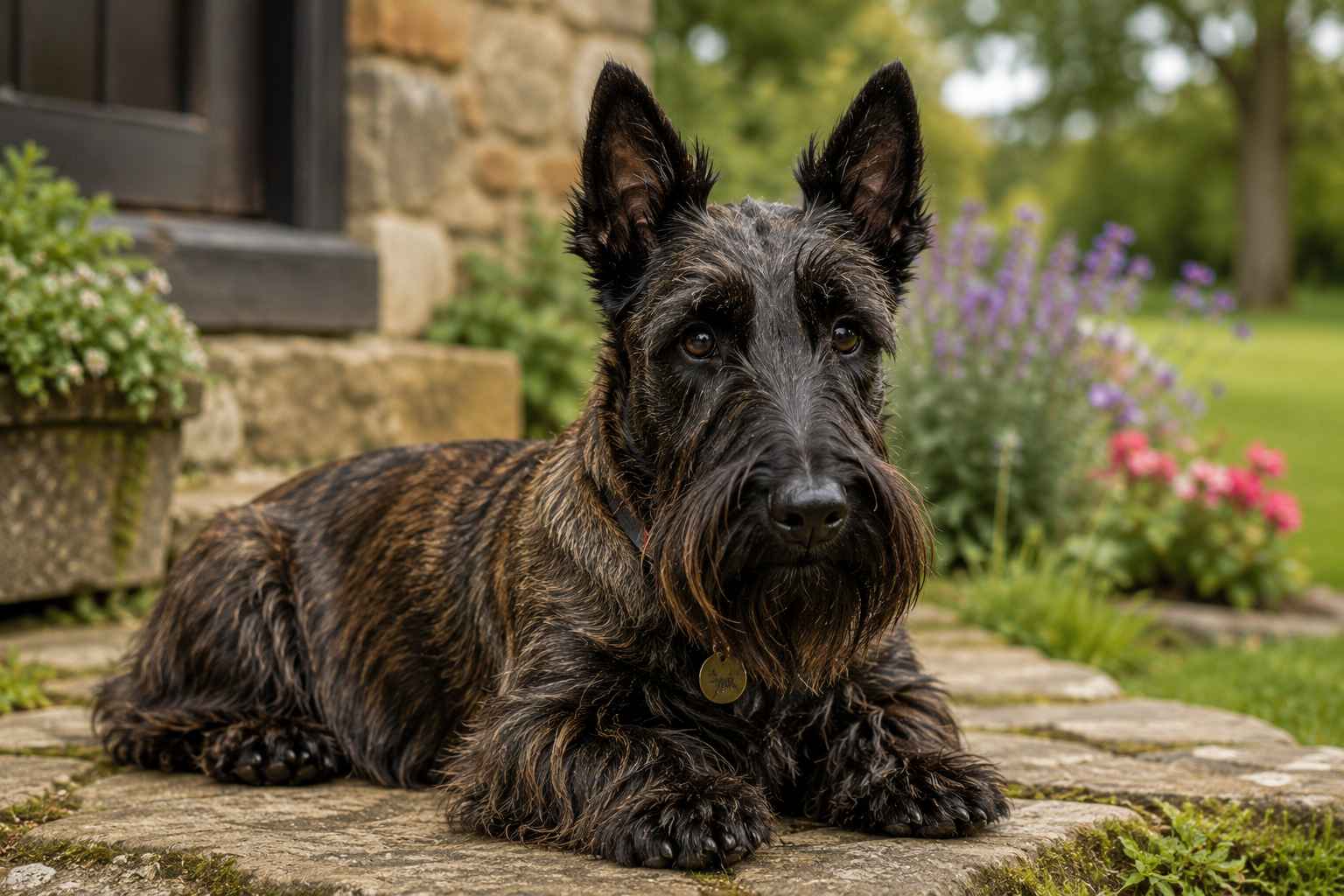
Brindle Scotties
Brindle is a pattern created by darker striping or intermingling over a lighter base. Depending on the dog, brindling can be obvious or so dark that the coat appears nearly black until viewed closely or in bright light.
Wheaten Scotties
Wheaten Scotties range through pale golden or wheat-like shades. Because people so strongly associate the breed with black, a wheaten Scottie is sometimes mistaken for another terrier.
Black-and-White Scottie Dogs
Searches for black-and-white Scotties often reflect artwork, markings or confusion with other terrier types. The Scottish Terrier breed standard is associated with black, wheaten and brindle rather than a deliberately bred black-and-white parti pattern.
Can Scottish Terriers Be White?
A white dog that looks like a Scottie is very often a West Highland White Terrier rather than a white Scottish Terrier. White is not a standard Scottish Terrier color.
This confusion is understandable. Scotties and Westies share Scottish terrier ancestry, similar compact proportions and erect ears. Grooming can make their outlines look even more alike to someone unfamiliar with the breeds.
A very pale wheaten Scottie may look cream-colored in some photographs, but that is different from the characteristic white coat of a Westie.
This distinction is useful when searching for puppies. Advertising a “rare white Scottie” should not be accepted at face value. Ask for registration information and learn what the breed’s recognized colors actually are rather than paying a premium for a marketing label.
Do Scotties Shed? Are Scottish Terriers Hypoallergenic?
Scotties are relatively low-shedding dogs, but they do shed some hair and no dog is guaranteed to be completely hypoallergenic.
The Scottish Terrier has a double coat: a harsh outer coat and a softer, dense undercoat. Regular grooming removes dead coat and helps keep loose hair under control.
Are Scottie Dogs Good for People With Allergies?
Some people with dog allergies find lower-shedding breeds easier to tolerate, but allergic reactions are individual. Allergens are associated with proteins found in dander, saliva and urine—not simply visible hair on furniture.
If allergies are an important factor, spend meaningful time with adult Scottish Terriers before committing to a puppy whenever possible. Do not rely on a guarantee that a breed cannot trigger symptoms.
Read the Dogs Central Hypoallergenic Small Dogs Guide
Scottish Terrier Grooming: Coat Care, Clipping & Hand Stripping
The Scottie’s coat is low-shedding but not low-maintenance. Regular brushing and scheduled trimming are needed to prevent tangles, maintain skin health and preserve the breed’s characteristic outline.
How Often Should a Scottie Be Brushed?
A thorough weekly brushing and combing is a sensible minimum for many pets, with extra attention to the beard, furnishings, armpits and other friction areas. Longer furnishings may need more frequent care.
Hand Stripping vs. Clipping
Hand stripping removes dead outer hairs by hand or with appropriate grooming tools, helping maintain the harsh texture and traditional color and finish of the coat. It is the preferred approach for dogs being maintained in correct show coat.
Many companion Scotties are clipped instead. Clipping is practical and easier to arrange, but over time it can soften the coat and change its texture or appearance. Neither choice makes someone a better pet owner; the important issue is maintaining the dog’s coat and skin comfortably.
How Often Does a Scottie Need Professional Grooming?
The exact interval depends on whether the coat is stripped or clipped, the desired length and how much maintenance is done at home. Many pet owners arrange professional grooming every several weeks rather than waiting until the coat is overgrown or matted.
The Famous Scottie Beard
The beard collects water and food with impressive efficiency. Comb it regularly and keep it clean and dry enough to prevent odor and skin irritation. Check beneath facial hair rather than assuming everything is fine because the outer coat looks tidy.
Nails, Ears & Handling
Trim nails regularly, inspect ears and begin grooming practice during puppyhood. A Scottie that learns to stand calmly, have its feet touched and accept brushing will have a much easier lifetime of coat care.
Explore Small Dog Grooming Resources
How Much Exercise Does a Scottish Terrier Need?
Scotties need daily exercise, but their short legs do not require marathon mileage. Regular walks, sniffing opportunities, play and mentally engaging activities suit most healthy adults.
Rather than prescribing one exact number of minutes for every dog, adjust activity to age, fitness, weather and health. A couple of purposeful walks plus play and enrichment can provide a satisfying day for many adults.
Can Scottish Terriers Go on Long Walks?
A fit adult Scottie can be an enthusiastic walker. Build distance gradually, pay attention to the individual dog’s condition and remember that short legs take more steps to cover the same ground.
Can Scotties Hike?
Healthy, conditioned Scotties can enjoy suitable hikes. Choose terrain and distance sensibly, carry water, watch temperature and use secure leash control around wildlife. Their prey drive can turn an apparently peaceful trail into an unscheduled pursuit.
Do Scotties Like Cold Weather?
Their Scottish heritage and dense double coat can make cool weather comfortable for many Scotties, but individual tolerance varies. Ice, road salt and severe cold still require common-sense precautions.
Hot Weather
Exercise during cooler parts of hot days and provide shade and water. Any dog can overheat. Dark-coated dogs also absorb considerable solar heat, so do not assume terrier toughness makes a black Scottie immune to summer conditions.
Best Enrichment Activities for Scotties
A Scottie’s brain deserves exercise as much as its legs do. Activities that let the dog sniff, search, solve and use terrier instincts are particularly valuable.
- Scent games: hide treats or toys and let the dog search.
- Food puzzles: use part of the dog’s normal meal for problem-solving.
- Earthdog-style activities: controlled sports can provide an outlet for terrier instincts.
- Digging box: a designated area can make digging legal rather than a landscaping dispute.
- Tug and fetch: many Scotties enjoy interactive games in short bursts.
- Trick training: brief sessions keep learning interesting.
- Sniff walks: allow time to investigate rather than making every walk a forced march.
Rotate activities instead of leaving every toy available all the time. Novelty often increases interest.
Are Scottish Terriers Good Family Dogs? What About Children?
Scotties can be excellent family dogs in households that appreciate their independent nature and teach children to interact respectfully. They are generally better suited to calm, dog-aware children than to chaotic handling by very young youngsters.
A Scottie is sturdy, but sturdiness should not be mistaken for unlimited tolerance. Children should never climb on, corner, tease or disturb a dog while it eats or sleeps.
Scotties and Young Children
Families with toddlers need especially careful supervision. A terrier that dislikes rough handling may communicate that clearly, and young children cannot reliably read canine warning signals.
Scotties and Older Children
Older children who enjoy training, walking and games can develop wonderful relationships with a Scottie. The breed’s personality often appeals to children who appreciate a dog that feels like an individual rather than a toy.
Compare the Best Small Dogs for Families
Do Scottish Terriers Like Other Dogs, Cats & Pets?
Scotties vary considerably in dog sociability. Some live happily with compatible dogs, while others are selective or prefer being the only dog in the household.
Early socialization helps, but it cannot erase genetics or guarantee that every adult Scottie will enjoy every dog it meets. Avoid forcing greetings and choose playmates thoughtfully.
Scotties and Cats
A Scottie raised with a confident cat may live peacefully with it, particularly when introductions are managed carefully. However, the breed’s prey drive means unfamiliar running cats may trigger pursuit.
Scotties and Rabbits, Rodents or Other Small Pets
Use extreme caution. A dog developed for vermin control should not be assumed safe with small mammals simply because it is affectionate with people. Secure physical separation is often the wisest management.
Are Scotties Good Apartment Dogs?
Scotties can adapt very well to apartment or condominium living. They are compact, do not require a huge yard and can meet much of their exercise requirement through walks and enrichment.
The main apartment considerations are barking and access to outdoor toileting. Hallway noises, elevators and neighboring doors can trigger watchdog behavior, so reward calm responses from the beginning.
A secure yard is convenient but not essential. In fact, a yard does not replace walks: Scotties benefit from getting out into the world to sniff, explore and experience different environments.
Compare the Best Small Dogs for Apartments
Are Scottish Terriers Good Dogs for Seniors?
A Scottie can be a wonderful senior companion for the right person. The breed is compact, generally requires moderate rather than extreme exercise and often enjoys companionship without demanding constant physical attention.
There are important practical considerations. Scotties are strong for their height and may lunge after wildlife if leash manners are poor. Their coat requires regular grooming, and their independent personality may be frustrating for someone wanting an effortlessly compliant lap dog.
For an older adult who enjoys daily walks, appreciates terrier character and can manage grooming, a well-trained adult Scottie can be an excellent match. A calm adult may also be easier than a sharp-toothed, energetic puppy for someone concerned about balance or mobility.
Explore the Best Small Dogs for Seniors
Are Scotties Good for First-Time Dog Owners?
Scotties are not impossible first dogs, but they are not the easiest choice for everyone. Their intelligence comes with independence, and their terrier instincts can challenge an owner expecting automatic obedience.
A thoughtful first-time owner who enjoys learning about behavior, uses positive training, provides secure management and accepts the dog’s individuality can succeed beautifully. Someone wanting a highly biddable dog that naturally seeks constant direction may be happier with another breed.
Compare Small Dogs for First-Time Owners
Scottish Terrier Health Issues & Recommended Health Testing
Scotties can live healthy lives, but the breed has inherited health concerns that responsible breeders and owners should understand. Health testing is particularly important when choosing a puppy because a general veterinary examination is not the same as screening breeding dogs for known inherited disorders.
Von Willebrand Disease (vWD)
Von Willebrand disease is an inherited bleeding disorder. The Scottish Terrier Club of America includes a DNA test for vWD among its required CHIC health-screening tests for breeding Scotties. Responsible breeders should be able to explain the status of the parents rather than simply saying their dogs have “never had a problem.”
Craniomandibular Osteopathy (CMO)
CMO is a developmental bone disorder affecting the skull and jaw of young dogs and is historically associated with several terrier breeds. DNA testing is available, and the Scottish Terrier Club of America made CMO testing part of its required CHIC screening protocol beginning in 2025.
Patellar Luxation
A luxating patella is a kneecap that slips out of its normal position. Signs can include skipping, intermittent hind-leg carrying or lameness. Patella evaluation is another required element of the STCA’s current CHIC recommendations.
Additional Screening
The Scottish Terrier Club of America’s current CHIC program also calls for an elective health test from a group that includes thyroid evaluation, an eye examination, serum bile acid testing, kidney screening or evaluation for Legg-Calvé-Perthes disease. Requirements can change as veterinary knowledge develops, so prospective owners should check the current parent-club recommendations rather than relying on an old checklist.
Scottie Cramp
Scottie cramp is a breed-associated movement disorder in which excitement or exercise can trigger abnormal gait and muscle activity. It is distinct from an ordinary muscle cramp. A dog showing unusual movement episodes should be evaluated by a veterinarian rather than diagnosed from videos online.
Cancer and Other Breed Health Concerns
The Scottish Terrier community has supported substantial health research over the years, including work involving cancers and other conditions seen in the breed. This does not mean every Scottie will develop a serious disease. It does mean family health history, transparent breeders and appropriate veterinary care matter.
What Should You Ask a Scottie Breeder?
Ask for the registered names of both parents and verify health results in the OFA database where applicable. “DNA tested” is too vague: ask which DNA tests were performed and what the results mean. Likewise, “vet checked” describes routine care, not a complete inherited-disease screening program.
🐾 Health-Testing Minimum
Current Scottish Terrier Club of America CHIC requirements include DNA testing for von Willebrand disease and CMO plus patella evaluation, along with an approved elective test. Always verify the latest requirements because breed-club recommendations can evolve.
Veterinary Note
This guide provides general educational information and cannot diagnose an individual dog. Contact your veterinarian about symptoms, health concerns or decisions about an individual Scottie’s care.
Explore Small Dog Health Resources
How Long Do Scottish Terriers Live?
Scottish Terriers commonly live around 12 years, and individual Scotties may live shorter or considerably longer lives. Lifespan statistics describe populations, not destiny.
Genetics, cancer risk, body condition, dental health, preventive care, nutrition, exercise and plain luck all influence longevity.
Caring for an Older Scottie
Senior dogs benefit from maintaining lean body condition and appropriate activity rather than becoming sedentary simply because they are older. Adjust exercise for arthritis, heart or other medical issues with veterinary guidance.
New lumps, changes in thirst or urination, unexplained weight loss, coughing, exercise intolerance, persistent digestive changes or altered behavior deserve attention. Do not automatically write new symptoms off as “old age.”
Scottie Dental Care
Scotties need the same serious dental attention as other small dogs. Periodontal disease can cause pain and infection long before an owner notices dramatic symptoms.
Daily tooth brushing with dog-safe toothpaste is ideal. Start in puppyhood by making mouth handling brief and rewarding. Veterinary dental examinations and professional cleaning may still be necessary even with good home care.
Watch for persistent bad breath, inflamed gums, loose teeth, facial swelling, reluctance to chew or dropping food.
Scottish Terrier Nutrition & Feeding
Feed a complete and balanced diet appropriate for your Scottie’s life stage, activity level and health. There is no single food that is automatically best for every Scottish Terrier.
How Much Should a Scottie Eat?
Use the food’s calorie information and feeding guidance as a starting point, then adjust according to body condition with veterinary advice. A compact, hairy dog can hide weight gain surprisingly well, so feel the ribs and waist rather than judging by coat outline alone.
Meals and Treats
Many healthy adults do well with two measured meals per day. Puppies generally need more frequent meals. Keep training treats small and account for them in the dog’s daily calories.
Can Scotties Eat Cheese or Watermelon?
Small amounts of many ordinary foods can be safe for healthy dogs, but a search for one ingredient should not substitute for knowing the dog’s health and total diet. Cheese is calorie-dense and some dogs do not tolerate dairy well. Plain seedless watermelon flesh can be an occasional treat, while rind and seeds should be avoided.
If a Scottie has pancreatitis, allergies, urinary disease, gastrointestinal problems or another medical condition, ask the veterinarian before adding foods or supplements.
Explore Small Dog Nutrition & Feeding Resources
What Is It Really Like Living With a Scottie?
Living with a Scottish Terrier is often less like owning a decorative small dog and more like sharing your home with a compact, bearded individual who has been appointed head of neighborhood security.
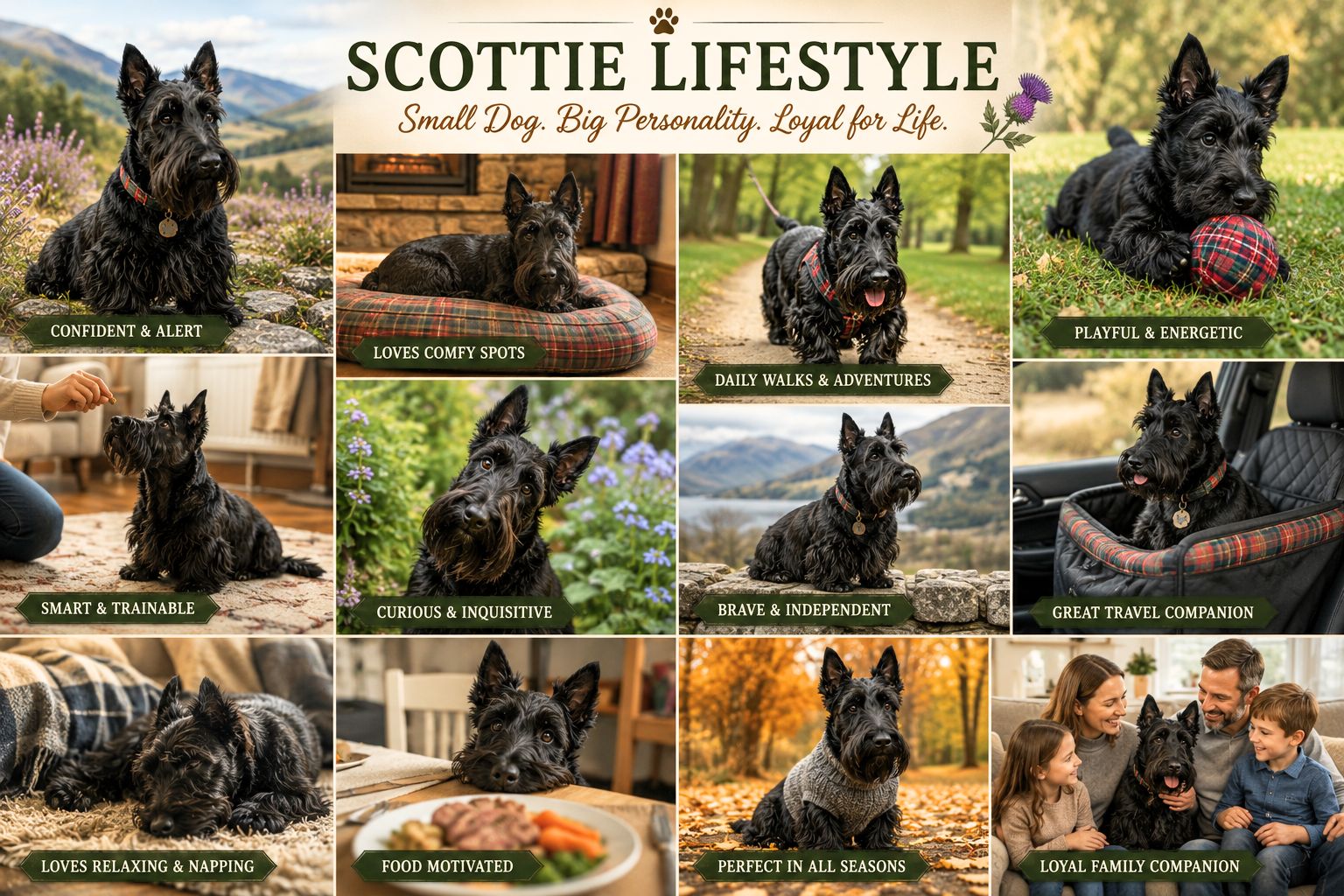
A typical Scottie may begin the day with a purposeful patrol of the yard, enjoy a sniff-heavy walk, nap while keeping one ear available for suspicious delivery vehicles, enthusiastically investigate a puzzle toy and then settle near the family in the evening.
They are often beautifully adaptable when their core needs are met. They do not require acres of land, but they do need a secure environment, daily engagement and owners who respect the terrier mind.
Things Scottie Owners Learn Quickly
- A short dog can dig a surprisingly ambitious hole.
- A beard can transport half a water bowl across the kitchen.
- “Come” competes with every squirrel in the neighborhood.
- Quiet affection can be just as deep as enthusiastic cuddling.
- A secure fence is a management tool, not an insult to the dog’s training.
- Keeping the coat tidy is much easier than rescuing it after weeks of neglect.
Explore the Small Dog Care Guide
Scottie Puppies: Raising a Confident Scottish Terrier
Scottie puppies are bold, curious, sharp-toothed little terriers that benefit enormously from thoughtful early socialization and training. Puppyhood is when owners can establish the handling, grooming and household skills the adult dog will need for life.
Early Socialization
A well-raised puppy should experience ordinary household sounds, different surfaces, visitors, car travel, grooming equipment, gentle veterinary-style handling and carefully selected friendly dogs. Exposure should be positive and age-appropriate rather than overwhelming.
Grooming Practice Starts Now
Touch the beard, feet, ears and body gently. Introduce brushing, combing and standing on a stable grooming surface in tiny sessions paired with rewards. A Scottie will require grooming for life, so this training is as practical as teaching “sit.”
Teach Recall Before You Think You Need It
Reward puppies heavily for turning toward you and coming when called. Practice before adolescent terrier confidence and prey drive make the environment more competitive.
Scottie Puppy Names
The breed’s Scottish heritage offers wonderful naming material: Angus, Bonnie, Brodie, Duncan, Fergus, Flora, Hamish, Isla, Mac, Maisie, Skye and Wallace are natural possibilities. Black Scotties also inspire names such as Onyx, Pepper, Raven and Guinness, while wheaten dogs suit names such as Barley, Honey or Biscuit.
Planned supporting guide: Scottish Terrier Puppy Guide: Finding & Raising a Healthy Scottie Puppy
Planned names guide: Scottie Dog Names: Scottish, Traditional, Cute & Color-Inspired Ideas
Scottish Terrier Breeders, Scottie Puppies for Sale & Price
People searching for Scottie dogs for sale, Scottie puppies or Scottish Terrier breeders should begin with breeder quality rather than price, color or distance from home.
What Responsible Scottie Breeding Looks Like
- Adult breeding dogs are valued companions with stable, breed-appropriate temperaments.
- Puppies are raised in a clean, enriching environment with meaningful human contact.
- The breeder understands Scottish Terrier health issues and follows current breed-club screening recommendations.
- vWD, CMO and patella results—and other applicable health testing—can be documented and verified.
- The breeder discusses strengths and weaknesses honestly rather than claiming the line has “no health problems.”
- Puppies receive thoughtful socialization and early grooming experience.
- The breeder asks buyers detailed questions and matches puppies by temperament and household fit.
- A written contract includes a return-to-breeder provision if the owner can no longer keep the dog.
- The breeder remains available after the sale.
Breeder Red Flags
- Many unrelated breeds or litters continually available
- Adult breeding dogs primarily housed as kennel stock rather than family companions
- Dogs routinely kept in crates as their main living environment
- No meaningful health-test documentation
- “Vet checked” presented as complete genetic screening
- Premium pricing for “mini,” “teacup,” “rare white” or other questionable marketing labels
- Little interest in who buys the puppy
- Pressure to send a deposit immediately
- Refusal to explain where and how puppies are raised
How Much Are Scottie Dogs?
Scottish Terrier puppy prices vary significantly by location, breeder, pedigree, veterinary costs and what is included. Price alone is a poor quality measure. Responsible health testing and excellent puppy raising cost money, but an expensive puppy can still come from a poor source.
Budget beyond purchase price for professional grooming, veterinary care, quality food, training, supplies, insurance or emergency savings and dental care over the dog’s lifetime.
Scottie Puppies for Sale Near Me
“Near me” is convenient but should not be the primary selection criterion. A well-bred puppy from a responsible breeder farther away can be a much wiser choice than an immediately available puppy from a poor breeding environment.
Visit the Responsible Small Dog Breeders Showcase
Planned Scottie breeder directory: Responsible Scottish Terrier Breeders & Scottie Puppies
Scottish Terrier Adoption, Rescue & Rehoming
Scotties occasionally become available through breed rescue, shelters and private rehoming. Search under both Scottish Terrier and Scottie, and remember that shelter breed labels are sometimes educated guesses.
When considering an adult Scottie, ask about behavior around dogs, cats, children and visitors; grooming tolerance; prey drive; house training; medical history; and how the dog copes when left alone.
Need to Rehome a Scottish Terrier?
Sometimes illness, housing, family changes or other circumstances make keeping a beloved dog impossible. Responsible rehoming means being honest about the dog’s health and behavior, screening adopters carefully and finding a home that genuinely suits the individual Scottie.
Dogs Central focuses on breed education. Our sister service, Pet Rehoming Network, specializes in compassionate private pet rehoming and adoption support.
Pet Rehoming Network resource: Scottish Terrier Adoption & Rehoming
Scottie vs. Westie & Other Small Terriers
Scotties are frequently compared with West Highland White Terriers because both originated in Scotland and share the compact, upright-eared terrier look. They are distinct breeds with different standards and characteristic appearances.
| Breed | Typical Visual Difference | General Character |
|---|---|---|
| Scottish Terrier | Long head; black, brindle or wheaten coat; distinctive beard and skirt | Independent, dignified, loyal, reserved, determined |
| West Highland White Terrier | White coat; rounder groomed head and more compact facial appearance | Confident, lively, social terrier character |
| Cairn Terrier | Shaggier, more natural coat and lighter outline | Busy, alert, cheerful working-terrier personality |
| Miniature Schnauzer | Distinct brows/beard but different body and breed ancestry | Bright, alert, trainable and often more overtly social |
Scottie vs. Westie
If your dream dog is “a white Scottie,” investigate the West Highland White Terrier. A Westie is not simply a Scottish Terrier in white. Conversely, if you love the Scottie’s reserved dignity and distinctive long-headed silhouette, color alone should not steer you toward another breed.
Scottie vs. Cairn Terrier
Both have deep Scottish roots, but the Cairn generally presents a more tousled natural outline while the Scottie has a heavier, lower silhouette and formal beard-and-skirt grooming. Individual personality varies, but both retain genuine terrier instincts.
Read the Cairn Terrier Breed Guide
Planned comparison: Scottie vs. Westie: Which Scottish Terrier Breed Fits You?
Scottish Terrier Pros & Cons
| Potential Advantages | Potential Challenges |
|---|---|
| Distinctive, devoted personality | Independent and sometimes stubborn |
| Compact but sturdy | Strong prey drive |
| Moderate exercise needs | Recall can be challenging around wildlife |
| Relatively low shedding | Specialized coat care and grooming expense |
| Good watchdog | Alert barking needs management |
| Can adapt to apartments | May be selective with unfamiliar dogs |
| Often deeply loyal to family | Can be reserved with strangers |
| Rich history and unmistakable appearance | Important inherited health concerns require responsible breeding |
Is a Scottish Terrier Right for You?
A Scottie May Be a Great Match If You…
- Love independent dogs with strong individual personalities.
- Want a compact but sturdy companion rather than a delicate toy dog.
- Enjoy daily walks but do not need a marathon-running partner.
- Appreciate a dog that is devoted without necessarily being clingy.
- Will maintain the coat and budget for professional grooming.
- Can provide secure leash and fencing management for prey drive.
- Enjoy positive, creative training rather than demanding instant obedience.
- Prefer a dog that may be politely reserved with strangers.
You May Prefer Another Breed If You…
- Want a dog that eagerly obeys every request.
- Need a highly social dog-park regular.
- Keep free-roaming rabbits or other small pets in the same space.
- Want a truly wash-and-wear coat.
- Expect reliable off-leash freedom around wildlife.
- Want a dog that enthusiastically greets every visitor.
- Are attracted only by the Scottie’s appearance but dislike terrier behavior.
The best Scottie owner does not try to remove everything terrier-like from the dog. Instead, they provide safe outlets for those instincts and build cooperation with a dog whose independence is part of its charm.
Read Choosing the Right Small Dog
Frequently Asked Questions About Scottie Dogs & Scottish Terriers
What are Scottish Terriers like as pets?
Scotties are generally loyal, independent, alert and confident companions. They often bond deeply with family while remaining reserved with strangers. They need regular grooming, daily activity and patient positive training.
Are Scotties good dogs?
They can be excellent dogs for people who appreciate terrier character. They are not ideal for everyone because independence, prey drive and dog selectivity can require thoughtful management.
How big do Scottish Terriers get?
Adult Scotties are about 10 inches tall and generally weigh around 18–22 pounds. They are short-legged but solidly built.
When are Scottish Terriers fully grown?
Most achieve much of their adult height during the first year, although the body, muscle and coat continue maturing afterward.
How long do Scottish Terriers live?
Scotties commonly live around 12 years, although individual lifespan varies with genetics, health and care.
Are Scottish Terriers hypoallergenic?
No dog is completely hypoallergenic. Scotties shed relatively little, which may help some allergy sufferers, but an individual person can still react to a Scottish Terrier.
Do Scotties shed?
Yes, but generally much less than many heavier-shedding breeds. Their double coat requires regular grooming to remove dead hair and prevent tangles.
How often should Scotties be groomed?
Brush and comb regularly—often weekly or more frequently for longer furnishings—and maintain the coat through hand stripping or clipping on an appropriate schedule. Many pet owners use a professional groomer every several weeks.
Are Scottish Terriers always black?
No. Scottish Terriers also come in brindle and wheaten. Black is simply the color most strongly associated with the breed in popular culture.
Can Scottish Terriers be brindle?
Yes. Brindle is a recognized Scottie color/pattern and can range from obvious striping to very dark coats that appear nearly black at first glance.
Can Scottish Terriers be white?
White is not a standard Scottish Terrier color. Dogs commonly mistaken for white Scotties are often West Highland White Terriers. Very pale wheaten Scotties can look cream-colored in photographs.
Are Scottish Terriers lap dogs?
Some enjoy laps and cuddling, while others prefer lying beside their people. Scotties often show deep affection without needing constant physical contact.
How do Scottish Terriers show affection?
Many follow their people, settle nearby, lean against them, bring toys or quietly supervise household activity. Their affection can be subtle but very strong.
Why are Scottish Terriers so stubborn?
The breed was developed to work independently. What appears to be stubbornness is often a dog evaluating whether an activity is worthwhile. Short, rewarding and varied training sessions work better than repetitive drilling.
Are Scottish Terriers friendly?
Scotties are often loving with family but naturally reserved with strangers. Early socialization supports confidence without requiring the dog to greet everyone enthusiastically.
Are Scottish Terriers quiet?
They can be calm indoors, but many have strong watchdog instincts and will bark to alert. Training and preventing repeated window or fence barking help keep vocal behavior manageable.
Do Scottish Terriers like other dogs?
Some live happily with compatible dogs, while others are selective. Early socialization helps, but owners should not assume every Scottie will enjoy dog parks or unfamiliar dogs.
Are Scottish Terriers hunting dogs?
Scotties were developed as working terriers used against vermin and quarry. Modern dogs are primarily companions, but many retain strong prey and digging instincts.
Can Scottish Terriers hike?
Healthy, conditioned adults can enjoy appropriate hikes. Build fitness gradually, carry water and keep them securely leashed around wildlife.
How much exercise do Scottish Terriers need?
Most benefit from daily walks, play and mental enrichment. Their needs are moderate rather than extreme, but they should not be treated as sedentary lap dogs.
Are Scottish Terriers good dogs for seniors?
They can be excellent companions for active seniors who appreciate an independent terrier and can manage grooming and leash walking. A calm adult may suit some seniors better than a puppy.
Are Scottish Terriers good with children?
They can do very well with respectful, dog-aware children, especially older children. Young-child interactions require close adult supervision and the dog should always have a quiet retreat.
What health risks affect Scotties?
Important breed concerns include von Willebrand disease, craniomandibular osteopathy and patellar luxation, among other conditions. The Scottish Terrier Club of America maintains current CHIC health-screening recommendations for breeding dogs.
How much are Scottie dogs?
Purchase prices vary by region and breeder. Judge a breeder by health testing, temperament, puppy raising and lifetime responsibility rather than assuming price alone indicates quality.
Are Scottish Terriers rare?
Scotties are less commonly encountered today than during some periods of their twentieth-century popularity, but they remain an established, internationally recognized breed with dedicated breeders and breed clubs.
Why aren’t Scottish Terriers more popular?
There is no single reason. Changing breed fashions, specialized grooming, a strong independent terrier temperament and competition from many other small companion breeds may all influence popularity. Lower popularity does not mean the breed is unsuitable; it makes careful preservation by responsible breeders especially valuable.
Final Thoughts: The Diehard in a Small Package
The Scottish Terrier is one of those breeds that becomes more interesting the more you understand it. The dramatic outline may attract attention first, but appearance is only the cover of the story.
Scotties are independent without being indifferent, affectionate without necessarily being effusive, compact without being fragile and intelligent without feeling obligated to demonstrate that intelligence through unquestioning obedience.
For people who want an easygoing little dog that agrees with everything, the Scottie may be a frustrating choice. For someone who appreciates terrier courage, dry dignity, loyalty and a little negotiation in the relationship, few breeds offer quite the same experience.
Related Dogs Central Guides
- Cairn Terrier Breed Guide
- West Highland White Terrier Breed Guide
- Small Dog Breeds
- Types of Small Dogs
- Hypoallergenic Small Dog Breeds
- Best Small Dogs for Families
- Best Small Dogs for Seniors
- Best Small Dogs for Apartments
- Responsible Small Dog Breeders Showcase
Trusted Scottish Terrier Resources
- Scottish Terrier Club of America – Parent club information on the breed, health, responsible breeding and Scottie ownership.
- Scottish Terrier Club of America Health Information – Current breed health and CHIC screening guidance.
- Orthopedic Foundation for Animals – Searchable health-testing records and CHIC information.
- American Kennel Club – Scottish Terrier – Breed standard, history and general breed information.
🐾 Dogs Central Tip
Breed tendencies are useful for planning, but they do not predict every individual dog. Temperament reflects genetics, early development, socialization, training, health and life experience.
About This Scottish Terrier Guide: Our Scottie Resource Is Growing
Dogs Central is building an expanding library devoted to small dogs and the people who love them. This Scottish Terrier guide will continue to grow with original Scottie images, infographics, owner experiences, puppy resources, grooming information, health resources, comparisons and responsible breeder showcases.
As supporting articles are published, this main guide will remain the hub: comprehensive enough to answer the essential questions while directing readers to deeper resources when a subject deserves its own page.